Agro tourism in Uganda means visiting working farms to see, and often help with, how coffee, tea, bananas, cattle, honey and fruit are grown and processed, usually as a half day add on to a safari. Most travellers fit a farm tour around Bwindi gorilla trekking, the coffee slopes of Mount Elgon or the tea country near Fort Portal. Uganda is a farming nation first, so these visits show how most Ugandans earn a living.
Agro tourism, also called agri tourism or farm tourism, sits comfortably beside the parks. A tea estate sits on the drive into Bwindi. Coffee grows right up to the forest boundary at Buhoma. Long horned Ankole cattle line the road past Lake Mburo. You rarely need a separate trip to reach a farm, just a slower afternoon on the safari you were already planning.

What Agro Tourism Means in Uganda: Farm Tours, Study Trips and Farm Stays
The Uganda Tourism Board describes agro tourism as turning farms into places people travel to, both to learn and to enjoy themselves, so that growers gain a second income and visitors see where their food comes from. That definition covers more ground than a single coffee tour. In practice, Ugandan farm tourism comes in four shapes.
Official backing has grown. The tourism board signed up agribusiness incubators, among them Excel Hort Consult and Gudie Incubation Farm, to build farm tour products across 18 regions and 51 districts, and ran a familiarisation trip to demonstration farms in Mbarara, Isingiro and Bushenyi in the southwest. The aim was partly to give tourism workers income when wildlife travel slumped during the pandemic, and partly to stop Ugandan tourism resting on national parks alone.
Alongside the board, the Kampala based Agro Tourism Association works on the farm side of the trade: training farmers to run their land as a business, arranging contract farming with processors, incubating young agribusinesses and placing interns and apprentices on farms. Kampala Capital City Authority also keeps an agribusiness directory that lists farm tour businesses inside the city, such as ATULI Agro Tourism Farm, which grows organic fruit and vegetables and offers rooms, fishing and animal feeding. For a visitor, that means farm tours range from polished estate visits to very small family plots, and a quick message to check a farm is still receiving guests is always worth sending.
Farming in Uganda: Why the Country Suits Agro Tourism Trips
Farming in Uganda is the backbone of the economy, and that is exactly why an agro tourism trip here feels real rather than staged. Most working Ugandans earn some or all of their living from the land, mostly on smallholdings of a few acres where bananas, beans, maize and cassava feed the family and coffee or tea pays the school fees.
Nature does a lot of the work. Two rainy seasons a year, rich volcanic soils in the west and east, and altitudes running from the warm shores of Lake Albert up to the cool hills of Kigezi let a single country grow tropical fruit, highland Arabica and temperate potatoes within a day’s drive of each other. Winston Churchill’s old line about Uganda as the Pearl of Africa was partly about this fertility.
Coffee is the crop most Ugandans would name as the most valuable, and it has been the country’s leading agricultural export for decades. Tea, fish from the lakes, cocoa, vanilla, cut flowers, sugar and maize add to the export list, while bananas, cassava, beans, sweet potatoes, millet, sorghum and simsim (sesame) feed the country. Goats, chickens, pigs and cattle are kept on almost every farm, and dairy is big business in the southwest.
Coffee Farm Tours in Uganda: Mount Elgon, Rwenzori and the Bwindi Hills
Coffee farm tours are the most popular agro tourism experience in Uganda, and they make sense. Coffee is the country’s leading agricultural export, and one of its two species grows wild here. Robusta occurs naturally in Ugandan forests such as Kibale, Budongo, Mabira and the Kalangala islands on Lake Victoria, and genetic studies treat these wild trees as a distinct line of the species. Most of the Robusta you will see on a farm grows in the warm lowlands of central and western Uganda, around Masaka, Mubende and the old Buganda heartland.
Arabica needs altitude. The best known Arabica coffee tours run on the slopes of Mount Elgon in the east, where Bagisu farmers have grown it for generations, and around Sipi Falls, where small cooperatives walk you through picking ripe red cherries, pulping, drying on raised racks, then pounding the beans in a wooden mortar and roasting them in a pan over a fire. You brew the result. The whole thing takes two to four hours, and it pairs well with the waterfall hike covered in our Sipi Falls tour guide. Exporters such as Kyagalanyi buy Arabica from Elgon smallholders, and some tour listings include visits to their washing and buying points. Arabica also grows in the foothills of the Rwenzori Mountains near Kasese, and in the Kigezi highlands around Bwindi.
In Bushenyi, on the road between Queen Elizabeth and the southwest, the Boona Bagaamoyo coffee tour follows a cup from the garden to the roaster: picking berries, drying them on mats, hulling, roasting and finally drinking the result with the farmers who grew it.
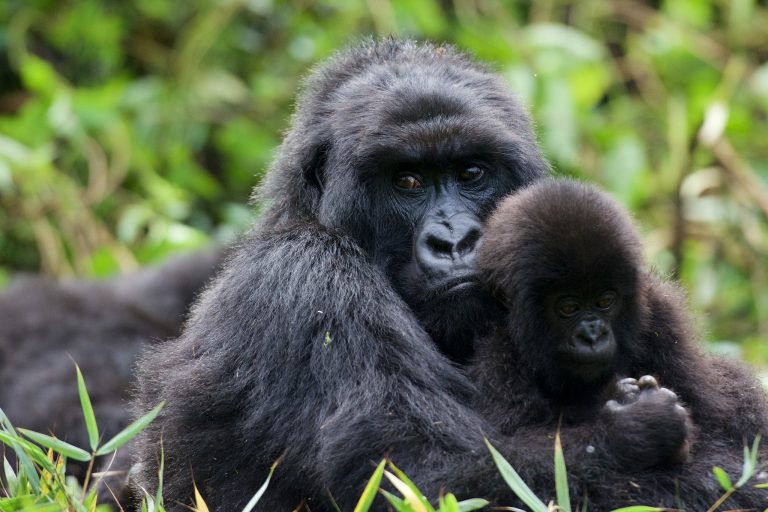
That last region matters to anyone on a gorilla safari. Around Buhoma, smallholders grow Arabica on hillsides that run straight up to the park edge. Gorilla Conservation Coffee, a social enterprise started by the conservation and health charity CTPH, buys single origin Arabica from these farmers at a better price, and a share of each sale funds conservation and community health work. Coffee also acts as a buffer crop: gorillas that wander out of the forest find nothing worth eating in a coffee garden and tend to turn back. Some visitors stop by the CTPH base and café, and the low key Gorilla Conservation Camp in Buhoma puts you right beside it.
For a broader read on what farming looks like across the country, from smallholder plots to commercial estates, farming in Uganda is covered in more depth by a local farming site.
Tea Estate Tours Near Bwindi, Bushenyi and Fort Portal
Tea estate tours come a close second, and they are the agro tourism experience you are most likely to pass on the way to the gorillas. Tea reached Uganda early. The first bushes were planted at Entebbe in 1900 from Indian seed, and commercial estates spread west through the following decades into the cool, wet hills of Toro and Kigezi.
Closest to Bwindi is the Kayonza Growers Tea Factory in Kanungu district, roughly 25 kilometres from the park and under an hour from Buhoma by road. It is a cooperative owned by thousands of smallholder growers, many of whom farm the hills that border the forest. Visits take about an hour: you follow green leaf from the weighing shed through withering, cutting, drying and sorting, then finish with a tasting. Tea from this area is also a quieter story about conservation, since a reliable cash crop on the boundary gives families less reason to cut into the forest.
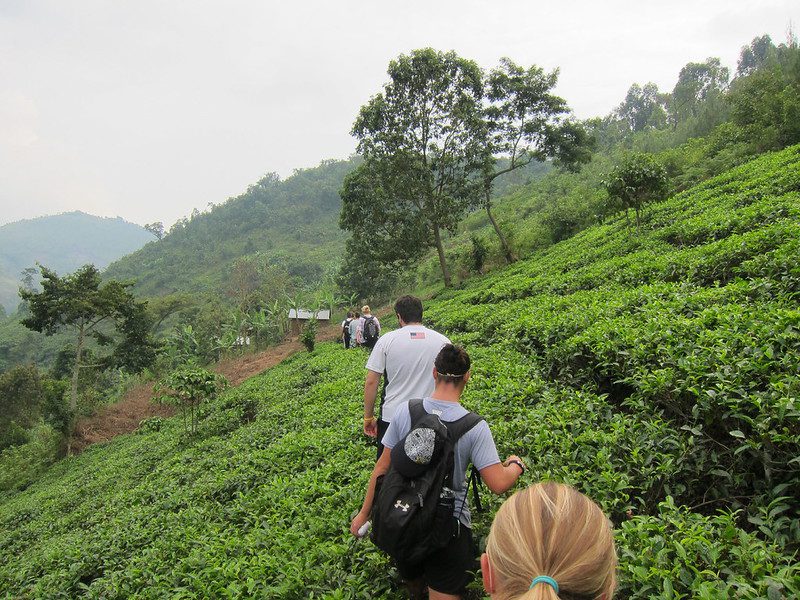
Heading to Ruhija for gorilla trekking? The road climbs through tea smallholdings, and some lodges on that route arrange visits to growers and the local factory. Further north, the Igara Tea Estate near Bushenyi sits on the main road between Queen Elizabeth National Park and the southwest, which makes it an easy break on a long transfer day.
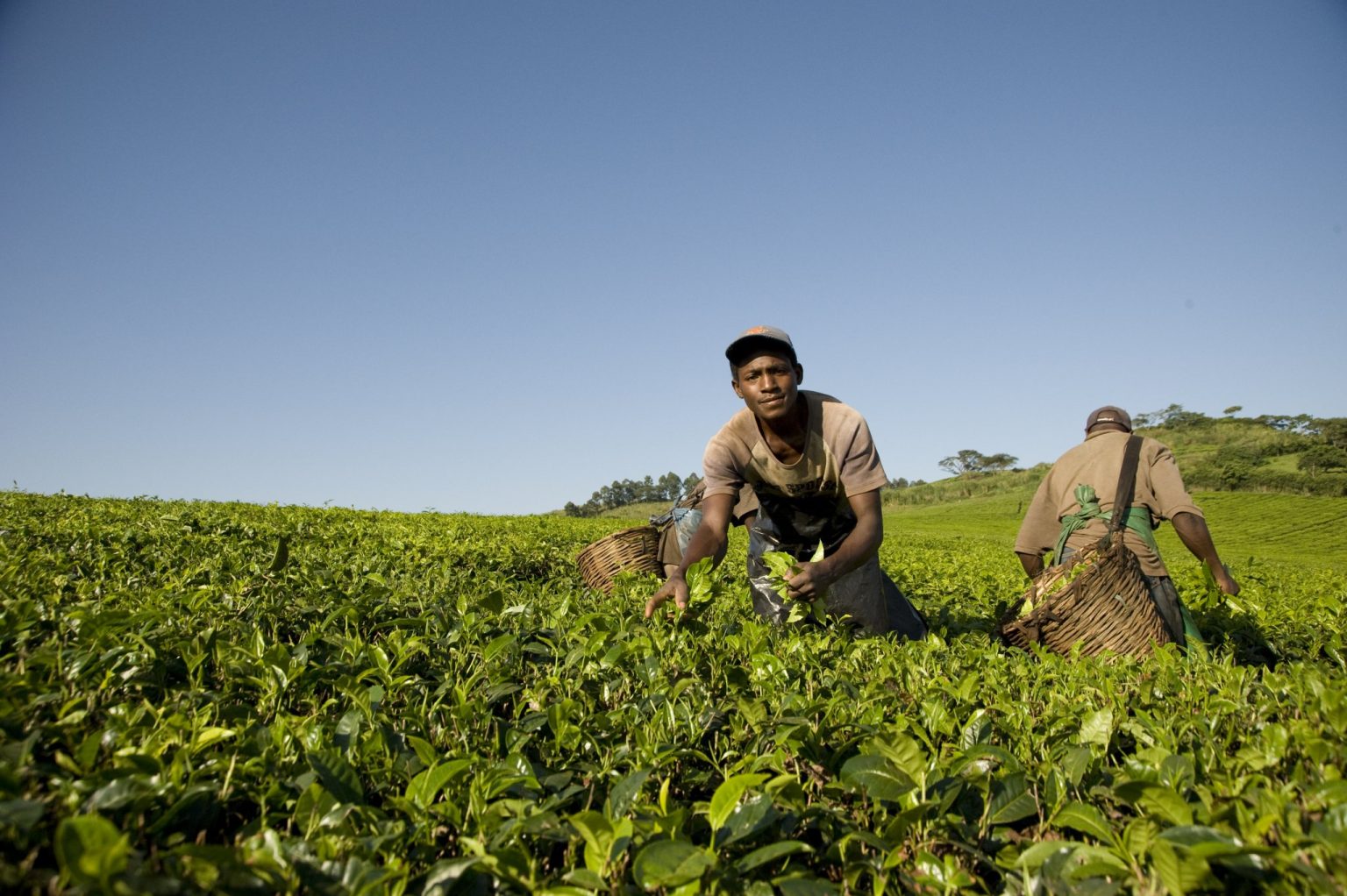
Fort Portal is the other tea capital. Estates around the town run half day tours that combine a field walk with a factory visit and tasting, and they fit neatly into a Kibale chimpanzee trekking safari. Camps on the forest edge, such as Kibale Forest Camp, arrange walks to neighbouring tea plantations and community gardens where guests pick, harvest and help process whatever is in season. One honest tip repeated by visitors: plucking only the top two leaves and a bud, quickly, is much harder than the pickers make it look. Expect a little laughter at your expense.
Banana and Matooke Farm Experiences in Western Uganda
A banana farm tour is the most everyday of Uganda’s agro tourism experiences, and possibly the most revealing. Ugandans eat more bananas per person than almost anyone on earth, mostly as matooke, the green cooking banana that is peeled, wrapped in banana leaves, steamed and mashed. In Mbarara, Bushenyi and the Buganda region around Kampala, the banana garden is the household pantry.
On a visit you see how farmers mulch, prop up heavy bunches, and cut a ripe stem with one swing of a panga. Many tours finish in a family kitchen, where you help peel a bunch with oiled hands (the sap stains) and steam it in leaves over a wood fire. Other varieties go into banana juice, banana beer and the strong local gin called waragi, and the same plants supply leaves for roofing, wrapping and crafts.

Farm lodges in the southwest, such as Mazike Valley Lodge and Emburara Farm Lodge near Mbarara, build banana gardens and home cooking into their stays, with meals made from what grows on the property. Some hosts turn the kitchen into a proper cooking class: luwombo stew steamed in a banana leaf parcel, millet bread, groundnut sauce and matooke, eaten together once the work is done.
Ankole Cattle and Dairy Farm Tours Around Mbarara
Ankole cattle farm tours are the signature agro tourism experience of the southwest. The breed carries enormous curved horns and sits at the centre of Banyankole and Bahima culture, where a herd has long measured a family’s standing. You pass these herds on almost every drive between Kampala and Bwindi.
Ranches and homesteads around Mbarara and Lake Mburo National Park show visitors how the cattle are herded, watered and milked by hand. Some let you try milking, which is harder than it sounds, and explain how milk becomes ghee, yoghurt and the fermented drink served to guests. Manure goes back onto banana gardens, so the cattle and banana stories join up. The full background on the breed is in our Ankole cattle guide.
Further south, Nshenyi Cultural Village near Kitwe in Ntungamo district, about half an hour from Ntungamo town and an hour from Mbarara, is one of the best known community farm stays in the country. Guests join the morning milking of Ankole cows, walk the banana gardens, handle old farming and food processing tools on a homestead heritage tour, open beehives, cook with the family and watch Banyankole music and dance in the evening. Batwa pottery sessions add another people’s craft to the visit. Tour listings also point to the government’s Mbarara Stock Farm for a look at modern cattle breeding.
Dairy tours run near Kampala too. Jesa Farm in Wakiso district, known across the country for its milk and yoghurt, appears on farm tour itineraries that show milking parlours and cheese and yoghurt making, which suits families who want a farm morning without the drive west.
Village Walks and Community Farm Stays Around Bwindi
The easiest agro tourism experience for gorilla trekkers is the Buhoma village walk, a guided community tour of about three hours that leaves from the park headquarters area. It moves through banana plantations, coffee and tea gardens and small vegetable plots, with stops to see banana beer brewed and waragi distilled, coffee roasted by hand, and a traditional healer who explains the medicinal plants gathered from the forest. Many walks visit a school and a craft group. Our Buhoma community walk guide covers the route in detail.
What is included varies by guide and season, so ask before you go if tasting banana beer or roasting coffee matters to you. Carry small Ugandan shilling notes. Crafts, coffee and honey are sold along the way, and nobody will have change for a large note.
For something slower, community farm stays put you in a homestay or simple farm camp for a night or more. Around Bwindi there are organic Arabica farms on the forest boundary that take guests and volunteers, and on the southern side the steep terraced hills of Kigezi around Rushaga and Lake Bunyonyi grow sorghum, Irish potatoes and beans in patterns you will not forget in a hurry. Guests on longer stays plant, weed and harvest alongside their hosts, feed the chickens and goats, and on some farms ride an ox cart down to the fields. A Batwa cultural experience adds the forest people’s side of the story: they were hunter gatherers inside Bwindi before it became a national park, and many now farm on its edge.
Evenings on these stays often bring storytelling by elders, basket weaving or pottery lessons, and the songs that go with planting and harvest. If you want the wider picture of the communities you will be staying with, our page on Uganda’s people and culture explains the kingdoms, clans and dances behind them.
Near Kibale, the KAFRED community group at Bigodi offers farm visits and a traditional meal alongside the Bigodi wetland walk, and Ndali Estate near Fort Portal runs crop walks on a working vanilla and tea farm above the crater lakes.
Pineapple, Fruit and Integrated Farm Tours in Central Uganda
Close to Kampala, fruit farm tours fill a free day at the start or end of a safari. The best known is the Luweero pineapple farm, about 75 kilometres north of the city, where guides walk you through the rows and hand out knives to cut your own ripe pineapples. Some groups turn it into a friendly contest for the biggest fruit. Luweero and nearby Mukono also grow mangoes, jackfruit, passion fruit and citrus, plus vanilla and spices on a few farms. Our guide to Ugandan fruits covers what each one tastes like and when it is in season.
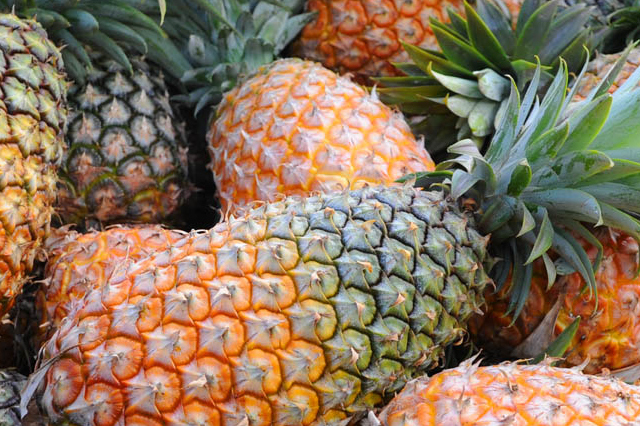
Integrated farm tours are the other central Uganda option. Demonstration farms in Wakiso district, such as the Pearl of Africa farm at Banda off Hoima Road, combine several practices on one plot. Forest farming means mango, avocado, jackfruit, orange, bamboo, pine and the indigenous musizi tree grown for fruit, timber and shade. Backyard farming shows how vegetables can be raised in small containers and sacks to feed a household. Food crops such as cassava, sweet potatoes, Irish potatoes, arrowroots, sugarcane and stevia fill the rest. Visitors see how compost and manure are made and can buy fresh produce. In Mukono, Nkoma Farm runs farm to table tours where lunch comes straight from the gardens you have just walked. Check before you go that a given farm is still receiving visitors, since small private farms open and close.
Beekeeping, Fish Farming and Cocoa Tours Across Uganda
Beekeeping tours run in Luweero, Kasese and the Rwenzori foothills. The Bunyangabu Beekeepers Cooperative, between Fort Portal and Kasese, shows hive types, honey extraction and candle making, and comb honey is available in the harvest months. Around Queen Elizabeth National Park, community groups use beehive fences to keep elephants out of crops, a practical side of conservation you can see on a short village walk.
Fish farm tours respond to strong demand for fish in Ugandan markets. Pond farms around Kampala, Wakiso and the southwest raise mainly catfish and tilapia, and a guided visit explains how ponds are dug, how fingerlings are chosen and how stock is kept healthy. At farms such as Nyakyera in Ntungamo district, visitors can feed the fish, help clean ponds and join a harvest. Wild fishing on the lakes is a different trip, covered in our guide to fishing trips in Uganda.
Cocoa tours centre on Bundibugyo, over the Rwenzori from Fort Portal, where farmers show how pods are split, fermented and dried. The same day trip usually takes in coffee and oil palm. Oil palm is also grown on Bugala Island in the Ssese group on Lake Victoria, where a large plantation project has turned much of the island over to the crop. Cotton, once a major crop in eastern and northern Uganda, is far less common now, so a cotton farm is a rare sight; in the north, around Lira and Gulu, simsim (sesame), millet and sorghum are the staples. In Karamoja, the Nabuin Zonal Agricultural Research and Development Institute works on drought tolerant crops and livestock for the dry northeast, a useful stop for study groups heading to Kidepo.
Agro Tourism Regions of Uganda: Where Each Farm Trip Fits
The table below matches each farming region to the safari it sits beside, so you can see which farm visit costs you the least extra driving.
| Region | Farm focus | Pairs with |
|---|---|---|
| Bwindi, Kanungu | Tea, Arabica, bananas | Gorilla trek |
| Kigezi, Kabale | Terraces, potatoes | Rushaga, Bunyonyi |
| Mbarara, Ankole | Cattle, dairy, matooke | Lake Mburo |
| Ntungamo | Cattle, fish, homestays | Lake Mburo |
| Bushenyi | Tea, coffee, bananas | Queen Elizabeth |
| Fort Portal | Tea, honey, vanilla | Kibale chimps |
| Bundibugyo | Cocoa, coffee | Semuliki |
| Mount Elgon | Arabica coffee | Sipi Falls |
| Luweero, Wakiso | Fruit, fish, dairy | Kampala days |
| Karamoja | Dryland crops | Kidepo |
Western Uganda carries most of it. A classic southwestern circuit through Lake Mburo, Bwindi, Queen Elizabeth and Kibale passes cattle, banana, tea and coffee country in turn, and our Uganda safari guide sets out the routes.
Pairing a Farm Tour With a Bwindi Gorilla Trekking Safari
Most visitors add agro tourism to a Bwindi gorilla trekking safari rather than plan a farm trip on its own, and the timing works well. Trek day is fixed: an early briefing, then anywhere from one to several hours in the forest before the permitted hour with a gorilla family, kept about 10 metres away under Uganda Wildlife Authority rules. By mid afternoon most trekkers are back at the lodge and stiff. A slow village walk or a tea factory visit is about the right pace.
Two practical points. Do not book a farm activity on the morning of your trek, since check in times are strict and treks can run long. And if you choose the four hour gorilla habituation experience in Rushaga, save the farm visit for another day. Lodges in each sector can arrange most of these activities; see our Bwindi lodges guide for where to stay, and how to get to Bwindi for drive times.
Uganda’s farms also fit wider East African trips. Many travellers fly into Entebbe for gorillas and farms, then continue to the Masai Mara or the Serengeti for the big cats, or cross to Kenya’s tea country around Kericho. Rwanda’s gorilla trekking in Volcanoes National Park pairs just as easily with coffee washing stations and tea estates on that side of the border.
Best Time for Farm Tours and Harvest Seasons in Uganda
Farms are open all year, but what you see changes with the season. Uganda has two rainy spells, roughly March to May and September to November, and two drier spells from December to February and June to August. The dry months make farm roads and hillside paths easier, and they line up with the best time for gorilla trekking in Uganda, which is why most farm tours are busiest then.
Harvests run to their own clock. Bwindi’s Arabica is picked in two seasons, roughly February to May and August to November, so a visit then lets you pick ripe cherries yourself. Tea is plucked year round, and growth is strongest after rain. Bananas and cattle have no off season. Pineapples, mangoes and comb honey are seasonal, so ask the farm before you make a special trip. Planting comes with the first rains in March and again in September, when a farm stay means hoes and seed rather than baskets of produce. Wet season tours still go ahead; bring proper boots and a rain layer, the same kit on our gorilla trekking packing list.
How Agro Tourism Helps Uganda’s Farmers and the Gorillas
Visitor money reaches farmers directly. Tour fees, coffee and honey sold at the gate, and meals in family kitchens give growers income on top of crop prices, and cooperatives often put it into school fees, water and tools. Farm tours create rural jobs as guides, cooks and drivers for young people who might otherwise head to Kampala. Farm tourism also teaches. Many Ugandans who grew up in towns visit farms to learn modern methods, from fish ponds to backyard vegetable growing, and farmers swap ideas with visitors as much as the other way round. Several farm tour hosts use organic methods, and visitors’ interest gives them a reason to keep doing so.
Around Bwindi the stakes are higher. Families on the park boundary who earn a fair price for coffee and tea depend less on the forest for firewood and land, and buffer crops that gorillas will not eat reduce crop raiding and conflict. The wider picture is in our guide to how gorilla tourism helps conservation.
What does agro tourism mean in Uganda?
It is tourism built around working farms: guided tours of coffee, tea, banana, cattle, fruit, fish and honey farms, often with picking, cooking or tasting. The Uganda Tourism Board frames it as making farms into destinations for learning and leisure. Most visitors add a farm tour to a wildlife or gorilla safari rather than travel for farms alone.
Can I do a coffee or tea tour on a Bwindi gorilla trekking safari?
Yes. Coffee gardens and banana beer brewing feature on the Buhoma village walk, Gorilla Conservation Coffee works with farmers next to the park, the Kayonza tea factory in Kanungu is under an hour from Buhoma, and the Ruhija road runs through tea smallholdings. Plan them for the afternoon after your trek or a spare day, never trek morning.
Which crop is most profitable in Uganda?
Coffee. It has been Uganda’s most important cash crop and leading agricultural export for decades, grown by smallholders across the country, with Robusta in the lowlands and Arabica on Mount Elgon, the Rwenzori and the Kigezi hills. Tea, cocoa, vanilla and dairy follow for many farmers, and a coffee farm tour is the most common way visitors see that trade up close.
What is the current status of Uganda’s tourism industry?
The Uganda Tourism Board reports that arrivals grew from about 844,000 in the 2008/09 financial year to about 1.5 million in 2018/19, before the pandemic cut travel sharply. Visitor numbers have been recovering since, and the board has pushed new products such as agro tourism, cultural tourism and sport tourism so the industry rests on more than national parks.
What are the different types of tourism available in Uganda?
Wildlife safaris and game drives, gorilla and chimpanzee trekking, birding, mountain climbing on the Rwenzori and Mount Elgon, adventure sports such as white water rafting at Jinja, lake and island stays, religious tourism at Namugongo, cultural and community tourism, sport fishing, and agro tourism on farms and estates.
How much do farm tours in Uganda cost?
Prices vary by farm and are set locally, so treat these as guides. Booking listings put Sipi Falls coffee tours at roughly US$15 to US$25 per person, and operators list Kayonza tea factory visits at about US$20 per person. Community walks around Bwindi and Kibale are usually priced in a similar range, and some estate walks are free. Multi day farm stays and packages cost more, depending on the lodge.
How much is a gorilla permit if I combine trekking with farm visits?
Uganda Wildlife Authority charges US$800 per person for foreign non residents, US$700 for foreign residents and UGX 300,000 for East African citizens. A US$600 rate has been announced for April, May and November. The gorilla habituation experience sells at US$1,500, with a rise to US$1,800 announced; sources differ on the start date, so confirm when you book. See our gorilla permits guide for details.
Are farm tours suitable for children and older travellers?
Mostly, yes. Village walks, banana farm visits and cattle farms are gentle and family friendly, and children usually love feeding animals, planting seeds and cutting their own pineapple. Hillside tea and coffee gardens can be steep and slippery after rain, so take sturdy shoes and a walking stick. Some factories set a minimum age for safety reasons, so check before you arrive with children.
What should I bring on an agro tourism day?
Closed shoes with grip, a light rain jacket, sun protection, drinking water and small shilling notes for buying coffee, honey or crafts. Ask before photographing people in their homes and gardens.
Can I stay overnight on a farm in Uganda?
Yes. Farm lodges near Mbarara, Nshenyi Cultural Village in Ntungamo, homestays near Bigodi and Lake Bunyonyi, and simple farm camps on the Bwindi boundary all take guests. Facilities range from comfortable lodges to basic huts, so check what is included.
Is agro tourism worth it on a short Uganda safari?
If you have one spare afternoon, yes. A short coffee or tea visit near Bwindi adds context to the gorilla trek, shows where your safari money goes in the community, and costs little extra time. On a very tight three day trip, the Buhoma village walk is the simplest fit.