The East Africa Tourist Visa is one joint tourist visa that lets you travel between Uganda, Rwanda and Kenya on multiple entries for up to 90 days, as long as you stay inside those three countries. Most travellers buy it for a combined Uganda gorilla trekking and wildlife safari, applying online through the country they land in first. It does not cover Tanzania, and Kenya’s part of the arrangement is currently uncertain.
If the paperwork feels like the least exciting part of planning a safari, you are in good company. The rules are short once they are laid out in order, and the only part that genuinely trips people up is which country you enter first. Fees for this visa and for each single country alternative are in the FAQ at the end.
Which Countries the East Africa Tourist Visa Covers on a Safari Trip
The East Africa Tourist Visa was launched in 2014 by Uganda, Rwanda and Kenya so that a visitor on a multi country safari could buy one visa instead of three. Holding it, you can fly from Entebbe to Kigali for gorilla trekking in Rwanda, cross back by road to Uganda for gorilla trekking in Bwindi, and in principle carry on to Kenya for a Masai Mara game drive, all on the same sticker. For trip budgets beyond the visa fee, see our Uganda and Kenya safari cost guide.
So which countries does the East Africa visa cover? Three, and only three. Uganda’s immigration service puts it bluntly on its own page: the joint visa is for Uganda, Kenya and Rwanda only, used multiple times for tourism. Rwanda’s migration directorate describes it the same way, for visitors who want to see the three countries on one trip.
What it leaves out matters just as much. Tanzania is not included, and neither are Burundi, South Sudan or the DR Congo, although all of them belong to the wider East African Community. A trip that adds the Serengeti, Zanzibar or a Congo gorilla trek needs a separate visa for that country, and the moment you leave the three member states your joint visa is finished.

Who Can Get the East Africa Tourist Visa for a Safari Tour
Every nationality can apply. You do not need to belong to a particular passport group, and the same visa is sold whichever of the three countries issues it. That includes US, UK, European, Indian, Chinese and Australian passport holders alike. The tests are practical ones: a passport with at least six months left, a genuine tourism purpose, and a route that starts in the issuing country.
Some passports do better on single visas, so check yours before you assume the joint visa is the right buy. Rwanda gives citizens of African Union, Commonwealth and Francophonie countries a free visa on arrival for 30 days, according to its migration directorate. India is a Commonwealth member, which is why travellers searching for the East Africa visa for Indians often find Rwanda costs them nothing on its own. A further list of countries, from Ghana and Senegal to Singapore and the Philippines, gets 90 days in Rwanda free of charge. For those travellers, a Uganda visa plus a free Rwanda entry can beat the joint visa unless Kenya is on the route.
Kenya has its own exemption list for its eTA, covering East African citizens and a growing number of other countries. That list changes often, so look up your nationality on the eTA portal rather than trusting a guide, this one included.
Validity and Entry Rules for the East Africa Tourist Visa
Three rules decide whether the tourist visa works for your safari trip, and all three are printed on the Ugandan and Rwandan immigration pages.
The first is the clock. The visa lasts 90 days from the day it is issued; Uganda’s page words it as three months from the date of issue. Apply too early and part of that window is gone before you take off, so most travellers apply three to six weeks ahead rather than three months ahead.
The second is the boundary. Within Uganda, Rwanda and Kenya you can cross back and forth as often as you like. Step outside, even for a weekend in Tanzania, and the visa ends. Coming back means buying a new one.
The third is that nothing stretches it. There is no extension inside the country, no renewal when it expires, and no way to reactivate it after you have left the zone. Need longer than 90 days? You are looking at single country visas, not this one.
Two smaller points catch people out. The visa is strictly for tourism, so a volunteer placement or a paid assignment needs a different permit; both Uganda and Rwanda say it must not be used for employment. And each traveller needs their own application, children included, since one visa never covers a family.
The First Country of Entry Rule for Your Safari Trip
This is the rule behind most of the confused posts on travel forums. Whichever country issues your East Africa Tourist Visa must be the first one you enter. Uganda’s immigration directorate states that the issuing country should be your first entry point, and Rwanda’s says the same in plainer words: if you get the visa before travel, your first entry point must be the country through which you applied.
Get this wrong and the visa you hold may not be accepted at the border you arrive at. Airlines check documents at check in too, so the mistake can surface before you even leave home. Flight plans change, of course. If a rebooking moves your first landing from Entebbe to Kigali, contact the issuing immigration office before you fly rather than hoping an officer waves it through.
Kenya’s eTA and the East Africa Tourist Visa: Where Things Stand
Kenya is the part of the East Africa Tourist Visa that needs the most care. Kenya has replaced its visas with an Electronic Travel Authorisation (eTA), applied for on the official etakenya.go.ke portal. Kenya’s embassies have since listed the East African Tourist eTA, the Kenyan form of the joint visa, as temporarily unavailable.
Sources do not agree on what that means in practice. Uganda’s and Rwanda’s immigration pages still describe the joint visa as valid for Kenya. Several operator guides say Kenya has resumed issuing it, while recent traveller reports describe being told to apply for a Kenyan eTA anyway, even with a joint visa issued in Kampala or Kigali. We could not find an official Kenyan statement settling it either way, and the eTA portal’s own pages did not answer it when we checked.
With that in mind, the cautious plan is simple. If Kenya is on your safari route, check the eTA portal shortly before you apply, and if the East African Tourist option is still not offered, plan on a standard Kenyan eTA for the Kenya leg. A standard eTA allows you to leave Kenya for other East African Community countries and come back while it is still valid, which suits a Masai Mara and gorilla trekking itinerary well. Apply at least two weeks before travel, since processing normally takes about three working days. Our two week East Africa safari guide shows how the visa fits a typical route.
Can a US citizen get a Kenya visa on arrival? Not in the old sense. Kenya expects the eTA to be approved before you board, for every traveller who is not exempt, infants included, so treat it as an advance application and never as something to sort at the airport.
Kenya has also gazetted a requirement for foreign visitors to hold health insurance meeting set minimum cover, uploaded with the eTA application. Its enforcement was challenged in the High Court soon afterwards, so look at the eTA portal for the current position before you buy a policy. If you are weighing up the Kenya leg itself, our guide to Kenya and East African gorilla trekking explains why the gorillas are in Uganda and Rwanda and how a Mara safari fits around them.
How to Apply for the East Africa Tourist Visa Online
How can I get an East Africa tourist visa? Almost entirely online, through the portal of your first country of entry. Use only the government sites. Copycat visa sites charge well above the official fee, and Rwanda’s migration directorate says plainly that no agent is authorised to apply on your behalf.
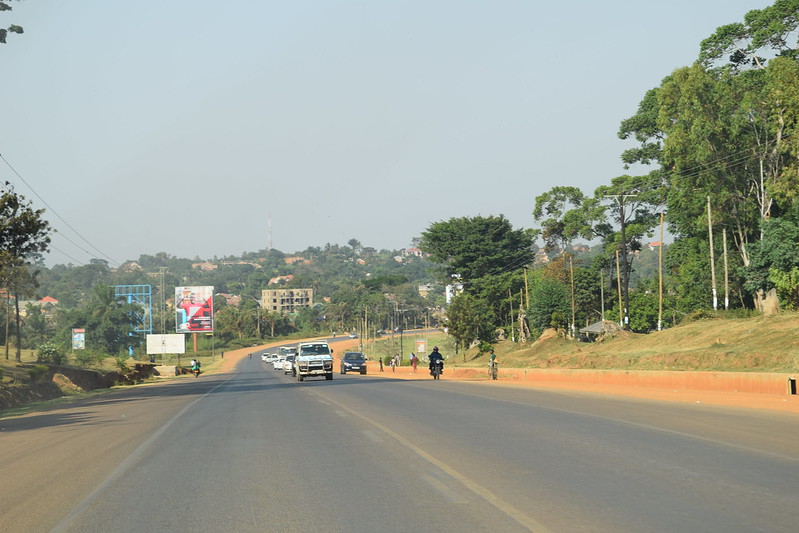
Through Uganda. Applications go through the Uganda immigration portal at visas.immigration.go.ug. You start a new application, accept the disclaimer, choose the East African Tourist Visa, complete the form and upload your documents, at which point a reference number is generated. Payment is made online, and a bank charge is added on top of the fee. Approval arrives by email as a letter. You print it and present it at Entebbe or a land border, where an officer takes your fingerprints and photograph and places the visa in your passport. Uganda no longer treats visas on arrival as a reliable fallback, so do not plan on buying one at the airport.
Through Rwanda. Can I get an East African tourist visa to visit Rwanda? Yes, in three ways. You can apply online on the Irembo portal at irembo.gov.rw, where the joint visa appears as visa type V11, East Africa Visa. You can get it at the port of entry on arrival. Or you can apply at a Rwandan embassy or high commission abroad. Rwanda lets online applicants pay either online or on arrival, and if you apply before travelling, Rwanda must still be your first entry point.
Through an embassy. Ugandan and Rwandan missions abroad can handle the joint visa too, which some travellers prefer when their passport needs a printed sticker before departure. Rwanda’s embassy in Washington, for example, takes postal applications with a traceable return envelope and will not accept cash or personal cheques. Opening hours and processing times vary by mission, so contact yours early.
Approval times reported by travellers range from a day or two to about a week, with longer waits around Christmas and the June to September peak. Applying with a few weeks in hand removes most of the stress.
Documents and Arrival Steps for the Tourist Visa
The tourist visa application asks for a short list of documents, and all of them must be in English. Uganda’s portal asks for a scan of your passport photo page, valid for at least six months, a recent passport style photograph with a plain background, a return ticket and a travel itinerary. Its page still lists a yellow fever certificate among the attachments too, so upload yours if you have one. Additional papers may be requested while the application is processed, and Rwanda says evidence of enough funds for your stay can be asked for online, at a mission or at the border.
Your itinerary does not need to be elaborate. A confirmation from your safari operator showing where you sleep each night, or a booking for your first lodge with the rest of the route, is normally enough. Some applications stall at the itinerary stage when no contact address in the country is given, so put down the name and phone number of your first hotel.
On arrival, have the printed approval letter, your passport and copies of the uploaded documents in your hand luggage. The officer at the desk takes fingerprints and a photo before stamping you in. Two habits help. Check that the stamp or sticker shows the full validity you paid for before you walk away. And keep the passport somewhere you can reach it easily for each later crossing, because every border between Uganda and Rwanda, Katuna and Cyanika included, will want to see it again.

Overstays, Lost Passports and Transit on an East Africa Safari Trip
A few situations sit outside the normal rules, and they are worth knowing before the safari trip rather than at a border post.
Overstaying. The joint visa cannot be extended, so the last day of the 90 is a hard stop. Rwanda’s migration directorate allows a grace period of five days after a visa expires to leave or renew without a penalty; after that, fines apply and an extension can be refused. Do not plan around that grace period. Uganda can extend its own single entry visas at immigration offices, but the joint visa is not extendable inside the country.
A lost or stolen passport. The visa lives in the passport, so losing one means a police report, an emergency travel document from your embassy, and a fresh visa for the rest of the trip. Keep photos of your passport, approval letter and permits on your phone and in an email to yourself.
Transit. Connecting through Nairobi or Kigali without leaving the airport usually needs no visa, though Kenya’s portal lists transit rules of its own, so check them if a layover is long or you change terminals. A connection through a country with yellow fever risk can also trigger a certificate check further along the route.
When a Single Country Visa Beats the Joint Visa for Your Trip
The joint visa is not automatically the right buy for every gorilla safari. It pays off when you will spend real time in at least two of the three countries and cross between them more than once. A trip that sits in Uganda for the whole holiday, or adds Rwanda for a single day, is often better served by a single country visa, and some passports pay nothing at all for Rwanda, as the section on eligibility explains.
| Visa | Covers | Stay | Entries |
|---|---|---|---|
| East Africa Tourist Visa | Uganda, Rwanda, Kenya | 90 days | Multiple, in zone |
| Uganda tourist visa | Uganda | Up to 90 days | Single |
| Rwanda tourist visa | Rwanda | 30 or 90 days | Single or multiple |
| Kenya eTA | Kenya | Up to 90 days | EAC returns |
| Tanzania visa | Tanzania | Up to 90 days | Single |
Tanzania deserves its own word, because so many itineraries pair Bwindi with the Serengeti. Tanzania issues its own eVisa through visa.immigration.go.tz, and US passport holders are sent to a one year multiple entry version. The order of your trip decides how many visas you buy. Finish Uganda and Rwanda first, then fly to Kilimanjaro or Arusha for a Serengeti safari, and you need the joint visa plus one Tanzanian visa. Go to Tanzania in the middle and then return to Uganda, and the joint visa is already gone, so the return leg costs another visa. Tanzania itself lets an ordinary visa holder come back after visiting another East African country, provided the visa is still valid, which helps on a Kenya and Tanzania loop.
Zanzibar adds one more step: visitors to the islands must buy the Zanzibar inbound travel insurance before arrival. Our Tanzania safari cost guide covers that leg in detail.
Yellow Fever and Health Rules for a Gorilla Trekking Safari in East Africa
Yellow fever is where the three countries have drifted apart, and many older guides, including earlier versions of this page, are now out of date. Uganda’s immigration service announced in October that a yellow fever certificate is no longer a condition of entry into Uganda, and the requirement has been taken off its eVisa portal. Health guidance still recommends the vaccine, and some official pages and airline systems were still catching up when it was announced, so carry the certificate if you have one.
Rwanda is the rule that bites on a three country trip. The Rwanda Biomedical Centre asks for a valid yellow fever certificate from travellers coming from countries with yellow fever risk, and Uganda is one of them, as is Kenya. Anyone without a certificate can be vaccinated at the border at their own cost, and a certificate less than ten days old is not yet valid, which can mean quarantine until it is.
Kenya also checks certificates for arrivals from risk countries, including passengers who have spent 12 hours or more in transit through one, and may ask for the card on an onward crossing from Uganda. Several countries further along your route home may ask for it simply because you have been in East Africa.
Put together, the vaccination is still worth having for a multi country trip, although Uganda no longer demands proof. It has to be given at least ten days before you travel to count, and one dose is valid for life on the international certificate. Malaria tablets, a basic first aid kit and the gear on our gorilla trekking packing list cover the rest of the health side. Treat all of this as general guidance: rules change with outbreaks, and your travel clinic and airline have the final word.
Residents, East African Citizens and the Interstate Pass
The East Africa Tourist Visa is built for foreign visitors on a safari tour. Two other groups travel on different rules.
Citizens of the East African Community move between member states without a tourist visa. Kenya exempts EAC citizens from the eTA for stays of up to 180 days, Rwanda grants them free entry on arrival for up to six months, and Uganda, Kenya and Rwanda accept national identity cards for their own citizens crossing between the three, with an Interstate Pass issued at the border for those without a passport.
Foreign residents form the second group. Expatriates holding a valid work or residence permit in one of the three countries have usually been able to cross between them without buying the joint visa, showing their permit at the border. Arrangements for residents change more often than the tourist rules, so confirm with immigration in your country of residence before you set off.
Planning a Gorilla Trekking Safari Route Around the Visa
Most people who search for this visa are really planning a route, and the visa works best when the route is fixed first. The classic pairing is Bwindi and Volcanoes National Park. Fly into Kigali, apply through Rwanda, then drive to the Uganda border for Bwindi’s southern sectors, a run covered in our guide to gorilla trekking in Uganda from Kigali. Our getting to Bwindi page sets out the road and air options from Entebbe and Kigali.
Another favourite is gorillas plus the Masai Mara. With Kenya’s joint visa option uncertain, the easiest version flies into Entebbe on the joint visa, treks in Bwindi, then flies to Nairobi on a Kenyan eTA for a Masai Mara safari. Ending in Kenya means you never need to return to Uganda, so the question of coming back in does not arise.
Gorilla permits are the other document to sort early, often before the visa, because they sell out months ahead in the busy season. Our guide to Uganda gorilla permits explains how they are bought, and plan your safari brings the timing, permits and route questions together in one place.
East Africa Tourist Visa Questions Travellers Ask
How much does the East Africa Tourist Visa cost, and is it cheaper than single visas?
The East Africa Tourist Visa costs US$100 per person on both the Uganda and Rwanda government pages, and it is not refundable. Uganda’s portal adds a bank charge. For comparison, Uganda’s single entry tourist visa is US$50, and Rwanda’s visa is US$50 for a single entry of 30 days or US$70 for a multiple entry of 90 days, with the fee waived for African Union, Commonwealth and Francophonie citizens. Uganda plus Rwanda on single visas costs the same as the joint visa, and the joint visa wins when you cross back and forth or add Kenya. Agencies that charge more than the official fee are adding their own service charge.
What do Kenya’s eTA and Tanzania’s visa cost if I need them alongside it?
Kenya’s standard eTA has been reported at US$30, with expedited processing for an extra fee; confirm the figure on etakenya.go.ke before paying, as we could not check it on the portal itself. Tanzania’s ordinary single entry visa is US$50, and US citizens pay US$100 for the one year multiple entry visa. Check both official portals before paying, since these fees change.
Which countries does the East Africa visa cover?
Uganda, Rwanda and Kenya only. Tanzania, Burundi, South Sudan and the DR Congo need their own visas, and entering any of them ends the joint visa.
How can I get an East Africa tourist visa?
Apply online through the immigration portal of the country you will enter first: visas.immigration.go.ug for Uganda or irembo.gov.rw for Rwanda. Upload your passport page, photo, return ticket and itinerary, pay, and print the approval letter. Rwanda also sells it on arrival, and both countries’ embassies can issue it.
Can I get an East African tourist visa to visit Rwanda?
Yes. Rwanda issues it online through Irembo as visa type V11, on arrival at Kigali airport and the land borders, and through its embassies, provided Rwanda is your first country of entry when you apply in advance.
Can US citizens travel to Africa without a visa?
Some African countries admit US passport holders for short tourist stays without a visa, but none of the main East African safari countries do. Uganda needs an eVisa or the joint visa, Kenya an eTA, Rwanda a visa that can be bought on arrival, and Tanzania its own visa. Check each country’s immigration site before you book.
Can a US citizen get a Kenya visa on arrival?
No. Kenya replaced its visas, including visas on arrival, with the eTA, which must be approved before you travel. Apply on the official portal at least two weeks ahead.
Can I use the East Africa Tourist Visa to enter Kenya right now?
It is uncertain. Kenya’s own East African Tourist option has been listed as temporarily unavailable, and travellers report being asked for a Kenyan eTA even with a joint visa from Uganda or Rwanda. Check the eTA portal before you go and plan on an eTA for Kenya unless it confirms otherwise.
Can I get the East Africa Tourist Visa on arrival?
In Rwanda, yes, when Rwanda is your first country of entry. Uganda expects you to apply online in advance and present the approval letter on arrival, so do not count on buying it at Entebbe.
Does the 90 days start when I apply or when I land?
It runs from the date the visa is issued. Applying four to six weeks before you fly keeps most of the 90 days available for the trip itself.
Can I visit Tanzania in the middle of my safari and come back on the same visa?
No. Leaving Uganda, Rwanda and Kenya ends the joint visa, so returning after Tanzania needs a new visa. Put Tanzania at the start or end of your gorilla safari to avoid paying twice.
Do I need a yellow fever certificate for a gorilla trekking safari?
Plan on carrying one. Uganda’s immigration service has said a yellow fever certificate is no longer a condition of entry, but Rwanda asks for one from travellers arriving from yellow fever risk countries, and Uganda is one of them. Kenya checks arrivals from risk countries too.
Can my children travel on my East Africa Tourist Visa?
No. Every traveller, children included, needs a separate application and visa. Gorilla trekking itself is limited to those aged 15 and over, so younger children on a family safari usually stay at the lodge with a sitter or a parent during the trek.