An Okavango Delta safari is a wildlife trip into Botswana’s great inland delta, explored by mokoro canoe, motorboat, open vehicle and on foot from small camps that most visitors reach by light aircraft from Maun. Most travellers book three to six nights in the Delta through a licensed operator, often linked with Moremi and Chobe. The Delta is a UNESCO World Heritage Site in northwest Botswana, where Angolan floodwater spreads across the Kalahari each dry season.

Okavango Delta Safari Camps: Water, Land and Mixed
Choosing a camp shapes an Okavango Delta safari more than any other decision, because each camp sits on one kind of ground and that ground decides what you can do. Get this right and the rest falls into place.
Water camps sit on permanent channels and lagoons deep inside the Delta. Activities are mokoro trips, motorboat outings and walks on islands, and there are no game drives at all because there is nowhere to drive. These camps suit birders, photographers who want reflections and papyrus, and anyone who simply wants quiet. Big cats are seen less often from a canoe than from a vehicle.
Land camps sit on the large dry islands and the edges of the Delta, including Moremi and the northern concessions. Game drives are the core activity here, often with night drives and walks, and this is where most lion, leopard and wild dog sightings happen.
Mixed camps, sometimes called water and land camps, offer both. Many only run mokoro trips while the flood is in, roughly June to October, and switch to drives when the water drops. Ask any mixed camp what it can offer in your month before you book.
The pattern that guides recommend again and again is two or three nights at a water camp followed by three nights at a land camp, linked by a short flight. Trip reports from people who booked only a water camp often mention that they loved the calm but felt they missed the predators. People who booked only land camps sometimes say the opposite. A split stay answers both.
Camps are small, commonly between eight and twenty guests, and most include meals, activities and laundry in the nightly rate. Families should check age limits early, since many Delta camps set a minimum age of six or more for mokoro and walking activities. Our family safari in Africa guide covers how camps handle children, and our African honeymoon safaris page covers the camps couples tend to pick.
Where to Stay on an Okavango Delta Safari: Camps and Lodges by Area
Once you know whether you want water, land or both, the next step on an Okavango Delta safari is picking named camps. The rows below group well known properties by the kind of country they sit in. This is not a ranking, and the site has no commercial tie to any of them. Concession leases are retendered from time to time and camps change hands or close for rebuilding, so check the current operator and activities with whoever plans your trip.
Rooms come in four broad styles. Permanent lodges have solid walls and often plunge pools. Tented camps use canvas on raised decks with en suite bathrooms. Semi tented camps mix the two. Mobile camps move between public campsites and are packed up when the group leaves. Canvas is not a step down. Plenty of travellers say hearing hippos and lions through a tent wall at night was the part of the trip they talk about most, so pay extra for solid walls only if you really want them.
Three practical points help when comparing camps. Ask how many vehicles and boats run on the whole concession, not just from your camp. Check what the camp can do in your exact month, since a water camp in a weak flood year may only offer boating. And look at the transfer pattern: two camps a short flight apart lose less of your day than two camps at opposite ends of the Delta. Our Botswana safari packages guide shows how operators string these camps into set itineraries, and Botswana budget safaris covers the cheaper mobile and Maun based options.
Mokoro Safari Trips Through the Delta Channels
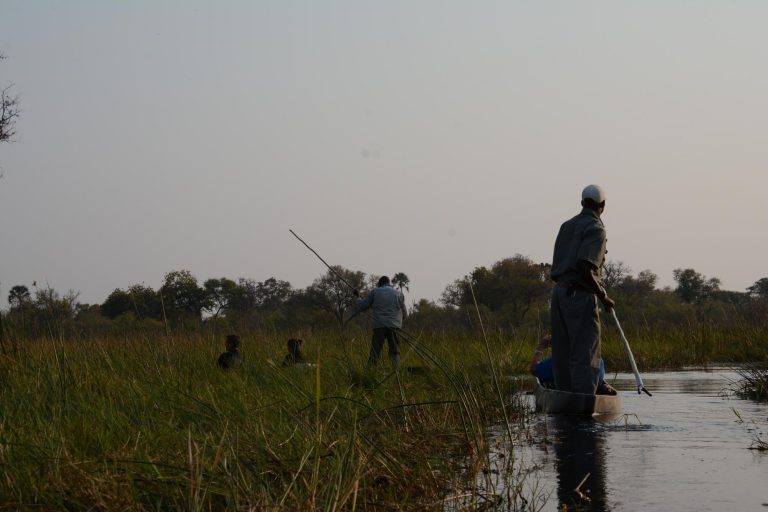
A mokoro safari is the signature Okavango experience. The mokoro is a narrow dugout canoe, traditionally carved from a large tree such as a sausage tree or ebony, and today often made from fibreglass to protect the trees. A poler stands at the back and pushes the canoe along with a long wooden pole, while one or two guests sit low in front, close to the water line.
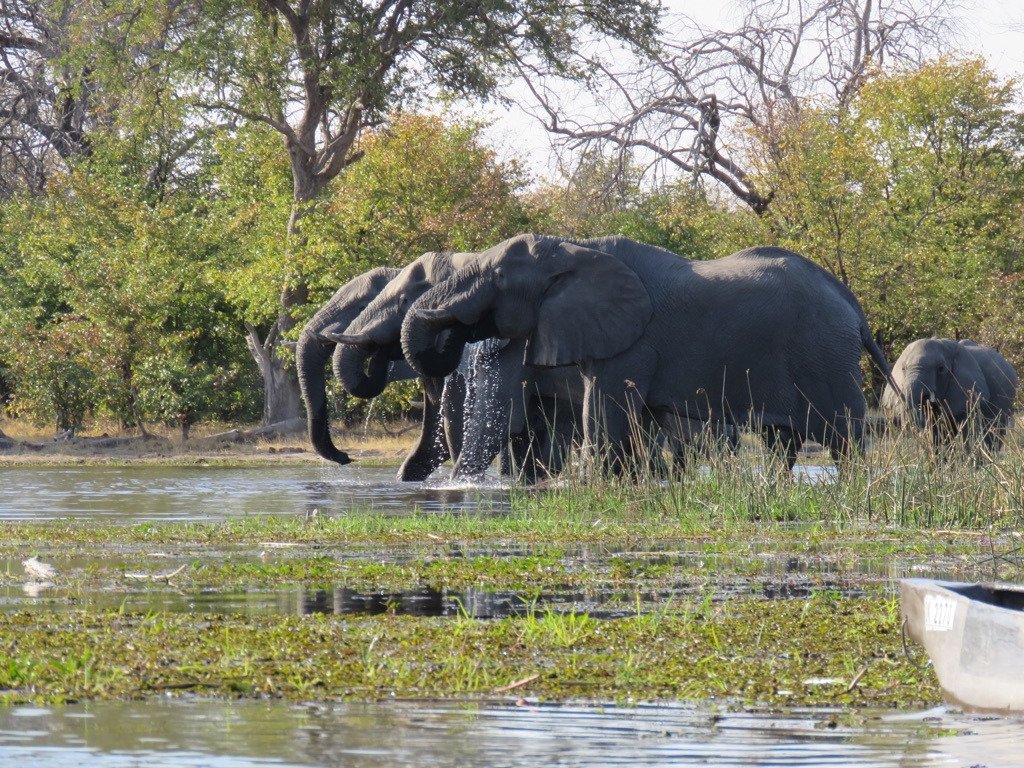
Without an engine, the canoe slides past reed beds in near silence. That is the point. You see painted reed frogs clinging to papyrus stems, malachite kingfishers, African jacanas walking across lily pads, and red lechwe splashing through the shallows. Elephants sometimes cross a channel ahead of you; the poler will hold back and wait.
Most outings last two to three hours and run in the early morning or late afternoon, often with a stop on an island for a short walk. Several travellers write that the first hour felt slow and then the stillness won them over. Others admit that, on a quiet morning, they saw little beyond birds and frogs. Both are honest. A mokoro trip is about the water itself, so book game drives as well if big mammals matter to you.
Safety is taken seriously. Polers know where hippos rest and keep to shallow channels, since hippos are the main danger on the water. Sit still, keep hands inside the canoe and follow the poler’s instructions, especially when an elephant or hippo is close.
Many polers come from the Bayei and Hambukushu communities around the Delta, and in places such as the Boro area and Seronga, community trusts run mokoro trips that put income straight into local villages. If you would like to try poling, ask in advance; most trips assume you will sit.
The Okavango Flood Cycle and the Best Time for a Delta Safari
The Okavango flood runs on its own clock. The water falls as rain in the Angolan highlands around January and February, travels down the Cubango and Cuito rivers, enters Botswana at Mohembo and then takes about four months to creep across the Delta’s flat fan of sand. It reaches Maun around July and August. So the Delta is at its fullest while the rest of Botswana is at its driest.
That timing is the reason UNESCO listed the Delta. The Okavango River runs about 1,500 km from Angola and never reaches the sea; it fans out and drains into the Kalahari sands, making this the largest inland delta in Africa. UNESCO describes roughly 600,000 hectares of permanent swamp and up to 1.2 million hectares of seasonally flooded grassland, and the animals and plants have timed their breeding to a flood that arrives in the dry winter. For a safari, it means water and dry country sit side by side in the same week.
| Months | Delta water | Game viewing | Best for |
|---|---|---|---|
| Dec to Mar | Lowest | Spread out | Birds, babies |
| Apr to May | Rising | Good | Value |
| Jun to Aug | Highest | Very good | Mokoro |
| Sep to Oct | Falling | Best | Predators |
| Nov | Low | Good | Value, births |
June to August is the high water window. Floodplains fill, channels run deep and mokoro trips work at nearly every water and mixed camp. Days are dry and around 25C, while mornings in open vehicles can feel close to freezing. These are the busiest months, so book well ahead.
September and October bring the best concentrations of game as pans dry up across northern Botswana and animals move to the Delta’s edges. October is hot, often above 38C in the afternoon. Plan a long midday rest.
The shoulder months feel very different from each other. In April, days still reach the high twenties and nights sit in the mid to high teens, while by late May the evenings drop to around 10C and the first floodwater is moving through the upper Delta. November usually brings the first storms, and December averages around ten afternoons of rain, often heavy but short.
The green season, December to March, brings afternoon storms, newborn antelope, migrant birds and the lowest rates. Game is more scattered and some camps on the southern fringes cannot run mokoro trips until the water returns. April, May and November are shoulder months that many experienced visitors rate highly.
Flood size changes from year to year with Angolan rainfall. After a weak rainy season some edge camps have had to stop mokoro trips early, so if water activities matter, choose a camp on permanent water. Our best time to visit Botswana guide covers the whole country month by month.

Moremi Game Reserve Safari: Game Drives on Public Land
Moremi Game Reserve protects much of the eastern Okavango, including Chief’s Island, the largest island in the Delta and once the hunting ground of the Batawana chiefs. It was set aside in 1963 at the urging of the Batawana people themselves, which makes it one of the first reserves in Africa created by a local community. Later extensions brought its area to almost 5,000 square kilometres. UNESCO notes that about 40 percent of the World Heritage property lies inside Moremi; the rest is made up of 18 wildlife management areas and controlled hunting areas run by community trusts or private concession holders.
A Moremi safari mixes permanent water, floodplains and mopane woodland, so it carries both water birds and big game. Xakanaxa and Third Bridge are known for lion and leopard, and the area around South Gate and Khwai is good for elephants and wild dogs. Game viewing peaks from June to October.
Moremi is public land, and that changes the rules. Vehicles must stay on the roads, night drives are not allowed inside the reserve, guided walking is not normally permitted, and you may share a sighting with other vehicles at busy spots in peak season. In return, Moremi is the one part of the Delta reachable by road, with public campsites run by private concessionaires that make self drive safaris and mobile camping trips possible. Those campsites book out months ahead for the dry season.
Next to Moremi, the Khwai community area offers similar wildlife with looser rules, including night drives, and many mid range mobile camps base themselves there.
Private Concession Safaris: Night Drives, Tracking and Fewer Vehicles
Outside Moremi, most of the Delta is divided into large private concessions, each leased by the government to one or two safari operators. Only guests staying at that concession’s camps may drive in it. For a concession safari, that means far fewer vehicles at a sighting, often just your own.
Private land also allows what national parks forbid. Guides can drive off road to follow a pack of wild dogs or a leopard, run night drives with a spotlight to look for genets, servals, aardwolves and the occasional aardvark, and lead walks from camp. Botswana’s policy of high value, low volume tourism keeps bed numbers low, which is why these camps are both quiet and expensive.
Concessions differ. Those in the north, such as Vumbura, Duba and the Linyanti area beyond the Delta, are known for predators and big buffalo herds. Areas in the southwest around the Xudum and Abu concessions mix water and land. Some concessions allow only a single company, while others are shared, so ask how many camps use the same roads.
If you are comparing camps of the same price, the concession usually matters more than the brand on the door. Our luxury African safari tours guide explains what the top tier really adds.
Fly In Safari Camps and Light Aircraft Transfers
A fly in safari is how most people see the Okavango. Small aircraft, usually single engine Cessnas, leave Maun for bush airstrips across the Delta, and flights between camps take between twenty and forty minutes. In much of the Delta there is no road, so the plane is not a luxury; it is the only way in.
Flying low over the floodplains is also a safari in itself. From a few hundred metres up you see elephant herds wading between islands, hippo trails cut through the reeds and the shape of the channels, which makes sense of everything you see on the ground later.
The soft bag rule catches more people out than any other. Forum threads are full of travellers repacking a wheeled case on the floor of Maun airport. Most camps launder clothes daily, so pack light and plan to rewear. Our Botswana safari cost guide explains how flight sectors add to a trip’s price, and why three nights per camp gives better value than two. Our Okavango Delta safari cost guide prices the Delta by camp, season and trip style.
Walking Safaris and Island Hikes in the Okavango
A walking safari in the Okavango usually starts from a mokoro. The poler beaches the canoe on an island and leads a walk of one to three hours through palm groves, termite mounds and grassland. In concessions, walks may also start directly from camp with an armed professional guide.
On foot, the focus moves to small things: tracks in the sand, dung beetles, termite architecture, medicinal plants and birds. Larger animals are seen too, from giraffe and zebra to elephant and buffalo, but always at a respectful distance. Walks start early, before the heat builds, and guides brief you on how to behave if you meet an animal: stay together, never run and follow instructions.
Specialist walking safari trips exist for people who want more, with several days moving between simple fly camps on foot. These suit fit travellers who are happy to trade comfort for time on the ground. Wear closed shoes in muted colours, and expect wet feet when crossing shallow channels in flood season.
Motorboat, Fishing, Horseback and Helicopter Safari Trips
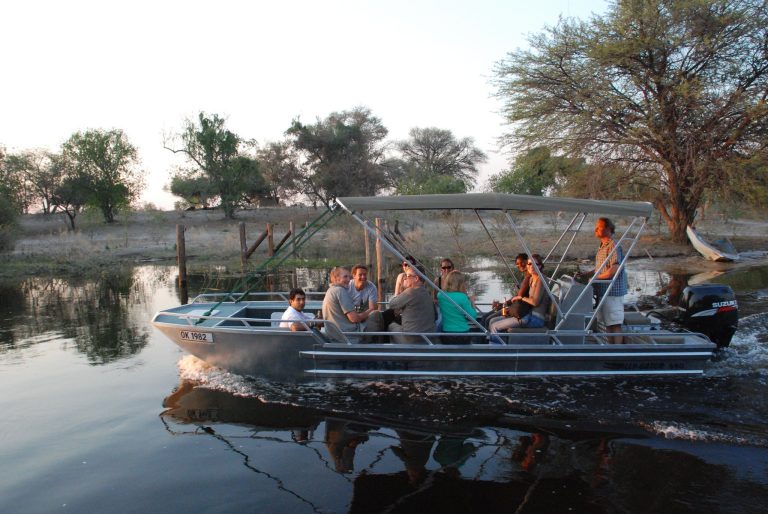
Motorboat safaris run from camps on deep permanent water, especially in the Panhandle and the inner Delta, where channels are too deep for poling. Boats cover far more ground than a mokoro, reach heronries and big lagoons, and are used to move guests between some camps. The engine does disturb some animals, so a boat trip is better for birds, hippos and crocodiles than for shy antelope such as the sitatunga.
Sport Fishing is offered at a handful of water camps on a catch and release basis. Tigerfish and several bream species (local tilapia) are the main targets, with the best tigerfish action usually from about September to December, when falling water pushes fish into the main channels. Not every camp fishes, and camps arrange any fishing permit you need.
Horseback safaris run in the seasonal floodplains of the western and southwestern Delta, using specialist riding camps. Riding lets you move alongside zebra, giraffe, wildebeest and lechwe in country vehicles cannot reach. These trips are for competent riders only, able to hold a canter and handle a fast exit if a predator or elephant appears.
Helicopter and scenic flights from Maun or from camps give a clear view of the channels and islands. Doors off helicopter flights are popular with photographers. Many guests feel the shared transfer flights give them most of that view anyway, so a dedicated flight is worth it mainly for photography.
A note on elephants. Elephant back safaris once ran in the Abu area but have ended over animal welfare concerns. A few places offer educational time with orphaned or rescued elephants instead; ask how the animals are kept before you book any elephant activity.
Okavango Delta Safari Trip Styles: Mobile, Specialist, Family and Accessible Tours
Most operators sell the Delta as set Okavango safari tours of three to fourteen nights, and the trip style changes the feel as much as the camp does. Short trips of three or four nights usually mean one or two camps. Six to nine nights is the common length for a Delta, Moremi and Chobe circuit. Longer itineraries add the Kalahari, the Makgadikgadi Pans, Victoria Falls or even Cape Town.
Fly in lodge safaris are the classic format, moving between two or three camps by light aircraft. Mobile safaris travel overland with a guide, cook and camp crew, pitching tents at public campsites in Moremi, Khwai, Savuti and Chobe; group departures are the lowest cost way to see the region, and private mobile trips let you set your own pace. Some mobile and walking operators also add sleep outs, a night on an open platform or star bed under the sky, usually as one night within a longer stay.
Specialist trips cover narrower interests. Photographic safaris, often hosted by a professional photographer, limit the number of guests per vehicle so everyone gets a clear angle. Birding safaris run in the green season when migrants arrive. Bush skills courses teach tracking, plant use and guiding basics over a week, and several riding and walking itineraries are built entirely around those activities.
Families have more choice than they did. A number of camps and mobile operators run family itineraries with private vehicles, family tents and activities for children, although minimum ages for mokoro trips and walks still apply. Honeymooners tend to pick water camps for the quiet and pair them with a land camp for the game. Travellers with limited mobility are not shut out either: a few specialist operators run wheelchair accessible mobile and lodge safaris with adapted vehicles and bathrooms, and the questions to ask are much the same as those in our guide to gorilla trekking for travellers with special needs.
Whichever style you pick, look at what is included. Flights between camps, park and concession fees, drinks and laundry are bundled in some quotes and listed separately in others, and that difference explains many of the price gaps between itineraries that look the same on paper.
Okavango Wildlife and Birding Safari Sightings
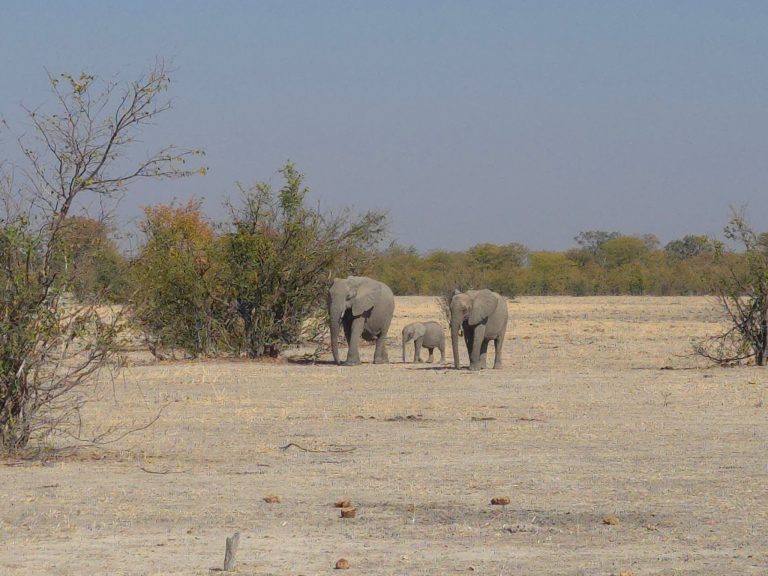
An Okavango wildlife safari can turn up most of southern Africa’s big mammals. Elephants and buffalo are common, often in large herds in the dry season. Lions, leopards and spotted hyenas are seen regularly in the predator areas, and cheetahs appear on open floodplains. The Delta and the Linyanti region hold one of Africa’s most important populations of the endangered African wild dog, with packs often denning from about June to August. Nothing is guaranteed on any drive.
The wetland adds species you will not find on a dry savanna safari. Red lechwe, an antelope built for wading, is the most abundant large mammal in the Delta. Sitatunga, shy swamp antelope with splayed hooves, live deep in the papyrus and are a prize sighting. Hippos and Nile crocodiles fill the channels. Rhinos, reintroduced to parts of the Delta, are managed with care and their locations are kept quiet.
The wider species list is long. UNESCO records about 130 mammal species, 482 bird species, 64 reptiles, 89 fish and more than 1,000 plants in the World Heritage property, and singles out cheetah, white and black rhino, African wild dog and lion as the endangered large mammals it protects. Away from the headline animals, game drives regularly turn up giraffe, plains zebra, blue wildebeest, greater kudu, tsessebe, warthog, chacma baboon and, in the drier woodland on the edges, sable antelope and brown hyena. Botswana carries the largest elephant population on earth, which UNESCO puts at around 130,000, and the Delta is the core of its range.
For a birding safari, the Delta lists more than 400 species, and close to 500 within the World Heritage boundary, including 24 globally threatened birds such as several vultures and the southern ground hornbill. Look for African fish eagle, Pel’s fishing owl, slaty egret, wattled crane, African skimmer and coppery tailed coucal. Birding peaks from November to March, when migrants arrive and many residents breed, though the dry season is excellent for water birds concentrated on the floodplains.
Okavango Delta Safari Packing for Bush Flights
Packing for an Okavango safari is a balance between cold mornings, hot afternoons and that strict luggage limit. Neutral colours such as khaki, olive and tan work best; avoid bright white, and leave dark blue and black at home since they attract tsetse flies in some areas.
Layers matter most. In June and July, early drives in open vehicles can dip to around 5C, and travellers regularly mention gloves and a warm hat as the items they wished they had packed. By noon a T shirt is enough. Pack a fleece or light down jacket, a windproof outer layer, two or three quick dry shirts with long sleeves for dusk mosquitoes, and comfortable trousers. In the green season add a light rain jacket.
Bring a wide brimmed hat, sunglasses, high factor sunscreen, lip balm and insect repellent. Good binoculars, 8×42 or 10×42, make a real difference on mokoro and boat trips. A dry bag or waterproof pouch protects a phone or camera on the water. Pack swimwear for camp pools and walking shoes you do not mind getting wet.
For full lists and gear advice, see our African safari packing list and the safari gear and clothing guides. If Bwindi is part of the trip, our gorilla trekking packing list shows what to add for the forest within the same soft bag.
Combining an Okavango Safari with Chobe, Victoria Falls and Bwindi
The Delta rarely stands alone. The most common Botswana circuit adds Chobe National Park, where the riverfront near Kasane holds huge elephant herds in the dry season and boat cruises bring you level with them as they drink. Savuti, in the remote heart of Chobe, adds lions and more elephants. A light aircraft hop links the Delta to Kasane.
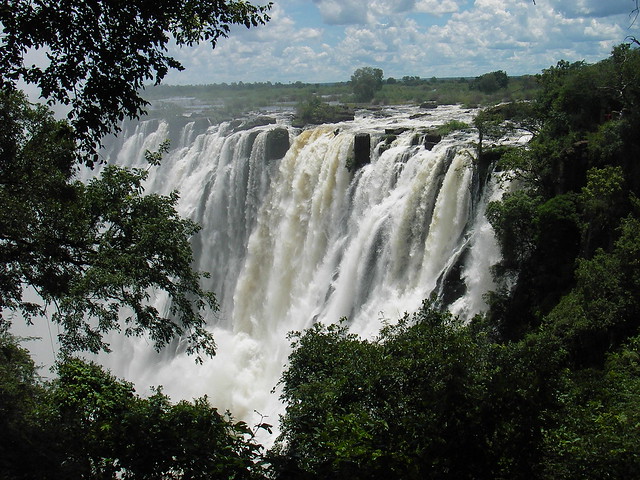
Victoria Falls is only about 80 km by road from Kasane, so many trips end there with a night or two on the Zambian or Zimbabwean side. Our Victoria Falls Zambia safari guide covers the Livingstone side, and our Zimbabwe safari guide covers Hwange and Mana Pools. The Makgadikgadi Pans add a desert contrast with meerkats and a green season zebra migration.
Botswana also pairs well with Uganda gorilla trekking in Bwindi. From Maun, Kasane or Victoria Falls, flights connect through Johannesburg or Nairobi to Entebbe, and a light aircraft or a long scenic drive takes you on to Bwindi Impenetrable National Park. Botswana’s dry season from June to September overlaps Uganda’s long dry season, when forest trails are firmest. Botswana’s shoulder months of April, May and November match Uganda’s low season gorilla permit months.
Plan the gorilla permit first, since dates sell out in the busy months, then fit the Delta around it. Our guides to gorilla trekking in Uganda, booking Uganda gorilla permits, the best time for gorilla trekking and Bwindi lodges cover that side of the trip. The gorilla habituation experience and Rwanda gorilla trekking are other ways to see gorillas on the same trip north.
Getting to the Okavango Delta via Maun
Maun is the gateway to the Okavango Delta and Moremi. Maun International Airport has regular flights from Johannesburg, plus links from Cape Town, Gaborone and Kasane. Most fly in safaris start at Maun’s light aircraft terminal on the same day you land, so leave a few hours between your arrival and the first bush flight.
By road, Maun is about 600 km from Kasane via Nata, and tarred all the way. Moremi’s South Gate is roughly 100 km from Maun, the last stretch on sand, and Khwai lies beyond it. Self drivers need a properly equipped 4×4, recovery gear and confirmed campsite bookings, and should avoid deep water crossings in high flood. Kasane is the better starting point if you are coming from Victoria Falls, with Chobe on the doorstep and short flights on to the Delta. Our Botswana and Victoria Falls itinerary guide sets out routes from 7 to 14 nights.
If you only have a day or two, mokoro day trips and overnight camping trips run from Maun and the nearby Boro area. They give a taste of the water at a fraction of camp prices, though without the wildlife density of the inner Delta. Our getting to Bwindi guide picks up the route from Entebbe if you continue to Uganda, and safari travel insurance explains what cover remote fly in camps require.
Okavango Delta Safari: Frequently Asked Questions
How much does an Okavango Delta safari cost per night?
Typical published rates per person sharing, all inclusive at camps, run roughly as follows. Shoulder months fall between the two columns.
| Style (US$) | Green season | Peak season |
|---|---|---|
| Group camping | $250 to $350 | $300 to $400 |
| Private mobile | $400 to $600 | $550 to $800 |
| Classic camp | $500 to $800 | $850 to $1,200 |
| Premier camp | $800 to $1,000 | $1,250 to $1,700 |
| Luxury camp | $1,000 to $1,850 | $1,700 to $3,000+ |
A seven or eight night fly in safari in the dry season using premier camps usually lands between about US$9,000 and US$13,000 per person, light aircraft included and international flights excluded. Green season stays at the same camps can cost a third to a half less.
What extra costs should I budget for, such as park fees, flights and tips?
Moremi charges a daily entry fee set by the Department of Wildlife and National Parks, whose fee schedule is under review, so no figure is given here. Camp and mobile safari rates normally include park and concession fees, so confirm the current rate with your operator before you travel. A shared light aircraft seat from Maun to a Delta airstrip usually costs about US$185 to US$400 one way. Common tipping guidance is about US$10 to US$20 per guest per day for your guide, US$10 to US$15 per guest per day for the staff box, and US$5 to US$10 per outing for a mokoro poler. Helicopter flights from Maun cost several hundred US dollars per person for a short flight.
How many nights do I need on an Okavango Delta safari?
Plan on at least five or six nights in the Delta: three at a water camp and three at a land camp. Add three or four nights for Chobe and one or two at Victoria Falls if you want a full northern Botswana circuit. Short stays of one or two nights per camp lose too much time to flights.
Should I choose a water camp or a land camp?
Both, if you can. A water camp gives mokoro trips, birding and quiet; a land camp gives game drives and the best chance of predators. If you can only afford one, a mixed camp that runs both activities in your travel month is the best compromise.
Is a mokoro safari safe?
Yes, with licensed polers who know the channels. Hippos are the main risk, which is why polers keep to shallow water and avoid known hippo pools. Sit still, keep your hands in the canoe, and follow instructions near large animals. Non swimmers can join, since the water is usually shallow, but tell your guide.
Can I visit the Okavango Delta on a day trip from Maun?
Yes. Mokoro day trips and scenic flights run from Maun, and overnight mokoro camping trips go into the southern Delta near Boro. They show you the channels and birdlife, but big game is far thinner there than in the inner Delta or Moremi, so treat them as a taster rather than a full safari.
Can children go on an Okavango Delta safari?
Yes, but many camps set a minimum age, commonly six or above, and some apply higher limits for mokoro trips and walks. Families with young children often need a private vehicle. Mobile safaris and some Moremi and Khwai lodges are more flexible.
Do I need malaria precautions for the Okavango Delta?
Yes. The Delta, Moremi and Chobe are malaria areas, with the highest risk in the rainy months from about November to April. Speak to a travel clinic about prophylaxis, and use repellent and long sleeves at dusk in every season. Bwindi is also a malaria area.
What do gorilla permits cost if I add Bwindi to an Okavango safari?
A Uganda gorilla trekking permit costs US$800 for foreign non residents, US$700 for foreign residents and UGX 300,000 for East African citizens. In the low season months of April, May and November the rate is US$600 for non residents and US$500 for foreign residents, and those permits cannot be rescheduled. Permits are paid in full at booking. The gorilla habituation experience costs US$1,500, with an announced rise to US$1,800 for foreign non residents. A Rwanda permit costs US$1,500.
Is the Okavango Delta better than Chobe for a first safari?
They do different jobs. Chobe gives easy access, big elephant herds and lower costs, especially as an add on from Victoria Falls. The Delta gives water activities, private concessions and far fewer vehicles. Most first timers who can stretch the budget combine the two.
What wildlife will I see on an Okavango Delta safari?
Expect elephants, buffalo, hippos, crocodiles, red lechwe, giraffe, zebra and impala on most trips, with lion, leopard, spotted hyena and wild dog seen regularly in the predator areas. Sitatunga, cheetah, sable and rhino are harder. Birders can expect well over 100 species in a week. Sightings depend on the camp, the month and luck, and none is guaranteed.
Do I need any special equipment for an Okavango safari?
No technical gear. The things that matter are a soft duffel within the bush flight limit, binoculars, warm layers for winter mornings, a hat, sunscreen, repellent and a dry bag for the boat. Most camps do laundry daily, so pack less than you think.
Why is the Okavango Delta a World Heritage Site?
UNESCO inscribed it in 2014 because it is one of the very few large inland deltas that never reach the sea, its wetland is almost intact, and its plants and animals have timed their lives to a flood that arrives in the dry season. It was the 1,000th site added to the World Heritage List.
Can wheelchair users go on an Okavango Delta safari?
Yes, with planning. A few specialist operators run accessible mobile and lodge trips with adapted vehicles, ramps and roll in showers. Light aircraft boarding and mokoro trips are the hardest parts, so discuss transfers and each activity in detail before booking.