What to wear for gorilla trekking is a long-sleeved top, long quick-dry trousers, tall socks with the cuffs tucked in, waterproof ankle-high boots, gaiters, gardening gloves and a brimmed hat, all in neutral olive, khaki, brown or grey. Layers matter because a gorilla trekking safari starts cold and ends hot. Bwindi Impenetrable National Park in Uganda and Volcanoes National Park in Rwanda are wet montane rainforests where nettles, thorns and biting ants reach any skin you leave uncovered.
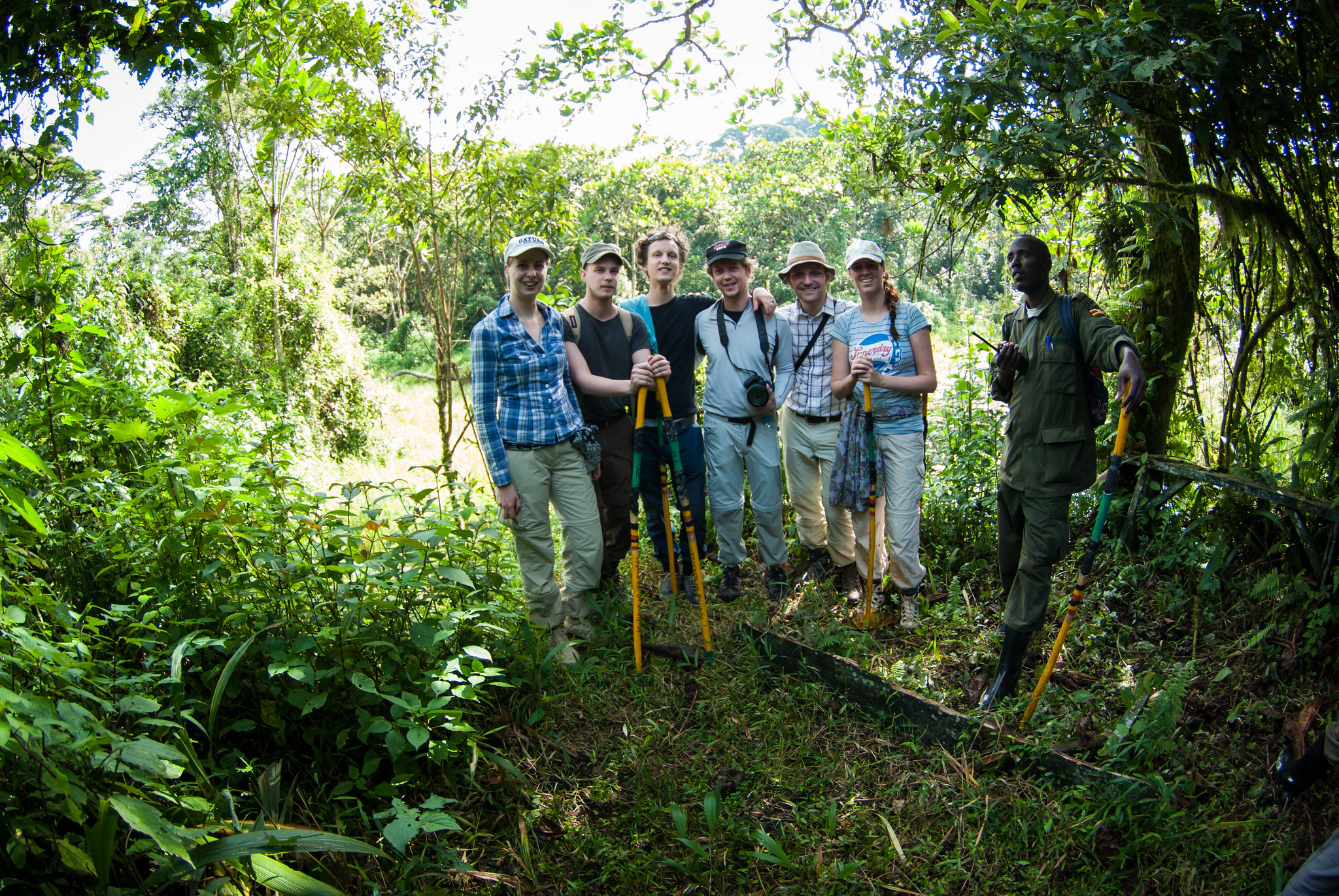
Gorilla Trekking Clothing and What the Forest Asks For
Your gorilla trekking outfit is protective equipment. Nobody is judging the cut of your trousers in Buhoma at seven in the morning, and the forest will not reward a good-looking choice over a functional one.
Three forces drive every decision below. The first is water, because Bwindi takes somewhere near 2,400mm of rain a year and the undergrowth stays wet even on days when nothing falls. The second is vegetation, since you are pushing through stinging nettles and thorny vines rather than walking a groomed trail. The third is temperature swing. You stand shivering at the 7am briefing around 11°C and you are sweating heavily by mid-morning as the air climbs toward 23°C and you climb with it.
Everything else follows from those three. Cover your skin, choose fabrics that dry, and build the outfit so pieces come off without stopping.
Long Sleeved Shirts and Base Layers for a Gorilla Trekking Safari
Long sleeves on a gorilla trekking safari are about your forearms, not the sun. You will brush nettles repeatedly, and the sting lingers.
A synthetic or merino long-sleeved top beats cotton for one plain reason. Cotton soaks, holds the water against you, and then chills you every time you stop moving in a forest where you stop often while trackers work out where the family went. Synthetics shed sweat and dry while you walk. Merino long-sleeved hiking tops handle odour better across consecutive trekking days, while quick-dry synthetic hiking shirts cost less and dry faster.
Loose beats tight. Anything close-fitting drags when it is wet and restricts you on high steps.
Bring a spare top for the drive back. You will be filthy, and the vehicle ride out of Bwindi is not short.
Trousers for Gorilla Trekking Tours in Bwindi and Volcanoes
Long trousers, always. Full stop, in every sector and every month.
Quick-dry synthetic trekking trousers are the right tool for gorilla trekking tours. They weigh little, move with you on steep ground, and dry on your body while you walk. Zip-off versions are fine as long as you keep the legs attached. Ripstop quick-dry hiking trousers in a water-resistant weave are the sensible middle ground, and women should look for a women’s cut in a longer inseam so the cuff still tucks into a sock.
Now the jeans question, because it comes up constantly and gets answered badly. Jeans are not prohibited and nobody will refuse you at the briefing for wearing them. They are simply the wrong fabric. Wet denim turns heavy and cold, takes hours to dry, and rubs the inside of your thighs raw on a long climb. In a rainforest, something is usually wet. If jeans are genuinely all you own, trek in them rather than panic-buying the wrong boots and trousers in a hurry, and accept that you will be uncomfortable from the first stream crossing.
Shorts are a different matter and the answer is no. Nettles, thorns, mud and safari ants all operate below the knee, and bare legs give them a clear run.
Waterproof overtrousers earn their place from March to May and again from September to November. In June and July they mostly ride in the daypack unused, which is still a reasonable trade for the two hours you might need them.
Rain Jackets and Shell Layers for a Gorilla Trekking Trip
There is no month in Bwindi where you leave the rain layer behind. October averages roughly 340mm of rain across twenty rainy days. July, the driest month of the year, still brings around 77mm. Rain arrives without much warning in either.
Pick a lightweight hooded jacket that stuffs into its own pocket over a heavy mountaineering shell. You are working uphill in humid air, so a jacket that traps your own sweat defeats the purpose, and a bulky one stays in the bag when you actually need it out. Breathability counts as much as the waterproof rating here, which is why pit zips matter more than weight. The full case, including hydrostatic head ratings and which models suit these conditions, sits in the guide to rain jackets for gorilla trekking.
Ponchos have a following, and porters and rangers wear them. They cover your daypack, they cost little, and they go on fast. The trouble is dense vegetation, where a poncho snags on everything and blows across your face on exposed climbs. Carry one over the pack if you like the idea. Do not carry it instead of a jacket.
Skip the umbrella. Both hands are working on a gorilla trekking trip.
Fleece and Mid Layers for Cold Briefings on a Gorilla Trekking Safari
A fleece surprises people. Africa, equator, rainforest, and yet the briefing at Kinigi or Ruhija can be genuinely cold.
Bwindi sits between about 1,160 and 2,607 metres. Volcanoes National Park climbs from roughly 2,400 to 4,507 metres, so the Rwandan side starts higher and colder still. Mornings in the upper sectors feel closer to a cool mountain morning in Europe than to anything most visitors associate with a gorilla trekking safari in Africa. Night temperatures near the park sit around 11°C to 14°C, and some lodges hand out hot water bottles for exactly that reason.
Take a light fleece or a thin insulated layer, wear it to the briefing, then pack it. Within an hour of walking you will want it off. Within an hour of finishing you will want it back. A packable lightweight fleece is the right weight, since anything heavier becomes dead cargo for six hours.
Gloves for Gorilla Trekking Through Nettles and Vines
Gardening gloves are the item most first-timers leave off the list and most returning trekkers put at the top of it.
The reasoning is simple once you have been on the ground. Steep clay gives way under your boot, your hand goes out for whatever is nearest, and what is nearest is often nettles or a thorned vine. Cotton gloves with rubber-dotted palms, or light leather work gloves, let you grab without flinching. That hesitation is what actually causes falls.
Look for padding across the palm and fingers rather than thin decorative gardening gloves. You are gripping wet vines under load, not weeding a border.
Take them off for your hour with the gorillas so you can work a camera properly, then put them back on for the walk out, which is often the harder direction. What to look for, and why technical hiking gloves are the wrong tool here, sits in the guide to gloves for gorilla trekking.
Hats and Head Cover for Gorilla Trekking Adventures
A brimmed hat does two jobs on gorilla trekking adventures. It keeps equatorial sun off your neck when the trail breaks out of the canopy, and it stops the constant drip from wet leaves running down your collar.
A wide brim beats a baseball cap, which leaves your neck exposed at altitude where the sun is stronger than the temperature suggests. Something crushable that survives being stuffed in a pack is more useful than a stiff-brimmed hat that gets bent out of shape on day one, so a packable wide-brimmed safari hat is the shape to look for.
Craft markets in Kampala, Kisoro and Musanze sell perfectly good hats if you would rather not carry one out from home.
Clothing Colours to Wear and Avoid on a Gorilla Trekking Safari
Neutral, muted, earthy. Olive, khaki, brown, grey, muted green. These read quietly in forest light and hide the red clay that will be all over you by mid-morning.
Bright colours and white are worth avoiding on a gorilla trekking safari, less because gorillas mind and more because white shows every mark and looks jarring in dim green light. Dark blue and black are worth avoiding for a firmer reason, since both attract tsetse flies on the drives in and out of the park.
Camouflage is the one that gets travellers into real trouble. Military-pattern clothing is not permitted for civilians in Uganda, in any colour, and the restriction reaches beyond shirts to hats, belts, backpacks, shoes and socks. Khaki is fine. Camo print is not. Leave it at home rather than negotiate at a checkpoint.
What Not to Wear for Gorilla Trekking in Uganda and Rwanda
Sandals, white trainers, tennis shoes and anything with a smooth sole. Cotton everything. Shorts. Camouflage of any colour. Heavy denim if you have an alternative.
Skip the brand-new boots too, which is the mistake that ruins the most trips. Boots worn for the first time on a five-hour climb through Nkuringo will blister you inside the first hour. Walk them in for two or three weeks before you fly, and see boots for gorilla trekking for what to buy.
Also leave the cotton socks. They soften when wet, bunch, and blister you exactly where you cannot reach.
Gorilla Trekking Outfits for Women and Men
The functional list barely changes by gender, and the differences that do exist are worth naming rather than glossing over.
Women who trek regularly tend to flag two things. A supportive sports bra matters more than expected across several hours of steep uneven walking, and a comfortable one you have already tested beats a new purchase. Trousers cut for women in a longer inseam are worth seeking out, since a cuff that will not tuck into a sock defeats the ant barrier entirely.
For men, the recurring issue is chafing on long descents, which argues again for synthetic trousers over denim and for merino rather than cotton underwear.
Both benefit from the same thing above the waist. Loose, long-sleeved, quick-drying, neutral.
Seasonal Clothing Choices for Gorilla Trekking Trips
Bwindi does not really have a dry season. It has wetter months and less wet ones, and your clothing changes accordingly.
Dressing for Buhoma, Ruhija, Rushaga and Nkuringo Sectors
Sector changes the arithmetic more than most packing advice admits.
Buhoma is the gentlest of the Bwindi sectors and sits lower, so it is the warmest start of the four. Ruhija sits high and cold, and the fleece stays on longest there. Rushaga gives you the widest spread of gorilla families and a mixed bag of terrain. Nkuringo is the hardest by a clear margin, with sustained steep gradients that ask for genuine hill fitness, and it is also cold enough in the early morning to catch people out. There is more on the physical side in the notes on how long gorilla trekking takes and how fit you need to be, and a fuller look at the toughest sector in the guide to Nkuringo gorilla trekking.
Over in Rwanda, everything starts higher. Volcanoes National Park runs from about 2,400 metres upward, so plan the mid-layer for a colder briefing than you would in Buhoma. The clothing list itself does not change across the border, though the weighting does, and the guide to Volcanoes National Park Rwanda covers the conditions there in more detail.
Frequently Asked Questions About Gorilla Trekking Clothing
How much should I expect to spend on gorilla trekking clothing?
Less than most people fear, and it helps to think in tiers rather than figures. Gardening gloves and a brimmed hat sit at the bottom and cost very little. Quick-dry trousers and a long-sleeved top are the mid tier and where most of your money should go, since you wear them all day. Boots and a rain shell are the two genuine investments. Several lodges near Bwindi lend gaiters and ponchos at no charge, and gaiters, boots and gumboots can often be hired locally for a small daily fee, which trims the list considerably.
Can I wear jeans for gorilla trekking?
You can, and rangers will not stop you. Denim is simply a poor performer in a rainforest. It holds water, adds weight, cools you when you pause, and chafes badly across long climbs and descents. Synthetic trekking trousers do the same protective work far more comfortably. Where jeans are the only long trousers you own, wear them rather than buying something ill-fitting at the last minute, and keep a dry change waiting in the vehicle.
Why are gardening gloves recommended instead of proper hiking gloves?
Because the job is grip and puncture resistance rather than warmth. Technical hiking gloves are built for cold and dexterity, and thin ones tear on thorns. Cheap cotton gardening gloves with rubber dots or light leather palms hold onto wet vines, resist nettle stings, and cost almost nothing to replace when they are ruined, which they will be. Padding across the palm and fingers is the feature that matters.
Is camouflage clothing really banned in Uganda?
Yes, and it is worth taking seriously. Military-pattern clothing is restricted to the armed forces, and civilians wearing it can expect questions or worse. The rule covers every colour of camo print and extends to accessories, so hats, belts, daypacks, footwear and socks all count. Plain khaki, olive and brown are completely fine and give you the same muted tone the forest calls for. Rwanda takes a similar view, so pack accordingly for either country.
What should I wear during the hour with the gorillas?
Whatever you trekked in, plus a surgical mask covering your nose and mouth. Both Uganda and Rwanda require face covering near the gorillas, since these animals have no immunity to routine human respiratory infections. Bring a spare, because the first will be damp with sweat by the time you arrive. Take your gloves off so you can handle a camera, keep movements slow and quiet, and leave the flash switched fully off rather than on automatic.
How cold does it actually get, and do I need a proper jacket?
Mornings near the park run around 11°C to 14°C and the higher sectors feel colder, particularly Ruhija and Nkuringo in Bwindi and anywhere in Volcanoes National Park, which starts above 2,400 metres. That is fleece weather rather than winter coat weather. A light fleece or thin insulated layer for the briefing, plus your rain shell over the top, handles it. By mid-morning you will be carrying both.
Do I need different clothing for the gorilla habituation experience?
The items are the same, but the day is four hours with the gorillas rather than one, and considerably longer on the trail overall. That raises the value of everything comfort-related. Better socks, trousers you have already worn on a long walk, more water, extra snacks and a spare mask all matter more. Gaiters and gloves move from useful to close to necessary given the extra hours in the undergrowth.
Continue With the Rest of Your Gorilla Trekking Gear
This page covers what goes on your body. For the full checklist including what rides in the daypack, start with the guide to what to pack for gorilla trekking.
Item by item, work through boots, gaiters, gloves, rain jackets and daypacks for gorilla trekking. If you would rather borrow than buy, see renting gorilla trekking gear.