
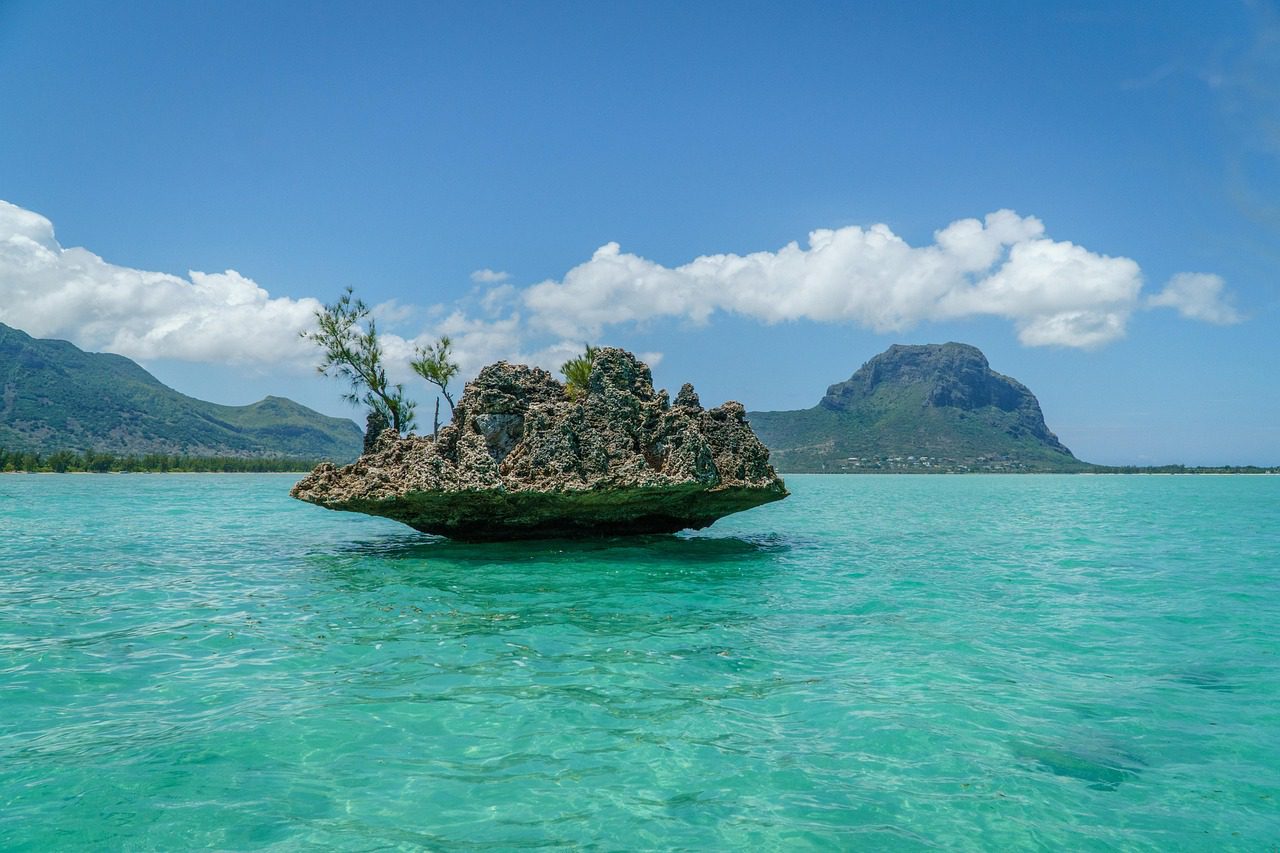
Mauritius holidays work best when you pick your coast by season, then add day tours inland: the lagoon beaches of the north and west, boat trips to Ile aux Cerfs, hikes in Black River Gorges and up Le Morne, and the coloured earths at Chamarel. Most Mauritius tours run as day trips from your hotel. The island sits in the Indian Ocean east of Madagascar, and many travellers add it as a beach finish after an African safari.
It is a small island, roughly an hour and a half to drive end to end, so you can sleep in one place and still see most of it. What changes your trip more than the hotel is the wind. The southeast trade winds blow hardest from June to September, which makes the east and south breezy and choppy while the west stays calm. Get that right and the rest falls into place.

Mauritius Beach Holidays by Coast: North, West, East and South
Every Mauritius beach holiday starts with a choice of coast. A coral reef rings most of the island, so the water inside it is shallow and sheltered, but each side has its own character and its own best months.
Families often settle on the north or west because the lagoons are calm and the drive to most tours is short. Couples who want space lean east.
One thing trip reports mention again and again: Sundays. Flic en Flac, Belle Mare and the public beaches fill with Mauritian families picnicking under the casuarinas, which is lively and friendly but not the empty beach in the brochure. Hotel beaches stay quiet. Coral and sea urchins sit close to shore in places, so reef shoes are worth packing, and the sun on the water is stronger than it feels with a sea breeze.
Mauritius Holiday Packages: All Inclusive, Honeymoon and Family Trips
Most Mauritius holidays are sold as a flight plus a resort, and the board basis matters more here than on many beach trips. Large resorts on the east coast and around Le Morne sit well away from towns, so half board or all inclusive saves you a taxi every evening. In Grand Baie, Trou aux Biches and Flic en Flac, restaurants and street food stalls are a short walk away, and room only or bed and breakfast makes more sense. Check what an all inclusive deal actually covers before you book: premium drinks, a la carte restaurants, motorised water sports and spa treatments are often extra.
Plan on seven to ten nights. A week gives you three or four slow beach days plus two or three day tours; ten nights lets you split the stay between two coasts, which many repeat visitors do, east for the winter sun on calm days and west for sunsets. Shorter than a week rarely feels worth the long flight.
Honeymoon trips are the island’s best known holiday type. Couples tend to pick the quieter east coast, around Belle Mare and Trou d’Eau Douce, where resorts such as Four Seasons at Anahita and LUX Belle Mare sit on long beaches, or the west and southwest for sunsets, with The Oberoi at Turtle Bay and the hotels under Le Morne. Weddings on the beach are common, and many resorts arrange the civil paperwork, though you should allow several weeks for documents. For the safari half of a honeymoon, see our guides to an Africa honeymoon and gorilla trekking on your honeymoon.
Family holidays work best in the north and west, where the lagoons are calm, or at family resorts such as Long Beach at Belle Mare, which run kids’ clubs and shallow pools. In the south, La Vanille Nature Park near Riviere des Anguilles keeps giant tortoises you can walk among, Nile crocodiles and an insect collection, and it is an easy half day with children. Golfers have more choice than on most small islands, with championship courses at Belle Mare, Bel Ombre and on Ile aux Cerfs, the last reached by boat.
Travellers from the United States usually book the resort and flights separately or through a specialist, since there is no direct flight. Buyers in the UK who book a flight and hotel together as a package get ATOL financial protection, which is worth having if a cyclone or an airline failure upsets the trip.
Island Boat Tours: Ile aux Cerfs, Ile aux Benitiers and the Northern Islets
Island boat tours are the most booked day trip in Mauritius, and there are several worth doing.
Ile aux Cerfs, off Trou d’Eau Douce on the east coast, is the famous one: a large island of sandbars, shallow lagoon and beach restaurants, with a golf course covering much of the interior. Shuttle boats run from the mainland every half hour or so, and speedboat and catamaran tours add a stop at the Grande Riviere Sud Est waterfall on the way. Be ready for crowds. By late morning the main beach is busy, so walk round the island away from the landing jetty to find quieter water. On a windy winter day the crossing gets bumpy.
On the southwest side, catamaran trips from Le Morne and La Gaulette visit Ile aux Benitiers and the sea carved Crystal Rock, often combined with a dolphin watching stop in the morning. The north has its own circuit. Catamarans from Grand Baie sail to Gabriel Island and Flat Island, both protected islets beyond the reef with white sand and good snorkelling, passing the wedge like cliffs of Coin de Mire. The sea up there is more open, so these trips are the ones most often cancelled for weather.
In the southeast, Ile des Deux Cocos in Blue Bay is a small private islet reached by glass bottom boat, with snorkelling straight off the beach. Book the popular catamarans a day or two ahead in high season, and check whether lunch, drinks and snorkel gear are included before you compare prices.
Black River Gorges Hiking Tours and the Island’s Rare Birds
Black River Gorges National Park is where Mauritius stops being a beach destination. Declared a national park in 1994, it protects most of what is left of the island’s native forest across the southwest uplands, with deep river valleys, viewpoints over the west coast and Black River Peak, at 828 metres the highest point in the country. A Black River Gorges hiking tour can be anything from a short walk to the Alexandra Falls viewpoint to a full day on the Macchabee trail.
The park is run by the National Parks and Conservation Service, with visitor centres at Le Petrin on the plateau and at the lower Black River entrance. Trails are signed but can be slippery and muddy after rain, especially from January to March, so good shoes matter more than you might expect on a tropical island. Guides from the visitor centres or private hiking companies know the birds and the plants, which turns a pleasant walk into something you actually learn from.
Birding is the reason many people go. Mauritius lost the dodo, but conservation work has brought back several species from the edge. The Mauritius kestrel fell to four known wild birds by 1974. The pink pigeon and the echo parakeet were in a similar position, and all three can now be seen in the gorges with patience, along with the Mauritius bulbul and Mauritius fody. Look out for Mauritian flying foxes over the valleys at dusk.
For a gentler trip with guaranteed wildlife, the Ile aux Aigrettes nature reserve off Mahebourg is run by the Mauritian Wildlife Foundation. Guided walks of around ninety minutes cross a restored coastal forest with pink pigeons, Telfair’s skinks and giant Aldabra tortoises roaming free. Visits are by guided tour only, booked through the foundation, and it is one of the best value half days on the island.
Le Morne Brabant Hiking Tour and Its UNESCO History
The Le Morne Brabant hiking tour climbs the basalt mountain on the southwest tip of the island, 556 metres high and inscribed by UNESCO as a World Heritage Site in 2008. In the eighteenth and early nineteenth centuries, escaped enslaved people, known as maroons, hid in its caves and on its summit. The mountain is now a memorial to them, and a good guide tells that story on the way up.
The first part of the trail is a steady walk through scrub. The last section is a steep scramble using hands, and the very top is reached with a guide. Allow three to four hours return, and start early. After about ten in the morning the rock heats up fast and there is little shade. Trip reports describe the view over the lagoon and the “underwater waterfall” illusion of sand sliding off the reef shelf as the reward, and also mention that the descent is harder on the knees than the climb.
If you would rather see that underwater waterfall from above, seaplane and helicopter tours fly over Le Morne from the west coast. They are short and expensive but the best way to understand how the reef and lagoon fit together.
Other good hikes on the island include Le Pouce, the thumb like peak above Port Louis, a half day trip with views over the capital; the Tamarind Falls (Sept Cascades) trail near Henrietta, where guided groups swim and sometimes abseil down a series of falls; and the forest walks of the Ferney Valley in the southeast.
Chamarel Tour: Seven Coloured Earths, Waterfall and Rum Distillery
A Chamarel tour usually combines three or four stops in the hills above the west coast, and pairs well with Black River Gorges on the same day.
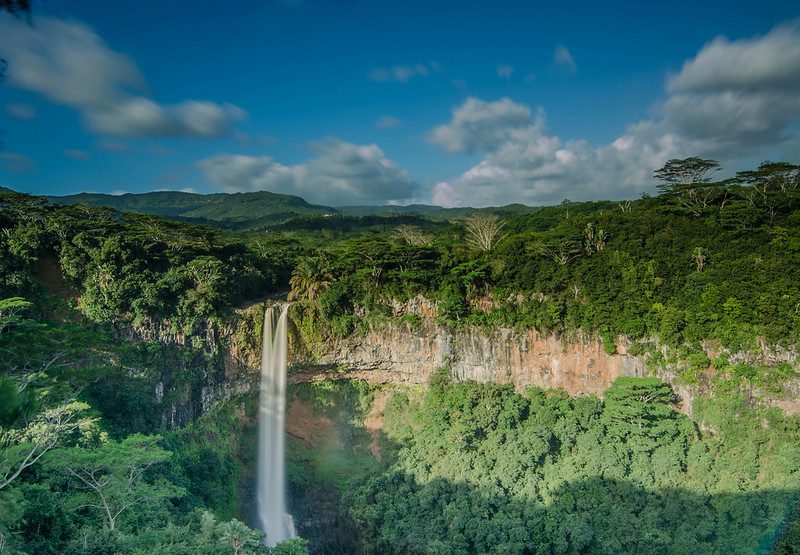
The Seven Coloured Earths are small dunes of volcanic soil streaked red, brown, violet and yellow, the colours coming from minerals left as the basalt weathered. They are fenced off, and the whole site takes about half an hour, so set expectations: it is pretty rather than vast. Inside the same geopark, giant tortoises graze in an enclosure. Nearby, the Chamarel waterfall drops roughly a hundred metres over the edge of the plateau. Most visitors see it from the viewing platform; guided canyoning trips go down to the base.
The Rhumerie de Chamarel distills rum from sugar cane grown on the estate, with a short tour and tasting. Down the road, the Ebony Forest reserve is replanting native forest on cleared land and runs guided walks to a viewpoint over the coast. Further south, La Vallee des Couleurs nature park offers ziplines, a long suspended bridge and its own coloured earth slopes.
On the way down, Grand Bassin (Ganga Talao) is a crater lake sacred to Mauritian Hindus, guarded by a 33 metre statue of Shiva. During Maha Shivaratri, in February or March, hundreds of thousands of pilgrims walk here from across the island. Visit respectfully, cover shoulders and knees, and take shoes off at the temples. The crater of Trou aux Cerfs in Curepipe is a short stop on the same route.
Scuba Trips, Snorkelling and Submarine Tours
Underwater, Mauritius is a reef destination more than a big fish one, and the reef is in mixed health after coral bleaching, so snorkelling and scuba trips work best with modest expectations and a good operator.
The west coast has the most varied scuba sites: drop offs, caves and wrecks around Flic en Flac and the Cathedral area, with the calmest conditions from October to April. The north has wrecks off Trou aux Biches and Grand Baie. Blue Bay Marine Park in the southeast is the easiest place for snorkellers, with shallow, clear water and coral close to the surface, and Trou aux Biches is the gentlest snorkelling beach in the north. Beginners can take a short course or a supervised first scuba session in the lagoon.
Water clarity tends to be best in the warmer months. In winter the sea cools to the low twenties Celsius and a thin wetsuit helps on longer dips.
For non swimmers, submarine tours from Grand Baie go down to about 35 or 40 metres, and sub scooter trips let you breathe through a helmet while steering a small craft over the lagoon floor. Glass bottom boats in Blue Bay are the cheapest way to see coral without getting wet. Kayaking in Tamarin Bay and flyboarding off the west coast round out the water options.
Dolphin Watching Tours and Whale Season: How to Do It Responsibly
Dolphin watching tours leave Tamarin, Black River and La Preneuse at dawn to find the spinner and bottlenose dolphins that rest in the west coast bays in the early morning. Sightings are very likely but not guaranteed, and many trips offer the chance to slip into the water and swim nearby.
This is where you need to choose your operator with care. The dolphins come into these bays to rest after feeding at night. At peak times a dozen boats can converge on one pod, with swimmers dropped right on top of the animals, and that disturbance is the main complaint in honest trip reports. Mauritius has dolphin and whale watching regulations, enforced by the Tourism Authority, that require operators to be licensed, to come alongside a pod slowly from the side on a parallel course, not to circle or chase the animals, and to limit how many people enter the water at once. Touching and feeding are banned.
Whale watching follows the humpbacks, which pass Mauritius on their migration from roughly July to October, with sperm whales also found off the west coast. Whale trips run from the same west coast harbours.
A note on Casela, the adventure park on the west coast: it offers safari drives among zebras and antelope, ziplines and walks with big cats. Animal welfare groups criticise hands on contact with lions and cheetahs, and if you are travelling on to a real African safari, the drives at Casela add little.

Port Louis City Tour and Cultural Trips Around the Island
A Port Louis city tour shows the side of Mauritius that resorts hide: a working capital where Indian, Creole, Chinese and French Mauritian cultures meet. Half a day is enough. Start at the Central Market for fruit, spices and street food such as dholl puri and gateaux piments, walk through Chinatown, then cross to the Caudan Waterfront for shops, the Blue Penny Museum and the harbour.
The Aapravasi Ghat, a UNESCO World Heritage Site, is the old immigration depot through which hundreds of thousands of indentured labourers, mostly from India, arrived to work the sugar estates after slavery ended. It is small and moving, and it explains why most Mauritians today trace their families to India. Fort Adelaide, the British citadel above the city, has the best view over the harbour, and the Champ de Mars racecourse holds horse races on weekends through much of the year.
North of the capital, the Pamplemousses Botanical Garden (the Sir Seewoosagur Ramgoolam Botanical Garden) is one of the oldest in the southern hemisphere, known for its giant water lilies, dozens of palm species and resident tortoises. Hire one of the official guides at the gate; the plants mean much more with someone explaining them. Next door, L’Aventure du Sucre tells the story of sugar, slavery and rum in a converted factory.
In Moka, Eureka House is a colonial Creole mansion with more than a hundred doors and windows, now a museum with a garden walk down to a river waterfall. The southern tea route links the Bois Cheri tea factory and estate, the Domaine des Aubineaux colonial house and the vanilla and rum at Saint Aubin; go in the morning, because the factory floor quietens in the afternoon and some stops close early. For a meal you will not find in a resort, several villages offer dinners in a local family home, and the Saturday markets in Mahebourg and Flacq are good for street food.
The island’s colonial layers are easy to trace on a day trip. The Dutch arrived first and named it after Prince Maurice of Nassau, and it was on their watch that the dodo disappeared. The French ran it as Isle de France and built the sugar estates, the British took it in 1810, and Mauritius became independent in 1968. In the north, Chateau de Labourdonnais at Mapou is a restored colonial house with orchards and a small rum and fruit tasting. On the west coast, the stone Martello Tower at La Preneuse, built by the British as a defence, is now a small museum and an easy stop on the way to the Black River Gorges.
Mauritian Food Tours, Shopping Trips and Nightlife
A Mauritian food tour is the quickest way to taste how many cultures share the island. Indian, Creole, Chinese and French cooking all show up on one plate. Dholl puri, a soft flatbread filled with ground split peas and served with curry and chutney, is the national street snack, sold from carts and vans for breakfast and lunch. Rougaille is a Creole tomato sauce with onion, chilli, thyme and garlic, cooked with fish, sausage or prawns. Chicken curry, octopus curry and vindaye, fish pickled with mustard seed and turmeric, turn up on menus across the island, and the Chinese community brings boulettes, steamed dumplings served in broth.
On the beach, vendors carve pineapples to order and dust them with salt and chilli. In markets, look for alouda, a sweet chilled milk drink with basil seeds and agar jelly. Rum is everywhere, from estate tastings at Chamarel and Saint Aubin to the flavoured rhum arrange that bars steep with vanilla, fruit and spice. Guided street food walks in Port Louis and Mahebourg cover the best stalls in a morning, and they are a good choice if the resort buffet starts to feel the same each night.
Shopping trips split three ways. For local goods, the Central Market and the craft market at Caudan in Port Louis sell spices, textiles, baskets and carved wood, and the Quatre Bornes market is known for clothes and fabric on its market days. Curepipe has workshops building detailed model ships, a Mauritian speciality worth seeing even if you do not buy, and the island also cuts and sells diamonds and duty free jewellery. For brands, Bagatelle Mall near Moka and the Caudan Waterfront are the big malls.
Nightlife is quieter than the Caribbean. Most of it is in Grand Baie, where bars and clubs along the main coast road stay open late at weekends, with a smaller scene in Flic en Flac. Resorts stage sega evenings, the island’s music and dance born among enslaved Africans and now listed by UNESCO in its traditional form; the version on the beach in a village on a Saturday night is livelier than the hotel show. Sundays are for family picnics, and many shops close early.
Best Time for a Mauritius Holiday, Month by Month
Mauritius has two seasons. Summer runs from November to April, hot and humid, with the heaviest rain in February and March and a risk of tropical cyclones. Winter runs from June to September, cooler, drier on the west and breezy on the east. May and October are transition months and, for many travellers, the sweet spot for a Mauritius holiday: warm sea, low rain, and fewer people than at Christmas.
| Month | Season | Rain | Best for |
|---|---|---|---|
| January | Hot summer | High | Scuba, warm sea |
| February | Hot summer | Highest | Deals, Shivaratri |
| March | Hot summer | High | Scuba, festivals |
| April | Late summer | Moderate | All coasts |
| May | Transition | Low | Beaches, hiking |
| June | Winter | Low | Hiking, west |
| July | Winter | Low | Hiking, whales |
| August | Winter | Low | Whales, kitesurf |
| September | Late winter | Low | Whales, hiking |
| October | Transition | Lowest | Everything |
| November | Early summer | Low | Beaches, Diwali |
| December | Summer | Moderate | Festive, busy |
January to March brings the warmest sea and the best water clarity for scuba, but also the wettest weather and the cyclone season. Most cyclones pass at sea and direct hits are rare, yet a passing system can bring two or three days of rain and closed boat trips, so travel insurance that covers weather delays is worth having. Hotels discount these months.
April and May are calm and green. From June to September the days are sunny and around the mid twenties Celsius, nights cool, and the hills are at their best for walking. Pack a light sweater for the evenings and the plateau. Base yourself on the west or north in these months, because the trade winds blow onto the east and south coasts. That same wind brings kitesurfers to Le Morne and Belle Mare. October and November are dry and warm before the summer heat, and mid December to early January is the busiest and most expensive time of the year, with many European families arriving for Christmas.
The Mauritius best time for a safari combination is July to October, which lines up with the long dry season in East Africa: the best months for gorilla trekking in Uganda and the Masai Mara migration.
Festivals are another reason to choose your month. Mauritius follows several religious calendars, so dates move from year to year; check them before you fix your trip.
Mauritius Travel Safety Now: Official Advice and the October Unrest
Mauritius is one of the calmest destinations in Africa for a tour or beach holiday, and it has led the continent on the Global Peace Index for years. Official advice still deserves a look before you fly, because the situation in October was unusual.
After a police shooting on 9 October, localised demonstrations and community unrest broke out in several areas of the main island, with roads blocked, some looting and attacks on police stations. The government imposed temporary evening and overnight curfews covering most of the main island. The UK Foreign Office, in an update on 14 October, advised travellers to avoid demonstrations and large gatherings, stay indoors during curfew hours and follow local authorities, and warned of road closures and disruption to transport and public services. Australia kept its overall level at exercise normal safety precautions. Resorts were not the focus of the unrest, but airport transfers and day tours can be affected while curfews run. Check the latest from your own government and the Mauritius Government Information Service before you travel, and see our guide to the safest countries in Africa to visit for how Mauritius compares with the main safari countries.
Combining Mauritius With a Safari or Bwindi Gorilla Trek
Mauritius has no big game, which is exactly why it pairs so well with a safari. A week of early starts, dusty game drives or muddy forest treks followed by a week on a lagoon is the classic African honeymoon, and it is the most common reason safari travellers look at Mauritius at all. Neighbouring Madagascar is a different kind of trip, built around lemurs rather than beaches, and our Madagascar tour cost guide shows what it costs.
The most popular pairing on this site is a gorilla trekking safari in Bwindi followed by the beach. A typical plan runs three or four days in Uganda for one or two gorilla treks, perhaps with chimpanzees in Kibale or a game drive in Queen Elizabeth, then a flight from Entebbe to Mauritius via Nairobi. Permits sell out months ahead in the dry season, so secure your Uganda gorilla permits through a licensed operator before you book the island. Rwanda works the same way: gorilla trekking in Rwanda from Kigali is a shorter transfer, and the route to Mauritius connects through Nairobi or Johannesburg.
Plan the order with care. Put the trek first and the beach last: you arrive at the lagoon tired and muddy rather than leaving it to start early mornings in the forest. Pack light, because getting to Bwindi may involve small domestic flights with a soft bag limit, and keep trekking boots, gaiters and rain gear separate from beach clothes. Our gorilla trekking packing list covers the forest side. For a sense of the full budget, the African safari cost guide breaks down safari prices by country, and Bwindi safari lodges range from simple camps to luxury rooms.
Many travellers book the safari and the island separately: a Uganda or Kenya operator for the safari, and the beach hotel direct or through a specialist. There are also companies selling Mauritius tours & holidays as part of wider Africa itineraries, which can be easier if you want one contact for the whole trip.
Getting to Mauritius and Getting Around
All international flights land at Sir Seewoosagur Ramgoolam International Airport at Plaine Magnien in the southeast. From Europe there are direct flights from Paris and London, and connections through Dubai and other Gulf hubs. A direct flight from London takes around twelve hours. From North America there is no direct service, so travellers connect through Europe, the Gulf or Johannesburg, and a full day or more of travel is normal. From Africa, Air Mauritius and other carriers fly from Johannesburg and Nairobi, and Ethiopian connects through Addis Ababa. From Uganda there is no direct flight, so travellers usually route Entebbe to Nairobi to Mauritius with Kenya Airways or connect through Addis Ababa or Johannesburg. Rodrigues, the quieter sister island with its own lagoon and hiking, is a short Air Mauritius hop from the main island. Madagascar is another island option, and our 10 to 14 day Madagascar itinerary lays out four routes day by day.
From the airport, transfers take around an hour to the north or west and about 45 minutes to the east coast resorts. Most visitors use a mix of hotel transfers and booked tours. Hiring a car gives the most freedom; driving is on the left, and the island is small enough that no drive takes more than an hour or two. A taxi with a driver for a half or full day is an easy middle ground, and drivers often double as informal guides. The Metro Express light rail links Port Louis with Rose Hill, Quatre Bornes and Curepipe, and public buses reach most villages cheaply but slowly.
Mauritius Tours and Holidays: Frequently Asked Questions
Do I need a visa for a holiday in Mauritius?
Many nationalities, including UK, EU, US, Canadian and Australian passport holders, do not need a visa for a tourist stay of up to 90 days; the immigration officer stamps the length of stay on arrival. You need a passport valid for your whole stay (six months’ validity is the safe rule airlines expect), a return or onward ticket, your accommodation details and proof of funds. Every traveller must also complete the Mauritius All in One Travel Digital Form online before arrival. Check your nationality with the Passport and Immigration Office, since rules change.
Do I need a yellow fever certificate after a gorilla safari?
Yes, if you are flying in from Uganda, Kenya, Rwanda or another country with yellow fever risk, or spent more than 12 hours in transit in one. Mauritius asks travellers over one year old arriving from those countries for the yellow fever certificate, and Uganda and Rwanda ask for one on entry anyway, so carry the original card. No other vaccines are required for Mauritius, though routine shots plus hepatitis A and typhoid are commonly advised. Mauritius has no malaria transmission, but dengue is present, so use repellent.
How much do Mauritius tours cost compared with a gorilla trek?
Island day tours, catamaran trips and dolphin swims are priced by each operator and change by season, so compare what is included (lunch, transfers, snorkel gear) before booking. The safari side is more fixed. A Uganda gorilla permit costs US$800 for foreign non residents, US$700 for foreign residents and UGX 300,000 for East African citizens, with a US$600 non resident rate announced for the low season months of April, May and November; permits are paid in full when booked. A Rwanda gorilla permit costs US$1,500. See the African safari cost guide for full trip budgets.
What currency is used in Mauritius?
The Mauritian rupee (Rs). Cards are accepted at hotels, malls and larger restaurants, and cash machines are common in towns, but carry rupees for markets, street food, taxis and small beach stalls. Euros and US dollars change easily at the airport and banks.
Which coast of Mauritius is best for a first holiday?
The north, around Grand Baie and Trou aux Biches, for its calm lagoons, restaurants and easy access to boat tours. Choose the west for sunsets, dolphins and dry winter weather, the east for long quiet beaches from October to May, and the southeast for snorkelling at Blue Bay close to the airport.
Is swimming with dolphins in Mauritius ethical?
It can be, if you choose a licensed operator who follows the rules: come alongside slowly from the side, no chasing or circling, and few swimmers in the water at a time. Too many boats on one resting pod is the main problem. A watching only trip is the gentlest choice, and swimming with whales is illegal.
What should I wear and pack for Mauritius?
Light summer clothes, swimwear, reef shoes, a hat and reef friendly sunscreen. From June to September add a sweater and long trousers for cool evenings and the central plateau. Bring proper walking shoes for Le Morne and Black River Gorges, and cover shoulders and knees at temples and Grand Bassin.
What plugs, voltage and time zone does Mauritius use?
Mauritius runs on 230 volts, with the British three pin plug and the round two pin European plug both in use, so a universal adaptor covers it. The island is on GMT plus four with no daylight saving, one hour ahead of Uganda, Kenya and Tanzania.
How many days do you need for a Mauritius holiday?
Seven to ten nights suits most people. A week covers beach time plus a boat trip, a Chamarel and Black River Gorges day and a Port Louis visit. With ten nights or more you can split the stay between two coasts or add Rodrigues. Shorter than a week is hard to justify given the flight time.
What language is spoken in Mauritius?
English is the main language of parliament, the courts and road signs. French dominates newspapers, television and hotel menus, and Mauritian Kreol is the language most people speak at home. Tourists get by easily in English.
Should I tip in Mauritius, and is it an expensive holiday?
Tipping is appreciated rather than expected. Around 10 percent in restaurants is a common guide when no service charge has been added, and a small tip for drivers, guides and boat crews is normal. On cost, the long flight and resort rates make Mauritius a mid to high budget beach holiday, but guesthouses, apartments, street food and public buses bring the price down a long way for independent travellers.
Is an all inclusive holiday in Mauritius worth it?
It depends where you stay. In resorts on the east coast or around Le Morne, far from towns, all inclusive or half board saves on taxis and hotel restaurant prices. In Grand Baie or Flic en Flac, where local restaurants and street food are close, many travellers prefer bed and breakfast and eat out.
Is Mauritius safe for a holiday right now?
For most visitors, yes, with normal care against petty theft. In October there were demonstrations and temporary overnight curfews across much of the main island after a police shooting, so check current UK, US or your own government’s advice and the Mauritius Government Information Service before you fly, and avoid any gatherings.