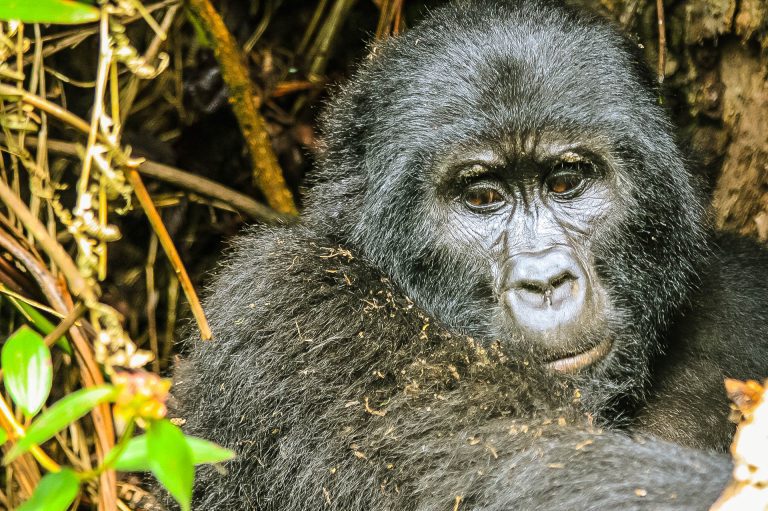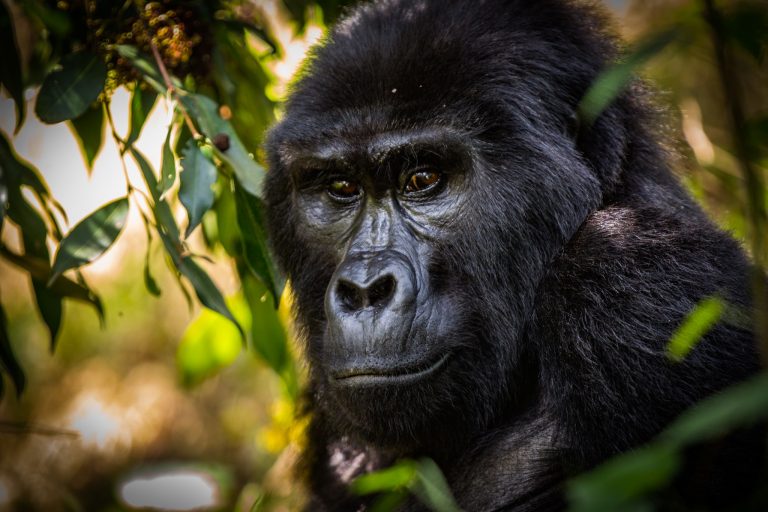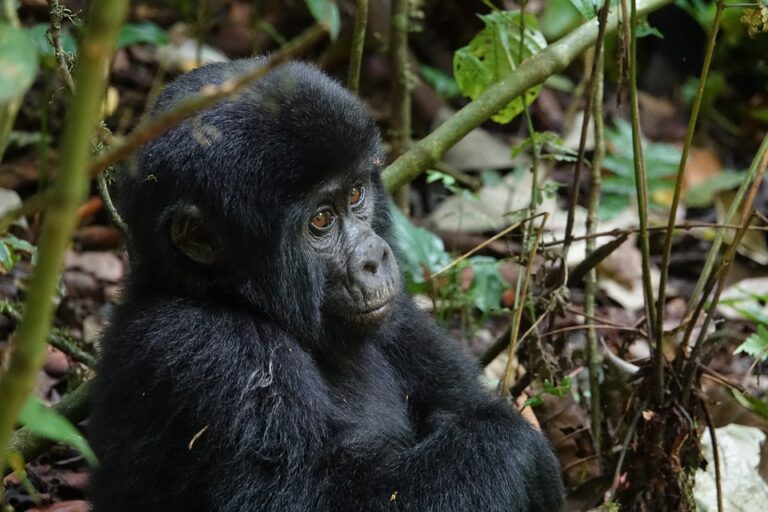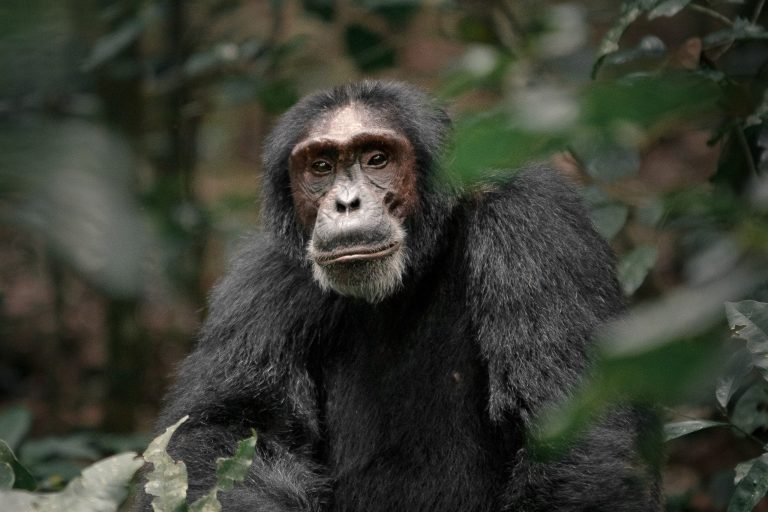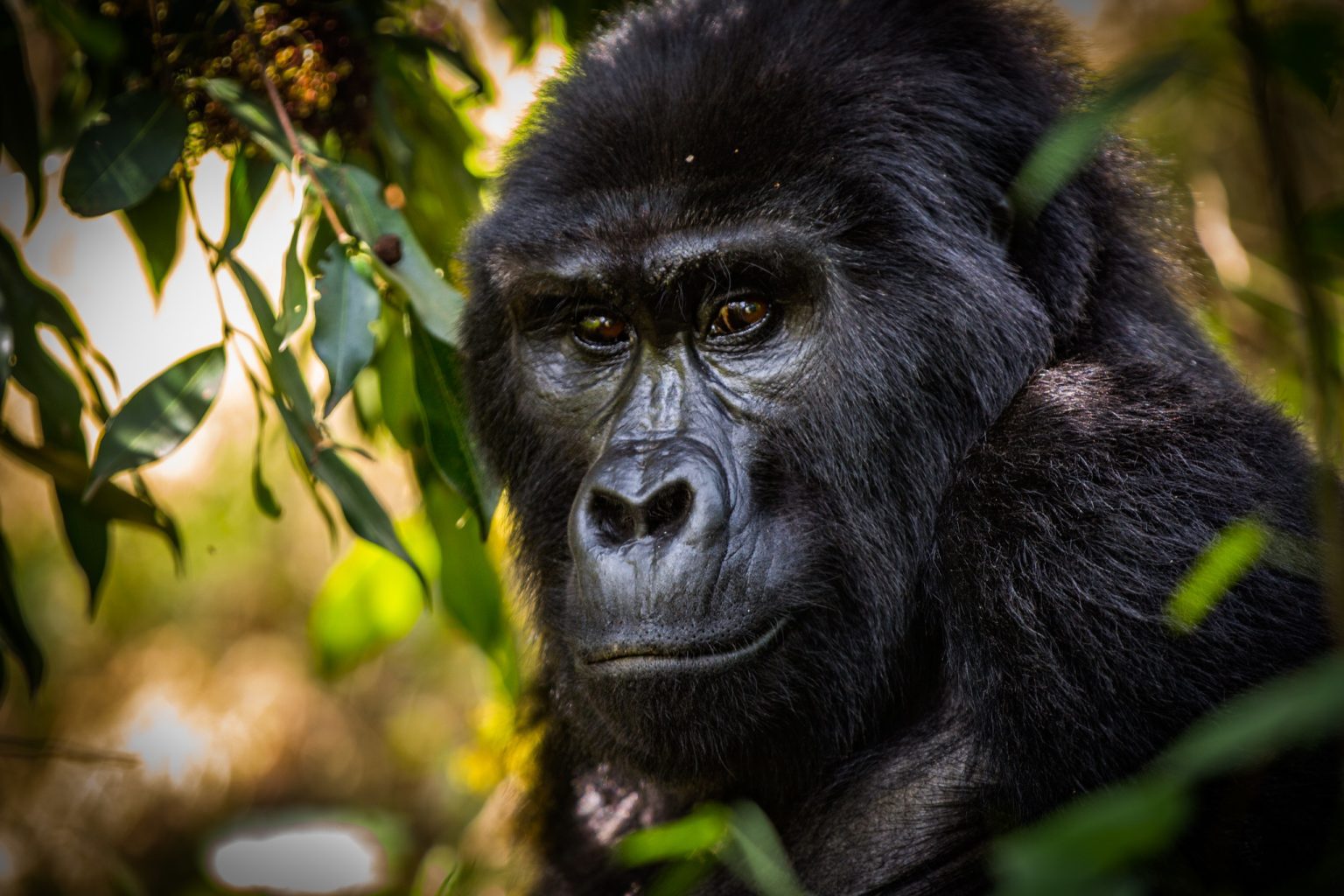
The best time to visit Bwindi and the best time for gorilla trekking in Uganda are the two drier seasons, June to August and December to February, when trails in Bwindi and Mgahinga are firmest and least slippery. Uganda gorilla trekking runs every day of the year, so quieter wet months also suit travellers after low season permits. Bwindi is a UNESCO listed rainforest in southwest Uganda, home to roughly half the world’s mountain gorillas.
This guide covers both questions travellers ask. Planning around Bwindi alone, you will find weather by sector and altitude, birding seasons and month by month trail conditions. If you are comparing Uganda’s gorilla parks, the sector panel brings in Mgahinga, and later sections deal with habituation timing, photography by season and how to fit a trek around Rwanda or the wildebeest migration. Three interactive tools sit beside the matching sections: a month planner that sets Bwindi against Rwanda, a permit booking and cost checker, and a packing checklist that changes with the season. For the steps beyond timing, see our guide to planning a gorilla trekking safari to Bwindi.
Bwindi Weather for Gorilla Trekking: Rain, Temperature and Altitude
Bwindi sits almost on the equator. There is no winter and summer in the European sense, so what changes through the year is rain. The park is a montane rainforest that receives somewhere between about 1,400 mm and 1,900 mm of rain a year, with wet years going higher, and even its drier seasons bring regular showers. Guides tend to say Bwindi has drier months rather than dry months, and that is the honest way to frame any Bwindi gorilla trekking safari.
Two drier seasons and two wetter ones make up the pattern across Uganda’s gorilla country. The long dry season runs from June to August, sometimes stretching into early September. A shorter dry season follows from December to February. Between them come the long rains of March to May and the short rains of September to November, though the edges move from year to year and recent seasons have been less predictable than older guidebooks suggest.
Altitude does the rest. Bwindi climbs from about 1,160 m in the northern valleys to 2,607 m on Rwamunyonyi Hill near Ruhija, while Mgahinga rises up the flanks of three volcanoes, the tallest of them Muhabura at 4,127 m. That height is why mornings feel cold here when the rest of Uganda is warm. Expect daytime highs in the low to mid twenties Celsius, roughly 70F to 77F, and early starts close to 10C, around 50F. January and February are usually the warmest months; June and July are the coolest, especially overnight.
Mist is part of the place. On many mornings cloud sits in the valleys until mid morning, and the forest stays wet with dew long after the rain has stopped. Trails that look dry from the lodge can still be greasy underfoot by the time you reach the steep sections.
None of this changes the core of a gorilla trek. Mountain gorillas do not migrate. Each habituated family keeps to its home range all year, and Uganda Wildlife Authority runs treks in every month under the same rules listed above. Timing changes how hard the walk is, how long the road transfer takes, how many other people hold permits that day and what you pay. It does not change whether you see gorillas. Choosing a month for a Uganda gorilla trekking safari is really choosing between comfort, availability and value.

Month by Month Guide to Visiting Bwindi and Gorilla Trekking in Uganda
Use the chart to shortlist months, then read the notes below it. Rain levels are relative to the southwest’s own pattern rather than exact totals, since weather station figures vary widely and the forest makes much of its own rain.
| Month | Rain | Trails | Crowds |
|---|---|---|---|
| January | Low | Good | Busy |
| February | Low, rising | Good | Moderate |
| March | Rising | Muddy | Quiet |
| April | Highest | Very muddy | Quietest |
| May | High, easing | Muddy | Quiet |
| June | Low | Good | Busy |
| July | Lowest | Best | Peak |
| August | Low, rising | Good | Peak |
| September | Moderate | Fair | Moderate |
| October | High | Muddy | Quiet |
| November | High | Muddy | Quiet |
| December | Easing | Fair to good | Busy late |
To compare Bwindi with Rwanda’s Volcanoes National Park month by month, or to filter for the driest trails, the quietest weeks or a discounted permit, use the planner below.
Gorilla Trekking Month Planner
Pick a month, or pick what matters most to you, to see rain, crowds and permit offers for gorilla trekking in Bwindi and Volcanoes National Park.
Dry = among the driest months on long term records. Mixed = showers building or easing. Wet = rainy season. Rain can fall in any month in both parks.
Showing all 12 months
| Month | Bwindi, Uganda | Volcanoes, Rwanda | Crowds | Permit offers | What it means for you |
|---|---|---|---|---|---|
| January | DryFirm trails | DryWarmest, driest stretch | Moderate, busy in the first week | Rwanda low season offer | One of the best months for a dry trek once the New Year rush ends |
| February | MixedMostly dry, showers return late | DryWarmest, driest stretch | Moderate | Rwanda low season offer | Good trekking weather with easier permit dates than July or August |
| March | WetLong rains begin | WetLong rains begin | Quiet | Rwanda low season offer | Muddier slopes, so pack gaiters and waterproof trousers |
| April | WetUsually the wettest month | WetUsually the wettest month | Quietest | Uganda low season permit and Rwanda offer | Lowest permit prices and fewest trekkers, hardest trails; Kwibuka commemoration begins 7 April in Rwanda |
| May | WetEasing late in the month | MixedRains ease from early May | Quiet | Uganda low season permit and Rwanda offer | Late May is a strong value window as the rain tapers off |
| June | DryDriest season, cold mornings | DryLong dry season | Busy | Standard rates | Firm trails before peak demand; book several months ahead |
| July | DryDriest season, cold mornings | DryLong dry season | Peak | Standard rates | Best trail conditions; permits for popular sectors can sell out up to a year ahead |
| August | DryDriest season | DryLong dry season | Peak | Standard rates | Book permits and lodges first, then flights |
| September | MixedSecond rainy season builds | DryMostly dry | Moderate | Standard rates | Drier in Rwanda than Bwindi; Kwita Izina gorilla naming was held in early September most recently, so check the date |
| October | WetRainy season | MixedShort rains from mid month | Quiet | Standard rates | Expect afternoon storms; early October suits Rwanda better |
| November | WetRainy season | WetShort rains | Quiet | Uganda low season permit and Rwanda offer | Second low season window; low season permits in Uganda cannot be rescheduled |
| December | MixedDrying through the month | MixedRains ease from mid month | Peak over Christmas | Rwanda low season offer | Early December is quiet; the Christmas and New Year fortnight books out like August |
No month matches both filters. Try setting one filter back to all.
Permit offers, indicative: Uganda’s low season gorilla permit costs USD 600 for foreign nonresidents in April, May and November, against USD 800 at standard rates, and cannot be rescheduled. Rwanda gives 30% off its USD 1,500 permit from November to May when you also stay two nights in Akagera or Nyungwe. Mgahinga in Uganda sits on the same Virunga volcanoes as Rwanda’s park, so its weather tracks the Volcanoes column more closely than Bwindi. Gorilla families are tracked year round, but sightings are never guaranteed.
Last checked October. Sources: Institute of Tropical Forest Conservation (Bwindi rainfall and Ruhija temperature records), Natural Habitat Adventures (Rwanda seasons), Uganda Wildlife Authority tariff as reported by Eclipse Travel and Uganda Safari Travel Guide, Rwanda Development Board booking portal and Kwita Izina announcement.
Dry Season Gorilla Trekking in Bwindi and Mgahinga: June to August and December to February
Dry season gorilla trekking is what most first time visitors ask for, and the reasons are practical. Firm ground means steadier footing on the steep, root covered slopes where gorillas like to feed. Boots grip. Trousers stay mostly clean. Your hour with the family is less likely to pass in a downpour, which matters for photographs and for simply being able to watch what the gorillas are doing.
Roads count for as much as trails. Every trailhead in Bwindi and Mgahinga is reached by murram road for the last stretch, and in the drier months transfers from the Kihihi and Kisoro airstrips, or the long drive from Kampala or Kigali, run closer to schedule. Our getting there guide sets out the routes.
Of the two windows, June to August is longer and more dependable. December to February is warmer but shorter, with rain sometimes returning in February. Trip reports from July and January still regularly mention a short shower on trek day, so a rain jacket goes in the pack regardless.
The price of good weather is competition. With a fixed number of permits per family each day, the dry months fill early, and late bookers often end up in whichever sector still has space rather than the one that suits their fitness or lodge. If your dates are flexible, late June and the first half of September give near dry season trails without the very top of demand.
Wet Season Gorilla Trekking in Uganda: March to May and September to November
Can you go gorilla trekking in the rainy season? Yes, and plenty of travellers pick these months on purpose. Treks are never cancelled for rain alone, and the gorillas carry on feeding, resting and moving whatever the sky is doing.
The trade off is physical. Wet season gorilla trekking in Bwindi means clay that slides underfoot, mud that can reach the top of your boots, and wet vegetation that soaks you from the knees down while the trackers cut a path with a machete. On the steepest pitches you will be pulling on stems and roots. Trekkers who went in April often describe the porter as the best decision of the trip, pushing or pulling at the hardest sections, and the walking stick handed out at the briefing stops being optional. If you are unsure about your fitness, our guide to trekking difficulty and fitness helps you judge it honestly.
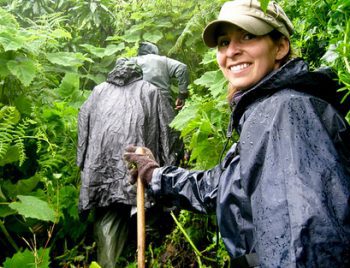
Some things get better. Dust is gone, the forest is at its greenest, and the soft light after rain suits photography in the shade of the canopy. Briefing points and lodges are quieter, and groups are more often smaller than the full eight.
Rain in Bwindi rarely lasts all day. A common pattern is a clear or misty morning followed by heavy showers in the afternoon, which works in your favour because treks leave after an early briefing. Some guides find that gorillas feed lower on the slopes when the forest is very wet, which can shorten a trek, yet nobody can promise it: trek length depends on where the family nested the night before, in any month, and ranges from under an hour to most of a day. Plan non trekking afternoons loosely.
Roads are the bigger risk. Stretches towards Ruhija, Rushaga and Nkuringo can turn slow and slippery, and a few smaller lodges close for part of April and May. A 4×4 with an experienced driver, and no long transfer on the morning of your trek, make these months far easier.
Mosquitoes are more active after the rains too, more so at lodges in the lower valleys than up on the ridges. Repellent, long sleeves at dusk and a net over the bed are standard, and a travel clinic can advise on malaria tablets for the whole Uganda trip.
Shoulder Months for Gorilla Trekking in Uganda: Late May, September and Early December
The weeks on either side of a rainy season often give the best balance of trail, price and availability. Late May is the clearest example. The long rains are tapering off, the forest is at its greenest, the low season permit rate still applies, and the July rush has not begun.
September and the first half of December work the same way from the other direction. Showers are building or easing rather than settled in, mornings are often dry, and a sector that sold out for August may still have space. Lodges near the trailheads often hold lower rates until peak pricing starts, so a shoulder week can cut the cost of the whole stay and not just the trek.
The catch is that the edges of each season move by a few weeks from one year to the next. Pack as if for the wet months and treat a dry spell as a bonus.
Low Season Gorilla Permit Months for Trekking in Bwindi: April, May and November
Uganda Wildlife Authority has brought back a reduced low season gorilla permit for treks in April, May and November, the three wettest and quietest months in gorilla country. It buys exactly what a July permit buys: the same families, the same rangers, the same hour. The figures are in the FAQ at the end of this page, and the latest booking details sit on our page about discounted Uganda gorilla permits.
Read the conditions before you commit. Low season permits cannot be rescheduled, so a missed flight or a change of plan means buying again. UWA has also suspended the old practice of holding a permit for seven days before payment, so permits are paid in full at the time of booking, in any month. Book once flights and dates are firm, not before.
For a budget conscious traveller these months still make a lot of sense. Many lodges cut their own rates at the same time, so the saving across a whole trip is often larger than on the permit alone. You do need decent waterproofs and a reasonable level of fitness, and a few lodges close for maintenance in April and May, so check that your chosen place is open.
Of the three, May usually offers the best balance. The rains tend to ease in its second half, birders arrive for nesting season, and the forest is at its greenest. April is the hardest on the legs and the roads. November sits between the two, with long drizzly spells rather than April’s downpours.
Best Time for Gorilla Trekking by Sector: Buhoma, Ruhija, Rushaga, Nkuringo and Mgahinga
Uganda has five places to trek mountain gorillas: Bwindi’s four sectors and Mgahinga. The same month plays out differently in each because of altitude and terrain, so pick your sector and your season together.
A practical rule. If you must trek between March and May or in October and November and you do not hike regularly, ask your operator for a Buhoma permit. Going in July and wanting a demanding hike? Nkuringo, Ruhija or Mgahinga give the more rewarding walk. Our comparison of gorilla trekking in Bwindi and Mgahinga sets the two parks side by side, and Mgahinga’s golden monkey trekking fills a spare morning in any season.
Where you sleep should follow your sector, since driving between the north and south of Bwindi takes hours. The Bwindi safari lodges guide groups places to stay by sector.
Gorilla Habituation Experience in Bwindi: When to Book the Four Hour Trek
The gorilla habituation experience in Rushaga follows the same seasons as a standard trek, with two differences that change the timing. You spend around four hours with a family that is still being habituated rather than one, and only four visitors join each group a day. That tiny allocation means habituation permits for the dry months sell out earlier than ordinary permits, often well before trekking permits for the same dates.
Weather counts for more, too. Four hours in steady April rain is a very different day from four hours in July, both for comfort and for photographs. If habituation is the centrepiece of your trip, the dry seasons are worth planning around; if you go in the wet months, waterproof everything twice. A UWA price rise for habituation has been announced and is covered in the FAQ. The gorilla habituation experience page explains how the day runs and how it differs from a standard trek. Our habituation experience packing list covers the gear for four hours in wet forest.
Best Time for Gorilla Trekking in Rwanda and Congo Compared with Bwindi
Rwanda’s Volcanoes National Park shares Uganda’s broad pattern: long rains from March to May, short rains from about mid October to mid December, and drier spells from June to September and December to February. The park sits higher than Bwindi. Treks start near Kinigi at about 2,400 m and climb through bamboo and hagenia woodland, so mornings are cold in every month and showers can arrive in any season. September is often drier on the Rwandan side than in Bwindi, which is why the planner above gives the two parks separate columns.
Treks in Volcanoes are often shorter than in Bwindi because the slopes are more open than Bwindi’s dense forest, and rangers there keep visitors about 7 m from the gorillas, against 10 m under UWA rules in Uganda. Rwanda sells a reduced permit from November to May to travellers who add qualifying nights in Nyungwe or Akagera; the figures are in the FAQ. Mgahinga sits on the same volcanoes, so its weather follows the Rwandan column more closely than the Bwindi one.
Two dates on the Rwandan calendar affect planning. Kwita Izina, the gorilla naming ceremony at Kinigi, has fallen in September or October in recent editions, so check the Rwanda Development Board announcement before you build a trip around it. Kwibuka, the commemoration of the genocide against the Tutsi, begins on 7 April; travel continues, though some businesses close on the opening day and visitors are expected to be respectful.
In the Democratic Republic of Congo, season is not the deciding factor at present. At the latest check, Virunga National Park lists its gorilla treks as closed until further notice, the US travel advisory for the DRC stands at Level 4, and visits to the eastern lowland gorillas of Kahuzi Biega have been disrupted since fighting reached Bukavu, so confirm the position before considering either park. Our Congo gorilla trekking page follows the latest status.
Gorilla Trekking Photography and Behaviour Across the Seasons
Light under the canopy is dim in every month, and flash is not allowed with the gorillas. That makes the season a bigger factor for gorilla trekking photography than people expect. On dry days, shafts of sun break through gaps in the canopy and create harsh contrast, with bright leaves beside black fur. Overcast and post rain light is softer and more even, which many photographers prefer, although wet lenses and steamed viewfinders come with it. A dry bag and a lens cloth earn their place in the wet months.
Behaviour changes a little as well. In the wetter months the families often sit huddled through heavy showers, then become active again as the rain stops, feeding on fresh shoots. In drier spells they may range further between feeding sites, which can lengthen a trek. Neither pattern is reliable enough to plan around, and none of it affects the 10 metre distance or the one hour limit, which rangers hold to in every season.
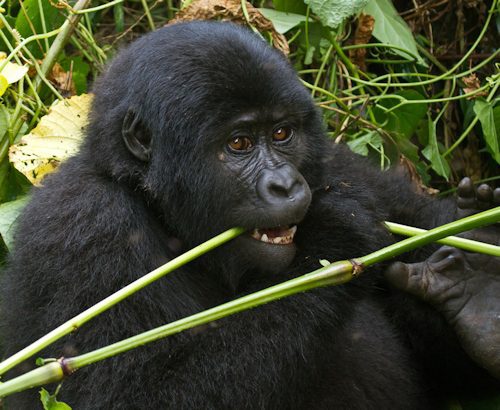
Best Time for Birding Safaris and Forest Hikes in Bwindi
Birding safaris in Bwindi work all year, yet the month you pick changes what you see. The park holds around 350 bird species, including 23 Albertine Rift endemics, among them the African green broadbill that draws serious birders to the Mubwindi Swamp trail near Ruhija.
Uganda Wildlife Authority points to May and June as the main nesting season in Bwindi, when endemics are most active and vocal, though heavy rain can still limit birding until about mid May. Migrant species from Europe and Asia are present from roughly November to April, which adds variety to lists in the wetter months. For birders who also want firm trails, June is the sweet spot. Read more on birding in Bwindi.
The other forest walks follow the same weather logic as gorilla trekking. The Munyaga waterfall walk at Buhoma, the long Ivi River trail between Buhoma and Nkuringo and the bamboo zone hike near Ruhija are far more pleasant in the drier months, when stream crossings stay low. Community visits, including time with the Batwa people, run in any weather and make a good plan for a wet afternoon.
Gorilla Trekking Crowds, Permit Availability and Lodge Rates by Season
Permits, not the size of the park, decide how busy gorilla trekking feels. Each habituated family receives no more than eight visitors a day, so the forest itself never feels crowded. What fills up is the permit allocation for the popular families, the lodges closest to each trailhead, and the gentler treks around Buhoma.
For July, August, late December and January, secure permits many months ahead, and longer still if you want a specific sector or a habituation slot. February, June and September are easier, with good conditions and more choice. In the low season months a trek can sometimes be arranged with a few weeks’ notice, though popular lodges still fill on certain dates.
Lodge pricing follows the same curve. Peak rates apply in the dry months and over Christmas, while many properties discount between March and May and in October and November.
The checker below turns those lead times into a month to book by and adds up the permits for your group at current rates in Uganda and Rwanda.
Gorilla Permit Booking and Cost Checker
Choose your trek month, park and group size to see how far ahead to book and what the permits cost at current rates.
July in Bwindi or Mgahinga: peak season
- Book this far ahead
- 6 to 12 months
- Book by around
- See your dates
- Permit per person
- USD 800
- Permits for your group
- USD 1,600
Dry season and school holidays make this the hardest month to book. Each gorilla family takes up to eight visitors a day, so popular sectors fill first.
Uganda confirms a permit only once it is paid, and you name your Bwindi sector at booking.
| Month | Book ahead | Uganda permit | Rwanda permit |
|---|---|---|---|
| January | 3 to 6 months | USD 800 | USD 1,500, or 1,050 with offer |
| February | 3 to 6 months | USD 800 | USD 1,500, or 1,050 with offer |
| March | 1 to 2 months | USD 800 | USD 1,500, or 1,050 with offer |
| April | 1 to 2 months | USD 600 low season | USD 1,500, or 1,050 with offer |
| May | 1 to 2 months | USD 600 low season | USD 1,500, or 1,050 with offer |
| June | 6 to 12 months | USD 800 | USD 1,500 |
| July | 6 to 12 months | USD 800 | USD 1,500 |
| August | 6 to 12 months | USD 800 | USD 1,500 |
| September | 3 to 6 months | USD 800 | USD 1,500 |
| October | 3 to 6 months | USD 800 | USD 1,500 |
| November | 1 to 2 months | USD 600 low season | USD 1,500, or 1,050 with offer |
| December | 6 to 12 months for Christmas | USD 800 | USD 1,500, or 1,050 with offer |
Prices are indicative foreign nonresident rates and can change. Uganda low season permits apply in April, May and November and cannot be rescheduled. The Rwanda offer is 30% off from November to May for travellers who also stay two nights in Akagera or Nyungwe with a paid activity. Lead times are typical guidance, not guarantees; popular Bwindi sectors can fill earlier. Trekkers must be at least 15.
Last checked October. Sources: Uganda Wildlife Authority tariff as reported by Eclipse Travel and Uganda Safari Travel Guide, Rwanda Development Board booking portal, operator booking guidance.
Uganda permits are booked through a licensed operator that is a recognised member of AUTO, the Association of Uganda Tour Operators, which buys them from UWA in your name, since UWA sells permits to licensed operators. For peak dates the simplest route is to ask several licensed gorilla safari companies to check availability for your dates and preferred sector at the same time, then compare what each can secure. Operators who specialise in the Uganda gorilla trekking experience can also tell you which families still have space in a given week.
Packing for Bwindi Gorilla Trekking Weather in Wet and Dry Months
Pack for rain whatever the month. A breathable waterproof jacket, quick drying long trousers, long sleeves against stinging nettles and broken in waterproof boots with deep lugs cover most of it. Gardening gloves are the item trekkers most often say they wish they had brought, because you end up grabbing thorny stems and vines on steep ground. Gaiters, or socks pulled over trouser hems, keep mud and ants out in the wet months. In the dry seasons add sunglasses, a hat and extra water. In any season, carry a fleece for cold starts, especially at Ruhija and in Mgahinga, and a dry bag for the camera.
Set the checklist below to the season of your trek and tick items off as you pack.
Gorilla Trek Packing Checklist by Season
Choose the season of your trek to show what to pack for it, then tick items off as you go. Every item stays listed for an all season trip.
0 of 18 items packed
For the trail, every season
Rainy months
Dry months
Ticks are kept only while this page is open. Trekkers must be at least 15 years old. Pack for the hardest version of the day: a trek described as short at the briefing can still run for hours.
Last checked October. Based on park trekking rules and traveller trip reports from Bwindi and Volcanoes National Park.
Our gorilla trekking packing list goes item by item, and the guides to gorilla trekking boots and the best rain jacket for gorilla trekking cover the two pieces that matter most between March and May.
Combining a Bwindi Gorilla Trek with Rwanda, the Migration and Other Safaris
Season can steer the rest of an East Africa trip. From July to October the herds of the Great Migration are usually in Kenya’s Masai Mara, which lines up neatly with Uganda’s long dry season; our Great Wildebeest Migration guide has the month by month movements. From December to February the calving season in the southern Serengeti pairs well with the short dry season, and January and February are also good months on Kilimanjaro.
Rwanda follows almost the same rainfall calendar, with its own dry seasons from June to September and December to February, so a combined trip works best in those windows. Southern Bwindi and Mgahinga sit close to the border, and many travellers fly into Kigali and drive across. Compare the two countries on our gorilla trekking in Rwanda page, or take a wider look at the top places to visit in Rwanda.
Savannah game viewing in Uganda follows the same calendar. In the dry months grass is shorter and animals gather near rivers and lakes, so game drives in Queen Elizabeth and on a Murchison Falls safari tend to be most productive from June to September and December to February. The wet months bring greener scenery, fewer vehicles and migrant birds, with tracks that can be slow. Planning a wider trip? Our best time to visit Tanzania guide covers the Serengeti, Kilimanjaro and Zanzibar by month.
Whichever way you combine them, allow at least three days for a single trek in Uganda, counting the drive in and out of Bwindi, and two to three days for Rwanda, where Kinigi is about two and a half hours from Kigali by road. A second trek on another day gives you a different family and a second chance if the first hour is spent peering through thick undergrowth.
Within Uganda, the drier months suit a primate and savannah circuit: chimpanzee trekking in Kibale, then game drives and the Kazinga Channel in Queen Elizabeth National Park on the way to Bwindi. If time is short, a 3 days Bwindi gorilla tour covers the trek itself in any month, and the main gorilla trekking in Uganda guide explains how the trek day runs.
Best Time to Visit Bwindi and Go Gorilla Trekking in Uganda: FAQ
What is the best time of year to see gorillas in Uganda?
The drier seasons of June to August and December to February, with July usually the driest month and the easiest on the trails, and June, August and January close behind. For good conditions with fewer people, February, late June and early September are strong choices. Gorillas can be seen in every month, so the season decides comfort and price rather than the sighting.
What is the entrance fee for Bwindi Impenetrable Forest?
If you are trekking, the gorilla permit already includes park entry for that day, so there is no separate gate fee. For a visit without a permit, such as a nature walk or birding day, operators quote UWA’s conservation tariff for Bwindi at about US$40 per adult foreign nonresident, US$30 for foreign residents and UGX 20,000 for East African citizens, valid for 24 hours, with guided activities charged on top. Confirm the current figure with UWA or your operator before you travel.
Is it safe to visit Bwindi Impenetrable National Park?
Bwindi receives visitors every day of the year, and treks run with armed UWA rangers and trackers. Most travellers go with a licensed operator and a driver guide, which also handles the remote roads. Travel advice for parts of western Uganda and the nearby Congo border changes from time to time, so read your government’s current advisory before you book; our guide to Uganda safety summarises the latest advice.
Can you wear blue in Uganda?
Yes, though dark blue and black attract tsetse flies, which bite in some savannah and woodland areas such as parts of Queen Elizabeth and Murchison Falls. For gorilla trekking in Bwindi, muted greens, browns and khaki are the usual advice, with long sleeves and long trousers against nettles in any season. See what to wear for gorilla trekking.
How much is a Uganda gorilla permit, and is it cheaper in the low season?
The standard permit costs US$800 for foreign nonresidents, US$700 for foreign residents and UGX 300,000 for East African citizens. In April, May and November UWA charges a low season rate of US$600 for foreign nonresidents and US$500 for foreign residents. Low season permits cannot be rescheduled, and with the seven day reservation hold suspended, all permits are paid in full at booking. Confirm the current terms with your operator before paying.
What does the gorilla habituation experience cost?
The habituation permit has been sold at US$1,500; UWA has announced a rise to US$1,800 for foreign nonresidents, so check which rate applies to your trek date. With only four places per group each day in Rushaga, book as early as you can for the dry months.
Do lodges cost less in the wet months?
Often, yes. Many Bwindi lodges lower their rates between March and May and in October and November, and across a whole stay the saving can exceed the permit discount. Some smaller lodges close in April or May, so check before booking.
Is gorilla trekking in Uganda possible in the rainy season?
Yes. Treks run every day of the year and are not cancelled for rain. Expect muddy, slippery trails and wet clothing, hire a porter, use the walking stick offered at the briefing, and allow extra time on the roads.
How hard is a gorilla trek in the wet season?
Noticeably harder than in the dry months. The same trek can take twice as long on wet clay, and steep areas such as Nkuringo and the Mgahinga slopes are tough after heavy rain. A reasonable level of fitness, a porter and good boots make most treks manageable.
Which Bwindi sector is best in the wet season?
Buhoma, because it is the lowest sector with gentler terrain and lodges close to the trailheads. Nkuringo is the hardest in the rain because of its steep descent and climb.
How cold does Bwindi get?
Days are mild, usually in the low to mid twenties Celsius, but early mornings and nights can drop to around 10C, and lower at Ruhija and in Mgahinga. Bring a fleece and a warm layer for evenings in any month.
When is the best time for birding in Bwindi?
May and June bring the nesting season for Albertine Rift endemics, and June combines that with firmer trails. Migrant species add variety from about November to April.
How far ahead should I book a gorilla trek in Uganda?
For July, August and the Christmas period, book many months ahead, and earlier still for habituation or a particular sector. In the quieter months a few weeks’ notice can be enough, depending on the sector you want.
Are gorilla sightings guaranteed in any season?
No sighting is ever guaranteed, but chances are very high in every month because trackers follow each family daily and the gorillas do not migrate. The season affects the walk, not the likelihood of finding the group.
How many gorillas live in Bwindi?
The 2018 census counted 459 mountain gorillas in Bwindi, out of a world total of 1,063. Results of a newer census are still awaited.
Is Uganda or Rwanda better for gorilla trekking at a particular time of year?
Both share almost the same seasons, so timing rarely decides it. Uganda has more families and the low season permit months, while a Rwanda permit costs US$1,500, or US$1,050 from November to May for travellers who add qualifying nights in Nyungwe or Akagera, and treks in Volcanoes National Park are often shorter. Many travellers combine both in the June to September or December to February dry seasons.
What is the best month to visit Rwanda for gorilla trekking?
June to September is the most reliable window in Volcanoes National Park, followed by December to February. March to May is the wettest stretch, with a second wet spell from about mid October to mid December.
When should I go to combine gorillas with the Masai Mara migration?
July to October, when the herds are usually in the Mara and Uganda is in or just past its long dry season. For the Serengeti calving season, go from December to February.