Madagascar tours are guided overland and fly in trips that link the island’s lemur rainforests, dry western forests and Indian Ocean beaches, usually over 10 to 18 days with a private driver guide. Most travellers book a set circuit, such as the RN7 south, the western Tsingy and baobab loop or the northern islands, through a licensed operator. Madagascar, the world’s fourth largest island, sits off Mozambique and holds more than 100 lemur species found nowhere else.
Madagascar Tours Explained: Choosing Your Route and Region
Every Madagascar tour starts with one honest fact: the island is huge and slow to cross. It runs about 1,600 km from north to south, roads outside the main national routes are mostly dirt, and a day on the road often covers less ground than the map suggests. So the first decision is not which lodge, but which region.
Four circuits cover almost every itinerary sold. Pick one or two and do them well. Trip reports from people who tried to squeeze in all four tend to say the same thing: too many hours in the car, not enough in the forest.
Booking is simple once the route is fixed. Licensed local ground handlers and international specialists sell the same circuits, and you can compare Madagascar tours and holiday packages side by side before choosing a style. Private trips with a driver guide are the norm, which means the pace, the number of night walks and the hotel standard are all yours to set. Small group departures exist too and suit solo travellers watching their budget. Our Madagascar tour cost guide shows what a trip really costs and what quotes should include.
Types of Madagascar Tours: Small Group, Private, Trekking and Fly In Trips
The style of a Madagascar tour matters almost as much as the route, because the same circuit feels very different in a minibus of twelve strangers and in a 4×4 with your own driver guide. Most specialist operators sell five broad types, and plenty of travellers mix two of them.
Which is best? For a first visit, a private RN7 trip with a good driver guide is the format that most trip reports praise, since it gives you control over the pace on slow roads. Small groups make sense when budget matters more than flexibility. Trekking tours suit people who would gladly trade a few lemur parks for days on foot in empty country, and birders should look for an operator that names its bird guides rather than hiring locally on the day.
Cycling trips exist too, mostly on quieter stretches of the highlands with a support vehicle carrying the bags. They are a niche product, so expect fewer departures. Family trips work well on the eastern rainforest circuit and the RN7, where drives are shorter and lemurs are easy to find; our guide to a family safari in Africa covers ages and pacing across the continent.
Whatever the style, the guide makes the trip. English speaking naturalist guides are fewer than French speaking ones, so book early for July, August and October if language matters to you.
Andasibe Mantadia Lemur Tours: The Indri and Rainforest Night Walks

An Andasibe lemur tour is the one experience nearly every Madagascar itinerary includes, and the reason is distance. Andasibe Mantadia National Park lies about 150 km east of Antananarivo, three to four hours by road, so you can be watching lemurs on your first afternoon. The park has two parts: the small Analamazaotra reserve beside the village, and the wilder Mantadia block to the north.
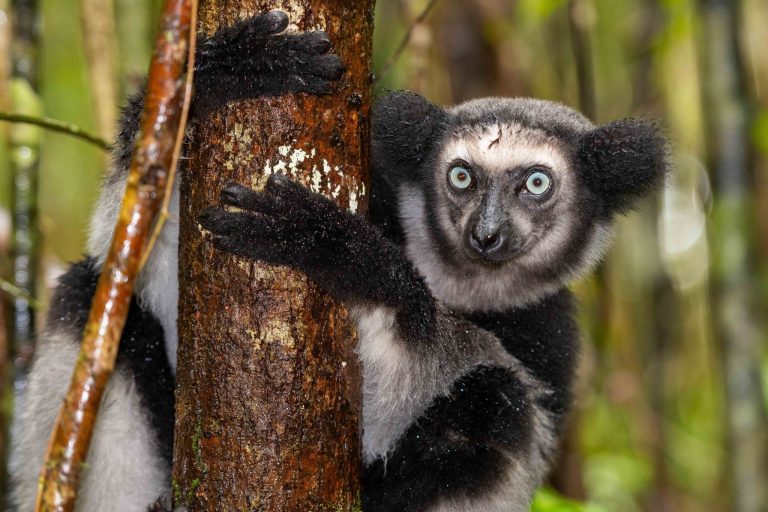
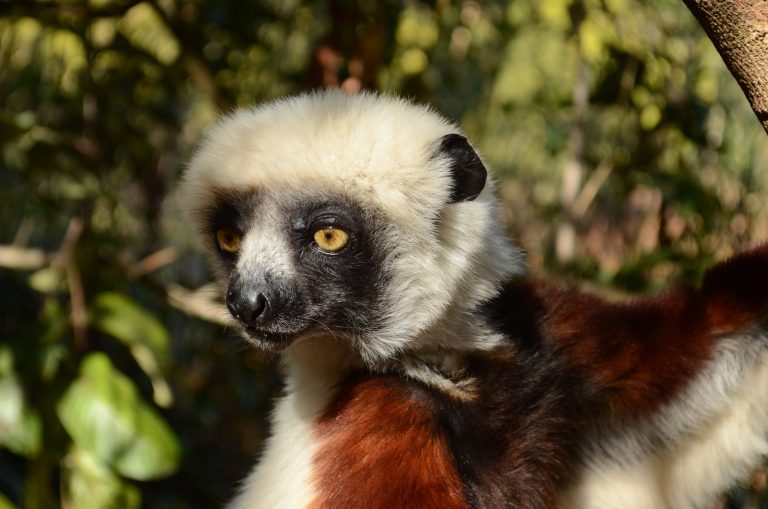
The star is the indri, the largest living lemur. Family groups call to one another each morning with a long, wailing song that carries across the valley, and guides track that sound to find them. Diademed sifakas, common brown lemurs, grey bamboo lemurs and black and white ruffed lemurs share the forest, along with around a dozen lemur species in total, Parson’s chameleons, leaf tailed geckos and a strong list of rainforest birds.
Trails in Analamazaotra are short and well made. Mantadia is steeper, muddier and quieter, and worth a full day if you can spare it.
Night walks are the second half of the Andasibe experience. National park rules keep visitors out of the forest after dark, so evening walks run along the park edge and in community reserves such as Mitsinjo, where guides pick out mouse lemurs, sleeping chameleons and tree frogs by torchlight. Bring your own head torch, ideally one with a red light setting. Guides carry strong torches, but having your own light on the path stops you tripping on roots while everyone else is looking up.
Two short add ons sit nearby. Vakona, a private reserve, has a small lemur island where habituated lemurs come close, which children enjoy and serious wildlife watchers often skip. Further east, the Pangalanes Canal links a chain of coastal lakes, and a boat trip to the Palmarium reserve adds an aye aye night visit to many east coast tours.
Antananarivo City Tours and the Royal Hill of Ambohimanga
Most visitors spend a night or two in Antananarivo, known to everyone as Tana, at the start or end of their tour. The capital climbs over a series of hills, and a Tana city tour usually works from the top down. In the upper town stands the Rova, the royal palace compound with the restored Queen’s Palace, and just below it the pink Andafiavaratra Palace, former home of the nineteenth century prime minister Rainilaiarivony. The middle town around Avenue de l’Indépendance and the old Analakely market area are livelier and more crowded.
Lake Anosy is ringed with jacaranda trees that flower purple around October and November. The Tsimbazaza park holds the elephant bird skeleton and a modest zoo, while the private Lemurs’ Park west of the city gives a gentle introduction to rescued lemurs. Birders can head to the Tsarasaotra wetland in the city, a Ramsar site that draws herons, ducks and the Madagascar pond heron in season.
Tana traffic is slow. Allow far longer than the map suggests for any crossing, and use hotel transport or pre booked taxis after dark.
About 20 km north of the city, the Royal Hill of Ambohimanga is a UNESCO World Heritage Site and a sacred place for the Merina people. Its fortified village, royal residences and burial sites date from the era when the Merina kings unified much of the island, and visitors are still expected to follow local customs, including the fady (taboos) your guide will explain at the gate. A half day Ambohimanga cultural tour fits neatly on an arrival or departure day.
RN7 Highlands Road Trip: Antsirabe, Ambositra and Ambalavao
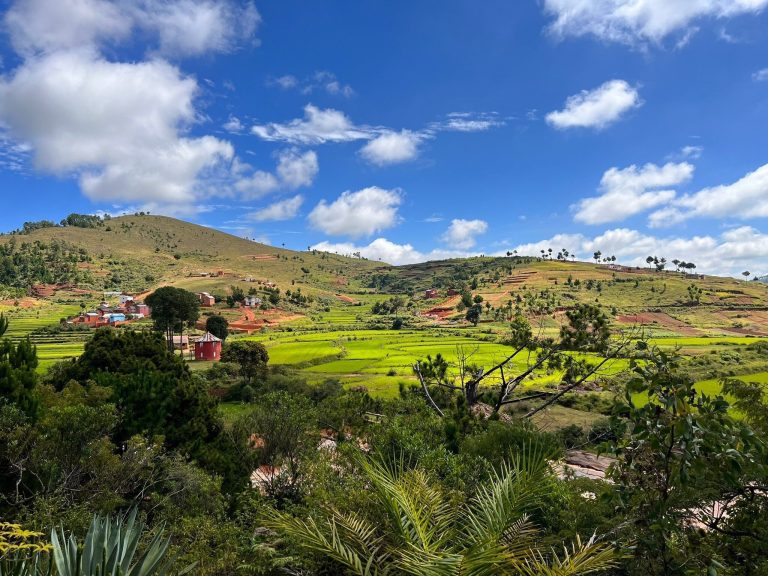
The RN7 road trip is the backbone of Madagascar touring. This national road runs south from Tana for about 950 km to Toliara, and it passes rice terraces, red earth villages and a string of craft towns that make the long drives feel shorter.
First stop is usually Antsirabe, a spa town built by the Norwegians and French, famous for its colourful pousse pousse rickshaws and its gem and embroidery workshops. On the way, Ambatolampy is where the cooking pots sold across the island are cast from scrap aluminium. Ambositra, further south, is the woodcarving capital, home to the Zafimaniry carving tradition that UNESCO lists as intangible cultural heritage.
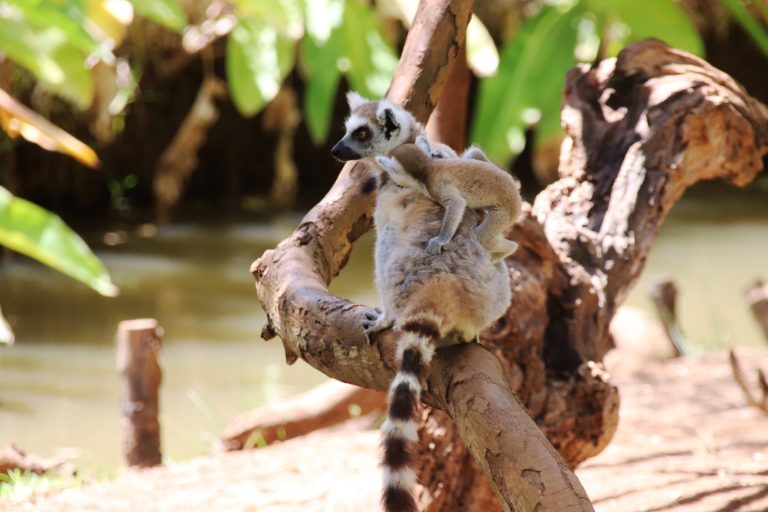
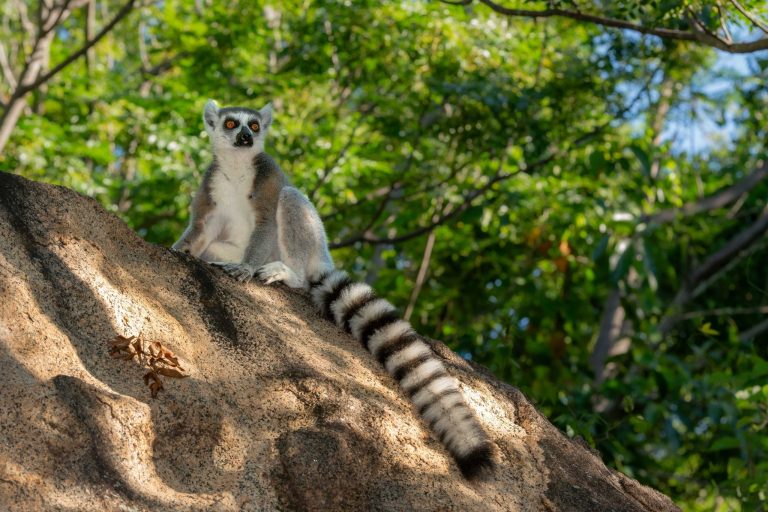
Beyond Fianarantsoa, Ambalavao makes Antaimoro paper pressed with dried flowers and hosts the island’s largest weekly zebu market, a striking sight that is still working agriculture, not a show. Just south, the community run Anja Reserve protects a troop of ring tailed lemurs among granite boulders. It is a short, easy walk and one of the best value lemur stops in the country, because entry fees go straight to the village.
Walkers can branch west from here into Andringitra National Park, where a two or three day trek reaches Pic Boby, at 2,658 m the second highest summit on the island. Nights in the highlands are cold from June to August, sometimes close to freezing, so pack a warm layer even if the rest of the trip is tropical.
Ranomafana National Park Rainforest Treks
A Ranomafana rainforest trek is where many travellers see their first lemurs in truly wild terrain. Ranomafana National Park, founded in 1991, covers about 41,600 hectares of steep montane rainforest in the southeast highlands and forms part of the Rainforests of the Atsinanana World Heritage Site. The name means hot water, after the thermal springs in the village.
The park owes its protection to the golden bamboo lemur, found here by researchers in 1986 and unknown to science before then. Today guides track it alongside the greater bamboo lemur, Milne Edwards’ sifaka, red bellied and red fronted lemurs, and a lot of chameleons and frogs. Trails climb and drop sharply, and after rain they are slippery. Expect leeches in the wet months; long socks tucked over trousers help.
Treks run from two hours to a full day. The longer circuits reach waterfalls and viewpoints over the Namorona river, and nocturnal walks along the park road find mouse lemurs and sleeping birds. Two nights is the sensible minimum here, because lemur sightings depend on where the groups are feeding that day, and a second morning doubles your chances.
Isalo National Park Hiking Tours: Canyons, Pools and Bara Country
Isalo hiking tours trade rainforest for sandstone. Isalo National Park, created in 1962, protects a great eroded massif of Jurassic sandstone in the south central region, cut by deep canyons with palm lined streams, natural swimming pools and grassland plateaus dotted with fire resistant tapia trees.

Most visitors base themselves in Ranohira and do one or two day hikes with a park guide. Popular walks lead to the Piscine Naturelle, a spring fed pool under pandanus palms, to the Black and Blue Pools, and into the Canyon des Makis and Canyon des Rats, where ring tailed lemurs and Verreaux’s sifakas move between the trees. Sunset at the rock arch known as the Window of Isalo is a regular end to the day. Longer camping treks of two to five days are possible for fit walkers, and operators selling hiking & trekking holidays in Madagascar often build their itineraries around Isalo and Andringitra.
Shade is limited and the midday sun is fierce. Start early, carry two litres of water, and wear shoes with grip for the rock slabs.
Isalo is also Bara country. The Bara are cattle herders, and you may pass their burial sites tucked into the cliffs, which are fady to touch or photograph closely. On the drive further south, Zombitse Vohibasia National Park is a short roadside stop for Appert’s greenbul, a bird found only here, and sifakas in a dry forest island.
Ifaty, Anakao and Berenty: Southwest Coast and Spiny Forest Trips
The RN7 ends at Toliara, and most tours finish with a beach stay. Ifaty is really two fishing villages, Mangily and Madio Rano, behind a lagoon protected by a long reef. Days here mix snorkelling, scuba trips on the reef, outrigger canoe rides and an early morning walk in the spiny forest of the Reniala reserve, where octopus trees and fat bottle baobabs shelter the long tailed ground roller and the subdesert mesite.
Anakao, south of Toliara, is reached by boat and is quieter still, with a short crossing to Nosy Ve for red tailed tropicbirds. Near Toliara, the Arboretum d’Antsokay is a good hour for anyone curious about the southern plants.
Further southeast near Fort Dauphin, the private Berenty Reserve is famous for ring tailed lemurs and Verreaux’s sifakas that cross open ground with sideways hops, the so called dancing sifakas. It is a fly in trip for most people and pairs well with the coastal forest lodges at Manafiafy. Robberies have been reported on isolated beaches north and south of Toliara, so walk on the busier stretches and leave valuables at the lodge.
Avenue of the Baobabs and Kirindy Forest Tours from Morondava
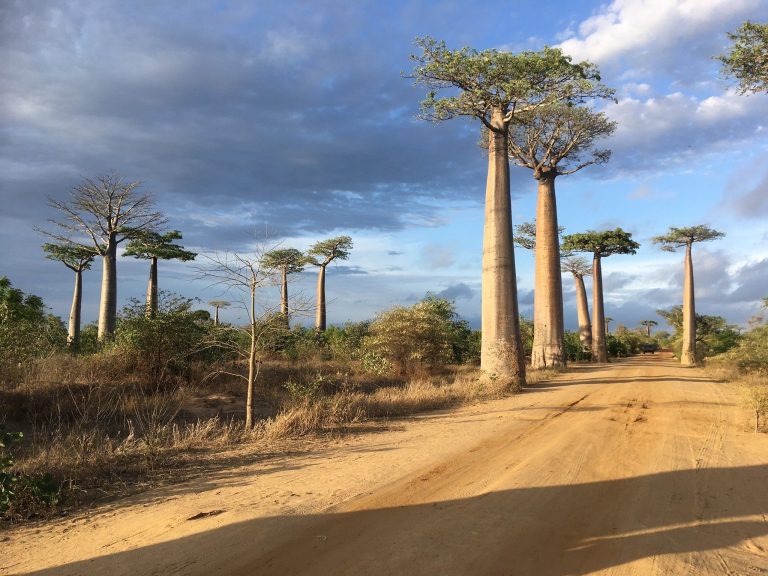
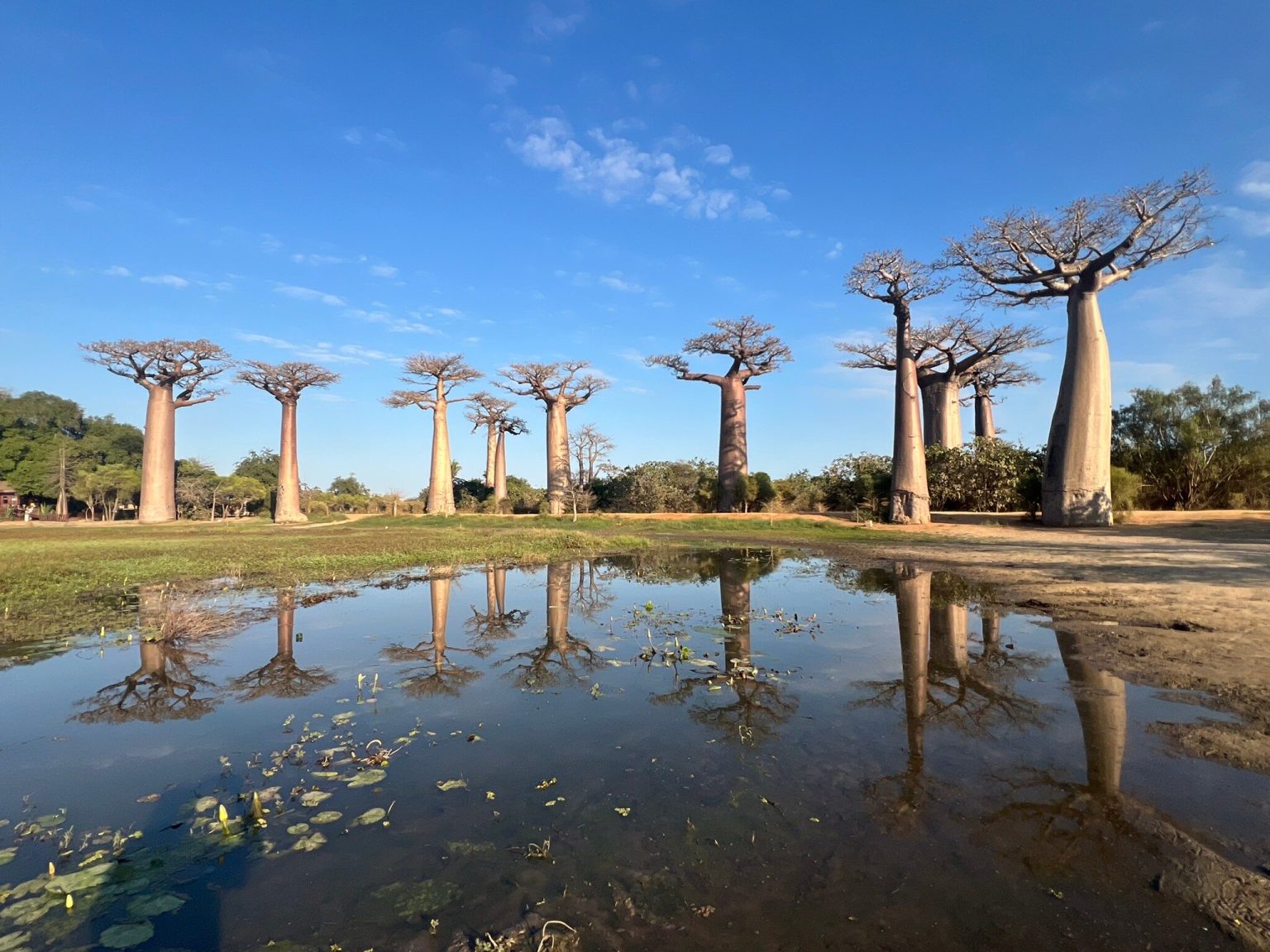
A Morondava baobab tour is the photograph most people have in mind before they book. The Avenue of the Baobabs is a short stretch of dirt road in the Menabe region, about 45 minutes north of Morondava, lined by some 20 to 25 Grandidier’s baobabs up to around 30 m tall, some thought to be several hundred years old. They are survivors of a dense forest long since cleared for rice and sugarcane, and the site now has protected status.
Arrive for sunrise if you want the road quieter. Sunset brings the tour buses, the souvenir sellers and the best colour, all at once. A few kilometres away, the Baobab Amoureux are two trunks twisted around each other, with a local love story attached that your guide will tell. Ask before photographing villagers on the road; many are happy to pose, some are not.
North of the avenue, Kirindy Forest is the best place in Madagascar to see the fossa, the island’s largest predator, which often visits the research camp, most reliably late in the dry season. Kirindy is also home to the giant jumping rat and Madame Berthe’s mouse lemur, the smallest primate known, and a night walk here is one of the most productive on the island. The Kirindy wildlife tour slots in naturally on the drive to the Tsingy.
Tsingy de Bemaraha Expedition and the Tsiribihina River Trip
A Tsingy de Bemaraha expedition is the adventure of western Madagascar. The Tsingy de Bemaraha World Heritage Site, inscribed by UNESCO in 1990, protects a forest of razor sharp limestone pinnacles, gorges and caves. The local word tsingy is often translated as the place where you walk on tiptoe, which is exactly how the rock feels.
Visitors base themselves at Bekopaka and explore two areas. The Petit Tsingy is a half day circuit close to the village. The Grand Tsingy, further north, is a full day of climbing ladders, crawling through narrow passages and crossing suspension bridges, clipped to fixed safety cables. Decken’s sifaka and red fronted brown lemurs live in the dry forest between the pinnacles, and a canoe trip into the Manambolo gorge adds caves and tombs.
Getting there is half the story. The road north from Morondava is unpaved, crosses two rivers by small vehicle ferry, and takes most of a day each way in a 4×4. It is only passable in the dry season, so the park opens from about April or May to November, with exact dates depending on the rains. Several days of the western circuit are spent driving, and many visitors say the Grand Tsingy was worth every bump. Charter flights to the area exist for those short on time.
The traditional alternative is a slow boat or canoe descent of the Tsiribihina River, two or three days of camping on sandbanks before rejoining the road at Belo sur Tsiribihina. Current UK government advice warns that armed criminals have boarded boats on the Tsiribihina and robbed passengers, and suggests using other routes, so check the latest position with your operator before booking this leg.
Northern Madagascar Tours: Ankarana, Amber Mountain and the Red Tsingy
A northern Madagascar tour starts in Diego Suarez (Antsiranana), on one of the largest natural bays in the world, about two hours by air from Tana. Boat trips leave for the turquoise Emerald Sea, and the coast road passes the Three Bays.
Amber Mountain National Park (Montagne d’Ambre) is a cool, misty rainforest on an old volcano, with waterfalls, crater lakes, crowned lemurs, Sanford’s brown lemurs and some of the tiniest chameleons on Earth. A few hours south, Ankarana National Park pairs grey limestone tsingy with caves, underground rivers and dry forest where crowned lemurs are common. The Red Tsingy, eroded spires of laterite near Irodo, glow at sunset and need only a short walk.
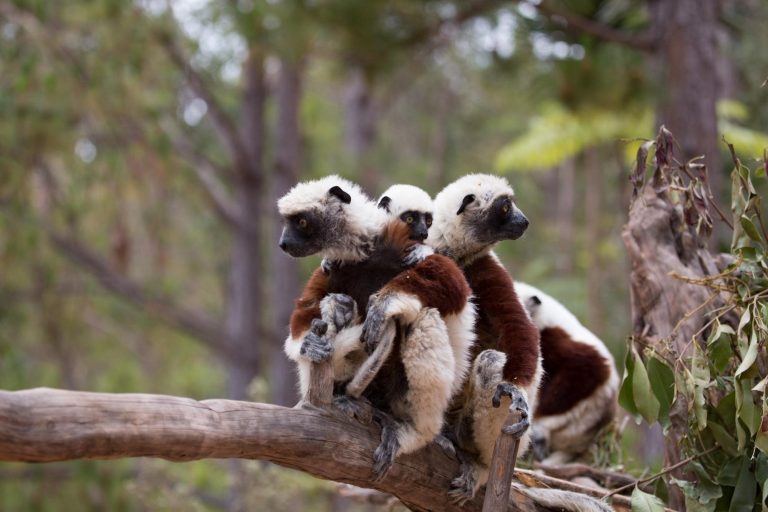
On the northwest coast, Ankarafantsika National Park near Mahajanga is the reliable place for Coquerel’s sifaka and a superb list of dry forest birds. Many northern tours end with a transfer by road and speedboat from Ankify across to Nosy Be.
Nosy Be Island Tours: Lokobe, Nosy Komba and Whale Sharks
Nosy Be island tours are Madagascar’s best developed beach holidays. The name means big island in Malagasy. Nosy Be lies off the northwest coast, has its own airport with flights from Tana and abroad, and its main town is Hell Ville (Andoany).
Most days are spent on the water. Boats run to the Nosy Tanikely marine reserve for snorkelling with turtles, to Nosy Komba for black lemurs and village crafts, to Nosy Sakatia for sea turtles in the sea grass, and to the white sand of Nosy Iranja. On land, the Lokobe reserve shelters the last original forest on the island, with black lemurs, panther chameleons and the Nosy Be ground boa, reached by pirogue from Ambatozavavy. Mount Passot is the classic sunset lookout over the crater lakes.
From roughly October to December, whale shark trips run off the coast, and humpback whales pass from about July to September. Scuba sites around the island are good for beginners. Robberies have been reported on isolated beaches here too, so keep to busier areas after dark.
Higher end visitors fly on to private islands such as Tsarabanjina or Nosy Ankao, while Nosy Be pairs well with a beach extension in Mauritius or an Indian Ocean cruise.
Ile Sainte Marie Whale Watching Tours
Whale watching tours are the main reason to visit Ile Sainte Marie, officially Nosy Boraha, a narrow island about 8 km off the east coast. Between roughly July and September, humpback whales arrive from Antarctic waters to calve and mate in the channel, and boats leave daily from Ambodifotatra and the hotel beaches.
Outside whale season the island is a quiet beach and cycling stop. Small paths lead through villages and coconut groves, the old pirate cemetery overlooks the bay, and a short boat ride reaches Ile aux Nattes at the southern tip. Coral lagoons are good for snorkelling, though rain can fall in any month on the east coast, with September to December the driest stretch.
Fly in from Tana where you can. The ferries from the mainland at Soanierana Ivongo have had accidents linked to overcrowding and poor maintenance, according to UK travel advice.
Masoala and Marojejy Rainforest Expeditions
A Masoala rainforest expedition is for travellers who want Madagascar at its wildest. Masoala National Park, founded in 1997, is the largest protected area in the country, with about 2,300 square km of rainforest and three marine parks along the northeast coast. It is part of the Rainforests of the Atsinanana World Heritage Site.
There are no roads in. Visitors fly to Maroantsetra, see the bright tomato frogs that live in town gardens, then take a boat across Antongil Bay to beach camps and lodges on the peninsula. The red ruffed lemur lives only here. The helmet vanga, Madagascar red owl and serpent eagle are prize birds, and the island of Nosy Mangabe offshore is a good place to look for the aye aye. Kayaking and snorkelling in the marine parks round off the stay.
Masoala is among the wettest places on the island. September to December gives the best odds of dry days, and boat crossings can be cancelled in rough seas, so build in a spare day.
Further north near Andapa, Marojejy National Park is a steep, demanding trek through mountain rainforest to see the silky sifaka, one of the rarest primates in the world. It suits fit walkers with time to spare.
Lemur Watching and Endemic Wildlife Tours Across Madagascar
Lemurs are why most people book a Madagascar wildlife tour, and the island delivers. There are about 112 lemur species, from mouse lemurs small enough to sit on a thumb to the indri, and every one is endemic. Our full guide to the primates of Madagascar covers the five lemur families, their conservation status and the best parks for each.
Sightings are likely, not certain. Lemur groups move, rain stops activity, and nocturnal species need patience. As a rough guide, the indri is near certain in Andasibe, ring tailed lemurs at Anja, Isalo and Berenty, sifakas in Kirindy, the Tsingy and Ankarafantsika, and bamboo lemurs in Ranomafana. The aye aye is the hardest to see, usually on a dedicated night trip.
Lemurs are only part of the list. Madagascar holds roughly half of the world’s chameleon species, including the giant Parson’s and the thumbnail sized Brookesia. The fossa is the top predator. Birders chase five endemic bird families, among them the ground rollers, mesites, asities and vangas. And the plants are their own reason to visit: six endemic baobab species, the spiny forest of the south, and hundreds of orchids.
Habitat loss is the backdrop to every visit. Much of the original forest is gone, and the IUCN rates most lemur species as threatened. Park fees and guide wages are one of the few incomes that make standing forest worth more than cleared land, which is a good reason to use registered local guides at every stop.
Primate lovers often pair Madagascar with apes on the mainland, since the island has no monkeys or apes of its own. Chimpanzee trekking in Kibale and gorilla trekking in Bwindi complete the set.
Malagasy Culture Tours: People, Customs, Food and Language
A Madagascar culture tour is rarely sold on its own, yet the people are what visitors talk about once they are home. The first settlers came by sea from Southeast Asia, probably from the region of Borneo, and were later joined by Bantu speaking arrivals from the African mainland, then Arab, Indian, Chinese and French influences. The result is a single Malagasy language with strong regional accents and around eighteen recognised ethnic groups, from the Merina of the highlands to the Betsileo rice farmers, the Bara herders around Isalo, the Sakalava of the west and the Antandroy of the arid south.
Two ideas run through daily life. One is fady, the local taboos that vary from village to village: a lake where swimming is forbidden, a food that may not be eaten on a certain day, a tomb that should not be pointed at. Your guide will tell you the ones that apply. The other is respect for the ancestors. In the highlands, families hold famadihana, the turning of the bones, when remains are taken from the family tomb, rewrapped in fresh cloth and danced with before being returned. These ceremonies mostly happen in the cooler months between about July and October, and visitors join only by invitation.
The Mikea, who live in dry forest north of Toliara, are among the last forest foragers on the island. Some tours visit Mikea communities with a local intermediary; ask your operator how the visit is arranged and who is paid.
Food is a quiet highlight on almost every tour. Rice comes with nearly every meal, often with romazava, a leafy beef and greens stew that many call the national dish, or ravitoto, pounded cassava leaves with pork. Zebu steak is on every hotel menu, and the coasts add lobster, crab and fresh fish. French bakeries and cafés survive in the towns. To drink, THB is the everyday beer, rum arrangé is rum steeped with vanilla, fruit or spices, and the Fianarantsoa area makes its own wine. Madagascar also grows much of the world’s vanilla, mostly in the northeast.
Malagasy is the national language and French is widely spoken in towns, hotels and offices. English is spreading in the tourism trade but is still patchy outside the main lodges, which is another reason a good guide matters. The island runs three hours ahead of GMT all year.
Courtesy goes a long way. Ask before photographing people, cover up when visiting villages and churches, and buy crafts such as raffia work, Zafimaniry carvings and Antaimoro paper from the makers where you can. LGBTQ travellers should read the local laws and customs section of their own government’s advice before booking, since attitudes outside Tana are conservative.
Best Time for Madagascar Tours by Region and Month
The best time for Madagascar tours is the dry season from April to November. Within that window, the right month depends on where you are going and what you want to see, because the east coast stays damp all year while the west and south are dry for most of it.
| Month | East and north | West and south | Verdict |
|---|---|---|---|
| Jan | Very wet | Hot, wet | Avoid |
| Feb | Cyclone risk | Hot, wet | Avoid |
| Mar | Wet | Wet, green | Poor |
| Apr | Drying | Green, warm | Good value |
| May | Mild | Dry, warm | Good |
| Jun | Cool, showers | Dry, mild | Very good |
| Jul | Cool, showers | Dry, cool | Peak |
| Aug | Cool, showers | Dry, cool | Peak |
| Sep | Drier | Dry, warm | Excellent |
| Oct | Dry, warm | Hot, dry | Excellent |
| Nov | Warm | Hot, rains due | Good |
| Dec | Rains begin | Hot, wet | Mixed |
January to March is the cyclone season. Storms hit the east coast hardest, many secondary roads become impassable except by 4×4, bridges wash out, and the western Tsingy road closes. Some lodges shut. Orchids and frogs are at their best, but this is a trip for specialists only.
April and May are a quiet sweet spot. The countryside is green, rice is being harvested, crowds are light and many lodges offer lower rates. The Tsingy road may not open until May, so keep the west late in your route.
June to August is cool and dry in the west and south, with highland nights near freezing and passing showers in the rainforest. July and August are the busiest months, driven by European school holidays, and good lodges in Andasibe, Ranomafana and Isalo fill early. Humpback whales are off Sainte Marie from about July.
September to November is the favourite window for wildlife. Baby lemurs cling to their mothers, birds are breeding and calling, chameleons are active, and jacarandas colour Tana. Whale sharks appear off Nosy Be from October. Heat builds in the west by November, and the first rains usually arrive late in the month.
December is a gamble. Early December can be fine on the RN7, while the east turns wet and the Tsingy closes.
Getting Around on a Madagascar Tour: Roads, Drivers and Internal Flights
Transport shapes every Madagascar tour itinerary more than any other factor. Most travel happens in a private 4×4 or minibus with a driver guide, and car hire companies include the driver as standard. Self drive is rare and hard work. The RN7 is paved but narrow, winding and full of potholes and unmarked speed bumps, and many other roads are dirt tracks that turn to mud in the rains.
Drive times are the number to watch. Tana to Andasibe takes three to four hours, Tana to Antsirabe four to five, Antsirabe to Ranomafana five to seven, and Isalo to Ifaty around five. The overland route from Tana to Morondava takes two long days, which is why most western tours fly. Do not drive after dark: vehicles often run without lights, roads are unlit, and armed robberies on main roads happen mostly at night.
Public minibuses called taxi brousse link every town and cost little, but UK travel advice recommends avoiding them because of robberies and frequent fatal crashes.
Domestic flights on the national carrier, Madagascar Airlines, connect Ivato with Morondava, Nosy Be, Toliara, Diego Suarez, Sainte Marie, Fort Dauphin and other towns, mostly on ATR turboprops. They save days, but schedules change at short notice and delays are common. Trip reports return to this again and again. Leave a buffer night in Tana before any international flight home, and expect your operator to rebook around changes.
Money matters on the road too. Ariary cannot be bought outside Madagascar, ATMs in small towns run dry, and park fees, guides and village purchases are cash only. Carry euros in clean notes, change or withdraw in Tana, and keep a stack of small notes for guides who rarely have change.
Where to Stay on Madagascar Tours: Lodges by Style
Accommodation on Madagascar safari tours ranges from simple bungalows to some of the most exclusive island lodges in the Indian Ocean. Overall it costs less than the safari lodges of East and southern Africa, though the top end has risen fast.
Hotel standards outside the top tier are basic by international measure. Rooms are clean, food is good, and electricity cuts are normal. Local operators know which places are reliable this season, so let them book.
Booking Madagascar Tour Packages: What Is Included and How to Choose an Operator
Quotes for Madagascar tour packages look alike at first glance and differ a lot in the detail. Read the inclusions line by line before comparing totals.
Park fees and local guide fees are the line that most often catches people out. Some operators fold them in, others leave you to pay cash at each gate, and the tariff is due to change, so ask which applies to your dates.
Choosing an operator comes down to a few questions. Is the company licensed by the Malagasy tourism ministry, and will it show you the licence? Who exactly is the driver guide, and how many seasons has that person worked? How old are the vehicles? What happens when a domestic flight is cancelled, which it may well be, and who pays for the extra night? International specialists usually buy the ground arrangements from a local handler and add their own support and, in some countries, financial protection. Booking direct with a local company often costs less and puts more money on the island, but you carry more of the risk yourself.
Travellers from the United States have no nonstop option. The usual routes run through Paris, Addis Ababa, Nairobi or Johannesburg, and the trip from the US East Coast commonly takes a full day or more each way, so an overnight in Tana on arrival is sensible. North American visitors need a tourist visa, available online or on arrival; the FAQ below covers the fees.
Read recent reviews of the operator, not just of the tour name. Trip reports single out the driver guide far more than the hotels, for better or worse. For the full price picture by trip style, see the Madagascar trip cost guide, and for day by day routes try the RN7 road trip itinerary.
Sample Madagascar Tour Itineraries from 7 to 18 Days
These outlines show what fits realistically. All assume a private driver guide and one domestic flight where noted.
Is Madagascar Safe for Tours Right Now? Current Travel Advice
Most Madagascar tours are running normally, but the country has been through a turbulent period and the rules for some travellers have changed. This section reflects UK and US government advice checked at the time of writing.
Politics. Youth led protests in Antananarivo and other cities brought violence and looting, followed by a military led takeover and a transitional government. The UK government has since lifted its warning against travel there, and the US rates Madagascar at Level 2, exercise increased caution. Demonstrations can still happen anywhere, so avoid gatherings and follow your guide’s advice.
Crime. Pickpocketing and bag snatching are common in Tana. Robberies happen on isolated beaches, on main roads at night and, according to UK advice, on boats on the Tsiribihina River. Travelling with a reputable operator, never driving after dark and keeping valuables out of sight remove most of the risk.
Ebola entry rule. Madagascar currently refuses entry to foreign visitors who have been in, or passed through, a country affected by Ebola in the previous 21 days. It has not published a fixed list of countries. The outbreak is centred on the Democratic Republic of Congo, Uganda’s cases were declared over by the World Health Organization in late August, and Kenya reported an imported case in early October. This matters directly if you plan to combine Madagascar with East Africa; see the next section.
Health. Malaria is present across the island, especially on the coasts, so take advice on tablets. A yellow fever certificate is required if you arrive from a country with yellow fever risk, which includes Uganda and Kenya. Bubonic plague occurs in some rural highland areas, mostly between August and April; the risk to tourists is very low. Drink bottled or treated water only. Travellers from cholera affected countries may be asked to take a dose of doxycycline at the airport.
Weather. The cyclone season runs from about November to April, peaking January to March. Check forecasts and keep travel insurance that covers disruption.
Advice changes quickly. Check your own government’s page, and the airline, before you book and again before you fly. Our guide to the safest countries to visit in Africa puts Madagascar in regional context.
Combining Madagascar Tours with Bwindi Gorilla Trekking and East Africa
Madagascar has lemurs but no great apes, so pairing it with gorilla trekking in Bwindi gives a primate trip no single country can match. The flight links are good. Kenya Airways flies nonstop from Nairobi to Antananarivo, and Ethiopian Airlines flies from Addis Ababa, with easy connections from Entebbe and Kigali to both hubs.
Order matters right now. Because of Madagascar’s Ebola rule, the safest plan is to visit Madagascar first and fly on to Uganda or Rwanda afterwards. Flying from Uganda straight into Madagascar risks refusal if the authorities treat any country on your route as affected, and Kenya’s recent case makes a Nairobi connection the greyer option for now. Routing via Addis Ababa, or allowing a 21 day gap, avoids the question. Confirm with a Malagasy embassy and your airline before paying for flights.
Timing lines up neatly. Bwindi’s driest months are June to September and December to February, so June to September suits both. A November trip combines Madagascar’s best wildlife month with Uganda’s lower season gorilla permit rate, though the forest trails will be wetter; see the best time for gorilla trekking in Uganda. Permits sell out in peak months, so secure Uganda gorilla permits before fixing the rest. Longer stays with a family can be arranged on the gorilla habituation experience, and Rwanda gorilla trekking from Kigali is a shorter alternative. Our Madagascar and Uganda itinerary sets out the combined route day by day.
Pack once for both. Rainforest walking in Ranomafana and Bwindi calls for the same waterproof jacket, long sleeves, gaiters and gardening gloves for nettles and roots, all covered in our gorilla trekking packing list. Travellers with more time add a Masai Mara safari for the migration from July to October, or the Serengeti, and then finish on a Madagascar beach. Ethiopia’s highlands are another natural add on through Addis; our Ethiopia tours guide covers the historic route.
Madagascar Tours FAQ
How many days do you need for a Madagascar tour?
Ten to fourteen days covers one region well, such as the RN7 from Andasibe down to Isalo and the coast. Add four or five days, and one domestic flight, to include the Avenue of the Baobabs and the Tsingy. A week is enough for Andasibe and the east coast only. Trying to see the whole island in under three weeks usually means more driving than walking.
What are the best tours to Madagascar?
For a first trip, the classic RN7 tour from Antananarivo through Andasibe, Ranomafana and Isalo to the southwest coast gives the widest mix of lemurs, scenery and culture by road. Add the western circuit for the Avenue of the Baobabs and the Tsingy if you have three weeks, or pick the north and Nosy Be for forest walks with a beach finish. Specialists should look at Masoala for rainforest, birding tours for the endemic families, and trekking trips in Andringitra.
Is Madagascar friendly to tourists?
Yes. Malagasy people are courteous and curious, and guides, drivers and lodge staff take real pride in showing visitors their country. Poverty is widespread, so expect requests for money or sweets in some villages and petty theft in Tana. Learning a few words of Malagasy or French, respecting fady and asking before taking photographs earn a warm response almost everywhere.
What time of year is best to visit Madagascar?
April to November is the best time to visit Madagascar for most tours, with September to November the favourite for wildlife and baby lemurs. July and August are cool, dry and busy. The western Tsingy is reachable only from about May to November, and January to March brings heavy rain and cyclones, especially on the east coast.
Can I book a Madagascar tour from the USA?
Yes. Many US travellers book with an American or European specialist that uses a local ground handler, or deal directly with a licensed Malagasy operator. There are no nonstop flights, so connect through Paris, Addis Ababa, Nairobi or Johannesburg and plan a night in Antananarivo before the tour starts. US citizens need a tourist visa, which can be arranged online before travel.
Is Madagascar a good tour for families with children?
It can be, for children who cope with long car days and simple hotels. The east rainforest circuit with Andasibe, the Vakona lemur island and the Palmarium suits younger children, and teenagers enjoy Isalo’s pools and the beaches of Ifaty or Nosy Be. Check malaria advice for children with a travel clinic and keep driving days short.
How much does a Madagascar trip cost?
Published small group departures of 12 to 15 days start at roughly US$2,800 to US$4,000 per person, excluding international flights, while private guided trips at upscale lodges commonly run US$7,000 to US$9,000 or more for two weeks. If you arrange a trip with a local operator, a private car with driver runs roughly US$50 to US$100 a day plus fuel, and domestic flight sectors roughly US$100 to US$300 each. July, August and the October to November holidays cost most; April, May and early December cost least.
What do park fees, guides and visas cost in Madagascar?
Madagascar National Parks charges foreign adults about 45,000 to 65,000 ariary a day depending on the park, and 25,000 ariary for foreign children, paid in cash. A doubling across every visitor category has been announced, reportedly due from 1 November, so check which rate applies on your dates. A registered local guide is compulsory and charged separately by circuit length. Tourist e visas cost €30 for up to 15 days, €35 for 30 days, €40 for 60 days and €50 for 90 days after a recent increase; UK advice still describes a small arrival fee for short stays, so check the official evisamada portal before you travel.
Is Madagascar safe for a guided tour?
For most visitors on an organised tour, yes, with sensible care. The UK no longer advises against travel and the US rates the country at Level 2. The main risks are theft in Tana, robbery on roads after dark and on isolated beaches, and road accidents, all reduced by using a reputable operator. Check current government advice and Madagascar’s Ebola entry rule before booking.
Will I definitely see lemurs on a Madagascar tour?
Almost certainly, though no species is guaranteed. Indri in Andasibe, ring tailed lemurs at Anja and Isalo, and sifakas in Kirindy and the Tsingy are seen on the great majority of visits. Rarer species such as the aye aye, the golden bamboo lemur and the silky sifaka need more time, a good guide and some luck.
Can I self drive in Madagascar?
Technically yes with an International Driving Permit, but very few visitors do. Hire cars normally come with a driver, roads are poor, signage is limited and night driving is unsafe. A driver guide also handles police checkpoints, ferries and lodge bookings, and speaks Malagasy, which pays for itself many times over.
How fit do you need to be for the Tsingy and Isalo treks?
Moderately fit. The Grand Tsingy involves ladders, narrow squeezes, exposed bridges and several hours in heat, so it is not for anyone with a strong fear of heights. Isalo’s day hikes are hot and rocky but manageable for most walkers who start early. Ranomafana’s steep, muddy trails are often the hardest walking on the RN7.
Can I combine a Madagascar tour with gorilla trekking in Bwindi?
Yes, and it is one of the best primate trips in the world. Fly between Antananarivo and Entebbe via Nairobi or Addis Ababa, and for now visit Madagascar first because of its Ebola entry rule. A Uganda gorilla permit costs US$800 for foreign non residents, US$700 for foreign residents and UGX 300,000 for East African citizens, with a US$600 rate for non residents in April, May and November. Rwanda’s permit is US$1,500.
What should I pack for a Madagascar tour?
A head torch with spare batteries for night walks, binoculars, layers for cold highland nights, a light rain jacket, long socks for leeches, sturdy walking shoes with grip, sun protection for Isalo and the west, insect repellent, a basic medical kit with anti diarrhoea tablets, and phone chargers for the car. Carry euros in cash and plenty of small ariary notes. Domestic flights have strict baggage limits, so pack soft and light.
Do I need vaccinations or malaria tablets for Madagascar?
Malaria tablets are advised for the whole island. A yellow fever certificate is required if you arrive from a risk country such as Uganda or Kenya, which matters on a combined gorilla trip. Routine jabs plus typhoid and hepatitis A are commonly recommended; see a travel clinic six to eight weeks before you leave.
Bwindiforestnationalpark.com is an independent visitor guide. We do not sell tours or book permits, but we can point you to licensed operators who run Madagascar tours and Uganda gorilla trips, many of them able to link the two. Browse our list of vetted safari companies, compare Madagascar Tours from specialist operators, or send your dates and questions through our contact page for free, no obligation planning advice.