A Kenya safari cost runs from about US$120 to US$320 per person a day on a shared road package with park fees, to roughly US$450 to US$1,000 a night at fly in conservancy and river camps, and US$1,850 to US$2,750 at flagship camps. Most visitors book a Kenya safari through a licensed Nairobi operator, built around the Masai Mara, whose reserve ticket alone is US$100 or US$200 per adult per day.
This guide prices Kenya as a whole: every park fee on the usual circuit, camps by tier, flights and road transfers, the extras that never appear on a quote, and a six night trip added up line by line. For the detail on one part of it, our Masai Mara safari cost page breaks down the reserve alone, the luxury Kenya safari guide covers the top camps, and the budget Kenya safari guide covers shared trips and camping. All prices are in US dollars per person sharing unless stated. If you are still choosing between operators, our list of the best Kenya safari companies is a good place to start.
Kenya Safari Cost per Person per Day and per Trip
A Kenya safari package price bundles five costs into one per person figure: the room with meals, park or reserve fees for each day inside a protected area, the safari vehicle and fuel, the driver guide, and the operator’s margin. Airport transfers in Nairobi are usually folded in. Here is what that bundle costs at each level, from operators’ and camps’ own published rates.
| Tier | Per person | Basis |
|---|---|---|
| Shared budget road trip | US$120 to 190 a day | Fees in |
| Mid range lodge road trip | US$200 to 320 a day | Fees in |
| Fly in conservancy camp | US$430 to 969 a night | All in |
| Classic Mara river camp | US$453 to 998 a night | Full board |
| Flagship camp | US$1,850 to 2,750 a night | All in |
The budget rows come from a Nairobi operator’s own rate card for three day Mara trips: US$370 per person from January to June and US$570 from July in a base camp, US$520 and US$750 in a mid range tented camp, US$600 and US$970 in a lodge, park fees included. The fly in row is Gamewatchers’ Porini camps in the Selenkay and Mara conservancies, where meals, drinks, game drives, walks, night drives and conservancy fees are in the rate. The river camp row is Governors’ Camp at Musiara, from its April and May low rate to its July to October high. Governors’ Il Moran tops out at US$1,592 in peak season, and Angama Mara publishes about US$1,850 per person in standard season and US$2,750 in peak.
For a whole trip, multiply and add flights. Three days on the cheapest Mara package is about US$370 in March. Six nights at two Porini camps with flights comes to about US$4,800 in November and US$6,200 in August, as the worked example below shows. Six nights at a flagship camp in peak season come to US$16,500 before flights. International flights sit outside every figure here.
What sits outside a package matters as much as what is in it. Your Kenya eTA, travel insurance, tips, drinks at budget and mid range camps, laundry, a balloon flight and souvenirs are almost always extra. Some budget operators also leave park fees out of the headline price, which makes a safari look US$200 to US$400 cheaper than it is. Ask for every quote in the same format: total per person, with park fees shown as their own line.
The style of camp changes what “full board” means. A budget camp gives you three meals. Many mid range and luxury camps work on a full board plus or all inclusive basis that covers house drinks, game drives in the camp’s own vehicles and sometimes laundry and conservancy activities, so two quotes can differ simply because one includes things the other charges for on the spot.
To price your own dates, the calculator below works from the same published rates. Pick a tier, a month and the nights in each park; the road trip rates already include park fees, and for camp based trips you can untick the fee box to add the reserve and KWS tickets for the days you will use them.
Kenya Safari Cost Calculator
Set your group, month, comfort level and nights in each park to see an indicative per person range, with reserve and park fees worked out for your dates.
- Per person
- USD 1,320 to 2,130
- Your group
- USD 2,640 to 4,260 for 2 travellers
| Mid range lodge road trip, 6 days at USD 200 to 320 a day | USD 1,200 to 1,920 |
| Kenya eTA | USD 30 |
| Tips, 6 days at USD 15 to 30 | USD 90 to 180 |
Park and reserve fees are treated as part of your package rate, so they are not added again.
| Item | Indicative cost |
|---|---|
| Budget shared road trip | USD 120 to 190 a day, park fees in |
| Mid range lodge road trip | USD 200 to 320 a day, park fees in |
| Fly in conservancy or river camp | USD 430 to 998 a night, conservancy fees in |
| Flagship camp | USD 1,850 to 2,750 a night, all in |
| Maasai Mara reserve, nonresident adult | USD 100 a day January to June, USD 200 July to December |
| Mara conservancy fee | USD 130 to 150 a night, usually inside the camp rate |
| Amboseli or Lake Nakuru, nonresident adult | USD 90 a day on the KWS schedule, which was challenged in court |
| Tsavo East or Tsavo West, nonresident adult | USD 80 a day |
| Kenya eTA | USD 30 |
| Health insurance for the eTA | Gazetted, then challenged in the High Court; check the eTA portal before you buy |
| Bush flight, Nairobi to the Mara | About USD 283 to 350 each way with taxes |
| Hot air balloon flight | USD 450 to 500 |
| Maasai village visit | USD 20 to 40 |
| Tips, guide and camp staff | USD 15 to 30 a day |
Indicative prices for nonresident adults. The road trip day rates on this page include park fees, so the fee box starts ticked. Fly in and flagship camp rates include conservancy fees but not the Mara or KWS ticket on days you drive into a reserve or park, so untick the box for those, or for any budget quote that leaves fees out. One fee day is counted per night in each park; a late departure can add another day. Children pay lower park fees; see the fee comparison below. International flights are not included.
Last checked October. Sources: Kenya Wildlife Service fee regulations (Legal Notice 160), Narok County reserve fees as reported by The Kenya Times and Nation, Mara Triangle, Gamewatchers Porini rates and flight fares, Governors’ Camp and Angama Mara rate sheets, a Nairobi operator’s Mara rate card, the Kenya eTA portal.

Masai Mara Fees: Reserve Tickets, Conservancies and the 12 Hour Rule
The Masai Mara safari is where most Kenya safari money is spent, and its fee depends first on who runs the land. The Maasai Mara National Reserve is not a Kenya Wildlife Service park. Narok County sets its fees, and the western section, the Mara Triangle, is run by the not for profit Mara Conservancy on the same non resident rates with its own ticketing. Both publish this table, per person per day.
| Visitor | Jan to Jun | Jul to Dec |
|---|---|---|
| Non resident adult | US$100 | US$200 |
| Child 9 to 17 | US$50 | US$50 |
| Child 8 and under | Free | Free |
| Kenyan citizen adult | KSh 1,500 | KSh 3,000 |
| East African resident | KSh 2,500 | KSh 5,000 |
Three rules change the maths on every Mara safari.
The ticket is valid for 12 hours, from 6am to 6pm, whatever time you enter, and it does not carry overnight. A group that reaches Sekenani Gate at four in the afternoon after the drive from Nairobi pays a full day for two hours of game viewing, so good operators plan the first night at a camp outside the gate and enter fresh the next morning. A three day road trip in August with two reserve days carries US$400 of tickets per adult before a bed is paid for; in March, US$200.
The high band starts on 1 July with the wildebeest migration and runs to 31 December, well past the point when the herds usually turn south. And the rate no longer changes with where you sleep: non residents pay the same inside or outside the reserve.
Vehicles pay too: KSh 1,000 a day for a car with fewer than six seats and KSh 1,500 for six to twelve. Private self drive cars are barred from Narok County’s side of the reserve, but the Mara Triangle admits private four wheel drive vehicles, valid for 12 hours with re entry, and its rangers will ride along as guides for KSh 1,500 for a drive under six hours or KSh 3,000 for longer. Triangle payment is cashless, by card or mobile money. For a fuller look at the reserve, see our Masai Mara safari guide.
Conservancy camps work differently. Around the reserve sit private conservancies such as Mara North, Naboisho, Olare Motorogi and Ol Kinyei, whose camps build a conservancy fee for the Maasai landowners into their nightly rate. Gamewatchers lists US$130 per person a night on its current offers plus a US$5 habitat payment, rising to US$150 for most conservancies next season. Conservancy guests pay the reserve ticket only on days they drive into the reserve itself, and many never do, because the conservancies cap vehicle numbers and allow off road driving to sightings, night drives and guided walks. Several trip reports describe twenty or more vehicles around one cheetah in the main reserve in August, which is exactly what conservancy camps sell against.
If you want a local planning resource dedicated to the reserve, Maasai Mara is a great Kenya safari destination to research in depth before you compare quotes, since the reserve is where the biggest fee lines on most quotes are paid.
Kenya Wildlife Service Park Fees for Amboseli, Tsavo, Nakuru and Other Safari Parks
Outside the Mara, most Kenya safari tours pass through parks run by the Kenya Wildlife Service (KWS). KWS replaced fees that had stood for nearly two decades with a tiered schedule, and the tier your parks fall into makes a real difference to a quote. KWS currently publishes these non resident conservation fees per person, valid for up to 24 hours.
| Park | Adult | Child |
|---|---|---|
| Amboseli, Lake Nakuru | US$90 | US$45 |
| Nairobi NP | US$80 | US$40 |
| Tsavo East, Tsavo West | US$80 | US$40 |
| Meru, Kora, Aberdare | US$70 | US$40 |
| Mount Kenya | US$70 | US$35 |
| Hell’s Gate, Longonot | US$50 | US$25 |
| Tsavo West and Amboseli | US$150 | US$80 |
| Tsavo East, West, Amboseli | US$215 | US$115 |
A KWS child is five to seventeen, and under fives enter free. African citizens pay lower dollar rates, and East African citizens and Kenya residents pay in shillings: KSh 1,500 and KSh 2,025 per adult for Amboseli. Vehicles add KSh 600 a day for a car with under six seats. KWS also charges US$50 per person for a night game drive in the parks that allow one, on top of entry. The two package tickets save money on a southern circuit, and payment is cashless through the online system, which most operators handle for you.
The schedule was challenged in court by tourism operators soon after it launched, so check the KWS website for the rate in force on your dates. County reserves follow their own rules: Samburu, Buffalo Springs and Shaba in the north are run by their counties, as the Mara is by Narok, and their fees change on a different timetable, so ask your operator for the current figure.
Here is how each common stop changes a quote.
The fee comparison below puts the reserve, the KWS parks and the conservancies side by side for your month, traveller type and number of days.
Kenya Park and Reserve Fee Comparison
Choose a month, a traveller type and a number of days to compare entry fees across the reserves and parks most Kenya safaris visit.
August: Maasai Mara high season rates apply. Showing 8 areas for a nonresident adult, 2 days each.
| Reserve or park | Fee per day | Your days |
|---|---|---|
| Maasai Mara National ReserveNarok side and Mara Triangle; 12 hour ticket, 6am to 6pm | USD 200 adult | USD 400 |
| Amboseli National ParkKenya Wildlife Service; same rate all year | USD 90 adult | USD 180 |
| Lake Nakuru National ParkKenya Wildlife Service; same rate all year | USD 90 adult | USD 180 |
| Tsavo East National ParkKenya Wildlife Service; same rate all year | USD 80 adult | USD 160 |
| Tsavo West National ParkKenya Wildlife Service; same rate all year | USD 80 adult | USD 160 |
| Nairobi National ParkKenya Wildlife Service; half day trips from the city | USD 80 adult | USD 160 |
| Mara conservanciesMara North, Naboisho, Olare Motorogi and others; per night, usually in the camp rate | USD 130 to 150 adult | USD 260 to 300 |
| Ol Pejeta ConservancyLaikipia; private conservancy | USD 110 adult | USD 220 |
Children Maasai Mara: free for 8 and under. Kenya Wildlife Service parks: free for 5 and under, child rate up to 17. Conservancies set their own child rates, often around half the adult fee, so they show as “ask the camp” for children.
Indicative fees for nonresidents, paid cashless through eCitizen or by card and mobile money at the gates. Vehicle entry fees are extra and usually sit inside the safari package. East African residents and Kenyan citizens pay lower rates in shillings. The Kenya Wildlife Service schedule was challenged in court soon after it launched, so check the KWS website for the rate in force on your dates.
Last checked October. Sources: Kenya Wildlife Service fee regulations (Legal Notice 160), HapaKenya, Tourism Update, The Kenya Times, Nation, Mara Triangle, SafariFind, African Overland Tours, Chags Photography.
Lodge and Camp Prices on a Kenya Safari by Tier
Accommodation is where a Kenya safari tour splits into budget, mid range and luxury, and it is the largest line on every quote above the cheapest level. These are published rates per person sharing per night.
Location inside the tier counts. In the Mara, a budget camp near Talek or Sekenani gate is cheap partly because it sits outside the reserve, which means a drive in each morning and a reserve ticket every day you use. A camp on the Mara River on the migration route costs far more for the same standard of tent, because you are paying for position. In Amboseli and Tsavo, the large lodges inside the parks are usually mid range and quote through operators, while conservancy camps outside the boundary save the KWS ticket on days you stay in the conservancy.
Supplements add up. Solo travellers pay a single supplement of about US$180 to US$210 a night at the Porini camps and US$398 at Il Moran in peak season, against about US$30 on a budget package. Porini adds US$40 per person a night on the Christmas and New Year dates. A quiet tip from people who have done several trips: mixing tiers works. Two nights somewhere simple on a transit stop, then the money spent where you will spend the most time, gives a better trip than one middle standard all the way through.
Road Safari or Fly In Safari: Transport Costs in Kenya
Transport mode is the next big decision. A road safari uses one vehicle and one driver guide for the whole trip. A fly in safari uses scheduled light aircraft from Nairobi’s Wilson Airport to airstrips in the Mara, Amboseli, Samburu or Meru, with game drives in each camp’s own vehicles.
Kenya allows safari minibuses with pop up roofs and 4×4 Land Cruisers, and the difference shows up in the quote. Minibuses are cheaper and fine on good roads in dry weather. Land Cruisers handle mud, carry spare fuel and give a higher, steadier view, and many travellers who have used both say the window seat and the open roof matter more than anything else about the vehicle. Ask whether every guest gets a window seat.

Road travel takes time. Nairobi to the Mara is usually five to six hours, the last stretch on rough road past Narok, and trip reports often describe it running longer. Nairobi to Amboseli is about four to five hours, and the Tsavo parks sit along the Nairobi to Mombasa highway. A road safari that visits four parks can spend two or three full days just driving, and you pay for the vehicle and guide on each of them.
Flying saves those days. The Nairobi to Mara flight takes well under an hour, and connecting flights link the Mara with Amboseli, Samburu and the coast. It costs more per leg, but you lose less time and avoid paying for a vehicle and driver to sit idle. Several travellers suggest leaving a suitcase at a Nairobi hotel and flying in light. A route that mixes both, driving to Lake Nakuru and Naivasha and flying out of the Mara, is a common middle path.
Worked Example: Six Nights in Amboseli and the Masai Mara Costed per Person
Here is a whole Kenya safari added up from published rates: two people sharing, three nights at Porini Amboseli Camp in the Selenkay Conservancy and three at Porini Mara Camp in Ol Kinyei, flying from Wilson, with a night in Nairobi first. It is a mid to upper tier trip in small conservancy camps, priced for late August.
Move the same trip to November and the camp lines fall to US$551 and US$584 a night, which brings the total to about US$4,810. Gamewatchers’ own example of the same offer, with Porini Giraffe in place of Porini Mara and taxes and extras left out, starts at US$3,856. Travelling alone adds the single supplement, US$210 a night in August, or US$1,260 over six nights. A dawn balloon flight adds US$450 to US$500, and a day’s drive into the main reserve adds US$200 in the high band.
A road safari over a similar week costs far less. On the operator rate card above, three Mara days in a base camp are US$370 to US$570 including fees; add Amboseli or Lake Nakuru at US$90 a day each in fees plus the vehicle, and a shared or mid range road week usually lands well under half the fly in figure, at the price of two long drives. Our 7 day Kenya safari and 3 day Kenya safari pages show both shapes day by day.
Safari Seasons and How Timing Moves Kenya Safari Prices
Season is the biggest lever you control. Kenya safari prices peak from July to October, when the migration herds are in the Mara, and again over Christmas and New Year. Our Masai Mara migration safari guide sets out trips for those months. They fall hardest in April and May, the long rains, when many camps either close or cut their rates sharply; the Porini camps close from mid April to the end of May.
Here is the catch. Camp seasons and the Mara ticket do not line up. Camps drop their rates in November and early December, yet the reserve stays on its US$200 band until 31 December. From January to March the opposite happens: camps run mid season rates, the reserve fee is US$100, the weather is mostly dry and the resident lions and cheetahs are easy to find. For a Mara safari on a budget, that window is often the best value of the year.
| Months | Mara adult | Governors’ Camp | Porini Mara |
|---|---|---|---|
| Jan to Mar | US$100 | US$623 | US$596 |
| Apr to May | US$100 | US$453 | Closed |
| June | US$100 | US$623 | US$584 |
| Jul to Sep | US$200 | US$998 | US$836 |
| October | US$200 | US$998 | US$595 |
| Nov to mid Dec | US$200 | US$623 | US$584 |
| Christmas | US$200 | US$998 | US$862 |
April and May bring real trade offs. Black cotton soil in the Mara and Amboseli turns to deep mud, some roads become impassable and a few camps shut altogether. In return you get calves, migrant birds, empty sightings and the lowest rates of the year where camps stay open: Governors’ Camp’s US$453 is less than half its August rate. June is a quiet sweet spot: the rains have eased, camps have not yet switched to peak rates, and the Mara ticket is still US$100.
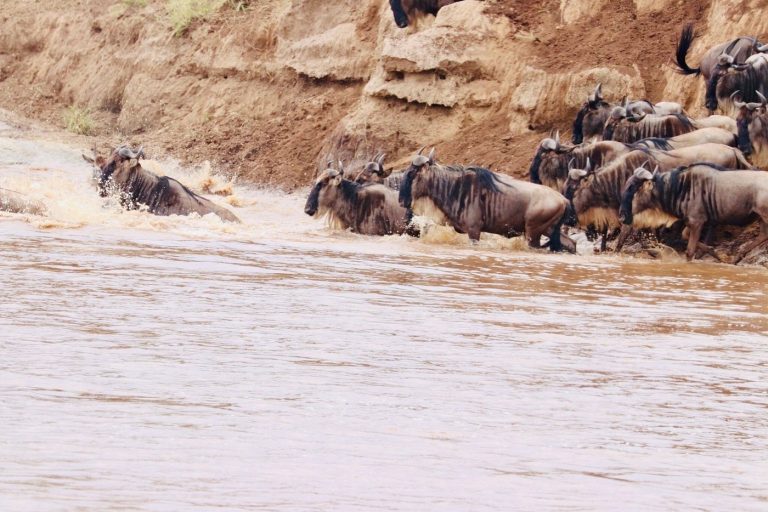
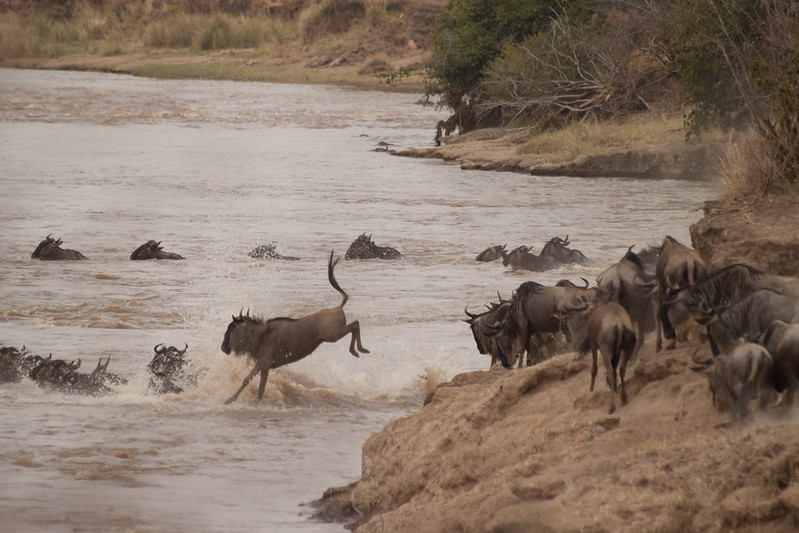
From July the herds usually reach the Mara River, and every rate in the reserve goes up at once. If seeing a river crossing is the reason for your trip, budget for it and book early: the best located camps on the river fill many months ahead. Crossings are never guaranteed on any given day, and guides often wait for hours by the bank.
Timing also shapes which parks offer value. Amboseli’s views of Kilimanjaro are clearest in the dry months; Tsavo works most of the year, though heavy rain from March to May slows game viewing; and Lake Nakuru, Naivasha and Hell’s Gate are short drives from Nairobi in any season, at US$50 to US$90 a day in fees. For month by month detail across the region, our guide to the best time for gorilla trekking in Uganda pairs well if you are adding gorillas to the trip.
Group Size, Private Vehicles, Children and the Single Supplement
Group size explains most of the gap between a cheap group safari and a private one. The vehicle, fuel and guide cost the operator the same each day whether one guest rides or six. Split six ways, that cost is small; carried by one person, it is not.
A shared or joining safari puts you in a vehicle with other travellers on fixed dates and a fixed route. It is the cheapest way to see the Mara, at US$370 to US$570 for three days on the rate card above, and the right choice for many solo travellers, whose single supplement there can be as low as US$30. The trade offs are a set pace, less say over how long you stay at a sighting, and sometimes a vehicle with every seat taken.
A private safari gives you the vehicle and guide alone. For two people it costs noticeably more per person than a group trip, but for a family or a group of four or more the gap narrows to almost nothing. At conservancy camps, where game drives run in shared camp vehicles, a vehicle to yourself costs extra: US$375 a day at Porini, with a two day minimum, and US$385 a day at Governors’ from January to June or US$512 from July to October, for up to six guests. Photographers tend to pay it so they can wait at a sighting.

Children are cheaper than most parents expect. In the Mara, children eight and under enter free and nine to seventeen year olds pay US$50 a day all year; in KWS parks under fives are free and children pay about half. Porini charges a child aged 8 to 16 sharing with two adults 60 percent of the adult rate and does not take children under eight, while Governors’ prices children under 16 from US$294 a night. One family’s ten day Kenya and Tanzania budget, shared online, notes that their fifteen year old was billed as an adult, so check each camp’s age bands. Our Kenya family safari guide covers how this works with younger children.
Travelling as a pair or a small group of friends is the simplest saving of all. One couple on a private road safari pays for a whole vehicle; two couples share it.
Hidden Costs and Packing for a Kenya Safari Trip
Beyond the package, a few costs catch people out on a Kenya safari trip.
Money handling matters too. Cards attract foreign transaction fees and some camps add a surcharge for card payments, so carry clean, recent US dollar notes for tips and small purchases, and use mobile money if you have a Kenyan line. At curio markets, prices start high and bargaining is normal. Health costs such as malaria tablets, any vaccinations your doctor recommends and a yellow fever certificate if you arrive from a risk country are paid before you leave.
Packing affects cost too, most of all on a fly in safari, where the 15 kg soft bag limit is enforced. Neutral coloured layers for cold early game drives, a warm fleece for the Mara highlands, a wide brimmed hat and good binoculars cover most needs. Our guides to what to wear on safari and gorilla treks and the gorilla trekking packing list work for a combined Kenya and Uganda trip, and our page on cameras and binoculars for an African safari explains what lenses and magnification suit the Mara. The full range sits in our safari gear and clothing section.
A reasonable rule from experienced travellers: keep a buffer of 15 to 20 percent on top of the quoted price for tips and extras, and confirm in writing what the quote includes before you pay a deposit.
Booking a Kenya Safari Tour and Reading the Quote
Most visitors book a Kenya safari tour through a Kenyan ground operator or through an agent at home who uses one. A local operator is usually cheaper because there is one margin, not two; an overseas agent adds a mark up but may give you consumer protection under your home country’s package travel rules. Either way, choose an operator licensed by Kenya’s Tourism Regulatory Authority and ideally a member of KATO, the Kenya Association of Tour Operators.
When comparing quotes, line them up on the same terms: nights in each park, camp names rather than “or similar”, vehicle type and whether it is private, park and conservancy fees included or not, and which meals and drinks are covered. Ask for the contract to state that all park fees are included. If one quote is far cheaper than the rest, the difference is usually a camp outside the reserve, a shared vehicle or fees left out; one Nairobi operator advertises a three day Mara trip at US$285, but without the US$200 to US$400 of reserve tickets.
Small extras on a quote are worth checking line by line. Shared online budgets from families show items such as a Mara pickup, a high season supplement and a daily charge to upgrade to an open sided vehicle added on top of the base rate, each a few hundred dollars across a trip. None of them is wrong, but they belong in the comparison.
The quote checker below does that comparison for you. Tick what an operator’s quote says is included, and it lists what is left out and what those items usually add per person.
Kenya Safari Quote Checker
Tick what your operator’s quote says is included. The checker lists what is left out and what those items usually add per person, so two quotes can be compared fairly.
Major items missing
Expect to add about USD 960 to 1,080 per person, plus 6 items to price with the operator
Park and reserve entry fees: about USD 840 to 870 per person for this trip. Ask the operator for the fee line in writing.
| Item left out | Typical extra per person |
|---|---|
| Maasai Mara reserve fee | USD 100 a day January to June, USD 200 July to December |
| Amboseli, Nakuru or Tsavo fee | USD 80 to 90 a day |
| Tips | USD 15 to 30 a day |
| Kenya eTA | USD 30 |
| Private vehicle, meals, transfers, water, drinks | Prices vary by operator and camp; ask for each in writing |
| Single room supplement | Varies by camp; ask for the solo price in writing |
Indicative extras for nonresident adults. Only the items with verified prices are added up. The park fee estimate counts your Maasai Mara days at the season rate and the remaining safari days at a typical Kenya Wildlife Service park fee. A quote that leaves out park fees is not cheaper; it just moves the biggest line to later.
Last checked October. Sources: Kenya Wildlife Service fee regulations (Legal Notice 160), Narok County reserve fees as reported by The Kenya Times, UK FCDO entry requirements, Porini, Discover Africa, Ella McKendrick travel guide, Roads of Adventure Safaris.
Kenya being a safari destination with dozens of operators, it pays to shortlist three and ask each the same questions. Our list of the best Kenya safari companies and our wider directory of safari companies for gorilla and Kenya combinations are a good start.
Book early for migration season and Christmas: the well placed camps fill six months to a year ahead, and luxury camps in the conservancies often longer. Forum regulars also point out that booking next year’s trip before the new rates come out often locks in the current year’s prices. For April, May and early June, shorter notice is usually fine and late discounts are common.
Kenya Safari and Gorilla Trekking: Adding Bwindi or Volcanoes and the Cost
There are no gorillas in Kenya, but a Kenya safari and gorilla trekking combination is one of the most popular trips in East Africa: savannah game in the Mara, then mountain gorillas in Uganda’s Bwindi Impenetrable National Park or Rwanda’s Volcanoes National Park. Our guide are there gorillas in Kenya explains the geography, and the gorilla and Masai Mara safari page lays out the combined route.
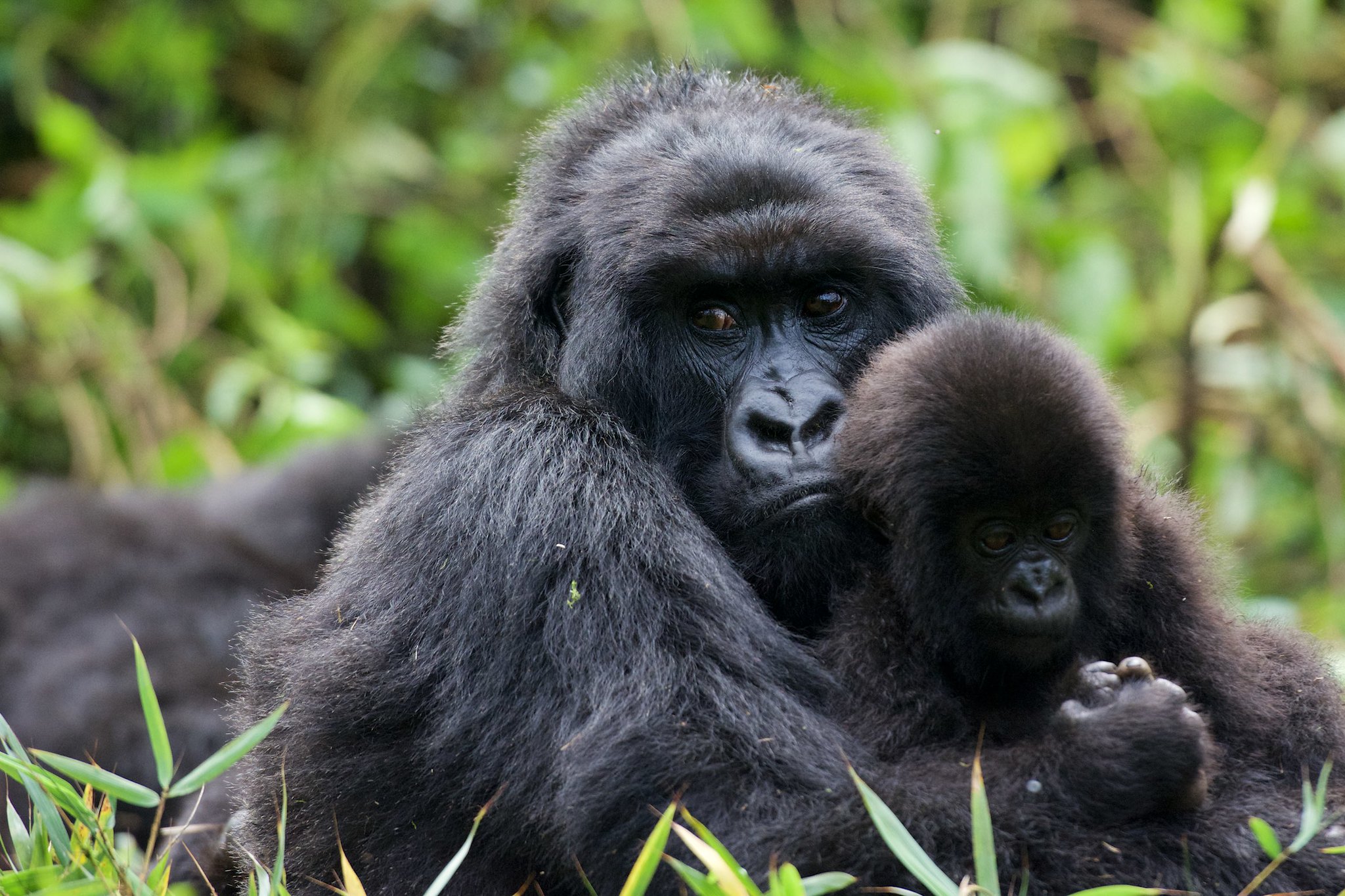
The gorilla permit is the single biggest cost in this combination. A Uganda permit costs US$800 for foreign non residents, US$700 for foreign residents and UGX 300,000 for East Africans, with US$600 and US$500 rates in April, May and November that are paid in full at booking and cannot be rescheduled. The gorilla habituation experience sells at US$1,500, with a rise to US$1,800 announced. Rwanda charges US$1,500, or US$1,050 from November to May on the RDB offer with two nights in Nyungwe or Akagera. That is why most budget and mid range combinations go to Bwindi, while Rwanda wins on transfer time: Kigali to Volcanoes is about two to three hours by road. Our page on gorilla trekking in Uganda and Rwanda compares the two, and Rwanda gorilla trekking covers the Rwandan side.
Routing is simple. Most people fly Nairobi to Entebbe or Kigali after the Mara, then drive or take a small plane to the gorilla parks; see how to get to Bwindi for the options. The US$100 East Africa Tourist Visa covers Kenya, Uganda and Rwanda on one document. Timing lines up well: the migration months of July to October fall in Uganda and Rwanda’s long dry season, the easiest time to trek. Permits sell out then, so secure them first and build the Kenya leg around the date. Our guide to gorilla permits in Uganda and Rwanda explains how booking works, the gorilla habituation experience page covers the four hour option, and for lodges near the trailheads, see Bwindi lodges.
Kenya Safari Prices Against Tanzania, Rwanda and Botswana
Kenya is usually the best value of the big safari countries for a first trip. Distances from Nairobi are short, minibuses keep road safaris cheap and the range of mid range camps is wide. Tanzania’s northern circuit has similar wildlife, but the Serengeti charges about US$70.80 to US$82.60 per 24 hours including VAT, depending on season, plus a concession fee of up to US$60 a night before VAT inside the park, against the Mara’s US$100 or US$200 for 12 hours, and its camps sit further from Arusha, so a comparable trip tends to cost more; our Tanzania safari cost guide sets out the difference, and the Serengeti safari page covers the migration from the southern side.
Botswana sits at the top of the price range because its government limits bed numbers in the Okavango Delta and most camps are fly in only. Rwanda’s average trip costs more than Kenya’s mainly because of its US$1,500 gorilla permit. Our pages on Rwanda safari cost and African safari costs compare the wider region.
Kenya Safari Cost Questions
What is the average cost of a Kenyan safari?
On published rates, about US$120 to US$190 per person a day for a shared budget road trip with fees, US$200 to US$320 for a mid range lodge package, and US$450 to US$1,000 a night at conservancy and river camps. A six night fly in trip to Amboseli and the Mara costs about US$4,800 in November and US$6,200 in August per person sharing, before international flights.
How much does a 7 day trip to Kenya cost?
It depends on the tier. A shared road week built from budget Mara packages plus Amboseli or Nakuru fees lands at a small fraction of a fly in week, which runs about US$4,800 to US$6,200 at the Porini camps with a Nairobi night. Add the international flight, the US$30 eTA, insurance and tips. Our 7 day Kenya safari page prices the routes.
How much is a 4 day safari in Kenya?
A four day Mara trip on a budget base camp package costs a little more than the three day rate of US$370 (January to June) or US$570 (July to December), since a third reserve day adds US$100 or US$200. Three nights at a fly in conservancy camp cost about US$1,620 to US$2,660 in camp rates plus about US$530 in return flights and taxes.
How much would a 3 week African safari cost?
Build it leg by leg. Three weeks that join Kenya with gorillas in Uganda or Rwanda, or with Tanzania, add each country’s park fees, camps and a regional flight to the Kenya figures above, plus a gorilla permit of US$800 in Uganda or US$1,500 in Rwanda. At mid range camps the total commonly runs into five figures per person; on shared road trips and budget camps it can be a fraction of that.
How much is a Masai Mara safari for three days?
About US$370 to US$600 per person from January to June and US$570 to US$970 from July on operators’ own rate cards, park fees included, depending on the camp. A two night fly in conservancy package costs US$1,930 to US$2,800. The full breakdown is on our Masai Mara safari cost page.
Is the Masai Mara ticket 12 hours or 24 hours?
Twelve. The reserve ticket runs from 6am to 6pm on the day of entry, whatever time you arrive, and does not extend overnight. Arriving late in the afternoon still costs a full day, so many operators plan the first night at a camp outside the gate and enter the next morning. KWS national parks use a 24 hour ticket.
Are park fees included in Kenya safari package prices?
Usually, but not always. Most reputable operators include park, reserve and conservancy fees, while some budget quotes leave them out to look cheaper, which can hide US$200 to US$400 per adult on a short Mara trip. Ask each operator to list the fees as a separate line and to state in the contract that all fees are included.
When is the cheapest time to go on safari in Kenya?
April and May, the long rains, bring the lowest camp rates and the US$100 Mara band; expect mud and some closed camps. For better weather at a good price, January to March and June are strong choices, since camps are not on peak rates and the Mara ticket is still US$100. November and early December bring lower camp rates, but the Mara fee stays at US$200 until the end of December.
Can I self drive in the Masai Mara?
On Narok County’s side of the reserve, no: private self drive cars are barred, so you need a registered tour vehicle and guide. The Mara Triangle, run by the Mara Conservancy, does admit private four wheel drive vehicles, at KSh 1,000 a day for a small car plus the conservation fee, and a ranger guide costs KSh 1,500 for a drive under six hours. Self drive also works in KWS parks such as Nairobi National Park and Lake Nakuru in a suitable 4×4.
Should I stay in a conservancy or inside the Mara reserve?
Stay inside or beside the reserve for the river crossings and the lowest price. Choose a conservancy for fewer vehicles at sightings, night drives, guided walks and off road driving, at about US$130 to US$150 a night in conservancy fees built into the camp rate. Many travellers split their nights between the two.
Is a fly in safari worth it compared with driving?
On a trip with three or more parks, often yes. A US$224 to US$320 flight turns a five to six hour road transfer into well under an hour, gives you an extra game drive and saves paying for a vehicle and driver on travel days. On a short Mara only trip, driving is cheaper and shows you the Rift Valley on the way. Keep to the 15 kg soft bag limit.
Can solo travellers keep a Kenya safari affordable?
Yes. Join a shared group safari, where the vehicle is split and the single supplement can be about US$30, and look for camps that waive or reduce the supplement in low season. A private safari alone is the most expensive way to travel; at the Porini camps the supplement is US$180 to US$210 a night.
Are all inclusive Kenya safari packages better value?
Often, at mid range and above. Camps such as the Porini camps include meals, drinks, game drives, walks, night drives and conservancy fees, so the bill on departure is mostly tips. At budget level “all inclusive” usually means meals, fees and transport only; drinks and extras are paid on the spot.
How much does a Kenya safari and gorilla trekking combo cost?
Add the gorilla leg to your Kenya budget. A Uganda permit costs US$800 for foreign non residents (US$600 in April, May and November), and the habituation experience US$1,500, with US$1,800 announced. A Rwanda permit costs US$1,500, or US$1,050 from November to May with Nyungwe or Akagera nights. On top come the regional flight from Nairobi, transfers to the park and two or three lodge nights.
Do I pay park fees in cash?
Usually not. KWS parks are cashless and paid online, and the Mara Triangle accepts card or mobile money only. If your operator handles the fees, as most do, you will not pay at the gate yourself.
What a Kenya Safari Is Like and Where the Money Goes Furthest
For most first time visitors a Kenya safari is worth the price. It combines easy access from Nairobi, camps at every level and some of Africa’s best big cat viewing in the Mara, and on even the cheapest package you drive the same plains as guests paying ten times as much. A short Kenya safari of three days is almost always the Mara alone. Five to seven days usually add Lake Nakuru and Lake Naivasha on the way, or Amboseli in the south. Ten days or more opens up Samburu in the north, with Grevy’s zebra, reticulated giraffe, gerenuk and Beisa oryx, the Tsavo parks and the coast. Our 5 day Kenya safari and 10 day Kenya safari pages lay out those routes, and first timers can compare parks in our guide to the best safari in Kenya.

Kenya’s tourism board site, which covers many parts of Kenya beyond the parks, is useful for deciding which of these deserve a place in your plan. Nairobi fills a spare half day with the elephant orphanage, the Giraffe Centre and the Karen Blixen Museum, and the coast is a popular finish after Tsavo: Fort Jesus and Old Town in Mombasa, Diani Beach to the south, and Lamu Old Town, a UNESCO World Heritage Site, further north.

Best Time for a Kenya Safari and Getting There
Kenya works all year, with two dry windows: January to March and June to October, when the migration is usually in the Mara. The long rains of April and May and the short rains of November bring green country and fewer vehicles, with some mud. Almost every safari starts at Jomo Kenyatta International Airport in Nairobi, with light aircraft leaving from Wilson Airport across the city; allow a night in Nairobi if your international flight lands late. Our Great wildebeest migration in the Masai Mara page covers where the herds are month by month.