
The most common fruits in Uganda are bananas (including matooke, the green cooking banana), pineapples, mangoes, passion fruit, jackfruit, avocados, pawpaws, watermelons and green skinned oranges, sold almost everywhere from Kampala markets to roadside stalls. Travellers taste them at lodge breakfasts, on market tours and on village walks near Bwindi. Uganda sits on the equator with two rainy seasons and fertile soils, so something is always ripe.
That climate is why Ugandans call their country the fruit basket of East Africa. Guides and growers commonly say more than forty or fifty kinds of fruit are grown here, counting the many banana types, and most of them never leave the country: they are eaten at home, sold in the next town or squeezed into juice at the nearest café.
Fruits in Uganda and Their Local Names: A Tasting Guide
Learning a few local fruit names makes a market visit easier and earns a smile from the seller. The names below are in Luganda, the language you hear most in Kampala’s markets; other regions use their own words, and plenty of vendors understand English anyway.
| Fruit | Luganda name | Best for |
|---|---|---|
| Sweet banana | Bogoya | Snacking |
| Small banana | Ndiizi | Sweetest bite |
| Cooking banana | Matooke | Main meals |
| Plantain | Gonja | Roasting |
| Jackfruit | Ffene | Fresh pods |
| Pineapple | Enanaasi | Juice, slices |
| Mango | Omuyembe | Fresh, juice |
| Passion fruit | Akatunda | Juice |
| Pawpaw | Eppapaali | Breakfast |
| Orange | Omucungwa | Juice |
| Tangerine | Mangada | Snacking |
| Lemon | Niimu | Tea, cooking |
| Avocado | Ovakedo | With meals |
| Guava | Ppeera | Fresh |
Plurals change the front of the word, so you will hear emiyembe for mangoes, emicungwa for oranges and obutunda for passion fruit. Ripe sweet bananas in general are often called menvu. Spellings vary from stall to stall and sign to sign. Nobody minds a visitor’s attempt.
Twenty Fruits in Uganda Worth Tasting on Your Trip
People planning a Uganda trip often ask for a straight list. Here are twenty fruits you can realistically find in Ugandan markets, lodges and roadside stalls, roughly from the everyday to the less common. Most get a fuller section further down.
Newer crops are turning up too. Some farmers around Gulu and elsewhere now grow dragon fruit, and vanilla, the pod of an orchid, is one of the country’s most valuable farm products, so valuable that growers in some districts post night guards over their vines.
Matooke and Uganda’s Banana Types on a Food Tour
Any Ugandan food tour starts with bananas. Uganda is one of the world’s biggest banana producers, and almost the whole crop is eaten at home rather than exported. Guides often say the country grows more than fifty kinds, and you will meet at least four of them in your first week.
Matooke is the green East African highland banana, cooked rather than eaten raw. It is peeled (oil on your hands stops the sticky sap staining them), wrapped in banana leaves, steamed for hours and mashed into a soft yellow mound served with groundnut sauce, beans or meat stew. In Kampala and across the west it is lunch and dinner for millions of people. Matooke is grown mainly in the central and western regions, and the road from Mbarara to Bwindi runs through mile after mile of banana gardens.
Gonja is the plantain, larger and starchier, and best roasted over charcoal at roadside grills until the skin blackens and the inside turns sweet. Bogoya is the big yellow dessert banana. Ndiizi, the small apple banana, is the sweetest of all, and cooks mash it with cassava flour into small fried pancakes called kabalagala, the same name as a Kampala suburb.
Then there are the beer bananas, sour types grown for juice and fermentation. Their juice becomes tonto, a cloudy banana beer, and distilling it gives the clear spirit waragi. On the Buhoma community walk near Bwindi you can watch both being made.

Jackfruit (Ffene) Tasting: Uganda’s Biggest Fruit
The jackfruit, called ffene in Luganda, is the largest fruit you will see in Uganda: a green, knobbly giant that can outweigh a watermelon. Mature trees stand in many family compounds, and a single tree can bear hundreds of fruits a year, so in season they are piled at roadsides and markets.
Opening one is a job for the seller. The flesh is full of sticky white latex, so vendors oil their knives and hands, cut the fruit into wedges and pull out the yellow pods inside. Each pod tastes somewhere between mango, pineapple and banana, with a chewy texture. Buy a bag of ready separated pods if you want to skip the mess. The seeds can be boiled or roasted.
Jackfruit has also become an export. Processors around Kayunga dry the pods for sale abroad, where unripe jackfruit is used as a meat substitute. In Ugandan homes it is mostly eaten ripe and fresh, often cut open in the evening when the whole family is home and shared out on the spot. If you are travelling with a guide, asking for one to share at camp is a good way to try it.
Fruit exports are still small next to the home market. Dried pineapple, mango and jackfruit, Hass avocados and fresh produce for European and regional buyers go out after checks by the Uganda National Bureau of Standards and the agriculture ministry, but by value Uganda’s biggest exports are gold and coffee.
Passion Fruit and Fresh Juice Stops on a Uganda Trip
Passion fruit is everywhere, and it is the fruit most visitors end up drinking rather than eating. Masaka and Kasese districts lead production, and vines also climb fences and trees in gardens across the country. The purple type is small and wrinkles when fully ripe; the yellow type is larger and sharper.
Fresh passion juice, sometimes mixed with pineapple or mango, is served at almost every lodge and café. Order it at a breakfast table in Bwindi and it will probably have come from a nearby smallholding. Just ask whether the juice was made with boiled or bottled water if your stomach is sensitive.
To eat one fresh, cut it in half and spoon out the seeds and pulp. Wrinkled skins are a good sign, not a bad one.
Pineapple Trips to Kayunga, Luwero and the Roadside
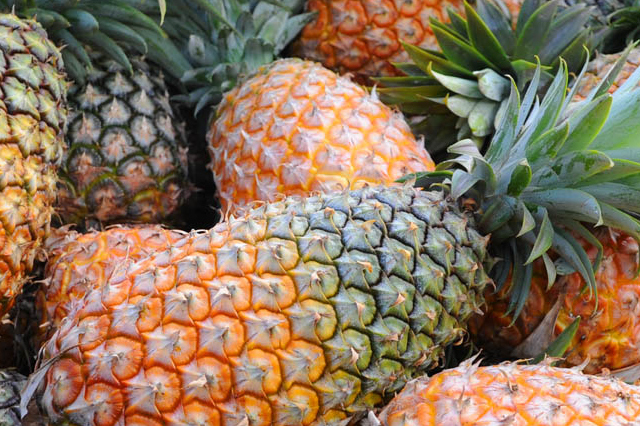
Ugandan pineapples, enanaasi in Luganda, are smaller than the supermarket fruit many visitors know, and noticeably sweet and low in acid. Most come from central Uganda, especially Kayunga, Luwero and Masaka districts, where farmers grow Smooth Cayenne, Queen and Red Spanish types. Uganda has two pineapple seasons without irrigation, and many growers stagger planting so some fruit is ready all year.
Prices and quality change sharply with the harvest. In peak season, trucks of pineapples line the roads and vendors sell them peeled and quartered in plastic bags for the drive. Off season, they are scarcer and dearer.
Many Ugandans eat the core too, since in a ripe local pineapple it is soft and sweet rather than woody. Nothing goes to waste. Peelings are boiled with ginger into a home made pineapple drink, and dried pineapple and mango from small processors now sit on Kampala and Nairobi supermarket shelves, a light souvenir that travels well.
Mango Seasons and Village Fruit Trees
Mangoes are among the most common fruits in Uganda, and many households keep at least one tree. In most areas the main crops follow the two rainy seasons, so markets fill with mangoes twice a year, and the timing varies by region. Northern and eastern districts such as Soroti, Arua and Gulu are big mango country, with whole roadsides of trees in season.
Varieties range from small, fibrous local mangoes, often eaten green with salt, to larger grafted types such as Apple, Kent and Tommy Atkins. The cheapest and best come straight from the tree at the height of the season; vendors will tell you which batch is sweetest that week. Mango also turns up in juices, salads and cakes.
Away from the main harvest you will still find mangoes in Kampala, often trucked in from another region where the season is running a little later.
Avocado, Pawpaw and Watermelon on a Uganda Safari
Ugandan avocados, called ovakedo, are large, creamy and cheap. They grow in home gardens across the south and west, and a slice beside your matooke or rolex is normal. Local varieties are big and green skinned, while Hass avocados are grown for export. Crops come in waves after the rains, with some always in the market, and many sellers rate the months around April to June as the best for avocados. Local avocados often stay green when ripe, so press gently near the stalk end: a slight give means it is ready to eat today.
The pawpaw, or papaya (eppapaali), is a fixture of lodge breakfast plates. Trees often seed themselves around homes, and the fruit is green outside and white inside when young, turning a deep orange as it ripens. A squeeze of lime lifts it.
Watermelons are sold all year. Ugandan watermelons are usually small, round and full of black seeds, unlike the seedless kind sold abroad, and taste just as good. Tap one and listen for a hollow sound before you buy, or ask the seller to cut a small plug so you can see the colour inside.
Citrus, Guava, Tree Tomatoes and Highland Fruit
Ugandan oranges are often still green or mottled when ripe, because nights on the equator are not cold enough to turn the skin orange. Do not judge them by colour. Oranges (emicungwa), tangerines (mangada) and lemons (niimu) are sold in every market, and citrus juice is a common lodge offering.
Guavas grow half wild across the country and are eaten fresh by children on their way home from school. Sugarcane, chewed in short lengths, is sold beside them at many stalls.
The cool Kigezi highlands around Kabale and Kisoro, the region closest to Bwindi, grow fruit that will not survive the heat of Kampala: tree tomatoes (tamarillos), Cape gooseberries, plums and apples. Apples were once all imported, but farmers in Kabale now grow them, and you will see small local apples on stalls in Kabale town, with imported and locally grown apples side by side on Kampala supermarket shelves. Check them over before buying, since bruised fruit is common after long transport. Beetroot from Kisoro and Kasese is sold beside the fruit and often blended into juice, though it is of course a vegetable.
In the north, look out for tamarind, shea fruit and baobab, gathered from wild trees rather than farmed.

Rolex, Fruit Stalls and Kampala Market Tours
A Kampala market tour is the fastest way to see and taste the full range of Ugandan fruits in one morning. Go early, when new stock has just arrived and the heat has not built.
Nakasero Market, on Nakasero Hill in the city centre, is the easiest for visitors. It is smaller and more orderly than the others, with neat stacks of pineapples, mangoes, avocados and passion fruit, and prices aimed at a middle class crowd. Bargain politely; the first price quoted to a visitor is rarely the last. Owino (St. Balikuddembe Market) is huge and chaotic, with lower prices and a lot more walking. Kalerwe on the northern edge is a wholesale hub where fruit arrives by the basket and truckload, cheaper again, and very muddy after rain. Smaller neighbourhood markets at Wandegeya, Nakawa, Kireka and Banda serve local shoppers.
In the evenings, women sell fruit from basins along Kampala’s streets and taxi stages. Street trading is officially restricted in the city centre, but these sellers remain a quick, cheap way to pick up bananas or a bag of cut pineapple.
Close by, you will smell the rolex. This is Uganda’s best loved street food: an omelette, usually with cabbage, tomato and onion, rolled inside a freshly fried chapati. The name comes from “rolled eggs”. Popular history traces it to a chapati seller in Busoga, and students at Makerere University in Wandegeya helped make it a national dish. Choose a busy stall where the eggs are cooked in front of you, and pair it with a ripe ndiizi or a slice of pineapple from the next stall.
Outside Kampala, highway fruit stops are part of every road trip. Expect sellers rushing to bus windows with gonja, roasted maize, pineapples and mangoes at towns along the Masaka road, and stalls of matooke and passion fruit on the drive from Mbarara to Kabale. Regional markets in Jinja, Masaka, Mbale and Fort Portal carry the fruit of their own districts. On the road east to Jinja and the source of the Nile, Namawojjolo is a well known roadside stop where vendors sell fruit, roast gonja and grilled chicken skewers through the bus windows.
Tasting Ugandan Fruits Around Bwindi on a Gorilla Safari
Most visitors to Bwindi taste more Ugandan fruit on their Uganda gorilla trekking safari than anywhere else. Lodge breakfasts usually include pineapple, pawpaw, passion fruit and small bananas, and packed lunches for the trek often carry a banana or an orange. Our Bwindi lodges guide shows where to stay in each sector.
The Buhoma community walk passes banana and coffee gardens, stops where banana beer and waragi are made, and visits families who grow their own fruit. It fills an afternoon after a morning trek, and our Buhoma community walk page covers the route. A Batwa cultural trail adds the forest people’s knowledge of wild fruits and plants; see our page on the Batwa people.
On the southern side of the park, Kabale and Kisoro markets sell highland fruit such as tree tomatoes and gooseberries, and the drive from Kampala passes the banana country of Masaka and Mbarara. If you would like to see the farm side in more depth, our agro tourism in Uganda guide covers banana farm tours, coffee and tea estates near Bwindi.
Fruit is also part of everyday hospitality. When you visit a home on a village walk, being offered a banana, a piece of sugarcane or a cup of juice is a welcome, and accepting it with thanks is polite. Our Uganda people and culture guide explains more about meals and customs.
Planning the gorilla side? Start with our guides to gorilla trekking in Bwindi, booking a gorilla permit and the best time for gorilla trekking.
Eating Fruit Safely While Travelling in Uganda
Most stomach trouble on a Uganda trip comes from water and handling, not from the fruit. Fruit you peel yourself, such as bananas, oranges, mangoes, passion fruit and pineapple you watch being cut, is the safest bet. Wash your hands, or use sanitiser, before you peel.
Be more careful with fruit cut long in advance and left uncovered, and with juices made using untreated water or served with ice. At lodges and good restaurants this is rarely an issue. For a rolex, some travellers ask the vendor to leave out the raw cabbage and tomato in the first few days.
Jackfruit latex is hard to wash off; rub your hands with cooking oil, not water. Pack a small knife in your checked bag (never your hand luggage) and a few zip bags if you like to buy fruit for the road. Our gorilla trekking packing list covers the rest of what to bring.
Adding Farm Visits and Culture to a Fruit Tasting Trip
A fruit focused trip fits neatly with Uganda’s wildlife circuit. Coffee tours around Sipi Falls show the coffee cherry, a fruit few visitors ever taste fresh. The Fort Portal area grows tea and fruit beside Kibale chimpanzee trekking, and the drive to Queen Elizabeth National Park passes banana country all the way.
For the wider trip, our Uganda safari guide sets out routes from three to fourteen days, and things to do in Uganda lists other activities. Many travellers continue to Rwanda or Kenya after Bwindi; Rwanda gorilla trekking and a Masai Mara safari both pair well, and Rwanda’s markets sell many of the same fruits.
Ugandan Fruits: Frequently Asked Questions
What is the most common fruit in Uganda?
Bananas, by a long way. Most are matooke, the green cooking banana eaten as a staple, followed by dessert bananas such as bogoya and ndiizi, and roasting plantain called gonja. Mangoes, pineapples, passion fruit and avocados are the next most common.
What are the 20 types of fruit found in Uganda?
A practical list of twenty: matooke, bogoya, ndiizi and gonja bananas, pineapple, mango, passion fruit, jackfruit, avocado, pawpaw, watermelon, orange, tangerine, lemon, guava, tree tomato, Cape gooseberry, apple, sugarcane and tamarind. Dragon fruit, plums and vanilla pods are newer or more specialist crops.
What are the top 3 most popular fruits?
Worldwide, bananas, apples and oranges are usually named as the most eaten fruits. In Uganda the top three are bananas, by a long way, followed by mangoes and pineapples, with passion fruit close behind thanks to juice.
What food is Uganda famous for?
Matooke with groundnut sauce is the classic, followed by the rolex street snack, luwombo (meat or chicken steamed in banana leaves), posho with beans, roasted gonja and muchomo meat skewers. In the rainy months, especially around May and November, fried nsenene grasshoppers are a seasonal treat in central Uganda.
What is Uganda’s biggest export?
By value, gold has led Uganda’s exports in recent years, with coffee the biggest farm export. Fruit is a small export earner: most of the crop is eaten at home, while dried fruit, Hass avocados and vanilla go abroad.
Is matooke a fruit or a vegetable?
Botanically it is a fruit, a banana, but it is cooked and eaten like a starchy vegetable, much as potatoes are elsewhere. It is never eaten raw. Steamed and mashed matooke with groundnut sauce is the dish to try first.
How much do fruits and a rolex cost in Uganda?
Fruit is cheap by international standards. In Kampala markets, a single mango, orange or avocado usually costs from a few hundred to a couple of thousand Uganda shillings, a pineapple a few thousand shillings depending on size and season, and a rolex from a street stall a few thousand shillings. Prices rise in supermarkets and lodges, and at Nakasero more than at Kalerwe. Expect to bargain at markets and carry small notes.
When are mangoes and pineapples in season in Uganda?
Both have two main harvests a year, broadly following the rainy seasons, and timing varies by district. Pineapple growers stagger planting so some fruit is available all year, and mangoes trucked between regions keep Kampala supplied for much of the year. Ask vendors which fruit is at its best that week.
Is it safe for tourists to eat fruit in Uganda?
Yes, with simple care. Fruit you peel yourself is safest. Avoid pre cut fruit left uncovered, and check that juice is made with treated or bottled water. Lodges and good restaurants follow safe practice.
Where can I taste Ugandan fruits near Bwindi?
At your lodge breakfast, on the Buhoma community walk through banana and coffee gardens, and in Kabale and Kisoro markets for highland fruit such as tree tomatoes. Roadside stalls on the drive in sell bananas, passion fruit and pineapples.
Can I take Ugandan fruit home?
Fresh fruit is usually banned or restricted by customs in the UK, the EU, the USA and many other countries, so eat it before you fly. Sealed, commercially packed dried fruit such as dried pineapple, mango or jackfruit is a better souvenir, but declare it and check your home country’s rules first.
What is Uganda’s most unusual fruit for visitors?
Jackfruit surprises most people, for its size and sticky latex. Tree tomatoes from the Kigezi highlands and tiny sweet ndiizi bananas are close behind.