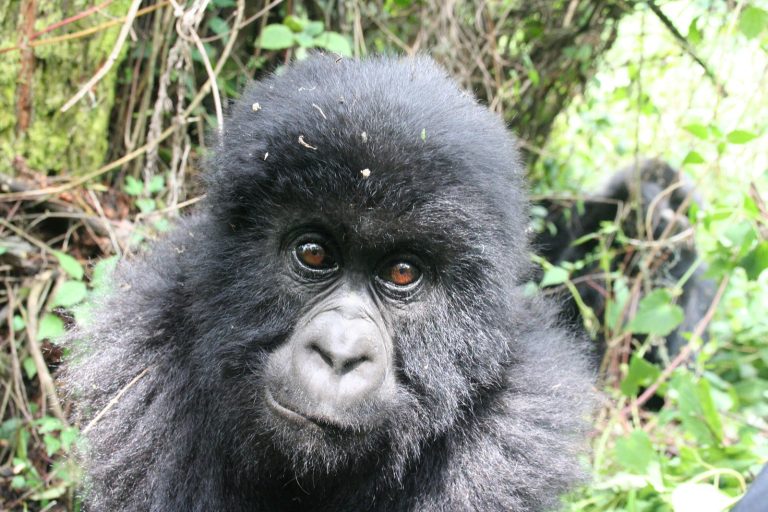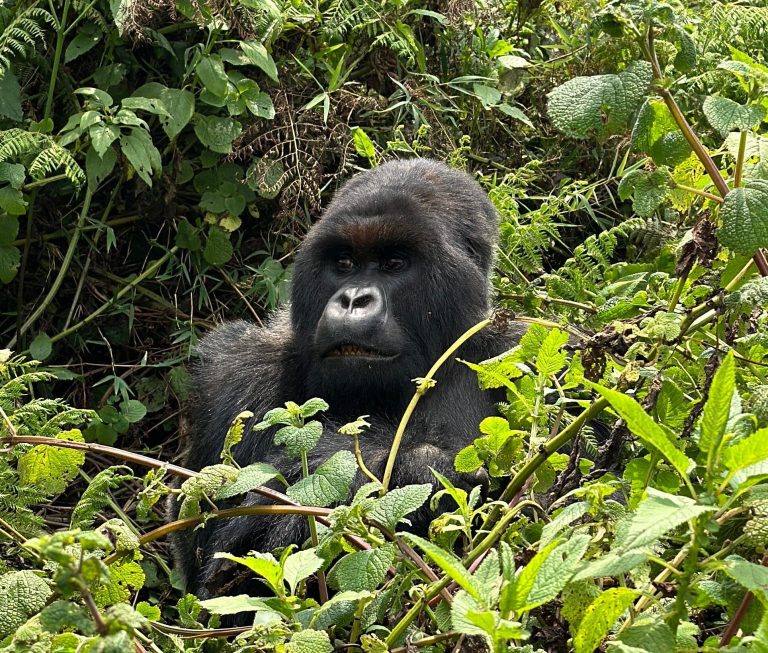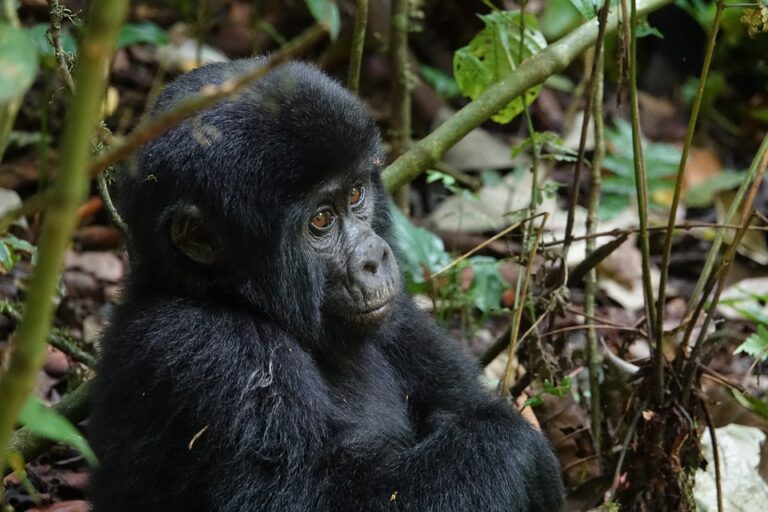
Mountain gorillas in Africa are an endangered subspecies of the eastern gorilla living in just two high forest islands: the Virunga volcanoes shared by Uganda, Rwanda and DR Congo, and Bwindi Impenetrable Forest in southwest Uganda. Visitors see them while gorilla trekking in Uganda at Bwindi or Mgahinga, or in Rwanda’s Volcanoes National Park, with one hour beside a habituated family. About 1,063 survive, every one of them wild, since none live in zoos.
That small range is the whole story. Every mountain gorilla on earth fits inside a few hundred square kilometres of cloud forest and bamboo, hemmed in by some of the most crowded farmland in Africa. Two populations, four parks you can name, and only two countries where you can trek today: that is the whole map.
Where Mountain Gorillas Live: a Safari Map of Two Forests and Three Countries
Ask where do mountain gorillas live and the honest answer is: in two places, roughly 25 to 30 kilometres apart, separated by terraced fields and villages. Neither population can reach the other.
The first is the Virunga Massif, a chain of extinct and active volcanoes where three borders meet. Its gorillas are split across three protected areas that form one block of forest: Volcanoes National Park in Rwanda, Mgahinga Gorilla National Park in Uganda and the Mikeno sector of Virunga National Park in DR Congo. Gorillas here range across bands of vegetation first mapped by the zoologist George Schaller: bamboo from roughly 2,200 to 2,800 metres, hagenia and hypericum woodland up to about 3,400 metres, then the giant senecio zone, where night temperatures can drop close to freezing. Most groups spend their time on the slopes of Karisimbi, Mikeno and Bisoke. Our page on the Virunga Mountains covers the eight volcanoes in detail.
The second is the Bwindi and Sarambwe forest. Bwindi Impenetrable National Park covers 321 square kilometres of steep ridges and valleys in Uganda, between about 1,160 and 2,607 metres above sea level, and the small Sarambwe reserve continues it over the Congolese border. Bwindi is lower, warmer and far more tangled than the Virungas, which changes everything from what the gorillas eat to how hard the trek feels.
Why only here? Mountain gorillas once had more room, but the forest between these blocks was cleared for farming long ago. Their long, thick coats suit cold, wet highland forest, and they rely on the year round supply of leaves, stems and shoots it offers. That is also why none survive in captivity: every mountain gorilla you will ever see is wild, in one of these four parks. The western lowland gorillas in zoos are a different species, and our mountain gorilla vs lowland gorilla guide explains how to tell them apart.
| Park | Country | Population | Trekking |
|---|---|---|---|
| Bwindi | Uganda | Bwindi | Open |
| Mgahinga | Uganda | Virunga | Open |
| Volcanoes | Rwanda | Virunga | Open |
| Virunga | DR Congo | Virunga | Closed |
| Sarambwe | DR Congo | Bwindi | No tourism |
Bwindi Impenetrable Forest: Uganda’s Mountain Gorilla Trekking Stronghold
Gorilla trekking in Bwindi is the reason most people ask where mountain gorillas live, because this one forest holds close to half the world’s population. The 2018 census counted 459 gorillas in Bwindi and Sarambwe, in 36 groups plus 16 lone males.
Around twenty families are habituated for visitors, spread across four trailhead sectors. Buhoma sits in the north and was the first sector opened to tourism. Ruhija lies high in the east, while Rushaga and Nkuringo share the south. Your permit is tied to one sector, and the drive between them can take hours, so trip reports regularly mention people who booked a lodge near the wrong trailhead. Check the sector on the permit before you book the room.
Bwindi gorillas eat more fruit than their Virunga cousins and travel further in a day to find it. Trails are steep, often muddy and cut through by vines, and a trek can take forty minutes or most of the day. Rushaga also runs the gorilla habituation experience, where a handful of visitors spend about four hours with a family still being habituated, the longest legal time with mountain gorillas anywhere. The main Bwindi gorilla trekking safari guide walks through a full trek day.

Mgahinga Gorilla National Park: Trekking on Uganda’s Virunga Slopes
Uganda’s share of the Virunga volcanoes is Mount Mgahinga gorilla trekking, in a park of only about 34 square kilometres on the flanks of Muhabura, Gahinga and Sabyinyo. One habituated family, the Nyakagezi group, is open to visitors. It used to cross into Rwanda and Congo, which made permits a gamble, but it has stayed on the Ugandan side for years.
One family means only eight permits a day. The walk is through open bamboo and volcanic slope rather than Bwindi’s ravines, so it can feel easier on the legs, although you are hiking at altitude. Mgahinga is also the only place in Uganda for golden monkey tracking, and the Batwa trail here is led by members of the forest people who lived in these hills before the park existed. Our Bwindi and Mgahinga comparison helps if you are choosing between the two.
Volcanoes National Park: Mountain Gorilla Trekking Safaris in Rwanda
All of Rwanda’s mountain gorillas live in Volcanoes National Park, about 160 square kilometres of bamboo, hagenia forest and alpine meadow on Karisimbi, Bisoke, Sabyinyo, Gahinga and Muhabura. Science followed the gorillas here. George Schaller’s study from 1959 gave the first detailed account of their family life, and Dian Fossey founded the Karisoke Research Center on the saddle between Karisimbi and Bisoke in 1967; her grave lies beside the gorillas she studied, and a hike to it is a popular second day in the park.
A Rwanda gorilla trekking day starts at the Kinigi park headquarters at around seven, where rangers assign each visitor to one of twelve habituated families. Treks start higher than in Bwindi, but the vegetation is more open, so some groups are reached within an hour. The park is about two and a half hours by tarmac from Kigali, which is why short gorilla trips and add ons to East African safaris tend to land here. Each year Rwanda names the gorilla babies born in the park at the Kwita Izina ceremony near Kinigi.
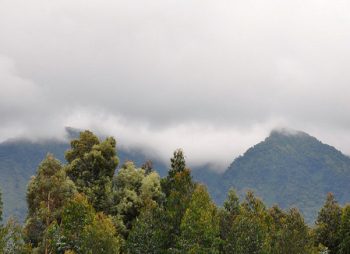
Virunga National Park, DR Congo: Gorilla Trekking Currently Closed
Virunga National Park is Africa’s oldest national park. The American naturalist Carl Akeley persuaded King Albert I of Belgium to create it in 1925, chiefly to protect these gorillas, and its Mikeno sector still holds the Congolese share of the Virunga population. The park reports eleven gorilla families under daily monitoring, including one led by the silverback Bageni that it says has grown to around sixty members, far larger than a typical family. In open years a Congo gorilla trekking safari meant small groups, a cheaper permit and the option of an overnight climb of Mount Nyiragongo.
That is not possible today. The park’s official visitor site states that gorilla and Nyiragongo treks are closed until further notice, after the M23 rebellion took control of much of the area around Goma. Rangers continue to protect the gorillas in very hard conditions. Treat any operator still selling Virunga gorilla treks with caution and check the park’s own channels and your government’s travel advice first. The good news for travellers is simple: Mgahinga and Volcanoes protect the same Virunga population and are both open.
How Many Mountain Gorillas Are Left in Africa
About 1,063 mountain gorillas were alive at the last combined count, and they are the only great ape whose numbers are rising. That figure joins two surveys: 604 gorillas in the Virunga Massif in 2015 and 2016, and 459 in Bwindi and Sarambwe in 2018. Bwindi alone holds roughly 43 percent of the total.
The picture in the early 1980s was very different. A 1981 census of the Virungas counted just 242 animals, and the subspecies looked set to disappear. Intensive protection, daily monitoring of habituated families, veterinary care and the money from gorilla tourism turned that around. In 2018 the IUCN moved mountain gorillas from Critically Endangered to Endangered.
Both populations grew between counts. The Virunga Massif went from an estimated 480 in 2010 to 604, and Bwindi and Sarambwe from roughly 400 in 2011 to 459. WWF puts the share of mountain gorillas habituated to people at more than 70 percent, which means most of the subspecies is watched by trackers every day. That close monitoring is one reason the counts are trusted, and one reason the numbers climbed.
Counting gorillas in Bwindi is slow work. Teams sweep the forest twice, record night nests and collect dung, and a laboratory then uses the DNA to tell individuals apart, which is why results take time. Our page on the 2018 mountain gorilla census explains the method.
Mountain Gorilla Habitat, Diet and Daily Life on a Trekking Day
What you see on a gorilla trek is mostly eating. Mountain gorillas are herbivores that spend a large part of each day feeding, and an adult can get through around 18 kilograms of plants daily. Wild celery, thistles, stinging nettles, bedstraw, bamboo shoots, bark and roots all feature, with ants and larvae taken now and then. In the Virungas bamboo shoots draw groups into the bamboo zone in the rainy months, and they climb high to chew the soft core of giant senecios; in Bwindi, families travel to fruiting trees whenever they can.
Studies in the Virungas logged more than 140 plant species in the diet, with leaves, shoots, stems and pith making up around 85 percent of what they eat. Galium, a clinging bedstraw vine available all year in the hagenia woodland, is a staple. Gorillas rarely drink. Juicy stems and the morning dew supply most of their water, and trackers sometimes watch one catch rain on a pushed out lower lip.
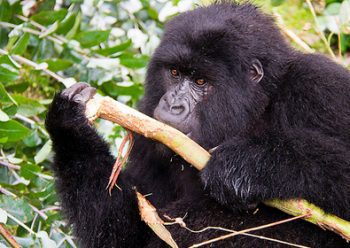
Their bodies match the cold. The coat is longer and thicker than a lowland gorilla’s, the nose is large and the arms longer than the legs. Adult males weigh around 160 kilograms, sometimes more, and females roughly half that. Mature males develop the silver saddle of hair across the back that gives the silverback gorilla its name, along with a tall crest on the skull that anchors big jaw muscles. They look aggressive. They are mostly calm, and our guide to whether gorillas are aggressive covers what a charge means and how rangers handle it.
Nothing about the day is fixed. A group wakes around dawn, feeds, rests through the middle of the day while youngsters play, then feeds again before building fresh nests of bent branches and leaves at dusk. They rarely sleep in the same place twice. That habit is what makes tracking possible: each morning, advance trackers go back to the previous night’s nests and follow the trail to the group, then radio its position to the ranger leading your trek.
Mountain Gorilla Facts for Trekkers: Names, Size, Sounds and Dislikes
A few mountain gorilla facts make the hour on a trek far richer. Start with the name. There are two gorilla species, eastern and western, each split into two subspecies. The mountain gorilla, Gorilla beringei beringei, shares the eastern species with the eastern lowland or Grauer’s gorilla of DR Congo. It was named after Captain Robert von Beringe, a German officer who shot two of them on the slopes of the Virungas in October 1902; the zoologist Paul Matschie described the new form from the specimen sent to Berlin.
Up close the scale is obvious. A big male stands about 1.7 metres when upright, has an arm span of two metres or more and can pass 180 kilograms, yet the mountain gorilla is not the largest gorilla in Africa: its Grauer’s cousin is bigger. Under the dark fur the skin is black, and each animal carries a unique pattern of wrinkles on the nose. Researchers and trackers identify individuals by these nose prints much as police use fingerprints, and the photo cards rangers carry on a gorilla trekking tour often show only noses.
Use your ears too. Scientists recognise about 25 distinct calls. Grunts and barks keep a group in touch while it moves through thick cover, screams and roars signal alarm, and the deep belching rumble you hear while a family feeds means all is well. When a silverback wants to impress, the full display runs through hooting, rising onto two legs, throwing plants, chest beating with cupped hands and a sideways run, often ending with a slap at the ground. It is mostly bluff, and our guide to whether gorillas are aggressive explains why rangers rarely worry.
Some of their dislikes are oddly specific. Mountain gorillas avoid water and will hunt for a fallen log rather than wade a stream. They sit hunched and miserable through heavy rain. Infants that chase anything that moves give chameleons and hairy caterpillars a wide berth. Leopards are the only natural predator and are rare in both forests now, which leaves people as the main danger. For a closer look at the leaders of each family, read our silverback facts guide, and the mountain and lowland gorilla comparison sets the four subspecies side by side.
Families, Nests and Breeding: What Gorilla Trekking Reveals
Mountain gorillas live in stable family groups, and watching how a family works is the part of gorilla trekking people talk about afterwards. A typical group holds around ten animals, though the range runs from two to forty or so. A dominant silverback leads it, deciding when to move and where to feed, and many groups also contain younger silverbacks and blackbacks who help guard it. Most young males leave their birth group at around eleven years old, wandering alone or with other males until they can attract females, and females often move between groups when they mature, which spreads genes across the population.
Family loyalty is strong. When two groups meet, there may be chest beating and a tense standoff, but each animal usually returns to its own family afterwards. Gorillas communicate with grunts, barks and hoots as much as with displays, and a contented feeding group makes a low rumbling belch that rangers imitate to signal they mean no harm.
Breeding is slow, which is why every infant matters to the census. Females first give birth at about ten years old, after a pregnancy of around eight and a half months, and usually have one baby every four years or so. Twins are rare. A newborn weighs only about 1.8 kilograms, rides on its mother’s back for its first years and is weaned gradually after age three. In the wild, mountain gorillas commonly live 35 to 40 years and some pass 40; Bwindi’s Ruhondeza was one of the best known old silverbacks. Our gorilla breeding guide goes deeper into courtship and infant care, and the Bwindi gorilla groups page profiles the families you might trek.
Threats to Mountain Gorillas and How Gorilla Tourism Protects Them
The recovery is real, yet a population this small in forests this small stays fragile. The threats fall into a few groups, and gorilla tourism sits on both sides of several of them.
Disease is the worry conservationists raise first. Mountain gorillas share about 98 percent of our DNA and catch our respiratory infections without our immunity, so a cough or flu carried into the forest can spread through a whole family. Scabies outbreaks in Bwindi were traced to people in nearby villages, and respiratory outbreaks have killed gorillas in the Virungas. This is the reason for the distance rule, the face masks and the ban on trekking while sick.
Snares set for antelope still catch gorillas, especially infants, and trackers find wire injuries every year. In 2020 a poacher killed Rafiki, the silverback of Bwindi’s Nkuringo group, and was jailed for it. Daily monitoring by trackers and vets is what turns a snare wound from a death sentence into a treatable injury.
Habitat limits are the slow threat. Both forests are islands with no room to grow, ringed by farms where gorillas raid crops at the boundary. In eastern Congo, conflict adds a further risk: rebel groups, charcoal cutting and the loss of tourism income all weigh on Virunga. Oil exploration concessions have also overlapped Virunga park, and WWF campaigned to stop drilling there.
Climate change is the newest worry on the list. Mountain gorillas already live on the high ground, so as lower slopes warm and plant zones creep upward there is nowhere higher or colder for them to move. Both forests are fully ringed by farms, which rules out shifting sideways too.
Tourism is the main answer to all of this. Permit income funds rangers, trackers and anti poaching patrols, a share goes to the villages around the parks, and porters and lodge staff earn wages from gorillas that are alive. Habituated families, watched every day, have grown faster than wild ones. The full story is in our guide to mountain gorilla conservation and how tourism saves them.
Planning a Mountain Gorilla Safari: Uganda, Rwanda and Combined Trips
For most people, seeing mountain gorillas means choosing between Uganda and Rwanda. Uganda gives you more families, a lower permit price, the habituation option and easy add ons such as chimpanzee trekking in Kibale and game drives in Queen Elizabeth National Park, at the cost of longer drives. Rwanda gives you speed: a gorilla trek can fit into two or three nights from Kigali, with a pricier permit and a more upmarket lodge scene. Our Uganda vs Rwanda comparison sets the two side by side, and where to see gorillas in Africa covers every gorilla species and park, lowland gorillas included.
Advice from past trekkers is consistent, and little of it appears in brochures. Hire a porter at the trailhead even if you feel fit; they carry the daypack, haul you up the steep bits and the fee goes straight to a local family. Bring gardening gloves for nettles and thorny vines, tuck trousers into socks or wear gaiters against safari ants, and pack two litres of water and lunch, because nobody knows at the start how long the walk will be. And expect the hour to go far faster than you think. Many people put the camera down for part of it. The full gorilla trekking packing list covers boots, rain gear and what to leave at the lodge.
Gorillas are also a natural add on to the classic savannah safaris. There are no wild gorillas in Kenya or Tanzania, but Entebbe and Kigali are short flights from Nairobi and Kilimanjaro, so a Masai Mara safari or a Serengeti safari pairs easily with three or four days in Bwindi or Volcanoes. Our Tanzania safari and gorilla trekking page shows how those trips are routed. Primate fans can go further still: the lemurs in our primates of Madagascar guide make a very different second chapter.
Gorilla trekking runs every month. The drier spells from June to September and December to February bring firmer trails and the strongest permit demand, while the wetter months mean mud, fewer visitors and gorillas that often feed lower down. The month by month detail is in our guide to the best time to go gorilla trekking in Uganda.
Getting to the Mountain Gorilla Parks
Kigali is the closest international airport to most of the gorillas. Volcanoes National Park is about two and a half hours away by road, and the southern Bwindi sectors and Mgahinga are around four to five hours, crossing into Uganda at Cyanika or Katuna. From Entebbe, the drive to Bwindi takes roughly nine to ten hours, so many travellers break it in Queen Elizabeth National Park or fly to the Kihihi or Kisoro airstrips instead. Our getting there guide lays out each route, and Bwindi safari lodges lists places to stay near every sector, from community bandas to high end forest lodges.
Frequently Asked Questions About Mountain Gorillas in Africa
Where do mountain gorillas live in Africa?
Only in two forest areas of east central Africa: the Virunga volcanoes, split between Volcanoes National Park in Rwanda, Mgahinga Gorilla National Park in Uganda and Virunga National Park in DR Congo, and Bwindi Impenetrable National Park in Uganda with the neighbouring Sarambwe reserve in Congo.
How many mountain gorillas are left in the wild today?
The official figure is 1,063: 604 in the Virunga Massif and 459 in Bwindi and Sarambwe. It comes from the Virunga survey of 2015 and 2016 and the Bwindi and Sarambwe census of 2018. A new Bwindi census began in May 2025 and its gorilla results have not yet been published, so 1,063 remains the number to quote.
How many mountain gorillas are left on Earth?
The same 1,063, because the wild population is the whole population. No mountain gorilla lives in a zoo, so the census of the two forests counts every one alive.
Why are mountain gorillas endangered?
Their range is tiny and cannot grow, they catch human diseases easily, snares set for other animals still injure them, and conflict in eastern Congo makes protection harder. The IUCN lists them as Endangered. They were Critically Endangered until 2018, and the move reflected steady growth, but the population is still small enough that one disease outbreak could set it back badly.
What is the biggest gorilla in Africa?
The eastern lowland or Grauer’s gorilla of DR Congo is the largest gorilla subspecies, a little bigger than the mountain gorilla. Grauer’s gorillas live in Kahuzi Biega National Park, where visits depend on the security situation in eastern Congo.
Are mountain gorillas dangerous to trekkers?
Habituated families are calm around rangers and small groups of visitors. A silverback may bluff charge if someone moves suddenly or comes too close, and the answer is to crouch, look down and stay still while the ranger speaks to him. Serious injuries to tourists are extremely rare.
How much does it cost to see mountain gorillas in Africa?
The permit is the main cost. In Uganda, a permit for Bwindi or Mgahinga costs US$800 for foreign non residents, US$700 for foreign residents and UGX 300,000 for East African citizens, and a low season rate of US$600 has been announced for April, May and November. The Bwindi habituation experience has sold at US$1,500, with a rise to US$1,800 announced; sources disagree on when that takes effect, so confirm when booking. Rwanda charges US$1,500 for Volcanoes National Park. Our guide to booking Uganda gorilla permits explains how permits are bought, and Rwanda gorilla permits covers the Rwandan side. Lodges, transport and guiding come on top, and our gorilla trekking cost guide builds full trip totals.
Can you see mountain gorillas in a zoo?
No. Mountain gorillas have never survived long in captivity and none are held in zoos today. Gorillas in zoos are western lowland gorillas, so the only way to see a mountain gorilla is a trek in Uganda or Rwanda.
Can I go mountain gorilla trekking in Congo right now?
Not in Virunga National Park. The park’s official site says gorilla and Nyiragongo treks are closed until further notice because of the conflict around Goma. Mgahinga in Uganda and Volcanoes in Rwanda visit the same Virunga gorilla population and are open.
How fit do you need to be for a gorilla trek?
Reasonably fit. A trek can last under an hour or six hours or more over steep, muddy ground at altitude. Porters, walking sticks and a quiet word with the rangers about a nearer family all help, and travellers with limited mobility can arrange a sedan chair carried by porters. See our guide to gorilla trekking with special needs.
Is Uganda or Rwanda better for seeing mountain gorillas?
Both have very high sighting rates with habituated families. Uganda suits travellers with more time who want more trekking choice, the habituation experience and better value; Rwanda suits short trips and travellers who want easier access from the airport.