Uganda fishing trips centre on Nile perch below Murchison Falls, with further sport fishing in Uganda on Lake Victoria, around the Ssese Islands, on the Nile at Jinja and at Lake Mburo. Most anglers book a guided day or add two or three fishing days to a wildlife or gorilla safari. Uganda sits on the upper Nile and shares Lake Victoria, so few countries offer this much big freshwater fishing.
The headline fish is the Nile perch, a predator that can pass 100 kg, and the headline venue is the Victoria Nile below the falls inside Murchison Falls National Park. Around it sits a wider choice: lake trolling for perch and tilapia, quiet island fishing in the Ssese archipelago, tigerfish and vundu catfish on the Nile, trout streams on Mount Elgon and tilapia from the shore at Lake Mburo. Fishing is also a working industry here, and the landing sites where most of the country’s fish comes ashore are worth seeing in their own right.
This guide covers each fishing area, the species and their local names, how permits work, how long to go for, when to go, what tackle to bring and how to fish responsibly. Prices sit in the FAQ at the end.
Nile Perch Fishing Safari at Murchison Falls
A Nile perch fishing safari at Murchison Falls is the trip serious anglers come to Uganda for. Here the whole Victoria Nile forces itself through a gap in the rock about seven metres wide, then spreads into a broad, oxygen rich river that runs west towards Lake Albert. Big perch and catfish hold in the turbulent water below the drop, and that stretch is where the largest fish on rod and line have been landed. The park lies roughly six hours’ drive from Kampala, or a short scheduled flight to Pakuba or Bugungu airstrip.
Four stretches are fished on the river below the falls, plus one upstream:
Methods are simple and physical. Guides usually start the day catching small fish for live bait, then cast and spin big lures into the white water near the falls, then drift live bait through the deeper runs downstream. Bank fishing is possible, yet hippos and Nile crocodiles share every metre of this river, so you fish where the guide and the ranger tell you to and nowhere else. Most fishing inside the park is done with a UWA ranger or a lodge guide present.
Expect heat. Days on the rocks can pass 40C in the dry months, there is little shade below the falls, and tsetse flies are active in the woodland near the river. Long trousers, a long sleeved shirt, a wide brimmed hat, sunscreen and repellent are standard kit. Rig your leaders and tie your knots the evening before, because the early boat leaves Paraa soon after first light and the best hour is the first one.
UWA also lists a Murchison Falls Invitational Fishing Tournament in its tariff, with its own boat rates, so competitive anglers can ask operators whether an event falls in their travel window.
Fishing pairs well with the rest of the park. A morning on the river can be followed by an afternoon launch trip to the falls, a game drive on the northern bank for giraffe, elephant and lion, or chimpanzee tracking in Budongo Forest. For timing, transport and lodges, see planning a safari in Murchison Falls.
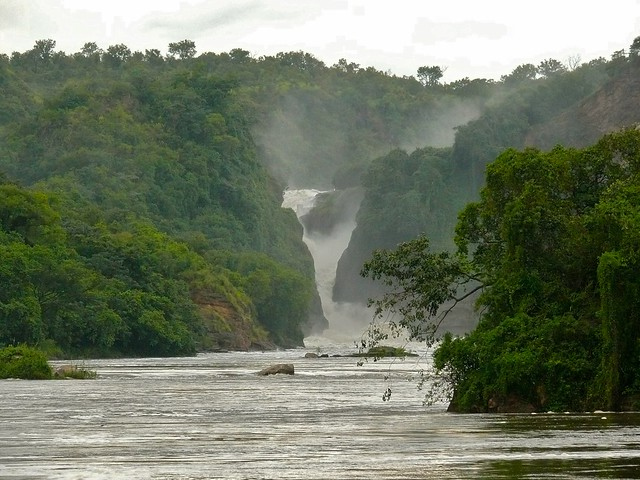
Catch and Release Rules and Nile Perch Records on the Victoria Nile
Catch and release is the rule for sport fishing at Murchison Falls. Fish are landed, weighed or measured, photographed and returned alive, and anglers should assume every fish goes back. Commercial fishing is not allowed on this protected stretch of river, which is a big part of why trophy perch still live here. Some operators and older guides talk about keeping a small fish for the pot; do not do so unless your UWA ranger confirms it is allowed on the day.
Good release practice matters with fish this size. Support a big perch horizontally under the belly rather than hanging it by the jaw, keep it in the water as much as possible, and use gloves, because the edges of the gill covers are sharp enough to cut hands. Single or barbless hooks make unhooking quicker. Revive the fish facing into the current until it swims off under its own strength.
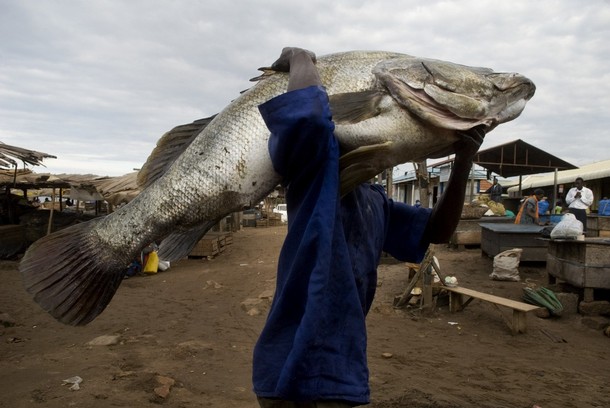
On records, the figure you will see repeated is a Nile perch of about 113 kg caught on rod and line below the falls in 2009. A slightly heavier fish of roughly 114 kg was later reported from the same river, though the sources disagree on weights and on which catch, if either, was formally ratified. What is clear is that Murchison has produced the heaviest Nile perch taken on rod and line anywhere. Fish of 20 to 60 kg are a realistic target for a good trip, and many days produce smaller perch, catfish and tigerfish instead.
Lake Victoria Fishing Trips from Entebbe and Kampala
Lake Victoria fishing trips are the easiest to fit into any Uganda itinerary, since boats leave from Entebbe, a short drive from the international airport, and from Munyonyo and Ggaba on the Kampala shore. Africa’s largest lake covers close to 69,000 square kilometres and reaches a little over 80 metres at its deepest. It is shared by Uganda, Kenya and Tanzania and fed mainly by the Kagera River. Nile perch were introduced to it in the 1950s, and they now support both a large export fishery and a steady charter trade.
Most lake trips run as a morning or afternoon session or a full day. Morning trips usually go out from about nine until half past twelve, and afternoon trips from about one until five. Charter boats troll deep running lures behind the boat along drop offs and around rocky islands for Nile perch, while bait and light lures pick up tilapia and catfish. The islands off Entebbe, among them Ngamba, Nsazi, Bulago, Kome and the Busi group, are favourite marks, since small fish breed in their sheltered bays and the perch follow. Boats also launch from the Kasenyi and Kigungu landing sites near Entebbe. There are no fixed hotspots: skippers move with the wind and the weather, and wind is the factor that decides most days, since a rough lake makes trolling hard and can cut a trip short. Many local skippers also say the fish bite better around the darker phases of the moon.
Two kinds of boat are common. A wooden or fibreglass canoe style fishing boat with an outboard is cheaper and fine for a half day close to shore, while a speedboat charter reaches the outer islands faster and copes better with chop. Pick a boat with shade cover and enough life jackets for everyone, and ask whether rods and lures are included before you book. Afternoon storms build quickly over the lake in the rainy months, and a reputable skipper will turn back early rather than push on.
Ssese Islands Fishing Trips on Lake Victoria
The Ssese Islands are an archipelago of more than 80 islands in the north west of Lake Victoria, and a fishing trip here feels very different from a busy charter out of Entebbe. Most visitors stay on Bugala, the largest island, around the small town of Kalangala and the Lutoboka landing site. Access is by the ferry from Nakiwogo near Entebbe, which takes a few hours, or by the short crossing from Bukakata on the Masaka side if you are driving.
Island lodges arrange boats and guides, and the fishing is relaxed: trolling and casting for Nile perch and tilapia off quiet shorelines, with lungfish and catfish taken on bait. Large parts of the smaller islands are forest with only scattered fishing camps, so evenings are quiet. Bring your own tackle if you can, since what is available to hire on the islands is basic, and allow at least two nights, because the ferry timetable makes a day trip impractical. Some operators run camping trips with tents, cooking gear and boats included, for anglers who want to fish remote islands for several days.
Jinja and Source of the Nile Fishing Tours
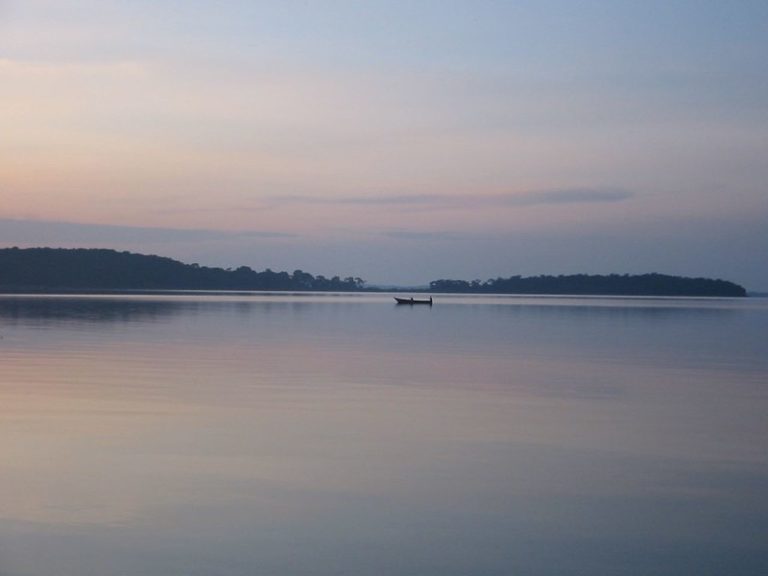
Jinja fishing tours work well for travellers who want a few hours on the water between rafting, kayaking or a visit to the source of the Nile. Jinja sits about 80 km east of Kampala where the Nile leaves Lake Victoria, and guided boats fish both the upper river and the sheltered lagoons and bays on the lake side of town. Samuka Island, a short boat ride out on the lake, has simple accommodation for anglers who want an early start on the water.
Nile perch and tilapia are the usual targets, with catfish and barbel also taken. Guides often troll lures at modest depths through the lagoons, and some reaches of the river are kept for sport fishing. Trips run from an hour or two up to a full day, which makes Jinja a good taster for beginners or for families. Outside the national parks, keeping a fish for the table may be allowed under the operator’s licence, so ask before you start rather than after you land one.
Lake Mburo National Park Fishing Experience at Mazinga
The Lake Mburo fishing experience is the gentlest sport fishing in Uganda. Lake Mburo National Park lies off the Kampala to Mbarara road, about four hours from the capital, and it is the closest park to the city with zebra, impala, eland and buffalo. Fishing is permitted at the designated site at Mazinga on the lake shore, with a UWA permit bought at the park.
Tilapia is the common catch, with catfish, lungfish and barbel also present. This is light tackle, shore based fishing with worms or small lures: no boats, no monsters, and a calm setting that suits children and anglers who want a quiet morning on a Uganda safari. Bring your own rod, since gear is not hired out at the park, and pair the session with a boat trip for hippos and birds or a walking safari on the eastern side of the lake.
Lake Bunyonyi, Sipi Falls, Lake Albert and Lake Kyoga Fishing Trips
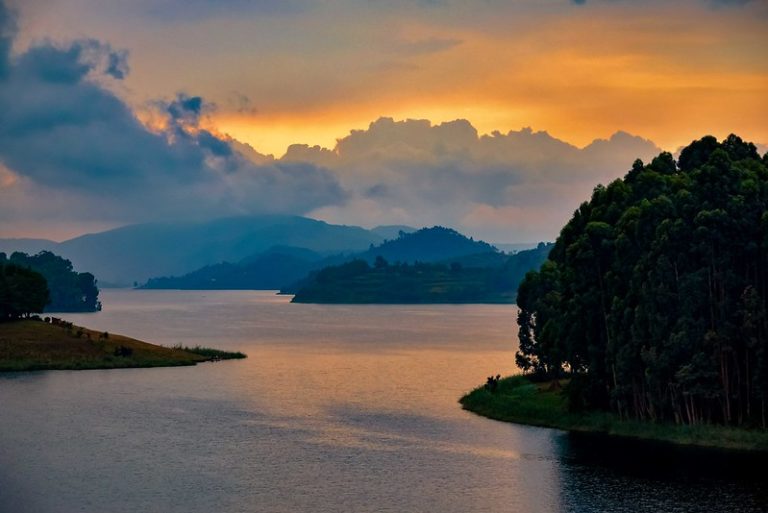
Lake Bunyonyi near Kabale is the lake most gorilla travellers see, and it is a good place to paddle a dugout canoe, but it is not a sport fishing lake. Its deep, cold water holds small fish: haplochromine cichlids, mudfish and introduced crayfish, plus a few tilapia and catfish from restocking. Local fishermen work it with traps and small nets. Watching them, or eating crayfish on an island lodge terrace, is the fishing experience here. Read more about the lake on our page on what to do after a gorilla safari.
Sipi Falls, on the slopes of Mount Elgon in eastern Uganda, offers something unexpected: trout. Rainbow trout were stocked in the cool streams of Elgon in the colonial period, and small populations survive in the rivers above and below the three waterfalls. Fishing is arranged through lodges in Sipi, such as Sipi River Lodge, which also help with the permit, and you need to bring your own light rod and flies or spinners. Treat it as a half day on a Sipi Falls tour rather than a destination in itself.
Lake Albert, at the western edge of Murchison and along the Congo border, is a big, windy lake with good numbers of Nile perch and hard fighting tigerfish, and it is slowly building a name as Uganda’s next sport fishing frontier. Few tourist operators work it, so trips here are usually arranged as part of a longer, specialist fishing safari from Murchison, sometimes with a night at a river camp in the Semliki valley to the south. Lake Kyoga, a shallow, papyrus fringed lake in central Uganda, is fished mainly by local communities for tilapia and Nile perch and sees very few visiting anglers.
Types of Fish in Uganda and Their Local Names
Uganda’s lakes and rivers hold a few hundred fish species, many of them small cichlids found nowhere else. The ones anglers and markets care about are listed below, with the Luganda names you will hear at landing sites and on restaurant menus.
Ask which fish is caught most in Uganda and the answer depends on what you count. By tonnage, mukene from Lake Victoria tops the list. By value, Nile perch leads. On the dinner table, tilapia wins, and a growing share of it now comes from fish farms rather than the lakes.
Sport Fishing Permits and Licences in Uganda
Permits for sport fishing in Uganda depend on whose water you are on. Inside national parks, the Uganda Wildlife Authority (UWA) sells a sport fishing permit, available at UWA’s Kampala office or at the park, and it is charged on top of the normal park entry fee. At Murchison Falls the permit is sold by the day or as a four day permit, and Lake Mburo and the fishing areas of Queen Elizabeth National Park have their own, lower rate. East African citizens pay in shillings, and East African citizens and foreign residents with work permits can buy an annual Murchison fishing permit. Fishing close to the base of Murchison Falls also involves a boat permit, which your operator or lodge arranges. The UWA tariff we could confirm has passed its stated end date, so confirm the current rate when you book.
Outside the parks, fishing comes under the Ministry of Agriculture’s Department of Fisheries Resources and the Fisheries and Aquaculture Act. The ministry has rolled out tougher regulations, with species specific licences for boats, limits on boat numbers and gear, protected breeding areas and the option of closing waters during breeding seasons. In practice, visitors on Lake Victoria or at Jinja fish through a licensed charter operator, whose licence covers the trip. Independent anglers who plan to fish lakes on their own should ask the district fisheries office or use the ministry’s online licensing portal before they start.
The practical rule is simple: book with a licensed operator, keep your permit receipt on you, and follow the ranger or skipper on what can be kept. Using nets, or fishing near landing sites without a licence, can bring heavy fines under the new rules.
How Long Uganda Fishing Trips Last: Half Day to Seven Day Fishing Safaris
Uganda fishing trips come in a handful of standard lengths, and the right one depends on how far you are travelling for the fish. A half day on Lake Victoria or at Jinja suits a first or last day near Entebbe. A full day charter gets you to the outer islands. Serious perch anglers book a three day Murchison trip at the least, and five or seven days give you enough sessions to ride out a slow day or high water.
Guided packages normally include the boat, fuel, skipper or guide, bait, and often rods and lures, plus transport and lodging on longer trips. Park entry and UWA fishing permits are sometimes included and sometimes not, so read the quote carefully. When you ask for one, tell the operator your dates, how many anglers are coming, your experience level, which species you are after and whether you will bring your own tackle. That is enough for a firm price and saves a week of emails.
Best Season for Uganda Fishing Trips
You can fish in Uganda in every month, but the best season for Uganda fishing trips depends on the water. On the Nile at Murchison, the drier months from December to February and June to September bring lower, clearer water, and fish are easier to locate in the pools below the falls. Some long standing guides single out January to April, before the long rains have fully raised the river. Heavy rain from March to May, and again from October into November, raises the river and colours it, which slows the lure fishing.
Lake Victoria behaves differently. Many skippers rate October to March as the best lake period, and the lake is fishable all year when the wind allows. Mornings are usually calmer than afternoons. If you are pairing fishing with gorillas, see the best time for gorilla trekking in Uganda, since the dry seasons suit both.
Fishing Tackle to Pack for a Uganda Fishing Safari
Bring your own tackle for Murchison if you can. Lodges and operators have rods, but quality varies and big perch find every weakness in a reel or a knot. For lake charters and Jinja, gear is often included, so ask before you pack a rod tube. If you fly to Murchison on a light aircraft, check the luggage allowance, since a rod tube and a soft bag are usually limited by weight.
For Nile perch, most visiting anglers use a heavy rod of roughly 8 to 11 feet with a strong multiplier or a large spinning reel and a smooth drag. A heavy duty multiplier reel from makers such as Shimano, Penn or Abu Garcia handles the long runs. Match it with a multi piece heavy casting rod, since a travel rod fits in airline luggage and on the small aircraft that serve the parks. Spool up with heavy braided line of 50 lb or more and carry a strong fluorocarbon leader to survive the rocks below the falls.
Lures for perch are big: large deep running plugs for trolling and casting are the standard pattern. Tigerfish teeth cut through mono, so add a few wire leaders. For tilapia at Lake Mburo or trout at Sipi, a light travel spinning combo is all you need.
For handling, pack cut resistant fishing gloves for the perch gill plates, long nose fishing pliers for unhooking, and barbless or circle hooks to make release easier on the fish.
Personal kit counts as much as tackle on the river. Polarised fishing sunglasses cut the glare off the water, a UPF 50 long sleeved fishing shirt and a wide brimmed sun hat with a neck flap keep the sun off, and picaridin insect repellent helps with mosquitoes and tsetse. A waterproof dry bag protects phones and cameras in the boat. Dark blue and black clothing attracts tsetse, so choose khaki or olive. For the rest of your safari clothing, see what to wear on safari, the African safari packing list and our safari gear and clothing guides.
Responsible Fishing and Uganda’s Fishing Communities
Responsible fishing in Uganda means more than returning a perch. Lake Victoria’s fish stocks have been under heavy pressure from illegal nets and the catching of immature fish, which is why the government has tightened licensing and gear rules. Visiting anglers help by fishing only with licensed operators, releasing big breeding fish, never buying undersized fish, and taking all line and packaging home. Old monofilament left on the rocks below Murchison can trap birds and otters.
Commercial fishing feeds the country. Most of Uganda’s catch comes from Lake Victoria, Lake Kyoga, Lake Albert, Lake George and Lake Edward, and it is landed at hundreds of small sites before it moves by refrigerated truck to markets and export plants. Ggaba landing site on the Kampala shore is the easiest to visit: arrive early in the morning to watch boats unload Nile perch, tilapia and mukene, and see the auctions and smoking racks. On the Ssese Islands the landing site at Lutoboka shows the same trade at village scale, with fresh, fried and dried fish for sale.
Methods on the lakes run from old to new. Traditional fishing uses wooden canoes, hand lines, long lines of baited hooks, basket traps and gill nets, and mukene crews still go out on dark, moonless nights with lamps that draw the small fish to the surface. Modern methods mean motorised fibreglass boats, legal mesh sizes checked by fisheries officers, cold chains to the export plants, and fish farming in ponds and floating cages.
Fish farming is the other half of the story. Tilapia and catfish ponds and lake cages have spread quickly to meet demand that the lakes alone can no longer supply, and farmed fish now feature in many markets.
Adding a Fishing Trip to a Gorilla Trekking or Wildlife Safari
Most visitors fish as part of a wider trip rather than for a week straight. The usual pattern is two nights at Murchison with one or two days on the river, then south through Kibale for chimpanzees and Queen Elizabeth for tree climbing lions, ending with gorilla trekking in Bwindi. Gorilla permits sell out in the dry seasons, so secure one through the gorilla permit booking guide before you fix fishing days. A Lake Victoria morning slots in easily on the first or last day near Entebbe, and Jinja fits a route east to Sipi Falls, with white water rafting on the Nile as a second activity. Near Murchison, a visit to the Boomu Women’s Group outside the park gate adds a village afternoon with local crafts and cooking. See the full list of things to do in Uganda and the parks covered in our Queen Elizabeth National Park guide. Anglers continuing to Kenya can add a Masai Mara safari, where Lake Victoria’s Kenyan shore offers more perch fishing.
Uganda Fishing Trips FAQ
How much does a sport fishing permit cost in Uganda?
Under the most recent UWA conservation tariff we could confirm, the Murchison Falls sport fishing permit for foreign visitors was US$50 per day or US$150 for four days, and Lake Mburo and Queen Elizabeth were US$15 per day or US$25 for four days. East African citizens paid UGX 20,000 a day or UGX 60,000 for four days, and an annual Murchison permit for East Africans and foreign residents with work permits was US$300. Park entry is extra; Murchison was US$45 per 24 hours for a foreign non resident adult, US$35 for foreign residents and UGX 25,000 for East African citizens. That tariff has passed its stated end date and UWA has announced revisions, so check the current figures with UWA or your operator before you travel.
What does a guided Uganda fishing trip cost?
Prices vary by operator and group size. Short guided sessions at Jinja or on Lake Victoria run from roughly US$150 to US$300 per person. On Lake Victoria, one Entebbe operator publishes indicative boat rates of about US$300 for a half day and US$400 for a full day in a canoe style fishing boat, and about US$400 and US$700 for a speedboat, per boat rather than per person. Multi day Murchison fishing safaris with lodges and transport usually run into the low thousands per person. Ask whether permits, park fees and tackle are included.
What types of fish can you catch in Uganda?
Anglers target Nile perch (mputa), tigerfish, vundu and semutundu catfish, Nile tilapia (ngege) and lungfish (mamba), with rainbow trout in the streams of Mount Elgon. Markets also sell mukene, the small silver fish from Lake Victoria, and farmed catfish.
What is the commonest fish caught in Uganda?
By weight it is mukene, the silver fish caught at night on Lake Victoria. Nile perch is the most valuable catch and the main export, and Nile tilapia is the fish Ugandans eat most.
Do I need fishing experience for a Murchison Falls fishing safari?
No, but you need reasonable fitness and patience. Guides will set up rods and teach casting, yet landing a big perch in strong current is hard work, and the walk down to the base of the falls is steep. Beginners often have a better time on Lake Victoria or at Jinja first.
How many days do I need for a fishing trip in Uganda?
A half day or full day is enough for Lake Victoria or Jinja. For Nile perch at Murchison, allow at least three days, and five to seven if a big fish is the main goal, since high water or a slow day can cost you a session.
Should I bring my own fishing gear to Uganda?
For Murchison and the Ssese Islands, yes if you can, because hire gear is basic and big perch break weak tackle. Lake Victoria charters and Jinja trips usually supply rods and lures. Bring gloves, pliers and spare leaders whatever you book.
Can I keep the fish I catch in Uganda?
Not inside national parks such as Murchison Falls, where sport fishing is catch and release. On Lake Victoria and at Jinja, some operators let you keep a legal sized tilapia or perch for dinner under their licence. Never keep undersized fish.
Is fishing in Uganda safe?
Yes with a licensed guide. The real risks are hippos and crocodiles on the Nile, storms on Lake Victoria, heat and sun. Wear a life jacket on the lake, stay off riverbanks unless your ranger approves, and take malaria precautions.
What is the biggest fish caught in Uganda?
The biggest are Nile perch from the Victoria Nile below Murchison Falls, with a widely reported rod and line fish of about 113 kg and a later claim of around 114 kg. Commercial nets on Lake Victoria have landed heavier perch.
Can I go fishing on a gorilla trekking trip?
Yes. Many travellers add Murchison or a Lake Victoria morning to a gorilla trekking safari. There is no sport fishing in Bwindi itself, and Lake Bunyonyi near Bwindi is better for canoeing than fishing.