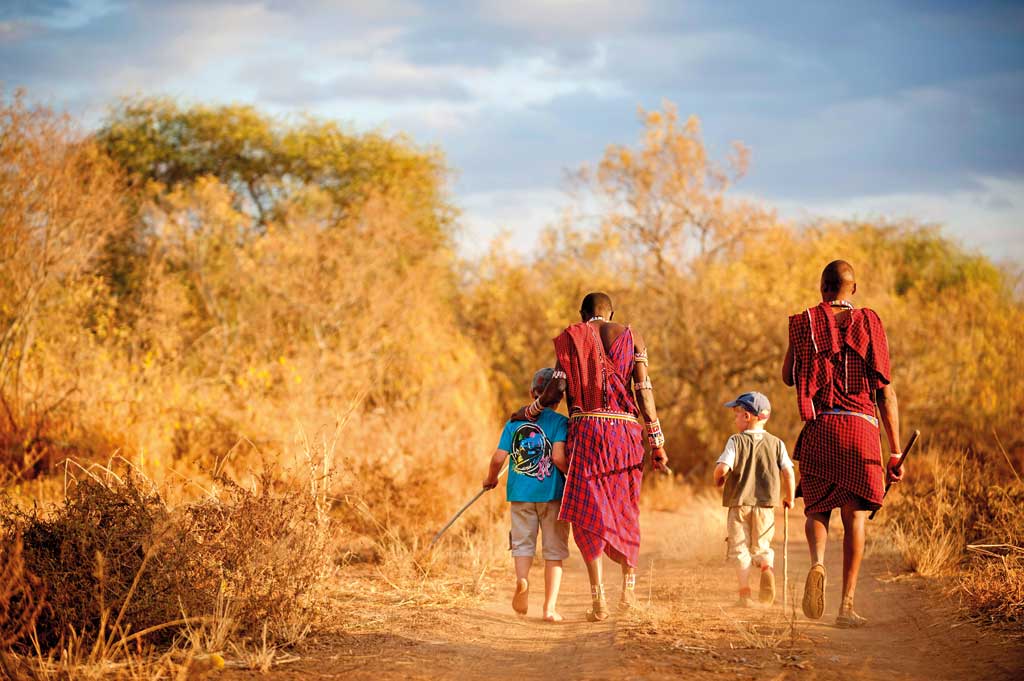
The best family safari in Africa is chosen by your youngest child’s age. South Africa’s malaria free reserves suit babies and toddlers, Kenya and Tanzania work from about six, and Botswana, Namibia, Zambia and the gorilla parks of Uganda and Rwanda reward older children and teens, since gorilla trekking starts at 15 and chimpanzee tracking in Uganda at 12. Book a private vehicle, a family room and short game drives, and almost any age can work.
That last point matters more than the choice of country. Plenty of parents picture four hour drives, enforced silence and a long list of rules, and assume a safari is an adult holiday that children merely tolerate. A family safari trip runs differently. Drives are shorter, the vehicle is yours, and the day has a pool and a nap in the middle. Countries come first below, then age limits, group tours against private trips, health, safety, lodges, pacing and packing, so you can match a trip to the children you actually have.

Choosing a Family Safari Country by Your Children’s Ages
Start with the youngest child. Their age decides whether malaria tablets are an option, which camps will take you and how long anyone can sit in a vehicle. The oldest child then decides how adventurous the trip can be.
Mixed ages are the norm, not the exception. A family with a four year old and a thirteen year old might base itself in a malaria free South African reserve and add Cape Town, then save East Africa for a later trip. A family with a teen and a ten year old could combine Kenya’s plains with Uganda, where the older child and one parent trek gorillas while the younger one goes on a community walk. A 7 day Kenya safari through Amboseli, Lake Nakuru and the Mara suits families with older children. To compare regions before choosing, see our guide to the best African safari countries.
| Country | Best ages | Malaria | Style |
|---|---|---|---|
| South Africa | All ages | Free areas | Lodge or self drive |
| Namibia | 6 and up | North only | Self drive |
| Kenya | 6 and up | Most parks | Guided |
| Tanzania | 6 and up | Most parks | Guided |
| Botswana | 8 and up | North | Fly in camps |
| Zambia | 12 and up | Yes | Walking |
| Uganda, Rwanda | 15 for gorillas | Yes | Guided |
South Africa Family Safaris: Malaria Free Reserves and Kruger
South Africa is the country most family safari planners land on, and for good reason. Roads are paved, flights are short, healthcare is good and a malaria free Big Five safari is possible within a few hours of Johannesburg or Port Elizabeth.
Madikwe Game Reserve, near the Botswana border about four hours’ drive from Johannesburg, is the classic pick. It is closed to day visitors driving themselves, so sightings stay quiet, and several lodges take children of every age, some with their own kids’ programmes and separate family houses. Pilanesberg, roughly two to three hours from Johannesburg, is the budget and self drive answer: a malaria free reserve inside an old volcanic crater where you can drive your own car, stop when someone needs the toilet and head back to camp for lunch. The Waterberg region and the Kalahari reserves of the Northern Cape, including Tswalu, fill out the malaria free list in the north.
Down south, the Eastern Cape pairs well with the Garden Route. Addo Elephant National Park, an hour or so from Port Elizabeth, has large elephant herds and is easy to self drive, and private reserves such as Kwandwe, Shamwari and Amakhala offer guided game drives with family rooms. Families who want a beach and a safari in one trip often drive the Garden Route from Cape Town and finish in the Eastern Cape.
Kruger National Park is different. It is a malaria area, with the risk highest from November to April and lower in the dry winter months, so take medical advice before bringing young children. In exchange, Kruger offers huge variety: SANParks rest camps with no age limit for self drivers, guided drives that usually start from age six, and private lodges in the Sabi Sand and Timbavati with family suites, a private guide and bushveld activities for children. SANParks guided walks are for children aged 12 and over.
Families who have done Kruger often look east to KwaZulu Natal next. Hluhluwe iMfolozi Park, where southern white rhino were brought back from the edge of extinction, sits a few hours north of Durban, and the wetlands and beaches of iSimangaliso around St Lucia add hippo boat trips on the estuary. It is a malaria area for part of the year, so it suits school age children best. Small neighbouring Eswatini slots in between Kruger and KwaZulu Natal, and mountainous Lesotho suits a longer South African road trip; both are covered further down.
Cape Town deserves at least three days. The African penguin colony at Boulders Beach near Simon’s Town is an easy hit with small children, boat trips from Hout Bay go out to the Cape fur seals on Seal Island, and the Two Oceans Aquarium at the V&A Waterfront fills a windy afternoon. Our wider South Africa safari guide and the best time to visit South Africa cover routes and seasons in more detail.

Namibia Self Drive Family Safari
A Namibia family safari is a road trip more than a game drive holiday. Main roads are good, many of them well kept gravel, traffic is light and towns have supermarkets, so families who like independence often hire a 4×4 and plan their own route. The catch is distance. Days of four or five hours in the car are common, which is why Namibia suits children from about six who can cope with long drives.
The south is malaria free. Children climb the red dunes at Sossusvlei, and the coast around Swakopmund offers quad biking and sandboarding on the dunes, seal colonies and cool sea air. Etosha National Park in the north is where most of the wildlife viewing happens: rest camps such as Okaukuejo sit beside floodlit waterholes, so after supper children can sit on a bench and watch rhinos and elephants come to drink. Etosha carries a seasonal malaria risk, highest in the rains from around November to April, so many families with young children visit in the dry months from June to October.
Between the two, the Cheetah Conservation Fund near Otjiwarongo runs a visitor centre that explains cheetah research and conservation, and in the far north visits with Himba communities give older children a look at a very different way of life. In Damaraland, guides track desert adapted elephants along dry riverbeds, and at Walvis Bay, near Swakopmund, flamingos crowd the lagoon for much of the year. Plan routes with the best time to visit Namibia in mind.
Kenya and Tanzania Family Safaris in East Africa
East Africa is the classic wildlife safari, and it works well for families once the youngest child is around six. Animals are easy to see on open plains, guides are used to children, and the Indian Ocean coast is close for a beach finish. Both countries are malaria areas, apart from the highlands, so plan health care ahead.
In Kenya, most families centre the trip on the Masai Mara and its private conservancies, add Amboseli or Laikipia, and spend a day in Nairobi at the elephant orphanage and Giraffe Centre. We cover ages, camps and pacing for that route in detail in our Kenya family safari guide, so this section stays brief. The Wildebeest Migration usually reaches the Mara from around July, which fits northern summer school holidays, though river crossings are never guaranteed. Lake Nakuru and the forested Aberdares add variety for families who want shorter drives between stops.
Kenya and Tanzania also combine well on one family safari trip. An overland route crosses at Namanga between Amboseli and Arusha, so families can see the Mara, the Serengeti and the Ngorongoro Crater without internal flights, though the days on the road are long and a private driver guide makes them far easier with children. Most escorted family tours in the region add a visit to a Maasai boma, with beadwork and spear throwing demonstrations, and some include a stop at a village primary school, which older children often remember longest.
A Tanzania family safari usually follows the northern circuit. The Ngorongoro Crater is the standout for children: a sunken caldera where lions, buffalo, zebra and often black rhino live in a compact area, so a half day game drive shows a lot without hours of searching. Tarangire, a short drive from Arusha, has big elephant herds in the dry season, and Lake Manyara, on the way to the crater, is small enough for a half day game drive with young children. The Serengeti is larger and the drives longer, so fly in rather than drive if your children struggle on rough roads. In the southern Serengeti, the calving season in January and February often brings large herds and newborn animals close to the tracks, though herd movements vary from year to year.
Near the crater rim, the farming town of Karatu has lodges with gardens and pools, which makes a calmer base than the crater rim itself. For routes and timing, see the Tanzania safari guide, the Ngorongoro Crater safari page and the best time to visit Tanzania. If a teenager is along, a Tanzania safari with gorilla trekking links the Serengeti to Bwindi in one trip.
Botswana, Zambia and Zimbabwe Family Safari Trips
These three countries suit families with older children best. Many camps are small, unfenced and reached by light aircraft, and a lot of them set a minimum age of six to twelve. In exchange you get some of the best guiding in Africa and activities that are hard to find elsewhere.
In Botswana, the Okavango Delta is the draw, with Moremi Game Reserve on its eastern side: game drives, motorboat trips and, where age rules allow, gliding through the channels in a mokoro dugout. A handful of Delta camps run dedicated family tents and children’s activities, and some insist on a private vehicle and guide for families with under twelves. Chobe National Park is easier with younger children, since a boat cruise on the Chobe River shows elephants and hippos without a long drive, and Kasane is a short transfer from Victoria Falls. On the salt pans of the Makgadikgadi and the edges of the Kalahari, some camps take families out to habituated meerkat colonies, an outing that works for children of most ages. See the best time to visit Botswana before booking.
Victoria Falls, on the border of Zambia and Zimbabwe, works for every age. Walking the rainforest paths opposite the falls is easy with children, and Livingstone and Victoria Falls town offer river cruises, helicopter flights and adventure sports with their own age rules. From there, a family safari in Zambia might head to South Luangwa National Park, known as the home of the walking safari, where walks usually start from age 12 and some camps set 16. In the Lower Zambezi, canoe trips past hippos and tiger fishing from a boat give teenagers something completely different from a game drive. Our Zambia safari guide covers these parks.
In Zimbabwe, Hwange National Park holds one of the largest elephant populations in southern Africa, and its waterholes make for productive game drives in the dry season. Mana Pools, on the Zambezi, is wilder: open floodplains with elephants, hippos and Nile crocodiles, where guided walking is a highlight for older teens.
Uganda and Rwanda Family Safaris: Gorillas from Age 15
Uganda and Rwanda are home to the world’s mountain gorillas, and gorilla trekking is the main reason families come. The rule to plan around is firm: the minimum age for gorilla trekking is 15 in both countries, checked at the briefing on the morning of the trek. The gorilla habituation experience has the same limit. A family whose youngest is 15 or older can treat this as one of the best family safaris in Africa. Families with younger children can still come, but should plan the trip so the under fifteens have their own activities.
In Uganda, the gorilla parks are Bwindi Impenetrable Forest and Mgahinga Gorilla National Park. In Rwanda, treks start from Volcanoes National Park, a shorter drive from Kigali that suits a quick add on; compare the two on our Rwanda gorilla trekking page. A trek can take an hour or most of the day on steep, muddy slopes. Teenagers tend to manage it better than their parents, and hiring a porter helps everyone.
For mixed ages, Uganda has plenty more. Murchison Falls National Park is the best all round family park in the country, with game drives on open savannah, a boat trip up the Nile to the base of the falls and a walk to the top. Queen Elizabeth National Park adds a launch trip on the Kazinga Channel with hippos and elephants at the water’s edge. Chimpanzee tracking in Kibale is open from 12 under the UWA tariff. Around Bwindi, younger children can join community walks while older siblings trek. Rwanda’s Akagera National Park offers a Big Five game drive within a few hours of Kigali.
Gorilla permits sell out in peak months, so secure them before anything else. Our gorilla permit guide explains how licensed operators book them, and the best time for gorilla trekking in Uganda covers the drier months.
Lesser Known Family Safari Ideas: Eswatini, Lesotho and Senegal
Not every family safari needs the Big Five. Some of the most relaxed family trips in Africa happen in countries that rarely make the brochures, where children can walk, ride or cycle rather than sit in a vehicle all day.
Eswatini is the easy one. Reserves such as Mlilwane let families explore on foot, by bike or on horseback among grazing antelope and zebra, and Hlane Royal National Park adds rhino and elephant within a short drive. Distances are small, so a few nights here between Kruger and the KwaZulu Natal coast barely lengthen the trip. Lesotho, the mountain kingdom inside South Africa, has no big game, but pony treks, waterfall hikes and mountain lodges suit active older children and teenagers.
West Africa is the outlier. Senegal has no classic safari circuit, yet Bandia Reserve, a fenced reserve about an hour from Dakar, shows giraffe, rhino, zebra and antelope on a short drive, which works for families visiting Dakar or the coast who want a first taste of a game drive. Set expectations: the wildlife was introduced and the reserve is small, so treat it as an outing, not a substitute for East or southern Africa.
Family Safari Age Limits by Activity
No African country sets one age for a family safari. Each camp, park and activity operator writes its own rules, and they differ more than most parents expect. The figures below are the usual pattern, not a guarantee, so ask every lodge on your route three questions: the minimum age to stay, the minimum age for a shared game drive, and whether a private vehicle is compulsory for younger children.
| Activity | Usual minimum | Notes |
|---|---|---|
| Self drive | None | Parent decides |
| Private game drive | Often none | Ask lodge |
| Shared game drive | 6 to 8 | Varies |
| Bush walk | 12 to 16 | Armed guide |
| Canoe trip | About 12 | Zambezi |
| Balloon flight | Often 7 | Serengeti, Mara |
| Chimp tracking | 12 | Uganda |
| Gorilla trekking | 15 | Strict |
Shared drives carry the strictest rules for a simple reason: a restless toddler costs other guests their sighting. Book your own vehicle and those limits usually fall away, because the drive runs at your pace. Walking is a different matter. On foot, a guide needs every member of the group to stay quiet, keep in line and follow instructions instantly, so most operators want children of at least 12, and some 16. Shorter nature walks around camp, looking at tracks, dung beetles and birds, are often open to younger children.
Watch the camp rules too. Some small luxury camps in Botswana, Zambia and the Sabi Sand do not take children under six or under twelve at all, while others welcome every age. Check before you fall for a property.
Family Safari Packages, Group Tours or a Private Safari Trip
Families book a safari in Africa in three broad ways, and each suits a different household. Many parents search for an all inclusive family African safari, but the label means different things to different operators, so read the inclusions line by line.
Escorted group family tours are the simplest. Large operators run fixed departures timed for school holidays, usually in northern Tanzania, Kenya or South Africa, with a tour director, set lodges and private vehicles for each small group. One ten day Tanzania family departure from a long established US operator, for example, runs through Arusha, Tarangire, Karatu and the Serengeti, takes children from age five, sets seven as the minimum for its balloon flight, seats six guests per vehicle so everyone has a window, and adds a Maasai village and a school visit. Group tours cost more per person than a simple private trip in the same lodges, but the planning is done for you.
Private tailor made safaris, arranged through a licensed operator, are what most families end up choosing. You set the pace, the vehicle and guide are yours, and the route can bend around nap times, a teenager’s wish list or a gorilla permit date. The safari companies page explains how to check an operator’s licence and what to ask before paying a deposit.
Self drive works in South Africa and Namibia, and to a lesser extent Botswana, for families confident on gravel roads. It is the cheapest way to go and the most flexible, but you carry all the planning, and long distances fall on the parents driving.
Whichever you choose, check what a package leaves out. International flights, visas, tips, internal flights, park fees, a private vehicle supplement and extra rooms for older children are the common exclusions, and on a family of four they add up quickly.
Malaria and Health on a Family Safari with Children
Health is the question parents ask most, and the answers are reassuring with some preparation. Book a travel clinic or paediatric travel appointment six to eight weeks before departure, so there is time for vaccines and for testing antimalarial tablets at home. A small travel first aid kit for the family is worth packing before you fly.
Malaria is the main reason South Africa tops the list for young families. Most safari regions of East Africa, Botswana’s north, Zambia, Zimbabwe, Uganda and Rwanda carry a risk, as does Kruger and northern Namibia in the rains. Children can take antimalarials, but the choice and dose depend on age and weight. Atovaquone with proguanil comes in a paediatric tablet and is the one most families are prescribed, while doxycycline is not given to children under eight. Babies and very young children are where many parents and doctors prefer to avoid the question altogether by choosing a malaria free reserve.
Tablets are only half of it. Children should wear long sleeves and trousers from dusk, use a repellent at a strength your doctor recommends for their age, and sleep under a net. Any fever during the trip, or in the months after, needs a malaria test straight away.
Routine childhood vaccines should be up to date. Yellow fever vaccination is recommended for much of East and Central Africa, and certificate rules differ by country and route. South Africa, for example, asks for a certificate from travellers arriving from a yellow fever country, which catches families who fly from Kenya or Uganda to Cape Town. Your clinic will also discuss typhoid and hepatitis A. Pack a small kit with children’s paracetamol, oral rehydration sachets, antihistamine, antiseptic and plasters, and make sure your safari travel insurance covers medical evacuation from remote camps.
Food and water cause more small upsets than anything exotic. Lodge meals are included on most safaris, and kitchens cope well with children’s tastes and allergies if told in advance. Stick to bottled or filtered water, pack oral rehydration sachets and a children’s diarrhoea remedy your doctor approves, and carry familiar snacks from home for the fussy days.
On the ground, the risks are mostly ordinary ones. The sun is stronger than visitors expect, so hats and sunscreen go on even on cool mornings in an open vehicle, and children dehydrate faster than adults. Wildlife rules are simple and need saying before day one: stay seated in the vehicle, keep voices low at sightings, and never walk around an unfenced camp after dark without a guide.
Is a Family Safari in Africa Safe? Travel Advice and Camp Rules
Wildlife rules and road travel matter more on a family safari than crime does, but official advice still shapes where families feel comfortable going. Here is where the main family safari countries stand at the latest check of the US State Department’s advisories, which run from Level 1, Exercise Normal Precautions, to Level 4, Do Not Travel.
Those ratings cover whole countries. Crime clusters in big cities such as Johannesburg, Nairobi and Dar es Salaam, and the parks themselves are run by guides and camp staff who host families every week. Our safest countries in Africa guide compares the advice country by country, and the is Uganda safe to visit guide covers the gorilla country in detail. Check your own government’s page before you fly, since advisories change.
Inside the camps, safety is about rules more than risk. Unfenced camps need an escort after dark, children must stay seated and quiet in the vehicle at sightings, and nobody wanders off the path. Fenced lodges remove most of that worry for parents of toddlers, which is why they top many lists for the under fives. The bigger hazards are the ordinary ones: long road transfers, heat, dehydration and tired children, all easier to manage with fewer moves and shorter drives.
Private Vehicles, Family Rooms and Kids’ Programmes on Safari
If the budget stretches to one upgrade, make it a private safari vehicle. On a shared vehicle you run to someone else’s timetable, and a photographer who wants forty minutes with a sleeping leopard tests any child’s patience. With your own vehicle and guide, you leave when the children have had enough, stop for a tortoise, take a toilet break and head back early for the pool. Some camps make a private vehicle compulsory for families with younger children, and many parents say afterwards it was the single best decision of the trip.
The guide matters as much as the vehicle. Trip reports from families say the same thing again and again: a guide who enjoys children, explains tracks, lets them hold a porcupine quill and does not spend the drive on the radio chasing the next big cat makes the safari. Ask your operator for a guide with family experience, even if it means a simpler lodge.
For rooms, look for family tents or suites with two bedrooms under one roof, so parents can hear the children at night. Ask whether a family tent is one structure or two tents with a path between them, since some camps need a guard to walk you between them after dark. Smaller tented camps tend to give families more attention from guides and staff than large lodges, though bigger lodges are often more relaxed about very young children.
Kids’ programmes are worth seeking out. Junior ranger courses, tracking lessons, bead work, baking and making plaster casts of animal prints give children their own part of the safari and give parents an hour off. Teenagers are the exception, since many find kids’ clubs patronising and would rather join the adults on a walk or a tracking session. Browse family friendly options on our safari lodges page.
Pacing a Family Safari Trip: Drives, Days and Rest
The commonest mistake on a family safari is doing too much. Four parks in ten days reads well on paper and feels like an endless car ride to a six year old. Two or three areas, with at least three nights in each, works better for almost every family.
Long haul flights to Africa can run ten to eighteen hours with a stopover, so take it easy at the start. A night in Johannesburg, Nairobi, Arusha or Entebbe before the first transfer gives everyone time to sleep off the flight. Direct flights, fewer transfers and lodges no more than a few hours apart matter more to a child’s mood than any single sighting.
Keep drives short for younger children, around 90 minutes to two and a half hours, and stop roughly every two hours for a toilet break and a stretch. Several parents in trip reports say three or four days of game drives in a row is about the limit before children lose interest, so break up a longer safari with a rest day, a swim or a different kind of outing. Snacks are the other secret. Hunger and boredom tend to arrive together on a game drive, and a well timed packet of crackers rescues more drives than any sighting.
Give children a job. Their own binoculars, a spotting checklist or a notebook for drawing what they see turns a passive ride into a game, and children often spot animals adults miss.
When a Family Safari Trip Can Wait
Sometimes the right answer is not yet. A safari asks children to sit still, stay quiet at sightings and follow a guide’s instructions straight away, and a child who cannot do that will spend much of the trip frustrated, as will everyone else in the vehicle. Families who expect constant action, or who want a trip with almost no planning, often find a beach holiday with a short game drive add on a better fit.
Budget is the other honest test. Family safaris in Africa get expensive once child rates, private vehicles and internal flights are added, and stretching a budget across too many parks spoils the trip. Waiting two or three years often opens up more countries, more activities and better value, since the children then qualify for walks, canoe trips and, at 15, gorilla trekking.
Beach Add Ons After a Family Safari
Ending with a few days by the sea gives everyone a rest after early starts and dusty roads, and many children say the beach was their favourite part. Most families add three to five nights.
From Tanzania, Zanzibar is a short flight from Arusha or the Serengeti, with calm beaches on the north and east coasts and Stone Town for an afternoon of spice markets and history. From Kenya, Diani Beach south of Mombasa is the usual choice. From South Africa or Zimbabwe, Mozambique has the Bazaruto Archipelago and Vilanculos, with snorkelling, dhow trips and warm water. Families on a longer trip sometimes add Mauritius or, with older children, Madagascar for lemurs and beaches.
Match the beach to the season. The long rains from around April to May bring rough seas and some resort closures on the East African coast, while Mozambique is best in the dry southern winter.
Packing for a Family Safari Trip and Planning the Season
Pack light. Light aircraft between parks set strict weight limits that include hand luggage, usually 15 kg per person in Kenya and Tanzania and often 20 kg in Botswana, and they ask for soft bags with no wheels or frame. A soft sided duffel bag for each family member avoids an argument at the airstrip. Most camps offer laundry, so a few outfits go a long way.
Dress children in neutral colours such as khaki, olive and tan, and avoid dark blue and black in areas with tsetse flies. Layers matter: early mornings in an open vehicle can be cold, even in summer, so bring a fleece and a beanie. Kids’ quick dry convertible trousers cover legs at dusk and zip off at midday. A wide brim sun hat with a chin strap stays on in an open vehicle, and a child friendly picaridin repellent is gentler on young skin, subject to your doctor’s advice. Closed shoes beat sandals around camp.
A few extras make a real difference. One pair of compact kids’ binoculars per child ends the queue for the family pair. A rechargeable kids’ headlamp helps with night time trips to the bathroom in a tent. An African animal spotting book for children keeps young minds busy between sightings, and an old phone or simple camera lets them take their own photos, so bring spare memory cards and chargers. If you plan to self drive in South Africa or Namibia, bring a lightweight travel booster seat, since safari vehicles have seat belts but rarely child seats. Our guides on what to wear on safari, the African safari packing list, cameras and binoculars and the wider Safari Gear and Clothing section cover the rest, and families with teens heading for gorillas should read the gorilla trekking packing list. Our safari gear for kids guide covers what children actually need to pack.
On timing, the dry seasons give the easiest game viewing almost everywhere: roughly late June to October across East and southern Africa, with January to March also good in Kenya and northern Tanzania. Vegetation thins, animals gather at water and roads are passable. Those months also match northern school holidays, so camps fill early and you should book six months or more ahead for July and August. The green season brings lower rates and fewer vehicles, with afternoon storms and, in malaria areas, more mosquitoes.
Family Safari in Africa FAQ
Which is the best country in Africa for a family safari?
For babies and under fives, South Africa, because of its malaria free reserves, short transfers and family lodges. For children from about six, Kenya and Tanzania give the most wildlife for the time spent in the vehicle. Botswana, Zambia and Namibia suit older children, and Uganda and Rwanda are best once everyone is 15 and can trek gorillas.
What is the best age to take children on safari?
Six to twelve is the easiest window. Children that age can sit through a two hour game drive, follow wildlife rules and qualify for shared drives at most camps. Younger children can come with a private vehicle and shorter outings, ideally in a malaria free reserve. Teenagers can do nearly everything, including walking safaris and, from 15, gorilla trekking.
Can you take a toddler on an African safari?
Yes. Self drive parks such as Pilanesberg and Addo, or malaria free lodges in Madikwe and the Eastern Cape that accept all ages, are the realistic options. Book a private vehicle, keep drives to an hour or two and plan plenty of time at the lodge. Bring snacks, a familiar toy and any formula or nappy brands from home.
What are the best safari destinations for families with children?
Madikwe, Pilanesberg and the Eastern Cape reserves in South Africa for young children, the Masai Mara conservancies and the Ngorongoro Crater for primary school ages, Etosha for families on a self drive, the Okavango Delta and Chobe for older children, and Bwindi and Volcanoes National Park for teenagers who can trek gorillas from 15.
Is a private safari vehicle worth it for families?
Usually, yes. A private vehicle lets you leave a sighting when children tire, stop for toilet breaks and return early, and at many camps it removes the minimum age for game drives. If you only upgrade one thing on a family safari, make it the vehicle.
How long should a family safari in Africa last?
Seven to ten days on safari suits most families, split between two or three areas with at least three nights in each. Add three to five days at the beach for a relaxed finish. Shorter trips work with flights between parks, but avoid squeezing in extra parks to fill the days.
Is an African safari safe for children?
Well run camps and parks are used to families, and the main rules are about wildlife: stay in the vehicle unless the guide says otherwise, keep voices low at sightings and never walk around an unfenced camp after dark without an escort. Health risks are mostly sun, dehydration and, in some regions, malaria, all of which preparation handles.
Can children go gorilla trekking in Uganda or Rwanda?
Only from age 15. Both countries enforce the limit at the morning briefing, and the habituation experience in Bwindi follows the same rule. Children from 12 can join chimpanzee tracking in Kibale, and younger children can join community walks around Bwindi, canoe trips on Lake Bunyonyi and game drives in Murchison Falls or Queen Elizabeth.
Do children need malaria tablets on safari?
In malaria areas, doctors usually prescribe them, dosed by age and weight. Atovaquone with proguanil is the common choice for children, and doxycycline is not given under eight. In malaria free reserves in South Africa and southern Namibia, tablets are not needed. Only a doctor or travel clinic should set the dose.
How much does a family safari in Africa cost?
Lodge and camp rates vary widely by country, season and style, from a few hundred US dollars per person per night at mid range lodges to well over a thousand at private camps in Botswana or the Sabi Sand. Child rates are where families save: many camps charge children under 12 between about half and three quarters of the adult rate, and under fives sharing with parents often stay free, though these discounts are not always advertised, so ask. Self driving in South Africa or Namibia and staying in park rest camps is by far the cheapest family safari, and Kruger’s SANParks rest camps charge reduced conservation fees for children; our Kruger safari cost guide sets out the fees and family options. At the top end, an escorted ten day family tour of northern Tanzania from a large US operator is priced from roughly US$9,400 per person, including lodges, game drives and gratuities. See our guides to South African safari cost and Tanzania safari cost for budgets.
How much are gorilla permits if we add Uganda or Rwanda?
A Uganda gorilla trekking permit costs US$800 for foreign nonresidents and US$700 for foreign residents, with a lower US$600 rate announced for April, May and November. The habituation experience costs US$1,500 and is due to rise to US$1,800 for foreign nonresidents from 1 January. Rwanda’s permit costs US$1,500. Uganda permits are paid in full at the time of booking.