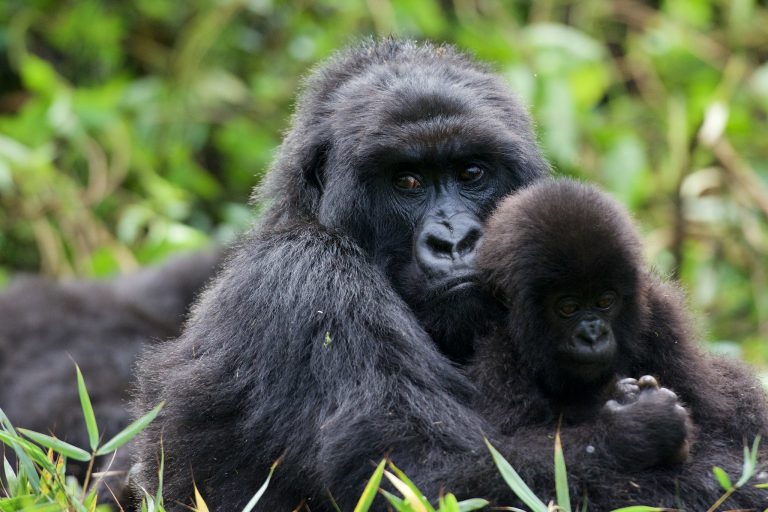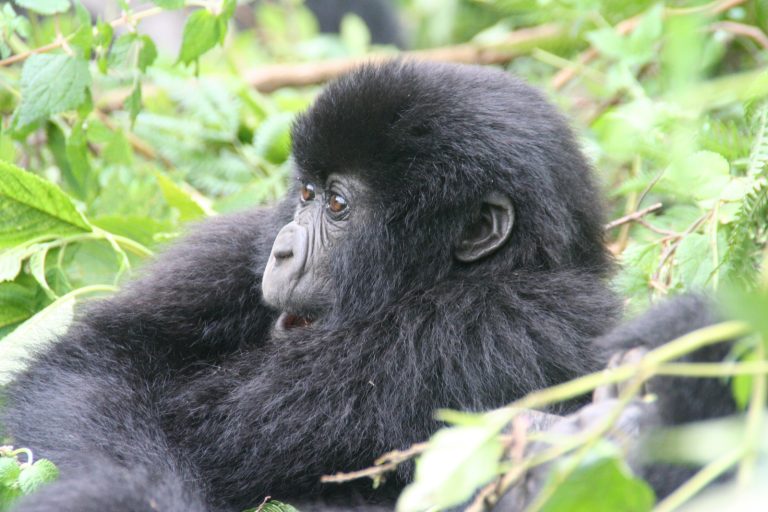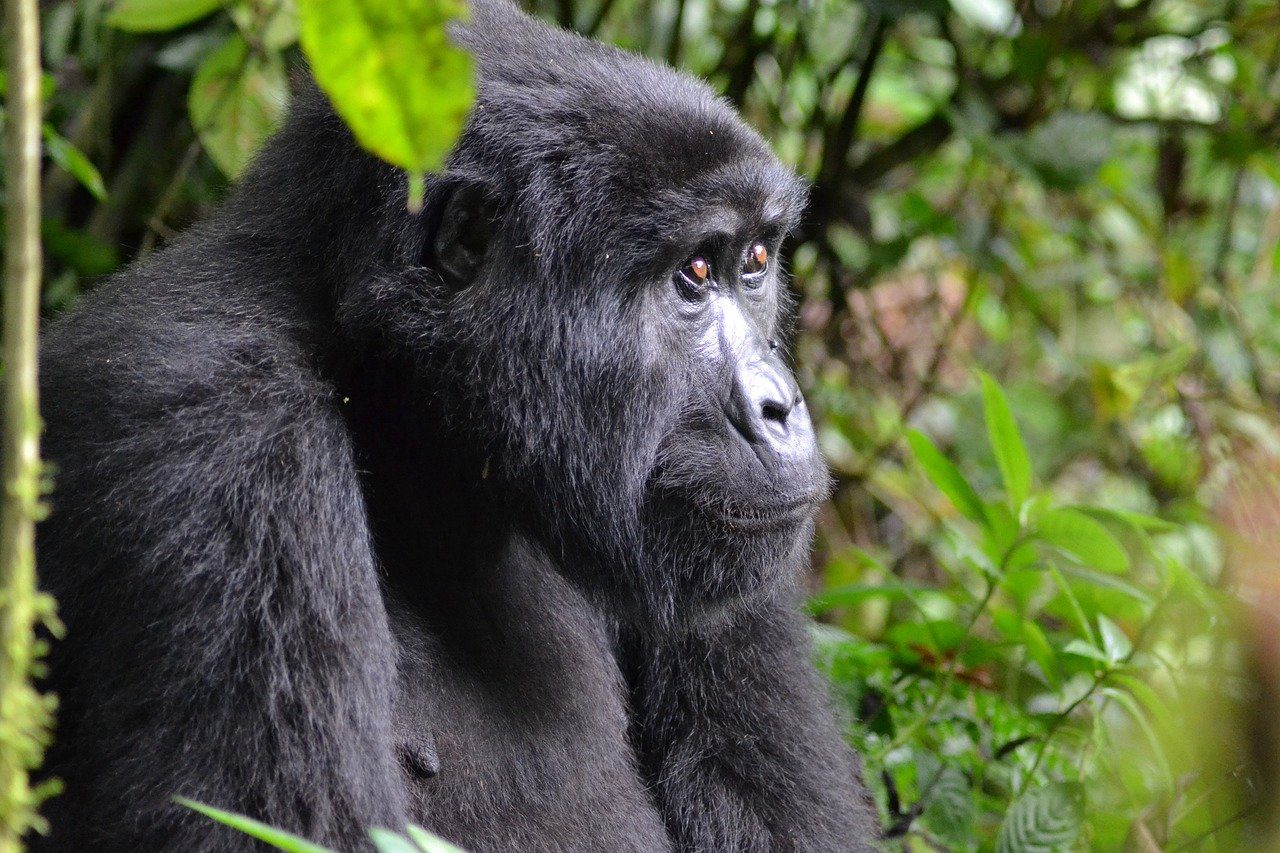
The Mubare gorilla family is the oldest habituated mountain gorilla group in Uganda, trekked from the Buhoma sector on the northern edge of Bwindi Impenetrable National Park. Permits are sold by the Uganda Wildlife Authority for Buhoma rather than for Mubare itself, and rangers assign families on the morning of the trek. The group opened to visitors in 1993 and is small today, around seven gorillas led by a single silverback, Maraya.
Most people only learn which family they will see at the morning briefing, so it helps to know the story before you go. Mubare has the longest record of any group in the country, and it has been through more upheaval than most. This guide covers where the family lives, how it changed over three decades, what the trek involves and how to plan a gorilla trekking safari around it.
Mubare Gorilla Family History: Uganda’s First Habituated Trekking Group
The Mubare habituation work began in 1991, the same year Bwindi was gazetted as a national park. Trackers had found the group in the Mubare Hills, deep inside the forest above Buhoma, and named it after them. Local guides translate the word in different ways, some as hills and some as stones, but every account ties the name to that ridge. Rangers and researchers then spent roughly two years visiting the family daily until the gorillas would tolerate people at close range. In April 1993 the first paying visitors walked in, which makes Mubare the group that started gorilla tourism in Uganda.
A few operator pages give 1998 as the habituation date. That is a slip. The 1991 start and 1993 opening are what the park and conservation records show, and they explain why Buhoma, rather than the southern sectors, was the birthplace of the trekking trade.
At its peak the family numbered about 18. Its leader was Ruhondeza, a silverback whose name means “sleepy fellow” in Rukiga. He lived up to it. Guides remember him as calm and slow, a leader who rarely picked a fight, though he did push young blackbacks out before they could challenge him, and that habit left the family short of fighting males once wild groups started testing it.
Numbers fell through the 2000s. Some young adults left to join or start other families, as gorillas normally do, while others died in clashes with wild groups. In 2009 the family lost three members: an adult female died of a skull injury, and her young infant, still unweaned, was later found dead too. By early 2012 Mubare was down to five animals.
Silverbacks of Mubare: Ruhondeza, Kanyonyi and Maraya
March 2012 was the turning point. A wild group attacked, took females, and left the ageing Ruhondeza beaten. He withdrew from the forest onto community land near Buhoma and lived out his last months alone, watched by UWA staff. He died of old age in June 2012, reckoned to be over 50, and was buried close to the park offices, where his grave still draws visitors. Our page on Ruhondeza’s burial tells that part of the story in full. Some operator pages place his death in 2013 or even 2015, which does not fit the burial records.

Leadership passed to Kanyonyi, his oldest surviving son. Kanyonyi held the survivors together and drew in females from neighbouring groups, and for a few years the family grew again, to around nine and by some counts more. A fall from a tall tree left him injured and weaker, though. His brother Muyambi, Ruhondeza’s other surviving son, also grew into a silverback.
In November 2017 a lone silverback called Maraya (spelled Malaya on some operator pages) fought and killed Kanyonyi, according to the International Gorilla Conservation Programme. Most members scattered after that fight, and some infants were killed, which is grim but normal behaviour when a new male takes over. Maraya then rebuilt a small family around himself.
The scattering left a mark on the whole sector. Gorillas that left Mubare during that period of upheaval went on to form the Katwe family in 2018, now one of Buhoma’s own trekking groups. Operator news from late 2019 also reported that Maraya had won back two females who had earlier moved across to the Rushegura group, and that births followed; those reports came from tour companies rather than the park, so read them as colour rather than a census.
One name in older Mubare rosters, the young male Muyambi, went on to found his own family: IGCP records that Muyambi, a son of Ruhondeza, left with followers in 2019 to start the Muyambi group, which tourists can now track from Buhoma. Older lists for Mubare (Kanyonyi as blackback, the adult female Kashundwe, the subadult male Muyambi, the subadult female Malaika and Kashundwe’s infant) describe the family as it was around 2012 and are now out of date.
Mubare Group Size and Leading Silverback Today
The most recent published breakdown comes from IGCP, in its latest family update. It records seven gorillas, with Maraya in charge. Several tour company pages still give eight, nine, 12 or even 18 members under Kanyonyi or Ruhondeza, figures that date from before 2017 or from the family’s peak.
Treat any count as a snapshot. Births, deaths and transfers change a small group quickly, and a single female moving out alters the picture. Your ranger at the Buhoma briefing will have the current roster and is happy to go through it.
A small family has one real advantage on a Mubare gorilla trek. With fewer animals spread through the undergrowth, you often see the whole group within the hour, and the silverback tends to stay close to his females and young.
Trekking the Mubare Family: Difficulty, Terrain and Timing
Expect a moderate to hard trek. Mubare ranges over the hills that gave it its name, and the trails climb and drop steeply through thick secondary growth and old forest. Buhoma sits lower than Ruhija or Nkuringo, at roughly 1,500 metres, so the air is warmer and the altitude rarely bothers anyone. The slopes are the challenge.
Trek times vary from day to day. On some mornings advance trackers find the family within an hour of the trailhead; on others the walk runs four or five hours before contact, and the return adds more. Plenty of trip reports from Buhoma mention mud to the ankle in the wet months and nettles along the edges of the trail.
The day starts with a briefing at around 7:30 at Buhoma park headquarters. Groups of up to eight visitors set off with an armed ranger guide, and the hour with the gorillas starts once you reach them. Porters wait at the gate. Hiring one costs little, helps a local family, and makes a real difference on steep ground, so most guides recommend it even for fit trekkers.
Rain falls in every month. The drier spells from June to August and December to February make the slopes easier underfoot, which our guide to the best time for gorilla trekking in Uganda covers month by month. March to May and October to November are wetter, with fewer trekkers on the trails; April, May and November also carry UWA’s announced low season permit rate, detailed in the FAQ below.
Your Hour with the Mubare Gorillas: Trekking Rules and What You See
The Mubare gorilla trekking hour begins when the trackers radio that they have the family. Your ranger halts the group a short distance away. Walking sticks, bags and food stay behind with the porters, a face mask goes on, and you cover the last few metres with a camera and nothing else.
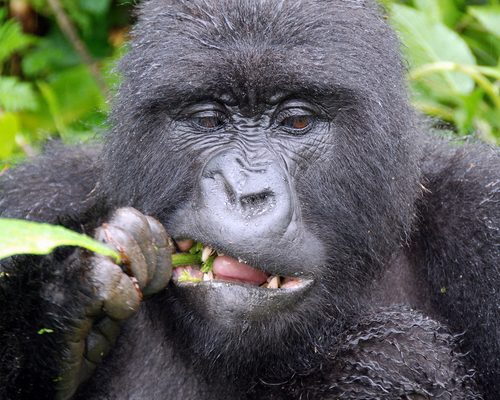
Rules are the same as for every Bwindi family. Keep about ten metres back, talk quietly, switch off the flash and never eat near the gorillas. Anyone with a cough, cold or fever should say so at the briefing, since gorillas catch human infections easily and the warden can keep a sick visitor back. If Maraya grunts or charges, crouch, look down and stay still; the ranger handles the rest. Nobody under 15 may trek.
What happens in that hour depends on the morning. Families feed, rest in day nests, groom one another and play, and Mubare’s infants are the ones most likely to tumble about while the adults doze. Light under the canopy is dim. Set a high ISO before you leave the trail, and put the camera down for a few minutes at some point, because the hour passes faster than anyone expects.
How to Request the Mubare Family on Your Gorilla Safari
You cannot book Mubare by name. UWA issues gorilla trekking permits by sector, so your permit says Buhoma and nothing more. Each morning the rangers divide that day’s visitors among the Buhoma families, weighing fitness, age and any requests.
That last part is worth using. Tell your safari company you would like Mubare, and mention it again quietly to the warden at the briefing. If you want a shorter walk, say so too, because rangers try to send slower walkers to whichever family is closest that morning. Nothing is promised, and a polite request is all anyone can do.
Book early for the busy months. Only eight permits a day go to each family, so Buhoma has a limited number in total, and they go months ahead for July, August and the Christmas period. Three to six months of lead time is sensible for the dry season, and UWA now takes full payment at booking.
Lodges Closest to the Mubare Gorilla Trekking Trailhead
Since Mubare starts from Buhoma headquarters, any lodge in Buhoma village works. The full list by tier is on our Bwindi lodges page. At the top end, the tented Gorilla Forest Camp sits inside the park boundary a few minutes on foot from the briefing point; see our older profile of Gorilla Forest Camp. Buhoma Lodge, once called Buhoma Homestead, has chalets just inside the gate.
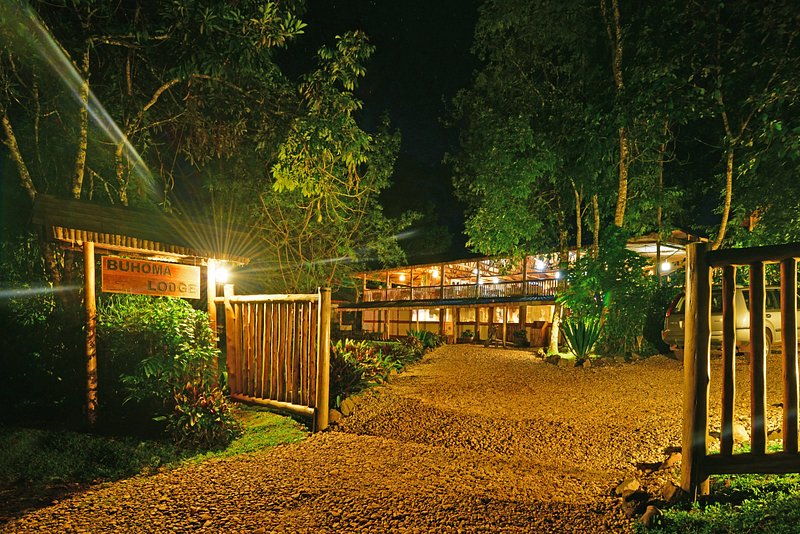
Mid priced choices include Engagi Lodge and the community owned Buhoma Haven Lodge. For a modest budget, the CTPH Gorilla Conservation Camp puts its profits into gorilla health work, and the Buhoma Community Rest Camp stands right at the gate. Avoid booking a lodge in another sector: Rushaga is three hours or more away by road, and the briefing will not wait.
What to Pack for the Mubare Gorilla Trek
Steep, muddy slopes decide the kit list here. Waterproof boots with deep lugs matter most, followed by gardening or leather gloves for grabbing vines and nettle stems, and long trousers tucked into socks or gaiters against ants. A light rain jacket earns its place even on a sunny morning.
Carry two litres of water, a packed lunch from your lodge, and a small dry bag for your camera. Our gorilla trekking packing list is the full gear hub, with separate guides to trekking boots and what to wear.
Other Buhoma Gorilla Families and Getting There
Mubare shares the sector with older and larger neighbours. The Habinyanja family, opened in 1999, is known for ranging far, while the Rushegura group, which split from Habinyanja in 2002, often stays close to headquarters. Katwe, formed from former Mubare members, has about ten gorillas, and the newer Muyambi, Binyindo and Happy families complete the sector. If Buhoma permits are sold out, the Bitukura family in Ruhija is a quieter alternative. Every habituated group in Uganda is profiled on our gorilla families hub, and Rwanda’s own families are covered at www.volcanoesrwanda.org.
Buhoma is reached by road from Kampala in a long day, about eight to nine hours via Rukungiri, or by a flight of just over an hour to Kihihi airstrip followed by a drive of an hour and a half to two hours. Many travellers arrive from Queen Elizabeth National Park through Ishasha, two to three hours away. Routes and timings are on our getting to Bwindi page, and the Buhoma gorilla trekking guide covers the sector as a whole.
A spare afternoon in Buhoma is easy to fill. The waterfall trail and the village walk start near the gate, as described on our Bwindi nature walks page, and a visit with the Batwa people, the forest’s former residents, adds the human side of the park’s story.
Mubare Gorilla Family FAQ
How much is a permit to trek the Mubare gorilla family?
A Buhoma gorilla trekking permit costs US$800 for foreign nonresidents, US$700 for foreign residents of East Africa and UGX 300,000 for East African citizens. UWA has announced a reduced rate of US$600 for April, May and November. Confirm the rate for your dates with your operator before paying, since UWA revises fees from time to time.
Is Mubare the oldest gorilla family in Uganda?
Yes. Habituation started in 1991 and the group received its first tourists in 1993, earlier than any other family in the country.
How many gorillas are in the Mubare family?
About seven in IGCP’s latest profile: the silverback Maraya, three adult females, one juvenile and two infants. Older figures of nine, 12 or 18 describe the family before 2017.
Who leads the Mubare group now?
Conservation records name the silverback Maraya, who took over in November 2017 after killing Kanyonyi. Ask the ranger at your briefing for the latest position, because leadership can change without much warning.
Where does the Mubare gorilla family live?
In the Mubare Hills above Buhoma, in the northern sector of Bwindi Impenetrable National Park, Kanungu District, southwest Uganda. Treks start from Buhoma park headquarters.
How hard is the Mubare gorilla trek?
Moderate to hard. The terrain is hilly, and total walking time can be anything from two hours to most of the day. A porter and a walking stick, both offered at the gate, make the climbs far easier.
Can I choose Mubare when I book my permit?
No. Permits name the Buhoma sector, and rangers allocate families on the morning. Your operator can pass on a request, and you can repeat it at the briefing.
Can I visit Ruhondeza’s grave?
Yes. It lies near the park offices at Buhoma, a short walk from the briefing area, and guides will point it out before or after your trek.
What is the minimum age for trekking Mubare?
Fifteen, as for every gorilla family in Uganda. Children under that age can join community walks around Buhoma village instead.