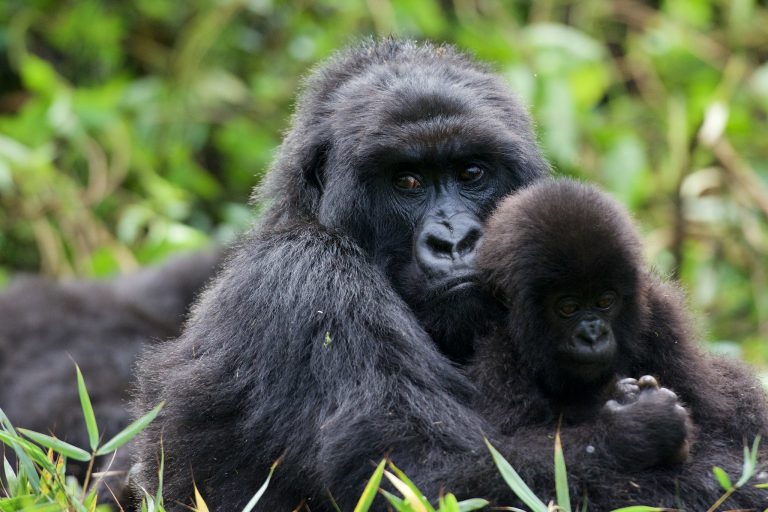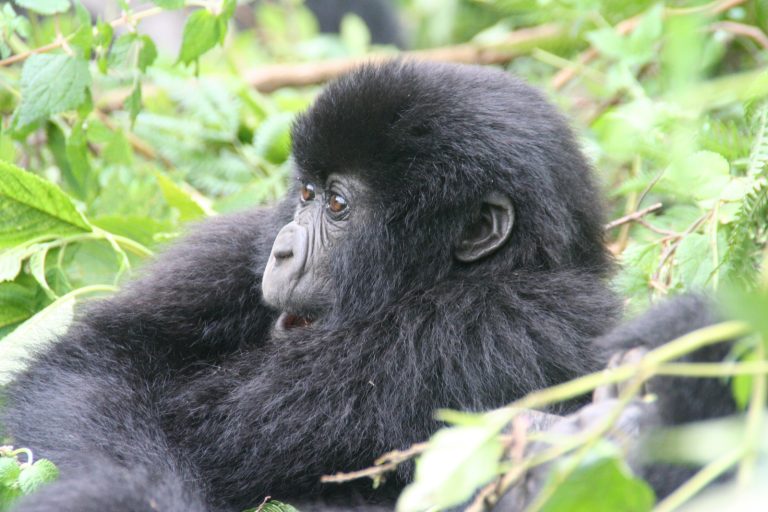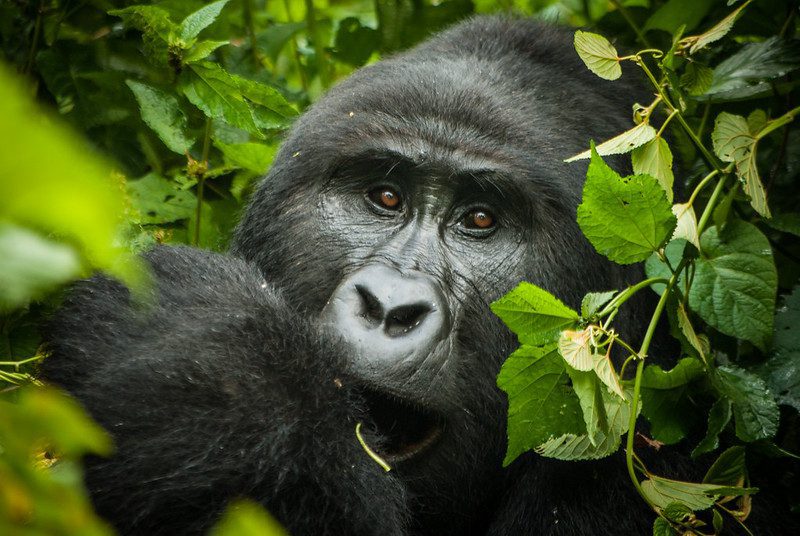
Buhoma gorilla trekking is the original mountain gorilla trek in Uganda, run each morning from the Buhoma sector office on the northern edge of Bwindi Impenetrable National Park. Visitors book a Buhoma permit through a licensed safari company that is a recognised member of AUTO, the Association of Uganda Tour Operators, and most sleep in the village beside the trailhead. The sector sits at about 1,500 metres in Kanungu District, where Uganda opened its first habituated gorilla family to tourists in 1993.
Buhoma Gorilla Trekking: Where Uganda’s Gorilla Tours Began
The Buhoma sector of Bwindi is where gorilla tourism in Uganda started. Trackers began habituating the Mubare family in 1991, the year Bwindi became a national park, and the first paying trekkers walked in two years later. For more than a decade Buhoma was the only place in the country you could do this. Nkuringo opened in the south in 2004, followed by Ruhija and Rushaga, which is why Buhoma still has the oldest gorilla families, the longest list of lodges and the most settled routine.
It is also the gentlest of the four sectors to arrive in. The village lies low by Bwindi standards, nights are mild, and the lodges sit in a short strip along the river within walking distance of the briefing point. You can wake up, eat breakfast and stroll to the gate. Nobody in Ruhija or Nkuringo gets that.
That convenience comes with a catch. Buhoma is the busiest sector, so its permits go first, above all for the dry months. If your dates are fixed, book the Buhoma permit before anything else, then build the lodge and transport around it. Our main gorilla trekking in Uganda guide compares all four sectors side by side.
The forest around the village is part of a much bigger story. Bwindi’s 2018 census counted 459 mountain gorillas, out of a world total of 1,063, which makes this one park home to close to half the subspecies; results of the newer census are still awaited. The mountain gorilla census page explains how those counts are made. Every one of those gorillas is wild, and only the habituated families described below can be visited.
Buhoma Gorilla Families You Could Trek
A Buhoma gorilla trekking permit is issued for the sector and the date, never for a named family. Rangers divide the day’s visitors among the families at the morning briefing, eight people to each group. So the names below are the families you might be given, not a menu. Because the sector releases eight permits per family per day, its daily total grows each time UWA opens a new group; with five to seven bookable families, that is roughly forty to fifty six trekkers a day, more than any sector except Rushaga.
| Family | Approx. size | Known for |
|---|---|---|
| Mubare | 6 to 8 | Oldest, 1993 |
| Habinyanja | 12 to 18 | Wide ranging |
| Rushegura | 16 to 19 | Near the lodges |
| Katwe | 7 to 10 | Split from Mubare |
| Muyambi | 6 to 7 | Newer group |
| Binyindo | 6 to 9 | Newer group |
| Happy | Not published | Newly opened |
Each of the older families has its own page on this site. The full story of the oldest group, including Ruhondeza’s grave near the park offices, is on our Mubare gorilla family profile. The two related groups that split in 2002 are covered on the Habinyanja family and Rushegura group pages, and every family across the park is listed in our directory of Bwindi gorilla families.
Group sizes on older websites are often wrong. Infants are born, young males leave and females transfer between groups, so a family listed as nineteen strong may number twelve on the day. Ask the ranger for the current count once you reach them, and look for the silverback first; our silverback gorilla facts page explains what sets him apart.
Will you actually see them? Almost always. Advance trackers follow each family from its night nests every morning, and long habituated groups like these are found on the great majority of treks; operators commonly quote odds above 95 percent. A sighting is still not guaranteed, because a family can cross a ridge or move into thick growth where the hour is spent peering through leaves.
A Buhoma Gorilla Trekking Day, from Briefing to the Final Hour
Your Buhoma gorilla trek starts at the UWA office beside the park gate. Plan to be there by about 7:30, with passport and permit, for registration before the briefing at around 8. Lodges in the village drive or walk guests over after an early breakfast and hand out a packed lunch at the door.
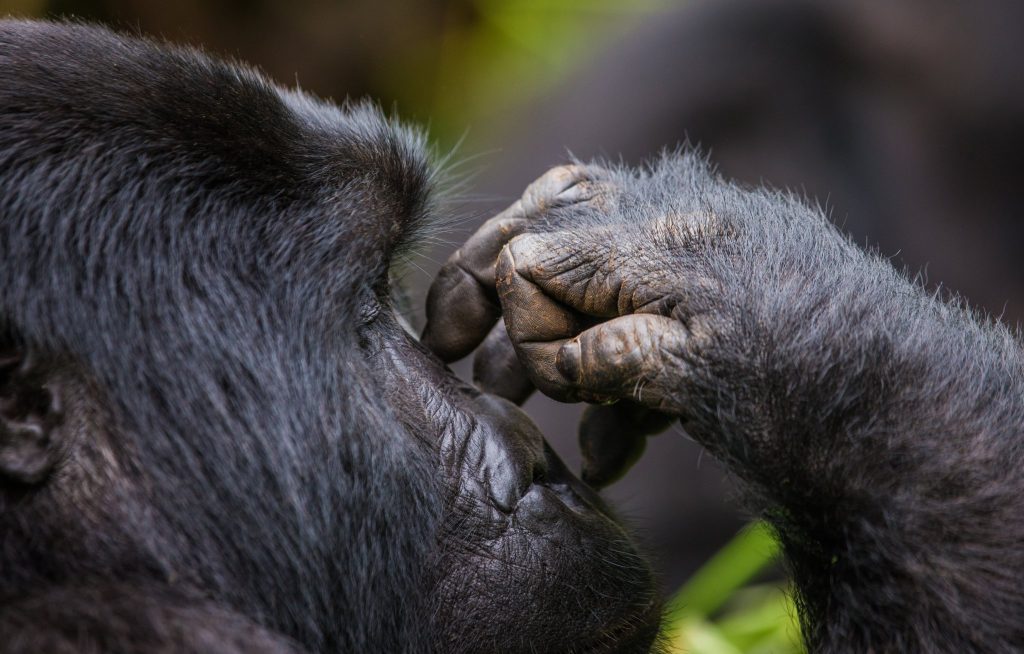
The briefing covers the rules, a little history of the families, and then the allocation. This is the moment to speak up. If you have bad knees, a heart condition or simply limited stamina, tell the warden quietly before the groups are named. Rangers cannot promise anything, since the gorillas move overnight, but they usually steer slower walkers toward the family that advance trackers have found closest to the road. Rushegura and Mubare are the groups most often handed to those trekkers. Fit walkers who want a long day can ask for Habinyanja.
Porters wait at the gate. Each trekking group then sets off with a ranger guide and armed escorts, sometimes walking straight into the forest from the office, sometimes driving a short way to a trailhead on the village side of the park. The trackers radio the family’s position to your guide as you go.
Once you reach the gorillas, packs and sticks go down a short distance away and the hour begins. It goes faster than anyone expects.
What you see depends on the morning. Some days the family is resting in a clearing while juveniles wrestle and an infant climbs over its mother. Other days the whole group is feeding on the move through thick undergrowth, and you follow, stopping when they stop. Rangers keep watch on the time and call it at sixty minutes, even if the silverback has just sat down in perfect light.
After the hour you walk back out the way you came, or by a shorter route if the family has moved toward the village. Many groups are back at the gate by early afternoon; Habinyanja trekkers sometimes return close to dusk. Certificates are handed out at the office, and most people head straight for a shower and a late lunch.
Gorilla Trekking Rules and Safety in Buhoma
The gorilla trekking rules in Buhoma are the same UWA rules used across Uganda, and they exist for two reasons: gorillas catch human colds and flu easily, and a calm family stays calm only when visitors behave predictably. The rangers repeat them at the briefing, so nobody is expected to arrive word perfect.
Stay about ten metres back. Young gorillas sometimes wander closer than the rule allows, and when that happens the guide moves you back rather than the gorilla. Keep voices low, no flash, no eating, drinking or smoking near the family, and no pointing sticks. Face masks are often handed out for the final stretch. Anyone with a cough, cold or fever should tell the warden, because you may be asked to stay behind, which protects the very family you came to see. Wash or sanitise your hands before setting off, turn away and cover your mouth if you have to sneeze, and carry every wrapper back out. If you need the toilet in the forest, the guide digs a hole well away from the group. The minimum age is 15.
Is it dangerous? Very rarely. Habituated gorillas are used to people, and attacks on trekkers by habituated gorillas are almost unheard of. A silverback may grunt, beat his chest or make a short bluff charge, usually at another gorilla or at someone who moved too fast. If that happens, crouch, look down, stay still and follow your guide; habituated males almost always stop short. The armed escorts are there for forest elephants and buffalo, which are rarely met, and they fire into the air only to scare an animal off.
The real risks are ordinary hiking ones: a twisted ankle on wet clay, a fall on a steep bank, dehydration on a hot afternoon. Porters, a walking stick and boots with grip deal with most of them. For wider questions about travel in the country, our page on whether Uganda is safe to visit covers current advice.
The trek also pays for the forest. Permit income funds the rangers and trackers who protect these families, a share of park revenue goes to communities around Bwindi, and porters, guides and craft sellers in Buhoma all earn from the morning’s trekkers. Vets from Gorilla Doctors work with UWA on snared or sick gorillas, and the Conservation Through Public Health (CTPH) centre in the village works on the health of people and gorillas together. Hiring a porter and buying from the village craft shops are the simplest ways to keep that income local.
How Hard Is the Buhoma Gorilla Trek?
Trekking difficulty in Buhoma runs from an easy morning to a long, sweaty day, and the deciding factor is where your family slept. Some trekkers reach Rushegura within an hour of the gate. Others follow Habinyanja for three to five hours before contact, then walk back again. A total time anywhere between two and eight hours is normal.
The ground is hill country rather than mountain. Bwindi’s northern slopes are short and steep, with stream crossings, slick clay after rain and thick undergrowth that guides clear with machetes as they go. Because Buhoma sits lower than the southern and eastern sectors, the air is warmer and altitude rarely bothers anyone. The humidity does. Expect to sweat through your shirt on the climbs.
Trip reports from the sector come back to the same few points. Hire a porter even if you are fit, because a hand on a steep, muddy bank matters more than the weight off your back, and the fee goes to a family in the village. Take the walking stick your lodge or the gate offers. On wet days people slide down sections on their backsides, which is uncomfortable but rarely more than that. And the trek is done at your pace; guides stop for breath whenever the group needs it.
No family is easy every day. Gorillas follow food, and a clash with a wild group can push even Rushegura deep into the forest for a week. Prepare for the hard version and enjoy it if you get the short one. Regular hill walking with a daypack in the weeks before the trip helps far more than gym work; our gorilla trekking difficulty and fitness guide has a plan. Travellers with real mobility limits can ask operators about sedan chairs carried by teams of porters, covered on our page about gorilla trekking with special needs.
Packing for a Buhoma Gorilla Trekking Safari
A gorilla trekking safari in Buhoma needs the same kit as anywhere in Bwindi, with a bias toward warm, wet conditions rather than cold. Waterproof boots with real grip come first; break them in at home, since new boots and steep clay are a poor mix. Our guide to boots for gorilla trekking explains what to look for.
Long trousers and long sleeves protect against stinging nettles, ants and thorny ferns. Gardening gloves are the item trekkers most often say they wished they had brought, because you grab whatever vegetation is nearest on a slippery bank; see gloves for gorilla trekking. Tuck trousers into socks or wear gaiters to keep safari ants and mud out. A light rain shell goes in the daypack whatever the morning sky looks like, as Bwindi weather turns from sunshine to downpour within minutes, and a thin sweater helps during the hour when you stop moving and the sweat cools.
Add two litres of water, the packed lunch from the lodge, insect repellent, sunscreen and a hat for the open stretches through village gardens, a small first aid kit with plasters for blisters, and a waterproof cover for the camera with spare batteries, since charging in the forest is impossible. Binoculars earn their place if you plan a nature walk the next day. Small cash for porters and tips helps too. The complete checklist is our gorilla trekking packing list, and camera settings for dark forest are in our gorilla trekking photography guide.
If you fly to Kihihi, pack in a soft bag. Light aircraft have strict luggage limits, so check your airline’s allowance before you pack heavy boots and a camera bag. Our Uganda gorilla trekking packing list sets out what to bring.
Health paperwork matters before you even reach the forest. Uganda no longer requires a yellow fever certificate on arrival, though the vaccine is still recommended, malaria prevention is advised for Bwindi, and travel insurance that covers medical evacuation is wise for a remote park. See a travel clinic four to six weeks before departure.
Buhoma Lodges by Budget for Your Gorilla Safari
Buhoma lodges cover every budget, and they cluster closer to a trailhead than in any other sector. It is also the only sector with lodges inside the park boundary. Pick by budget and style rather than distance, since all of them are within a short walk or drive of the briefing.
| Lodge | Tier | To briefing |
|---|---|---|
| Gorilla Forest Lodge | Luxury | 5 min walk |
| Bwindi Lodge | Luxury | About 500 m |
| Buhoma Lodge | Luxury | Few min walk |
| Trackers Safari Lodge | Upmarket | 5 min drive |
| Mahogany Springs | Upper midrange | 5 to 10 min walk |
| Silverback Lodge | Upper midrange | Short drive |
| Engagi Lodge | Midrange | Short walk |
| Buhoma Haven Lodge | Midrange | Short drive |
| Lake Kitandara Camp | Budget tents | Few min walk |
| Community Rest Camp | Budget | 2 to 5 min |
| CTPH Camp | Budget | About 2 km |
At the top end, Gorilla Forest Lodge, rebuilt by Abercrombie and Kent on the site of the old Gorilla Forest Camp, stands inside the park on a steep slope with ten villas. Bwindi Lodge, run by Volcanoes Safaris and still widely listed as Volcanoes Bwindi Lodge, has ten bandas facing the forest across a stream and suits trips that continue to Rwanda with the same company. Buhoma Lodge, the former Buhoma Homestead, has ten wooden chalets just inside the gate. Trackers Safari Lodge has eleven log chalets and, unusually for Bwindi, a swimming pool, sauna and gym.
In the middle, Mahogany Springs has stone and thatch suites in gardens above the river and is a favourite with families. Silverback Lodge was rebuilt from the ground up with twelve rooms on the hill above the village, so older reviews describe a building that no longer exists. Engagi Lodge, once spelled Engangi Camp, has eight cottages running down to the river. Buhoma Haven Lodge is owned by the village development association and keeps its profits local.
For a tight budget, the Buhoma Community Rest Camp sits right at the gate with tents, cottages, bandas and a campsite, and the CTPH Gorilla Conservation Camp puts its income into gorilla health work. Lake Kitandara Bwindi Camp has around twenty tents near park headquarters, though it has no website of its own, so confirm it is trading before you pay. Ride 4 a Woman also runs a small guesthouse in the village. Operator lists add names such as Bwindi View Bandas, Gorilla Friends Lodge, Bwindi Forest Lodge and Bwindi Guesthouse; we could not confirm each one, so treat them as leads for your safari company to check. Butogota, the last town on the road in, has simple guesthouses about 17 km out, though some, such as Bwindi Travellers Motel, could not be confirmed as open. Every option by sector is on our Bwindi lodges guide.
One warning matters more than any lodge review. Sleep in the sector on your permit. A lovely lodge in Buhoma is no use with a Rushaga permit, because the drive south takes four to five hours and the briefing will not wait.
Buhoma Nature Walks: Waterfall Trail, Village Walk and Hill Hikes
A spare afternoon or day in Buhoma fills easily, because the sector has the best set of short forest hiking trails in Bwindi. Every walk inside the park goes with a UWA ranger guide and is booked at the sector office or through your lodge the evening before.
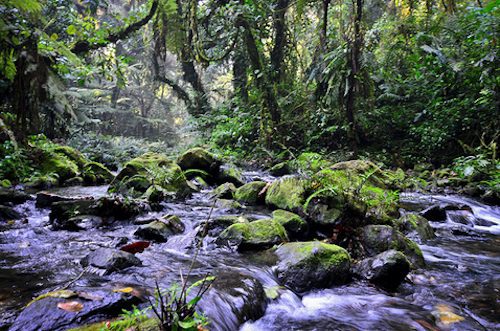
The waterfall walk is the one most visitors choose, and it is good for a reason other than gorillas: you get the forest itself at a pace that lets you look at it. Black and white colobus and red tailed monkeys feed above the river, l’Hoest’s monkeys and duikers turn up now and then, and butterflies gather on the wet sand by the streams. More detail on every route sits in our Bwindi nature walks guide.
Birding tours in Buhoma work best on the lower waterfall trail and the forest edge near the gate, early in the morning. Bwindi records around 350 bird species, many of them Albertine Rift endemics, and birders here look for black billed turaco, Kivu ground thrush, black bee eater, African emerald cuckoo and a long list of sunbirds and flycatchers. A bird guide from the village lifts the count hugely. The southern and eastern specialities are covered in our Bwindi birding guide.

The village walk and the Batwa cultural tour suit the afternoon of trek day, when legs are tired. The Batwa lived in the forest before the park was created and were moved out when it was gazetted; their story is told on our page about the Batwa people. Buhoma also has Bwindi Community Hospital and the CTPH health centre, both open to visitors, plus a craft row and guided cycling trips run with Ride 4 a Woman.
Combining Buhoma Gorilla Trekking with Ishasha, Ruhija and Beyond
Buhoma is the natural gorilla stop on a Uganda wildlife safari that comes south from Queen Elizabeth National Park. The road passes through the Ishasha sector, known for lions that rest in fig trees, and most drivers run a short game drive there on the way. Tree climbing lion sightings are not guaranteed, but the Ishasha plains also hold buffalo, topi and Uganda kob. Ishasha to Buhoma is about 65 km and two to three hours past Kihihi and Butogota, and from Mweya on the Kazinga Channel it is about 160 km and four to five hours. Our Queen Elizabeth safari guide covers the park itself.
The classic route runs Kibale for chimpanzee trekking, then Queen Elizabeth, then Ishasha, then two or three nights in Buhoma. Kibale to Buhoma direct takes six to seven hours, which is why the Queen Elizabeth nights in between work so well. That gives one trek day, one spare day for the waterfall or village walk, and a cushion if rain closes the Ishasha tracks, which happens in the wet months when low bridges flood and drivers switch to the longer road through Rukungiri.
Two treks in one trip are popular too. Buhoma to Ruhija is about two hours by road, so a second permit in Ruhija works with a lodge move, while fit walkers cross on foot to Nkuringo by the Ivi River trail. The longer gorilla habituation experience runs from Rushaga in the south, not Buhoma, and the southern sectors are four to five hours away by road.
Plenty of travellers weigh Uganda against Rwanda before they book. Rwanda’s Volcanoes National Park is closer to Kigali airport and its treks are often shorter, but the permit costs far more and the viewing distance there is about seven metres against Uganda’s ten. Buhoma gives you the same hour with a habituated family, a much wider choice of lodges and the waterfall and village walks on the side. Many people do both on a two country primate tour, pairing Buhoma with gorilla trekking in Rwanda.
Further afield, a short flight from Entebbe links gorillas with the wildebeest migration on a Masai Mara safari or a Serengeti safari.
Getting to Buhoma for Your Gorilla Trek: Kihihi Airstrip and Roads
The fastest way in is a scheduled flight from Entebbe to Kihihi airstrip, roughly 70 to 75 minutes direct, though some rotations stop at Kisoro first and take closer to two hours. Charter companies also fly from Kajjansi airfield on the Entebbe road, which is often quicker to reach from a Kampala hotel. Your lodge or driver meets the plane, because no taxis wait at the strip, and the transfer to Buhoma takes an hour and a half to two hours, about 46 km of tarmac then murram past tea estates. Charters can also use the small Kayonza strip, roughly 45 minutes by road from Buhoma.
By road, Kampala to Buhoma is about 480 km and eight to nine hours via Masaka, Mbarara, Ntungamo, Rukungiri and Kihihi, sealed almost all the way until the last hour through Butogota. Many travellers break it with a night at Lake Mburo, three to four hours from Kampala, because arriving shattered after a full day in the car and then trekking at dawn is nobody’s plan. From Kigali, Buhoma is about 225 km and six to eight hours through the Katuna border, which is why travellers flying into Rwanda usually pick Rushaga or Nkuringo instead; our guide to gorilla trekking in Uganda from Kigali explains that route.
On a budget, buses leave Kampala early in the morning for Kihihi and Butogota via Rukungiri, and the last 17 km from Butogota is by shared pickup, special hire or boda boda. Expect a full day on board. The full set of routes is in our guide to getting to Bwindi, and the Entebbe options are compared on our gorilla trekking from Entebbe page.
Best Time and Booking for a Buhoma Gorilla Trekking Permit
Gorilla trekking in Buhoma runs every day of the year. The drier spells, June to August and December to February, give firmer paths and are the busiest months, so Buhoma permits for those dates should be booked three to six months ahead, more for July and August. March to May and October to November bring more rain and more mud, but also easier permit availability and fewer people at the briefing, and UWA has announced a lower permit rate for April, May and November. Our best time for gorilla trekking in Uganda page goes month by month.
Permits are sold by UWA through licensed operators that are recognised AUTO members, and need your passport details at booking. UWA has suspended its reservation hold, so they are paid in full when booked, and low season permits cannot be rescheduled. Read how it works on our Uganda gorilla permits page. Most nationalities also need a Uganda visa, and the East Africa tourist visa covers Uganda, Rwanda and Kenya on one sticker if your trip crosses borders.
Which company should you use? Pick a Uganda based operator licensed by the tourism board and a member of the Association of Uganda Tour Operators, ask for the permit receipt in your name, and compare what each quote includes: permit, vehicle and driver guide, lodge, park walks. Budget gorilla trips usually mean a shared vehicle and a community camp rather than a cheaper permit, since the permit price is fixed. Allow two to four nights in Buhoma: one to arrive, one for the trek, and ideally one for the walks or as a weather buffer. A three day trip from Entebbe with flights is the shortest that works well; same day trips are covered on our 1 day gorilla trekking in Uganda page and rarely suit Buhoma.
Buhoma Gorilla Trekking Questions
How much does a Buhoma gorilla trekking permit cost?
A Uganda gorilla permit costs US$800 for foreign non residents, US$700 for foreign residents and UGX 300,000 for East African citizens, the same in every sector. A low season rate of US$600 (US$500 for foreign residents) has been announced for April, May and November; those permits cannot be rescheduled. UWA has suspended its reservation hold, so permits are paid in full when booked. The permit covers park entry, the ranger guide and the hour with the gorillas. For comparison, a Rwanda permit is US$1,500. Whole trip totals are on our gorilla trekking cost page.
What do Buhoma lodges and extras cost per night?
Recent listings put camping at the Community Rest Camp from about US$10 to US$20 per person and a CTPH Camp double on full board around US$160. Midrange Engagi Lodge runs roughly US$320 to US$420 per person, Buhoma Lodge about US$380 to US$535 depending on season, and Gorilla Forest Lodge from about US$800 per person all inclusive. Nature walks were listed at US$40 for foreign non residents plus park entry on the latest UWA tariff we could read. Porters charge a fixed fee at the gate. Confirm current rates with the lodge or your operator.
Why is a gorilla trekking permit so expensive?
The price limits numbers to eight people per family per day, and it pays for the rangers, trackers, vets and anti poaching patrols that keep the families safe, with a share going to communities around the park. Uganda’s US$800 permit is still a little over half the Rwanda price for the same hour.
Can I choose which Buhoma gorilla family I trek?
No. The permit names the sector and the date. Rangers assign families at the briefing, though they listen to requests about fitness and age, so tell them if you need an easier trek or want a longer one.
How many gorilla families and permits does Buhoma have?
Six families are well established for trekking: Mubare, Habinyanja, Rushegura, Katwe, Muyambi and Binyindo, with Happy reported as recently opened. Each takes eight trekkers a day, so the daily total depends on how many families UWA has open.
Is Buhoma a good sector for older or less fit trekkers?
Usually yes. It is lower and warmer than the other sectors, the lodges are next to the gate, and Rushegura and Mubare often feed fairly close to the village. A porter and a walking stick make a big difference. Nothing is guaranteed, because the gorillas move.
How long does a Buhoma gorilla trek take?
Between two and eight hours in total, including the hour with the gorillas. Rushegura treks often reach the family within one to three hours; Habinyanja can take three to five hours before contact.
Is gorilla trekking in Buhoma dangerous?
Attacks by habituated gorillas on trekkers are extremely rare. Silverbacks sometimes bluff charge, and the answer is to crouch, look down and follow the ranger. Slips on muddy slopes are the more common problem, so wear boots with grip and take a stick.
Are gorilla sightings guaranteed in Buhoma?
No, but they are very likely. Trackers follow each family from dawn, and the long habituated Buhoma groups are found on almost every trek. If a family cannot be reached, your guide decides what happens next; ask your operator how that would be handled.
How close can I get to the gorillas in Buhoma?
UWA asks trekkers to stay about ten metres away. Young gorillas sometimes come closer, in which case your guide will move you back. Groups are limited to eight visitors and one hour with the family.
Is there a minimum age for gorilla trekking in Buhoma?
Yes, 15 years on the day of the trek. Younger children can join the village walk and some of the shorter nature trails with a guide.
Can I trek gorillas in Buhoma and see tree climbing lions on the same trip?
Yes. Ishasha, in the south of Queen Elizabeth National Park, is two to three hours from Buhoma by road, so the two fit naturally into one Uganda safari.
How do I fly to Buhoma?
Fly from Entebbe to Kihihi airstrip, roughly 70 to 75 minutes direct, then drive an hour and a half to two hours to Buhoma. Your lodge or operator arranges the transfer, since no taxis wait at the strip.