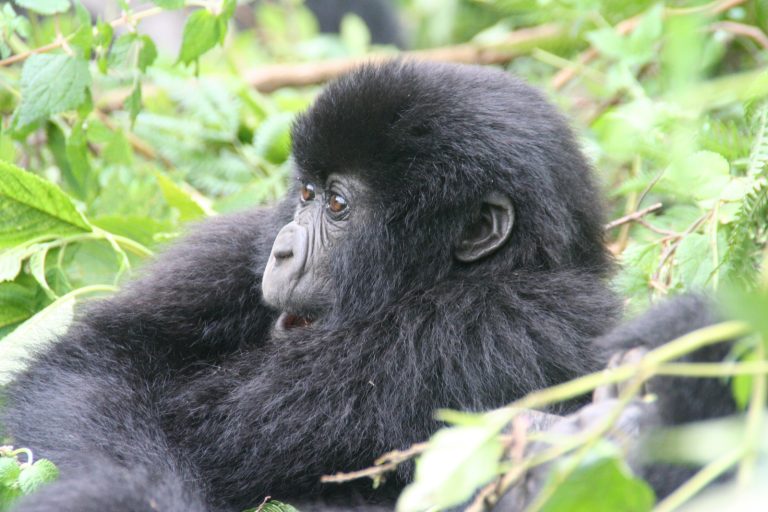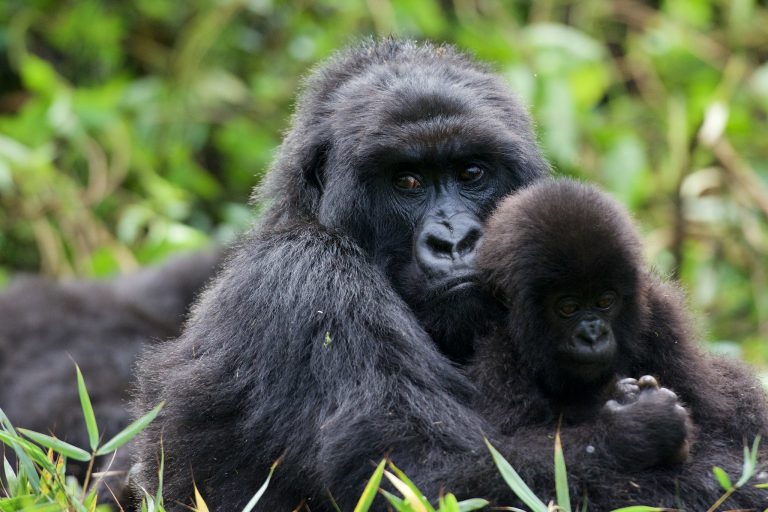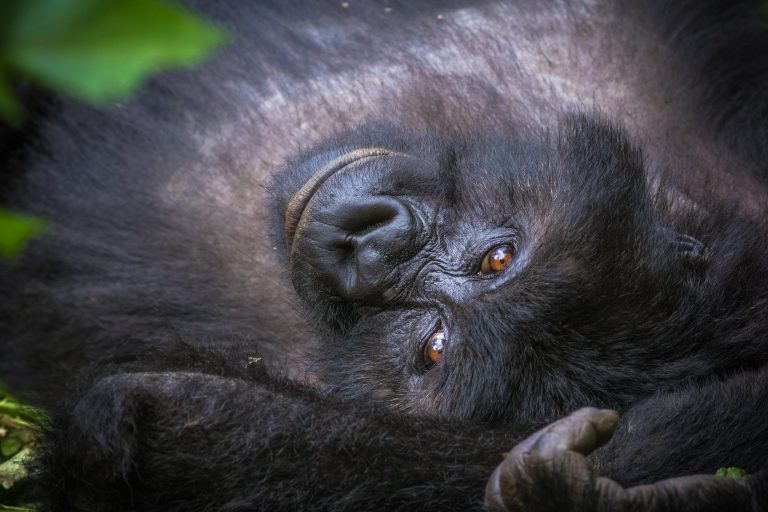
Habinyanja is a habituated mountain gorilla family in the Buhoma sector of Bwindi Impenetrable National Park, led by the silverback Makara and visited by up to eight trekkers a day since 1999. Visitors buy a Buhoma permit from the Uganda Wildlife Authority through a licensed safari company that is a recognised member of AUTO, the Association of Uganda Tour Operators, and rangers allocate the family at the morning briefing. Habinyanja is the parent group of Rushegura and is known for covering a wide territory.
Habinyanja rarely gets the attention Mubare does, yet its story explains how half of Buhoma’s families came to exist. If your permit says Buhoma, there is a fair chance you will be sent to it, so here is what to expect from the history, the walk and the planning.
Where the Habinyanja Gorilla Trekking Family Lives
Rangers first found this group near a swampy patch of forest, and the name followed: Habinyanja roughly means “the place with water”. Its home range lies in the hills around Buhoma and stretches some distance from the park office, which is why Habinyanja gorilla trekking has a reputation as one of the longer walks in the sector.
Buhoma itself sits on the northern edge of the park at about 1,500 metres, in Kanungu District. The trailhead is the UWA briefing area at park headquarters, beside the Munyaga River. On days when the family has moved towards the far side of its range, the walk can start with a short drive along the park boundary to a closer entry point. Some operators name Nyamishaba village as one such starting point, around 45 minutes by vehicle from headquarters. Ask at the briefing how far away the trackers found them.
The range has not stayed fixed, either. IGCP notes that Habinyanja has moved beyond its original home area in Buhoma and settled new ground, which is part of the reason trek lengths vary so much from one week to the next.
Habinyanja History: From Mugurusi to the Rushegura Split
Habituation began in the mid 1990s. The International Gorilla Conservation Programme dates the start to 1996, while UWA and most operators give 1997. Either way, the first tourists arrived in 1999, making Habinyanja the second family in Uganda to open after Mubare.
Its first known leader was Mugurusi, a name that means “old man” and that turns up spelled Mugurisi or Mukurusi in other accounts. He held a large and settled family of more than 25 gorillas, with some histories putting it near 30. After he died, two of his sons, Mwirima and Rwansigazi, shared control, though they were not the only grown males in the group. Operators also name a younger, restless male called Makara and another called Binyindo, the family’s awkward outsider.
That shared arrangement did not last. Rwansigazi liked to range widely, whereas Mwirima preferred to stay in a smaller area close to where their father had kept the group. On 14 February 2002, Valentine’s Day, the family split in two without any recorded fighting. Mwirima took his followers away to form the Rushegura group; Rwansigazi kept the Habinyanja name, along with the gorillas that liked the long walks.
The two families still meet now and then. Guides report that these meetings tend to pass calmly, which is unusual between gorilla groups that once shared a silverback.
Leadership later passed from the ageing Rwansigazi to Makara, who leads today. One sad event stands out from the years since. In June 2011 the young blackback Mizano was found dead with spear wounds to his neck and shoulders after poachers using dogs and spears entered the group’s range; accounts say he was standing between the hunters and his family. It was the first gorilla in Bwindi known to have been killed by poachers since the mid 1990s.
A footnote on names. IGCP now lists a separate, newer Buhoma family called Binyindo, led by a silverback of that name and named for his distinctive nose. Its profile does not say whether he is the same Binyindo from old Habinyanja rosters, so treat any link between the two as unconfirmed.
Habinyanja Group Size, Silverbacks and Named Members
Published counts disagree. IGCP’s latest profile records 13 gorillas, with two silverbacks, four adult females and a single infant. Its own breakdown of the rest is not consistent: one part of the profile lists two blackbacks, two subadult females and two juveniles, while another describes four blackbacks and two subadult males. Some operator pages say 17 or 18. The difference is mostly a matter of when each count was taken, since infants are born, young adults leave and females sometimes transfer to neighbouring groups. The family directory on our hub page gives Habinyanja a range of 12 to 18 for the same reason.
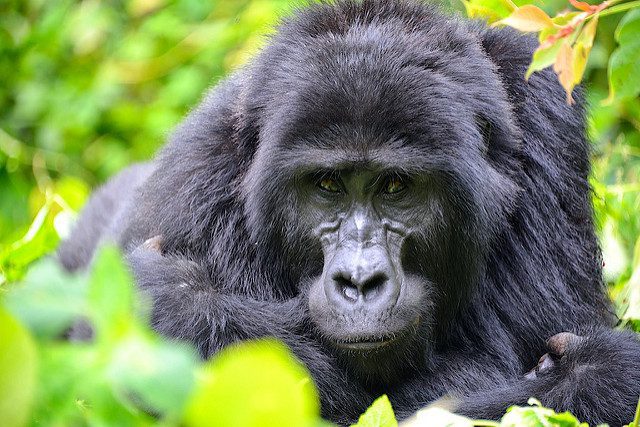
Operators like to describe Habinyanja as a family with plenty of intrigue, and the history backs that up: several grown sons, a shared leadership that fell apart, and a long run of contests over who leads. Among the females, Kisho is usually named as the one in charge, a confident adult the others tend to follow. Birth news surfaces from time to time too. One operator reported a new infant born to Nyamuhango, a female whose name is said to mean “the giant”, with mother and baby both doing well.
Older rosters, including the one this page carried for many years, name these individuals. Treat them as a historical record, not a guarantee of who you will meet.
Two silverbacks in one family makes for interesting watching. The second male usually keeps a little distance from Makara and the females, and the ranger will point out who is who once you settle in.
How Hard Is the Habinyanja Gorilla Trek?
This is the Buhoma family most likely to give you a long day. Habinyanja treks often run three to five hours before contact, and the return adds to that, though on a lucky morning the gorillas may be much closer. Operators quote anything from three to eight hours for the whole outing. The ground is hilly rather than mountainous, with steep sections where the trail crosses streams and ridges.
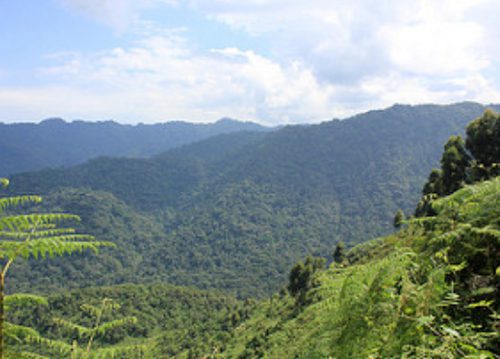
Visitors who have done it often mention two things: how quickly the trail turns to mud after rain, and how welcome a porter becomes on the climb back. A porter carries your daypack and gives you a hand on slippery banks; the fee goes straight to a local household. Walking sticks are handed out at the gate.
The day follows a set pattern. Advance trackers leave at first light for the spot where the family built its night nests, then radio the position to your ranger as you walk. Once you reach the gorillas, packs and sticks stay a short way back, and the hour starts. Nobody with a cold or cough should go, because human illness can spread to the family.
If you have bad knees or limited fitness, say so at the briefing. Rangers try to match slower walkers with whichever family is nearest that morning, and in Buhoma that is often not Habinyanja. Our guide to gorilla trekking with limited mobility explains the options, including sedan chair carriers.
Booking a Gorilla Permit and Asking for Habinyanja
UWA sells Uganda gorilla permits per sector and per date. No permit names a family. On the morning, the warden splits the day’s visitors between the Buhoma groups, and requests are weighed against fitness and numbers.
So the honest answer to “can I book Habinyanja?” is no, but you can ask. Have your safari company note the preference when they buy the permit, then raise it politely at the briefing. A strong walker asking for the far group is usually well received, since the long treks are the hardest to fill.
Permits for June to September and December to February sell out early in Buhoma, so start planning at least four to six months ahead. The best time to trek page explains the seasons in more detail.
Lodges Near the Buhoma Trailhead for Habinyanja Treks
All Buhoma lodges sit within a short walk or drive of park headquarters, so choose by budget and style. Because a Habinyanja day can run long, sleeping in Buhoma the night before matters more than usual; driving in from another sector at dawn leaves little in reserve. Our Bwindi lodges guide lists them by tier. Mahogany Springs, an upper midrange lodge a five to ten minute walk along the river, suits families. Silverback Lodge, recently rebuilt, looks over the village from the hill. Engagi Lodge is a good mid priced pick, and Buhoma Haven Lodge is another option close to the gate.
For a lower budget, the Buhoma Community Rest Camp sits at the gate, and the Buhoma community bandas page describes it. After a long Habinyanja day, a lodge that cleans boots and does laundry is worth the extra.
Packing for a Long Habinyanja Gorilla Trek
Long days mean food and water count for more than usual. Carry at least two litres, plus the packed lunch most lodges provide, and some sugary snacks for the return. Waterproof boots with ankle support, gaiters or socks pulled over trouser legs, and tough gloves for gripping branches cover the trail itself.
Pack a light rain shell, a dry layer for the hour when you stop moving, and a waterproof cover for your camera. The full gear hub is our gorilla trekking packing list, and gloves for gorilla trekking covers one of the most overlooked items.
Buhoma Gorilla Families Compared and Wider Trip Planning
| Family | Opened | Typical walk |
|---|---|---|
| Mubare | 1993 | Moderate to hard |
| Habinyanja | 1999 | Often long |
| Rushegura | 2002 | Often shorter |
The Mubare family is the oldest of the three and now one of the smallest. Rushegura tends to stay near headquarters and sometimes wanders into lodge grounds. Buhoma also has newer families: Katwe, which formed from Mubare members in 2018, plus Muyambi, Binyindo and the recently opened Happy group. Families in the other sectors, from Ruhija to Rushaga, are all listed on our Uganda gorilla families hub.
Habinyanja is one small part of a bigger picture. Bwindi is a UNESCO World Heritage Site, and its 2018 census counted 459 mountain gorillas, close to half of the world total of 1,063. A newer Bwindi census has since been carried out, and its results are still awaited.
Buhoma pairs well with Queen Elizabeth National Park, reached through Ishasha in about three to four hours. Travellers adding Kenya or Tanzania often fly from Entebbe after the trek to join a Masai Mara or Serengeti safari. Start with our main gorilla trekking in Uganda guide and the Buhoma sector page.
Habinyanja Gorilla Family FAQ
What does a permit for Habinyanja gorilla trekking cost?
Habinyanja is trekked on a standard Buhoma permit: US$800 for foreign nonresidents, US$700 for foreign residents and UGX 300,000 for East African citizens. A lower US$600 rate has been announced for April, May and November. Your operator will confirm the rate that applies on your date.
How many gorillas are in the Habinyanja family?
IGCP’s latest profile counts 13, including two silverbacks, four adult females and one infant. Operator pages often say 17 or 18, and the true figure moves with births, deaths and transfers.
Who leads the Habinyanja gorilla family?
The silverback Makara, who took over from Rwansigazi. Among the females, Kisho is usually described as the dominant one.
What does Habinyanja mean?
It comes from the Rukiga word “nyanja”, meaning water or a place with water, because the group was first found near a swamp.
Are Habinyanja and Rushegura related?
Yes. Rushegura split from Habinyanja on Valentine’s Day 2002 when the silverback Mwirima left with part of the family. The two groups still share parts of their range.
How long is the Habinyanja trek?
Plan for a full day. Contact can come within an hour, but three to five hours each way is common for this wide ranging group.
How long can I stay with the gorillas?
One hour from the moment your group reaches the family, at a distance of about ten metres. The ranger keeps time.
Is the Habinyanja group good for photography?
It can be. Two silverbacks and several mothers with young give plenty to watch, though light under the canopy is dim, so a camera that handles high ISO well helps. Flash is not allowed.