A 3 day Kenya safari nearly always means two nights in the Masai Mara: you leave Nairobi on day one, spend day two on game drives and return on day three, either by road or on a light aircraft from Wilson Airport. Most travellers book this 3 day Masai Mara safari as a shared or private package with a licensed Nairobi operator. The Mara holds the Big Five all year, plus the migration herds from July to October.
Three days is short, and many people ask whether it is worth the effort. It can be, as long as you know the trade offs before you book. Transport is the big one. Drive, and close to a third of your waking hours go on the road; fly, and most of that time comes back as game drives. This guide follows the order the decisions come in, from how you get there to where you sleep, which month you pick and what else three days can cover.

Road or Flying Safari: How Your 3 Day Masai Mara Trip Starts
Every 3 day Masai Mara safari starts with one choice, and it shapes the rest. A road safari leaves Nairobi between 7.30 and 8 in the morning and reaches the reserve around lunchtime, five to six hours later. A flying safari leaves Wilson Airport, Nairobi’s light aircraft airport, and lands on a dirt airstrip in the Mara in about 45 minutes, or up to an hour and a quarter if the plane drops people at several strips on the way.
Driving costs less and shows you the country. You stop at the Great Rift Valley viewpoint above the escarpment, look across to the old volcanoes of Longonot and Suswa, then refuel and stretch your legs in Narok. Past Narok, things get slower. The last stretch to Sekenani Gate, about 80 km, has been promised tarmac for years and is still rough: dusty in the dry months, slow after rain. Local residents have blocked it more than once in protest at its state, which can hold traffic up for hours. Expect to arrive tired.
Flying costs more but turns three days into a proper safari. Your camp’s vehicle meets the plane, and many guides start game viewing on the way to camp. The catch is luggage. Most Mara flights allow 15 kg per person in a soft bag, hand luggage and camera gear included, and ground staff can refuse hard suitcases that will not fit the hold. Safarilink and AirKenya will usually store extra city luggage at Wilson for returning passengers.
Not everyone wants a small plane. Plenty of people who ask about short safaris on travel forums say so straight out, and the answer is simple: you never have to fly. A road package from Nairobi works, and some travellers enjoy the drive for what they see of daily life along the way.
Day 1 of the Safari: Nairobi, the Rift Valley and an Afternoon Game Drive
Your driver guide picks you up early from your Nairobi hotel or the airport. A hotel in Westlands or near the centre makes the pickup easier, and landing in Kenya a day ahead protects the safari if your international flight runs late.
Road travellers reach camp for a late lunch; fly in guests are usually there by mid morning. The first game drive heads out at about 3.30 or 4 in the afternoon and runs until close to 6.30, when vehicles must be off the reserve tracks. Late afternoon is a good time to begin. Lions stir, elephants walk to water, and the light softens for photographs. Typical first sightings include Maasai giraffe, topi, zebra, impala, buffalo and perhaps a lion pride resting in the grass. Then dinner and an early night. Some camps light a fire for a sundowner first, and many put a hot water bottle in your bed, because Mara nights get cold.
Day 2: A Full Day of Masai Mara Game Drives
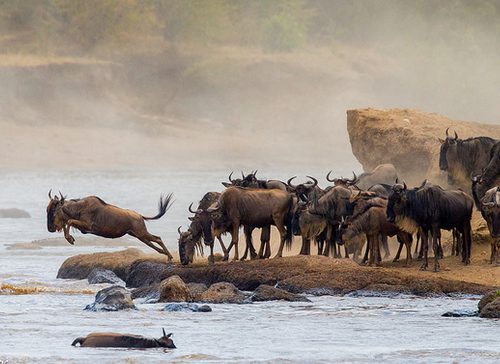
Day two is the core of any 3 day Kenya safari, and you choose its shape. Either you go out at sunrise, around 6.15, come back for breakfast, rest through the heat and head out again in the afternoon, or you take a full day game drive with a packed lunch under a tree somewhere in the reserve. Most operators offer the full day at no extra charge. It suits anyone who wants to reach the Mara River, where hippos and Nile crocodiles live all year and the migration herds cross in season, and it takes you further from camp, which matters in a reserve of about 1,510 square kilometres. Camps near the river sometimes set out breakfast at a hippo pool on the morning drive.
Cheetah are often found on the open plains in the east, leopard along the wooded river lines, and black rhino are present though rarely seen. Lions are the easiest of the big cats to find. Nothing is guaranteed. A guide who knows the area and keeps in touch with other drivers by radio makes more difference than any itinerary.
Dawn is colder than people expect. An open vehicle at speed before sunrise feels close to freezing, so a fleece and a light windproof go in your daypack, plus a buff or scarf for dust. Our guide to what to wear on safari covers clothing in detail, and the African safari packing list handles the rest.
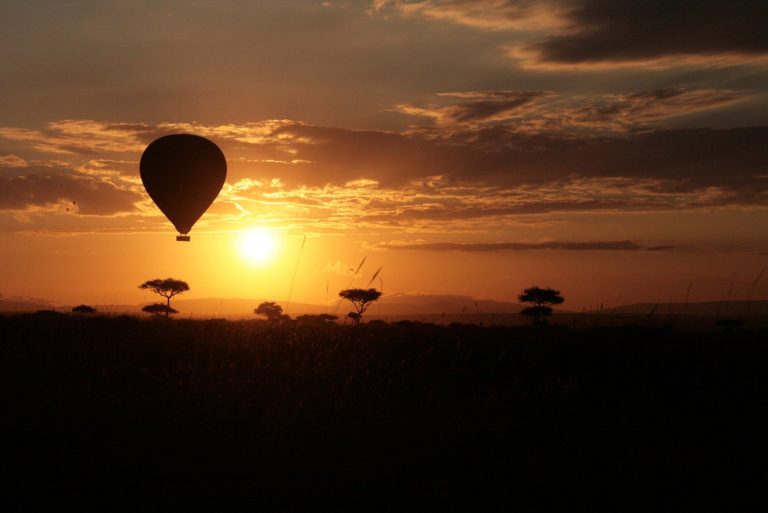
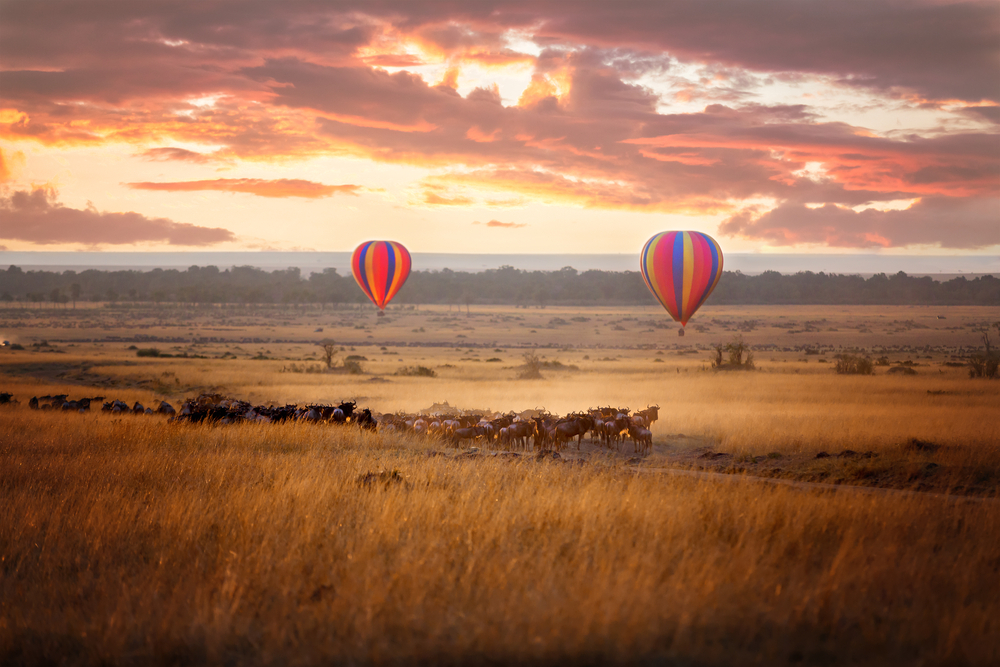
A dawn hot air balloon safari can replace the morning drive. Balloons lift off at first light, float for about an hour and land for a bush breakfast. In the afternoon, many groups add a Maasai village visit, where families show their homes, explain the cattle economy and sell beadwork. Some visits feel rehearsed, so ask your operator whether the village is community run and where the fee goes.
Day 3: Sunrise Game Drive and the Trip Back to Nairobi
The last day opens with a short sunrise game drive, often the best of the trip, since predators are still active and the light is low. Breakfast follows, then checkout around 8.30. Most road groups aim to be out of the reserve by mid morning, around 10, because Mara tickets cover a set daytime window and a late exit can mean paying for another day. Ask your operator how many reserve days your price covers before you book. Gates and camps apply the ticket rule in slightly different ways.
On the road you reach Nairobi in the early or mid afternoon, around 2.30 on a typical schedule, with lunch in Narok or a packed lunch. Most operators will drop you at Jomo Kenyatta International Airport for an evening flight. Fly out guests take a late morning or afternoon flight to Wilson, which leaves time for one more drive. Do not book an international departure for the same afternoon if you are driving; the road delays above are real.
Reserve or Conservancy: Where to Stay on a Short Mara Safari
The Masai Mara is not one place. The national reserve is run by Narok County, apart from the Mara Triangle west of the river, which a non profit company manages. Around the reserve sit private conservancies such as Mara North, Olare Motorogi, Naboisho and Ol Kinyei, leased from Maasai landowners and open only to guests of their camps.
For a three day trip by road, a camp inside the reserve or close to one of its gates (Sekenani, Talek or Oloolaimutia) makes the most sense. You spend less time driving to the animals, and on a short stay that counts. Reserve rules keep you to daytime drives on marked tracks, and at a big sighting in July or August you may share a lion with many other vehicles; trip reports describe twenty or more around a single cheetah.
Conservancies run differently. Camps cap the number of vehicles at a sighting, allow night drives and guided walks, and let guides drive off track to reach animals. They suit fly in trips best, since their airstrips are close and the camps sit higher up the price range. The trade off is the river crossings, which happen inside the reserve, so conservancy guests who want to watch them pay the reserve fee for that day. Outside the migration months, a conservancy is often the better choice, and Nairobi based regulars on travel forums recommend one for a first short safari when the budget stretches. Our full Masai Mara safari guide compares the main conservancies and camps.
Masai Mara Camps and Lodges by Tier for a 3 Day Safari
Package names hide a lot. Two operators can both sell a “3 day Mara safari” and put you in very different beds, so look at the camp before the price. These are the usual tiers, with examples that turn up again and again on 3 day itineraries.
On a road trip the gate camps and mid range lodges make most sense, because they sit close to where the minibus enters. On a fly in trip the camp sends its own vehicle to the airstrip, so location matters less than vehicle numbers and guiding. Ask whether the camp’s game drives are private or shared, and whether reserve fees are in the rate: conservancy camps usually include their fee, river camps inside the reserve often do not.
Best Months for a 3 Day Kenya Safari
The Mara keeps plenty of resident game all year, so there is no bad month, only different ones. The Great Migration usually reaches the Mara from Tanzania’s Serengeti in July and stays into October, which is when crossings at the Mara River can happen. The herds follow rain and grass rather than a calendar, so read our great wildebeest migration guide before you fix dates around it, and see our Masai Mara migration safari page for trips built around the crossings.
January and February are dry, quiet and fall in the lower reserve fee band, which makes them good value for a short trip. The long rains, March to May, turn black cotton soil tracks to mud and close some camps, though the grass is green and the crowds are gone. June is a good shoulder month. November’s short rains tend to come as afternoon showers. The reserve fee doubles from 1 July, so a trip that starts in the last days of June costs less than one a few days later.
| Months | Weather | Wildlife | Crowds |
|---|---|---|---|
| Jan to Feb | Dry, warm | Residents | Low |
| Mar to May | Long rains | Residents | Very low |
| June | Drying out | Herds near | Moderate |
| Jul to Aug | Dry, cool | Migration | Very high |
| Sep to Oct | Dry | Migration | High |
| November | Short rains | Herds leave | Low |
| December | Mixed | Residents | High at holidays |
Read the chart with the transport question in mind. In April and May a road trip can lose hours to mud near the gates, so flying earns its cost then. In July and August, book early: river camps fill months ahead and the best placed ones go first. December stays quiet until the Christmas holidays, when Kenyan and overseas families fill the lodges.
What a 3 Day Masai Mara Safari Package Includes
Packages look alike on paper and differ in the detail, so read the inclusions line by line. A standard 3 day Kenya safari package covers the items below.
Two choices matter more than the rest. A group joining safari puts you in a shared vehicle of up to six or seven people on a fixed plan, which cuts the cost but means compromise over where to stop and for how long. A private safari lets you set the pace, and operators price it per person on a sliding scale, so four or six people pay noticeably less each than two. Vehicles matter too. A pop up roof minibus copes on dry tracks, whereas a Land Cruiser handles mud and gives better views from higher seats, which is why it is worth the extra in the rains. Ask whether the vehicle carries a radio, since guides share sightings that way.
If you are choosing an operator, our list of the best Kenya safari companies is a good starting point, and our Kenya safari cost guide explains how quotes are built. Pick a member of the Kenya Association of Tour Operators, get the camp name and the vehicle type in writing, and be wary of a cheap price from a seller you found only through a ticket marketplace. Families can find age limits and child friendly camps in the Kenya family safari guide.
Amboseli, Lake Nakuru and Other 3 Day Kenya Safari Routes
The Mara is the default, not the only choice. An Amboseli safari takes about four to five hours by road from Nairobi, or under an hour by air, and is known for big tusked elephant herds against the slopes of Kilimanjaro, which stands across the border in Tanzania. The mountain often hides in cloud and shows best at dawn and dusk. Elephants cross between the swamps in the morning and late afternoon, so plan drives for those hours. Our Amboseli safari page covers trip lengths, and a full week opens up the classic 7 day Kenya safari through Amboseli, Lake Nakuru and the Mara.
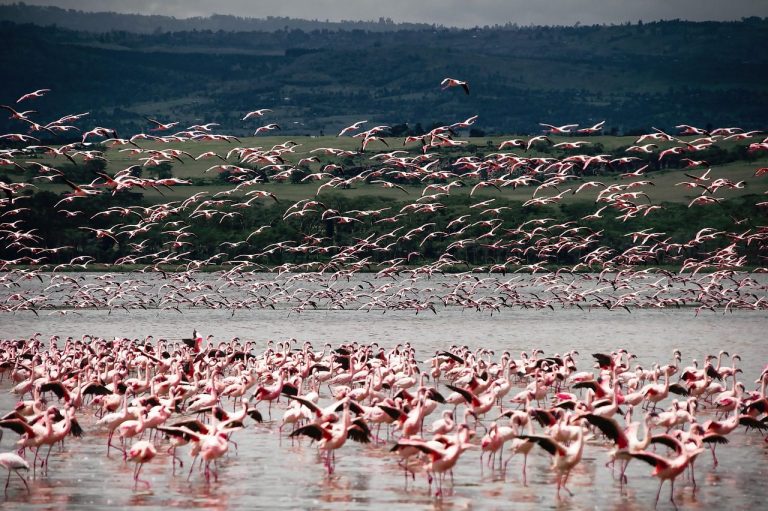
A Rift Valley lakes tour is the closest option, about three hours away. Lake Nakuru National Park protects both black and white rhino, and the lake draws flamingos in numbers that rise and fall with the water level; it is also known for lions that rest in the acacias. Lake Naivasha adds a boat trip among hippos and a walk on Crescent Island, plus cycling in Hell’s Gate National Park. This route spends less time on rough roads, which suits families.
Can you combine two parks in three days? Yes, at the cost of more driving. Lake Nakuru and the Masai Mara is the usual pair: Nakuru on day one, the long drive to the Mara on day two with an afternoon drive, and a morning drive before the road back on day three. Amboseli and Tsavo West is the southern pair, with a night in each. Both work, but you see each park in a hurry. Five or six days lets you combine the Mara with Nakuru or Amboseli without spending most of the trip in a vehicle, and a 5 day Kenya safari does exactly that.
3 Day Kenya Safari from Mombasa and the Coast
Many people book a beach holiday in Diani, Mombasa or Watamu first and look for a short safari second. From the coast, the Tsavo safari is the practical answer, because you never have to fly. Tsavo East is two to three hours by road from Mombasa, with open dry country, elephants stained red by the soil, and the Galana River. Tsavo West is hillier and greener, with the clear pools of Mzima Springs, where hippos can be watched from an underwater hide, and the black Shetani lava flow. A typical 3 day coast safari spends a night in each park, or two in one, often at a lodge in the private Taita Hills reserve between them.
Prefer the train? The Madaraka Express runs between Nairobi and Mombasa and stops at Voi, on the edge of Tsavo East, so you can reach the park by midday for an afternoon drive, then carry on to the coast afterwards.
If it has to be the Mara, fly. Scheduled light aircraft connect the coast with the Mara airstrips, either directly on some days or through Nairobi, and a drive from Mombasa would eat most of the three days. Some operators sell this as a 3 day flying package from the coast, with camp vehicles meeting the plane. Check the bag limit before you pack your beach kit into it.
Nairobi Days, Entry Rules and Safety Around a Short Kenya Safari
A spare day in Nairobi before or after the safari is easy to fill. The Sheldrick elephant orphanage opens for a late morning visiting hour when keepers bring the young elephants out to feed, and tickets are booked online in advance. The Giraffe Centre in Karen lets you feed endangered Rothschild giraffes from a raised platform. Nairobi National Park, a short drive from the centre, has lion, rhino and giraffe against the city skyline, and a half day game drive there fits a long layover.
Every traveller to Kenya, babies included, needs an approved electronic travel authorisation (eTA) before boarding, applied for on the official portal at least two weeks ahead, since processing normally takes about three working days. Kenya has also gazetted a requirement for foreign visitors to hold health insurance meeting set minimum cover, uploaded with the eTA application. Its enforcement was challenged in the High Court soon afterwards, so look at the eTA portal for the current position before you buy a policy. Our African safari insurance guide covers what your own policy should include.
On safety, at the latest check the US government rated Kenya Level 3, reconsider travel, citing health, crime, terrorism, unrest and road safety, with its strictest warnings for areas such as the Somali border counties that no Mara or Tsavo itinerary visits. Guided safaris in the main parks run normally. In Nairobi, use a driver rather than walking after dark, stay away from protests, and wear a seat belt between parks. Our guide to the safest countries to visit in Africa compares the official advice country by country.
Adding Gorilla Trekking in Uganda or Rwanda to Your Kenya Safari
There are no gorillas in Kenya, yet a 3 day Masai Mara trip pairs naturally with a gorilla trek, and many travellers build their East Africa trip that way. From Nairobi, a flight of about an hour reaches Entebbe for gorilla trekking in Bwindi, followed by a long drive or a domestic flight to Kihihi or Kisoro. Flying to Kigali is quicker for Rwanda gorilla trekking, since Volcanoes National Park is two to three hours from the capital by road. Our gorilla and Masai Mara safari page sets out the combined trip day by day.
Gorilla permits sell out in busy months, so secure the Uganda gorilla permit before you fix Kenya dates. The paperwork needs care: Kenya now uses its eTA, and its option under the joint East Africa Tourist Visa has been listed as unavailable, so check how the joint visa applies to your route before you rely on it for Uganda and Rwanda. Heading to Tanzania instead? A 3 day Tanzania safari follows the same herds on the Serengeti side, and the 15 day Tanzania safari and Zanzibar route shows how the Mara fits a longer trip with a beach.
3 Day Kenya Safari FAQ
Is a 3 day Kenya safari enough?
It is enough for a first look at the Masai Mara, especially if you fly. On a road trip you get roughly one and a half days of game viewing out of three. If you can stretch to four days, that extra day goes entirely on game drives, which is the best value addition you can make.
How much does a 3 day Masai Mara safari cost?
One Nairobi operator’s published rate card for three day Mara road trips, park fees included, runs from US$370 per person in a base camp from January to June and US$570 from July, to US$520 and US$750 in a mid range tented camp and US$600 and US$970 in a lodge. Another operator’s mid range lodge trip is listed at US$575 to US$1,345 per person, depending on group size and season. A fly in trip costs far more: return flights from Wilson are about US$479 plus taxes on one airline’s published fares, and conservancy or river camps run about US$450 to US$1,000 per person a night, so two nights with flights usually land between about US$1,600 and US$2,900 per person. Balloon flights cost about US$450 to US$500, a village visit is listed at about US$30 by some operators, and guides are commonly tipped US$10 to US$20 a day plus US$5 to US$10 a night for the camp staff box. The non resident reserve fee, on a 12 hour ticket, is shown below; conservancy camps build their own fee, about US$130 to US$150 a night, into the rate. Our Kenya safari cost page breaks every line down.
| Visitor | Jan to Jun | Jul to Dec |
|---|---|---|
| Adult | US$100 | US$200 |
| Child 9 to 17 | US$50 | US$50 |
| Child 0 to 8 | Free | Free |
What do the Kenya eTA, other park fees and gorilla permits cost if I extend the trip?
A standard Kenya eTA costs US$30. Amboseli and Lake Nakuru charge non resident adults US$90 a day under the current Kenya Wildlife Service schedule, which tourism operators have challenged in court, so check the rate on your dates. A Uganda gorilla permit costs US$800 for foreign non residents, US$700 for foreign residents and UGX 300,000 for East Africans, with a US$600 low season rate announced for April, May and November. A Rwanda gorilla permit costs US$1,500, with a US$1,050 offer from November to May.
Do I have to fly to the Masai Mara?
No. Road packages from Nairobi run every day, take five to six hours each way and cost less. Flying saves most of a day and suits anyone short of time, but if small planes worry you, the road trip works well and you see the Rift Valley on the way.
Can I see the wildebeest migration on a 3 day safari?
Yes, if you travel between July and October, when the herds are usually in the Mara. A river crossing is a different matter: herds can gather at the bank for hours and turn away, so take a full day drive near the river and treat a crossing as a bonus.
What animals will I see on a 3 day Kenya safari?
In the Mara, lion, elephant, buffalo, giraffe, zebra, topi, wildebeest, hippo and crocodile turn up on most trips, with good odds of cheetah and leopard. Rhino are rare in the Mara; Lake Nakuru is the better bet for them. Sightings are never guaranteed, and a good guide matters more than the number of drives.
Is the road from Nairobi to the Masai Mara safe?
The main risk is discomfort, not crime. The tarmac to Narok is busy but sound; the last stretch to the gates is rough and can be blocked by mud or protests. Travel with a licensed operator, leave early, and avoid booking a same day international flight on the way back.
Is Kenya safe for a short safari, and do I need travel insurance?
At the latest check the US rated Kenya Level 3, reconsider travel, with its strictest warnings for border areas that safari routes avoid; guided trips in the Mara, Amboseli and Tsavo run normally. Take your own travel insurance with medical evacuation cover. Kenya has also gazetted a minimum health insurance rule for visitors, whose enforcement was challenged in the High Court, so check the eTA portal for the current position before you buy a policy.
Should I choose a group or a private 3 day safari?
Group trips suit solo travellers and tight budgets, and you meet other people. Private trips suit photographers, families with young children and anyone who wants to wait at a sighting for as long as they like. With three or more travellers, a private vehicle often costs little more per head than seats on a group tour.
Is a 3 day safari physically demanding?
Not in effort, but it is tiring. Expect early starts, long hours sitting on bumpy tracks and, on a road trip, two days of five or six hours in a vehicle. Anyone with back trouble should ask for a seat over the middle axle, or fly.
What should I pack for a short Masai Mara safari?
A soft bag (required if you fly), a fleece for dawn drives, neutral clothing, a hat, sunglasses, high factor sunscreen, insect repellent, a buff for dust, binoculars and spare camera batteries. Sunscreen and repellent are expensive at camps, so bring your own.
Can children go on a 3 day Kenya safari?
Yes. Children under nine enter the reserve free, and a private vehicle lets you stop when they need a break. Some camps set minimum ages for walks or the camp itself, and the drive is long for small children, so flying in is often easier for families.