The best Kenya safari companies are the ones you can check: a current Tourism Regulatory Authority licence, a listing in the Kenya Association of Tour Operators directory, guides they can name and a written quote that matches the itinerary. Most Kenya tour operators work out of Nairobi and sell Masai Mara, Amboseli and Samburu safaris, often with a beach extension. This independent guide profiles the ten companies featured here, in no ranked order, and shows how to vet any of them before you pay.
What Makes a Kenya Safari Company Worth Booking
Kenya has hundreds of safari companies. Some run fleets of Land Cruisers and employ guides with twenty years in the Mara. Others are one person with a laptop, reselling another firm’s trips. A few are not real at all. From a website alone they can look the same, and that is the part that makes first time planners nervous. For route ideas before you contact any of these companies, see our guide to the best safari in Kenya for first timers.
A good Kenya safari company answers the question you asked. It tells you when a plan will not work, such as the Mara, Amboseli and Lake Nakuru squeezed into three days, and suggests something that will. It puts licences, inclusions and payment terms in writing without being chased.
So which tour company is best in Kenya? Honestly, none for everyone. A couple wanting a private conservancy camp, a backpacker on a shared camping trip and a family with two children under ten are buying different products, and the company that does one of them well may be wrong for the others. Pick the trip first, then the company.
Price on its own tells you little. A quote far below the others usually saves money somewhere you will notice: an older minivan, a camp an hour outside the reserve gate, a shared vehicle when you asked for a private one, or park fees left off the headline figure and added later. The most expensive quote is not automatically the safest either. What you want is a quote you can read line by line.
Fit matters too. A budget camping operator and a luxury camp owner are both legitimate, but they sell different trips. Decide what kind of Kenya safari tour you want first, then look for companies that do that well. Our budget Kenya safari guide explains where the savings are real and where they cost you game viewing.
Types of Kenya Safari Companies: Ground Operators, Camp Owners and Planners
The phrase Kenya safari companies covers several kinds of business, and knowing which one you are emailing changes the questions you ask. Here is how they differ.
A local operator usually gives the most control over guide, route and pace, and you deal directly with the people running the trip. An overseas planner earns its margin on complex routes across several countries and adds a contact at home if something goes wrong. Camp owners keep standards tight inside their own properties. None of these is safer by default. Each needs the same licence and payment checks.
Kenya Safari Companies Featured on This Page
These are the Kenya safari companies this page has long listed. The order below is not a ranking. We have not travelled with them, and we describe each one only with what we could confirm from public sources. Run every company, including these, through the checks further down before you pay.
| Company | Main trip style | Base |
|---|---|---|
| Lets Venture Africa | Road safaris | Nairobi |
| Bonfire Adventures | Group and leisure | Nairobi |
| Insight Safari Holidays | Multi country | East Africa |
| Jambo Kenya Tours | Custom trips | Nairobi |
| Kenya Walking Survivors | Walking focus | Kenya |
| Go Places Travel | General travel | Nairobi |
| Natural World Kenya | Safari and beach | Nairobi |
| East African Safari Co. | Private trips | Unconfirmed |
| Twiga Tours | East Africa safaris | Nairobi |
| The Safari Collection | Own camps | Nairobi |


Looking for operators in neighbouring countries? The site keeps separate guides to Tanzania safari companies, Rwanda tour operators and Uganda’s gorilla safari companies.
KATO Membership and TRA Licence Checks for Kenya Tour Operators
Every company selling a Kenya safari tour on the ground needs a licence from the Tourism Regulatory Authority (TRA), the regulator set up under the Tourism Act. Tour operators and safari companies sit in their own licence class, Class C, and tourist service vehicles need a separate TRA licence of their own. The regulator has publicly urged travellers to check a company’s licensing status before making any payment, and it has revoked licences in crackdowns on rogue operators.
Checking takes minutes. TRA’s own website carries a licence verification page and a published list of licensed entities, along with a list of suspended ones. Ask the company for its licence number, its licence class and its registered company name, then look all three up yourself. A genuine operator sends them in one email and does not mind you checking.
KATO, the Kenya Association of Tour Operators, was formed in the late seventies and represents more than three hundred operators. To join, a company must have traded for at least a year as a limited company holding a TRA tour operator licence, and members sign a code of conduct with a complaints process run by the association’s ethics committee. KATO also runs a bond scheme for client money paid in advance, though by its own terms the bond does not cover voluntary liquidation or fraud. Its website has a find a member directory, which is where to check a badge.
Membership is voluntary. Plenty of small, honest firms have not joined, so a missing listing is a reason for more questions rather than an automatic no. The real warning is a mismatch: a KATO badge on a website for a company that is not in KATO’s directory. Fake operators copy that logo more than any other.
Park fees are the third check. Parks such as Amboseli, Tsavo, Lake Nakuru and Nairobi are run by the Kenya Wildlife Service (KWS), and entry is cashless through its online system, which most operators handle for you. The Masai Mara is not a KWS park: Narok County runs the reserve and the Mara Conservancy runs the Mara Triangle, each with its own ticketing. Ask the company to send the park receipts with your names and dates before you travel. Unpaid fees at the gate are one of the oldest problems in Kenya safari complaints.
The same logic runs across the border. Uganda has its own operators’ association and Rwanda its own licensing, and our pages on licensed gorilla tour operators explain those checks.
Safari Guides and Vehicles: Minivan or Land Cruiser
Your driver guide makes or breaks a Kenya safari. A good one reads the plains, knows where the lions lay up last week, and positions the car for the light without crowding the animals. A weak one parks at the first sighting and waits for the radio.
Kenyan guides can climb a formal qualification ladder. The Kenya Professional Safari Guides Association (KPSGA), founded about three decades ago, runs voluntary Bronze, Silver and Gold certification, with Gold the highest and held by only a small number of guides. Ask which level your guide holds, how long they have worked in the parks on your route, and which languages they speak well. Reviews that praise a guide by name carry more weight than general compliments about “the team”.

Then the vehicle. Kenya allows two kinds of safari game drive vehicle: minivans with pop up roofs and four wheel drive Land Cruisers. Minivans are cheaper and fine on tarmac and dry tracks. Land Cruisers cope with mud, sit higher and ride rough roads better. Trip reports split on the choice. Some travellers were happy in a van and felt the upgrade cost was not worth it. Others saw several vans broken down or stuck in the black cotton mud of the Mara after night rain and said they would not book one again.
Whatever you choose, get it in writing. One recurring complaint is a traveller who expected a Land Cruiser and found a van, only to be told an upgrade was possible if they had asked. Ask the model of the car, how many passengers it will carry, and whether every guest has a window seat. Six people in a Land Cruiser is a common maximum on private trips. And ask what happens if it breaks down: a serious operator has a backup vehicle and can tell you how long it takes to reach the Mara.
Roads deserve honesty too. The drive from Nairobi to the Mara takes five to six hours, the last stretch on a rough road past Narok, and several travellers with back or neck problems say they wish they had flown. Light aircraft from Wilson Airport cut that to under an hour but limit you to soft bags of about fifteen kilograms. One more detail people miss: some safari vehicles cannot carry large suitcases for a group, so pack soft bags for the road too.
Masai Mara Conservancies and Camp Choices in a Safari Quote
Most Masai Mara safaris are sold one of two ways, and a good operator explains the difference before you choose. The Maasai Mara National Reserve is managed by Narok County, with the Mara Triangle in the west run by the not for profit Mara Conservancy. Around the reserve sit private conservancies such as Mara North, Naboisho, Olare Motorogi and Ol Kinyei, leased from Maasai landowners.
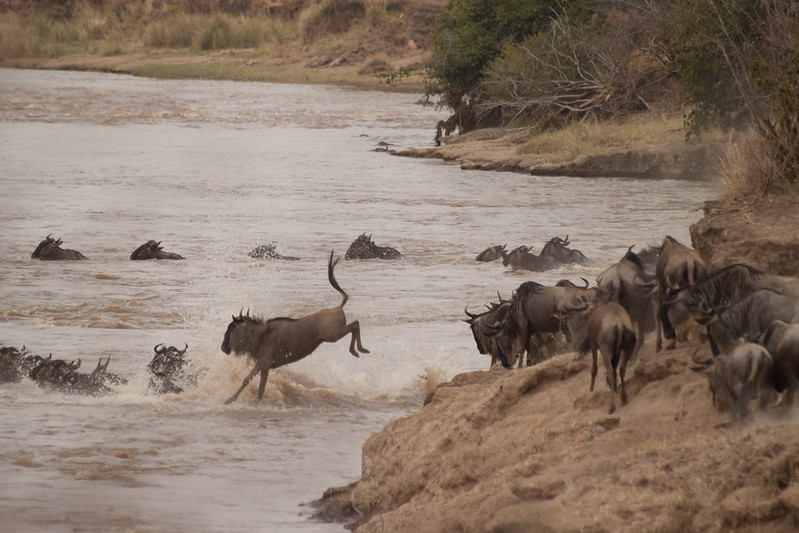
Conservancy camps cap vehicle numbers, commonly at around five per sighting, allow off road driving to a sighting, and offer night drives and guided walks that the main reserve does not. The trade is distance: the famous river crossings are inside the reserve, so a conservancy camp may mean a long drive on crossing days. Inside the reserve you are closer to the river but share sightings. Travellers who visited the main reserve in August describe twenty or thirty vehicles around a single group of cheetahs.
So ask every operator three things. Which camp, by name? Is it inside the reserve, in a conservancy, or outside the gate? And how many reserve days are in the quote? Our Masai Mara safari guide compares the reserve and the conservancies in detail, and the wildebeest migration guide shows which months put the herds where.
Testing Kenya Tour Operators Before You Book: Replies, Quotes and Inclusions
The planning emails are your free sample of the service. Send every company on your shortlist the same brief: dates, number of travellers, children’s ages, budget band, the parks you want and one pointed question, such as which Mara camp they would use in your month and why. Then compare the replies.
Good answers come back within a day or two, deal with your question directly and name camps, vehicles and ideally the guide. Poor ones paste a stock itinerary, skip what you asked or push for a deposit before the plan is settled. A company that is slow and vague while trying to win your booking rarely gets sharper after it has your money.
Ask at least three companies to quote the same Kenya safari itinerary: the same parks, the same number of nights, the same camp standard and the same vehicle arrangement. Only then can you compare them. If one quote is far below the rest, find the line where the gap sits.
| Quote line | Ask this | Why |
|---|---|---|
| Park fees | Every day listed? | Often left out |
| Camps | Named, where? | Drive time |
| Vehicle | Van or Cruiser? | Comfort, mud |
| Private or shared | Seats sold apart? | Pace, stops |
| Meals and water | All listed? | Extras |
| Flights | Bag limit? | Packing |
| Conservancy fees | In camp rate? | Hidden cost |
| Changes | If camp is full? | Substitutes |
Then read the itinerary for hours, not just place names. How long is each road transfer? Do game drives run all day with a packed lunch, or break at noon? A short 3 day Kenya safari to the Mara spends a large share of its time on the road, which is fine if you know it in advance and frustrating if you do not.
Shared trips need extra care. Seats on a group safari are sold individually, so you join strangers on fixed dates. Reviews of budget group trips mention vehicles dropping guests at three different camps an hour apart every evening, and lodges swapped at short notice in peak season. Ask in writing which camp you will sleep in and what happens if it is full.
The cheapest tour companies in Kenya are usually group joining operators, and many are perfectly honest. The low price comes from shared vans, budget camps outside the gate and fixed routes. Know that going in, and check the licence as hard as you would for a luxury trip.
Travelling with children changes the brief. Some camps set minimum ages for game drives or walks, and long road days are hard on small children. Our Kenya family safari guide covers ages, parks and pacing, and the Kenya safari cost guide explains why two quotes that look alike can be priced far apart.
Reviews and Track Record of Kenya Safari Tour Companies
Read reviews on more than one platform, and read the middling ones. Five star reviews tell you the good days went well. Three star reviews show how a company handles a broken vehicle or a missed transfer. Recent reviews from the last year or so matter most, because companies grow, lose guides and change hands. Look for named guides, named camps and the month of travel.
Watch for patterns. A burst of short five star reviews in the same fortnight, reviews that appear only on the company’s own website, or a company that answers every complaint with the same pasted reply all deserve a second look. A calm, specific reply to a bad review is a good sign.
Years trading tells you something too. A company that has run Mara safaris for a decade has dealt with floods, cancelled flights and breakdowns before. A newer company can be excellent, but ask who founded it and where its guides worked before. Then ask for two recent references and email them, asking what went wrong, then what went right.
Responsible Kenya Safari Operators: Conservancies, Communities and Ethics
Many Kenya safari companies call themselves eco or community friendly. Ask them to be specific. Do conservancy fees in the camp rate reach Maasai landowners, and how? What share of the guides and managers are Kenyan? Are guides salaried or paid only per trip? Which conservation or community projects does the company fund, by name?
Independent certification helps more than a green logo. Ecotourism Kenya runs an eco rating scheme for lodges and camps, and some operators hold international certifications or publish impact reports. On the ground, watch how your guide behaves: staying on tracks in the reserve, giving cats space, and not joining a scrum of vehicles all point to a company that takes the rules seriously.
Payment Protection and Red Flags Before Booking a Kenya Safari
Most safari horror stories start with money. The pattern in traveller reports is familiar: a deposit sent by bank transfer, then silence; hotels on the itinerary with no booking under the guest’s name; or a company that claims offices in several cities that do not exist. One forum poster’s bank stopped a suspicious deposit before it left the account, and others in the thread said that bank call saved them.
Protect yourself before you pay. Use a credit card where you can, since card schemes let you dispute a charge. Never pay into a personal account. Get a receipt for every payment that names the company you checked, and keep every email and chat. Read the cancellation terms, then buy travel insurance that covers cancellation and medical evacuation; our African safari insurance guide explains what to look for.
One warning sign on its own is not proof of fraud. Two together should send you to the next company on your list. Telling an operator you are comparing quotes is normal, and a good one will not hold it against you.

Pairing a Kenya Safari With Gorilla Trekking in Bwindi
Kenya has no gorillas, as our guide are there gorillas in Kenya explains, but the Mara and Bwindi Impenetrable National Park make one of East Africa’s most popular pairings. Most travellers fly from Nairobi to Entebbe or Kigali after the Mara, then drive or take a light aircraft to the forest. See how to get to Bwindi for the routes, and the East Africa Tourist Visa page for the single visa that covers Kenya, Uganda and Rwanda.
The operator question matters twice here. Several Nairobi companies sell gorilla extensions through partners in Uganda or Rwanda, so ask who holds the permit and run the same licence checks on that partner. Permits are limited each day, so confirm a Uganda gorilla permit has actually been secured before you pay the balance. The Mara migration months of July to October fall in the long dry season in Uganda, the easiest time to trek. For the trek itself, read our Bwindi gorilla trekking guide and the gorilla trekking packing list, or compare with Rwanda gorilla trekking.
Kenya Safari Company Questions Travellers Ask
Which company is the best for a Kenya safari?
The best company is the one that is licensed by TRA, runs the style of safari you want and answers your questions clearly before taking money. A private conservancy trip, a shared camping safari and a family road trip suit different operators, so start with the trip, shortlist three or four companies and compare their replies and quotes.
Which tour company is best for safaris across East Africa?
For a trip that crosses Kenya, Tanzania, Uganda or Rwanda, look for a company that runs or closely manages the ground work in each country, or a planner that names its partners and lets you check them. Ask who holds the gorilla permit and who drives you in each country.
How do I check that a Kenya safari company is licensed?
Ask for the registered company name and the TRA tour operator licence number, then look it up on TRA’s licence verification page and its list of licensed and suspended entities before paying. Check KATO membership in the association’s own directory. On arrival, your vehicle should carry its own TRA tourist service vehicle licence.
Is a KATO member safer than a non member?
A KATO member has traded for at least a year with a TRA licence, has signed a code of conduct and falls under the association’s complaints process and bond scheme, which gives you somewhere to turn if things go wrong. Membership is not a quality guarantee, and some good small firms are not members, so judge each company on its licence, guides, vehicles and reviews too.
Should I book a Kenya safari with a local operator or an overseas agency?
Both can work. A Kenyan operator gives you direct contact and more say over the guide and route. An overseas agency adds home country consumer protection and one contact for complex trips, but passes your booking to a Kenyan ground operator anyway. Ask an agency for that operator’s name and check it.
What is the average cost of a Kenyan safari?
Figures gathered on this site put a shared road package at about US$120 to US$320 per person a day with park fees, fly in conservancy and river camps at roughly US$450 to US$1,000 a night, and flagship camps at US$1,850 to US$2,750. The Maasai Mara National Reserve itself charges foreign non resident adults US$200 per person for a 12 hour ticket from July to December and US$100 from January to June, with children aged 9 to 17 paying US$50; conservancy fees are usually built into the camp rate. If you add Bwindi, a Uganda gorilla permit costs US$800 for foreign non residents, with a lower US$600 rate announced for April, May and November. Our Kenya safari prices guide covers the full fee schedule.
How much deposit do Kenya safari companies ask for, and how should I pay?
Many operators ask for a deposit of around 20 to 30 percent to hold camps, with the balance due some weeks before travel, though peak migration camps can ask for more. Pay by credit card where possible, never into a personal account, and get the refund and cancellation terms in writing first.
How far ahead should I book a Kenya safari tour?
For July to October, when the migration is in the Mara, the best camps fill early and six to nine months ahead is common. For quieter months a few months is often enough. If gorilla trekking is part of the trip, secure the permit first and build the Kenya dates around it.
Are Kenya safari companies set up for families with children?
Many are, but camps differ. Some set minimum ages for game drives or walking safaris, and private vehicles suit young children better than shared group trips. Tell the operator the children’s ages before it builds the route.
Is a Kenya safari safe for solo and women travellers?
Many solo travellers and women book Kenya safaris every season. Ask the operator who meets you at the airport, whether you can join a shared vehicle to cut the single cost, how camps escort guests to tents after dark and whether a female guide is available. Choose a licensed company with recent reviews from people travelling the same way.
Does this site rank or book Kenya safari companies?
No. bwindiforestnationalpark.com is an independent visitor guide. It does not sell safaris, book permits or take bookings, and the companies on this page are listed in no particular order. Run any company through the checks above before you pay.