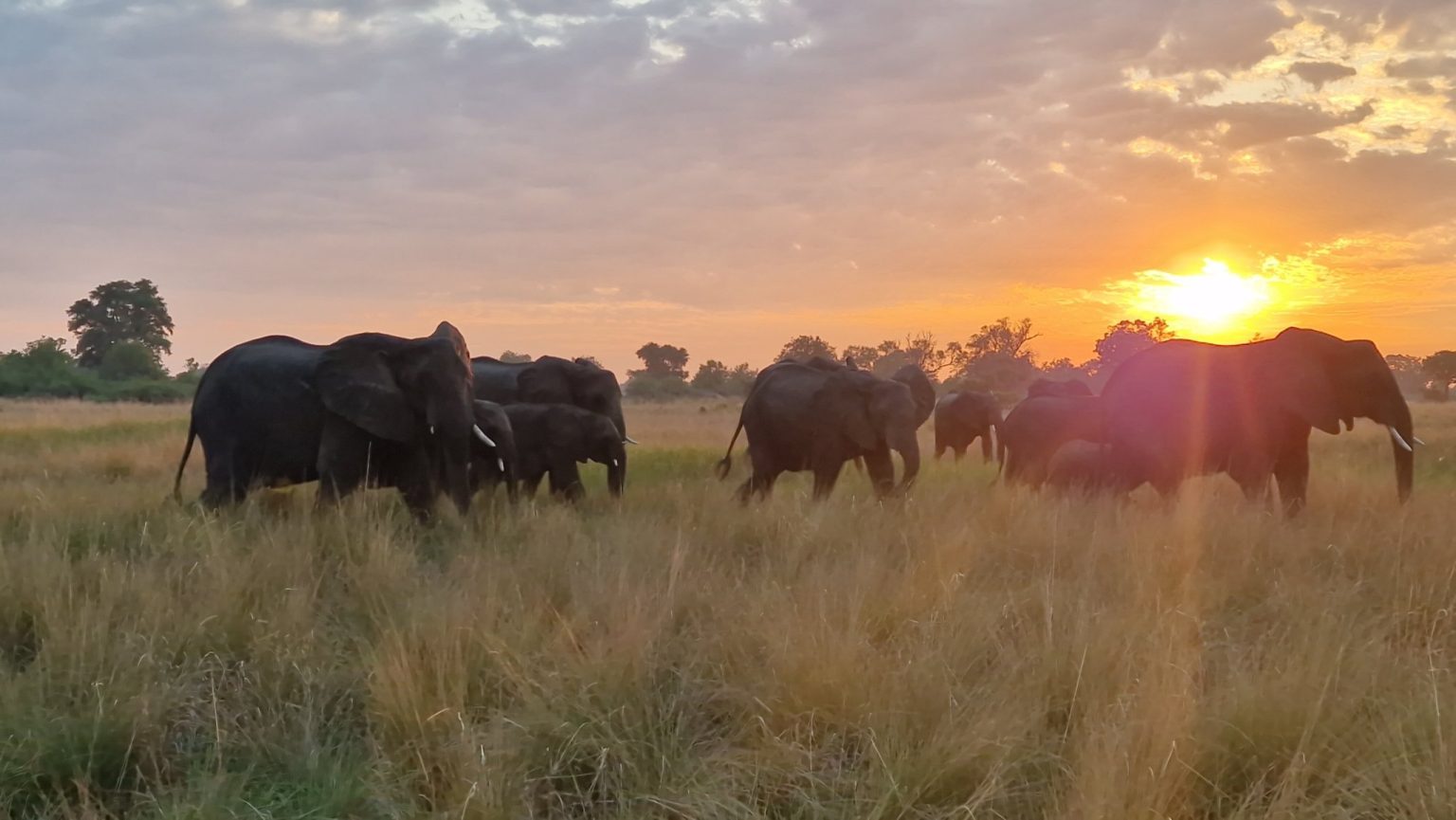
A Botswana safari cost runs from about US$224 to US$600 per person per night on group and mobile camping trips, US$595 to US$1,445 at mid range fly in camps and US$995 to US$3,895 at classic and premier Delta and Kalahari camps, sharing, with meals and activities inside the rate. Park entry, currently P270 (about US$20) a day for international visitors in Chobe and Moremi, is usually included too. Season, the number of light aircraft hops and how many camps you string together move the total most.
Botswana safari cost at a glance (US dollars, per person sharing).

Botswana Safari Cost per Person per Night by Safari Style
Most Botswana safari tours are priced per person per night, fully inclusive. That is why a Botswana quote can look twice the size of a Kenyan or Tanzanian one that lists meals, drives and park fees separately. The bands below come from the operators’ and camp groups’ own rate pages, not from aggregators.
| Safari style | Per night | Example |
|---|---|---|
| Group camping | US$224 to US$265 | Bush Ways Buffalo, Fish Eagle |
| Mobile camping | US$450 to US$600 | Bush Ways, Lelobu |
| Self drive, two sharing | About US$135 to US$190 each | Bushlore camper |
| Budget fly in lodges | US$400 to US$560 a day | Lelobu packages |
| Explorer camps | US$595 to US$1,445 | Elephant Pan, Little Sable |
| Classic camps | US$995 to US$2,295 | Sable Alley, Duke’s |
| Premier camps | US$1,545 to US$3,895 | Tuludi, Jack’s Camp |
The mobile camping row divides package prices by nights. Bush Ways’ six night Serval route at US$2,680 to US$2,830 and Lelobu Safaris’ eight night Maun to Kasane trip at US$3,600 both land near US$450 a night; Lelobu’s five night Okavango and Moremi mobile trip at US$2,990 comes to about US$600. Lelobu’s fly in lodge packages, US$2,700 for five days in the Delta and Khwai and US$2,780 for seven days in the Okavango and Chobe, prove a basic fly in week need not cost five figures. The self drive row is a camper split between two people plus a concession campsite and park entry, before fuel and food, and it has its own section below. Our Botswana budget safari guide goes deeper on the cheapest options.
Group camping in bow tents sits lowest. Bush Ways’ seven night Buffalo Safari from Maun to Victoria Falls costs US$1,625 from November to May and US$1,780 from June to October, roughly US$224 to US$265 a night, guide, vehicle, meals and park fees for the route all included.
The camp rows come from Natural Selection’s published Botswana rack sheet, one of the few camp groups that prints every rate. Its Explorer camps such as Elephant Pan run US$595 a night in the green season to US$1,045 in July and August, and Little Sable in Khwai runs US$660 to US$1,445. Classic Duke’s Camp in the northern Delta costs US$1,195 to US$2,295, while Jack’s Camp in the Makgadikgadi tops the sheet at US$2,095 to US$3,895. Those rates cover all meals and drinks except premium brands, laundry, activities, airstrip transfers, park entry fees and VAT.
Budget lodges fill a gap many people never hear about. Khwai Guest House starts at about US$330 a night with two activities and park fees, and simple riverfront camps near Chobe such as Sango Safari Camp and Chobe Elephant Camp start near US$435, according to the rates on our budget safari page. Rooms are simpler and menus fixed. The animals are the same ones the expensive camps watch.
So is Botswana expensive for tourists? At the top end, yes, more than anywhere else in Africa. Lower down, a mobile camping week costs less than most people expect.
The selector below sorts the safari styles by daily budget and by what matters most to you, and shows the reason any style drops out.
Botswana Safari Style Selector
Pick your daily budget and what matters most, and see which Botswana safari styles fit, with the reason any style drops out.
Showing all 7 safari styles
Every style is shown. Choose a budget or priority to narrow the list.
| Safari style | Typical cost | Where it works | What it means for you |
|---|---|---|---|
| 1.Self drive camping | Estimate: about USD 200 to 300 per person per day for two sharing a rented 4×4 | Moremi, Khwai, Savuti, Central Kalahari, Makgadikgadi | You book every campsite, carry fuel and water, and handle deep sand yourself |
| 2.Group camping safari | About USD 224 to 265 per person per day in bow tents | Moremi, Khwai, Savuti, Chobe, Delta edge from Maun | Guide, vehicle and meals included; you help pitch tents and share a truck with up to 12 |
| 3.Budget lodge or private mobile | USD 400 to 600 per person per day | Maun, Khwai community areas, Kalahari, Boteti | Comfortable beds and set meals; activities and drinks may be extra, so read the inclusions |
| 4.Chobe riverfront lodge | USD 430 to 600 per person per night, all inclusive | Kasane and the Chobe riverfront | Boat cruises and game drives into Chobe, but busy vehicles on the riverfront in the dry season |
| 5.Mid range camp | USD 595 to 1,445 per person per night, season dependent | Savuti, Khwai, Moremi edges, Delta fringe concessions | Two activities a day, meals and most drinks included; flights are usually on top |
| 6.Classic fly in camp | USD 995 to 2,295 per person per night | Private Okavango concessions, Linyanti, Selinda | Mokoro, boating, night drives and walks in one stay; reached by light aircraft only |
| 7.Premier fly in camp | USD 1,545 to 3,895 per person per night | Top Okavango and Makgadikgadi camps | Very few guests per guide, often a private vehicle; a conservation fee may be added each night |
No safari style matches all your choices. Try a higher budget or a different priority.
Styles that did not match, and why
Indicative ranges only; camp rates rise in the dry season and fall in the green season. Night drives and walking safaris are not allowed inside Moremi Game Reserve, which is one reason private concessions score for privacy. Sightings are never guaranteed.
Last checked October. Sources: Bush Ways, Cedarberg Africa, Natural Selection rack rates, Camp Savuti and Chobe Safari Lodge published rates, Lonely Planet, Moremi Park guide.
Why Botswana Safaris Cost More: High Value, Low Volume Tourism in Figures
Botswana prices its safari tours high on purpose. For decades the government has followed a policy of high value, low volume tourism: a small number of visitors paying a lot rather than crowds paying little. Fewer vehicles at a sighting, fewer beds per concession and less pressure on a fragile wetland are the result. The bill is the other result.
The policy shows up line by line. Natural Selection’s camps range from three sleeping platforms at Skybeds to roughly a dozen rooms at the largest, so the fixed cost of running a camp is spread across very few guests. On top of the room rate sits a community, conservation and reserve fee of US$60 per person per night, charged from age six. Then comes plain geography. Most of the best Botswana safari country has no tarred road, so fuel, food, staff and guests arrive by light aircraft or along long sand tracks, and every crate of tomatoes carries a freight cost.
Concession leases add another layer. Outside Moremi and Chobe, the government leases large blocks of the Delta and the land to its north to one or two operators each, with bed limits written into the lease. An operator paying for exclusive use of a few hundred square kilometres and allowed only a handful of tents has to charge per tent what a big lodge charges per floor.
Compare that with East Africa. A mid range lodge safari on Tanzania’s northern circuit costs about US$340 to US$515 per person per day with park fees included, according to the operator prices on our Tanzania safari cost page, against US$595 to US$1,445 a night at Botswana’s Explorer camps. South Africa’s private reserves start lower again, and our South Africa safari page covers that side. Botswana has very little middle ground: mobile camping and self drive exist, yet the classic Okavango fly in safari has no cheap version.
Plenty of people feel uneasy when they first see Botswana rates. It helps to know what the money buys: a vehicle shared with perhaps four or five other guests, a guide trained to walk and track, and long stretches of a morning drive without seeing another camp’s car.
Sample Botswana Safari Budgets for 3, 7 and 10 Night Trips
Trip totals only make sense against a length, so here are the per night bands above multiplied out for the lengths people ask about most. Figures are per person sharing, in US dollars, before international flights. For a 3 night Botswana safari, the same bands give US$1,350 to US$1,800 on a mobile trip, US$1,785 to US$4,335 at Explorer camps, US$2,985 to US$6,885 at classic camps and US$4,635 to US$11,685 at premier camps; group camping routes do not run that short. The 7 and 10 night totals sit in the table.
| Style, US$ | 7 nights | 10 nights |
|---|---|---|
| Group camping | 1,625 to 1,780 | 2,240 to 2,650 |
| Mobile camping | 3,150 to 4,200 | 4,500 to 6,000 |
| Explorer camps | 4,165 to 10,115 | 5,950 to 14,450 |
| Classic camps | 6,965 to 16,065 | 9,950 to 22,950 |
| Premier camps | 10,815 to 27,265 | 15,450 to 38,950 |
The low end of each range is the green season from 10 January to 31 March and the high end is July and August. Three things sit outside the camp rows. Light aircraft seats run about US$220 to US$260 per hop from Maun into the Delta, so a two camp week adds roughly US$660 to US$780. The US$60 community fee adds US$420 over seven nights at Natural Selection camps. Tips at the published minimums add about US$30 per person a day.
Real packages land inside these bands. Lelobu sells a nine day Chobe, Okavango and Victoria Falls trip for US$3,250 and a ten day Makgadikgadi, Okavango and Chobe fly in trip for US$6,185, while its twelve day Nxai Pan, Chobe and Delta green season trip costs US$6,475. A three night Delta taster is the hardest length to make good value: two of the three days are partly spent flying, so planners push for at least three nights in each camp. A three week southern Africa trip that adds Victoria Falls, Namibia or Cape Town to a Botswana week usually doubles the Botswana figure rather than tripling it, because the other countries cost less per night. Ready made routes and their prices sit on our Botswana safari packages page.
Okavango Delta Safari Costs: Khwai and Private Concession Camp Rates
An Okavango Delta safari is where Botswana’s prices climb highest, and the concession system explains it. Outside Moremi Game Reserve, most of the Delta and the land to its north is divided into private concessions leased to one or two operators, and only guests staying in that concession’s camps may drive there. Camp by camp prices are in our Okavango Delta safari cost guide, and the wildlife and water zones are in the Okavango Delta safari guide.

Private land changes what you can do, and that is part of the price. In a concession, guides may leave the track to follow wild dogs, run night drives with a spotlight and take guests on guided walks. Inside Moremi and Chobe, park rules keep vehicles on the roads and stop night drives. That is why two camps a few kilometres apart can sit far apart on price: Duke’s Camp in the northern Delta costs US$1,195 to US$2,295 a night, while Little Sable in the Khwai private reserve, beside Moremi, costs US$660 to US$1,445.
Water matters too. Camps on permanent channels run mokoro trips and boat outings all year, while camps on drier islands mix game drives with water activities only when the flood arrives. A water and land camp usually sits at the top of the price ladder because it offers both.
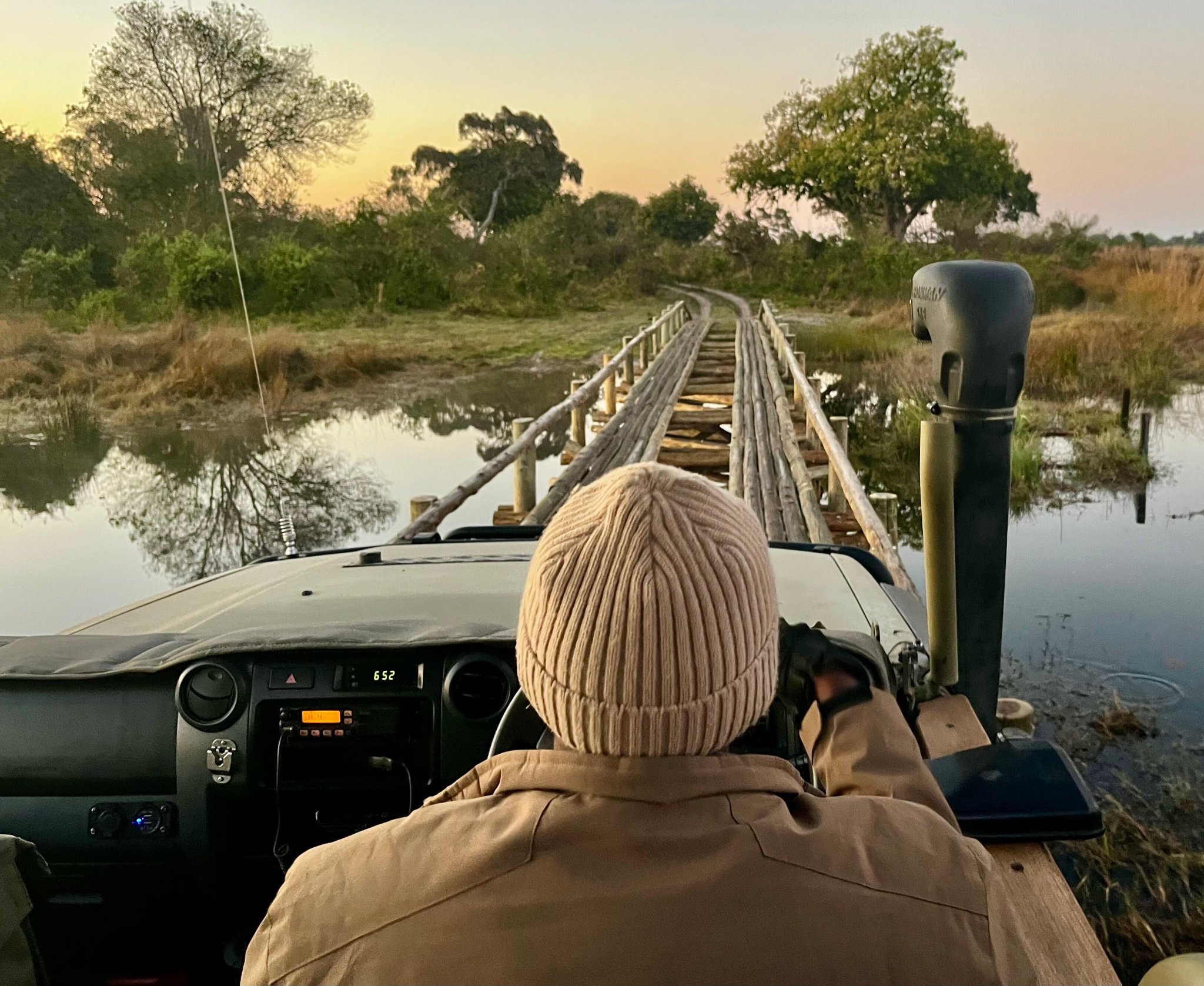
Some of the most expensive camps sit in the far north, around Linyanti, Selinda and Kwando, where predators and very low guest numbers push rates up. Smaller and older camps in the same concessions cost noticeably less, so the concession matters more than the brand over the door. Natural Selection’s own Khwai add on shows how activities are priced on private land: a private Khwai ranger excursion costs US$740, paid into conservation.

Mobile Camping Safari Costs: Moremi, Savute and Chobe by Road
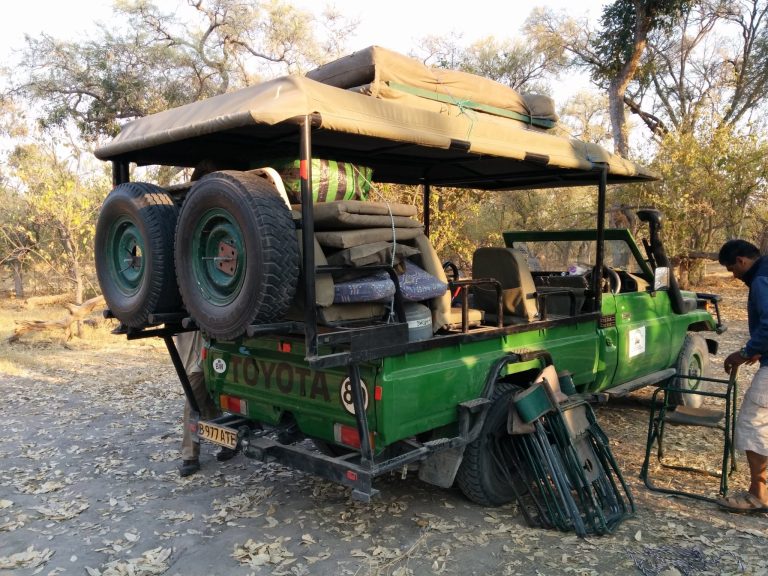
A mobile camping safari is the cheapest guided way into the same reserves the fly in camps sit beside. A guide and crew drive ahead, pitch walk in tents with beds, and move camp every two or three nights, so you see Moremi, Khwai, Savute and Chobe for a fraction of fixed camp rates.

Read the exclusions on mobile trips line by line. Bush Ways leaves out visas, airport transfers, gratuities and curios, and its terms list “any rise in National Park fees” as an exclusion, which matters while a postponed fee increase hangs over the parks. The seasonal swing of just US$150 on the Serval route is far smaller than at fixed camps, so a mobile trip in August is the best value peak season option in the country. Group size counts as well: a private guide, cook and Land Cruiser cost the same whether two or six share them, so a family of four pays far less per head than a couple on the same private departure.
Campsites inside the parks are not fenced. Elephants feed beside the tents and hyenas check the kitchen, and guides brief guests on staying inside after dark. Mobile operators also hold their own campsite bookings, which in the dry season can decide whether a trip happens at all.
Self Drive Safari Costs in Botswana: 4×4 Hire, Campsites and Park Fees
A Botswana self drive safari is the cheapest way into the parks for two experienced drivers, and the most demanding. You rent a fully equipped 4×4, usually a Toyota Hilux or Land Cruiser with a rooftop tent, fridge, long range tank, cooking kit and recovery gear, then plan, book and drive the whole route yourself.
Put together, a week by road in July comes to about US$2,050 per person all in before flights, as worked through line by line on our budget safari page. That is less than one night at a premier camp in peak season.
Campsites are the tight constraint, not cars. Each concessionaire sells its own pitches, replies can be slow, and dry season dates at Third Bridge, Xakanaxa and Savuti go up to a year ahead. Gate staff ask for your campsite voucher, and wild camping inside a park is not allowed. Park fees are easiest paid in advance at the wildlife department’s offices in Maun or Kasane, where card machines work more reliably than at the gates.
Forum advice for first timers is consistent. Moremi’s tracks are manageable in the dry months at the right tyre pressures, but the deep sand between Savuti and Kachikau catches inexperienced drivers, and breakdowns happen where there is no phone signal. Travel with a second vehicle in remote areas. Self drive also costs you a guide’s eyes, since leopard and wild dog sightings come far more often with someone reading tracks and alarm calls. Our self drive safaris in Africa guide covers vehicles, border paperwork and park rules.
Fly In Safari Costs, Light Aircraft Transfers and the 20 kg Soft Bag Limit
Most fly in safaris in Botswana start at Maun or Kasane and move between camps by small aircraft to a bush airstrip. Each hop is a cost line, either included in a package or charged per seat per sector, so an itinerary with four camps costs more than one with two. Mack Air, one of the main Maun charter airlines, does not publish its seat rates; they are quoted on request or folded into a package.
Packages show what the flights are worth. Lelobu’s seven day Okavango and Chobe fly in package costs US$2,780 against US$3,600 for its eight night mobile trip by road, so the cheapest fly in weeks are not far off road based ones. At the other end, Natural Selection includes free flights between Tawana and Maun, the Delta or Linyanti when you book three nights at Tawana with at least three nights at another of its camps, which is worth asking about. Camp rates there already cover the airstrip transfer at each end.
Some camps do publish fares. Shared seats from Maun to a Delta or Moremi airstrip are commonly quoted at about US$220 to US$260 one way, and Camp Savuti’s transfer sheet lists longer legs per person, one way, with children paying the adult rate.
| Route | Fare, one way |
|---|---|
| Maun to Delta or Moremi | US$220 to US$260 |
| Maun to Savute | US$407 |
| Savute to Khwai | US$427 |
| Savute to Kasane | US$683 |
A three camp itinerary needs four sectors: in, two camp changes and out. Four short Delta hops come to about US$880 to US$1,040 per person, and the bill climbs once Savute or Kasane legs join the route. Shuttles often stop at other airstrips on the way, so a twenty minute hop on the map can take closer to an hour.
Light aircraft luggage rules.
The soft bag rule catches people out more than anything else on a Botswana safari trip. Forum threads are full of travellers who arrived in Maun with a hard wheeled case and repacked on the airport floor. A soft safari duffel bag, a light daypack and clothes you can wash at camp, since laundry is included at most fixed camps, keep you inside the limit. Our safari gear and clothing guides cover what to look for, including binoculars and camera kit that will not eat your weight allowance.
Botswana Safari Season Rates and Green Season Savings, Month by Month
Season is the second biggest lever on a Botswana safari cost. Camps run several rate bands a year, and the same tent can cost about double in August what it costs in February. Natural Selection’s sheet shows the steps clearly.
| Season | Little Sable | Duke’s Camp |
|---|---|---|
| Green, 10 Jan to 31 Mar | US$660 | US$1,195 |
| Shoulder, Apr, Nov to 19 Dec | US$925 | US$1,495 |
| Shoulder high, May, Oct | US$1,045 | US$1,745 |
| High, Jun, Sep, festive | US$1,295 | US$2,045 |
| Peak, Jul to Aug | US$1,445 | US$2,295 |
Month by month, the same camp moves like this. Use it to see what a few weeks either side of your ideal dates would save.
| Month | Rate band | Little Sable |
|---|---|---|
| January | Green from 10th | US$660 |
| February | Green | US$660 |
| March | Green | US$660 |
| April | Shoulder | US$925 |
| May | Shoulder high | US$1,045 |
| June | High | US$1,295 |
| July | Peak | US$1,445 |
| August | Peak | US$1,445 |
| September | High | US$1,295 |
| October | Shoulder high | US$1,045 |
| November | Shoulder | US$925 |
| December | Shoulder, high from 20th | US$925 to 1,295 |
Peak season in July and August costs the most. Rain has not fallen for months, animals gather at the remaining water, and the Okavango flood, which comes from rain in the Angolan highlands, peaks in the dry months so mokoro trips run widely. The festive fortnight from 20 December carries the high rate although it falls in the rains. The camp group’s next season sheet is already out, with Duke’s Camp rising to US$2,450 at peak and Little Sable to US$1,575.

The shoulder months sit in the middle. April costs US$925 at Little Sable against US$1,445 in July, about 36 percent less, with the bush drying and the flood arriving. May is crisp and green and still well below peak. November is hot, with the first storms, and game is still concentrated.
The green season from 10 January to 31 March brings the lowest rates, and single supplements are waived then and again from 1 October to 19 December. Antelope drop their young, predators follow, and Makgadikgadi and Nxai Pan draw a zebra migration. Grass grows tall, animals spread out, afternoon storms are common, a few camps close (San Camp opens only from 1 April), and some southern Delta camps cannot run mokoro trips until the water returns. Mobile trips barely move with the season: Bush Ways’ Serval route costs US$2,680 or US$2,830. Malaria risk is also highest from about November to April. Our best time to visit Botswana guide goes through the year month by month for wildlife and weather.
The calculator turns safari style, month, nights and light aircraft hops into a per person range and a group total, using the camp rates and fares on this page.
Botswana Safari Cost Calculator
Estimate a per person and group range for your Botswana safari by style, month, nights and light aircraft hops. International flights, visas for nationalities that need one, and insurance are not included.
- Per person
- USD 6,160 to 10,360
- Your group
- USD 12,320 to 20,720 for 2 travellers
- Average per person per day
- USD 880 to 1,480
| Mid range lodge or camp, 7 nights in peak season | USD 5,950 to 10,115 |
| Tips, 7 days | USD 210 to 245 |
July is peak season: dry weather, game around permanent water and the highest camp rates of the year.
| Safari style | Green season | Shoulder | Peak |
|---|---|---|---|
| Group camping safari | USD 224 to 265 | USD 224 to 265 | USD 224 to 265 |
| Budget lodge or private mobile | USD 400 to 600 | USD 400 to 600 | USD 400 to 600 |
| Mid range lodge or camp | USD 595 to 660 | USD 750 to 1,045 | USD 850 to 1,445 |
| Classic fly in camp | USD 995 to 1,195 | USD 1,495 to 1,745 | USD 1,745 to 2,295 |
| Premier fly in camp | USD 1,545 to 2,095 | USD 2,500 to 2,950 | USD 3,100 to 3,895 |
| Light aircraft sector, per seat | USD 220 to 700 | USD 220 to 700 | USD 220 to 700 |
Indicative ranges only. Seasons used here: green season January to March, shoulder April, May, November and December (camps charge high season rates over the festive fortnight from 20 December), peak June to October. Lodge and camp rates usually include meals, most drinks, two activities a day, park entry and laundry; camping rates include the vehicle, guide and meals. Community and conservation fees, where a camp adds one, are about USD 60 per person per night. Tips are counted at USD 30 to 35 per person per day, the published minimums for a group guide and the staff box plus a tracker or poler, and a Maun mokoro day trip at USD 100 to 200 per person.
Last checked October. Sources: Natural Selection rack rates, Camp Savuti rates and transfer sheet, Bush Ways, Lelobu Safaris, okavango.com, the Botswana Safari Company tipping minimums.

Chobe, Kalahari, Makgadikgadi and Linyanti Safari Costs by Region
Each Botswana safari area has its own price level, and mixing an expensive area with a cheaper one is the most reliable way to balance a budget without dropping the Delta.
| Area | Per night, sharing | Access |
|---|---|---|
| Okavango private concessions | US$1,195 to US$3,895 | Fly in |
| Khwai private reserve | US$660 to US$1,445 | Fly or road |
| Moremi, mobile camping | US$450 to US$600 | Road |
| Chobe riverfront lodges | US$435 to US$766 | Road from Kasane |
| Makgadikgadi and Boteti | US$625 to US$3,895 | Fly or road |
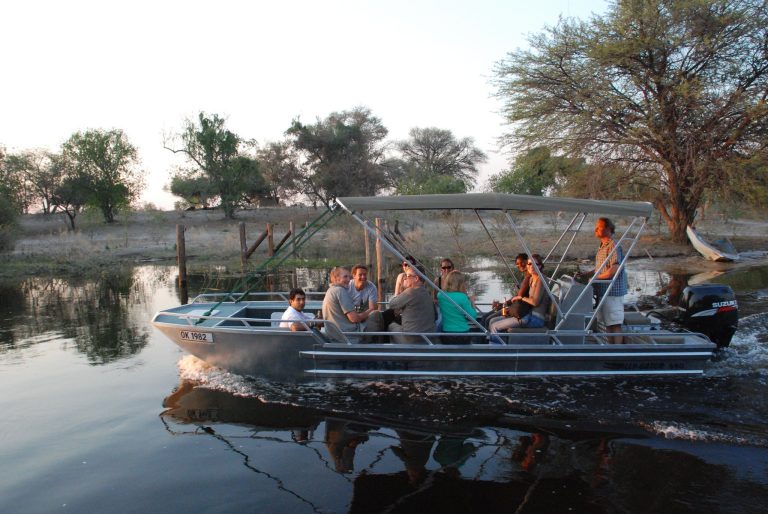
The Chobe National Park safari is the cheapest big game in the country. The riverfront near Kasane has lodges at a wide spread of prices, from full board camps at US$435 to US$640 a night with activities extra to inclusive riverfront lodges at US$644 to US$766 with a drive, a cruise and park fees every full day. River cruises and drives are also sold by the activity, and Victoria Falls is a short drive away. Bush Ways’ six night mobile route ends on the riverfront for US$2,680 to US$2,830, and Lelobu pairs Chobe and the Okavango for US$3,480 over five days.

The Makgadikgadi and Kalahari are mid priced and add something the Delta cannot: habituated meerkats, salt pans and the green season zebra migration. Natural Selection’s Meno a Kwena on the Boteti River costs US$625 to US$1,275 a night and Camp Kalahari US$795 to US$1,325, while Jack’s Camp, the flagship on the pans, costs US$2,095 to US$3,895. Lelobu’s ten day Makgadikgadi, Okavango and Chobe fly in trip costs US$6,185 and its twelve day Nxai Pan, Chobe and Delta green season trip US$6,475.

The Central Kalahari Game Reserve has very few camps and is best in the green season, when springbok, gemsbok and Kalahari lions gather on Deception Valley’s grass. It is reached by air or on self drive, with park entry at the lower P190 rate. Savute, the remote heart of Chobe, sits between Chobe and the Delta in price and is a standard stop on mobile routes. Linyanti, Selinda and Kwando in the far north are private concessions known for wild dogs and big dry season elephant herds, and they price close to the northern Delta.

Botswana Park Fees, Levies and What a Safari Rate Includes
Most Botswana safari packages are quoted per person sharing on a fully inclusive basis, so read the inclusions before comparing two quotes.
Park fees are set by Botswana’s Department of Wildlife and National Parks in two bands. Chobe and Moremi are Category A: international visitors pay P270 per adult per day, about US$20, or P190 when booked as a tour operator’s client; SADC residents pay P205, and citizens P30. The Central Kalahari, Makgadikgadi, Nxai Pan and Khutse are Category B at P190 for international visitors and P145 for SADC residents. Children aged 8 to 15 pay half and under 8s enter free, though some campsite concessionaires use an 8 to 17 bracket. A foreign registered car adds a daily vehicle fee, quoted at P75 by most sources and P115 by some Chobe guides, so allow for either.
A large rise was due on 1 April, taking the international rate to P500 a day, and it was postponed at the end of March after objections from the tourism industry. No new date has been set, and the tourism ministry has said the current fees stay in place while consultation continues. That postponement is why older guides quote a P500 figure that nobody is actually charging. For most travellers it changes little, because camp and mobile rates already include park fees. Self drivers pay at the gate or, better, in advance at a wildlife office in Maun or Kasane, and anyone booking a mobile trip should ask whether a future rise would be passed on, as Bush Ways’ terms say it would.
A tourism levy on arriving visitors has been talked about for years and was withdrawn before it was charged; no reintroduction has been confirmed. Ask your operator to check before you travel in case it returns. The estimator below adds up park entry, vehicle and campsite charges for one park stay on the current schedule.
Botswana Park Fee and Campsite Estimator
For self drive and camping safaris: add up park entry, vehicle and campsite charges for one park stay, using the last fee schedule that operators widely quoted. Lodge guests normally have park entry built into their nightly rate.
- Park and vehicle fees
- BWP 1,845 to 1,965
- Campsite fees
- USD 200 for 2 nights
| Park entry, 2 adults for 3 days at BWP 270 | BWP 1,620 |
| Vehicle, 3 days | BWP 225 to 345 |
| Campsite, 2 adults for 2 nights at about USD 50 | USD 200 |
Moremi campsites (Third Bridge, Xakanaxa, South Gate, Khwai) are run by private concessionaires; you need a confirmed booking to enter, and the June to October dates fill months ahead.
Botswana’s park fee schedule is under review, and we could not confirm the current rate on a government source, so treat the park and vehicle figures as a rough guide and confirm them with a Department of Wildlife and National Parks office before you travel.
| Park | International | SADC resident | Citizen |
|---|---|---|---|
| Chobe and Moremi | BWP 270 | BWP 205 | BWP 30 |
| Central Kalahari, Makgadikgadi, Nxai Pan, Khutse | BWP 190 | BWP 145 | BWP 20 |
| Foreign 4×4 under 3,500 kg | BWP 75 to 115 a day | Same | Lower local rate |
| Private campsite, Chobe and Moremi | About USD 40 to 50 pp | Lower rate | Lower rate |
| Private campsite, Central Kalahari pans | BWP 350 pp | BWP 350 pp | BWP 350 pp |
Indicative fees from the last widely quoted schedule. Children under 8 enter free and children 8 to 17 usually pay half. Park entry and vehicle fees are charged for every calendar day, including the day you leave. The schedule is under review, the figures in circulation disagree and a rise for international visitors has been proposed, so confirm the rate at the gate or with the Department of Wildlife and National Parks in Maun before you pay. Campsite rates are set by each concessionaire and the citizen and resident rates vary by operator.
Last checked October. Sources: Department of Wildlife and National Parks schedule as reported by Tourism Update, Tawana Self Drive campsite guide, Moremi Park entry fee guide, Botswana Daily News.
Optional Safari Activity Costs: Mokoro, Scenic Flights, Horse Riding and San Walks
Fixed camps fold most safari activities into the nightly rate: game drives, guided walks in the concessions, mokoro and boat trips where the water allows, and night drives on private land. A handful of extras are charged on top, and on budget and mobile trips the list of extras grows.
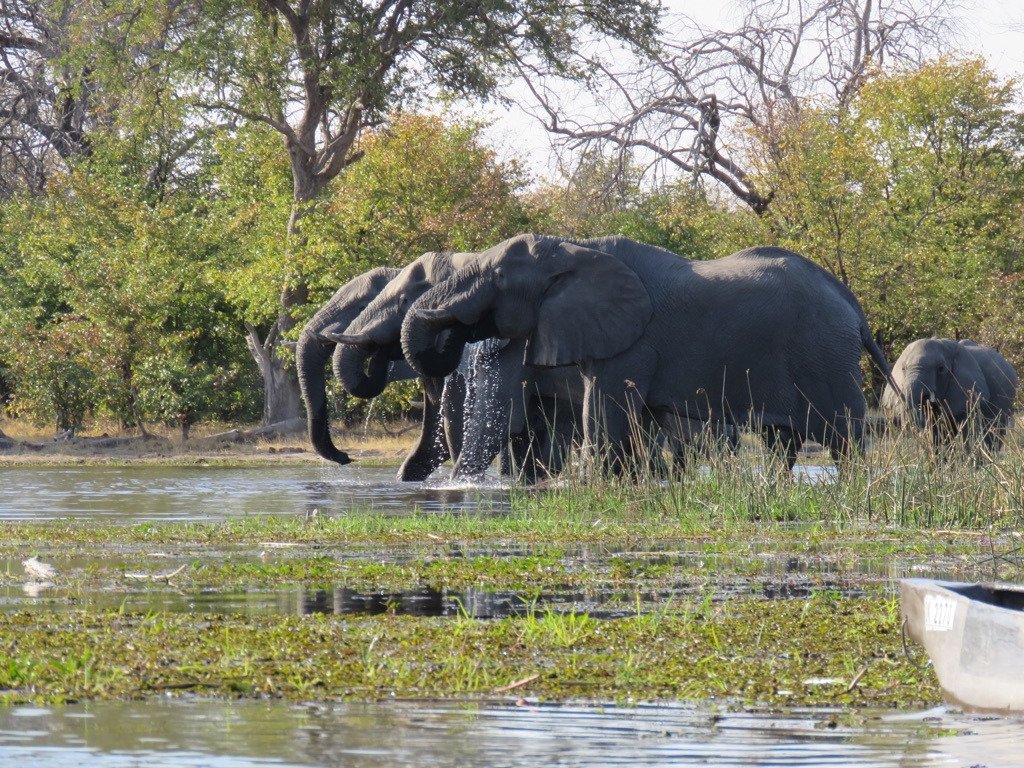
Night drives and walking are not allowed inside Moremi, so mobile trips there cannot add them at any price; you need a night in Khwai or a private concession. Mokoro day trips from Maun earn good reviews for quiet and birds and mixed ones from people who expected lions, since big game is thin on the southern fringe of the Delta. The Okavango Delta guide explains which zones have which activities.
Hidden Safari Costs: Tips, Single Supplements, Visas, Insurance and Cash
The camp rate covers most things. These lines sit outside it, and together they can add ten percent to a trip.
On a seven night trip, the Botswana Safari Company’s minimums for a group guide and the staff box come to US$210 per person, so bring clean US dollar notes in small denominations, printed recently, since older notes are often refused. Trip reports often mention carrying more cash than expected, because card machines are rare in the bush and gates do not always take cards. Children’s age rules affect the bill too: Natural Selection’s Delta camps accept children from six, while its Makgadikgadi and Boteti camps take all ages.
Worked Example: A 7 Night Botswana Fly In Safari Costed per Person
Here is a realistic Botswana safari budget for one named trip shape: 7 nights, two people sharing, three nights at Little Sable in the Khwai private reserve and four at Duke’s Camp in the northern Delta, shared game drives, travelling in July. It uses Natural Selection’s published 6 to 7 night rate.
Ask for the light aircraft seats as a separate line, because the camp’s reservations team or the airline quotes them rather than publishing them. The gap between July and February, about US$6,750 per person for identical nights, is the single biggest saving available on a Botswana safari.
Botswana and Victoria Falls Safari Add On Costs
Adding Victoria Falls is the most common extension to a Botswana safari, because Kasane sits about an hour’s drive plus the Kazungula border from Victoria Falls town in Zimbabwe, and Livingstone in Zambia is a similar distance over the Kazungula Bridge. Two nights at the Falls is the usual add on, and it costs far less per night than the Delta.
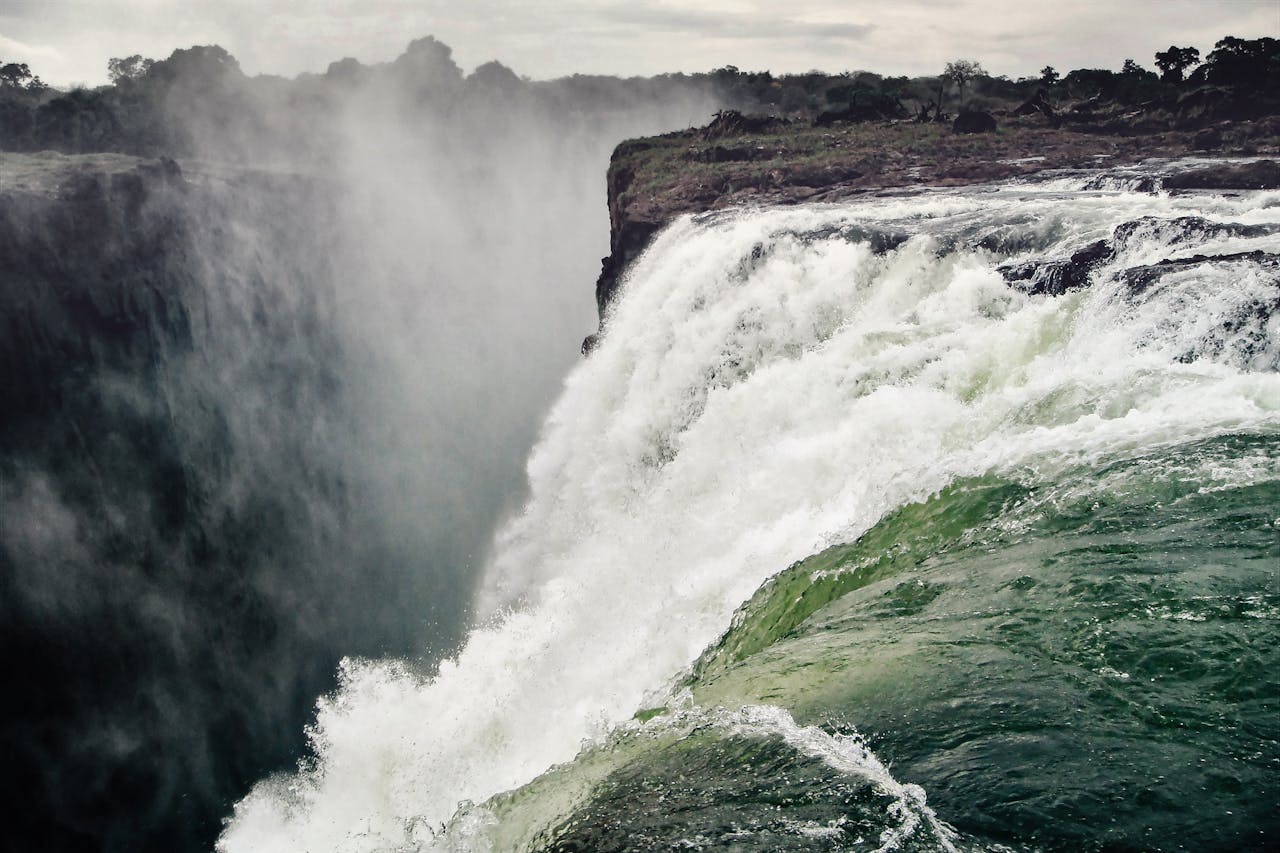
Two Falls nights with the rainforest walk and a helicopter flight come to roughly US$840 per person before transfers, meals beyond breakfast and visas. Packages fold this in neatly. Lelobu’s nine day Chobe, Okavango and Victoria Falls trip costs US$3,250, and Bush Ways’ Buffalo Safari ends at the Falls for US$1,625 to US$1,780. Our Botswana and Victoria Falls itinerary sets out the days, the Victoria Falls safari guide covers the Zambian side, and the Zimbabwe safari and Zimbabwe safari cost pages price Hwange and Mana Pools if you want to keep going. The Namibia safari page covers the western extension.
One timing note. The Falls carry the most water from about March to June, which overlaps Botswana’s cheaper shoulder months, while the curtain thins by October and November, just as Botswana’s dry season game peaks. Choose which matters more before you choose the month.
How to Plan an Affordable Botswana Safari Trip
An affordable Botswana safari comes from a few deliberate choices, each with a number attached.

Who you book through matters less than people fear. A Botswana based operator or a specialist agent abroad usually pays the same camp rate, and the agent’s margin buys a single point of contact and help when flights change. Ask any of them to show each camp, flight and fee as its own line. One thing not to cut is guiding quality. Trip reports that end in disappointment rarely blame the tent; they blame a short stay, a camp on the wrong side of a dry channel or a guide who stuck to the track. Comparing countries helps too: our Zambia safari cost, Kenya safari cost and African safari cost guides give the wider picture, and the Botswana luxury safari cost guide covers the top camps in detail.
Adding Gorilla Trekking in Bwindi: Botswana Combo Costs
Many travellers who spend this much on a Botswana safari also want to see mountain gorillas. A gorillas and Botswana safari usually links Maun or Kasane to Entebbe or Kigali with one connection, most often through Johannesburg or Nairobi, and adds three or four days for gorilla trekking in Bwindi or Rwanda.
The permit is the main added cost. In Uganda a permit costs US$800 for foreign non residents, US$700 for foreign residents and UGX 300,000 for East African citizens; in April, May and November the rate drops to US$600 and US$500, but those permits cannot be rescheduled and are paid in full at booking. Rwanda’s permit costs US$1,500, with the RDB 30 percent offer bringing it to US$1,050 from November to May when you add nights in Nyungwe or Akagera. Our page on Uganda gorilla permits explains the rates, and getting to Bwindi covers flights and road transfers. Botswana’s green season overlaps with drier spells in Uganda; the best time for gorilla trekking guide sets out the months.
Packing for both is where the 20 kg soft bag rule bites. Gorilla trekking in Uganda needs waterproof boots, a rain jacket, gloves and long trousers. Wear the boots on travel days, choose a light packable rain shell and keep one daypack for both trips. The gorilla trekking packing list, the trekking boots guide and the daypack guide show what earns its weight.
Botswana Safari Cost FAQ
How much does a Botswana safari cost per person per day?
About US$224 to US$265 a night on a group camping trip, US$450 to US$600 on a mobile camping trip, US$595 to US$1,445 at mid range Explorer camps and US$995 to US$3,895 at classic and premier camps, per person sharing, with meals, activities and park fees included. Some camp groups add a US$60 nightly community fee.
Is Botswana expensive for tourists?
At the top end it is the most expensive safari country in Africa, because of its low volume tourism policy and fly in camps. A group camping week from US$1,625, a mobile camping week at US$2,680 to US$3,600, or a basic fly in package from US$2,700, keeps it within reach of many budgets.
How much does a 7 day Botswana safari cost?
About US$1,625 to US$1,780 on group camping, US$3,150 to US$4,200 on a mobile camping trip, US$4,165 to US$10,115 at Explorer camps and US$6,965 to US$16,065 at classic camps, per person sharing before international and light aircraft flights. A three week southern Africa trip with Victoria Falls and another country usually roughly doubles the Botswana week.
How much does a luxury Botswana safari cost?
Classic and premier camps cost US$995 to US$3,895 per person a night on Natural Selection’s sheet. Seven July nights split between Khwai and the Delta come to about US$13,470 before flights; seven peak season nights at Jack’s Camp pass US$26,000. Our Botswana luxury safari cost guide goes camp by camp.
Why is the Okavango Delta so expensive?
Most of it is leased as private concessions with strict bed limits, the camps are reached only by light aircraft, and everything from fuel to food is flown or trucked in. Guests pay for very few vehicles, night drives, walks and mokoro trips on private land. The cheapest way in is a mokoro camping trip from Maun or a mobile safari in Moremi.
Is the Okavango Delta worth it?
For travellers who value space and water activities, most say yes. Sightings are not guaranteed and you see fewer animals in one view than in the Serengeti, but you share them with far fewer people. Three nights in one camp is the minimum that makes the flights worthwhile.
What is the best month to go to the Okavango Delta?
June to September for the flood and dry season game, with July and August the most expensive. May and October are good value compromises, and January to March is cheapest but wet. Our best time to visit Botswana guide covers every month.
What are the current park fees in Botswana?
International visitors pay P270 per adult per day in Chobe and Moremi and P190 in the Central Kalahari, Makgadikgadi, Nxai Pan and Khutse; a planned rise to P500 was postponed with no new date. Camp and mobile safari rates normally include park fees, so only self drivers pay them directly.
Is Botswana or Tanzania better for safari?
Tanzania gives more for a smaller budget, and the Serengeti migration has no Botswana equivalent. Botswana gives private concessions, night drives, walking and the Okavango’s water, with far fewer vehicles. First timers on a tight budget usually get better value in Tanzania; our Tanzania safari cost guide has the figures.
Which country is better for a safari, Kenya or Botswana?
Kenya suits shorter trips and the Masai Mara migration, with road access keeping costs down. Botswana suits travellers who want remoteness and are willing to pay for it. Compare our Kenya safari cost guide with the figures above.
Which African country is the cheapest to go on safari in?
Among the classic safari countries, East Africa and South Africa are cheaper than Botswana for a lodge trip, and Tanzania camping safaris start near US$220 a day with park fees included. Within Botswana, the cheapest route is a group camping trip, self drive or the Chobe riverfront by road. Our African safari cost guide compares countries.
Do I need malaria pills for Botswana?
For the north, usually yes. The Okavango Delta, Moremi, Khwai and Chobe are malaria areas, with the highest risk from about November to April, so see a travel clinic about tablets. Use repellent and long sleeves at dusk and sleep under the nets camps provide.
Can you wear blue in Botswana?
Yes, there is no rule against it. On game drives and walks, guides suggest khaki, olive and tan because neutral colours stand out less and hide dust, and dark blue and black are best left at home where tsetse flies occur. Our guide to what to wear on a walking safari covers colours and fabrics.
How much should I tip on a Botswana safari?
The Botswana Safari Company’s minimums are US$20 per guest per day for a group guide, US$80 a day for a private guide, US$5 for a tracker or mokoro poler and US$10 for the staff box. A week at those rates comes to about US$210 per person.
How many nights do I need for a Botswana safari?
Seven to ten nights covers two or three areas, for example the Delta, Khwai or Moremi and Chobe. Spend at least three nights in each camp; Natural Selection’s nightly rate drops 5 to 10 percent once you book six or more nights.
Is the green season a good time for a Botswana safari?
For many people it is the best value: camp rates fall by about half and single supplements are waived from 10 January to 31 March. Newborn animals draw predators and birding peaks. Expect heat, storms, tall grass and some camps without mokoro trips early in the year.
Can children go on a Botswana safari?
Yes. Natural Selection’s Delta camps accept children from six and its Makgadikgadi camps take all ages, but families with children aged nine and under must pay for a private vehicle at US$725 to US$935 a night. Mobile safaris and Chobe lodges tend to be more flexible.
Is a Botswana Safari Worth the Money? What the Days Are Like
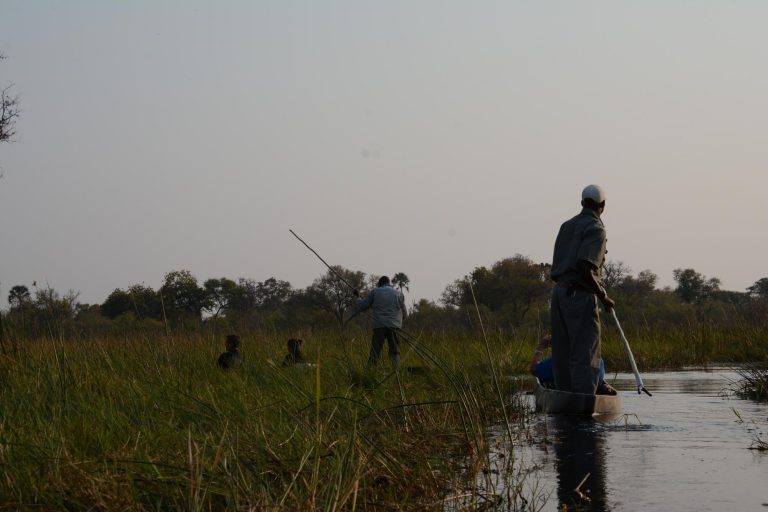
For travellers who value space, usually yes, and the reason shows in how a US$1,000 night is spent. Mornings start in the dark with coffee by the fire, then a drive or a walk while the light is low. In a concession the guide can leave the track for wild dogs or a leopard in a sausage tree, and the next vehicle is often a camp away. Midday is slow and hot. In the afternoon a mokoro slides through papyrus channels, the poler standing at the back, and the evening drive ends with a spotlight sweep on the way home. Sightings are never guaranteed, and in the green season the grass hides a lot.
What people remember is the quiet. Trip reports from East Africa veterans say the same thing: fewer animals in a single view than the Serengeti, far fewer people, and a sense of having the place to yourselves.


Getting to Botswana for Your Safari
Most safari travellers fly into Maun for the Okavango Delta, Moremi and Khwai, or into Kasane for Chobe, usually connecting through Johannesburg. Kasane is also a short road transfer from Victoria Falls, which makes a Chobe and Victoria Falls combination popular on a first visit.
From Maun, light aircraft fan out to the Delta camps, while Moremi and Khwai are a few hours away by road. The Central Kalahari and the Makgadikgadi are long drives from Maun, and Savute sits roughly between Maun and Kasane on a sand route. Plan the order of camps around the flights rather than the other way round, and keep a buffer night in Maun or Kasane when connections are tight, since travellers report delayed and cancelled regional flights.