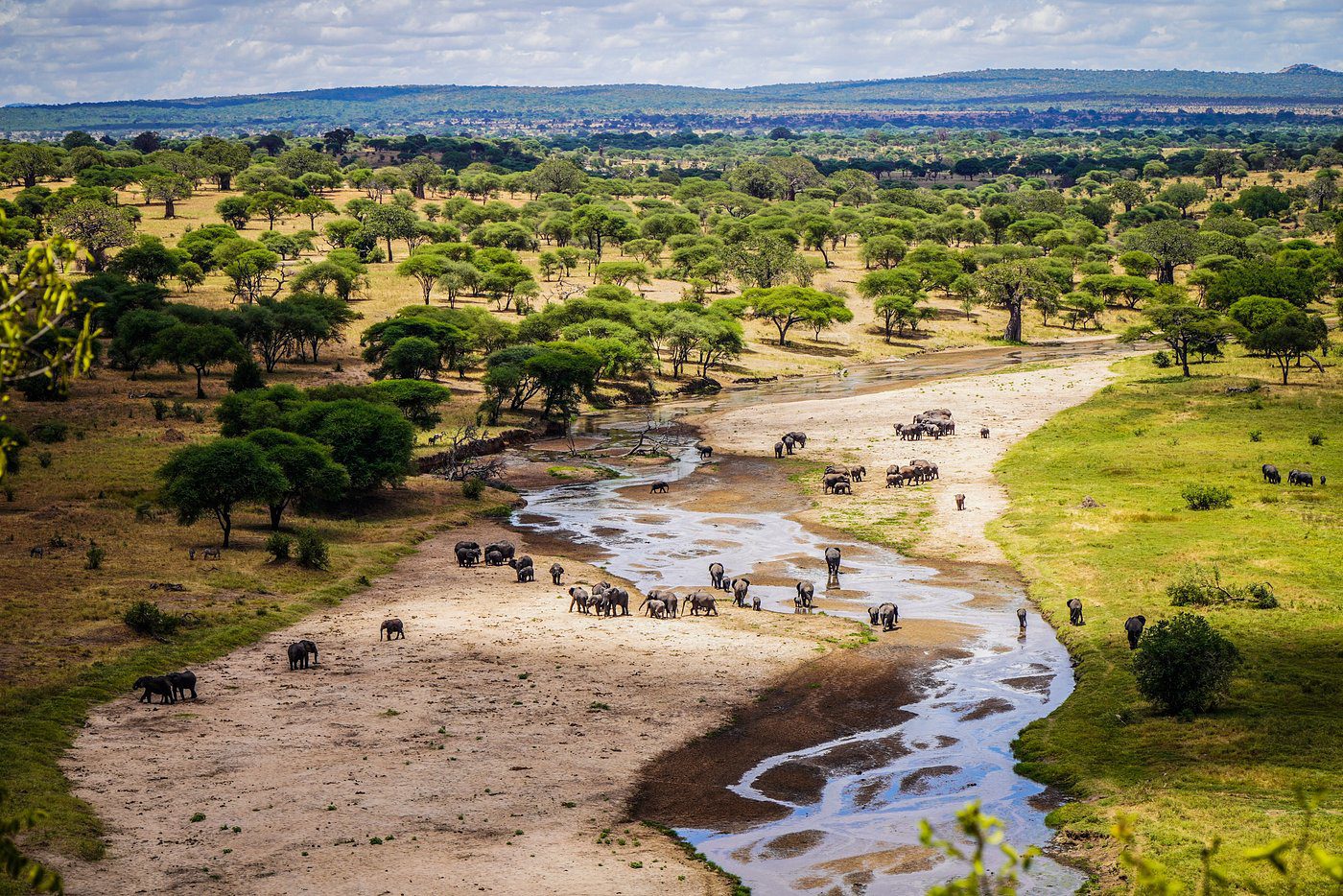
A Tanzania safari cost runs from about US$220 to US$460 per person per day on a camping trip and US$340 to US$515 on a mid range lodge safari, park fees included, while luxury camp nights alone cost from about US$520 to over US$3,500. Most travellers book a package with a licensed Arusha operator. Tanzania holds the Serengeti, the Ngorongoro Crater and the wildebeest migration, and every figure below comes from a park authority, airline, lodge or operator rate page.

Plenty of people open their first safari quote and feel slightly winded. That is normal. Two quotes for the same week can sit thousands of dollars apart, and the gap nearly always traces back to where you sleep, how many days, which month, which parks and whether the vehicle is yours alone. For the parks themselves, see our Tanzania safari guide.
Tanzania Safari Cost per Person per Day by Safari Style
Every Arusha operator prices a Tanzania safari package around the same tiers, and working out which one a quote belongs to is the first step to comparing like with like. The figures below come from operators’ own published package prices, divided by the number of days, with park fees, vehicle, guide and full board already inside.
| Safari style | Per person per day | Example |
|---|---|---|
| Group camping | US$220 to US$250 | 4 and 5 day camping |
| Small group camping | US$380 to US$460 | 7 days, 2 to 4 guests |
| Group lodge | US$375 to US$410 | 3 to 5 day lodges |
| Private mid range | US$340 to US$515 | 7 days, 6 down to 2 |
| Luxury camp | US$520 to US$3,525 | Lodging alone |
The camping rows come from ZK Tanzania’s group joining trips, where a 4 day camping safari sells from US$990 and a 5 day from US$1,100, and from Blessing Safaris’ 7 day camping route at US$2,680 per person for four or more guests and US$3,200 for two. Our guide to the Tanzania budget camping safari goes through the campsites and what the crew carries.
The lodge rows use ZK Tanzania’s group lodge departures, US$1,220 for 3 days up to US$1,890 for 5, and Kilidove Tours’ private 7 day northern circuit in its mid luxury tier, which runs US$2,401 per person for six or more guests and US$3,295 to US$3,585 for a couple. Plenty of first timers land here: en suite rooms, plated or buffet meals, often a pool.
Luxury safaris are priced per night rather than per trip. Gibbs Farm in the Ngorongoro highlands publishes US$518 to US$683 per person full board. Singita Sasakwa in the Grumeti reserve publishes US$2,550 to US$3,525 per adult per night, all inclusive but with park and concession fees on top. Add a private vehicle and the fees, and luxury days rarely fall below about US$900. Our Tanzania luxury safari cost guide covers the top camps and private reserves, which answers the most common follow up: what does a luxury safari cost in Tanzania.
The calculator below uses those bands, about US$220 to US$460 a day camping, US$340 to US$515 private mid range and from about US$900 in luxury camps, and adds the visa, the US$44 inbound insurance, tips and the common extras, so you can see a realistic range before asking for a quote.
Tanzania Safari Cost Calculator
Estimate a realistic range for your Tanzania safari by style, length and group, with the visa, mandatory insurance, tips and common extras added in. International flights are not included.
- Per person
- USD 2,629 to 3,889
- Your group
- USD 5,258 to 7,778 for 2 travellers
| Safari days, mid range lodges, 7 days at USD 340 to 515 a day | USD 2,380 to 3,605 |
| Tourist visa, multiple entry | USD 100 |
| Inbound travel insurance | USD 44 |
| Tips, 7 days | USD 105 to 140 |
Mid range lodges with en suite rooms, a private or small group vehicle, a driver guide, meals and park fees in most quotes. July is peak season, so expect the upper half of the range and book well ahead.
| Item | Indicative rate |
|---|---|
| Budget camping safari | USD 220 to 460 per person per day |
| Mid range lodge safari | USD 340 to 515 per person per day |
| Luxury tented camp safari | USD 900 to 1,500 per person per day |
| Top camps and fly in safari | USD 1,500 to 2,500 per person per day |
| Tourist visa | USD 100 for United States passports, USD 50 for most others |
| Inbound travel insurance | USD 44 per adult, valid up to 92 days, one policy for mainland Tanzania and Zanzibar |
| Tips | USD 15 to 20 per person per day in total, for the guide and the camp staff box |
| Serengeti balloon flight | About USD 599 per person |
| Light aircraft flight, one way | About USD 277 to 388 per person, Arusha to a Serengeti airstrip with taxes |
Indicative prices for adults sharing a room. Daily rates usually cover lodging, meals, the vehicle, the driver guide and park fees, but always check the quote line by line. Solo travellers often pay a single room supplement.
Last checked October. Sources: published Arusha operator rate guides, Embassy of Tanzania in Washington, National Insurance Corporation of Tanzania notices, Kilidove Tours tipping guidance, Serengeti Balloon Safaris and Coastal Aviation fare sheets.
Tanzania Safari Package Prices From 3 Day Trips to Two Week Tours
Trip length is the plainest cost driver on any Tanzania safari tour. Each extra day adds a night of lodging, another day of park fees and another day of vehicle hire. Short trips are not automatically better value, though, because a large share of them is spent on the road from Arusha.
Seven days is the length most travellers settle on for the full northern circuit without feeling rushed. Trip reports return to the same complaint about three and four day trips: two of those days are mostly driving.
Tanzania National Park Fees: The TANAPA Safari Tariff
Park fees are the one line no operator can discount. Tanzania National Parks (TANAPA) charges a conservation fee per person for every 24 hours inside a park, plus a concession fee per person per night if you sleep at a lodge or camp inside. TANAPA’s current tariff, running 1 July to 30 June, now lists non resident fees in Tanzanian shillings.
| Park | Adult entry | About US$ | Concession |
|---|---|---|---|
| Serengeti | TZS 178,850 | US$70 | TZS 153,300 |
| Nyerere | TZS 178,850 | US$70 | TZS 153,300 |
| Tarangire | TZS 127,750 | US$50 | TZS 102,200 |
| Lake Manyara | TZS 127,750 | US$50 | TZS 102,200 |
| Ruaha | TZS 76,650 | US$30 | TZS 76,650 |
The shilling amounts equal the old dollar tariff converted at 2,555 shillings to the dollar, which is where the US$70, US$50 and US$30 come from. That old tariff was quoted before 18 percent VAT, which is why many quotes still show US$82.60, US$59 and US$35.40 a day. Ask your operator whether VAT sits on top of the shilling figures for your dates. The adult entry rates shown apply from 16 May to 14 March, and the Serengeti and Nyerere concession figure is the 1 July to 30 September high season rate. From 15 March to 15 May, Serengeti and Nyerere entry drops to US$70.80 with VAT, and Tarangire and Lake Manyara to US$53.10.
Children aged 5 to 15 pay TZS 51,100 in the Serengeti and Nyerere, TZS 38,325 in Tarangire and Manyara and TZS 25,550 in Ruaha, and under fives enter free; our family safari in Africa guide covers minimum ages for walks and balloons. A public campsite inside a park costs TZS 76,650 per adult per night, the same as a Ruaha concession, which is why camping trips save less on fees than people expect. A foreign registered vehicle of 2,001 to 3,000 kg pays TZS 383,250 a day in the Serengeti, a cost that matters mainly to self drivers coming in from Kenya; our page on self drive safaris in Africa covers that option. Fees are paid electronically by your operator or by card at the gate.
Route choice sets how many fee days you pay. A trip that reaches the Serengeti by road crosses Ngorongoro twice unless it flies back, and a trip following the herds to the far north in August adds a night or two. Our Serengeti safari cost guide works through the Serengeti fees zone by zone, and the Serengeti safari page covers the park itself.
Ngorongoro Crater Safari Fees: Entry, Descent and Concession
The Ngorongoro Crater safari is priced by a different body, the Ngorongoro Conservation Area Authority (NCAA), in US dollars. You pay entry to cross the conservation area, which every road trip to the Serengeti must do, then a crater service fee per vehicle for each descent to the floor.
That vehicle fee is why a crater day costs a couple more per head than a group of six. Two people split US$295 into US$147.50 each; six people pay under US$50 each. Sleeping on the rim adds two entry fees and two US$59 concessions, so many mid range trips sleep in Karatu outside the area instead. The NCAA states that its tariffs can change without notice. Our Ngorongoro safari tours page prices day trips and short packages, and the Ngorongoro Crater safari guide covers the crater itself.
Watch the 24 hour rule as well. Fees are charged for every 24 hours inside a park, so entering the Serengeti at noon and leaving two days later before noon counts as two days, not three, and good operators time gate crossings with care. The estimator below adds up the conservation, concession and crater fees for your own route, using the dollar figures with VAT that most quotes show.
Northern Circuit Park Fee Estimator
Work out the government park fees on your Tanzania safari route: Serengeti, the Ngorongoro Crater, Tarangire and Lake Manyara, by season, group and where you sleep.
- Park fees per adult
- USD 584.10
- Your group
- USD 1,168.20 for 2 travellers
| Serengeti conservation fee, 2 days | USD 330.40 |
| Ngorongoro conservation fee, 1 day | USD 141.60 |
| Tarangire conservation fee, 1 day | USD 118 |
| Serengeti concession fee, 2 nights | USD 283.20 |
| Crater service fee, 1 descent, 1 vehicle | USD 295 |
The crater service fee is charged per vehicle per descent, so it costs less per person in a full vehicle.
| Fee | Adult | Child 5 to 15 |
|---|---|---|
| Serengeti, per 24 hours | USD 82.60 high, 70.80 low | USD 23.60 high, 11.80 low |
| Tarangire, per 24 hours | USD 59 high, 53.10 low | USD 17.70 high, 5.90 low |
| Lake Manyara, per 24 hours | USD 59 high, 53.10 low | USD 17.70 high, 5.90 low |
| Ngorongoro Conservation Area, per 24 hours | USD 70.80 | USD 23.60 |
| Ngorongoro Crater service fee | USD 295 per vehicle per descent | |
| Serengeti concession fee, per night | USD 70.80 | USD 11.80 |
Indicative rates. TANAPA now lists nonresident fees in Tanzanian shillings; the dollar figures here are the long standing tariff with 18 percent VAT, as most quotes still show it. The Serengeti concession shown is the 1 July to 30 September high season rate. Children under 5 enter free. Vehicle entry fees, camping fees and Tarangire or Manyara concession fees are not included. Most safari quotes already include park fees, so use this to check a quote, not to add to it.
Last checked October. Sources: Tanzania National Parks fee schedule as published by Duma Explorer, Road Trip Africa and SafariFind; Ngorongoro Conservation Area Authority fees as reported by the same sources.
Most quotes already include these fees, so use the result to check a quote, not to add to it. Budget operators sometimes list park fees separately, which makes the headline price look lower than it is.
Safari Lodge, Tented Camp and Campsite Rates in Tanzania
Accommodation swings a safari cost per person more than any other line. The same seven day route can be run as camping, lodges or luxury camps, and the nightly rate explains most of the gap between US$2,680 and US$20,000.
At the bottom, a camping safari pays campsite fees rather than a room rate: TZS 76,650 per adult per night at a TANAPA public campsite and US$35.40 at Simba campsite on the crater rim. Trip reports describe dome tents, shared toilet blocks, cold showers at some sites and hyenas passing after dark. You still drive the same roads and see the same animals as the lodge on the ridge.
Gibbs Farm gives a clear picture of the upper mid range to luxury band, because it publishes its own rack sheet: US$518 per person full board in the green season, US$624 in the shoulder months and US$683 in the peak months, with 18 percent VAT inside the rate. Children aged 6 to 15 sharing pay US$94, and a local drinks package costs US$60 per person. At the top, Singita Sasakwa’s rate of US$2,550 to US$3,525 per adult per night includes premium drinks, laundry and the lodge’s own game drives, which makes it look worse on paper than it is.
Location matters as much as tier. A lodge inside the Serengeti carries the TZS 153,300 high season concession per person per night on top of its rate, while a lodge in Karatu or Mto wa Mbu avoids the concession entirely. The trade is an earlier start and a longer drive to the animals.
Solo travellers face a single supplement, because rooms are priced per person sharing. Gibbs Farm’s is 50 percent of the nightly rate. Some operators can pair solo guests on group trips to avoid it.
Private Safari or Group Tour: How Group Size Moves the Price
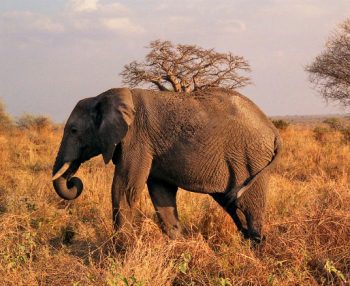
A private safari means the Land Cruiser and driver guide are yours alone. A group safari puts you in a shared vehicle on a fixed departure, and the vehicle, guide and fuel are split among everyone on board. Since the vehicle is priced per day rather than per person, group size changes the per person price more than almost anything except the lodge.
Kilidove’s 7 day northern circuit shows the effect in one table. In the high season, two people pay US$3,585 each, four pay US$2,943 and six or more pay US$2,691, for the same lodges and the same route. Blessing Safaris’ 7 day camping trip runs the same way: US$4,460 for a solo traveller, US$3,200 each for two, US$2,700 for three and US$2,680 for four or more. A solo traveller on a private trip pays about two thirds more than each member of a full vehicle pays.
The crater fee follows the same arithmetic, US$147.50 each for a couple and under US$50 for six. Group joining operators such as ZK Tanzania cap departures at six per vehicle so every seat is a window seat. Ask before paying, because the middle seats are the ones people complain about after a seven hour drive, and the slowest riser sets the morning start on a shared trip.
Safari Season Pricing in Tanzania: Peak, Shoulder and Green Season
Season moves a Tanzania safari price almost as much as length. Operators and lodges publish three bands, and the gaps are real but smaller than many expect.
| Rate | Green | Shoulder | Peak |
|---|---|---|---|
| Kilidove 7 days, 2 pax | US$3,295 | US$3,359 | US$3,585 |
| Gibbs Farm night | US$518 | US$624 | US$683 |
| Singita Sasakwa night | US$2,550 | US$3,160 | US$3,525 |
Peak means July, August and the Christmas to New Year fortnight for most lodges, and Kilidove’s top band also covers December 20 through February for the calving season around Ndutu. The green season of April and May brings the lowest rates, some closed camps, afternoon rain and slippery black cotton soil, yet the crater floor still turns up lion, buffalo and rhino on most days. TANAPA’s own high season concession for the Serengeti and Nyerere covers 1 July to 30 September, and it lists the entry rates shown above from 16 May to 14 March, so the window between falls in the long rains; ask your operator which park rates apply to those dates.
On a mid range trip the seasonal swing is about 9 percent; on luxury camps it reaches about 30 to 40 percent. Our guide to the best time to visit Tanzania goes month by month, and the great wildebeest migration guide shows where the herds sit, which matters because camps near the herds charge accordingly.
Fly In Safari Costs: Bush Flight Fares and Luggage Limits
A fly in safari swaps a long drive for a light aircraft hop. Coastal Aviation’s own schedule and price list gives the clearest fares, quoted per adult before taxes.
A common pattern is to drive out from Arusha through Tarangire and Ngorongoro, then fly back from a Serengeti airstrip. That adds about US$277 per person but saves a full day on corrugated roads, plus that day’s lodging and fees. Children aged 2 to 12 fly at a lower child fare. The standard bag allowance is 15 kg per passenger in soft bags, and Coastal sells an XL seat allowing 30 kg if the aircraft can take it. Trip reports mention seven or eight hour driving days and a fine layer of dust on everything, so a dust cover for the camera is money well spent either way.
Southern Circuit Safari Costs in Nyerere and Ruaha
A southern circuit safari covers Nyerere National Park, the former Selous Game Reserve, and Ruaha in the central south. Both are big and quiet; you might drive an hour in Ruaha without seeing another vehicle. They usually cost more per day than the north, and the reason is the flight, not the fees.
Nyerere sits in the same TANAPA band as the Serengeti, TZS 178,850 a day with a TZS 153,300 high season concession. Ruaha is far cheaper at TZS 76,650 for both entry and concession, about US$30 each. Getting there is the cost: Coastal flies Dar es Salaam to the Selous airstrips for US$192 plus US$27 and Dar to Ruaha for US$433 plus US$39, and the Ruaha flights are suspended in the long rains from mid March to the end of May. Zanzibar to Nyerere costs US$248 plus US$27, which is why so many travellers pair a few southern nights with the beach.
Camps in the south are fewer and mostly mid to upper range, with almost no budget lodging inside the parks. In return you get boat safaris on the Rufiji, walking safaris with an armed ranger and big lion and elephant numbers with little traffic. Our page on Nyerere safari tours sets out how the park works and when to go.
Hidden Safari Costs: Visas, Insurance, Tips, Transfers and Drinks
The quote covers the safari. A handful of costs sit outside it, and they are where most budgets slip.
Government insurance is not the same as proper travel cover, and medical evacuation cover is worth having on any trip this remote; our guide to African safari insurance explains what to look for. International flights are rarely included. Northern trips start at Kilimanjaro International Airport near Arusha, while southern trips and Zanzibar connect through Dar es Salaam.
So how much should you tip on a safari in Tanzania? Forum threads argue it both ways, per person or per vehicle, and posters on shared trips often split a vehicle tip between them. Whatever figure you settle on, carry clean, recent US dollar notes in small denominations, since older or torn notes are often refused.
Packing is the cost people forget: a warm fleece for crater mornings, a soft duffel that fits the 15 kg limit and binoculars matter most. Our guides to what to wear on safari and to safari cameras and binoculars explain what is worth buying, and the full safari gear and clothing section covers boots, bags and rain gear.
Optional Safari Activity Costs: Balloon, Walking, Olduvai and Zanzibar
Several of the best Tanzania safari experiences are priced on their own, so decide early which ones you want.
The Serengeti hot air balloon safari is the big one. Serengeti Balloon Safaris publishes US$599 per person for a shared balloon, with camp pickup, about an hour in the air and a bush breakfast, and park fees left to your operator’s package. Blessing Safaris lists it as a US$500 extra. Many people call it the highlight of the trip; a few say it was pleasant but not something they would pay for twice.
Walking safaris carry park fees of their own. In the Serengeti, TANAPA charges TZS 51,100 per adult for a short walk and TZS 63,875 for a long one, about US$20 and US$25, plus a ranger fee of TZS 51,100. In the Ngorongoro highlands the NCAA charges US$23.60 or US$29.50. Olduvai Gorge on the road into the Serengeti costs US$35.40 per adult. Cultural visits to a Maasai boma or to the Hadzabe near Lake Eyasi are paid per visit or per group, so ask for the figure in writing.
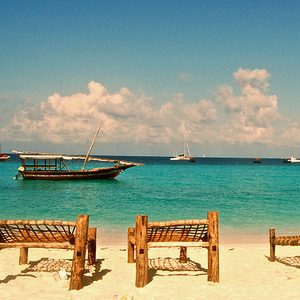
Zanzibar is the most popular add on. The flight is US$348 plus US$32 from Arusha or US$89 plus US$21 from Dar es Salaam, and beach hotels range from simple guesthouses to resorts priced like safari lodges, with Christmas surcharges and minimum stays. Mount Kilimanjaro is the other big extension, priced as its own trip with park fees and crew; our pages on Kilimanjaro trekking and the cost to hike Kilimanjaro break it down.
Worked Example: A 7 Day Northern Circuit Safari Costed per Person
Here is a realistic Tanzania safari budget for one named trip shape: 7 days, two people sharing, a private vehicle, mid range lodges, Lake Manyara, two nights inside the central Serengeti, the Ngorongoro Crater with a Karatu night, and Tarangire, travelling in July. It uses Kilidove Tours’ published high season rate for that route.
Two things stand out. Government fees are only about a fifth of a mid range package, so the lodge and vehicle are where the money really goes. And the extras outside the quote add roughly 7 to 10 percent, before drinks and souvenirs.
How to Pay Less for a Tanzania Safari and Read a Quote
The biggest savings come from three choices already priced above. Travelling in April or May trims about 8 percent off Kilidove’s 7 day rate and about 25 percent off Gibbs Farm’s peak rate. Filling a vehicle with six cuts the 7 day private price from US$3,585 to US$2,691 per person. Sleeping in Karatu rather than on the crater rim avoids a US$59 NCAA concession per person per night and the second entry fee.
To see what a real quote leaves out, tick what your operator says is included. The checker lists each gap and a rough cost per person for a 7 day trip.
Tanzania Safari Quote Checker
Tick what your operator’s quote says is included. The checker lists what is missing and what each gap is likely to cost per person, so you can compare quotes on the same basis.
6 gaps to budget for
Add roughly USD 199 to 284 per person to this quote for a 7 day trip, plus the items priced separately below
Drinking water: usually carried free in the vehicle; ask, since bottled water bought at lodges adds up over a week.
| Item | Typical extra cost |
|---|---|
| Park conservation fees | About USD 350 to 550 per person on a week long Northern Circuit trip, before concession and crater fees |
| Ngorongoro Crater service fee | USD 295 per vehicle per descent |
| Concession fees inside parks | USD 70.80 per adult per night in Serengeti |
| Meals on safari days | Varies by lodge; ask for the lunch and dinner rate in writing |
| Private vehicle | Costs more than a seat in a shared vehicle; ask the operator for both prices |
| Airport transfers | About USD 60 to 80 per vehicle each way |
| Arusha hotel nights | Varies by hotel; most trips need one night before and one after |
| Drinks | Paid at the lodge bar on departure; varies by lodge |
| Tips | USD 15 to 20 per person per day |
| Visa and inbound insurance | USD 144 for United States passports, USD 94 for most others; the USD 44 policy covers mainland Tanzania and Zanzibar |
Indicative costs per person for a 7 day trip unless stated. A gap is not always a problem; it only matters when two quotes you are comparing leave out different things.
Last checked October. Sources: Tanzania National Parks and Ngorongoro Conservation Area Authority fees as published by Duma Explorer and Road Trip Africa, Embassy of Tanzania in Washington, National Insurance Corporation of Tanzania notices.
Booking channel affects the price too. Local Tanzanian operators sell directly, while international agents often add their own margin on top of a local ground handler. That margin can buy real value, such as financial protection and a single contact for multi country trips, but it is worth knowing it is there. Our lists of Tanzania safari companies and the best safari companies in Tanzania are a starting point for requesting three quotes on the same itinerary. Cheaper operators sometimes save money on the guide or on older vehicles that spend more time with the bonnet up, and trip reports say the guide made more difference than the lodge. Asking how long the guides have worked the northern parks is a fair question.
Adding Gorilla Trekking in Bwindi: Combined Safari Costs
Many travellers pair the Serengeti with gorilla trekking in Uganda, flying to Entebbe or Kigali and driving to Bwindi Impenetrable Forest. The combination adds three cost lines to a Tanzania budget: the regional flight, the gorilla permit and two or three nights near Bwindi. Our African safari cost guide sets Tanzania beside the other safari countries.
A Uganda gorilla permit costs US$800 for foreign non residents and US$700 for foreign residents. In April, May and November the low season rate is US$600 and US$500, but those permits cannot be rescheduled and are paid in full at booking. Rwanda’s permit costs US$1,500, with the RDB 30 percent offer bringing it to US$1,050 from November to May when booked with nights in Nyungwe or Akagera. On the flight side, Coastal’s code share fare from Kigali to Arusha is US$944 plus US$139 in taxes, which shows why most combo trips route through Kilimanjaro on scheduled airlines instead.
Dry season permits sell out months ahead, so the gorilla date usually anchors the itinerary. Our Tanzania safari and gorilla trekking guide shows how the two halves are routed. For the gorilla half, see gorilla trekking in Bwindi, how to book Uganda gorilla permits, the best time for gorilla trekking in Uganda and our Rwanda gorilla trekking page. The same neutral layers work in both places, with waterproof boots, gardening gloves for nettles and a rain jacket added for Bwindi; the gorilla trekking packing list covers the forest kit. Weighing Kenya instead? Compare our Kenya safari cost guide and the Masai Mara safari page.
Tanzania Safari Cost FAQ
How much does a Tanzania safari cost per person?
On operators’ own published prices, about US$220 to US$460 a day on a camping safari and US$340 to US$515 at mid range lodges, park fees included. A 7 day northern circuit comes to US$2,680 to US$4,460 camping and US$2,401 to US$3,585 private mid range, before visas, tips and international flights.
How much does a luxury safari cost in Tanzania?
Luxury lodging alone runs from US$518 to US$683 per person a night at Gibbs Farm to US$2,550 to US$3,525 at Singita Sasakwa. Add park and concession fees, a private vehicle and bush flights, and a luxury week runs from roughly US$5,000 per person at the Gibbs Farm level to over US$18,000 at the Singita level.
How much to tip on a safari in Tanzania?
Kilidove Tours suggests about US$15 to US$20 per person per day in total, split between the driver guide and a shared staff box at each lodge. On a shared group vehicle, travellers often pool the guide’s tip. Use clean, recent US dollar notes.
Is 70 too old to go on safari?
No. Plenty of travellers in their seventies go on safari, and a vehicle safari needs little fitness beyond climbing in and out of a Land Cruiser. Long driving days are the hard part for older travellers, so a private vehicle, fewer parks and a bush flight back from the Serengeti make the trip easier. Check travel insurance age limits before booking.
Are safaris in Tanzania good?
Yes. The Serengeti and the Ngorongoro Crater offer some of the most reliable big cat and large herd viewing in Africa, and the northern parks sit close enough together for a 5 to 7 day trip. Disappointment usually comes from cramming too many parks into too few days, or a cheap quote that saved on the guide or the vehicle.
What does a 10 day Tanzania safari cost?
Kilidove’s 13 day safari and Zanzibar trip starts at US$5,400 per person, and a 10 day northern circuit at mid range rates usually falls between the 7 day private price of about US$3,600 and that figure. Luxury 10 day trips can exceed US$25,000, since Singita’s peak rate alone is US$3,525 a night.
How far ahead should I book?
For July to October, Christmas and the calving season, six to twelve months ahead secures the best camps and guides. Green season trips can often be arranged a few weeks out. If you are adding gorilla trekking, book the permit first and build the safari around it.
Is a Tanzania Safari Worth the Money? What the Days Are Like
For most people, yes, and the reason shows in how the US$3,600 or so of a mid range week is actually spent. Days start before six with coffee in the dark, then the first game drive while the light is low and the cats are still moving. By late morning the vehicle has usually stopped for lion, elephant or a cheetah on a termite mound, and the guide’s radio has done half the finding. Lunch is a picnic box or a lodge table, the middle of the day is hot and slow, and the second drive runs until the gates close.
The crater day is different: a steep descent at first light, a floor packed with buffalo, zebra and wildebeest, and a fair chance of black rhino through the binoculars. Sightings are never guaranteed, but on the northern circuit the odds are high. The tiredness is real too. Dust, corrugated roads and long transfer days are what trip reports mention most, and they are the best argument for a seventh day rather than a cheaper sixth.
Northern or Southern Circuit: Which Tanzania Safari Suits a First Trip
The northern circuit suits most first timers. Roads are easier, the parks sit close together, and the Serengeti and the crater are hard to beat for numbers of animals. The southern circuit suits repeat visitors who want fewer vehicles, walking and boat safaris, and do not mind flying in. Many people do the north first, come back for Ruaha and Nyerere, and say the second trip felt like a different country.