Sipi Falls is a chain of three waterfalls on the Sipi River, on the northwestern slopes of Mount Elgon in Kapchorwa District, eastern Uganda, and the tallest drop falls roughly 95 to 100 metres off a basalt cliff. A Sipi Falls tour means a guided hike to all three, often with abseiling beside the main fall or a coffee farm visit. Most travellers spend one or two nights at the ridge lodges, about five to six hours by road from Kampala or three to four from Jinja.

The trading centre sits at about 1,775 metres, so Sipi is far cooler than Mbale on the plains below. Small lodges line the ridge above the gorge. From most of them you can watch the main fall from your veranda, and on a clear morning the view runs out across the Karamoja and Teso plains toward the Lake Kyoga basin, where the Sipi River ends up. Nights call for a fleece.
The Three Sipi Falls on Mount Elgon: Heights, Names and Viewpoints
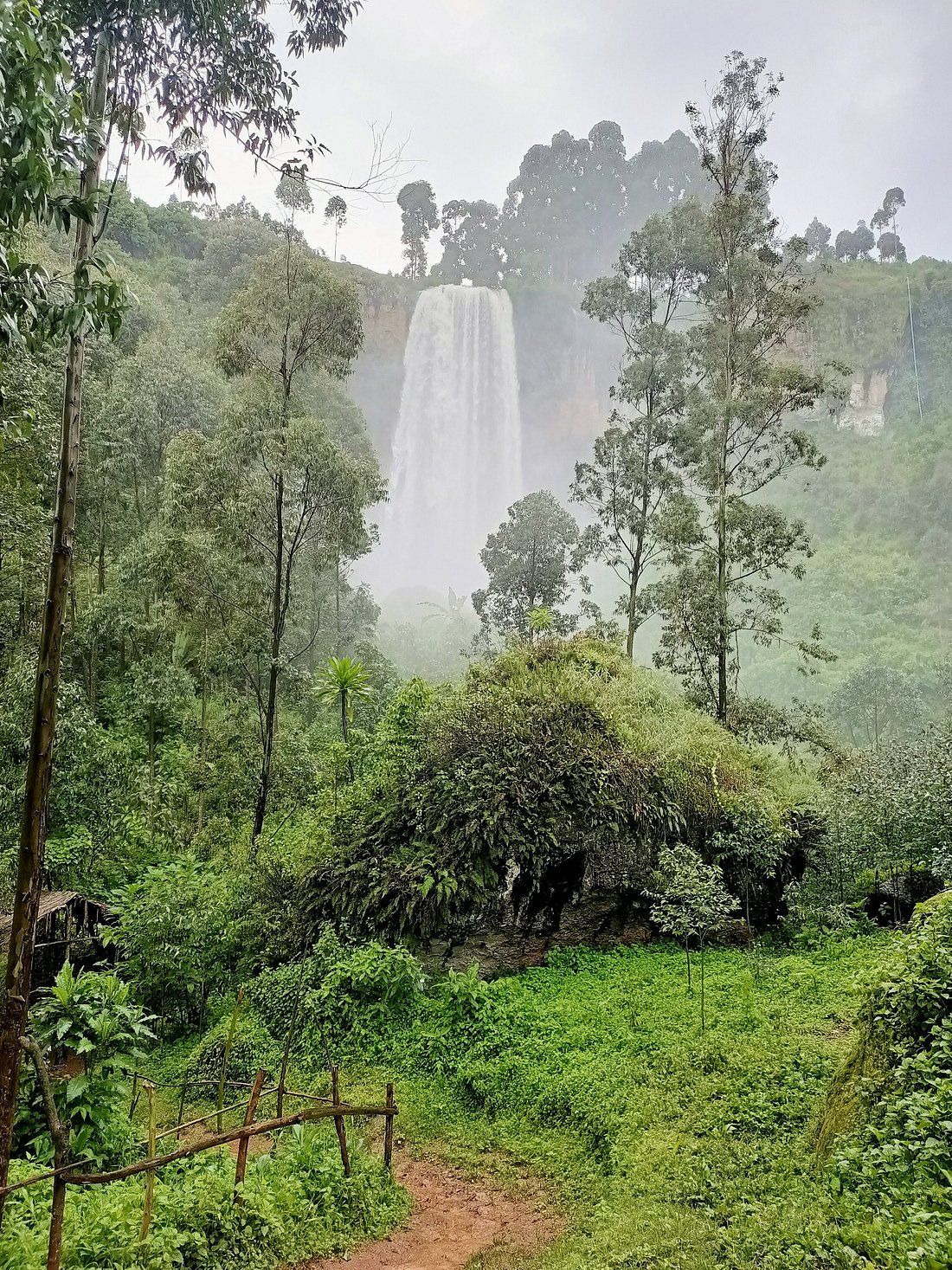
A Sipi Falls tour is built around three separate drops on one river, each with its own pool and its own path in. The main fall, often just called Sipi Falls, is the lowest on the river and the tallest of the three. Published heights run from 95 to 100 metres. It drops as a single column into a dark, steep gorge, and it is the one on every postcard.
Upstream sit the other two. Simba Falls, the middle fall, is usually listed at about 74 metres and has a shallow cave behind its curtain of water. Ngasire Falls, the upper fall, is about 85 metres and the first drop the river makes on its way off the mountain. Local guides use Sabiny names too, and one or two sources swap the order or the heights. Nobody agrees on the last metre, and on the ground it hardly matters. What you notice is how close you can get.
The cave behind Simba has history. Guides say people lived in caves like this one for generations, and bats still roost at the back. In heavy rain they keep you out, because the spray turns the path in into a slide.
The name comes from a plant. A wild banana relative called sep, with translucent green fronds and a crimson rib, grows along the riverbanks, and the Sabiny use it as a medicine for fevers and measles. A story told around Sipi says early British visitors asked a woman gathering it what the falls were called, and she gave them the name of the plant instead. True or not, it stuck.
Water volume swings with the seasons. In the rains the main fall is loud enough to drown out conversation at the viewpoint; late in a long dry spell it thins to a ribbon. If you are choosing between Sipi and the rest of the country’s falls, our guide to the best waterfalls in Uganda sets it beside Murchison, Ssezibwa and the Rwenzori falls.
Sipi Falls Hiking Tour: The Full Loop to All Three Falls
The Sipi Falls hike is the reason most people come, and this guided trek covers all three falls in one loop of about seven kilometres. Most groups take three to five hours, depending on how long they sit at each pool and how wet the paths are. Fit, fast walkers on dry ground finish in about three.
Paths drop and climb through coffee gardens, banana plots and small homesteads rather than along any formal park trail. That is part of the appeal: you pass children walking to school, farmers drying coffee on mats, goats tethered beside the path. It also means the route is easy to lose. Hire a guide. Community guides and lodge guides around the trading centre know which shortcuts are passable after rain and which farmers are happy for you to cross their land.
Two route shapes are common. Most groups start at the main fall, walk down to its base, then climb upstream to Simba and its cave and finish high at Ngasire before looping back along the ridge. Others reverse it, starting at the top and saving the main fall for last, which puts the steepest descent at the end of the day when legs are tired. Ask your guide which way they prefer in the current conditions; after rain the answer often changes.

Trip reports agree on one point above all: the mud. After rain the red clay turns slick, the descent to the base of the main fall becomes a slow scramble with wooden ladders in places, and some hikers decide the bottom is not worth the risk and watch from higher up. A walking stick helps a great deal, and guides can usually cut one for you. Boots with a deep tread matter more than anything else you pack; a pair of waterproof hiking boots built for Bwindi’s forest trails does the same job here.
Expect to get wet at the bottom of the main fall. Spray soaks anyone who stands near the pool for more than a minute, so put your phone and camera in a dry bag.
Short on time or knees? The clifftop viewpoints over the main fall take under an hour with almost no climbing, and the walk from the trading centre to the base of the main fall alone is around 20 to 30 minutes each way on a dry day. Start early whichever version you choose. Mornings are clearer, the light on the main fall is better, and you finish before the afternoon showers that often roll in off the mountain.
Abseiling and Rock Climbing Adventures at Sipi
Abseiling at Sipi Falls means lowering yourself on a rope down the cliff right beside the main fall, close to the full 100 metre height of the drop, with spray drifting across you on the way down. It is the adventure people post about most, and it is run by local climbing outfits whose guides set the anchors, fit the helmet and climbing belt, and control a safety line from the top. No experience is needed. A short briefing and a practice on a small slab come first.
The descent itself takes around an hour from kit up to the pool, and the walk back up is a steep half hour or so. The first step over the edge is the hard part; after that most people find it steady. Ask to see the ropes and harnesses before you commit, check that the operator runs a separate belay line rather than relying on one rope, and skip it in a storm, when guides should be calling it off anyway.
Rock climbing is quieter but well established. The basalt cliffs around Sipi and nearby Chebonet hold a set of short single pitch routes, with top rope options for beginners, and Chebonet’s cliffs sit right beside its own waterfall. A half day is enough for a first try. Climbers with their own shoes should bring them; hire gear is basic.
Sipi Coffee Tours: Bugisu Arabica From Bush to Cup
The slopes of Mount Elgon grow some of Uganda’s best known Arabica, sold as Bugisu coffee after the Bagisu farmers on the southern and western slopes. Around Sipi it grows at roughly 1,600 to 1,900 metres in volcanic soil with steady rain, mostly on small family plots shaded by bananas, and it is the main cash crop for most households you pass on the hike. A Sipi coffee tour walks you through the whole chain on one farm.
You pick ripe red cherries if it is harvest season, then pulp them, see how the beans are washed and dried on raised racks, and pound off the parchment in a wooden mortar. The beans are roasted in a pan over an open fire, ground by hand and brewed on the spot. Farmers explain where the beans go next, through local cooperatives and processors to exporters and roasters abroad. The whole tour takes two to four hours and is gentle enough for children and older travellers, though some farms sit on steep ground. Farmers sell bags of their own roast at the end, often far fresher than anything you will find in Kampala.
The main Elgon harvest falls in the second half of the year, running roughly from August into January, with a smaller fly crop at other times, so a visit outside those months shows more drying and roasting than picking. If coffee is the main draw, our guide to agro tourism in Uganda covers coffee, tea and farm tours across the country, including the Arabica gardens on the edge of Bwindi.

Sabiny Culture, Running Trails and Village Tours Around Kapchorwa
The hills around Sipi belong mostly to the Sabiny (also called Sebei), a Kalenjin speaking people related to communities across the border in Kenya, with Bagisu families farming the lower slopes toward Mbale. A village tour from Sipi takes in homesteads, a local market on market days, and often a women’s craft group selling baskets and beadwork. Guides talk openly about local customs, including the long campaign that has pushed female circumcision close to extinction in the district. Ask before photographing people or homes.
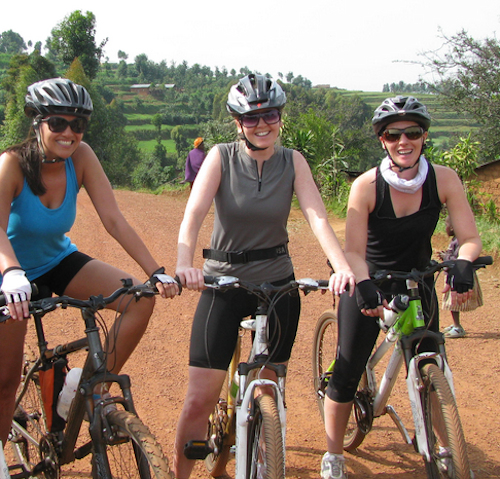
Kapchorwa also has a name in athletics. Olympic marathon champion Stephen Kiprotich and distance runner Joshua Cheptegei both come from the Elgon region, and the Teryet High Altitude Training Centre above Kapchorwa draws Ugandan and visiting athletes. Some guides run a running tour: an early jog on the red dirt tracks local athletes train on, at altitude, with views that make the burning lungs easier to ignore. Mountain biking on the same tracks is possible through a few lodges, but hire bikes vary, so check brakes, gears and tyres before setting off. Sunrise and sunset walks to the ridge viewpoints are the gentle version of the same idea.
On the Bagisu side of the mountain, south of Mbale, imbalu circumcision ceremonies take place in even numbered years, usually from August, when boys are led through the villages by drummers and kadodi dancers before the cut, watched by large crowds. It is a public event and visitors do attend, but go with a local guide and keep cameras discreet. Around Bududa, villages also stage traditional bull fights on some weekends, a lively local gathering rather than a tourist show; ask your lodge whether one is on.
Further afield, the people and culture of Uganda make a good companion read, and a trip north into Karamojong country is the natural next step for travellers heading toward Kidepo.
Mount Elgon Hiking Trips Starting From Sipi
Sipi is one of the gateways to Mount Elgon, an old, eroded volcano straddling the Uganda and Kenya border, with most of its bulk on the Ugandan side. Its broad caldera, roughly eight kilometres across, ranks among the largest in the world, and the highest point on its rim, Wagagai, reaches 4,321 metres. Unlike the Rwenzori, Elgon needs no ropes or ice gear. It is a long, steady walk.
The Sipi trail starts at the Kapkwai Forest Exploration Centre, about 12 to 13 kilometres above the trading centre, and climbs gently through montane forest past Tutum Cave. Taken all the way to Wagagai and back it is a trek of about a week. Most summit hikers use the steeper Sasa trail from Budadiri instead, usually a four to five day return, and some come down toward Sipi to finish at the falls. A trans boundary route crosses the caldera into Kenya for those who arrange the paperwork in advance. Treks inside Mount Elgon National Park need a ranger guide from Uganda Wildlife Authority, and porters can be hired at the gates.
Above the forest the trail climbs through bamboo, then heath and moorland with giant lobelias and groundsels, the same strange plants found on East Africa’s higher mountains. Hikers who have been put off Kilimanjaro by the crowds often find Elgon quieter, cheaper and just as absorbing, if lower.
For a taste without the full climb, Kapkwai runs forest walks of a few hours through bamboo and podocarpus forest, with black and white colobus monkeys, forest birds and caves that played a part in local ceremonies and traditions. Pair a Sipi hike with a Kapkwai walk and you have seen both sides of the mountain’s lower slopes. Travellers planning a bigger mountain trip in Uganda should also read our guide to Rwenzori Mountains National Park, the snow peaks on the opposite side of the country.
Birding, Fishing and Nearby Waterfall Trips Around Sipi
Birdwatching tours around Sipi are relaxed rather than intense. The mix of farmland, riverine scrub and forest edge turns up sunbirds, hornbills, turacos, raptors riding the updrafts off the cliffs, and montane species higher on the mountain, such as Hartlaub’s turaco. Vervet monkeys and baboons forage along the gorge. A dedicated birder will want a morning at Kapkwai.
On a quiet stretch of the Sipi River above the falls, a few lodges arrange fly fishing for trout, introduced to Elgon’s cold streams in the colonial era. It is low key and catches are not guaranteed, but it fills a slow afternoon well. Our page on fishing trips in Uganda covers the bigger options on the Nile and Lake Victoria.
Elgon’s slopes hold far more falls than the famous three, many of them high on the mountain and out of reach. Several are easy day trips. Sisiyi Falls, in Bulambuli District beside the road north from Mbale toward Moroto, is similar in height and lets you stand in the spray at its foot with far fewer visitors; it makes a good stop on the way to Kidepo. Chebonet Falls sits beside the road up to Kapchorwa, with climbing cliffs alongside. Bumwambu Falls is a lesser known hike nearby, and Wanale Falls, on the ridge above Mbale, is seasonal and at its best in the rains.
Day Trips and Safari Add Ons From Sipi Falls
A few longer outings turn a Sipi stop into a proper eastern Uganda trip. The Nyero rock paintings near Kumi, two to three hours away by road, carry red and white geometric art on granite outcrops and are among the most important rock art sites in the country; local people still treat the shelters as sacred. To the north, Pian Upe Wildlife Reserve is one of Uganda’s largest protected areas, a dry savannah with ostrich, roan antelope and a rugged, empty feel, and Matheniko further north again adds a game reserve on the Karamoja plains. Neither has the game density of the big parks, which is exactly why some travellers like them.
On the way back toward Kampala, Tororo Rock rises straight out of Tororo town. The climb to the top and back takes about two hours, with a wide view over the country toward the Kenya border. It pairs well with a night in Mbale or a drive south via Tororo instead of Iganga.
Safety on a Sipi Falls Trip: Guides, Paths and Abseiling
Sipi is a safe, friendly place, and most problems visitors run into are practical rather than criminal. The main ones are slips on the wet clay, especially on the steep path to the base of the main fall, and unofficial guides who stop you on the road. Book a guide through your lodge or the community guides’ office, agree the route and fee before you start, and ask for a receipt. Freelancers on the road sometimes quote well above the lodge rate.
Stay well back from the edge at the clifftop viewpoints, where the grass hides loose ground, and keep out of the plunge pools after heavy rain, when the flow rises fast. For abseiling, use an established outfit, look at the gear first, and do not be talked into a descent in a thunderstorm. On the road, ride motorbike taxis only with a helmet and avoid the Kapchorwa climb after dark.
Where to Stay on a Sipi Falls Trip
Most lodges line the ridge on the edge of the trading centre, and the best rooms look straight at the main fall. Choose one with a view; you will spend a fair amount of time on the veranda.
Electricity and water can be intermittent in Sipi itself. Bring a head torch, carry cash in Ugandan shillings because card machines are rare, and expect cold nights at this altitude, so pack a warm layer even in the dry months.
Getting to Sipi Falls From Kampala and Jinja
Sipi is about 275 kilometres from Kampala by road, usually five to six hours. The route runs east past Mabira Forest to Jinja and across the Nile, then on through Iganga to Mbale, and finally climbs an hour to an hour and a half up the Kapchorwa road to Sipi. A slightly longer alternative carries on from Iganga to Tororo and turns north to Mbale, passing Busitema Forest, where baboons often sit by the road. From Jinja, about 195 kilometres away, the drive is around three to four hours, which makes Sipi an easy add on after a few days rafting or at the source of the Nile. The last stretch is tarmac in good condition, though side roads to some lodges turn rough and slippery in the rains.
Most visitors travel with a driver guide or a hired vehicle; our Uganda car hire guide explains the self drive and driver options. On public transport, buses run from Kampala to Mbale, and shared taxis or motorbike taxis cover the last 50 kilometres or so from Mbale to Sipi. Ride only with a helmet, and avoid the climb after dark.
Sipi is a detour from the classic western circuit, so it pairs best with an eastern loop or a stop in Jinja. It also fits a trip that crosses into Kenya through Malaba or Busia, then continues to a Masai Mara safari. If you are linking it with gorillas, budget a long travel day each way to the southwest; most itineraries fly between Entebbe and the Bwindi airstrips to save time. Our guide to getting to Bwindi sets out the flight and road options, and the Uganda safari planning guide shows how the regions fit together.
Best Time for a Sipi Falls Tour
Sipi is open all year, and each season gives something different. The trade is simple: more water in the falls means more mud on the paths.
For hiking and abseiling, December to February and June to August are the most comfortable. Photographers who want the falls at their loudest should come in the rains and accept the mud. Whatever the month, mornings are clearer than afternoons on Elgon, so plan the hike early and leave the coffee tour for after lunch. A light rain jacket earns its place in any month.
Sipi Falls Uganda FAQ
Which district is Sipi Falls in?
Sipi Falls is in Kapchorwa District in eastern Uganda, on the northwestern slopes of Mount Elgon. Mbale is the nearest large town, about 50 kilometres away, and the falls lie just outside the boundary of Mount Elgon National Park.
How much does it cost to visit Sipi Falls?
The three falls hike is paid through a community and guide fee rather than a national park ticket. Foreign visitors have typically paid around US$15 per person, with lower rates for Ugandans and East Africans, and operator led hikes usually start from about US$15 to 20. Abseiling beside the main fall is quoted by local outfits at roughly US$50 to 80 per person, and coffee tours at about US$15 to 25. These are set locally and change often, so confirm with your lodge and carry Ugandan shillings in cash.
Is Sipi Falls inside Mount Elgon National Park, and do I pay park fees?
The falls lie just outside the park boundary, so the hike needs no park ticket. Treks from Kapkwai or up the Sipi trail enter Mount Elgon National Park, and Uganda Wildlife Authority charges entry on top of guiding. Under the last confirmed UWA tariff, entry was US$35 per day for foreign non residents, US$25 for foreign residents and UGX 15,000 for East African citizens, with hiking charged separately per day. UWA revises its tariff every couple of years, so check the current rate before you go.
What is the largest waterfall in Uganda?
Murchison Falls is usually called the largest, because the whole Nile forces through a gap about seven metres wide, making it the most powerful. By height, the main Sipi Fall and Nkusi Falls on Lake Albert are among the tallest, each listed at around 100 metres. Our guide to the waterfalls of Uganda compares them all.
Can you swim in Sipi Falls?
Yes, at the plunge pools, and the pool below the main fall is big enough for a proper dip. The water is cold. Ask your guide first, stay well back from the falling water, and do not swim after heavy rain, when the flow rises quickly and the rocks are treacherous.
How hard is the Sipi Falls hike?
Moderate. The full loop is about seven kilometres with steep climbs and descents, ladders in places and slippery clay after rain. Anyone used to a day of hill walking will manage it in three to five hours. If your knees complain on steep ground, visit the clifftop viewpoints over the main fall and skip the descent to the pool.
Can I do Sipi Falls as a day trip from Kampala or Jinja?
From Kampala, not comfortably: ten or more hours of driving leaves little time on the trail. From Jinja or Mbale a long day is possible. One night at Sipi is the minimum that feels worthwhile, and two let you add coffee or abseiling at an easy pace.
Do I need a guide for the Sipi Falls hike?
Yes, in practice. The paths cross private farms and branch constantly, and a guide keeps you on routes the owners accept. Book through your lodge or the community guides’ office rather than with someone who approaches you on the road, and agree the route and fee before you start.
Is abseiling at Sipi Falls safe for beginners?
With an established outfit, yes. Guides fit the climbing belt and helmet, run a safety line from the top and give a practice session first, so no previous experience is needed. Check the ropes and the second belay line before you go over, and accept a postponement if the weather turns.
Can I combine a Sipi Falls tour with gorilla trekking in Bwindi?
Yes, though they sit at opposite ends of Uganda. Most travellers do Sipi and Jinja first, return through Kampala or Entebbe, then fly or drive southwest for gorilla trekking in Bwindi. Gorilla permits sell out in busy months, so secure them early; our page on booking Uganda gorilla permits explains how.