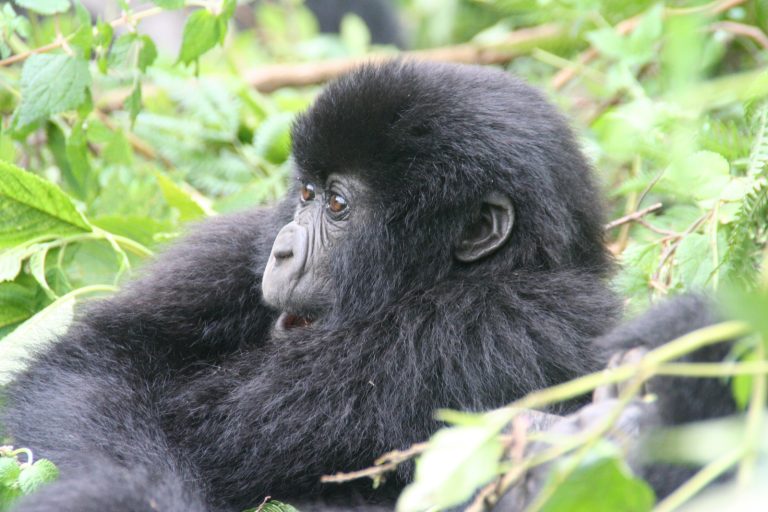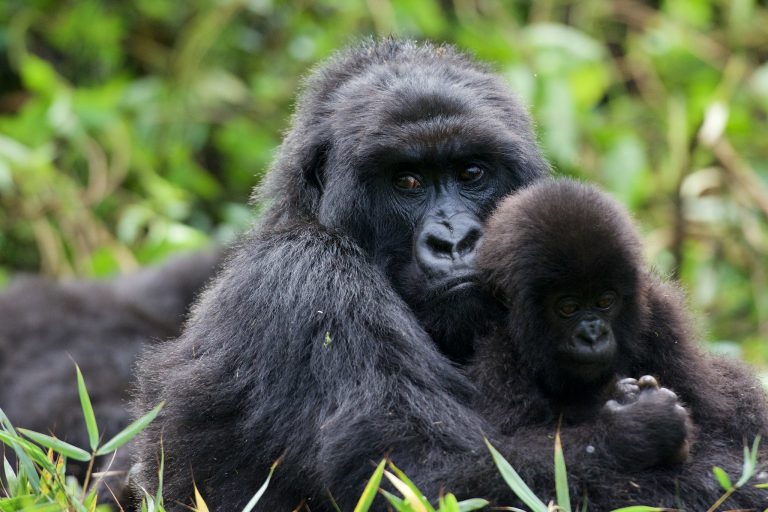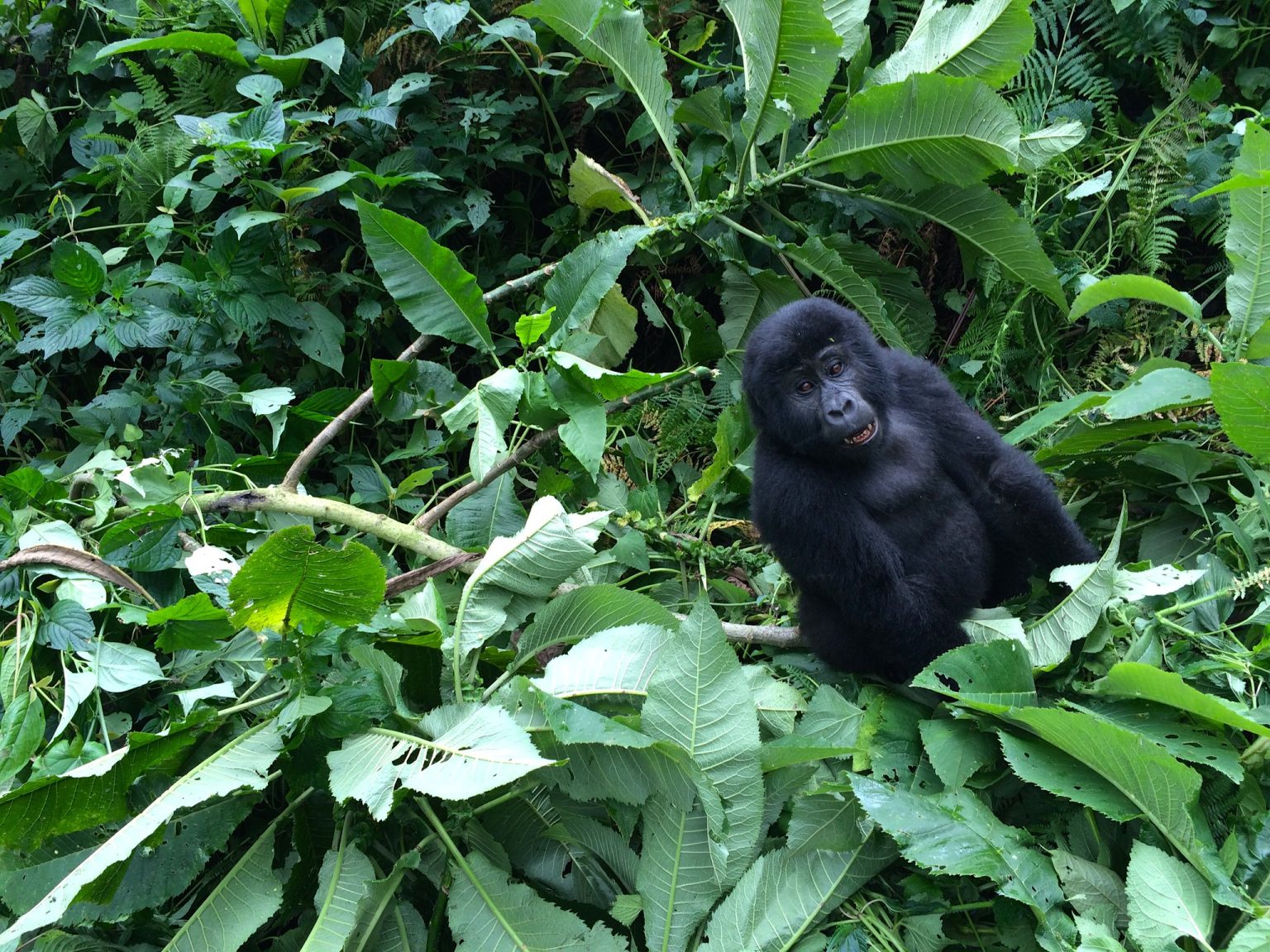
Bwindi gorilla families are the habituated mountain gorilla groups that visitors can trek in Bwindi Impenetrable National Park, spread across four sectors: Buhoma, Ruhija, Rushaga and Nkuringo, with one more family, Nyakagezi, in nearby Mgahinga. Your permit is booked for a sector, and rangers name the exact family at the morning briefing. Bwindi sits in southwest Uganda and holds close to half of the world’s mountain gorillas.
Most people planning a gorilla trekking safari in Uganda hear the family names long before they reach the forest. Mubare, Nshongi, Habinyanja. It can feel as though you are meant to pick one, like a seat on a plane. You are not, quite. This page lists every habituated family we could trace, explains who is who inside a family and how you actually end up with one of them, and shows how to use the families to choose a sector that suits your legs and your itinerary.

Bwindi Gorilla Families Directory: Every Habituated Group by Sector
The table below lists the habituated gorilla families in Bwindi and Mgahinga by sector, which together make up the Uganda gorilla families open to visitors. Treat the sizes as rough. Gorilla families gain infants, lose old members and swap females with neighbouring groups every year, which is why no two guides online agree on a single number. The ranges combine the latest IGCP family profiles with recent ranger and park counts, and the notes flag anything unusual about the family.
| Family | Sector | Approx. size | Notes |
|---|---|---|---|
| Mubare | Buhoma | 6 to 8 | Oldest, 1993 |
| Habinyanja | Buhoma | 12 to 18 | Wide ranging |
| Rushegura | Buhoma | 16 to 19 | Near the lodges |
| Katwe | Buhoma | 7 to 10 | Split from Mubare |
| Muyambi | Buhoma | 6 to 7 | Newer group |
| Binyindo | Buhoma | 6 to 9 | Newer group |
| Happy | Buhoma | Not published | Newly opened |
| Bitukura | Ruhija | 11 to 14 | Several silverbacks |
| Oruzogo | Ruhija | 11 to 23 | Many juveniles |
| Kyaguriro | Ruhija | 6 to 10 | Research group |
| Mukiza | Ruhija | 10 to 19 | Kyaguriro split |
| Nshongi | Rushaga | 8 to 18 | Once the largest |
| Mishaya | Rushaga | 7 to 12 | Nshongi split |
| Bweza | Rushaga | 7 to 14 | Nshongi split |
| Kahungye | Rushaga | 13 to 17 | Three silverbacks |
| Busingye | Rushaga | 9 to 10 | Kahungye split |
| Bikingi | Rushaga | 9 to 21 | Habituation |
| Rwigi | Rushaga | 6 to 7 | Newer group |
| Mucunguzi | Rushaga | 8 to 15 | Bweza split |
| Tindatine | Rushaga | About 8 | Newer group |
| Kutu | Rushaga | 8 to 20 | Counts differ |
| Nshanjare | Rushaga | Not published | Newly opened |
| Nkuringo | Nkuringo | About 14 | Steepest trek |
| Bushaho | Nkuringo | 8 to 12 | Nkuringo split |
| Christmas | Nkuringo | 6 to 9 | Small group |
| Posho | Nkuringo | 14 to 17 | Newer group |
| Nyakagezi | Mgahinga | About 9 | Only Mgahinga group |
Some of those ranges are wide for a reason. IGCP’s profiles put Oruzogo at about 11 and Mukiza at about 19, close to the reverse of what older guides print, and its figure for Kutu is about 20 where operator lists still say eight or nine. When a count moves that much, a family has usually gained or lost members to a neighbour.
A few names appear in some lists and not others. Kanyanyi (also spelled Kanywanyi) in Buhoma has been reported as habituated but not yet bookable, and the Kyaguriro research group is sometimes listed as two units, A and B, because of a split that produced Mukiza. The Happy and Nshanjare families were reported as opened for trekking in a recent UWA update, as relayed by tour operators, and one park guide places Happy in Ruhija rather than Buhoma. We could not read the announcement itself, so confirm both with your safari company before you count on them. IGCP’s archive also now lists Hirwa, a family long trekked in Rwanda, under Mgahinga; whether UWA sells permits for it is something to check before you plan around it.
The names follow a simple pattern. Most families are named after the place where trackers first found them: a river for Nshongi and Bitukura, a hill for Mubare and Nkuringo, a swamp for Habinyanja. Others carry the name of the silverback who founded them, such as Mishaya, Bweza, Busingye and Mukiza, and Christmas is named after a male born on Christmas Day. A name tends to stick after the founder dies, which is why Mishaya is still called Mishaya under a different leader.
Inside a Bwindi Gorilla Family: Who You Meet on a Trek
Every family you could be assigned on a gorilla trek has the same basic cast. Knowing who is who makes the hour far more interesting, because you start to see relationships instead of a blur of black fur.
So how many wives does a gorilla have? A silverback does not pair with one female. He breeds with every adult female in his family, which in Bwindi usually means somewhere between two and six, and the females stay with a male who protects their infants well. Younger males sometimes get a chance while the leader is busy, and females move between families when two groups meet, which is how a small new family grows. Our guide to how gorillas mate goes into the detail.
Watch the silverback first when you arrive. Where he sits tells you where the family is likely to stay, and the juveniles rarely stray far from him.
How a Gorilla Trekking Permit Matches You to a Family
This is the part most guides skip. A Uganda gorilla trekking permit is booked for a sector and a date, not a named family. Nobody at the booking stage promises you Mubare or Nshongi.
On the morning of the trek you report to the sector office by about 7.30am for registration and a briefing from UWA rangers, which usually starts around 8am. Then the allocation happens. Rangers split the day’s trekkers into groups of up to eight, and each group is assigned one gorilla family, a guide and armed rangers. Trackers have usually been out since dawn, starting from where the family built its nests the night before, so the rangers already have a fair idea of which group is close and which has wandered off over a ridge.
Age, fitness and what you ask for all count. If you tell the rangers at the briefing that you have a bad knee, or that you are over seventy, they will often put you with the family expected to be nearest. Trip reports repeat the same lesson again and again: say it out loud at the briefing, because the rangers cannot guess. Equally, fit trekkers who want a long day can ask for a family deeper in the forest. Nothing is guaranteed, though. Gorillas move every day, and a family that was twenty minutes from the trailhead yesterday can be three hours away this morning.
Once with the family, every group gets one hour with the gorillas at a distance of about ten metres, and only one group of eight visits each family per day. That cap is why permits sell out in busy months: the number of permits in each sector is simply the number of bookable families multiplied by eight.
Gorilla Trekking Rules Once You Reach a Family
The rules for gorilla trekking in Bwindi are the same whichever family you are given, and the rangers repeat them at the briefing. They exist because gorillas catch human colds and flu easily, and because a calm family stays calm only if visitors behave predictably.
Keep about 10 metres from the gorillas. Youngsters ignore that rule and walk up to look at boots, and when that happens you step back slowly rather than reach out. Voices stay low. Nobody eats, drinks or smokes near the family, and if you need the toilet in the forest the guide digs a hole well away from the group. Flash photography is banned, and rangers may hand out face masks for the last stretch. If you have a cough or a fever, say so: you may be asked to stay behind, and that rule protects the family you came to see.
Bags and walking sticks usually stay with the porters a short distance back, so you walk the final few metres with only a camera. Trekkers must be at least 15 years old. If the silverback grunts or charges, crouch, look down and follow your ranger; habituated males almost always stop short. Photographers will find settings and lens advice in our gorilla trekking photography guide.
Buhoma Gorilla Families: The Oldest Trekking Groups
Buhoma, in the north of the park, is where Uganda’s gorilla trekking started, and it has the most families with long, documented histories. The terrain is lower and the trails are usually gentler than in the south, which is why it is the usual recommendation for first time trekkers and older travellers. The sector office sits beside the lodges, so a Buhoma trek often starts with a short walk rather than a drive.
Mubare gorilla family. Named after the Mubare Hills where trackers first found it, Mubare was habituated from 1991 and opened to visitors in 1993, the first family in Uganda to receive trekkers. It once numbered around 18 under the silverback Ruhondeza, whose name is usually translated as “sleepy one”. Fights with wild groups, deaths and departures cut the family to just five members by 2012, the year Ruhondeza, by then old and pushed out by rivals, died after retiring to community land near the park edge. He was buried near the park offices at Buhoma, where visitors can still see the grave. His son Kanyonyi held the survivors together for a few years until a lone silverback, Maraya, killed him in a fight in late 2017, according to IGCP. Maraya has since rebuilt a small family of around seven.
Habinyanja gorilla family. Habituation started in 1997 and visitors followed from 1999. The name comes from a local word for a place with water, after the swampy area where the group was first seen. Habinyanja had more than 25 members in the late 1990s under the silverback Mugurisi; after his death his two sons, the brothers Mwirima and Rwansigazi, led together for a while before the family divided peacefully in 2002. The silverback Makara leads today, with about 13 members and two silverbacks in IGCP’s latest profile. In 2011 a young blackback from the group, Mizano, was killed by poachers, a rare and widely reported loss for Bwindi. Habinyanja ranges widely, so treks here can be short or run for most of the day.
Rushegura gorilla family. This is the half of Habinyanja that followed Mwirima in 2002, named after the place where the split happened. He left with twelve gorillas, five of them adult females, and the family has grown to about 16 under its current silverback, Kabukojo. Rushegura once wandered across the border into the Democratic Republic of Congo but has settled on the Ugandan side, and it often feeds close to Buhoma village and even through lodge gardens. That habit makes it one of the most likely families for a short trek.
Katwe gorilla family. Katwe formed in 2018 from members who left Mubare during a period of upheaval, and it has one dominant silverback with a following that IGCP now puts at about ten.
Muyambi, Binyindo and Happy. These are the newest Buhoma families. Muyambi and Binyindo were reported as opened after several years of habituation, and IGCP lists about seven and nine members respectively. Happy was added most recently. Little detail is published about them yet, which is normal for a family in its first years of trekking.
Ruhija Gorilla Families: High Forest Trekking and Research Groups
Ruhija sits on the eastern side of the park at roughly 2,300 metres, the highest of the four trekking sectors. Mornings are cold, the forest is more open in places and the treks can involve long descents into valleys followed by the climb back out. Staying in Ruhija itself matters here, because driving in from Buhoma or Kabale on the morning of the trek is a long, early start.
Bitukura gorilla family. Named after the Bitukura River, this family was habituated in about 15 months from 2007, far faster than the usual two years, which is often put down to its earlier contact with researchers following the neighbouring Kyaguriro group. It opened to visitors in 2008. Bitukura is known for keeping several adult males in the same family without the fights you might expect, and it has had up to four silverbacks at once. For years the old silverback Karamuzi stood aside while a younger male, Ndahura, led. Ndahura is reported to have died after a fall from a tree in December 2016, and Mugisha has led since.
Oruzogo gorilla family. Habituation began in 2008 and trekking opened in about 2011 under the silverback Tibirikwata. Births came quickly: two in 2011 and twins to a female called Kakoba in 2012. For years that made Oruzogo one of the larger families in the park, full of juveniles, so the hour with it tends to be busy and playful. IGCP’s latest profile shows it smaller, at about 11, so expect fewer gorillas than older guides describe.
Kyaguriro and Mukiza families. Kyaguriro has been followed by researchers since the early 1990s, with the Max Planck Institute studying it from 1998, and it is kept mainly for research rather than regular tourism, though it has been opened at times of peak demand. Its long serving silverback Zeus was overthrown by a younger male, Rukina, in 2014. After Rukina’s death the family divided in 2016, and the breakaway became Mukiza, named after its silverback and now listed for trekking. Mukiza appears to have taken the larger share: IGCP lists about 19 gorillas there against about six in Kyaguriro.
Rushaga Gorilla Families: The Busiest Trekking Sector
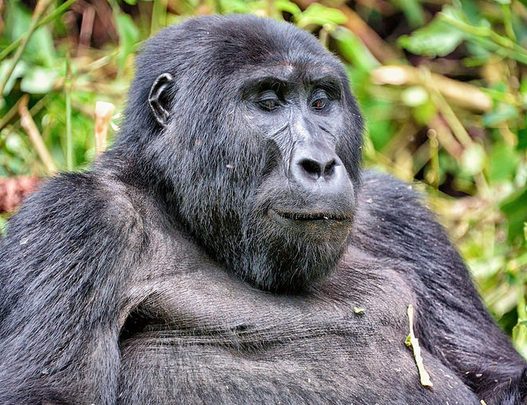
Rushaga, in the south, holds more habituated gorilla families than any other sector, so it also releases the most trekking permits each day. That makes it the sector most likely to have space when the others are full. It is also the base for the gorilla habituation experience. The hills are steeper than Buhoma, and how hard your day is depends almost entirely on which family you are given.
Nshongi gorilla family. Found near the Nshongi River, this was the largest group in Bwindi’s 2006 census, with more than 30 members, and it was the biggest family ever opened to trekkers when visits began in 2009, with about 36 gorillas and several adult males living side by side. Large families rarely hold together. In 2010 the silverback Mishaya left with several members, and in 2012 the silverback Bweza did the same. Nshongi is now a mid sized family of about 13 in IGCP’s count.
Mishaya gorilla family. Mishaya built his group by taking females from other families and had a reputation as a fighter; he was injured in a clash with a wild group in 2011 and treated by the gorilla vets. He died suddenly in early 2014, the family scattered for a time, and a silverback called Tinfayo now leads the group that kept Mishaya’s name.
Bweza gorilla family. Bweza split from Nshongi in 2012 and opened for trekking at the end of that year. It often feeds close to community land and the lodges on the Rushaga side, which can mean short treks, and it has grown to about 14 in IGCP’s profile; several operators name the current leader as Kakono. A later quarrel inside Bweza produced the Mucunguzi family, led by the silverback of that name, who went on to take females from other groups and now has about 15.
Kahungye gorilla family. Habituated from 2008 with close to 30 members, Kahungye opened at about the same time as Oruzogo. Older accounts name its leader as Gwigi, a name that means door; newer guides name other males, a sign that leadership has changed hands. In 2012 it split, and the silverback Busingye left with about nine gorillas. Busingye’s name means peace, which is a little ironic for a male known for fights with wild groups and for winning females from them. Kahungye kept three silverbacks after the split.
Rwigi, Tindatine, Kutu and Nshanjare. These are smaller and newer Rushaga families, mostly formed by splits from Kahungye and Bweza. Kutu was at one point used to show visitors the habituation process before it opened to regular trekking, and Nshanjare was reported as opened only recently.
Bikingi gorilla family. Bikingi, also spelled Bikyingi, is the family most often named as the habituation group, which means it is visited by small parties of four for longer sessions instead of standard treks. Its founding silverback, also called Bikingi, is reported to have died in 2018, and IGCP lists about 12 members.
Nkuringo Gorilla Families: The Steepest Trekking in Bwindi
The Nkuringo sector sits on a high ridge in the southwest with views across to the Virunga volcanoes. The catch is the climb. Trails drop several hundred metres into the valley where the gorillas usually feed, and every step down is a step you must climb back up. Several trekkers on travel forums call the Nkuringo family one of the hardest treks in Bwindi, and the sector is a poor fit for anyone with knee or heart concerns.
Nkuringo gorilla family. The name means round hill. Habituation began in 1997 because the family kept raiding farms below the forest, and trekking opened in 2004. The original silverback, also called Nkuringo, died in April 2008 and his son Safari took over. The family is known for twins: a female called Kwitonda gave birth to twins, Muhozi and Katungi, dated to 2004 by IGCP and to 2008 by the African Wildlife Foundation, and Katungi later died of an illness at about eighteen months. In June 2020 the silverback Rafiki, by then the leader, was killed by a poacher, a case that ended with a prison sentence and drew international attention to Bwindi’s community protection work. A young male, Rwamutwe, has held the family of about 14 together since.
Bushaho gorilla family. Bushaho broke away from Nkuringo and is led by a silverback called Bahati, known for chest beats and bluff charges. Some guides list it as a habituation family; others list it for regular trekking, which tells you how often the arrangement changes.
Christmas and Posho families. Christmas is a small group of about eight named after its silverback, who was born on Christmas Day. Posho is the most recent Nkuringo family, reported as fully habituated only in the last few years, and at about 17 it is the largest in the sector.
Nyakagezi Gorilla Family: Trekking in Mgahinga
Outside Bwindi, the long established habituated family in Uganda is Nyakagezi, in Mgahinga Gorilla National Park on the slopes of the Virunga volcanoes. Habituated in the early 1990s, it is led by the silverback Mark, and it is unusual for keeping several adult males together, including some of his brothers, without serious fights. IGCP’s profile lists nine members, four of them silverbacks.
For years Nyakagezi was a frustrating family to book. It crossed freely into Rwanda and the Democratic Republic of Congo, so permits were sold only at short notice at the park office. Since about 2012 it has stayed on the Ugandan side and is now booked like any other. Mgahinga trekking takes place on open bamboo and volcano slopes rather than in dense forest, and our page comparing gorilla trekking in Bwindi and Mgahinga sets the two side by side.
Habituation Families and Trekking Families on a Gorilla Safari
Every family on this page was wild once. Habituation is the two to three year process of rangers and researchers visiting a family every day until it accepts people nearby. Only when a family is calm enough is it opened to standard trekking. Families at different stages serve different visitors.
The habituation experience suits people who want more time and do not mind a long, slow day off the trail. Families being habituated are warier and harder to follow, and the gorillas may move off through thick undergrowth rather than settle. It also needs a separate, more expensive permit that sells out sooner. Our habituation experience guide covers how a day runs.
How Gorilla Families Change: Splits, New Groups and Silverback Deaths
Gorilla families are not fixed units. A family usually forms around one dominant silverback, and as younger males mature they either wait their turn, challenge him or leave with a few females. Bwindi’s own history shows every one of those paths, and it explains why the family list grows nearly every few years. Our page on silverback gorilla facts covers the behaviour behind it in more detail.
Splits rarely hurt the trekking. A new family usually stays in the same part of the forest and becomes another bookable group, which adds permits rather than removing them. Deaths of a dominant silverback are harder: the family can scatter, merge with a wild group or fall under a new male who may kill infants that are not his, as happened in Mubare. That is why sizes in the directory shift, and why a family described online as twenty strong may number twelve when you visit.
Threats to Bwindi Gorilla Families and How Trekking Protects Them
The families you meet on a gorilla trekking day have very few natural enemies. Leopards are the only wild predator of gorillas, and they are rare in the park. In practice the most common danger to a family is another gorilla: a lone silverback looking for females, who may fight the leader and kill infants, as Maraya did in Mubare.
People are the bigger threat. Snares set for antelope catch gorilla hands and feet, and on rare occasions gorillas have been killed outright, as Mizano of Habinyanja was in 2011 and Rafiki of Nkuringo was in 2020. Human illness is the other worry, which is why sick trekkers are kept back and masks may be handed out. Crop raiding causes conflict too: the Nkuringo family was habituated partly because it kept eating sweet potatoes and bananas in farms below the ridge. Lightning has been blamed for gorilla deaths in the past as well.
Habituated families are the most closely watched gorillas in the forest. Trackers check on them every day, vets from Gorilla Doctors working with UWA can reach a snared or sick gorilla quickly, and permit income pays for the rangers who patrol their range. A share of park revenue goes to communities around Bwindi, so farmers next to the forest have a reason to want gorillas as neighbours. IGCP, which works across Uganda, Rwanda and Congo, follows 44 habituated families in all. Your permit is part of how that work is paid for, and the mountain gorilla census page explains where the population numbers come from.
Choosing a Bwindi Trekking Sector by Gorilla Family
You cannot book a family, but you can stack the odds by booking the right sector. Think about three things: how fit you are, where else your trip goes, and how far ahead you are booking. Rushaga and Nkuringo are closer to Kigali and to Lake Bunyonyi, so they suit a Bwindi gorilla trek from Kigali, while Buhoma and Ruhija suit trips coming south from Queen Elizabeth National Park or a gorilla trek from Entebbe. Our getting to Bwindi guide lays out the road and air routes.
Once the sector is set, book your lodge inside it. Our Bwindi lodges by sector page helps with that, because a lodge in the wrong sector can mean a two hour drive before a 7.30am report time. If you have mobility limits, the special needs gorilla trekking guide explains sedan chair options. Whatever family you get, the same kit applies: waterproof boots, gloves for the nettles, a rain jacket and long trousers, all covered in the gorilla trekking packing list.
Frequently Asked Questions About Bwindi Gorilla Families
How many gorilla families are there in Bwindi?
Bwindi has more than 20 habituated families open to visitors, with Rushaga holding the most, plus a research group in Ruhija and one or two families used for the habituation experience. UWA’s park page puts the total at 25 habituated groups. Most of Bwindi’s gorillas live in wild groups that are never visited, and new habituated families are added every few years.
How many gorillas are in Bwindi?
The 2018 census counted 459 mountain gorillas in Bwindi, out of a world total of 1,063, which is close to half of all mountain gorillas. A newer census has been carried out and its results are still awaited, so 459 remains the official figure.
How many gorilla families are there in Rwanda?
Rwanda’s Volcanoes National Park has about 12 habituated families open to trekkers, among them Susa, Sabyinyo, Amahoro, Agashya, Kwitonda and Muhoza. IGCP counts 44 habituated families across Uganda, Rwanda and the Democratic Republic of Congo. Our Rwanda gorilla trekking guide covers the Rwandan side.
How many wives do gorillas have?
A dominant silverback breeds with all the adult females in his family, usually two to six in Bwindi, and a strong male may hold more. Females are free to leave for another family when groups meet, so a silverback keeps them by protecting their infants.
What is a gorilla’s worst enemy?
Leopards are the only natural predator, and they rarely take gorillas. The real threats are people, through snares, poaching and human diseases, and rival silverbacks, who may kill infants when they take over a family.
Can I choose which gorilla family I trek?
Not directly. You book a sector, and rangers assign the family at the morning briefing after considering age, fitness and where the trackers have found each group. You can ask for a nearer or a more distant family, and rangers will try, but the gorillas decide how far you walk.
Which Bwindi gorilla family is the easiest to trek?
No family is easy every day, because they all move. Rushegura in Buhoma and Bweza in Rushaga are often found close to the villages, so they have a name for shorter treks. Nkuringo is the one most often described as hard.
Which gorilla family is best for photography?
Families with many young gorillas give the most action, and families that feed in more open forest give better light. Ruhija’s families often sit in lighter forest, and Rushegura sometimes feeds in clearings near Buhoma. The family is assigned on the day, though, so pack for dark forest whichever one you get.
Are gorilla sightings guaranteed on a Bwindi trek?
Nothing in the wild is guaranteed, but sightings are very reliable because trackers locate each habituated family before trekkers set out. On the rare day a group fails to reach its family, UWA’s rules allow part of the permit to be refunded or the trek moved.
How fit do I need to be to trek a gorilla family?
Reasonably fit. A trek can take one hour or most of the day on steep, muddy slopes at altitude. Regular walking on hills in the weeks before helps more than gym work, and a porter makes a real difference. Our trekking difficulty and fitness guide goes further.
How much is a gorilla permit for a Bwindi gorilla family?
A Uganda gorilla trekking permit costs US$800 for foreign non residents, US$700 for foreign residents and UGX 300,000 for East African citizens, and the price is the same for every family and sector. UWA has announced lower rates of US$600 for non residents and US$500 for foreign residents in April, May and November; those permits cannot be rescheduled, and permits are paid in full at booking. The habituation experience costs US$1,500, with a rise to US$1,800 for foreign non residents announced, so check the rate for your dates. For comparison, a Rwanda permit is US$1,500.
How many days do I need to see a gorilla family?
One trek day is enough to spend an hour with one family, but the drive to Bwindi takes most of a day from Kampala or Kigali, so three days is the realistic minimum. Many visitors add a second trek in another sector to meet a second family.
How far ahead should I book a gorilla trekking safari?
For June to September and December to February, three to six months ahead is sensible, and longer for the habituation experience or a specific sector. Rushaga usually has the most space because it has the most families. Our best time for gorilla trekking guide explains the seasons.
Are habituated gorilla families dangerous?
Habituated families are calm around people, and serious incidents with visitors are very rare. A silverback may mock charge if someone gets too close or moves suddenly, so follow the guide, keep about ten metres away and stay low and quiet. Our page on whether gorillas are aggressive goes further.
What happens if my gorilla family has split or changed?
Nothing changes for your booking. Permits are tied to a sector and the rangers assign whichever families are bookable on the day, so a split simply adds another group to that sector’s list.
What is the minimum age to visit a gorilla family?
Trekkers must be at least 15 years old on the day of the trek, for both standard trekking and the habituation experience.
Gorilla Families as Part of a Wider Africa Safari
Many visitors meet a Bwindi gorilla family in the middle of a longer trip. Gorillas pair well with the Masai Mara during the July to October migration months, or with a Serengeti safari, using short flights through Entebbe or Kigali. Others add a second gorilla family across the border on a Rwanda gorilla trek in Volcanoes National Park, which is a different forest and a different set of families. Where to see gorillas in Africa compares every option, including lowland gorilla families in Congo.