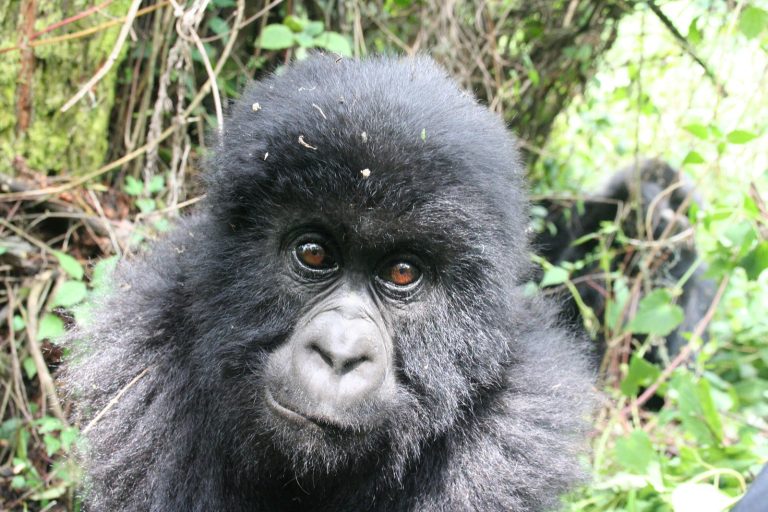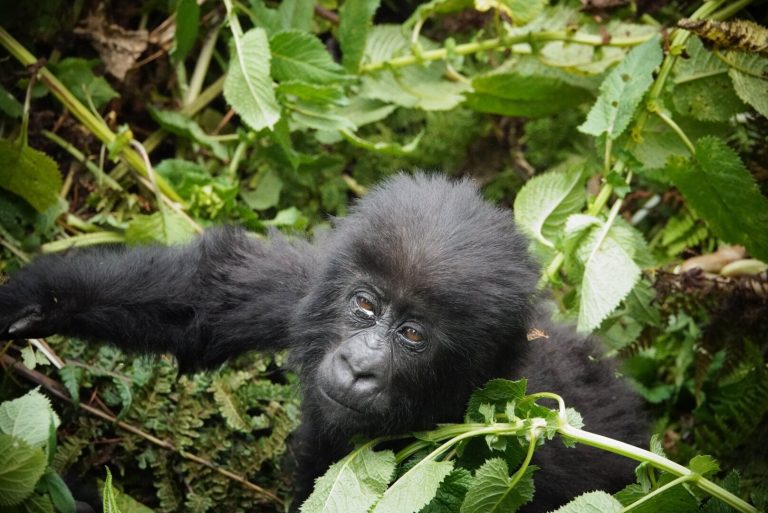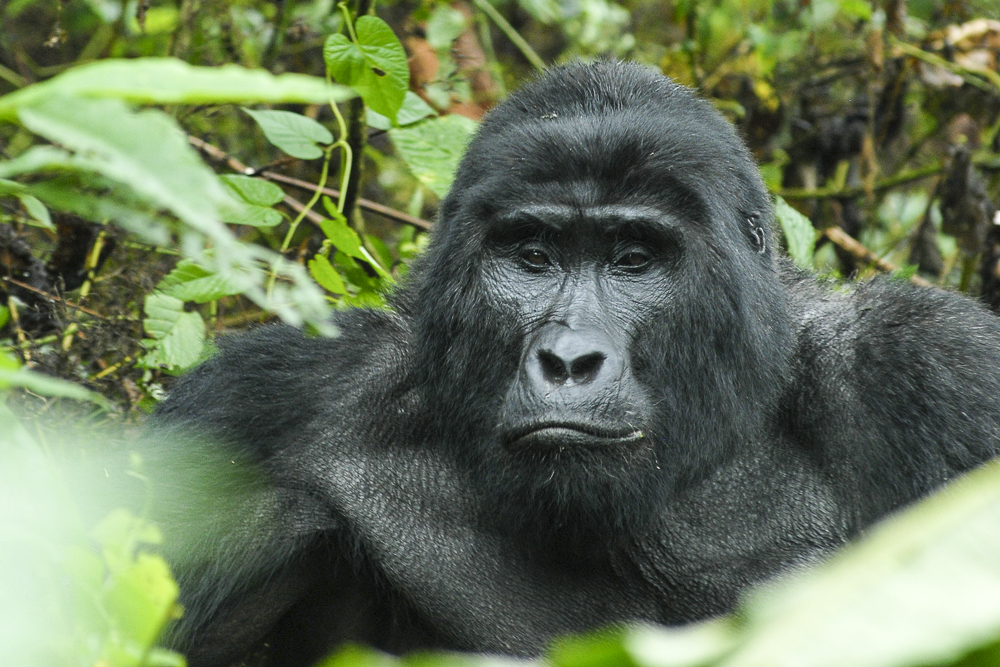
The Nshongi gorilla family is a habituated mountain gorilla group in the Rushaga sector of southern Bwindi, and the first family ever opened for trekking there. When visits began in September 2009 it had about 36 members, the largest habituated gorilla family on record; splits since have cut it to around 13 in the latest IGCP count. You trek it on a Rushaga permit from the Uganda Wildlife Authority, and rangers assign families on the morning.
Everything about Rushaga as a trekking area began with this family. Before Nshongi, southern Bwindi’s only trekking group was Nkuringo on the far ridge; today Rushaga has more families than any other part of the park, several of them descended from this one group. Here is how that happened and how to plan a trek here as part of a wider Uganda gorilla trekking safari.
Nshongi Gorilla Family History: Habituation and the Rushaga Launch
Long before anyone thought of trekking it, the group stood out. Bwindi’s 2006 census recorded it as the largest in the park, with more than 30 members. Rangers began habituation work in about 2007, in forest near the Nshongi River on Bwindi’s southern side, and two years of daily visits followed before the gorillas would let a small party sit with them.
The river gave the family its name. Some guides say the word comes from the local term for honey, because the water runs a deep honey colour; others simply say Nshongi is the river’s name and leave it there. Either way, the label stuck to the group and later to the dominant silverback.
The family opened to visitors on 26 September 2009. UWA marked it with a public launch attended by invited guests and well known supporters, and used the occasion to promote its Friend a Gorilla campaign, which asked people around the world to follow and support named gorillas online. For a while the Nshongi gorillas were among the most publicised wild animals in Uganda.
Local accounts of the launch add colour that is harder to check. A park news item from the time says six cows were slaughtered for the celebration, with local brew flowing alongside bottled drinks, and that a party of Hollywood celebrities, managers and journalists later tracked the family. Treat both as stories from one report rather than settled record. Opening counts in print also differ: most sources give about 36, a few say 35, and at least one guide says 25, which looks like a figure taken after the first departures.
What made the group unusual was its structure. Most families have one or two adult males. Nshongi had three silverbacks and seven blackbacks living side by side without, at first, any open fight for control, and the dominant male, also called Nshongi, was not even the oldest of them. Guides at the time said nobody expected the arrangement to last. They were right.
Nshongi Gorilla Family Splits: Mishaya, Tinfayo and Bweza
The first break came in July 2010, under a year after opening. The silverback Mishaya left with about ten gorillas, mostly females and young, and founded the Mishaya group. Nshongi dropped to around 26.
Around 2012 a younger male, Tinfayo, slipped away with the adult female Shida and her infant Rotary, all three named on this family’s older rosters. Years later, in May 2018, Tinfayo turned up leading what was left of Mishaya’s group after Mishaya’s sudden death. In August 2012 came the next formal split, when Bweza left to form the Bweza family, opened to tourists at the end of that year. A few operator pages date the Bweza split to 2013; UWA’s opening of the family late in 2012 makes the earlier date more likely.
Each split is a reminder that big families with several males rarely stay big. Young silverbacks need females of their own, and a group of 36 holds plenty of ambition. The Bweza family has since produced its own breakaway, Mucunguzi, so the Nshongi line now runs through at least four Rushaga families. Several operators name Kakono, the second silverback on Nshongi’s old roster, as the current leader of Bweza.
Some older safari blogs go further and credit Nshongi with founding Kahungye and Busingye too. That is a mix up. Kahungye was a separate Rushaga family, habituated from 2008, and Busingye broke away from Kahungye in 2012, not from Nshongi. The same posts often date the Bweza split to 2013 and leave Nshongi at 18 members, figures that have not been updated since. Our Bwindi gorilla families guide traces each line.
Nshongi Group Size and Leadership on Today’s Gorilla Treks
Counts for Nshongi vary more than for almost any other family. The International Gorilla Conservation Programme’s latest profile records 13 or 14 members: one silverback, one blackback, four adult females, two subadults, one or two juveniles and four infants. Oddly, that profile names the leading silverback as Bweza. Whether that reflects a return, a different male with the same name, or an error is not clear from published sources.
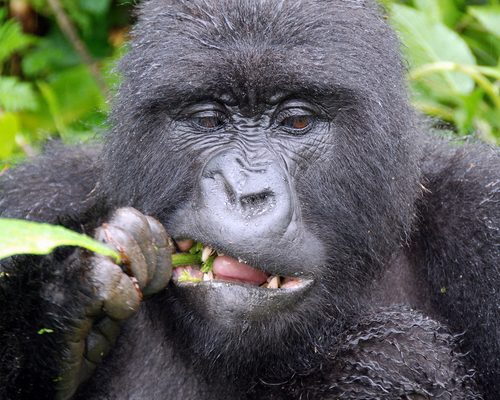
Operator websites give anything from 19 to 26 members, with Nshongi still in charge, and one park guide site quotes 19 in one paragraph and 24 in the next. Most of those numbers trace back to the years straight after the 2010 split. The safest course is to treat the IGCP figure as the most recent published count and ask the ranger at your Rushaga briefing who leads the family that morning. Our gorilla groups hub carries the same range for every Bwindi family.
A family of 13 or so is no longer a record breaker, but it is a comfortable size for a visit. With several mothers and infants in the group, there is usually plenty going on during the hour.
Inside the Nshongi Family: The Launch Roster and Its Stories
When the family opened, its profiles read almost like a drama series, which suited the Friend a Gorilla campaign. Three silverbacks held mating rights in one group, so commentators wondered which males the females would favour. A young blackback, Busasa (spelled Busasi in some profiles), was tipped as a future challenger, and the adult female Bwiruka was said to be a favourite of the dominant male. How much of that was observation and how much was storytelling is hard to say now; the splits that followed showed the tension was real.
The roster below, carried on this page for years, shows the family soon after the Mishaya split. Some of these names, such as Kutu, Tindatine and Mucunguzi, are now also the names of separate Rushaga families, and Mukiza is a family in Ruhija. Shared names are common in Bwindi, and published sources do not confirm whether these are the same individuals, so treat any link as unproven.
Two names from that list already lead families of their own: Bweza and Tinfayo. A third, Kakono, is named by operators as Bweza’s leader today.
What the Nshongi Gorilla Trek Is Like in Rushaga
Most visitors rate a Nshongi gorilla trek as moderate. Rushaga sits roughly between 1,500 and 2,500 metres, and its hills roll rather than plunge, gentler overall than the ridges at Ruhija or Nkuringo, though individual valleys are steep and the forest floor stays wet for much of the year. Contact can come within an hour; three to four hours in total is common, and a bad day runs longer.
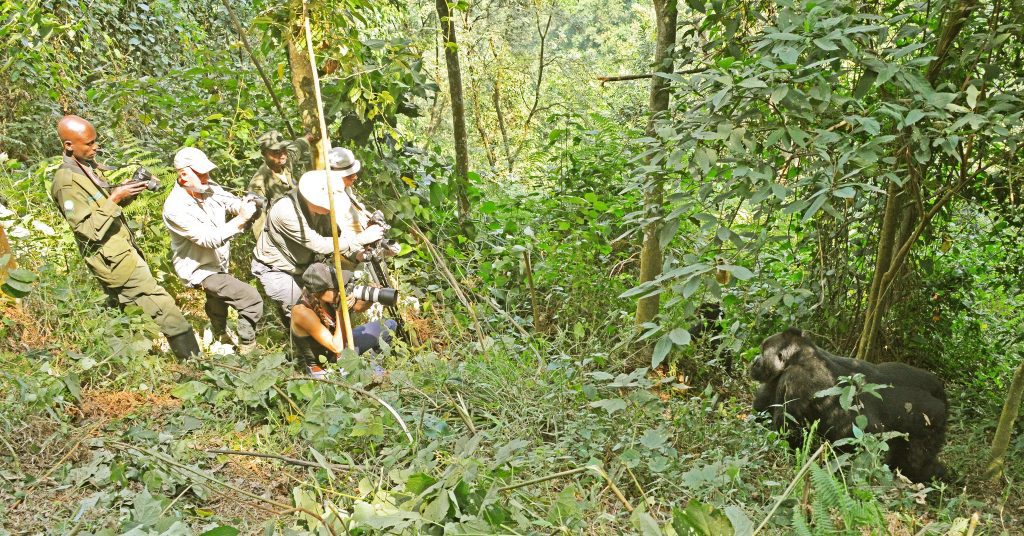
The family is described as healthy on the whole, with the odd injury from scuffles with neighbouring groups. During the hour you might see youngsters wrestling, mothers grooming and the silverback resting with an eye on all of it. Nothing is guaranteed, and in dense growth you may spend part of the hour following the family rather than sitting with it.
The walk in is part of the trek. Rushaga’s forest also holds black and white colobus and L’Hoest’s monkeys, plenty of butterflies and a long list of forest birds, and guides tend to point them out while the trackers radio in the family’s position. Start times are early, and the whole day can run anywhere from two hours to most of the daylight, depending on where Nshongi spent the night.
Several Rushaga trip reports make the same two points. Gloves save your hands on the thorny vines, and the porters know the slopes far better than any visitor, so hiring one is the easiest decision of the day. The pace is set by the slowest person, and nobody minds stopping.
Our page on gorilla trekking difficulty and fitness covers how to prepare.
Requesting Nshongi on a Rushaga Gorilla Trekking Permit
UWA sells Bwindi gorilla permits by sector, never by family. Rushaga visitors gather at the briefing point around 7:30, and the warden then shares them out among the sector’s groups, which include Nshongi, Mishaya, Bweza, Kahungye, Busingye, Mucunguzi and several newer families. Tell your operator you would like Nshongi and mention it at the briefing. Rangers will try where they can, and they also weigh fitness against how far each family has moved.
A common question at the planning stage is which Rushaga family is the best one to trek. Honestly, there is no single answer, because every group moves every day. Nshongi carries the history. Bweza often feeds close to community land and the lodges, which can mean a shorter walk. Kahungye has kept more than one silverback, and Busingye’s leader has a name for winning females from wild groups. On the morning itself, where each family nested the night before and how fit your group is matter far more than the name on the allocation sheet.
Because Rushaga has more families than any other sector, it also releases the most permits each day, which makes it the sector most likely to have space when others are full. Rushaga is also where Uganda runs its four hour gorilla habituation experience, with families still being habituated rather than with Nshongi. If you want more time with gorillas than the standard hour, that is the option to look at. The sector as a whole is covered on our Rushaga gorilla trekking page.
Where to Stay for a Nshongi Gorilla Trekking Safari
The closest lodges sit along the road from the Rushaga gate. Gorilla Safari Lodge is the top choice a few minutes away; Rushaga Gorilla Camp and Rushaga Gorilla Lodge are central mid priced bases, and Nshongi Camp, named after this family, keeps things simple and cheap near the forest edge. Bweza Gorilla Lodge carries the name of Nshongi’s second breakaway. Ichumbi and Four Gorillas lodges sit a short drive out, while Wagtail Eco Safari Camp in Rubuguri works for Rushaga or Nkuringo permits.
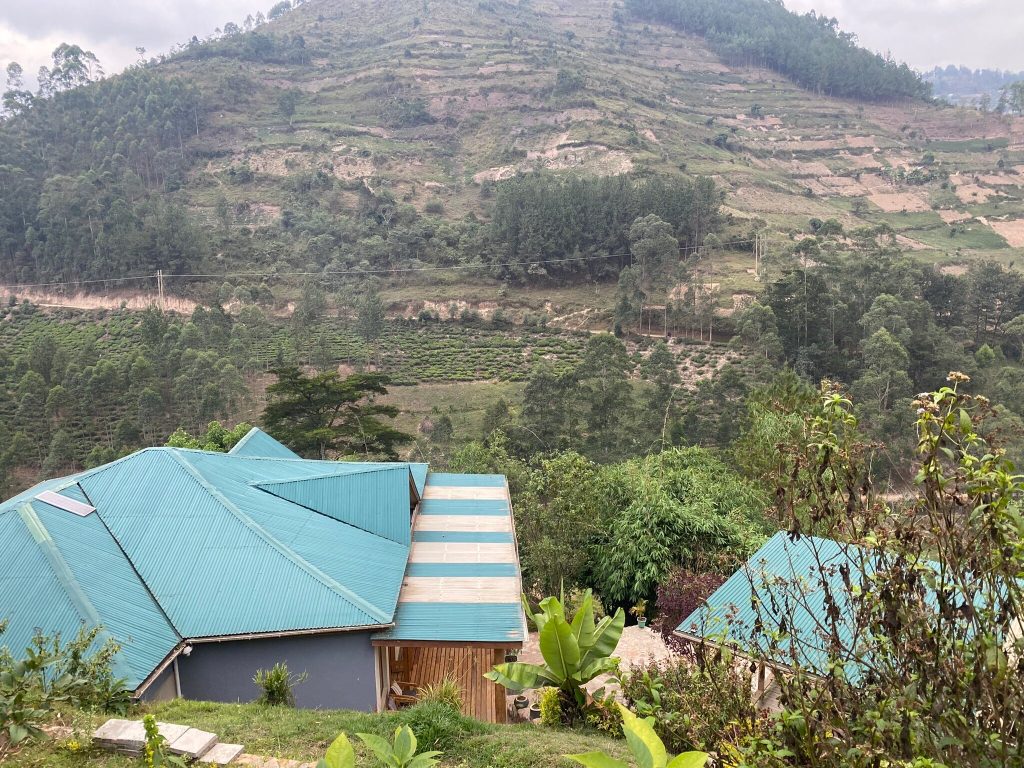
Every option is compared on our Bwindi lodges page, including the Lake Mutanda bases about an hour away.
Gorillas from the Rushaga families sometimes wander through lodge gardens and village plots near the gate, Bweza more than most, though nobody can promise or schedule it. A spare afternoon or the day after the trek fits other things too: a community walk through the farms around Rushaga, time with the Batwa, birding in Bwindi for Albertine Rift endemics, or a guided nature walk to forest streams and waterfalls. Lake Mutanda and Lake Bunyonyi are both within driving distance for a slower final day.
Gear for a Gorilla Trek With the Nshongi Family
The basics are the same in every sector, and they matter more on wet slopes: waterproof boots with good tread, gaiters or long socks over your trousers, gloves, a rain jacket and a light warm layer for the cold start. Add two litres of water and a packed lunch, since a long trek can run past midday.
Our gorilla trekking packing list is the hub for all the gear guides, including gaiters and gloves.
Sister Families and Getting to Rushaga
Nshongi’s most direct relative is the Mishaya family. For a contrast in the north of the park, the Rushegura group in Buhoma came from a peaceful split of its own, and the Bitukura family in Ruhija has managed to keep several silverbacks together for years. Over the hill, the Nkuringo gorilla family was southern Bwindi’s first trekking group. All are profiled on our gorilla groups hub.
Rushaga is the most convenient Bwindi sector from Rwanda, about four to six hours by road from Kigali through the Katuna or Cyanika border; our guide to a Bwindi gorilla trek from Kigali sets out the route. From Kampala or Entebbe it is a full day’s drive of eight to ten hours, or a flight to Kisoro and an hour and a half to two hours by road. Nkuringo is an hour to an hour and a half away via Rubuguri. Many travellers pair Rushaga with Mgahinga, or with a Masai Mara or Serengeti safari later in the trip, and our getting to Bwindi page has every route.
Nshongi Gorilla Family FAQ
How much does a Nshongi gorilla safari permit cost?
A Rushaga gorilla permit costs US$800 for foreign nonresidents, US$700 for foreign residents and UGX 300,000 for East African citizens. UWA has announced a US$600 rate for April, May and November. The four hour habituation experience in Rushaga is US$1,500, with a rise to US$1,800 announced. Low season permits cannot be rescheduled, and permits are paid in full at booking. Confirm the price for your date with your operator.
Is Nshongi still the largest gorilla family in Bwindi?
No. It was the largest when it opened in 2009, but splits in 2010 and 2012 cut it to a mid sized family. Larger groups now live elsewhere in Bwindi and in Rwanda’s Volcanoes National Park.
How many members does the Nshongi gorilla family have?
Around 13 in IGCP’s latest profile. Operators quote figures between 19 and 26, most of them taken in the years just after the first split.
Who leads the Nshongi family?
Sources disagree. Many operators still name the silverback Nshongi, while IGCP’s latest profile names a silverback called Bweza. Your ranger will tell you on the day.
Which gorilla families came from Nshongi?
Mishaya in 2010 and Bweza in 2012. A third male, Tinfayo, left around 2012 and later took over the remains of the Mishaya group, and Bweza’s own breakaway, Mucunguzi, extends the line.
Is Rushaga a good sector for first timers?
Yes. It has the most families, so permits are often easier to find, and the terrain is usually moderate. It also suits travellers coming from Rwanda.
Which is the best gorilla family to trek in Rushaga?
None is best every day. Nshongi has the history, Bweza is often found near the lodges, and Kahungye and Busingye are known for their silverbacks. Where a family slept and your fitness on the day decide more than its name.
Did the Kahungye and Busingye families come from Nshongi?
No, though some older blogs say so. Kahungye was a separate family, and Busingye split from Kahungye in 2012. Nshongi’s own offshoots are Mishaya and Bweza, with Mucunguzi coming later from Bweza.
Can I choose Nshongi when I book?
Not directly. Permits are for Rushaga as a whole, and the family is allocated on the morning. A polite request through your operator and at the briefing is the best you can do.
What is the minimum age to trek the Nshongi gorillas?
Fifteen, as everywhere in Uganda. Visitors with a cold or other visible illness can be turned back to protect the gorillas.