Budget gorilla trekking in Rwanda costs about US$1,550 to US$1,800 per person on the cheapest realistic trips, because the RDB permit alone is US$1,500, or US$1,050 from November to May with two paid nights in Nyungwe or Akagera. Most budget travellers either take two days from Kigali with a Musanze guesthouse or cross into Uganda for a cheaper permit. The trek takes place in Volcanoes National Park, two to three hours north of Kigali.
Rwanda Gorilla Permit Prices on a Budget Gorilla Trek
Start with the number nobody can move. A Rwanda gorilla permit costs the same whether you sleep in a guesthouse or a lodge charging thousands a night, because the Rwanda Development Board sets one rate per visitor category and sells every permit through its own booking portal. On a two day budget gorilla trek in Rwanda, it is close to nine tenths of the bill.
| Visitor | November to May | June to October |
|---|---|---|
| Foreign visitor | US$1,500 | US$1,500 |
| With low season offer | US$1,050 | Not offered |
| Rwanda resident | US$500 | US$1,500 |
| African citizen | US$500 | US$1,500 |
| EAC citizen | US$200 | US$1,500 |
RDB lists the US$500 and US$200 rates as promotional and suspends them from June to October, when every category pays US$1,500; confirm the resident promotion with RDB before you rely on it. That matters to the many South African and other African travellers who ask in budget travel groups about a July trek from Kigali: in July the permit is the full US$1,500 for them too, and a trek from November to May costs a third of that.
What the permit buys does not change with your budget. Each habituated family receives up to eight visitors a day, the group gets one hour once the trackers find the gorillas, rangers keep everyone about seven metres back, and trekkers must be at least 15. RDB’s own refund rules are worth knowing on a tight budget: if the family moves and you cannot track for the whole day you get another chance or a full refund, if you track all day without contact you get 75 percent back, and late arrival or a delayed flight earns nothing. Rescheduling costs 20 percent of the permit fee.

The 30 Percent Low Season Gorilla Permit Offer and What Qualifying Costs
The one real reduction on a Rwanda gorilla permit is RDB’s low season discount: 30 percent off, which takes the US$1,500 permit to US$1,050 and saves US$450 per person. It runs from November to May and only for travellers who also stay in Nyungwe Forest National Park or Akagera National Park.
The catch for a backpacker is that the qualifying nights cost money. On the parks’ own current tariffs, the cheapest qualifying stays per person look like this:
So the offer pays for the camping, the entry and the activity with roughly US$190 to spare, before transport. Transport is what decides it. Nyungwe is five to six hours southwest of Kigali, Akagera about two and a half hours east, and neither is practical without a vehicle, so on a two day trip from Kigali the offer usually costs more than it saves. On a week in Rwanda it is the opposite: if you wanted chimpanzees in Nyungwe or a game drive in Akagera anyway, the US$450 pays for most of that leg. Check with RDB that a campsite receipt counts as the hotel receipt before you rely on it; if it does not, a room inside the park changes the sum.

Budget Beds for a Gorilla Trek: Musanze Hotels, Kinigi and Park Campsites
The lodges around Volcanoes are among the priciest in Africa, and that is what gives a Rwanda gorilla safari its reputation. Budget travellers stay elsewhere. Musanze, the town many drivers still call Ruhengeri, has small hotels and guesthouses about half an hour from the park office at Kinigi. As one published example, La Palme Hotel in Musanze lists a standard room at US$80 single and US$90 double a night with breakfast, which is US$45 each for a couple.
Closer still, Kinigi Guest House sits a few hundred metres from the park headquarters with plain rooms, shared dormitories and camping space. It publishes no rate card of its own, so ask for a written quote; walking to the 7am briefing saves a transfer if you have no car. The community run Red Rocks centre near Musanze offers hostel beds and camping on request.
For the low season offer nights, the parks’ own campsites are the cheapest beds in Rwanda: Nyungwe charges US$15 per person a night to camp plus US$20 for tent hire, and Akagera US$25 per person plus US$30 for a tent that sleeps up to six, bedding not included. Bring a sleeping bag or hire one in Kigali.
The single supplement. Solo travellers pay for the whole room. At the Musanze rate above, that is US$80 against US$45 each for a couple, about US$35 a night more. The site’s guide to lodges near Volcanoes National Park shows the other end of the scale if you want to compare.
Evenings at this altitude are cold and many budget rooms have no heating, so pack a warm layer. Check whether dinner is served on site, since Kinigi has few places to eat after dark. Travellers who stayed in Kigali and left in the small hours for the 7am report time mostly say in trip reports that fog on the hills and a three hour drive in the dark made a night in Musanze worth its cost.
Bus, Car Hire or Transfer: Transport Costs to Volcanoes National Park
Bus. Several companies run frequent buses from Kigali’s Nyabugogo bus park to Musanze, about two hours on good tarmac. The regulated fare is RWF 3,821 one way, under US$3. Buses from the Cyanika border with Uganda also stop in Musanze.
The trek day car. A bus only reaches town. On trek day you need a vehicle twice: from your bed to the Kinigi park office, then from the office to the trailhead for your assigned family, which can be a short hop or a long rough drive. A moto taxi can get you to Kinigi but cannot follow the ranger to the trailhead. Travellers describe three fixes: hire a car and driver for the day in Musanze, agreed the evening before; share a vehicle with other trekkers from the same guesthouse; or ask an operator for a transfer only. A saloon car may not manage the tracks after rain, a point that comes up again and again in trip reports.
Car hire from Kigali. One Kigali rental company’s published rates show what a vehicle costs:
Confirm the fuel terms in writing, since the same company’s pages disagree on whether fuel is included. Two people sharing a RAV4 with driver for two days pay US$70 each, which is cheaper than a bus plus a local car once you count the trek day hire. Akagera adds a vehicle fee of US$10 for a Rwanda registered car. For routes into the region, including the Cyanika border to Uganda, see getting to the gorilla parks.
One Day Gorilla Trek From Kigali: Operator Price Against Doing It Yourself
A day trip saves the night, nothing else. One Kigali operator publishes its one day gorilla trek from Kigali at US$1,950 per person for two sharing, permit included, with a single supplement for solo travellers. Doing the same day yourself costs the US$1,500 permit, a RAV4 with driver at US$70 for the day, porter and tips of about US$40 and the visa, so roughly US$1,660 alone or US$1,625 each for two, if you can find a driver for a 3am start.
The price of the shortcut is sleep and slack. You leave Kigali around 3am, report by 7am, and drive back after a trek that can last most of the day. If the family is far away, it becomes a fourteen hour day with no margin for a late start. Few people who try it recommend it over a Musanze night that costs US$45 to US$80. If you still prefer to go and return in one day, our 1 day gorilla trek from Kigali guide sets out what that long day involves.
Worked Totals for the Cheapest Rwanda Gorilla Trekking Trips
These budget gorilla safari totals are built line by line from the published rates above, in US dollars, per person, for a foreign visitor. International flights and insurance are left out.
What moves these totals: the month decides whether the US$450 saving exists at all; travelling alone roughly doubles the car and room lines; and self drive saves the driver’s US$20 a day but leaves you finding the trailhead. Trip B is the surprise. Done in a shared car with your own sleeping bag, four days with a second park cost less per person than two days with the gorillas alone, as long as the campsite receipt is accepted.
Budget Gorilla Tour Packages in Rwanda: Prices, Inclusions and Operators
Packaged Rwanda gorilla tours cost more than the sums above because the operator adds a vehicle, a driver guide, meals, a margin and usually a midrange lodge. One Kigali operator’s published list shows the shape: US$1,950 per person for a one day trek, US$3,460 for three days and US$3,500 for four days with golden monkeys, all for two sharing with the permit included. Our guide to the Rwanda gorilla trekking cost per person sets out the midrange and luxury tiers.
A shared group tour sells seats in one vehicle on fixed dates and splits the car, fuel and driver among the group. Per person it is usually the cheapest packaged option. A private budget trip gives you your own car and driver at budget lodges, which costs more per head for one or two travellers and less per head for four.
If you would rather hand the logistics to someone local, a Rwanda based company such as Lets Go Tours Rwanda can quote a short budget trip, and the site’s list of Rwanda safari companies gives more names to compare. Ask every company the same things: is the permit bought in my name at US$1,500 or US$1,050, which lodge, is the vehicle shared, is fuel included, and what is excluded. The page on gorilla safari companies explains how to check RDB licences and spot red flags before you pay.
Booking the permit yourself on RDB’s portal and arranging the rest is the cheapest route on paper. It also leaves you carrying every risk: a missed bus, a driver who does not show at 6am, or a guesthouse an hour from Kinigi. With no refund for late arrival, a US$1,500 permit is a lot to lose to a broken alarm.
Hidden Costs on a Rwanda Gorilla Trek: Porters, Tips, Visas and Golden Monkeys
Report at the Kinigi park office by 7am with your passport and permit. Coffee and tea are usually served while rangers assign each group to a family, and a dance troupe often performs while you wait. Around that hour sit the small costs that a gorilla trekking budget forgets:
Porters are local people, many from families around the park, and hiring one is one of the cheapest ways to put money straight into the community. They carry your bag, pull you up the steep bits and keep your camera dry, and trip reports note that a porter tends to come along whether you planned on one or not. Stinging nettles grow thick on the lower slopes and go through thin trousers. Gardening gloves, long socks over your trousers and a rain jacket solve most of it; the Rwanda gorilla trekking packing list covers the rest, and hiring boots or gaiters locally saves buying kit you will use once.
Want more than one primate on a tight budget? A golden monkey trek costs a fifteenth of a second gorilla permit and accepts children from 12. Opinions in trip reports are mixed after the gorillas, so treat it as an extra hour in the bamboo rather than a substitute.
Crossing to Uganda From Kigali for a Cheaper Gorilla Permit
If the lowest cost matters more than time, the honest answer is often Uganda. A Uganda gorilla permit costs US$800 for foreign non residents, and US$600 in April, May and November, not reschedulable and paid in full at booking. The current rates are on our Uganda gorilla permits page.
You do not have to give up Kigali’s airport. Gorilla trekking in Uganda from Kigali works through the southern Bwindi sectors of Rushaga and Nkuringo, or Mgahinga, four to six hours away via the Cyanika border. One Uganda operator’s published prices for trips starting in Kigali, permit included, for two sharing:
| Trip from Kigali | Uganda, per person | Rwanda, per person |
|---|---|---|
| One day | US$1,080 | US$1,950 |
| Two days | US$1,350 | About US$1,705 |
| Three days | US$1,550 | US$3,460 |
The Rwanda column uses the Kigali operator’s published one and three day prices and Trip A above for two days. Add the cost of the border: the East Africa Tourist Visa at US$100 covers both countries, or a US$50 Uganda eVisa if your Rwanda visa is fee waived. On those figures, two days in Uganda from Kigali come to about US$1,490 with the visa and tips against about US$1,705 in Rwanda, and the gap widens by another US$200 in Uganda’s low season months if the operator passes the permit saving on. The longer drive costs time, and Uganda is one hour ahead of Rwanda.
Rwanda still wins on short trips and simplicity: good roads, a quick transfer and one country. Our budget gorilla trekking in Uganda guide works through the Uganda sums, and our comparison of Uganda and Rwanda for a gorilla safari sets out the full trade off. Congo’s cheaper permits are not an option now: Virunga lists its gorilla treks as closed until further notice.
Budget Gorilla Trekking Rwanda Questions
Why is gorilla trekking in Rwanda so expensive?
RDB prices the permit at US$1,500 to keep visitor numbers low and to fund protection of the gorillas: rangers, trackers, veterinary monitoring and a 10 percent share of tourism revenue for communities around the parks. Only eight people visit each family a day, so the price does the rationing.
Where is the cheapest place to go gorilla trekking?
Uganda, among the parks open now: US$800 for foreign non residents, US$600 in April, May and November. Rwanda is US$1,500, or US$1,050 with the low season offer. Virunga in Congo lists its gorilla treks as closed until further notice.
How much does a gorilla trekking trip in Rwanda cost?
On a budget, about US$1,550 to US$1,800 per person: US$1,705 each for two days from Kigali with a Musanze night, about US$1,540 plus fuel for four days using the low season offer with Akagera camping. Packaged trips from one Kigali operator run US$1,950 for one day and US$3,460 for three days per person sharing.
Is gorilla trekking worth the money?
Most people who go say yes, and a budget trip buys the same hour as a luxury one. The section after these questions sets out what the US$1,500 pays for on the mountain.
How can I get the Rwanda gorilla permit for US$1,050?
Trek between November and May and spend two nights in Nyungwe or Akagera, or one in each on consecutive nights, with a paid activity. Send RDB the paid hotel receipt and the activity receipt; one discounted permit per person per stay.
Can I do Rwanda gorilla trekking without a tour operator?
Yes. Buy the permit on RDB’s portal, take the RWF 3,821 bus to Musanze or hire a RAV4 with driver at about US$70 a day, sleep near Kinigi and arrange the trek day vehicle the day before. You need a car to reach the trailhead with the ranger.
Which months are cheapest for a gorilla trek in Rwanda?
November to May, when the US$1,050 offer and the African and resident promotional rates apply and some lodges cut prices. March to May and November are the wettest months; December to February are drier and still inside the window. June to October has no discounts.
How fit do I need to be for a budget gorilla trek?
Reasonably fit. Treks climb steep, muddy slopes above 2,500 metres and can last from under an hour to most of a day. Tell the rangers at the briefing if you need a gentler family, and hire a porter.
How far ahead should I book a budget gorilla permit?
Six to twelve months for June to September, three to six months for December to February, and a few weeks to three months for March to May and November. Book the permit first, then the cheap bed and the car around it.
Can I fly into Kigali and trek gorillas in Uganda instead?
Yes. Rushaga, Nkuringo and Mgahinga are four to six hours from Kigali through the Cyanika border. Published two day trips from Kigali start around US$1,350 per person sharing with the US$800 permit, plus a Uganda visa or the US$100 East Africa Tourist Visa.
Is a Budget Gorilla Trek in Rwanda Worth the Money?
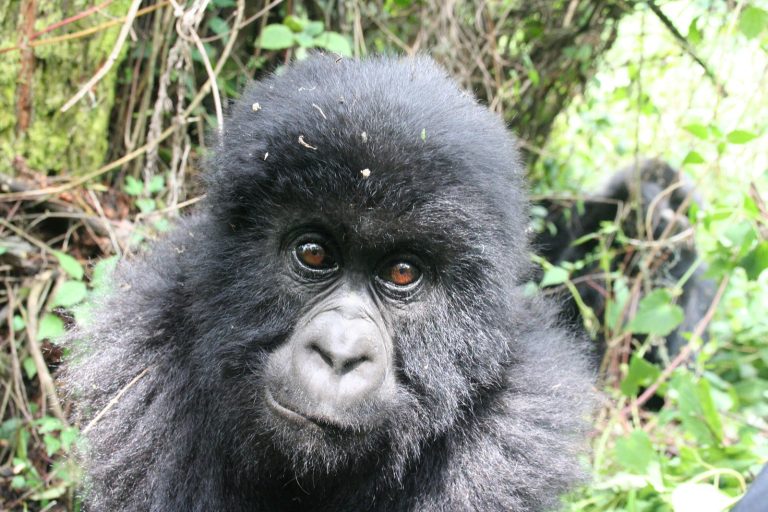
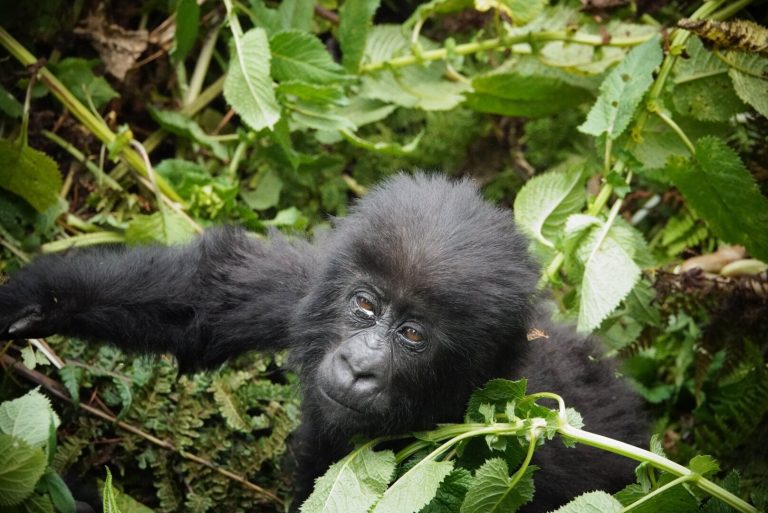
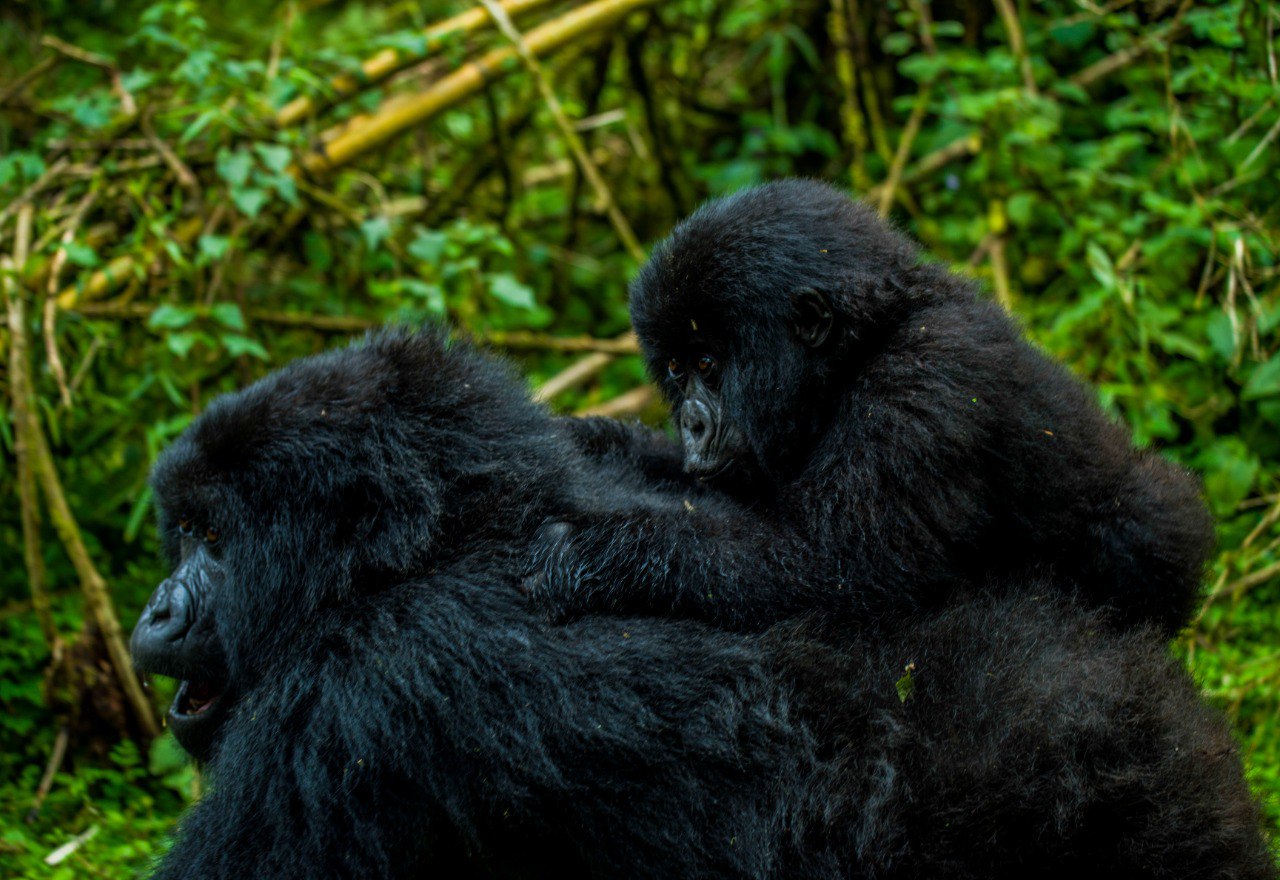
What the US$1,500 buys is the same on every permit. You meet the rangers at Kinigi, drive to the trailhead, and climb through farmland, then bamboo and nettles, with trackers ahead radioing the family’s position. The walk can take forty minutes or several hours. When you reach the gorillas, the hour starts: a silverback feeding, juveniles tumbling in the undergrowth, mothers with infants a few metres away. Then the ranger calls time and you walk down.
Budget travellers who wrote about it afterwards rarely mention the guesthouse or the bus. They mention the hour, how fast it went, and that they would pay it again. If the money is tight, save on the bed, the car and the extra nights, and do not save on the permit, the porter or a night close to the park.
Planning a Budget Rwanda Gorilla Trip With the Rest of Africa
A gorilla trek is often one leg of a longer African trip, and the budget logic carries over. Regional flights link Kigali with Nairobi and Kilimanjaro, so a short Rwanda gorilla trek pairs well with a Masai Mara safari in the migration months or a trip into the Serengeti. Group camping safaris in Kenya and Tanzania are among the cheapest ways to see big game in Africa, which balances a costly permit.
For the full breakdown of what a trip in Rwanda costs, including Nyungwe and Akagera park fees, see the Rwanda safari cost guide. If your trip crosses borders, the East Africa Tourist Visa covers Rwanda, Uganda and Kenya together.