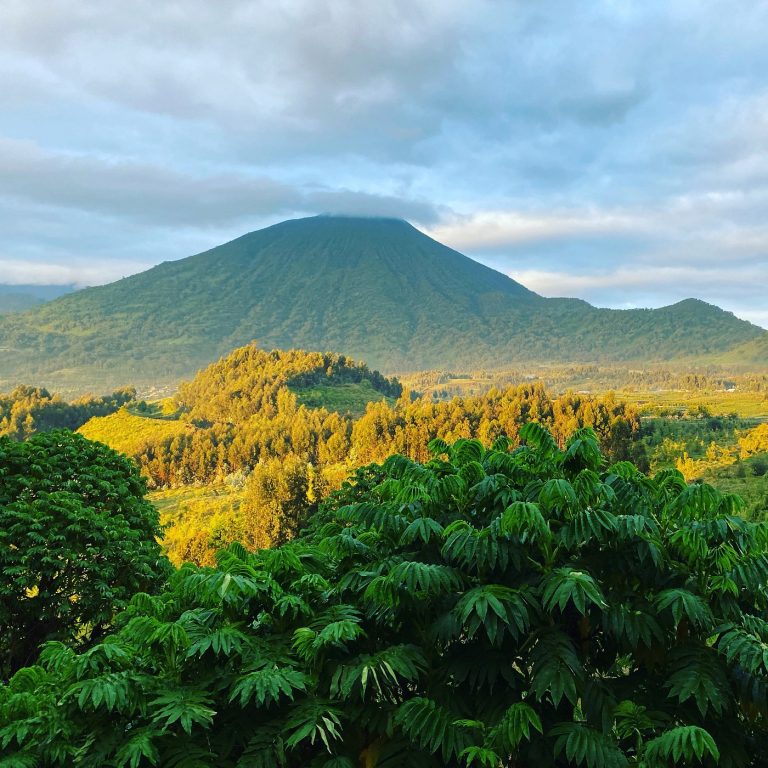
Nyungwe Forest National Park is a montane rainforest of about 1,019 square kilometres in southwest Rwanda, run by African Parks with the Rwanda Development Board, and it is the country’s park for chimpanzee tracking, the canopy walkway and guided rainforest hikes. It holds 13 primate species and around 300 birds, many found only in the Albertine Rift. Most visitors spend two or three nights here on a Rwanda safari, driving five to six hours from Kigali or flying to Kamembe.
It is a big forest by East African standards: mountain rainforest, bamboo, swamp, grassland and heath between roughly 1,600 and 2,950 metres, sitting on the borders of Burundi, where it runs straight into Kibira National Park, and close to Lake Kivu and the Democratic Republic of Congo. The main road from Huye to Rusizi cuts right through it, which is why you can pass giant tree ferns and L’Hoest’s monkeys without leaving the tarmac. Nyungwe also sits on the ridge between two of Africa’s great river basins. Rain falling on its western slopes drains to the Congo, streams on the eastern side feed the Nile, and guides lead walks toward a spring on Mount Bigugu often described as that river’s most distant source.
The park has been managed by African Parks in partnership with the Rwanda Development Board since 2020, under a 20 year agreement, and in 2023 UNESCO inscribed Nyungwe as Rwanda’s first natural World Heritage Site. A zipline, a rope course, a lodge inside the forest and new multi day trails have followed. The independent Nyungwe Forest National Park Rwanda site carries more background on the park and its history.
What Makes a Nyungwe Forest Safari Unique
Three things set a Nyungwe safari apart from anywhere else in Rwanda. First, age: this is one of the oldest rainforests in Africa, thought to have stayed forested through the last ice age. Second, endemism. Nyungwe holds more species found nowhere outside the Albertine Rift mountains than any other forest surveyed in the rift, including around 30 endemic birds and two endemic monkeys, L’Hoest’s and Hamlyn’s, the shy owl faced monkey of the bamboo zone.
Third, sheer variety in one place. Surveys have recorded more than 1,000 plant species, among them some 200 trees and well over a hundred orchids, about 85 mammals, some 300 to 345 birds depending on the survey, plus 32 amphibians and 38 reptiles. Thirteen primates live here, roughly a quarter of all those found in Africa, and the forest is home to Angolan colobus troops that run into the hundreds, a group size seen almost nowhere else.
The forest has not always fared well. It was set aside as a reserve under Belgian rule in 1933, but fires, wood cutting and farming took well over 150 square kilometres between the late 1950s and early 1970s. The last buffalo was shot in 1974 and the last elephant was killed by poachers in the Kamiranzovu swamp in 1999. Nyungwe became a national park in 2004. Since African Parks took over, a team of about 100 community eco rangers, many of them former poachers, clears snares, and dozens of community cooperatives earn income from the park, which also supplies a large share of Rwanda’s fresh water.
Chimpanzee Tracking Safari in Nyungwe
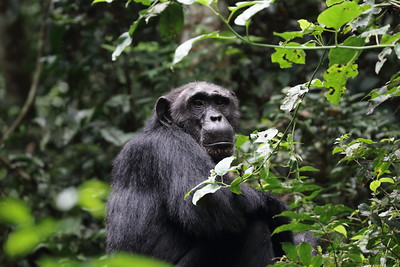
Chimpanzee tracking is the reason most people book a Nyungwe safari, and it is a very different trek from a gorilla day. The park now takes visitors to three semi habituated communities. Mayebe, the group most visitors meet around Uwinka, ranges through the main forest close to the central visitor centre. Cyamudongo lives in a separate island of forest of about 19 square kilometres west of the main block, ringed by tea and eucalyptus and reached by an early drive of around an hour from Gisakura, the last stretch on a rough track. Gisovu, in the far north near the Gisovu tea estate, is the community used for the full day habituation experience.
Days start in the dark. Chimps leave their night nests at first light and feed hard in the early hours, so trackers head out well before breakfast, often by 5am, and in June to August you can be up at 4am. A ranger guide leads a group of no more than eight, with trackers in radio contact ahead. Once the chimps are found you get one hour with them.
Be ready for the hard part. Chimps travel fast, often through steep valleys, and the walk can take two hours or six. Trails get slick after rain. Much of your hour may be spent looking up into a fruiting fig at shapes moving through the leaves, and on some days the group is heard calling long before it is seen. Trip reports split on this: when the chimps come down to the ground and start drumming on buttress roots, people rank the morning above anything else on their trip; when they stay high, it can feel like a long walk for a glimpse. Sightings are not guaranteed, though the trackers find the chimps on most days.
The chimpanzee habituation experience is the deeper option. You leave with the trackers before dawn, watch the chimps come down from their nests, follow them through the day while the team records diet, behaviour and individual features, and stay until they build new nests in the evening. It suits photographers and anyone who found a single hour too short in Uganda. The park office tells you which community you are assigned, usually based on where you sleep. Permits are limited to eight people per community per day and are in demand from June to September, so book early. Under the park’s own rules the minimum age for chimp tracking and habituation is 15. If chimps are your main goal and you are also visiting Uganda, our guide to chimpanzee trekking in Kibale covers Uganda’s main chimp forest, where the ground is flatter and the groups are larger.
Nyungwe Canopy Walk, Zipline and Rope Course Adventures
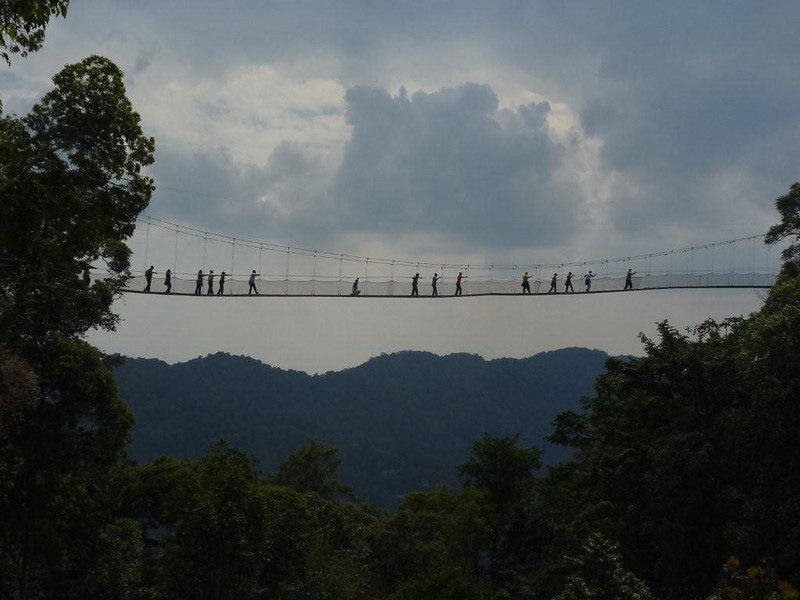
The Nyungwe canopy walk is a steel suspension walkway strung across a forested valley near Uwinka, and it is the most popular activity in the park after the chimps. You reach it on the Igishigishigi trail, an easy guided walk of under two kilometres whose name means tree fern, and the whole outing takes around two hours. The walkway itself runs for roughly 160 metres in three spans. Figures for its height vary between sources, but the highest point sits somewhere between 50 and 70 metres above the valley floor. It is often described as the only walkway of its kind in East Africa.
It sways. Not much, but enough that people who dislike heights tend to grip the rails on the first span and relax by the third. The mesh sides are high and the guides are used to nervous walkers. From the middle you look straight across the treetops, and on clear mornings the hills of Burundi show on the horizon. Go early or late in the day for birds and monkeys moving through the crowns, which is when L’Hoest’s monkeys and turacos are most active.
Children can do the canopy walk from about six years old, with an adult, which makes it the best family activity in Nyungwe.

The Nyungwe zipline starts from the Uwinka Visitor Centre and runs in three sections adding up to 1,935 metres, ending close to the canopy walkway and hanging 20 to 50 metres above the ground. African Parks lists it among the longest ziplines in Africa, and it suits first timers and people who have done one before. At Gisakura, a rope course strung between the trees at the forest edge has about 20 obstacles, from hanging tyres and nets to swinging logs, at a lower and calmer height. Both are booked through the park, can be bundled with the canopy walk, and close in heavy rain or high wind.
Colobus Monkey Tracking and Other Primate Tours
Colobus monkey tracking is the gentle primate trek in Nyungwe, and plenty of visitors enjoy it more than the chimp morning. The park’s Angolan colobus, a black and white monkey with long white shoulder hair, live in troops far larger than colobus groups elsewhere in Africa; surveys in the 1980s first recorded groups of up to 400. Today a habituated super troop of more than 400 is tracked from Uwinka, and a smaller group of about 50 lives in the Gisakura forest patch beside the tea estate, so that walk is short and the monkeys are often low and easy to watch.
Nyungwe has 13 primate species in all. Along with the chimps and colobus, you may see L’Hoest’s monkeys on the road verges at dawn, in troops of a dozen or so, grey cheeked mangabeys, silver and blue monkeys, red tailed monkeys, Dent’s mona monkeys, vervets and olive baboons. Owl faced monkeys live in the bamboo zone in the south but are rarely seen. Three kinds of bushbaby and the potto come out after dark.
Golden monkeys are not a Nyungwe trek. Rwanda’s habituated golden monkeys are in Volcanoes National Park, covered on our Rwanda golden monkey treks page.
Birdwatching Safaris and Wildlife in Nyungwe
Birdwatching safaris in Nyungwe are among the best in East Africa, and serious birders often spend more days here than in any other Rwandan park. The park’s own list runs to 322 species, around 30 of them found only in the Albertine Rift mountains. Target birds include the Rwenzori turaco, red collared mountain babbler, handsome francolin, Grauer’s warbler, regal sunbird and the Albertine owlet.
The great blue turaco is the bird almost everyone sees. It is big, loud and blue, with a habit of gliding between trees in follow the leader lines. Look for it along the main road and around Gisakura.
Guided birding walks run from Uwinka, Gisakura and Kitabi with the park’s specialist bird guides. The roadside between Uwinka and Kitabi is productive early, and the Kamiranzovu swamp holds species missing from the drier slopes, including Grauer’s swamp warbler. Bird parties move through the canopy, so the walkway gives eye level views that the ground trails cannot. Many of the same endemics turn up in Bwindi, and our page on birding in Bwindi helps if you plan to cross into Uganda.
Beyond primates and birds, the forest holds about 85 mammal species, most of them small or secretive: duikers, giant forest hog, bush pig, squirrels and the tree hyrax you hear screaming at night. Leopard and golden cat have been recorded but are rarely seen. Butterflies, chameleons and orchids keep slower walkers busy.
Nyungwe Hiking Trails, Waterfall Treks and Multi Day Hikes
Over 130 kilometres of hiking trails run through Nyungwe, from a gentle hour to several days. Ten day trails start from the Uwinka Visitor Centre and three from Gisakura, and every walk is led by one of the park’s community freelance guides, a rule rather than a suggestion. You choose your route with the guide in the morning, and the park grades the trails itself: easy for Igishigishigi and Buhoro, moderate for Umuyove, Ndambarare, Irebero, Kamiranzovu and Umugote, and hard for Imbaraga, Bigugu, Rukuzi and the full Uwinka trail.
The Isumo waterfall trail is the favourite. It starts near Gisakura, crosses the tea estate and drops into the forest to a waterfall in a fern lined gorge, a round trip of around four hours with a steep climb back. Colobus monkeys often feed along the way. The Ndambarare and Kamiranzovu waterfalls are the other two falls the park promotes, the second below the great swamp.

The Bigugu trail is the tough one. It climbs to the park’s highest point, close to 2,950 metres, over about six hours of steep ground, and in the right season the upper slopes carry giant lobelias and flowering heath. The Kamiranzovu trail drops to a large swamp in a bowl of forest, once home to elephants and now known for orchids and swamp birds. The Umuyove trail takes in tall mahogany trees and a waterfall. The Ngabwe trail near Kitabi is a loop of under five kilometres with a campsite and wide views. Karamba is flat and easy, good for birding. Rukuzi heads towards views of Lake Kivu, and Imbaraga is a long, hard day for fit hikers.
Three longer hikes are newer. The Cyinzobe trail is a catered three day hike from Uwinka to Gisakura, about 25 kilometres in all, past the Kamiranzovu swamp and its waterfall, with nights in wooden A frame cabins and groups of three to ten. The Congo Nile Divide trail follows the watershed for about 50 kilometres over three or four days, and the Nyungwe Traverse crosses the park on a 109 kilometre route with self catered campsites. All three are booked ahead through the park.
Several trip reports make the same points. The forest is cooler than people expect, often damp in the mornings, and stinging nettles grow beside some paths, so long trousers and gardening gloves are worth the space in your bag. Gaiters help on muddy days. Our Rwanda gorilla trekking packing list works for Nyungwe too, and a proper rain jacket for trekking matters more here than anywhere else in Rwanda.
| Activity | Starts at | Time |
|---|---|---|
| Chimp tracking | Uwinka | 2 to 6 hours |
| Chimp tracking | Cyamudongo | Half day |
| Habituation | Gisovu | Full day |
| Canopy walk | Uwinka | About 2 hours |
| Zipline | Uwinka | 1 to 2 hours |
| Colobus trek | Uwinka, Gisakura | 1 to 3 hours |
| Isumo waterfall | Gisakura | About 4 hours |
| Bigugu summit | Main road | About 6 hours |
| Night walk | Gisakura, Uwinka | 2 to 3 hours |
| Cyinzobe trail | Uwinka | 3 days |
Gisakura Tea Tours, Night Walks and Community Experiences
The Gisakura tea estate spreads right up to the western edge of the forest, and a tea tour here is the easiest way to see how most people in this corner of Rwanda earn a living. You can walk the rows with the pickers, try plucking the top leaves into a basket on your back, then follow the leaf through the factory as it is withered, rolled and dried. Kitabi on the eastern side has its own tea estate and a community eco centre with cultural visits.
A guided night walk shows a different forest. Walks leave around 5:30pm and return by 8 or 9pm, and the park lends head lamps at reception. Bushbabies, pottos, tree hyraxes, scaly tailed flying squirrels, chameleons and sleeping birds come into the torch beam, and the sound of the forest changes completely after dark. Bring warm layers, as it gets cold quickly at this altitude.
Around the forest edge, villages in Banda and Gisakura offer basket weaving, blacksmithing, pottery, traditional dance and traditional brewing, booked through the Gisakura reception, and beekeeping cooperatives also take visitors. The Cyamudongo Community Centre sells crafts and coffee to chimp trackers. Beyond the park boundary, the Congo Nile Trail runs north along Lake Kivu from Rusizi, and some travellers cycle or hike a section after Nyungwe. All of this brings income to the villages that live beside the park.

Where to Stay on a Nyungwe Safari
Lodges cluster in two places: around Gisakura on the western edge, close to the tea estate and the smaller colobus troop, and around Uwinka in the centre, closest to the canopy walk, the zipline and the Mayebe chimps.
Some travellers stay in Rusizi (Kamembe) on the southern tip of Lake Kivu, about an hour away, which has more choice and connects with the airport. That works for the canopy walk, but the Uwinka chimp trek means a very early drive. Our wider guide to safari lodges compares stays across Uganda and Rwanda.
Best Time for a Nyungwe Forest Trip
Nyungwe is open every month, and it rains in every month, because it is a rainforest. Temperatures barely move through the year, around 20°C by day and 10°C at night. What changes is how much rain falls. The drier spells, June to September and mid December to February, bring firmer trails, clearer views from the canopy walk and the easiest hiking. Heavier rain falls from March to May and again from October to November, when paths turn muddy and the Bigugu climb gets slippery. Guides often say chimps are easier to find in the wetter months, when fruit is plentiful and the groups stay in one area, though that pattern does not hold every year.
Whatever the month, mornings at Uwinka can be cold, so bring a fleece. For a wider view of seasons across the region, see our page on the best time for gorilla trekking.
The Gorilla Permit Discount and Combining Nyungwe With Volcanoes and Akagera
Nyungwe fits into a wider Rwanda safari, and it can lower the cost of the gorilla trek. From November to May, the Rwanda Development Board offers a discounted gorilla permit to travellers who also stay in Nyungwe or Akagera. The conditions are strict. You need either two nights in one of those parks, backed by a paid hotel receipt and one paid park activity, or one night in each on consecutive nights. Each qualifying stay covers one discounted permit per person, and the application is checked before the permit is issued. No discount applies from June to October. If you were coming to Nyungwe for the chimps anyway, the saving can pay for a large share of this leg; the full rules and rates are on our Rwanda gorilla permits page. Our 7 day Rwanda safari links Nyungwe with gorillas and Akagera.
Our Rwanda safari cost guide prices each of these trips. For the activities that fill the other days, see our guide to things to do in Rwanda, and for how the regions and towns fit together, the best tourist destinations in Rwanda, including Akagera National Park. Plenty of travellers trek gorillas in Bwindi Impenetrable Forest instead to save money and keep Rwanda for chimps and wildlife, and a few fly on from Kigali to Nairobi for a Masai Mara safari to finish with big game.
Getting to Nyungwe Forest National Park
By road, Nyungwe is about five to six hours from Kigali: roughly 213 kilometres to the Uwinka Visitor Centre and 234 kilometres to Gisakura, through Huye (Butare) and Nyamagabe on good tarmac the whole way. Coming from Huye you enter at the Kitabi gate on the eastern side. Most visitors travel with a driver guide, and the drive is usually broken with a stop at the Ethnographic Museum in Huye or the King’s Palace at Nyanza. Driving after dark through the forest is best avoided because of fog and sharp bends. Public buses reach Huye and Rusizi, but without your own vehicle it is hard to reach trailheads, so most independent travellers hire a car and driver.
RwandAir flies between Kigali and Kamembe in about 40 minutes, and from Kamembe it is about an hour by road to Gisakura and an hour and a half to Uwinka. Helicopter charters from Kigali take around 30 minutes and land close to the luxury lodges. Coming from Uganda, travellers usually cross at Gatuna or Cyanika and drive south via Kigali; our getting there guide covers the border crossings and flight options. Activities are booked through the park’s own office or a tour operator, and payment is cashless, by card, bank transfer or mobile money. TripAdvisor reviews of the park’s most attractive trails are a useful check on recent conditions.
Nyungwe Forest National Park FAQ
How much do Nyungwe park fees, chimpanzee tracking and the canopy walk cost?
On the park’s current price sheet, international visitors pay park entry of US$100 for one night, US$150 for two nights and US$200 for three, with the fourth to seventh nights free; entry covers the day trails and waterfalls. Activities are paid on top: chimpanzee tracking US$150, the canopy walk US$40, and US$40 each for guided birding, other primate walks and night walks. The full day chimpanzee habituation experience is US$200, the zipline US$100 (or US$125 with the canopy walk), and the rope course US$35. Children aged 6 to 12 pay child rates and under fives go free. Rwandan, East African and resident rates are lower. Fees change, so confirm them with the park or your operator when you book.
How does the Rwanda low season gorilla permit discount work with Nyungwe?
The Rwanda Development Board’s gorilla permit is US$1,500 for foreign non residents. From November to May it falls by 30 percent to US$1,050 if you also spend two nights in Nyungwe or Akagera, with a paid hotel receipt and one paid park activity, or one night in each on consecutive nights. Each qualifying stay earns one discounted permit per person, and the offer does not run from June to October. For comparison, a Uganda gorilla permit for Bwindi is US$800 for foreign non residents. Our Rwanda safari cost guide sets out the full rate table.
What does a Nyungwe safari cost overall?
That depends on your lodge and transport more than the fees. The park’s campsites and guesthouses keep a stay modest, mid range hotels near Gisakura sit in the middle, and One&Only Nyungwe House is priced at the top end of the market. A vehicle with a driver guide is charged per day. Ask operators for itemised quotes so you can see the park fees, lodge and transport lines separately.
What is unique about Nyungwe National Park?
Its age and its endemics. Nyungwe is one of Africa’s oldest rainforests and the largest block of mountain forest in East and Central Africa, with more Albertine Rift endemic species than any other forest surveyed in the rift. It has 13 primates, colobus troops of several hundred, a canopy walkway rare anywhere in Africa, and it sits on the divide between the Congo and Nile basins.
Where is the Nyungwe forest located?
In the far southwest of Rwanda, between the town of Huye to the east and Lake Kivu and Rusizi to the west, on the border with Burundi, where it joins Kibira National Park. Uwinka, in the centre of the park, is about 213 kilometres from Kigali by road.
What is the most visited national park in Rwanda?
Volcanoes National Park is the best known and highest earning, because of mountain gorilla trekking, and Akagera draws large numbers of visitors on game drives, many of them Rwandans on day trips from Kigali. Nyungwe completes the big three, and Rwandans now make up around half of its visitors. Most international itineraries include at least two of the three.
Are there gorillas in Nyungwe Forest National Park?
No. Nyungwe has chimpanzees and 12 other primate species, but no gorillas. Mountain gorilla trekking in Rwanda happens only in Volcanoes National Park in the north, about seven hours away by road, and in Uganda’s Bwindi and Mgahinga parks.
Will I definitely see chimpanzees on a Nyungwe chimp trek?
Not definitely. The trackers find the chimps on most days, but the Uwinka group ranges widely over steep ground and sometimes stays high in the canopy. The smaller Cyamudongo group is often easier to locate. Spending two nights gives you a second chance if the first morning is quiet.
How many days do I need in Nyungwe?
Two nights is the minimum for the chimps and the canopy walk without rushing, since the drive from Kigali takes most of a day. Three nights adds colobus tracking, a waterfall hike or the tea estate, and suits birders; the Cyinzobe trail needs three days on its own. Two nights also meets the stay needed for the gorilla permit discount.
Is Nyungwe suitable for children and older travellers?
Partly. Chimpanzee tracking and the habituation day are limited to visitors aged 15 and over, and they can be hard walks. The canopy walk accepts children from about six with an adult, and the colobus trek, the rope course, tea tours and easy trails such as Igishigishigi, Buhoro and Karamba suit most ages and fitness levels.
Can I hike in Nyungwe without a guide, and can I pay in cash?
No to both. Every walk in the park is guided, by rangers for the chimps and by community freelance guides for the trails, who wait at the Uwinka and Gisakura receptions. The park runs a cashless system, so pay by card, bank transfer or mobile money, or through your operator.
What should I pack for chimp tracking and hiking in Nyungwe?
Waterproof hiking boots with good grip, a rain jacket and rain trousers, long sleeves, gardening gloves for nettles and branches, gaiters, a warm fleece for early mornings, binoculars and a dry bag for your camera. Tuck your trousers into your socks to keep ants out.
Is Nyungwe worth visiting if I am also going to Kibale in Uganda?
For chimps alone, Kibale usually gives easier sightings on flatter ground. Nyungwe earns its place for the forest itself, the canopy walk, the huge colobus troops and the Albertine Rift birds, and for the gorilla permit discount if you are trekking in Rwanda.