A gorilla holiday in Uganda works best as a five to ten day trip built around one gorilla trek in Bwindi Impenetrable National Park, with Buhoma as the base and a lake, a savannah park or a chimpanzee forest added on. Licensed safari companies run these trips by road from Entebbe, by light aircraft into Kihihi, or overland from Kigali. Bwindi is a UNESCO listed rainforest in southwest Uganda that shelters close to half the world’s mountain gorillas.
This page is about shaping the whole holiday. If you want the detail of the trekking day in the northern sector, the gorilla families and lodges there, read our Buhoma gorilla trekking guide. If you only have three days, the 3 day gorilla trekking safari page sets out the short version hour by hour. What follows is for everyone with a week or so who wants the gorillas at the centre and a proper holiday around them.
Why a Uganda Gorilla Holiday Centres on Buhoma
Buhoma is where Uganda’s gorilla trekking tours started, and it is still the easiest place in Bwindi to build a holiday around. The sector sits at the northern edge of the forest, on the side facing Queen Elizabeth National Park, so it links neatly with a savannah safari. Kihihi airstrip is roughly an hour’s drive away, which makes a fly in holiday realistic. And the village outside the park gate has the widest spread of lodges in Bwindi, from community bandas to top end lodges on the forest edge.
That matters more than it sounds. Bwindi has four trekking sectors (Buhoma, Ruhija, Rushaga and Nkuringo), and the drive between the north and the south takes several hours on mountain roads. A holiday planned around Buhoma flows north to south or the reverse without doubling back. Plan around a southern permit, say in Nkuringo, and the trip leans towards Lake Bunyonyi, Kisoro and the Rwandan border instead.
Short answer: pick the shape of the holiday first, then ask your operator for a permit in the sector that suits it.

Buhoma Gorilla Families on a Uganda Gorilla Holiday
A Buhoma gorilla trekking permit is sold for the sector and the date, never for a named family. Rangers hand out the families at the morning briefing, once trackers have radioed in where each group nested. Buhoma holds the families with the longest recorded histories in Uganda, and its trails sit lower and run gentler than those in the south, one more reason first timers and older travellers base a holiday here. The sizes below follow our full Bwindi gorilla families directory. Families gain infants and swap females every year, so read them as ranges.
Kanyanyi, sometimes spelled Kanywanyi, has been reported as habituated but not yet bookable. Each bookable family takes eight visitors a day, so the number of Buhoma permits on any date is the number of open families times eight. That cap is why the busy months sell out.
You do have some say in the draw. Tell the rangers at the briefing about a bad knee, a heart condition or a tight connection, and they will often give you a family expected to be nearer the trailhead. Gorillas move every day, though, and a group twenty minutes away yesterday can be three hours off this morning.
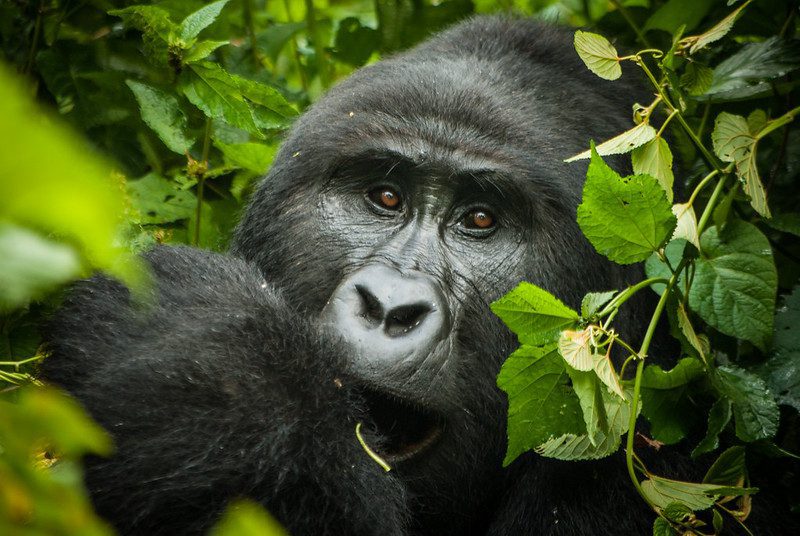
How Long a Gorilla Holiday in Uganda Should Last
The honest answer depends on how much driving you can stomach. Western Uganda is beautiful, but roads are slow, and a day on the road from Entebbe to Bwindi runs eight to ten hours. Every park you add costs a travel day. Some travellers find that relaxing, with roadside markets, the equator crossing and tea estates passing the window. Others find two long drives in a row the low point of the trip.
| Length | Typical route | Suits |
|---|---|---|
| 3 days | Bwindi only | Tight schedules |
| 4 to 5 days | Mburo, Bwindi | First trip |
| 6 to 7 days | Queen Elizabeth, Bwindi | Gorillas and game |
| 8 to 10 days | Kibale, QENP, Bwindi | Primates focus |
| 12 days plus | Murchison to Bunyonyi | Full Uganda |
A five day gorilla holiday is the shortest version that feels like a holiday rather than a mission. You break the drive at Lake Mburo, spend two nights at Buhoma so the trek is not squeezed between two long transfers, and either drive or fly back. A seven day trip adds two nights in Queen Elizabeth with game drives, the Kazinga Channel boat trip and the Ishasha sector on the way into Bwindi. At eight to ten days, Kibale’s chimpanzees join the route and the holiday turns into a full primate safari.
Build in one spare half day if you can. Rain can close a road, a flight can slip, and anyone who wakes with a cold should not trek, since gorillas catch human illnesses. A holiday with some slack absorbs that. A three day dash does not.
Flying changes the arithmetic. Scheduled light aircraft from Entebbe land at Kihihi in about an hour and a half, and from there the transfer to Buhoma takes roughly an hour, so a fly in holiday can give you two or three extra days on the ground. Our guide to getting to Bwindi compares the road, air and Kigali routes.
Here is how a typical seven day Uganda gorilla trip by road fits together. It is the shape most operators quote first.
Swap Lake Mburo for Kibale and the same week turns into a gorillas and chimpanzees trip. A fly in version trims the road days and gives that time back to the forest or the savannah.
Gorilla Holiday Routes Through Lake Mburo and Lake Bunyonyi
Two lakes do most of the work of breaking up the drive on a gorilla holiday route, one on the way in and one on the way out.
Lake Mburo National Park sits about four to five hours from Entebbe, which makes it the natural first night. It is a small, quiet park of acacia and rolling grassland where zebra, impala, eland and buffalo graze close to the lodges. Because there are few big predators, walking safaris, horse rides and cycling are allowed, which is a pleasant change after a long drive. An evening boat trip on the lake usually turns up hippos, crocodiles and fish eagles.
Lake Bunyonyi, near Kabale, fits better at the other end of the holiday, especially if your permit is in a southern sector. The lake is dotted with small islands and terraced hillsides, the water is free of bilharzia according to most local accounts, and the days are for canoeing, short island walks and doing very little. From Buhoma the drive takes most of a morning on winding roads, so it suits a final rest stop before the run back to Entebbe or across the border to Kigali.
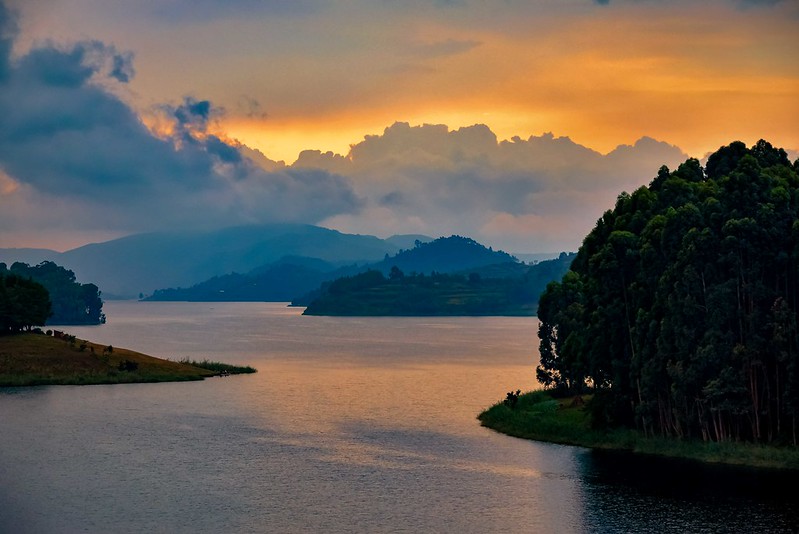
Lake Mutanda, close to Kisoro, does a similar job with the Virunga volcanoes as a backdrop. It suits holidays that also take in Mgahinga, Uganda’s other gorilla park, where golden monkey tracking can be added.
Gorillas and Game Drives: Queen Elizabeth and Ishasha Safari
Combining Bwindi with a Queen Elizabeth National Park safari is the most popular way to give a gorilla holiday some classic game viewing. The park lies directly north of Bwindi, and a holiday that drives in from the north can do the two back to back without retracing a single kilometre.
Most people spend two nights near Mweya or Kasenyi. Morning game drives on the Kasenyi plains look for lions, Uganda kob, buffalo and elephants. In the afternoon the Kazinga Channel boat trip runs along a shoreline crowded with hippos, buffalo wading in the shallows and plenty of waterbirds. Kyambura Gorge, on the eastern side, offers a chimpanzee trek in a sunken forest, with lower odds of a sighting than Kibale.
The road south to Buhoma passes through the Ishasha sector, famous for tree climbing lions that rest in the branches of fig and acacia trees. Sightings are common but not guaranteed. From Ishasha to Buhoma is about two hours, so a game drive there fits on the transfer day. In heavy rain the Ishasha road can turn to deep mud, and drivers sometimes reroute, which adds time.

Primate Holidays: Kibale Chimpanzee Trekking and Bwindi Gorillas
For many travellers the best primate holiday in Uganda pairs mountain gorillas with chimpanzees. Kibale chimpanzee trekking takes place in a forest near Fort Portal, about two to three hours north of Queen Elizabeth, so the classic route runs Kibale, then Queen Elizabeth, then Bwindi.
The two treks feel nothing alike. Chimps are loud, fast and often high in the canopy, so you spend the hour craning your neck and trying to keep up. Gorillas are calm, sit on the ground and let the group settle around them. Doing chimps first works well, since the gorilla hour then lands as the high point of the trip. Bigodi swamp, next door to Kibale, adds a gentle guided walk for birds and monkeys on the same afternoon.
Bwindi itself is a primate forest. Black and white colobus, L’Hoest’s monkeys and red tailed monkeys turn up on the Buhoma trails, and the park holds chimpanzees too, though they are not habituated for tourism there. Our page on Bwindi primates and wildlife lists the species.
Travellers who want more time with the gorillas can swap the standard trek for the gorilla habituation experience, which gives up to four hours with a family still being accustomed to people, in a group of four. It runs in the southern sector, not Buhoma, so it pulls the holiday route south.
Longer Gorilla Trekking Holidays with Murchison Falls and Jinja
Ten days or more lets a gorilla trekking holiday run the full length of western Uganda. The long loop usually starts in the north at Murchison Falls National Park, five to six hours by road from Kampala, where the Nile squeezes through a narrow cleft in the rock and launch trips run up to the foot of the falls. Game drives on the northern bank add giraffe, which the southwestern parks lack, and many routes break the drive at Ziwa, the only place on a standard Uganda safari where you can track rhinos on foot.
From Murchison the road heads south through Hoima and Fort Portal to Kibale, a full day of driving, then on to Queen Elizabeth and Buhoma. Finish at Lake Bunyonyi or cross to Kigali. Twelve to fourteen days covers it without rushing; fewer days means some very long stretches in the vehicle.
Jinja, east of Kampala where the Nile leaves Lake Victoria, fits a first or last day. White water rafting, a boat ride to the source of the Nile and a quiet night by the river are the usual reasons to go, and it suits travellers whose flight leaves late.
Buhoma Village Walks, Batwa Visits and Forest Trails on Your Gorilla Holiday
The day before or after the trek is free on most holidays, and Buhoma fills it well. The Buhoma village walk is a community run tour of two to three hours through farms and homes outside the park, usually taking in a traditional healer, banana beer brewing and a local school or craft group. Money from the walk goes back to the community, and the guides are from the village.
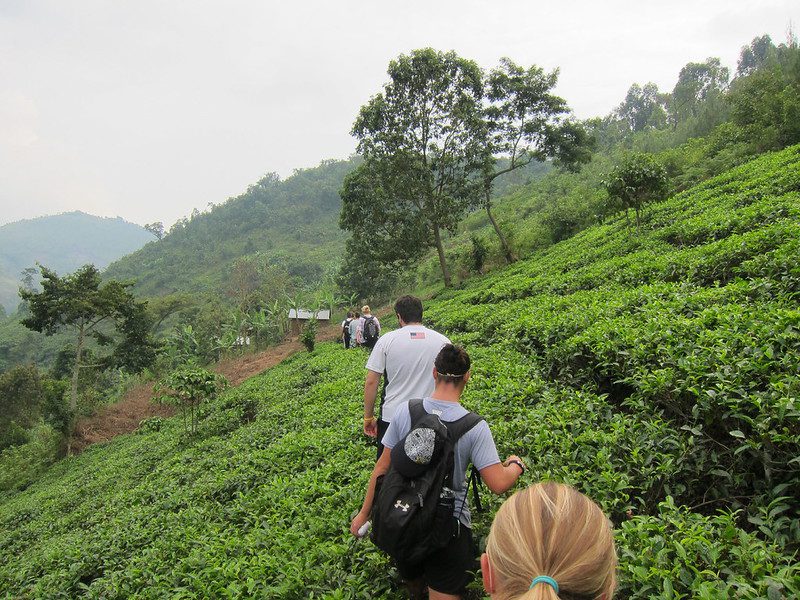
Evening song and dance performances by local groups can be arranged through most lodges. A visit with the Batwa people, the forest dwellers who lived in Bwindi before it became a national park, gives a sobering view of what conservation cost them, and the better programmes are run with Batwa communities rather than for them.
Inside the park, the Bwindi nature walks start from the Buhoma gate. The Waterfall Trail drops under tree ferns to a series of falls in about three to four hours. Munyaga River Trail is a short walk along the forest edge, good for birds and monkeys late in the afternoon. Rushura Hill climbs to views over the Albertine Rift towards Lake Edward and, on a clear day, the Rwenzori. Muzabajiro Loop reaches a viewpoint across the forest to the Virunga volcanoes. The Ivi River Trail follows an old road through the forest towards Nkuringo and is a favourite with birders; some walking holidays use it to cross Bwindi on foot.
Not every activity suits everyone. Several travellers say the waterfall walk is steep and slippery on the way back up, and that the village walk is far better with a guide who knows the families than as a quick tour of craft stalls.
Buhoma Lodges for a Gorilla Trekking Holiday
Buhoma has the widest choice of beds in Bwindi, and most of it sits within walking distance of the briefing point, so trek morning starts with a short stroll rather than an early drive. Book the room once the permit is confirmed, never before, and stay two nights so the trek is not squeezed between transfers.
The community owned places put their income straight into village projects, which is worth knowing if that matters to you. Nights at the forest edge are cool at around 1,500 metres, so a fleece earns its space in the bag whatever the tier.
Who a Gorilla Watching Holiday in Uganda Suits
A gorilla watching holiday suits more people than the trek’s reputation suggests. The deciding factor is rarely age. It is whether you can walk uphill on muddy ground for a few hours with rests.
The trek itself can take thirty minutes or most of the day, depending on where the family slept. Our page on trekking difficulty and fitness explains how to prepare. Hiring a porter is worth it for almost everyone. It helps your knees and puts money straight into the village economy.
Best Months for a Uganda Gorilla Holiday
Gorilla trekking runs every day of the year, so the question is what the rest of the holiday needs. The drier months, June to September and December to February, give firmer trails, easier roads to Ishasha and the best game viewing in Queen Elizabeth, when animals gather near water. They are also when permits and the best Buhoma rooms sell out first, the Christmas and New Year fortnight above all.
March to May and October to November are wetter. Afternoon storms are common, trails are muddier and some roads slow down. In return the forest is green, the lodges are quieter, and UWA has introduced a lower permit rate for April, May and November. Travellers escaping a European winter often pick January or February, when Bwindi is mild and dry.
See our full guide to the best time to go gorilla trekking in Uganda for month by month conditions, and pack for rain whatever the month. The gorilla trekking packing list covers boots, gaiters, gloves and rain gear; plenty of past trekkers say gardening gloves for grabbing vines and stinging nettles were the most useful thing they brought.
Gorilla Trekking Rules on Your Uganda Holiday
The Gorilla watching holidays sold in Uganda all lead to the same morning: a ranger briefing at the park office around 8am, then a walk with an armed ranger, trackers and up to seven other visitors to the family you have been assigned. Trackers set out earlier from where the gorillas nested the night before and radio their position back.
The rules exist to protect the gorillas from human disease and stress, and rangers enforce them:
For the full sequence of the day, which families trek from Buhoma and how hard the terrain is there, read the Buhoma guide linked above and the wider Uganda gorilla trekking safari overview for Bwindi National Park.
Extending Your Gorilla Trip to Rwanda, Kenya and Tanzania
Uganda’s gorillas sit on a wider East African circuit, and plenty of holidays use them as one chapter. The simplest extension crosses into Rwanda. Southern Bwindi is about four to five hours by road from Kigali, so you can fly into Kigali, trek in Uganda and finish with a second trek, golden monkeys or Lake Kivu in Volcanoes National Park. Our Rwanda gorilla trekking guide covers that side, and the East Africa Tourist Visa covers Uganda, Rwanda and Kenya on one sticker.
For a bigger trip, a short flight from Entebbe to Nairobi links Bwindi with a Masai Mara safari, timed for the wildebeest river crossings between July and October. Northern Tanzania works too: gorillas first, then a Serengeti safari and a few days on Zanzibar to finish. These combinations need careful flight planning, and an operator who works in both countries makes them easier.
Group Tours, Tailor Made Trips and Fly In Gorilla Safaris
The same gorilla trek sits inside very different holidays, and the style you pick decides your days more than the route does.
Many travellers read “gorilla tours” and “gorilla holidays” as the same thing. The difference is pace. A tour packs the trek into the fewest possible days; a holiday leaves room for a rest day, a lake and a second park. For worked examples of short trips and what they include, see our Uganda gorilla tours page.
Planning and Booking a Gorilla Holiday in Uganda
Start with the permit. Gorilla permits are limited to eight visitors per family per day and are issued by the Uganda Wildlife Authority, so your dates and sector depend on what is available. For June to September and the Christmas period, book three to six months ahead; for the busiest weeks, longer. UWA has suspended its unpaid reservation hold, so permits are paid in full when booked. Our page on booking Uganda gorilla permits explains how the process works.
Most visitors book the whole holiday through a licensed Uganda operator, who secures the permit, books lodges and supplies a driver guide and vehicle. Compare several on our gorilla safari companies list and ask each one for the same route so the quotes line up. Choose lodges by sector once the permit is confirmed; the Bwindi safari lodges page lists options from budget bandas to top end lodges.
Uganda Gorilla Holiday Questions
How much does a gorilla holiday in Uganda cost?
The gorilla permit is the largest single cost. UWA charges US$800 for foreign non residents, US$700 for foreign residents and UGX 300,000 for East African citizens. A low season rate of US$600 for foreign non residents (US$500 for foreign residents) has been announced for April, May and November; those permits cannot be rescheduled. On top of the permit, a five day road trip with mid range lodges commonly totals around US$1,800 to US$2,800 per person sharing, and a seven to ten day holiday with Queen Elizabeth and Kibale often runs US$3,000 to US$5,500. Fly in and luxury trips cost considerably more. Ask operators for itemised quotes.
What do other permits and extras cost on a Uganda gorilla trip?
The gorilla habituation experience costs US$1,500, and UWA has announced a rise to US$1,800 for foreign non residents from January under a recent tariff letter, so confirm the rate for your dates. Kibale chimpanzee permits, park entry fees for Queen Elizabeth and Lake Mburo, porters (often around US$15 to US$20 plus a tip) and visas add to the total. A single entry Uganda tourist visa is US$50, and the East Africa Tourist Visa is US$100. For comparison, a Rwanda gorilla permit is US$1,500.
How many days do I need for a gorilla holiday in Uganda?
Five days is the shortest comfortable gorilla holiday from Entebbe by road, with a night at Lake Mburo and two at Buhoma. Seven to ten days lets you add Queen Elizabeth, Ishasha and Kibale. Three days works only if you are short of time and accept two long travel days.
Am I fit enough for gorilla trekking?
If you can walk uphill for two or three hours with breaks, you can almost certainly do it. Treks range from under an hour to six hours or more, on steep and often muddy ground. Hire a porter, use a walking stick from the park office, and tell the rangers at the briefing if you want a shorter trek.
Is seeing the gorillas guaranteed on a gorilla trekking holiday?
No sighting can be promised, but habituated families are tracked daily and sightings in Bwindi are very likely. On a longer holiday a second trek gives a backup if something goes wrong on the first.
Should I choose Uganda or Rwanda for a gorilla holiday?
Rwanda’s Volcanoes National Park is closer to Kigali airport and quicker to reach. Uganda’s permits are cheaper, and Bwindi pairs naturally with game drives, chimpanzees and lakes, so it suits a longer holiday. Many travellers do both, and our Uganda vs Rwanda gorilla trekking comparison sets them side by side.
How many mountain gorillas live in Bwindi?
The 2018 census counted 459 mountain gorillas in Bwindi out of a world total of 1,063. A new Bwindi census began in May 2025, and its results are still awaited.
Can children come on a gorilla holiday?
Children can travel with you, but only those aged 15 and over may trek. Younger children can join the village walk, the game drives in Queen Elizabeth and the boat trips, and some lodges arrange activities for them during the trek.
Do I need a yellow fever certificate for Uganda?
Entry rules on yellow fever have recently changed, and neighbouring countries may still ask for proof if you cross borders. Check the current rules with Uganda immigration and your doctor before travel, and carry the certificate if you have one.
Is a gorilla holiday in Uganda safe?
At the latest check, the US State Department rates Uganda at Level 4, Do Not Travel, naming health, crime, terrorism and unrest, while the UK and Canada publish their own, separate advice. Gorilla treks in Bwindi go out with armed UWA rangers, and most visitors travel with a licensed operator and driver. Read our Uganda safety guide, check your own government’s latest advice and confirm your travel insurance still covers you before you pay a deposit.
Which countries offer gorilla trekking holidays?
Mountain gorillas can be trekked in Uganda, in Bwindi and Mgahinga, and in Rwanda’s Volcanoes National Park. The Democratic Republic of Congo has habituated families too, but Virunga National Park lists its gorilla treks as closed until further notice at the latest check. Lowland gorillas live in central Africa; our mountain vs lowland gorilla guide explains the difference.
Can I trek the gorillas twice on one holiday?
Yes. Book two permits for different days, either both in Buhoma or one in Buhoma and one in a southern sector. Each trek is assigned on the day, so you will usually meet two different families, and a second trek is a good hedge against a wet or difficult first day.