A 9 day Tanzania safari on the northern circuit usually means a night in Arusha, a full day in Tarangire, Lake Manyara or the Karatu highlands, three nights in the Serengeti placed where the migration is that month, a morning on the Ngorongoro Crater floor and a final night before flying home. Most travellers book it as a private road safari, sometimes flying the longest leg. The route runs across northern Tanzania from Kilimanjaro airport to the Serengeti plains.
Nine days is long enough to see the main parks without a bed change every night, and short enough that the Serengeti nights have to be placed with care. Below you will find the standard route night by night, then the seasonal versions that change its shape: calving at Ndutu from December to March, river crossings in the north from July to October, and the Western Corridor in June. After those come the Lake Natron loop, the version for Kilimanjaro climbers, the Kenya, Zanzibar and gorilla trekking swaps, and what a package should include.
The 9 Day Tanzania Safari Itinerary, Night by Night
This is the shape most operators quote for a 9 day northern circuit safari. It drives the whole way, keeps one guide and one vehicle throughout, and uses six beds over eight nights.
Three Serengeti nights is the difference between this trip and a seven day safari, and it is one fewer than the 10 day Tanzania safari allows. That makes the split between central Serengeti and the herds the biggest decision on the whole itinerary. The 8 day safari drops a night from the middle, and the 12 day version adds more Serengeti time.
Driving times decide how a route feels more than distances do. These are typical times for the main legs in a safari vehicle, with game viewing on the way stretching the park sections.
| Leg | Typical time | Road |
|---|---|---|
| Airport to Arusha | About 1 hour | Tarmac |
| Arusha to Tarangire | About 2 hours | Tarmac |
| Manyara to Karatu | Under 1 hour | Tarmac |
| Karatu to Seronera | 4 to 5 hours | Gravel |
| Seronera to Kogatende | 4 to 5 hours | Gravel |
| Seronera to rim | 4 to 5 hours | Gravel |
| Crater to airport | 4 to 5 hours | Tarmac |

Days 1 to 3: Arusha, the Tarangire Safari and Lake Manyara
Most international flights arrive in the evening, so day one is a sleep. Coffee lodges on the lower slopes of Mount Meru are quieter than hotels in town and sit a little closer to the road west. If you land in the morning, the spare afternoon suits something gentle: a canoe on the small crater lake at Duluti, a walk around a coffee farm, or a short look at Arusha’s markets with a local guide.
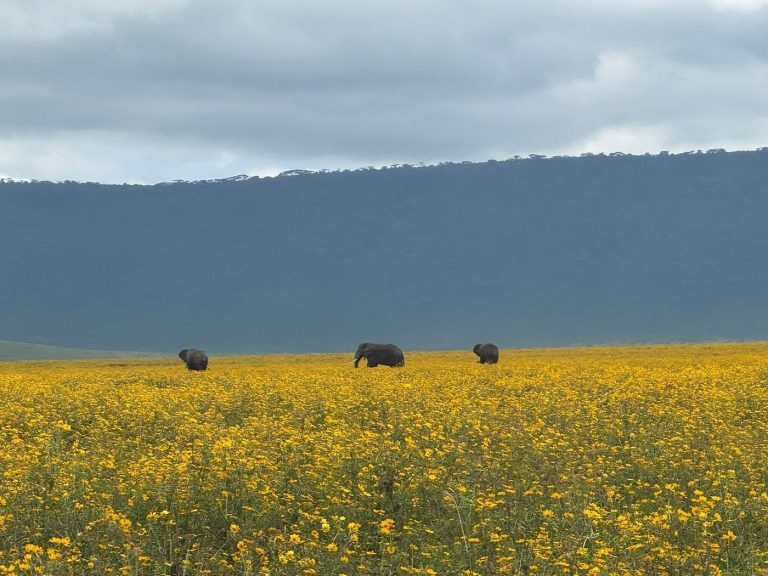
The Tarangire safari on day two is where many people see more elephants than anywhere else on the trip. In the dry months from about June to October the Tarangire River draws them in large family groups, under baobabs that stand on every ridge. Lion, buffalo and giraffe stay through the dry season, lesser and greater kudu turn up in the thicker bush, and the yellow collared lovebird, found only in this part of Tanzania, is a target for birders. Sleeping at or beside the park gives you a dusk drive and an early start; camps on the boundary also run walks and night drives, which are not allowed inside the park itself.

Day three runs at a gentler pace. A Lake Manyara game drive starts in groundwater forest full of baboons and blue monkeys and ends on grassland by the lake, where flamingos come and go with the water level. Manyara has a long name for tree climbing lions, much like Ishasha in Uganda, which our page on tree climbing lions describes, but sightings have become rare and many trip reports say they never showed. A treetop walkway of suspended bridges through the forest canopy gets you out of the vehicle for an hour, and a guided walk through Mto wa Mbu, the farming town at the foot of the escarpment, shows banana and rice plots worked by families from many different ethnic groups.
Travellers on a second or third safari often skip Manyara for an afternoon on a Karatu coffee farm, a walk in the highland forest, or a visit to Lake Eyasi, where Hadzabe hunter gatherers still live, about two hours south.
Days 4 to 6: Three Nights on a Serengeti Safari
The Serengeti safari is the core of the trip, and the drive in takes most of day four. From Karatu the road climbs to the crater rim, drops onto the short grass plains past the Olduvai Gorge turning, and reaches Naabi Hill Gate in three to four hours. Seronera is another hour or more beyond, with game viewing on the way. The road is corrugated gravel, dusty in the dry months and muddy in the wet. People with back trouble feel it, and a seat near the middle of the vehicle helps.
A stop at Olduvai Gorge breaks the drive. The small museum on the rim explains the early human fossils and footprints found in the area, and a guide talks you through the gorge below. Allow an hour.
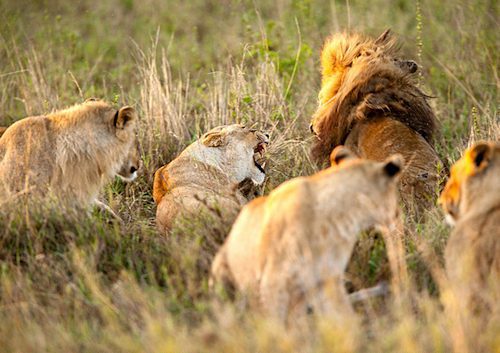
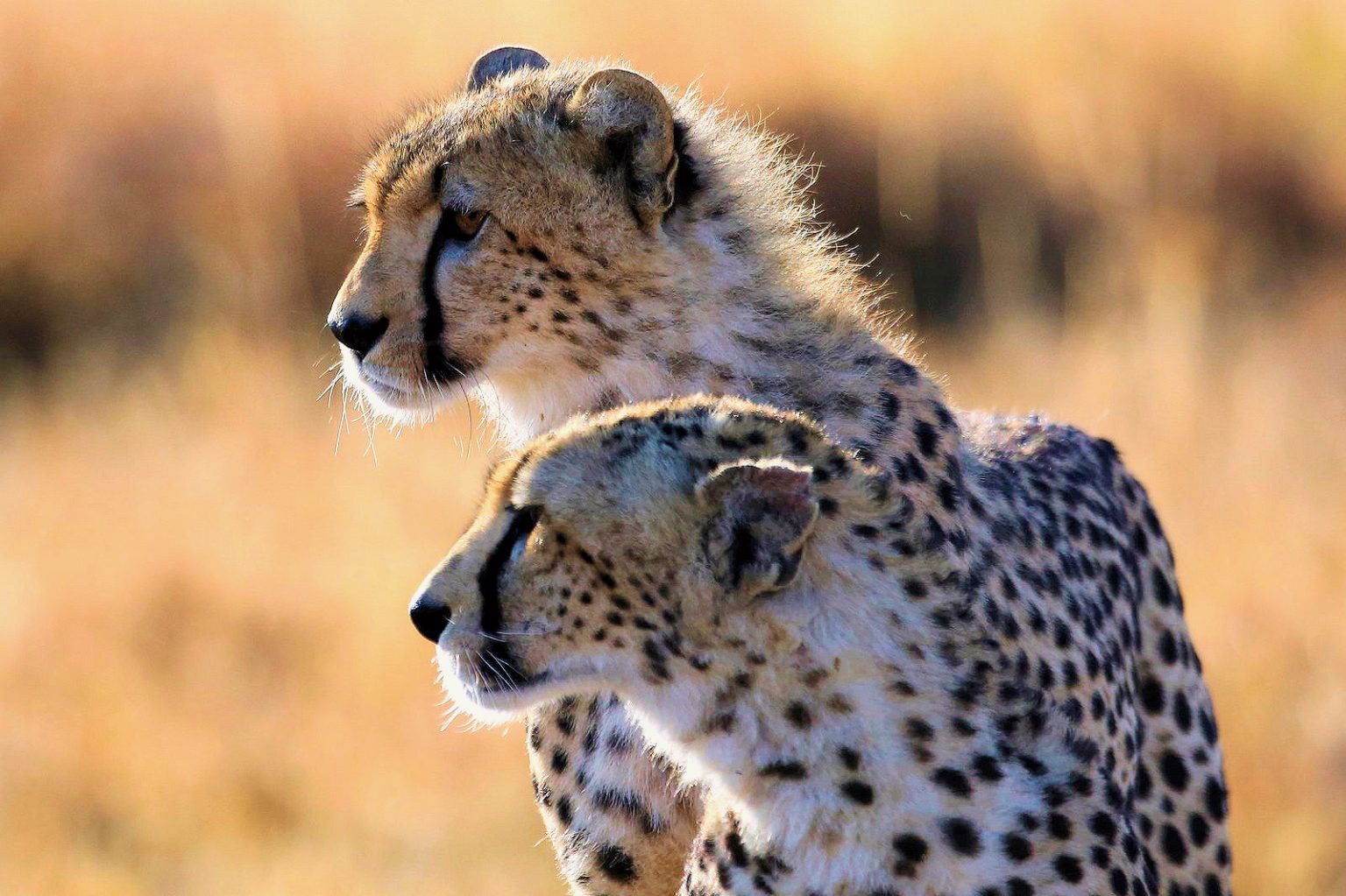
Central Serengeti around Seronera holds resident game all year. The river line and the granite kopjes are among the most reliable places in Africa for leopard, lion and cheetah, though no sighting is ever guaranteed. A full day here, out at 6am with a picnic lunch and back after 4pm, is how most guides like to work. The Seronera visitor centre, with a short trail and displays on the migration, is a good place to sit out the hottest hour.

Nights five and six go wherever the herds are, from a seasonal or mobile camp that moves with them. A hot air balloon safari at dawn is the most popular add on, booked as a single morning from Seronera, Ndutu, the Western Corridor or the north depending on the season, with breakfast in the bush after landing. A sundowner at a kopje on the last evening is the other small extra many camps offer. Our Serengeti safari guide covers each region and its camps.

One lesson from trip reports: nine days of game drives can feel long for active people. Several travellers wrote that they were sore from sitting and wished they had asked for a walk or a slow afternoon. Ask for one deliberately, at a Tarangire boundary camp or in Ndutu, where walking and off road driving are allowed under conservation area rules.
Where to Place the Serengeti Nights: Migration Safari Months
Your travel month decides more about this 9 day migration safari than the lodge list does. The herds move in a loose loop through the year, and the second base should sit near them.
| Months | Herds usually | Second base |
|---|---|---|
| Dec to Mar | Calving, south | Ndutu |
| Apr to May | Moving north | Seronera |
| Jun | Western Corridor | Grumeti area |
| Jul to Oct | Mara River | Kogatende |
| Nov | Heading south | East or Seronera |
Three of those seasons change the shape of the whole route, not just the camp, so they get their own versions below. In April and May the long rains bring the lowest rates and some closed camps, though central Serengeti and the crater still give good viewing to people who do not mind afternoon storms. November’s short rains turn the herds south through the eastern plains. Our great wildebeest migration page follows the herds month by month, and best time to visit Tanzania covers the weather.

Calving Season Version: Ndutu and the Southern Plains Safari
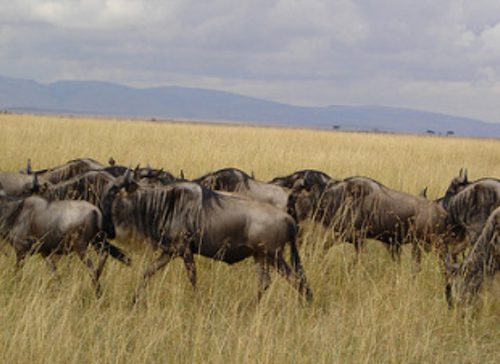
From about December to March the herds calve on the short grass plains of the southern Serengeti and the Ndutu area, which lies inside the Ngorongoro Conservation Area. February is the peak, when hundreds of thousands of calves are born within a few weeks and lion, cheetah and hyena follow closely. For this calving season safari, the nine days reorder themselves around the crater.
This is the easiest version on driving, because the crater and the herds are close together. Off road driving is permitted in parts of the Ndutu area, so your guide can reach a birth or a hunt that a national park track would not. If the short rains fail, the herds can drift east for a few weeks; three nights within reach of both Ndutu and the southern plains covers that. Some operators flip the order and finish with two nights near the crater, adding a balloon flight over the Ndutu lakes and plains on the last full morning. Camps near Ndutu fill nine to twelve months ahead for February.
River Crossing Version: Drive In, Fly Out of the Northern Serengeti
From July to October the herds reach the Mara River in the far north around Kogatende and Lamai. A river crossing safari in nine days only works if you flip the route, take the crater early and fly out of the north at the end.
Three nights in the north is the point. Herds can mass on a bank for hours and then turn away, and trip reports describe long waits in a parked vehicle followed by several crossings the next morning, so one night rarely delivers where three often do. Driving back from Kogatende to the crater takes about eight hours, which is why the flight out matters. August and early September are the most reliable months and the busiest, with many vehicles at the popular crossing points.
Western Corridor and Lake Natron Safari Versions
Two more shapes turn up among the nine day trips operators publish, and each suits a particular traveller.
The Western Corridor safari is the June choice. From late May into July the herds often gather south of the Grumeti River in the long finger of the park that runs toward Lake Victoria, and the river’s large crocodiles wait for them at the crossings. A typical plan runs Arusha, Tarangire, then a long drive to central Serengeti on day three, two nights in the corridor from day four, back to Seronera for two nights, then the crater on the way out. The corridor is about three hours from Seronera, with far fewer vehicles than the north, and its gallery forest along the river holds colobus monkeys and good birding. The catch is timing: if the herds pass early or late, you sit in a quiet corner of the park, so book it only for June and ask your operator where the herds were the week before you arrive.
The Lake Natron safari swaps Tarangire and Manyara for the Rift Valley north of Mto wa Mbu. Natron is a shallow soda lake below Ol Doinyo Lengai, an active volcano, and the main breeding ground of lesser flamingos in East Africa. A nine day loop spends one or two nights there, with a waterfall gorge walk and a visit to the ancient human footprints at Engare Sero, then crosses the Loliondo highlands to Klein’s Gate and the northern Serengeti, works south through Seronera and leaves by the crater. Some versions finish with a night on the lower slopes of Kilimanjaro near Moshi, with a village and farm walk on the last morning. The tracks to and from Natron are rough and the heat at the lake is intense, so this route suits a second safari more than a first. Our 7 day Tanzania safari lays out the Natron loop day by day.
Days 7 and 8: Ngorongoro Crater Safari Finish
In the standard route, the Ngorongoro Crater safari comes last because you pass it on the way out. Sleeping on the rim puts you at the descent road for the 6am opening, ahead of the vehicles coming up from Karatu. Rim lodges sit at over 2,000 metres, and nights are cold enough for a fleece and a hot water bottle whatever the month. Morning fog often hides the view from the top until mid morning.
The floor drops about 600 metres from the rim and covers roughly 260 square kilometres of grass, swamp, a soda lake and fever tree forest. It is one of the best places in East Africa to look for the black rhino, which usually keeps to open grass far from the track, so bring binoculars. Lion, hyena, buffalo, old elephant bulls and hippo are regular, and Lake Magadi, the soda lake in the centre, often holds flamingos. Each vehicle is limited to about six hours on the floor.

Crowds are the usual complaint, and dust is the second. Going down at first light and having your picnic after the mid morning rush avoids most of both. One honest regret from a luxury traveller’s account: skipping the crater to spend more time in private concessions. It is the one stop on the northern circuit with no real substitute. Our Ngorongoro Crater guide has the full detail.
Watch the last day closely when you book flights. Some itineraries do the crater on the morning of day nine and drive straight to Kilimanjaro airport, arriving in the late afternoon after four to five hours on the road. That only works with a flight leaving in the evening, roughly 9pm or later for long haul departures. Anything earlier needs the extra night in Karatu or Arusha that the standard route builds in, or a short flight from the Manyara or Ngorongoro airstrip.
Kilimanjaro Climb and Safari: the Acclimatised Version
Kilimanjaro climbers make up a large share of people booking a safari of this length, and nine days does not hold both a climb and a full safari. A sensible climb takes six to eight days on the mountain; add arrival, a rest night and departure and a Kilimanjaro trek plus a nine day safari is a trip of two and a half weeks. Climbers who only have nine days in total should pick a shorter safari, such as our 3 day Tanzania safari routes.
For people adding the full nine days to a climb, two versions work.
Safari after the climb. Most people come down tired, with heavy legs for a few days, and game drives are seated, which suits recovery well. Make day one a rest night in Moshi rather than Arusha, drop the Manyara morning on day three, and keep the walking optional. Collection from Moshi adds about an hour of driving on day two.
Safari before the climb. Nights on the crater rim at over 2,000 metres and an Arusha National Park walk in the Mount Meru foothills give a little gentle altitude exposure before the mountain, and some climbers like starting the climb with a few days at moderate height behind them. It is no substitute for a proper acclimatisation schedule on the mountain itself. Swap Lake Manyara for Arusha National Park on day two or three, and finish the safari in Moshi rather than at the airport. Our Kilimanjaro trekking guide compares the routes, and the cost to hike Kilimanjaro sets out the climb budget.

Swaps and Add Ons: Kenya, Zanzibar and Gorilla Trekking
The nine day frame bends in several directions, and the ranking itineraries show most of them.
Kenya and Tanzania. Some nine day routes start in Nairobi with two nights in Amboseli below Kilimanjaro, cross at Namanga to Tarangire, run through the crater and the Serengeti, then cross again at Isebania into the Masai Mara for two nights before the drive back to Nairobi. Each border means immigration queues, two visas and usually a change of vehicle and driver, since many operators’ vehicles are licensed for one country only. The Mara and northern Serengeti are the same ecosystem, so the trade is variety of countries against time in the vehicle.
Zanzibar. A nine day safari and beach trip cuts the safari to four days and gives the island four nights, reached by a flight of about an hour and ten minutes from Arusha or Kilimanjaro, or directly from some Serengeti airstrips.
Four safari days is the minimum that still reaches the Serengeti, and it drops Tarangire entirely. If elephants matter to you, add a day and lose one beach day. The 15 day Tanzania safari and Zanzibar holiday shows the longer version.
Gorilla trekking. Tanzania has no gorillas. Trim the safari to six days, fly from Kilimanjaro to Kigali or Entebbe on a day with a direct flight, and spend the last three days on a gorilla trekking safari in Bwindi or a Rwanda gorilla trek. From Kigali the southern Bwindi sectors are about four to five hours by road; from Entebbe a domestic flight to Kisoro or Kihihi saves a day. Gorilla permits sell out in the dry months, so book the gorilla permit before the Tanzania lodges. Our page on a Tanzania safari with gorilla trekking sets out the timings, and getting to Bwindi covers the transfers.
Culture. A Maasai village visit near the crater or a morning with the Hadzabe at Lake Eyasi fits into any version. Village visits carry a fee, and travellers often mention pressure to buy crafts at the end, so agree the arrangements with your guide first.
Lodges, Camps and What a 9 Day Safari Package Includes
Accommodation on a 9 day safari tour comes in three broad tiers, and many operators quote the same route at all three. Budget trips use public campsites, such as the Simba campsite on the crater rim and the Seronera sites, or simple tented camps outside the park gates, with a cook travelling with the vehicle. Mid range trips use lodges in Karatu and on the rim and permanent tented camps in the Serengeti. Luxury trips add private concessions near Tarangire and Manyara, rim lodges with crater views and small mobile camps that follow the herds, often linked by light aircraft. Inside the parks, tented camps send an escort to walk you to your tent after dark.
Names are examples rather than recommendations, and operators substitute similar camps when one is full. Ask for the named lodge for each night in writing.
Five things move the price more than anything else. Lodge tier comes first. Season follows, with July to September at the top and April and May at the bottom. Group size matters, since the vehicle and guide cost the same for two or six people. Flights replace road days with airfares. And sleeping inside a park adds a nightly concession fee that camps outside the boundary avoid. The FAQ puts figures on each, and our Tanzania safari cost page breaks them down further.
Group safaris cost less but share the vehicle with up to six strangers. Most travellers who wrote up a private trip said the extra was worth it for control over timing, and the same reports advise saying on day one what kind of days you want, since guides tend to keep a habitual rhythm unless asked. Choose a licensed operator, ideally a member of the Tanzania Association of Tour Operators, and compare at least three quotes for the same route. Our guides to Tanzania safari companies and the best safari companies in Tanzania explain what to look for, the Tanzania safari guide covers the wider country, and the African safari packing list covers the soft bag and layers a nine day trip needs.
9 Day Tanzania Safari FAQ
How much does a 9 day Tanzania safari cost?
Published operator prices for the northern circuit fall into bands per person per day, two sharing, with park fees included: roughly US$250 to US$400 for budget camping or group trips, US$450 to US$800 for a mid range lodge safari with a private vehicle, and from about US$900 to well past US$1,500 for luxury camps. Over eight safari nights that works out at about US$2,000 to US$3,200 on a budget, US$3,600 to US$6,400 mid range and US$7,200 upward for luxury, before international flights, visas and tips. Nine day packages published by Tanzanian operators sit inside those bands, from a little over US$2,300 per person on a basic road route to above US$5,000 at a comfort level with a Western Corridor camp. Green season rates from late March to May can be 20 to 30 percent lower at many lodges, and operators commonly take a deposit at booking with the balance due before or on arrival. These are market ranges, so ask for an itemised quote, and see our Tanzania safari cost guide for full totals.
Which park fees and extras does a 9 day safari price include?
Tanzania National Parks lists its non resident tariff in shillings: Serengeti entry is TZS 178,850 per adult per 24 hours, about US$70, and Tarangire and Lake Manyara TZS 127,750, about US$50, with operators often adding 18 percent VAT. With VAT, Serengeti entry comes to US$82.60 in the high season and US$70.80 from mid March to mid May. The Ngorongoro Conservation Area charges US$70.80 per adult per 24 hours, which a road safari also pays crossing to the Serengeti, plus a crater service fee of US$295 per vehicle per descent and US$59 per adult per night at rim lodges. Shared balloon flights are about US$599 to US$700 per person, and light aircraft flights between Serengeti airstrips and Arusha commonly cost US$300 to US$500 one way. The tourist visa is US$50 for most nationalities and US$100 for US citizens, and the government inbound travel insurance is US$44 per adult for up to 92 days, with one policy covering both mainland Tanzania and Zanzibar. Fees change, so confirm them with your operator.
What does a gorilla trekking swap add to the budget?
A Uganda gorilla permit costs US$800 for foreign non residents and US$700 for foreign residents, with a lower US$600 rate announced for April, May and November; those low season permits cannot be rescheduled and UWA now takes full payment at booking. A Rwanda permit costs US$1,500. Regional flights and the transfer to the forest come on top. Common tipping guidance on the Tanzania side is US$20 to US$30 per vehicle per day for the guide.
Is 9 days enough for a Tanzania safari?
Yes for the northern circuit. It covers Tarangire, the Serengeti and the crater with three Serengeti nights, which is enough to follow the herds in most months. It is not enough for the southern parks as well, or for a Kilimanjaro climb plus a full safari.
What is the best month for a 9 day Tanzania safari?
June to October gives the best general game viewing, with Mara River crossings from July and the Western Corridor at its best in June. February is the peak of calving at Ndutu. June and early November offer good viewing with fewer vehicles, and April and May are wet, quiet and cheapest.
Should I drive the whole 9 day safari or fly part of it?
Driving keeps one guide with you throughout and costs less. Flying one leg, usually out of the Serengeti at the end, saves the longest day and is close to a must for the northern river crossing version. Light aircraft enforce a soft bag limit, commonly 15 to 20 kilograms.
Is a 9 day safari tiring?
It can be. Game drives need little fitness, but long days on rough roads add up, and some travellers find nine days of drives too much sitting. Build in a slow afternoon, a walk at a boundary camp or a Karatu farm morning.
Is the 9 day route safe and suitable for families?
The northern parks are well run and safari routes are well travelled. At the latest check the US State Department rated Tanzania at Level 2, Exercise Increased Caution, mostly over crime in towns, so keep valuables in the lodge safe and use the operator’s transfers after dark. Stay in the vehicle except at marked sites, and follow camp rules on walking after dark. Families do better with two nights per stop and a lodge pool, and some camps set minimum ages. Gorilla trekking has a minimum age of 15.
Can travellers with limited mobility do a 9 day safari?
Yes, more easily than most safaris. A private road safari is almost entirely seated, several lodges in Arusha, Karatu and the Serengeti have ground floor rooms with level access, and some operators run vehicles with a lift or a swivel seat. Tell the operator early, ask for room photos, and expect the gravel roads to be the hardest part. Our page on gorilla trekking for travellers with special needs covers the gorilla add on.
Do I need malaria tablets or a yellow fever certificate?
The northern parks are malaria areas, so ask a travel clinic about tablets and use repellent at dusk. Tanzania may ask for a yellow fever certificate if you arrive from a country with yellow fever risk, including Kenya and Uganda, which matters on the Kenya and gorilla versions.