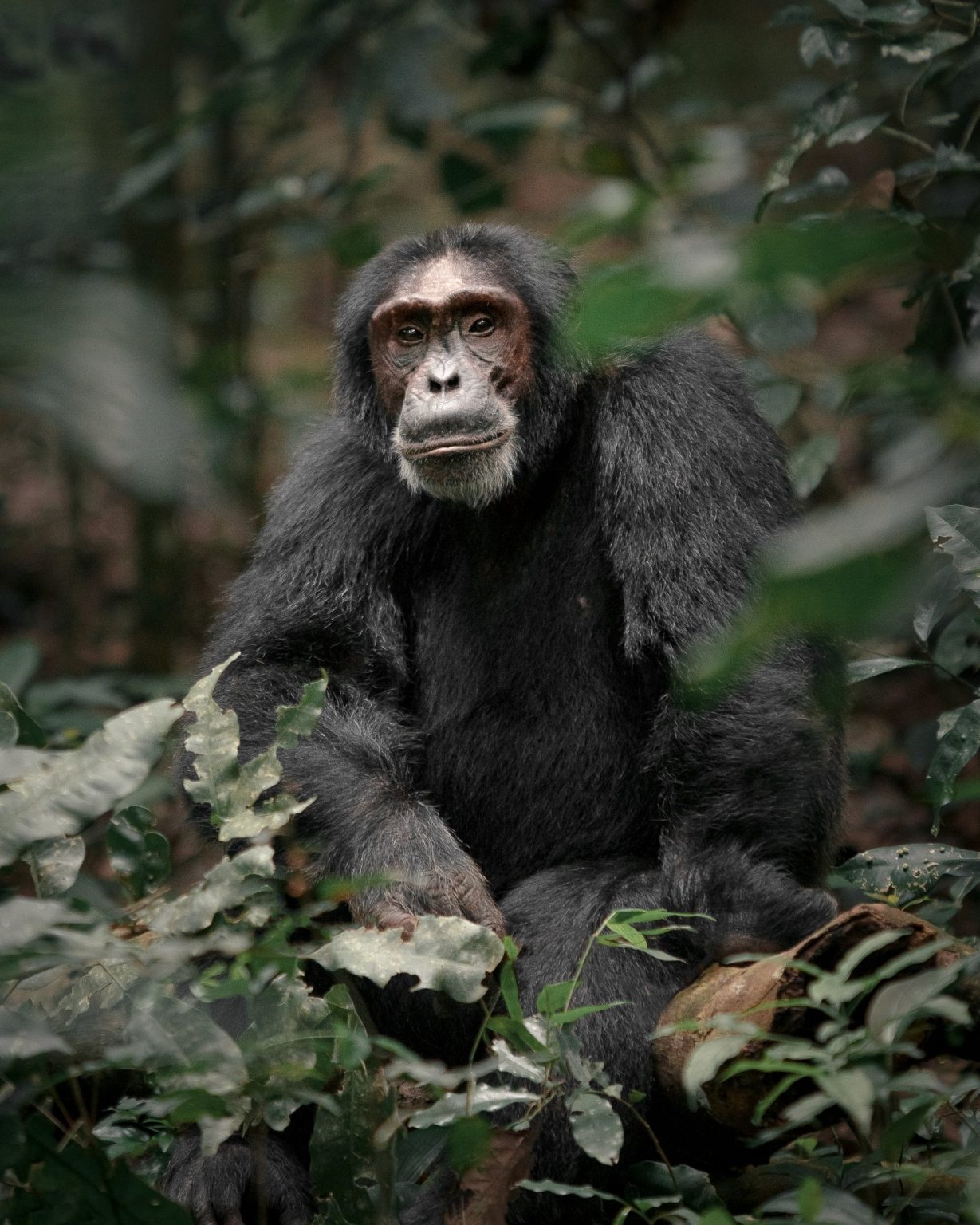
Kibale chimpanzee trekking is a ranger guided walk into Kibale National Park to find a habituated chimp community, then one hour watching them feed, call and groom, and it is the most reliable place in Uganda to see wild chimpanzees. Treks start from the Kanyanchu visitor centre, with permits booked ahead through a licensed tour operator that is a recognised member of AUTO, the Association of Uganda Tour Operators, which buys the permit from UWA in your name. Kibale is a mid altitude rainforest of nearly 800 square kilometres near Fort Portal in western Uganda.
Kibale was protected as a forest reserve in 1932 and became a national park in 1993. It holds about 1,500 chimpanzees, 13 primate species and around 370 bird species, which is why guides call it the primate capital of East Africa. All permit prices are in the FAQ at the end.
How Kibale Chimpanzee Trekking Works from Kanyanchu
Every tourist chimpanzee trekking group in Kibale sets off from Kanyanchu. Arrive about half an hour before your slot. Rangers check your permit against your passport, then a UWA guide runs through the rules and splits visitors into groups of six. You walk into the forest straight from the visitor centre, so there is none of the long drive to a trailhead that some gorilla sectors involve.
So what is chimpanzee trekking, in plain terms? It is a search on foot. Trackers leave early to find where the Kanyanchu community slept and radio its position to the guides, who lead each group along cut trails and then off them. Sometimes the chimps are twenty minutes away. On other days the search takes two hours or more, because a chimp community does not move as one unit. It splits into small parties that forage separately and regroup.
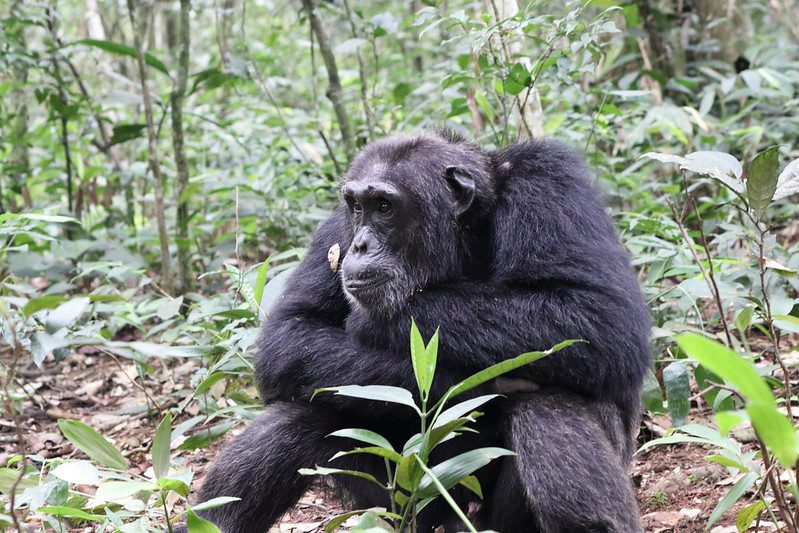
The Kanyanchu chimps have taken daily visitors since the early 1990s and UWA puts the sighting rate above 90 percent. A rate is not a promise, and a few groups each season come back with nothing better than glimpses of chimps high in a fruiting tree.
Permits for standard tracking must be booked in advance, and since UWA stopped holding permits on reservation they are paid in full at booking. June to September and December to February sell out first. Visitors buy through a licensed safari company that is a recognised AUTO member, since UWA sells chimp permits to licensed operators rather than to visitors.
Inside a Kibale Chimp Tracking Hour
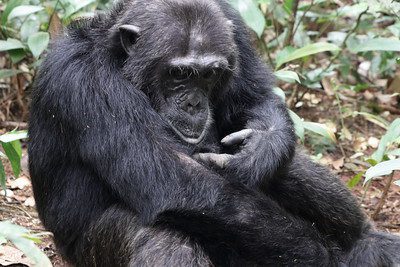
A Kibale chimp tracking hour rarely looks like the photographs. Gorillas sit and feed in one place for long stretches. Chimpanzees move fast, call constantly and climb out of sight without warning. If the community is spread through a fig in fruit, you may spend much of your hour staring straight up, and a stiff neck is a common souvenir.
Then they come down. Adults groom and squabble a few metres off the trail, juveniles chase each other, and a burst of pant hoots and buttress drumming can drown out conversation. You often hear a chimp party long before you see it. When the group moves, it moves, and your guide follows at something close to a jog through undergrowth while you keep up behind.
Trip reports repeat a few practical lessons. Stand clear when chimps are directly overhead, because fruit, twigs and urine fall. Tuck trousers into socks before you start, since a column of safari ants crossing a boot can cost five minutes of the hour. And expect company: in busy months two or three tracking groups sometimes converge on the same party of chimps, which crowds the viewing.
The 8am session tends to find chimps at their most active, feeding low after waking, and most visitors rate it the best slot. The 2pm group often finds them resting after the midday heat. A smaller number of travellers pick the afternoon on purpose, because the morning is fuller with people who plan Bigodi for later the same day.
Photography is hard work. The forest floor is dark even at noon and black fur against shade confuses autofocus, so raise the ISO, switch off the flash, which the rules forbid anyway, and accept that some frames will be soft. A mid range zoom earns more keepers here than a very long lens.
The Chimpanzee Habituation Experience in Kibale Forest
The chimpanzee habituation experience is for anyone who suspects an hour will feel short. Instead of joining the tourist community, you go out with researchers and habituators who follow a group still being accustomed to people, and you stay with it for most of the day.
Days start before dawn, around 6am, so the group reaches the nest site as the chimps wake and climb down. From there you follow them through feeding, travel and rest, sometimes until they build fresh nests in the late afternoon. Habituation takes about two years of daily contact before a community is calm around people, and you are watching part of that work.
| Feature | Tracking | Habituation |
|---|---|---|
| Start | 8am, 11am, 2pm | About 6am |
| Chimp time | One hour | Most of a day |
| Chimps | Fully habituated | Semi habituated |
| Effort | Moderate | Long and tiring |
Do not book it expecting a better view. Often the view is worse, since these chimps keep more distance and are less settled. What you buy is time, and with it the behaviour a single hour rarely shows: nest building, a hunt, the shifting alliances of males on patrol. Photographers and serious primate watchers get the most from it. The gorilla version is the gorilla habituation experience in Bwindi.
Habituation places are few and go early. At times the experience has been paused or limited, so confirm it is running on your dates before you build a route around it.
Chimp Trekking or Gorilla Trekking: How the Two Safaris Compare
Most travellers who book a chimp trekking safari in Kibale are also trekking gorillas in Bwindi, and the two feel very different.
Which is better? The honest answer is that they complement each other. The gorilla hour is quiet and close, the chimp hour loud and restless, and plenty of visitors come away saying the chimps were the bigger surprise. Doing chimps first works well as a warm up for the harder walk in Bwindi. Our gorilla and chimpanzee safari guide links the two parks in five days.
Kibale Chimp Trekking Rules, Fitness, Safety and Minimum Age
The rules on a Kibale chimp trek exist because chimpanzees share roughly 98 percent of our DNA and catch human colds and flu easily.
Go by UWA’s figure and confirm it when you book, because rangers check passports at Kanyanchu and turn away underage visitors. Families with younger children can do the Bigodi swamp walk and the crater lakes, which suit all ages.
Physically, Kibale is easier than gorilla country. Trails are flatter and lower than Bwindi’s and most walks are shorter. It is still rainforest: wet leaves, roots, the odd steep stream bank, nettles and thorny vines. Moderate fitness is enough, and the effort comes from keeping pace when chimps travel rather than from climbing. Porters can be hired at Kanyanchu to carry a day pack or camera bag, and there is no harder or easier route to choose between, since the chimps decide where you go.
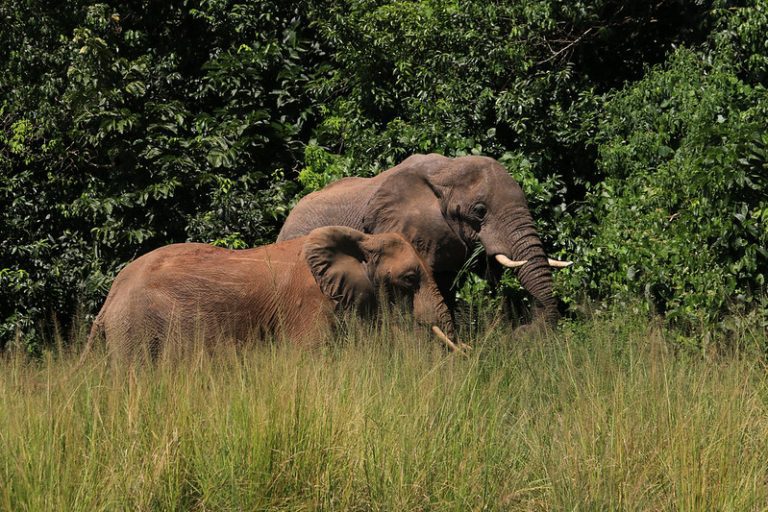
Are chimpanzees friendly, and is the trek safe? Habituated chimps ignore people most of the time, but they are wild, strong and occasionally excitable, especially adult males displaying to one another. Displays can involve charging past, slapping trees or dragging branches. Your guide reads this behaviour and will move the group back when needed, and the 8 metre rule is there for your safety as much as theirs. Forest elephants also use Kibale, and guides keep watch for them on the trails.
Is chimp trekking ethical? Visits are capped at small groups for one hour, rangers enforce distance and health rules, and permit revenue funds the rangers and community projects around the park. The case against is that habituation changes how wild animals live alongside people. Most primatologists who work here accept tourism on these terms, and Kibale’s long research history shows the communities have held up under it.
Long trousers, long sleeves in muted colours, boots with grip, a light rain jacket and gardening gloves for grabbing vines are the basics. The chimpanzee trekking packing list goes item by item for Kibale and the other chimp forests. Our Uganda trekking packing list covers the kit in more detail, and a good insect repellent helps against ants and forest flies.
Kibale’s Chimpanzee Communities on a Primate Safari
What is Kibale National Park famous for? Chimpanzees, first and foremost, and the decades of research that make Kibale’s chimps some of the best studied anywhere. A primate safari here is a visit to a forest where scientists have followed some communities for more than thirty years.
About 1,500 chimpanzees live in the park, split into more than a dozen communities, and only a few of them are habituated for tourism or research. Uganda as a whole holds roughly 5,000. Each community defends a territory, and males patrol its edges.
Chimps eat mainly ripe fruit, figs above all, topped up with leaves, pith, flowers, insects and honey. They also hunt. Red colobus monkeys are the usual prey in Kibale, and a hunt is a chaotic, noisy event that a few lucky tracking groups witness. Each night every chimp except dependent young builds a fresh nest of bent branches in the canopy.
Ngogo, deep in the centre of the park, held one of the largest chimpanzee communities ever recorded, at around 200 animals. Researchers watched it split into two groups, known as the Western and Central groups, and a study published in the journal Science documented repeated lethal attacks by one group on the other, a rare case of a community turning on its former members. This is what the “Kibale chimpanzee war” headlines refer to. Ngogo is a research site and is not open to tourists.
Two other research sites carry names you may hear from guides. Kanyawara in the north has been studied since the late 1980s, and Sebitoli, near the main road east of Fort Portal, is a quieter northern sector with its own research work.
Primate Walks, Night Tours and Forest Wildlife in Kibale
Chimps overshadow everything else, which is a pity, because a primate walk from Kanyanchu regularly turns up four or five other species before it finds them. Red colobus are the ones to watch for. Kibale holds one of the strongest remaining populations of the Ugandan red colobus, and troops move through the mid canopy in numbers.
Black and white colobus are common and easy to photograph. Grey cheeked mangabey, L’Hoest’s monkey, red tailed monkey, blue monkey and olive baboon all show up on day walks, while potto and bushbabies appear after dark. More than 120 mammal species are recorded in the park, among them forest elephants, bushpigs, giant forest hogs and several duikers, though the thick cover means most stay hidden. Our page on Bwindi wildlife and primates shows how Kibale’s primates compare with Bwindi’s.
The night forest walk leaves Kanyanchu around 7pm and lasts about an hour by torchlight. Bushbabies are the usual reward, with tree frogs, sleeping chameleons on exposed twigs, nightjars and, with luck, a potto. Longer guided nature walks run through the forest by day for anyone who wants trees, butterflies and birds without the chase. Both are booked at the visitor centre or through your lodge.
Bigodi Wetland Walk and Birding Safaris Near Kibale
Birding safaris in Kibale work from a list of around 370 species, with a good number of Albertine Rift endemics among them. The green breasted pitta is the bird most visiting birders want, and finding it means an early start on the forest trails with a specialist guide rather than a general primate walk. Nahan’s partridge, blue headed bee eater and black bee eater are on most target lists too.
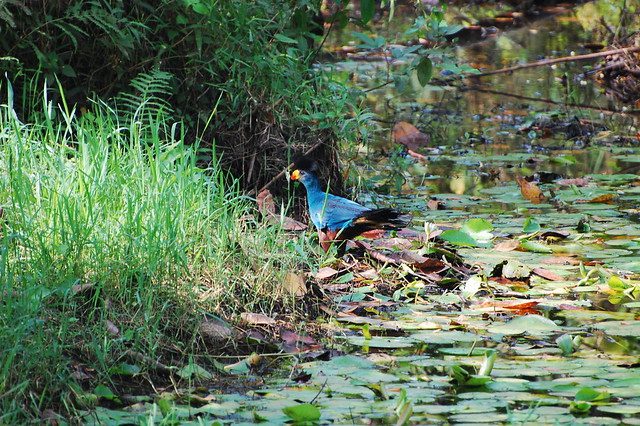
Six kilometres south of Kanyanchu, the Bigodi swamp walk loops through the Magombe papyrus wetland on boardwalks and forest paths. KAFRED, a village association founded in 1992, runs it, and the fees go into local schools, a health centre and water points. The walk takes two to three hours, the great blue turaco is close to a fixture, and up to eight primate species use the swamp edges. Chimps in the morning and Bigodi in the afternoon is the standard day. There is more detail on Bigodi and birding in Kibale here.
Best Time for a Kibale Chimpanzee Trekking Safari
Chimp tracking runs every day of the year and the communities do not migrate, so the season changes the walking more than the odds. Kibale is wet, with the north of the park taking up to about 1,700 millimetres of rain a year, and temperatures sit roughly between 14°C and 27°C.
Rain tends to arrive in afternoon bursts rather than all day, another reason the 8am session is the safer bet in the wet months. Bring a layer for the early start: Kanyanchu at 7.30am is cooler than most people expect.
Where to See Chimpanzees in Uganda: Other Chimp Tracking Sites
Where is the best place to see chimpanzees in Uganda? Kibale, by a clear margin, for the size of its population and the reliability of the Kanyanchu community. Several other chimp tracking sites are worth knowing, mostly because they fit a different route.
Kibale Safari Lodges and Trip Lengths
Lodges for a Kibale chimp safari sit in two clusters: around Kanyanchu and Bigodi on the park edge, and among the crater lakes north and west of the forest. The first is closer for an 8am start; the second has the views.
Anyone booking habituation should sleep near Kanyanchu, because the day starts before dawn. One night covers standard tracking; two let you add Bigodi or the night walk without rushing. Packages that feature Kibale usually run three days for chimps alone from Kampala, four or five days with Queen Elizabeth or Bwindi gorillas added, and seven to ten days on the full western circuit.
Crater Lakes, Caves and Fort Portal Tours Around Kibale
North and west of the park, the Ndali Kasenda crater field holds dozens of old explosion craters, many filled with water. Lakes Nkuruba, Nyabikere, Nyinambuga and Kifuruka sit close to the lodges, and the “top of the world” viewpoint looks over three crater lakes at once. Walking between them takes a morning with a local guide.
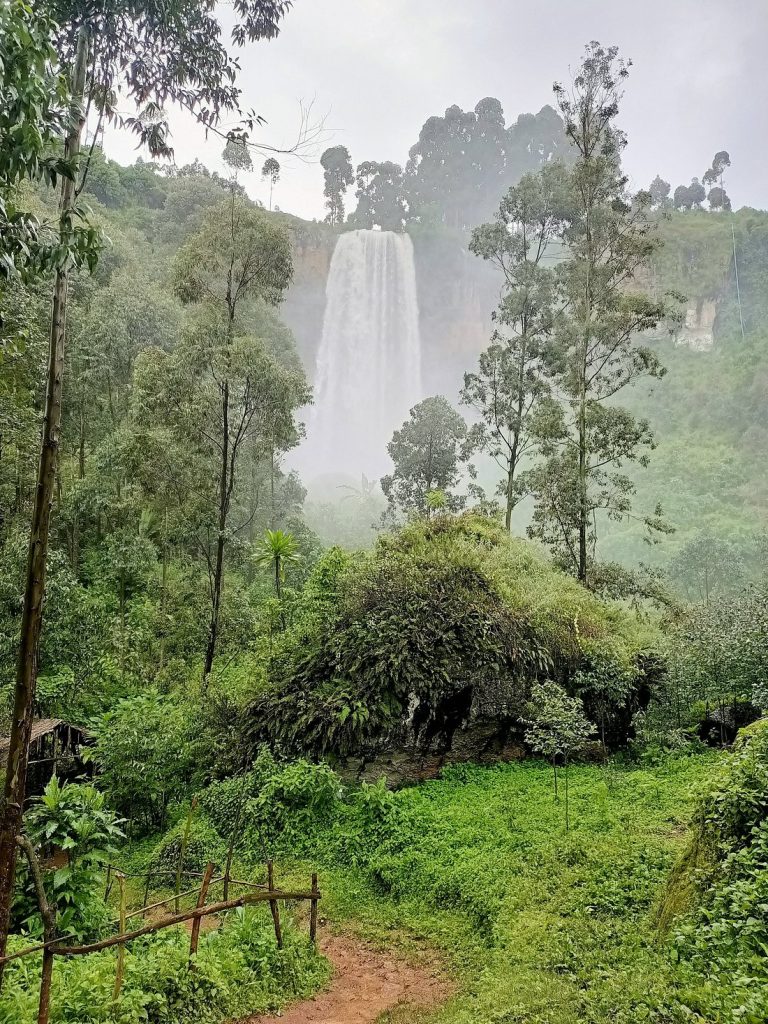
Fort Portal, the Tooro kingdom’s capital, has its hilltop royal palace, markets and, a short drive out, the Amabere ga Nyina Mwiru caves and waterfall, with limestone formations and a local origin story. South of the park, Mpanga Falls and the small Mahoma Falls make a half day outing, and our guide to the best waterfalls in Uganda covers both.
Getting to Kibale and Adding Bwindi Gorilla Trekking
By road, UWA gives about 326 kilometres from Kampala to the park via Mubende and Fort Portal, around six hours on tarmac, then under an hour on to Kanyanchu. A southern route through Mbarara and Kamwenge suits travellers coming up from Lake Mburo or Bwindi. Scheduled and charter flights from Entebbe or Kajjansi land at Kasese, about an hour in the air, with roughly two hours by road from there. If you are hiring a vehicle, our Uganda car hire page covers driver guides and self drive.
Kibale is the usual first stop on the western circuit. Queen Elizabeth lies about three hours south, with the Kazinga Channel boat trip and the tree climbing lions of Ishasha on the way to Bwindi gorilla trekking. Kibale chimps, Queen Elizabeth and Bwindi gorillas in seven or eight days is the most booked route in Uganda, and some travellers then fly from Entebbe to the Masai Mara, as in the ten day chimps, gorillas and Mara plan on our gorillas and Masai Mara safari page. For wider route ideas see our Uganda safari destinations guide, and fix your gorilla permit first using the Bwindi safari planning guide, because gorilla dates set everything else.
Kibale Chimpanzee Trekking FAQ
What is chimpanzee trekking?
It is a guided walk through a forest to find a wild, habituated chimpanzee community, followed by one hour watching it at a safe distance. In Kibale the trek starts at Kanyanchu and usually takes two to five hours in total.
How much is a Kibale chimpanzee trekking permit?
On the current UWA tariff, standard chimp tracking costs US$250 for foreign non residents and US$200 for foreign residents, with East African citizens paying about UGX 180,000. The habituation experience is US$300 for foreign non residents. A low season rate for April, May and November cuts tracking to US$200 for foreign non residents and US$150 for foreign residents; those permits cannot be rescheduled and habituation is not discounted. UWA has announced a rise to US$300 for tracking and US$400 for habituation for foreign non residents, so confirm the rate for your dates when you book. Permits are paid in full at booking.
Is chimpanzee trekking worth it?
For most visitors, yes. Kibale gives a very high chance of wild chimps for a modest effort, and the noise and speed of a chimp community make a strong contrast with the calm gorilla hour. If you only have patience for clear, close views, pick the morning session, and if one hour feels too short, book habituation.
What is Kibale National Park famous for?
Its chimpanzees, about 1,500 of them, and the highest density of primates in East Africa with 13 species, including the Ugandan red colobus. It is also known for long running chimp research at Ngogo and Kanyawara, the Bigodi wetland and the nearby crater lakes.
Where is the best place to see chimpanzees in Uganda?
Kibale National Park, with sighting rates above 90 percent at Kanyanchu. Kyambura Gorge, Budongo Forest and Kalinzu Forest also offer chimp trekking, usually with lower odds, and Ngamba Island near Entebbe is a rescue centre rather than wild tracking.
How likely am I to see chimpanzees in Kibale?
Very likely. The Kanyanchu community has been visited daily for decades, so most groups get good views. A small number see chimps only high in the canopy or hear them moving off.
Should I book standard tracking or the habituation experience?
Standard tracking suits most visitors: one hour, a reliable sighting and the afternoon free for Bigodi. Habituation suits photographers, repeat visitors and anyone curious about chimp behaviour, but it starts before dawn, lasts most of the day and the chimps are less settled around people.
Is chimp trekking harder than gorilla trekking in Bwindi?
Usually easier. Kibale is flatter, lower and better trailed, and walks are shorter. The effort comes from keeping up when chimps travel, so moderate fitness is enough, and porters are available at Kanyanchu. Our guide to gorilla safaris in Uganda and Rwanda explains how to plan the gorilla days.
What is the minimum age for chimpanzee trekking in Kibale?
The UWA tariff gives 12 years. Some operators still quote 12 or 15, so go by UWA’s figure and carry passports, since rangers check ages at Kanyanchu.
What should I wear for chimpanzee tracking?
Long trousers tucked into socks against safari ants, a long sleeved top in muted colours, boots with grip, a light rain jacket and gardening gloves. Carry water, insect repellent and a camera that copes with low light.
Can I see chimpanzees in Rwanda instead?
Yes, in Nyungwe Forest, where chimp trekking runs alongside a canopy walk. The terrain is steeper and sightings are less dependable than in Kibale, so most travellers combining chimps with gorillas choose Kibale.
What does a gorilla permit add if I combine Kibale with Bwindi?
A Bwindi gorilla permit costs US$800 for foreign non residents, US$700 for foreign residents and UGX 300,000 for East Africans, with a US$600 low season rate announced for April, May and November. Our page on booking Uganda gorilla permits covers availability.