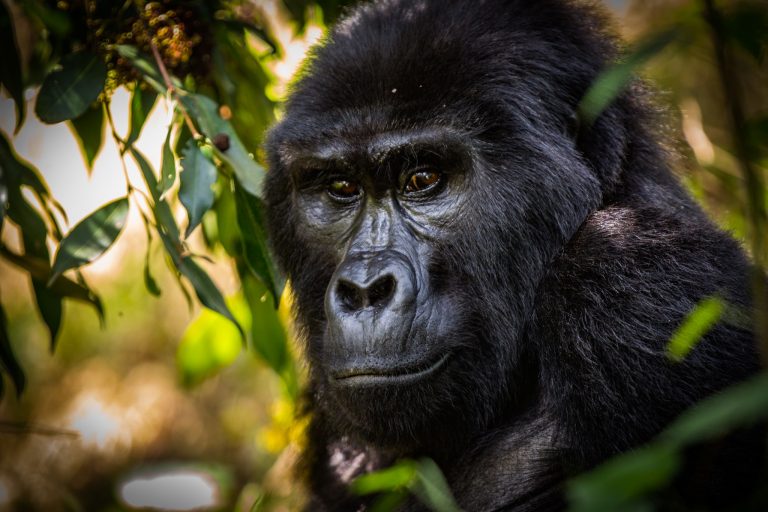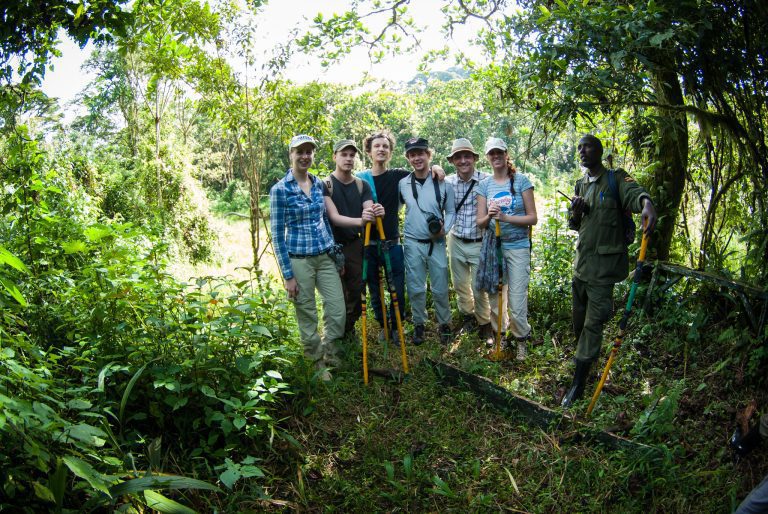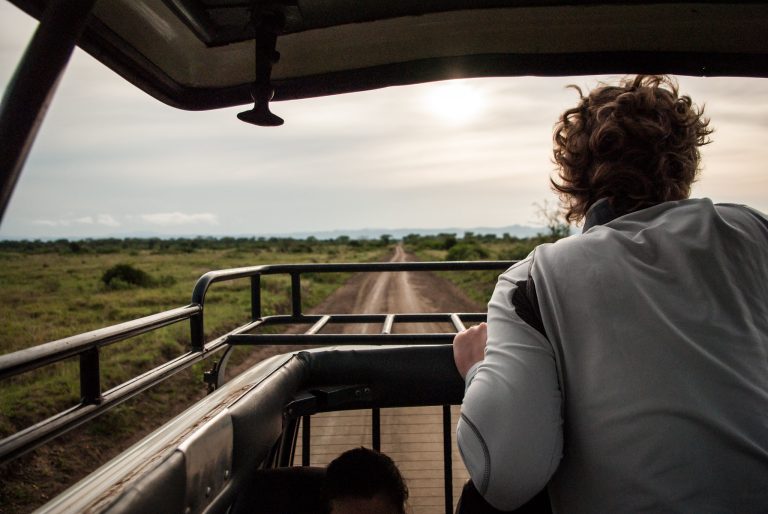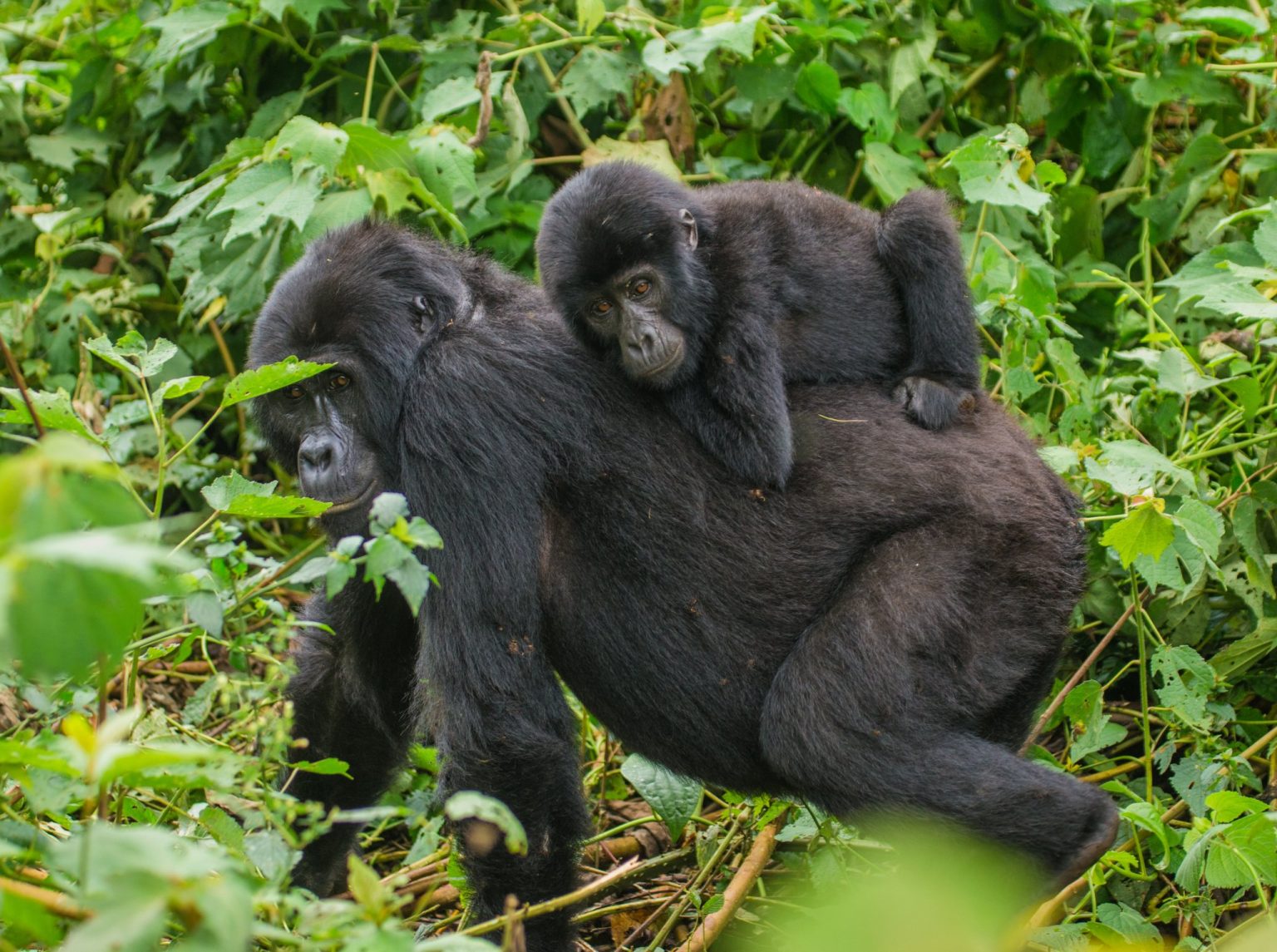
To plan a gorilla safari to Uganda, fix your travel dates first, then secure a permit for gorilla trekking in Uganda in a specific sector, and only after that book the lodge, transport and any extra parks around it. Travellers arrange the permit through a licensed safari company that is a recognised member of AUTO, the Association of Uganda Tour Operators, and most let it handle lodges and the long drive too. Bwindi Impenetrable National Park is a UNESCO listed rainforest in southwestern Uganda and home to roughly half the world’s mountain gorillas.
If this is your first gorilla trip, the number of moving parts can feel like a lot. Four trekking sectors, permits that sell out, a border or a long road to cross, and gear you may never have bought before. The decisions do fall into a natural order, though, and once the permit is in hand everything else gets simpler. This page is the planning hub for the whole site: it walks through that order one step at a time, with a trip builder, a month planner and a planning timeline you can work from, and each step ends with the detailed guides for that decision.
Gorilla Trekking Itineraries and How Many Days to Allow
How long should a gorilla trekking itinerary in Uganda be? It depends mostly on where you land and what else you want to see. The drive is the biggest factor, so a short trip from Kigali can work in three days, while a trip from Entebbe needs more. The trip builder below matches your days, budget and country to the common trip shapes on this site, adds a rough permit line, and lists the shapes that do not fit with the reason. Operators adjust every outline to the sector on your permit.
Gorilla Safari Trip Builder
Pick your trip length, country, budget and extras. The best matching itinerary is highlighted in the table, with a permit cost line per person.
Best match
7 day Uganda safari
Fits 6 to 8 days in Uganda, with chimpanzees.
Next step: send this shape to two or three licensed operators from the safari company section and compare the quotes.
Not a fit for your choices (13)
| Trip shape | Days | Countries | What it looks like |
|---|---|---|---|
| 1 day gorilla trekking in Uganda | 1 | Uganda, starting in Kigali or Kisoro | Possible only for the southern sectors with a very early start and a late return, and tiring. Entebbe and Kampala sit too far from the gorillas for a day trip. |
| 1 day gorilla trek from Kigali | 1 | Rwanda | A pickup at about 4am, the 7am briefing at Kinigi, one hour with a family and back in Kigali by early evening. |
| Rwanda gorilla tours of 1, 2 and 3 days | 1 to 3 | Rwanda | The 2 day tour adds a night near Volcanoes National Park; the 3 day tour adds golden monkeys, a volcano hike or a second gorilla trek. |
| 3 day gorilla trekking itineraries | 3 | Uganda | Day one, drive or fly to the lodge. Day two, the trek. Day three, a morning walk, then back to Kigali or Entebbe. |
| Uganda fly in gorilla safari | 3 to 4 | Uganda | About an hour by light aircraft to Kihihi or Kisoro in place of a nine or ten hour drive, then a short transfer to a lodge in your permit’s sector. |
| Luxury gorilla safari in Uganda | 3 to 5 | Uganda | A top lodge in the sector on your permit, a private driver guide and a light aircraft. Three days by air is the shortest version that works. |
| Luxury Rwanda gorilla safari | 3 to 5 | Rwanda | Fly into Kigali, stay at a high end lodge beside Volcanoes National Park, trek one morning and use the spare time for golden monkeys or a second family. |
| 4 day gorilla safari in Uganda | 4 | Uganda | Adds a night at Lake Bunyonyi, Lake Mburo or Queen Elizabeth to break the road. |
| Gorilla and chimpanzee safari in Uganda | 4 to 8 | Uganda | Kibale for chimpanzees and Bwindi for gorillas, with Queen Elizabeth on the road between them. Four days with flights, five by road. |
| 7 day Uganda safari | 7 | Uganda | The classic Uganda circuit: Kibale for chimpanzees, Queen Elizabeth for game drives and the Kazinga Channel, then Bwindi, sometimes with Lake Mburo on the way back. |
| 7 day Rwanda safari | 7 | Rwanda | Akagera game drives, gorillas and golden monkeys in Volcanoes National Park, a night on Lake Kivu and chimp tracking in Nyungwe, all by road from Kigali. |
| Uganda and Rwanda gorilla safari | 7 to 10 | Uganda and Rwanda | One gorilla trek in Rwanda’s Volcanoes National Park and another in Bwindi or Mgahinga, crossing the border by road. Five days is possible at a push. |
| 10 day Uganda safari | 10 | Uganda | Rhino tracking at Ziwa, Murchison Falls, Kibale chimpanzees, Queen Elizabeth and Ishasha, then Bwindi, in one loop from Entebbe. |
| Gorillas and Masai Mara safari | 8 to 12 | Uganda or Rwanda, plus Kenya | Three or four nights of Mara game drives with one or two gorilla treks, linked by a short flight from Nairobi. The migration herds are usually in the Mara from about July to October. |
| Tanzania safari and gorilla trekking | 9 to 14 | Uganda or Rwanda, plus Tanzania | The Serengeti and Ngorongoro first, then a flight of an hour or two to Entebbe or Kigali for the trek, timed so the migration and the drier trekking months overlap. |
| Gorilla trekking and Victoria Falls | 7 to 14 | Uganda or Rwanda, plus Zambia or Zimbabwe | Two to four nights near the gorillas, a flight day through Johannesburg, Nairobi or Addis Ababa, then two or three nights at the falls. |
| Two week East Africa safari | 10 to 14 | Uganda, Kenya and Tanzania | Gorillas plus a second country, either Rwanda’s Volcanoes National Park or a flight to the Masai Mara or the Serengeti. The full two week route covers Bwindi, the Mara and the Serengeti with the longer gaps flown. |
| Madagascar and Uganda itinerary | 12 to 18 | Madagascar, then Uganda or Rwanda | Five to nine days with lemurs in Madagascar, a connecting flight through Nairobi or Addis Ababa, then four to seven days in Uganda, often with chimps in Kibale. |
Permit rates are foreign non resident prices from the Uganda Wildlife Authority and Rwanda Development Board, checked October. Treat every figure as indicative and confirm the rate for your trek date before you pay. Gorilla sightings are never guaranteed.
Most visitors build two to four nights around Bwindi itself, often adding a nature walk, the Batwa trail or a canoe trip on Lake Mutanda or Lake Bunyonyi. A spare day after the trek is worth having. Some families are reached in an hour, but others take most of the day, and nobody enjoys a long transfer straight after a seven hour hike.
More itinerary and tour guides
Gorilla Safari Planning Timeline: Twelve Months to One Week Out
Here is the whole gorilla safari plan laid out against the calendar. Peak season travellers should start at the top. Going in a quieter month? You can usually start at the six month mark and still have choices, though the lodges closest to the trailheads fill early in every season.
Gorilla Safari Planning Timeline
Work down from your travel date. Each point says what to settle then and why. Gold markers are the bookings that sell out.
Twelve months out
Pick your travel window and decide whether this is a gorilla only trip or part of a longer East Africa safari. If you want the Masai Mara migration or the Serengeti calving season too, the wildlife sets those dates, so fix them first and fit the gorillas around them.
Nine to twelve months out
Shortlist two or three licensed operators, ask each for a quote, and ask them to check permit availability for your dates in your preferred sector. For June to September, late December and family groups needing several permits on one day, this is the time to commit.
Six months out
Permit paid and confirmed in writing, with the sector and date on it. Lodge booked in the same sector. International flights booked into Entebbe or Kigali, depending on which side your operator recommends.
Four months out
Buy travel insurance that covers trekking and medical evacuation. Adding a domestic flight to Kihihi or Kisoro? Confirm it now, since the small aircraft have limited seats and strict bag limits.
Three months out
Start fitness training: hills, stairs and long downhill walks. Buy boots now so there is time to break them in.
Six to eight weeks out
Visit a travel clinic for malaria tablets, the yellow fever vaccine and any other vaccines your doctor recommends. Apply for the Uganda eVisa or the East Africa Tourist Visa through the official portal only.
Two weeks out
Print your permit, visa approval, insurance documents, yellow fever card and a passport copy. Check the packing list against what you own, and decide whether to rent gear rather than buy it.
One week out
Reconfirm pickup times with your operator and lodge. Carry small, recent US dollar notes for porters and tips. If you catch a cold or flu, tell your operator, because rangers can refuse sick trekkers to protect the gorillas.
Choosing Your Gorilla Trekking Dates and Season
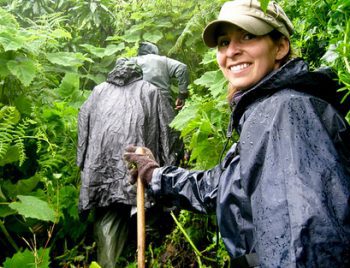
Gorilla trekking in Bwindi runs every day of the year, so the real question is which trade off suits you. The two drier spells, roughly June to September and December to February, give firmer trails and are the busiest months for permits. That makes them the best time of year to see gorillas in Uganda for most first timers. The wetter months of March to May and October to November bring mud, slippery slopes and afternoon downpours, yet the forest is quieter and permits are far easier to find.
Rain in a montane forest rarely lasts all day. Mornings are often clear. The gorillas do not move far in heavy rain, which can shorten a search, and fruiting trees in the wetter months sometimes keep a family closer to the forest edge. Because the park sits between about 1,160 and 2,600 metres, it is cool in every month, with chilly early starts at Ruhija in particular.
Bwindi Month Planner
Rain and crowds peak at different times. The strip shows both for every month, plus the months when Uganda’s lower permit rate and Rwanda’s low season offer apply. Pick a month for the detail.
In words: rain is heaviest in April, with a second wet spell in October and November, and lightest in July. Crowds peak in July and August and are thinnest in April. Uganda’s US$600 rate applies in April, May and November, and Rwanda’s US$1,050 offer runs from November to May.
July in Bwindi
Driest month, peak demand
Best trail conditions; permits for popular sectors can sell out up to a year ahead.
Month by month table
| Month | Verdict | Rain | Trails | Crowds | Book permits | Uganda permit | Rwanda permit | What it means for you |
|---|---|---|---|---|---|---|---|---|
| January | Dry and busy | Low | Good | Busy | 3 to 6 months | US$800 | US$1,500, or US$1,050 with the offer | One of the best months for a dry trek once the New Year rush ends. |
| February | Dry, easier dates | Low, rising | Good | Moderate | 3 to 6 months | US$800 | US$1,500, or US$1,050 with the offer | Good trekking weather with easier permit dates than July or August. |
| March | Wet and quiet | Rising | Muddy | Quiet | 1 to 2 months | US$800 | US$1,500, or US$1,050 with the offer | The long rains begin and slopes get muddier, so pack gaiters and waterproof trousers. |
| April | Wettest month, lowest rates | Highest | Very muddy | Quietest | 1 to 2 months | US$600 low season | US$1,500, or US$1,050 with the offer | Lowest permit prices and the fewest trekkers, with the hardest trails. Kwibuka begins on 7 April in Rwanda. |
| May | Wet, easing late | High, easing | Muddy | Quiet | 1 to 2 months | US$600 low season | US$1,500, or US$1,050 with the offer | Late May is a strong value window as the rain tapers off. |
| June | Dry, filling up | Low | Good | Busy | 6 to 12 months | US$800 | US$1,500 | Firm trails before peak demand; book several months ahead. |
| July | Driest month, peak demand | Lowest | Best | Peak | 6 to 12 months | US$800 | US$1,500 | Best trail conditions; permits for popular sectors can sell out up to a year ahead. |
| August | Dry, peak demand | Low, rising | Good | Peak | 6 to 12 months | US$800 | US$1,500 | Book permits and lodges first, then flights. |
| September | Mixed, moderate | Moderate | Fair | Moderate | 3 to 6 months | US$800 | US$1,500 | Showers return to Bwindi while Rwanda usually stays drier. |
| October | Wet and quiet | High | Muddy | Quiet | 3 to 6 months | US$800 | US$1,500 | Expect afternoon storms; early October suits Rwanda better. |
| November | Wet, low season rate | High | Muddy | Quiet | 1 to 2 months | US$600 low season | US$1,500, or US$1,050 with the offer | The second low season window; low season permits in Uganda cannot be rescheduled. |
| December | Mixed, busy at Christmas | Easing | Fair to good | Busy late | 6 to 12 months for Christmas | US$800 | US$1,500, or US$1,050 with the offer | Early December is quiet; the Christmas and New Year fortnight books out like August. |
Rain and crowd levels are relative, drawn from long term Bwindi records and trekking demand, not millimetre totals. Rain can fall in any month. Rwanda’s offer needs two paid nights in Nyungwe or Akagera and one paid activity. Last checked October.
A practical tip from trip reports: if your dates are flexible, the shoulder weeks at the start of June or the end of November tend to combine reasonable trails with better permit choice. For a month by month breakdown that sets Bwindi beside Rwanda, with rainfall and what each month means on the trail, read our month by month guide to the best time to visit Bwindi.
See the best time to visit Bwindi
Season guides for the wider trip
Securing a Gorilla Trekking Permit and Choosing Your Sector
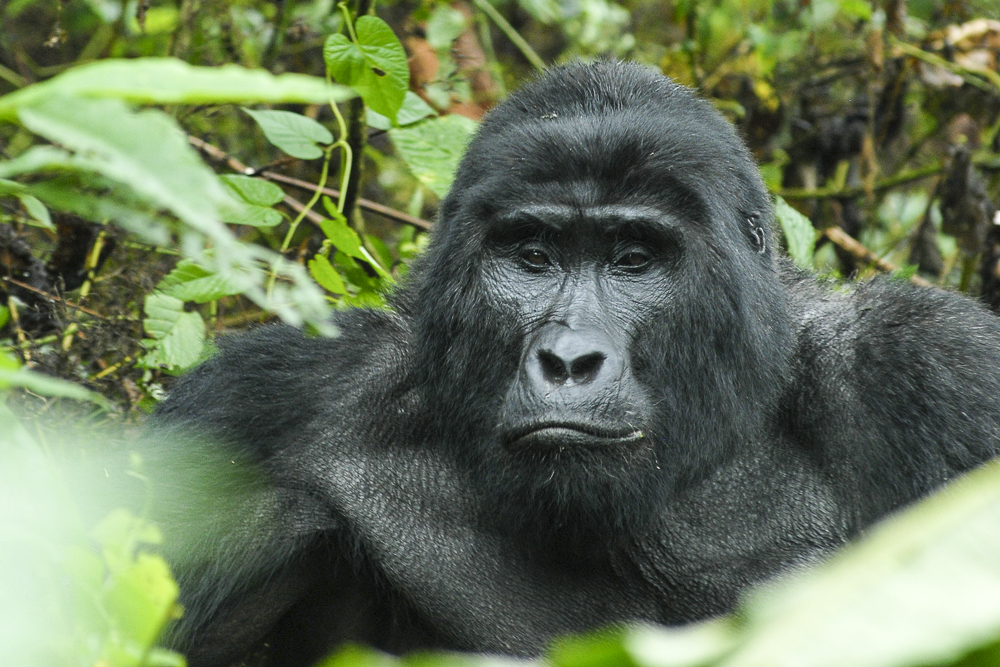
The gorilla permit is the one item that cannot be fixed later, so it drives every other booking. Permits are issued by the Uganda Wildlife Authority (UWA), each one is tied to a date and a sector, and each habituated gorilla family can be visited by a maximum of eight people per day. That cap is why permits run out: it limits disease risk and stress for the gorillas, and there are only so many habituated families. There are no walk up sales at the sector gates.
So how do you book gorilla trekking in practice? Through a licensed Ugandan tour operator that is a recognised AUTO member. UWA sells permits to licensed operators, so there is one route, and the operator buys the permit from UWA in your name.
The minimum age is 15, and rangers can check passports at the briefing. What does the permit cover? A ranger guided trek, the trackers who locate the family at dawn, the park entry for that day and one hour with the gorillas once you reach them. Lodges, transport, porters and tips sit outside it.
Two permit types are sold. The standard trek gives you that one hour with a habituated family. The gorilla habituation experience in the Rushaga area gives up to four hours with a family still being habituated, in a much smaller group. Read the full guide to Uganda gorilla permits, prices and booking, linked at the end of this section, before you commit. The chart below sets the permit prices side by side.
Gorilla and Primate Permit Prices Compared
Per person, foreign non resident rates. A Rwanda gorilla permit costs nearly twice a Uganda one, and the habituation permit costs about the same as Rwanda’s standard trek.
Picking the trekking sector comes next, and it matters more than most first timers expect. The four sectors sit hours apart on slow mountain roads, so the sector on your permit decides where you sleep and how long you drive.
| Sector | Location | Terrain | Best for |
|---|---|---|---|
| Buhoma | North | Moderate | First timers |
| Ruhija | East | High, cool | Birders |
| Rushaga | South | Varied | Most families |
| Nkuringo | Southwest | Steep | Fit hikers |
Buhoma is the original trekking base, with the widest lodge choice and the easiest access from Queen Elizabeth National Park. Ruhija is the highest sector and the base for the Mubwindi Swamp birding trail. Rushaga in the south has the largest number of habituated families and is the closest sector to Kigali, while Nkuringo involves a steep descent at the start and an equally steep climb back up. Our guide to the Bwindi gorilla families by sector lists every habituated group. If fitness is a worry, read how hard gorilla trekking is and tell your operator, who can ask the rangers for a family that tends to range closer to the trailhead. That request is not a guarantee. The gorillas decide where they spend the night.
One more option sits just outside Bwindi. Mgahinga Gorilla National Park, on the Virunga volcanoes near Kisoro, has a single habituated family and very few permits, and it pairs with golden monkey tracking. Our page comparing gorilla trekking in Bwindi and Mgahinga sets the two side by side.
Read the Uganda gorilla permit guide
Permits, gorilla families and other primates
Choosing a Gorilla Safari Operator
Most travellers book their gorilla safari through a licensed local operator, and for good reason. One company buys the permit, books the lodge, supplies a 4×4 and a driver guide, and deals with the border if you come from Rwanda. If a road washes out or a flight is delayed, someone on the ground can rearrange things.
A point that surprises plenty of first timers: your operator’s guide does not go into the forest with you. UWA rangers and trackers lead every trek, and the driver guide waits at the trailhead. What you are paying an operator for is logistics, local knowledge and the safety net, not the trek itself.
Operators sell the same trek in different shapes. A private, tailor made trip sets its own dates and pace. A small group departure shares a vehicle and fixed dates, which suits solo travellers. Family trips plan around the age limit, with younger children staying at the lodge or joining a short nature walk instead. Fly in trips swap road days for light aircraft. Decide which shape you want before asking for quotes, so the quotes can be compared.
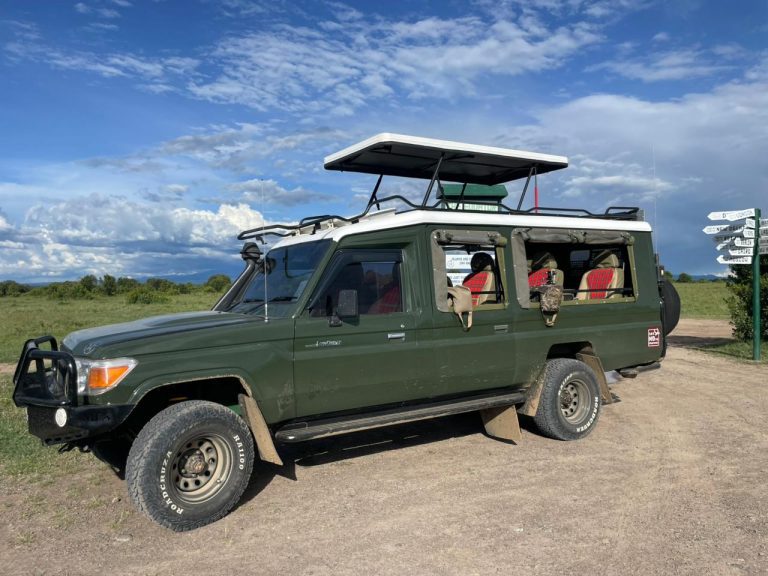
When comparing quotes, ask each company whether it is licensed and a member of the Association of Uganda Tour Operators, whether the permit is included and in whose name it is issued, what vehicle you get and whether it has a pop up roof for game drives, which lodge they propose and in which sector, and what the cancellation terms are. A quote far cheaper than the others often leaves out the permit, uses a lodge in the wrong sector, or adds a long transfer on trek morning. We are an independent visitor guide and do not sell tours, so we keep a list of licensed safari companies, linked below, that you can contact and compare directly; for a Kigali start, our guide to choosing a Rwanda safari company covers the checks there. Independent travellers can also self drive with Uganda car hire, though you will still need to secure the permit through a licensed operator that is a recognised AUTO member; our notes on car hire and gorilla trekking cover the roads to each sector.
Compare gorilla safari companies
Bwindi Safari Lodges by Sector
Once the permit is confirmed, book your Bwindi safari lodge in the same sector. Briefings start at around 7:30 in the morning at the sector headquarters, and driving between sectors on trek morning is not realistic. A lodge with glowing reviews two sectors away is a worse choice than a plain one ten minutes from the briefing point.
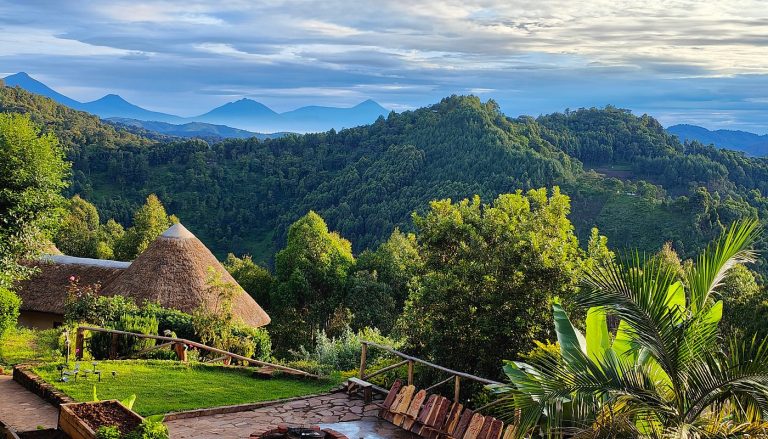
Every sector has a spread of options, from community run bandas and campsites to mid range lodges and a small number of high end properties with forest views. Buhoma has the most choice. Rushaga and Nkuringo have grown quickly, and Ruhija has the fewest beds, so book early there. Lodges near the trailheads fill up in peak season as fast as permits do, which is why the timeline above books both at the same point. Most lodges serve an early breakfast and pack a lunch for trek day, and some lend gloves, walking sticks or gaiters. Our full lodge guide sorts Bwindi safari lodges and accommodation by sector and budget, or you can start from the sector on your permit below.
Lodge Guides by Trekking Sector
Sleep in the sector printed on your permit. These are the lodge guides on this site, grouped by the trailhead they serve.
| Sector | Lodge guides | Good to know |
|---|---|---|
| Buhoma, north | Mahogany Springs Lodge, Buhoma Lodge at the trailhead, Trackers Safari Lodge, Buhoma Community Rest Camp | The widest choice, from budget bandas at the gate to riverside suites; Kihihi airstrip is the nearest. |
| Ruhija, east | Agandi Eco Lodge, Bakiga Lodge, Cuckooland Lodge, Gorilla Mist Camp | The fewest beds and the coldest nights; book early. |
| Rushaga, south | Burunga Gorilla Lodge, Four Gorillas Lodge, Gorilla Safari Lodge, Nshongi Camp | The most habituated families and the habituation experience; closest to Kigali. |
| Nkuringo, southwest | Nkuringo Bwindi Gorilla Lodge, Bwindi Orugano Lodge, Gorilla CloseUp Lodge | Ridge top views of the Virungas; the trek starts with a steep descent. |
| Lake Mutanda and Kisoro | Chameleon Hill Lodge, Lake Mulehe Safari Lodge | A lakeside base for Rushaga, Nkuringo and Mgahinga, with Kisoro airstrip nearby. |
| Volcanoes, Rwanda | Luxury lodges near Volcanoes National Park | All Rwandan treks start from the Kinigi park office. |

Browse Bwindi lodges by sector
Getting to Bwindi for Your Gorilla Trek
Bwindi is remote, and the transfer is often the longest part of a gorilla trekking trip. There are three main ways in, plus private charters for those with the means.
Several trip reports describe the drive as part of the experience, with tea plantations, roadside markets and the equator crossing along the way. Others found a ten hour day tiring, so if your time is short, the Kigali route or a flight is worth the extra planning. The full guide to getting to Bwindi compares every route, and there are specific route notes for trekking Bwindi from Kigali.
What Happens on Gorilla Trekking Day in Bwindi
Knowing the shape of gorilla trekking day takes away much of the first time nerves. It follows the same order in every sector.
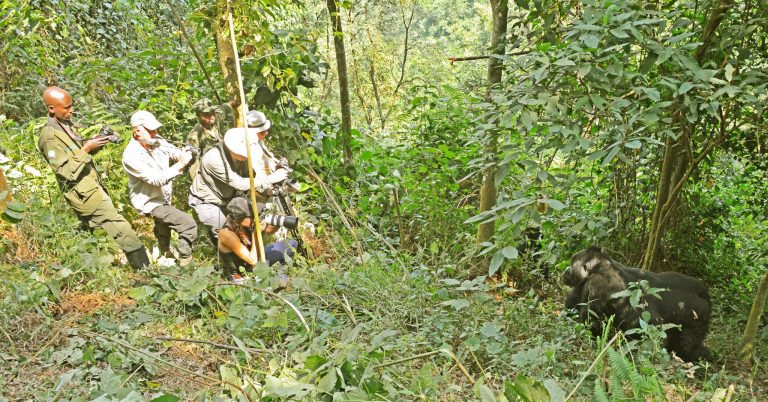
With the gorillas, the rules are short and strictly kept. Stay about 10 metres back in Uganda, no flash photography, keep your voice low, do not eat or drink near the family, and turn away and cover your mouth if you need to cough or sneeze. Young gorillas sometimes walk right up to a group; the rangers will tell you to step back slowly. Visitors with colds are asked not to trek, since gorillas catch human respiratory infections. Silverbacks rarely threaten trekkers who follow these rules, and our page asking whether gorillas are aggressive explains what a charge looks like and what to do.
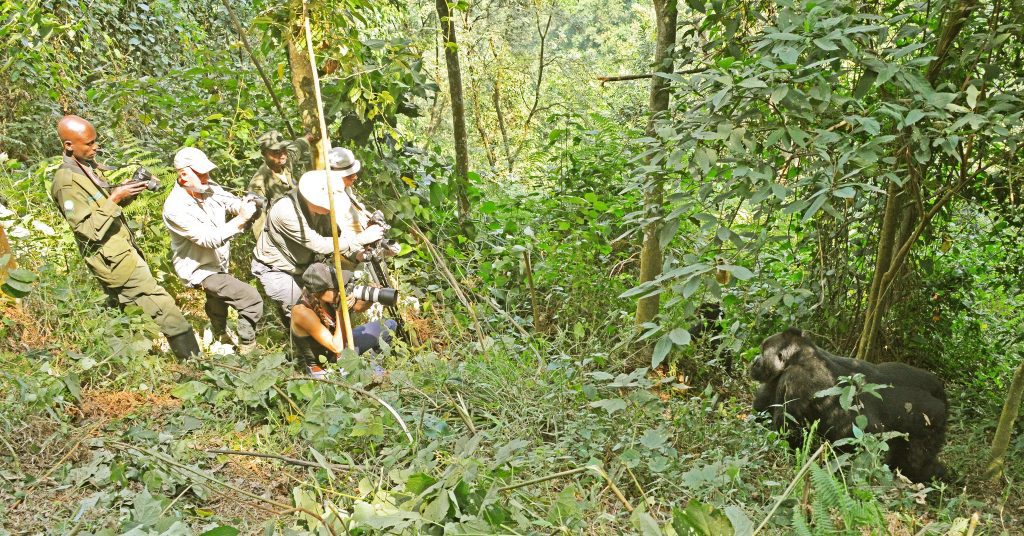
Plenty of trekkers say the hour goes much faster than expected. Taking photos for the first half and then simply watching for the second half is the advice that comes up most often.
Fitness, access and photography on trek day
Visas, Health, Insurance and Money for a Gorilla Safari
Most visitors need a visa for Uganda, applied for online through the official immigration portal before travel. If you plan to cross into Rwanda or Kenya on the same trip, the East Africa Tourist Visa covers Uganda, Rwanda and Kenya on one visa, and you apply through the country you enter first. It does not cover Tanzania, so a Serengeti add on needs a separate Tanzanian visa. Beware of lookalike visa websites that charge well above the official fee.
On health, Uganda’s immigration service announced in October that a yellow fever certificate is no longer a condition of entry, but health guidance still recommends the vaccine, and Rwanda or Kenya may ask for the card on an onward crossing, so carry it. Bwindi lies in a malaria area, so ask a travel clinic about tablets well before you leave. Gorillas catch human respiratory infections, which is why rangers can turn away anyone visibly ill on trek morning.
Insurance deserves more thought than usual. Pick a policy that covers trekking at altitude, medical evacuation by air from a remote area, and trip cancellation, since permits are rarely refundable. Our guide to African safari insurance explains what to check in the small print. On safety more widely, the national parks and the main safari routes see thousands of visitors a year without trouble, and our page on how safe Uganda is to visit covers current travel advice and sensible precautions.
Money is simple once you know the pattern. Permits and most lodges are paid in US dollars through your operator before you travel, while porters, tips and small purchases near the park are paid in cash. Carry small, recent US dollar notes or Ugandan shillings, since older and larger notes are often refused, and keep a card for lodge extras where card machines exist. Suggested tip amounts for rangers, trackers, porters and your driver guide are in the FAQ below.
What to Pack for Gorilla Trekking
The forest is steep, wet and full of stinging nettles, so gorilla trekking gear is about protection more than looks. The items that come up again and again in trip reports are broken in waterproof boots with deep grip, long trousers tucked into socks or under gaiters to keep out mud and safari ants, a long sleeved top, a proper rain jacket, and a pair of gardening gloves for grabbing vines and branches. Cotton jeans are a common regret, since they soak up water and stay heavy all day.
Carry at least two litres of water, a packed lunch, insect repellent, a small first aid kit and a waterproof cover for your daypack. A walking stick is usually offered at the trailhead. Hiring a porter for your bag is money well spent on a steep or muddy day, and it supports families living next to the park. Flash photography is not allowed with the gorillas, so a camera that works in low light makes a real difference.
Start with our full gorilla trekking packing list, then go deeper on what to wear for gorilla trekking, trekking boots, gloves, gaiters and cameras and binoculars. If your trip continues to the savannah, the African safari packing list covers game drive clothing, and you can rent gorilla trekking gear rather than buying items you will use once. Every gear guide on the site sits in the safari gear and clothing section. Uganda’s sockets are UK style Type G, and our travel adapter for Uganda guide covers what to buy.
Open the gorilla trekking packing list
Packing lists by trip and the gear that matters most
The Parts That Add Up on a Gorilla Trekking Safari
The permit is the largest single item on a Bwindi gorilla safari, but it is rarely more than half of the total. Plan the trip from these parts, then compare operator quotes against them. Current figures for each are in the trip builder and permit chart above, in the FAQ below and in our full guide to gorilla trekking cost.
Two ways to bring the total down without spoiling the trip: travel in a low season month when the reduced permit rate applies, and use the Kigali route for a short trip to cut road days. Sharing a vehicle with friends also lowers the per traveller transport share. Our budget gorilla trekking in Uganda guide covers more ways to save.
Work out your gorilla trekking cost
Cost guides by country and budget
Bwindi or Rwanda for Your Gorilla Trekking Safari
Many people planning a gorilla trekking safari weigh Bwindi against Volcanoes National Park in Rwanda before booking anything. Both protect mountain gorillas, both cap groups at eight and both give one hour with the family. The differences are in the walk, the access and the permit fee, shown in the permit chart above and covered in the FAQ.
| Factor | Bwindi, Uganda | Volcanoes, Rwanda |
|---|---|---|
| Terrain | Dense, steep forest | Bamboo, volcano slopes |
| Nearest airport | Kigali or Entebbe | Kigali |
| Viewing distance | 10 metres | 7 metres |
| Minimum age | 15 | 15 |
| Habituation trek | Yes | No |
| Permit, foreign non resident | US$800, or US$600 in April, May and November | US$1,500, or US$1,050 from November to May with qualifying nights |
Bwindi suits travellers with a week or more who want gorillas plus chimpanzees and a savannah safari, and anyone watching the total. Rwanda suits a short trip from Kigali with shorter road transfers. Some travellers trek in both and find the two forests feel quite different. Our Rwanda gorilla trekking guide covers Volcanoes in detail, and the wider choice of country is set out in our Uganda vs Rwanda comparison. A third option, eastern lowland and mountain gorillas in the DR Congo, depends on security conditions, and treks there are on hold at the latest check; see our notes on Congo gorilla trekking.
Rwanda and the other gorilla countries
Responsible Gorilla Trekking: Rules, Ethics and the Community
Is gorilla trekking ethical? It is a fair question, and the answer most conservation bodies give is yes, when the rules are kept. Habituation takes two to three years per family, during which researchers and rangers visit daily until the gorillas accept people nearby. In return, the families are watched every day by trackers, which helps protect them from snares, and vets can respond to injuries. Permit income pays for that protection. The 2018 census counted 459 gorillas in Bwindi, out of a world total of 1,063 mountain gorillas, and results of the most recent census are still awaited; our page on the mountain gorilla census tracks the counts.
The other half of the answer is the people who live next to the park. Part of each permit goes to neighbouring communities through park revenue sharing, and porters, lodge staff and guides are often hired from the villages on the boundary. The Batwa, the forest people who lost access to their homeland when the park was created in 1991, now lead cultural trails near Buhoma and in the southern sectors. Read about the Batwa people before you go, and see how permit fees fund protection in our guide to mountain gorilla conservation.
Your own choices matter too. Hire a porter even if you can carry your bag. Book a lodge that employs local staff. Stay home on trek day if you are ill, and keep to the distance rule even when a young gorilla comes closer.
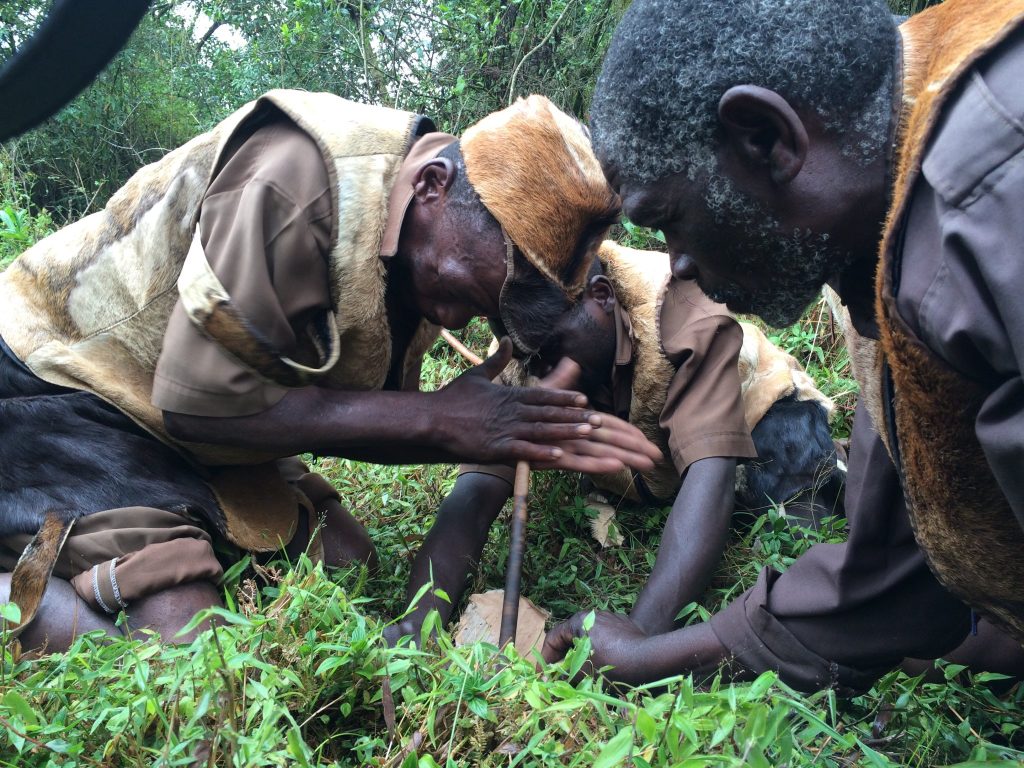
Those small things are what keep the trekking model working for gorillas and people alike.
Safari Add Ons: Queen Elizabeth, Kibale, the Masai Mara and the Serengeti
Few people fly to East Africa for a single hour with gorillas, and the best gorilla safari itineraries pair the trek with savannah or other primates. Around Bwindi itself, our list of things to do in Bwindi covers birding, waterfall walks, village visits and cycling. Beyond the forest, these are the combinations that work best.
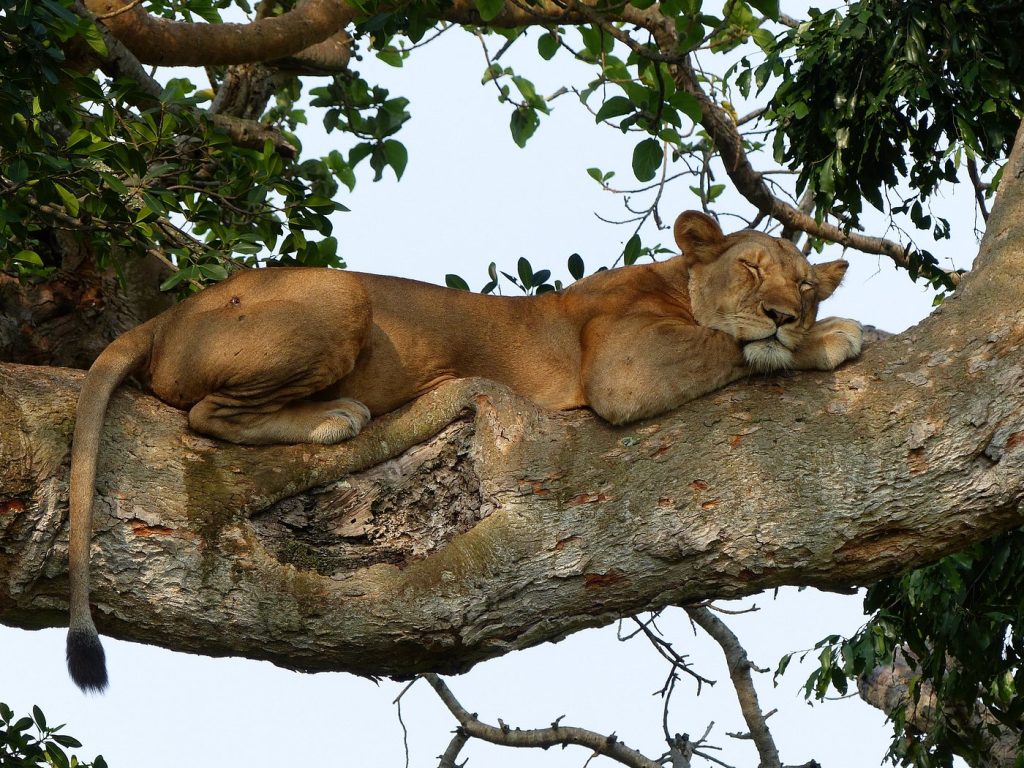
For more Uganda ideas, Murchison Falls and Lake Mburo both fit a longer loop, and Lake Bunyonyi makes an easy rest stop on the road south of Bwindi. For the trek itself, our main guide to gorilla trekking in Bwindi is linked at the top of this page.
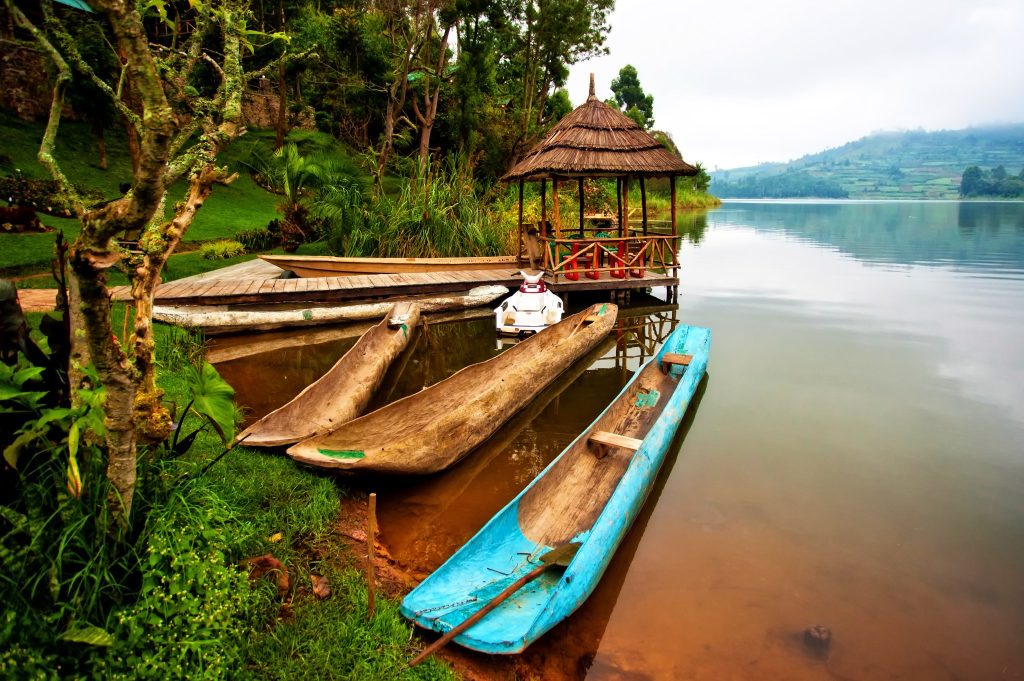
Other parks and activities to add
Gorilla Safari Planning FAQ
How far ahead should I plan a gorilla trekking safari to Bwindi?
For June to September and the December holidays, start six to twelve months ahead, especially if you need several permits on the same day or want a particular lodge. For the wetter months, three to six months is usually enough, though last minute availability is never certain.
Is there a gorilla trek available in Bwindi National Park?
Yes. Bwindi Impenetrable National Park is Uganda’s main gorilla trekking destination, with daily treks to habituated families from four sectors: Buhoma, Ruhija, Rushaga and Nkuringo. Rushaga also offers the longer gorilla habituation experience.
How much does a Bwindi gorilla permit cost?
The standard trekking permit is US$800 for foreign non residents, US$700 for foreign residents, US$500 for citizens of other African countries and UGX 300,000 for East African citizens. UWA has announced a low season rate of US$600 for foreign non residents and US$500 for foreign residents in April, May and November, and these cannot be rescheduled. The gorilla habituation experience sells at US$1,500, and UWA has announced a rise to US$1,800, so confirm which rate applies to your trek date before you pay. For comparison, a Rwanda gorilla permit is US$1,500, or US$1,050 from November to May for travellers who also spend two paid nights in Nyungwe or Akagera and book one paid activity there.
How much does a gorilla safari cost in Uganda?
The permit is fixed, and everything else depends on lodges, transport and trip length. A Uganda safari runs about US$200 to US$450 per person per day on a budget to mid range trip and from about US$500 to well over US$1,000 with upmarket lodges, two sharing, before primate permits. On top, allow for a porter at about US$15 to US$20, tips, a Uganda single entry eVisa of US$50 or the US$100 East Africa Tourist Visa, and insurance. The gorilla trekking cost guide linked above builds real totals for budget, mid range and luxury trips.
What is the best time of year to see gorillas in Uganda?
The drier months of June to September and December to February give the firmest trails and are the most popular. Trekking runs all year, though, and April, May and November bring quieter forest and a lower permit rate in exchange for more mud.
How do I book a gorilla safari or gorilla trekking permit?
Choose your dates and sector, then ask a licensed operator that is a recognised AUTO member to check availability. Send passport details, pay the permit in full, and get the permit number, sector and date in writing. A licensed operator can then book the lodge and transport around it.
How many days do I need for a gorilla safari?
Allow at least three days for Bwindi alone from Kigali, or four to five from Entebbe, since the drive takes most of a day each way. A classic Uganda circuit with Kibale and Queen Elizabeth runs seven to ten days, and adding the Masai Mara or Serengeti makes it ten to fourteen. The trip builder near the top of this page matches your days to a trip shape.
Is gorilla trekking worth the money?
Most people who have done it say yes, and many call it the highlight of their time in Africa. The hour is short and the trek can be hard, but the fee pays for rangers, trackers and community projects that keep the gorillas protected. If the permit stretches your plans, a low season month brings it down.
Is gorilla trekking in Bwindi hard?
It depends on the day. Reaching the family can take under an hour or most of the day, on steep and muddy slopes. Anyone who can walk several hours on hills can do it, and porters help with bags and a hand on steep sections. Older travellers or those with limited mobility should tell their operator early, and a sedan chair carried by local teams can be arranged in some sectors.
What do porters and tips cost?
Porters are commonly hired for around US$15 to US$20 for the day, paid at the trailhead, and many trekkers add a tip. Tips for rangers, trackers, lodge staff and your driver guide are customary rather than compulsory. Operator guidance runs to about US$10 to US$20 per person for the ranger guide, US$5 to US$15 each for trackers and the porter, US$10 to US$20 per traveller per day for a driver guide and US$5 to US$10 a night for lodge staff; ask your operator for current local norms and carry small US dollar notes. A Uganda single entry eVisa costs US$50 and the East Africa Tourist Visa costs US$100 on the official portals.
Are gorilla sightings guaranteed?
No. Trackers go out ahead of each group at dawn and sightings are very likely on any given day, but the gorillas are wild animals and nothing is guaranteed. Permits are not refunded if a family moves out of reach.
Should I fly into Entebbe or Kigali?
Kigali is closer to the southern sectors and is quicker for a short gorilla trip, especially if you also want to trek in Rwanda. Entebbe makes more sense for a longer Uganda circuit that includes Kibale, Queen Elizabeth or Murchison Falls.
Can children go gorilla trekking?
Only from the age of 15. Younger children can join a family safari and stay at the lodge with a parent or a sitter on trek day, or take part in nature walks and community visits around the park.
What is the minimum age for chimpanzee tracking in Uganda?
Twelve, under the UWA tariff, against 15 for gorillas. A family with a 12 to 14 year old can track chimps in Kibale together, while the gorilla trek is for those aged 15 and over.
Can I add golden monkeys to a gorilla safari?
Yes. Golden monkeys live on the Virunga volcanoes, so they fit trips that include Mgahinga in Uganda or Volcanoes National Park in Rwanda. Tracking costs about US$100 in Rwanda, or US$60 plus park entry in Mgahinga, and it takes a morning.
Can I plan a gorilla safari without a tour operator?
Partly. The Uganda permit itself is booked through a licensed operator that is a recognised AUTO member, because UWA sells permits to licensed operators. Around it, independent travellers can hire a car and book lodges directly. It takes more time and coordination, and you carry the risk if a road or flight problem costs you your permit date, which is why most first timers use an operator for the whole trip.