A Queen Elizabeth National Park safari means dawn game drives for lions on the Kasenyi plains, an afternoon boat trip past hippos on the Kazinga Channel, chimpanzee trekking in Kyambura Gorge and a search for the tree climbing lions of Ishasha. Most visitors stay two to four nights, often on the road to gorilla trekking in Bwindi. The park covers 1,978 square kilometres of savannah, crater lakes and forest on the equator in western Uganda.
It is Uganda’s most visited savannah park. It opened as Kazinga National Park in 1952 and took its present name two years later, after a visit by Queen Elizabeth II. UWA records more than 95 mammal species and over 600 birds, the longest bird list of any park in the country, and the boundaries run from the Rwenzori foothills in the north to the Congo border at Ishasha. Anyone holding a permit for gorilla trekking in Bwindi will very likely drive through it.
Queen Elizabeth Safari Sectors: Kasenyi, Mweya, Ishasha and Kyambura
Think of a Queen Elizabeth safari as several small parks sharing one name. The Kazinga Channel cuts the park in two, and the northern and southern halves look different and lie hours apart by road. Where you sleep decides what you see. Learn the sectors before you choose a lodge.
First trips usually run north to south, or the reverse. Two nights around Mweya or Kasenyi cover the channel and the plains. Add a third in Ishasha, and the drive to Bwindi becomes a game drive in its own right instead of a transfer.
Kasenyi Plains Game Drive Safaris and Lion Tracking
On a Kasenyi game drive safari, most visitors see their first Ugandan lions. Vehicles roll out at about half past six, when the air is cool and the kob are on the move, and the drive runs for around three hours on the network of tracks north of the channel. Kob gather here more densely than anywhere else in the park. That is why the prides hunt here.
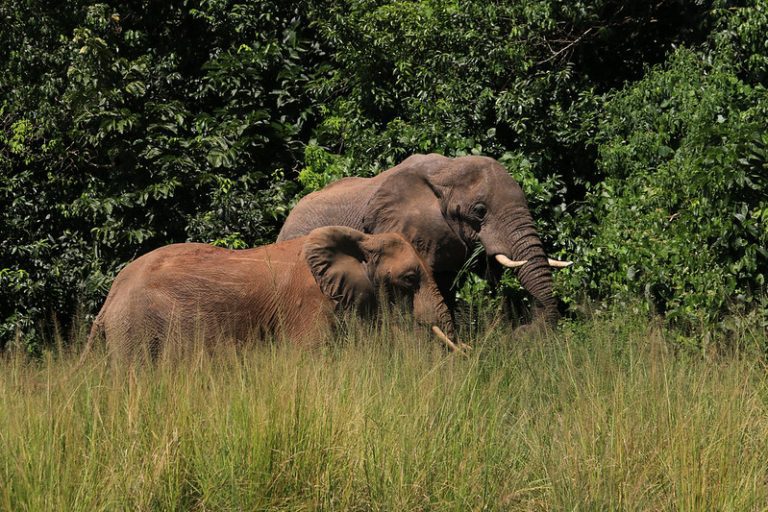
Expect elephant, buffalo, waterbuck, warthog and bushbuck. Spotted hyena show up around first light. Leopard live here but stay hidden, and giant forest hog, a shy animal elsewhere, sometimes feed along the thicket edges beside the Kasenyi tracks. Afternoon drives can work, though lions tend to lie flat in the long grass until the heat goes out of the day.
The lion tracking experience takes it a step further. You join researchers from the predator monitoring programme as they find collared lions by radio telemetry, so the outing often turns up cats an ordinary drive would miss. It runs at dawn or late afternoon for two to three hours, with only a few places, and has to be booked ahead. Two smaller activities sit alongside: mongoose tracking on the Mweya peninsula, which follows banded mongoose troops for a couple of hours, and the hippo census, where a small group joins rangers counting hippos along the shore.
Night game drives are open only to guests staying inside the park, with a UWA ranger on board. They give the best chance of leopard, genet, civet and white tailed mongoose. The rule catches out self drivers again and again, so anyone planning to hire a vehicle in Uganda should book the ranger in advance.
Get to Kasenyi gate early, since it is one of the busiest entrances and queues build in the dry months. Fill the tank before you enter, carry some cash and keep the park receipt in the vehicle for the ranger checks.
Kazinga Channel Boat Safari from Mweya
The Kazinga Channel launch cruise is the one activity almost everyone books, and many people call it the highlight of their Uganda trip. The channel runs for about 40 kilometres from Lake George, a shallow lake fed by streams off the Rwenzori and listed as a protected wetland, west into the much larger Lake Edward. Its gentle banks hold one of the densest hippo populations in Africa. Boats leave from the jetty below Mweya, usually at about two in the afternoon and again later, with morning trips on some days, and the cruise lasts about two hours.
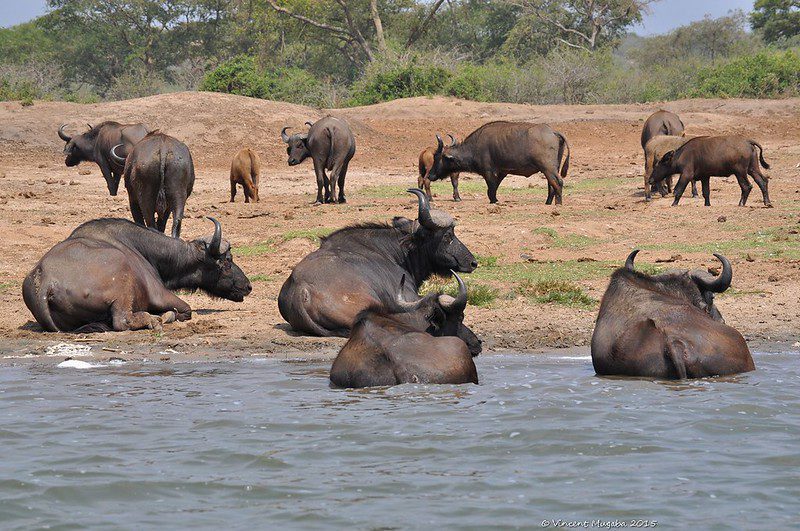
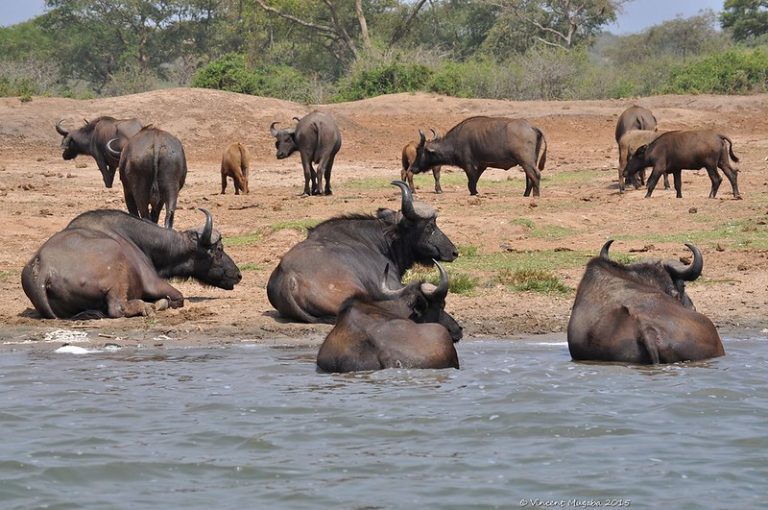
Hippo pods surface a few metres from the bow. Buffalo and elephant wade in to drink, and Nile crocodiles bask on the sandbanks. Birders tick off pied and malachite kingfishers, African fish eagles, open billed storks, cormorants and African skimmers, and on a lucky day a shoebill at the papyrus edge. Fishing villages share the same shore, which tells you more about how people and wildlife live side by side here than any briefing will.
There are two ways to go out. The UWA launch is a bigger boat with a ranger giving the commentary, while Mweya Safari Lodge runs its own smaller boats that usually carry fewer people. Trip reports are split: some praise the UWA rangers as first rate naturalists, others prefer the lodge boat for photography. In peak months the afternoon slots fill with safari groups, so book a day or two ahead.
Sit on the side facing the bank you are travelling along. Keep the camera strap round your neck, because a hippo coming up beside the hull makes everyone jump. A hat helps too. The open boats have little shade, and late afternoon light on the water is the best of the day for pictures.
Ishasha Tree Climbing Lion Safari: The Honest Odds
An Ishasha tree climbing lion safari is why many travellers add a night to a Queen Elizabeth trip, and it deserves a plain answer about what you are likely to see. The southern sector is open grassland scattered with sycamore figs, and for decades its lions rested on the low branches in full view of the tracks. Nobody knows for sure why they climb. Escaping the heat and the biting flies on the ground, catching a breeze and watching for kob are the usual explanations. Lake Manyara in Tanzania is the other place famous for the habit.
The lion population has crashed. UWA figures show lions across the whole park falling from about 400 in the late 1970s to 39 in a 2022 count. Poisoning, snares set for antelope and revenge killings after cattle losses did most of the damage, and six lions were found poisoned inside Ishasha itself in 2021. The Wildlife Conservation Society, which now co manages Ishasha with UWA under a ten year agreement, says fewer than five lions remain in the sector.
So expect a slow, scenic drive with a chance of lions, not a sure sighting. Ishasha still has big herds of Uganda kob, the park’s only good numbers of topi, buffalo along the river and elephants that cross to and from Congo. Lions tend to climb from mid morning to mid afternoon as the ground warms, so a night in the sector lets you search at first light and again around midday. Visitors who passed through in an hour on the way to Bwindi report empty trees far more often than those who stayed. Our full guide to tree climbing lions in Uganda covers the trees, the recovery plan and the Lake Manyara comparison.
If seeing lions matters more than seeing them in a tree, the collared prides on the Kasenyi plains are the safer bet. Ishasha is for the setting and the chance.
Kyambura Gorge Chimpanzee Trekking Safari
Chimpanzee trekking in Kyambura Gorge takes you down into a forested trench about 100 metres below the plains and roughly a kilometre across at its widest. After a morning on the open savannah, the closed canopy and the river at the bottom feel like another park altogether. Treks set off at eight in the morning or in the early afternoon and last from one to five hours, depending on where the chimps have gone.
The habituated community is small and the gorge is steep, so sightings are less certain than in Kibale, and the rangers will tell you so if you ask. Even when the chimps stay out of sight, you will probably see black and white colobus, red tailed monkeys and forest birds, and the climb down and back out is a good workout. The minimum age is 15. Unlike Kibale, where entry is bundled into the chimp permit, park entry is paid separately here.
Kalinzu Forest, a reserve about half an hour from the gorge, offers a second chimp option outside the park system. If chimpanzees are the reason for the trip, build the plan around chimpanzee trekking in Kibale National Park and treat Kyambura as a bonus.
Crater Lakes Drive, Lake Katwe Salt Works and Flamingo Tours
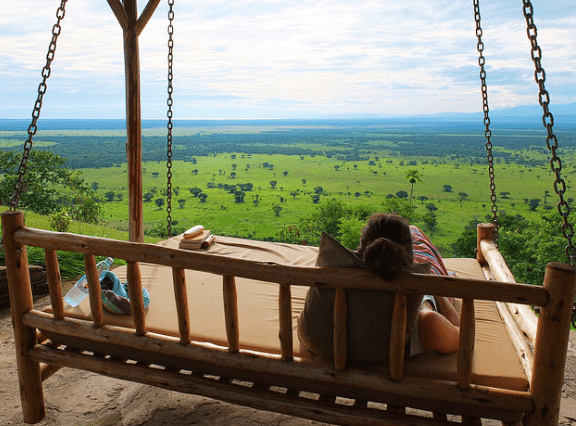
The explosion crater drive winds through a field of volcanic craters north of the channel, on a track of about 27 kilometres between Kabatoro gate and the Queen’s Pavilion. The craters were blown out by violent gas eruptions long ago rather than built up as cones, which is why so many are deep bowls. Some hold lakes, some grassland and one a patch of forest, and on a clear morning the view runs across Lake George to the Rwenzori Mountains. It is a scenery tour rather than a wildlife one, and it fits nicely between a dawn game drive and the afternoon launch.
Lake Katwe lies just outside the park boundary. Salt has been cut by hand from its evaporation pans for centuries, and a guided Katwe salt works tour of about two hours explains how the pans are worked, who works them and what the brine does to skin and eyes. Fees go to the community guides. It is tough work to watch, and an honest look at how people make a living beside the park.
Close by, the small saline crater lake of Munyanyange attracts lesser flamingos in some months, most often from about August. Numbers change a lot from year to year, so count any flamingos as luck. The Queen’s Pavilion on the crater rim marks the royal visit and has a small café and information point.
Cultural Tours and Community Visits Around the Queen Elizabeth Safari Area
A cultural tour is the easiest way to see the park from its neighbours’ side. Several fishing villages sit inside the park boundary on the channel and the lakes, and the communities around the edge include Basongora cattle keepers, Bakonzo farmers from the Rwenzori foothills and Banyankore families to the east.
Community projects near the northern gates run dance and drumming performances, craft workshops, cooking sessions and village walks, and some explain the conflict between farmers and wildlife and how the projects try to reduce it. Visitors often try the local banana gin and watch how it is distilled. The Katwe salt pans, covered above, are the best known community tour, and there are walks in the villages near Kyambura and Ishasha too. Ask your driver guide or lodge which groups are running visits during your stay, and pay the community guide directly where you can.
Maramagambo Forest Walks and Birding Safaris
Maramagambo forest walks head into one of the larger forests left in western Uganda, in the southeast of the park. The best known trail leads to the bat cave, where a colony of Egyptian fruit bats roosts and African rock pythons hunt at the entrance; a viewing platform keeps people at a safe distance. Longer trails reach small crater lakes deep in the trees. Chimpanzees live here too, but they are not habituated and are rarely seen.
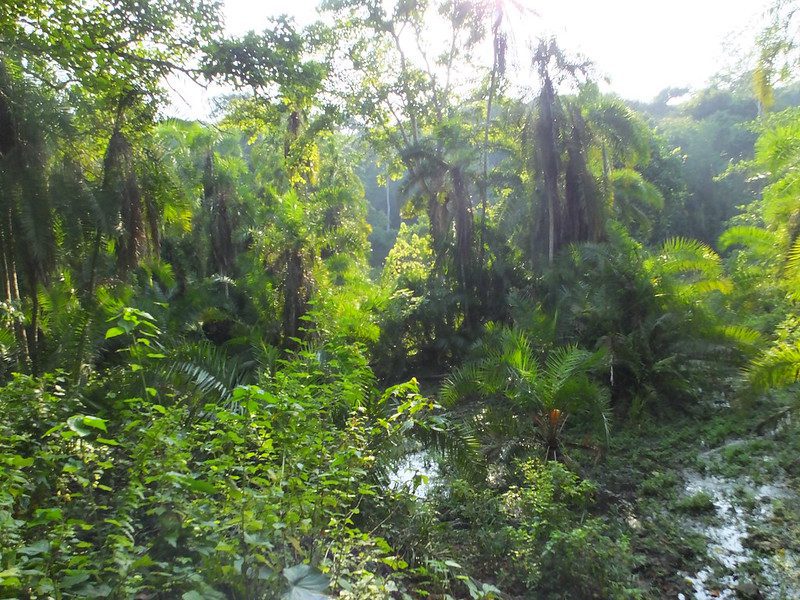
Birding safaris in Queen Elizabeth work from a list of more than 600 species. The total comes from the mix of habitats within a short drive: savannah, papyrus swamp, crater lakes, riverside woodland, forest and open water. Kasenyi, the Mweya peninsula, the Katunguru bridge, Lake Kikorongo, the Ishasha river woodland and Maramagambo all add different birds. Martial eagle, black bee eater, papyrus gonolek, African skimmer and a long run of kingfishers are realistic targets. A shoebill is possible in the wetter margins but far from certain.
Migrant species arrive from about November and stay into April, so birders who come in the shoulder months see more and often pay less for rooms. Bwindi adds a different list again, set out in our Bwindi birding guide.
Wildlife on a Queen Elizabeth Safari: Which Animals You Will See
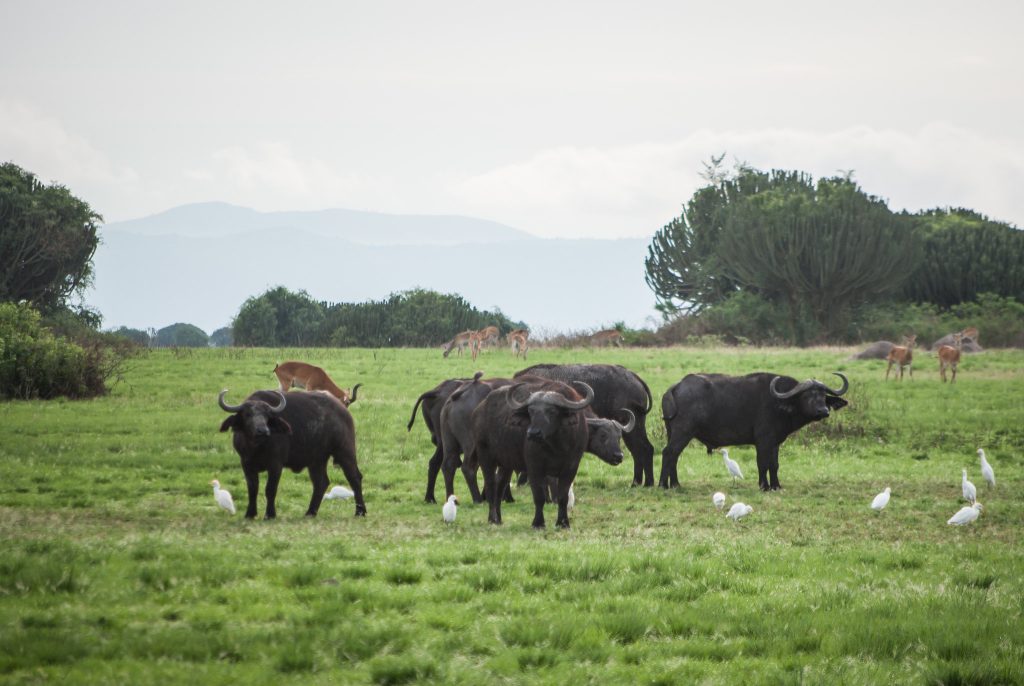
A Queen Elizabeth wildlife safari gives you numbers rather than rarities. Uganda kob, buffalo, waterbuck, warthog and hippo are close to certain. Many of the buffalo are reddish brown, a sign of mixing with forest buffalo from Congo. Elephants are common across the north and in Ishasha, and topi live mostly in the south. Lions are present but few, and leopards turn up on perhaps one drive in several, most often at night. Giant forest hog are easier to see here than in most parks, and the channel adds hippo and crocodile in large numbers.
The park has ten primate species. Chimpanzees live in Kyambura, Maramagambo and Kalinzu; black and white colobus, red tailed monkeys, vervets and olive baboons are widespread. There are no rhinos, giraffes or zebras, so travellers who want them add a Murchison Falls safari in the north for giraffe or Lake Mburo for zebra. For a wider look at what each Uganda park holds, see our guide to wildlife and primates in Bwindi, which explains how the forest and savannah lists fit together.
Elephants here are used to vehicles but not tame. Clips that circulate online of an elephant charging a car or walking through a lodge are real, so keep your distance, turn the engine off only when your guide says so and never get out near them. Tsetse flies bite in parts of the park, mainly around Ishasha and Maramagambo. Wear long sleeves in pale, neutral colours rather than dark blue or black, and keep the windows up where they are thick.
Queen Elizabeth Safari Itineraries From Two Nights to a Full Circuit
Operators sell Queen Elizabeth safari packages in a handful of standard shapes. These are the ones that work, and how they use the park.
Private trips with a driver guide are the norm in Uganda, and they let you set the pace. On any of these, ask the operator which sector each night is in, because that decides how much of the day goes on driving. Our overview of Uganda safaris compares the other parks.
Safari Lodges in Queen Elizabeth by Sector
Picking Queen Elizabeth safari lodges is mostly a question of location. A fine lodge in the wrong sector adds two hours of driving to every outing. Book early for June to September and the Christmas weeks, when the best placed rooms fill with operator groups.
Our safari lodges guide lists places to stay in Bwindi to pair with any of these, sector by sector.
Best Time for a Queen Elizabeth Safari
The park is open all year and its animals stay put, so the best time for a Queen Elizabeth safari comes down to roads, grass height and rain. Days reach the high twenties most of the year, and because the park lies far lower than Bwindi, evenings stay warm.
| Months | Rain | Tracks | Crowds |
|---|---|---|---|
| Dec to Feb | Low | Good | Busy |
| Mar to May | Heavy | Muddy | Quiet |
| Jun to Sep | Low | Good | Busiest |
| Oct to Nov | Moderate | Mixed | Quiet |
June to September is the long dry season. The grass is short, game gathers near water, and the Ishasha road holds up, which matters on a Bwindi transfer. December to February is a second dry spell with clear skies, popular with travellers who match the park with the best months for gorilla trekking in Uganda.
March to May brings the heaviest rain, and April is usually the wettest month. The plains turn green, lodges cut their rates, and the black cotton soil on some Kasenyi and Ishasha loops turns slick, so a sound 4×4 matters. October and November are wetter than the dry seasons but seldom wash out a whole day; afternoon storms are the pattern, and the migrant birds arrive. Uganda also sells cheaper gorilla permits in April, May and November, which changes the sums for a combined trip. Equatorial weather does not read the calendar, so pack a rain jacket in any month.
Combining a Queen Elizabeth Safari with Bwindi Gorilla Trekking via Ishasha
The classic western Uganda route joins a Queen Elizabeth safari with gorilla trekking in Bwindi, and Ishasha is the hinge. From Mweya the road heads south through Katunguru to Ishasha in two to three hours of game viewing. From Ishasha it is about 65 kilometres via Kihihi and Butogota to Buhoma, two to three hours on unsealed road, so leave by mid afternoon to arrive before dark.
Buhoma is Bwindi’s oldest trekking sector and the natural first stop from the north; our Buhoma gorilla trekking guide explains its families and trails. Fix the trek date first, because gorilla permits sell out long before lodges do, and the Uganda gorilla permit booking guide covers the rules. Travellers with more time add the four hour gorilla habituation experience in the south of Bwindi.
The route works just as well in reverse, from Bwindi north through Ishasha to Mweya and on to Kibale. Two country trips are common too: gorillas and Queen Elizabeth, then a flight from Entebbe to Kenya for a Masai Mara safari in the migration months. Pack for both climates; our Uganda gorilla trekking packing list covers forest and savannah days.
Getting to Queen Elizabeth National Park, Safety and Self Drive
By road, Kampala to the park is about 400 kilometres, seven to eight hours via Masaka and Mbarara, mostly on tarmac, to the main gate at Katunguru. A northern route via Fort Portal and Kasese is a similar distance and passes Kibale. From Fort Portal, Kasenyi is two and a half to three hours. Scheduled light aircraft and charters fly from Entebbe to the Kasese and Mweya airstrips, and Kihihi airstrip serves Ishasha and Buhoma. Our guide to getting to Bwindi sets out the road and air options for the whole southwest.
Inside the park the speed limit is 40 kilometres an hour, and distances are bigger than the map suggests, so most visitors use a driver guide in a 4×4. Self drive is possible in the dry season with a capable vehicle and a full tank. A good compromise is one guided drive first, then repeating the route yourself. No public transport runs into the park.
On safety: in October 2023 two foreign tourists and their driver were killed by attackers in the park near Katunguru. The UK government has since lifted its warning against travel to the park, while still asking visitors to take particular care in western Uganda and to follow local authorities. Travel in daylight, stay with your guide, and check your government’s current advice and your insurance before you go.
Queen Elizabeth Safari FAQ
How much is the entrance at Queen Elizabeth National Park, and what do activities cost?
On UWA’s current conservation tariff, park entry is US$40 per 24 hours for foreign non residents, US$30 for foreign residents and UGX 20,000 for East African citizens, with free entry for young children and reduced rates for older ones. The Kazinga Channel launch is US$30 (US$25 for foreign residents). Kyambura Gorge chimpanzee tracking is US$100 for foreign non residents, US$80 for foreign residents and UGX 50,000 for East Africans, with park entry paid on top. The lion tracking experience is US$200 for foreign non residents and US$150 for foreign residents, plus a US$10 community fee and vehicle costs. Mongoose tracking is US$30. UWA has announced higher rates for lion tracking and Kyambura chimp tracking from 1 January, so confirm the rate for your travel date.
How much does a safari in Uganda cost?
Most safaris with a driver guide cost roughly US$200 to US$450 per person per day on a budget to mid range basis, and from about US$500 to well over US$1,000 per day with upmarket lodges, before gorilla permits. A seven day route through Kibale, Queen Elizabeth and Bwindi, with permits included, is commonly quoted at around US$2,600 to US$3,400 per person on a budget basis and US$3,800 to US$5,500 mid range for two people sharing.
What does a gorilla permit cost if I add Bwindi to the trip?
A Bwindi gorilla permit is US$800 for foreign non residents, US$700 for foreign residents and UGX 300,000 for East African citizens. A US$600 low season rate applies in April, May and November, on fixed dates that cannot be rescheduled, and UWA takes full payment at booking. The gorilla habituation experience is US$1,500, rising to US$1,800 for foreign non residents from 1 January under UWA’s announced change. Chimp tracking in Kibale is US$250 for comparison, with a rise to US$300 announced.
Which animals are in Queen Elizabeth National Park?
More than 95 mammal species, including lion, leopard, elephant, buffalo, hippo, Uganda kob, topi, waterbuck, giant forest hog, spotted hyena and ten primates, among them chimpanzees in Kyambura Gorge. There are over 600 bird species. There are no rhinos, giraffes or zebras.
What is the best safari in Uganda?
It depends on what you want. Bwindi is the place for gorilla trekking, Queen Elizabeth gives the widest mix of savannah game, boat safari, chimps and birds, Murchison Falls adds giraffe and the falls themselves, and Kidepo in the far north is the most remote and scenic. Most first trips combine Queen Elizabeth with Bwindi and Kibale.
Will I see the tree climbing lions in Ishasha?
Maybe, but plan for the chance rather than the certainty. Conservation groups now count only a handful of lions in Ishasha. A night in the sector with a dawn and a midday search gives the best odds. If seeing lions at all is the priority, the collared prides on the Kasenyi plains are more reliable.
How many days do I need for a Queen Elizabeth safari?
Two nights for the northern highlights, three or four if you want Ishasha and Kyambura too. One night works only as a stopover between Kibale and Bwindi. Add travel days if you are coming from Kampala rather than from Kibale or Bwindi.
Is Queen Elizabeth National Park safe to visit?
Thousands of travellers visit each year without trouble, and the UK has lifted its warning against travel to the park. The attack near Katunguru in October 2023 led to tighter security and more rangers. Travel in daylight with a registered guide, follow ranger instructions and check current government advice before you go.
Should I self drive or hire a driver guide?
A driver guide is the easier choice for most people. They know where the lions were seen yesterday, sort out night drive rangers and handle muddy tracks. Self drive suits confident drivers in the dry season with a 4×4, a full tank and time in hand.
Is Kyambura Gorge worth it compared with Kibale?
For the most reliable chimp day, Kibale wins, with a larger habituated community and higher sighting rates. Kyambura is worth it if you are already in Queen Elizabeth and like the idea of a steep forest walk with a fair chance of chimps and good monkey viewing.
Can children go on a Queen Elizabeth safari?
Yes. Game drives and the launch cruise have no minimum age, which makes the park a good family stop. Chimpanzee tracking in Kyambura and gorilla trekking in Bwindi are limited to visitors aged 15 and over.
What should I pack for Queen Elizabeth?
Light long sleeved shirts in neutral colours for sun and tsetse flies, a hat, binoculars, a camera with a zoom of at least 200mm, sunscreen and insect repellent. Add sturdy shoes and a rain jacket if Kyambura or Bwindi is on the plan.