No, there are no gorillas in Kenya: no wild population lives in any Kenyan park, reserve or forest, so there is no Kenya gorilla trekking. The closest mountain gorillas are a short flight away in Uganda’s Bwindi Impenetrable National Park and Rwanda’s Volcanoes National Park, which is why most travellers pair a Kenya safari in the Masai Mara with gorilla trekking in Uganda or Rwanda. One flight from Nairobi links the savanna to the gorilla forests.
That combination is one of the most popular trips in East Africa, and it works well once the routing is clear. This guide covers why Kenya has no gorillas, which ten African countries do, what Kenya offers instead, how to get from the Mara to the forest, three sample itineraries, the months when the migration and the dry trekking seasons overlap, and how visas work across Kenya, Uganda and Rwanda. First timers can compare routes in our guide to the best safari in Kenya. Our guide to the best African safari countries widens the comparison beyond East Africa.
Why There Are No Wild Gorillas in Kenya
Does Kenya have gorillas anywhere, even a small group hidden in the hills? It does not. Gorillas are forest apes. Every wild population lives in the rainforests of equatorial Africa, from the Congo Basin east to the volcanoes and hill forests along the Albertine Rift, where Uganda, Rwanda and DR Congo meet. Kenya sits outside that belt. Most of the country is savanna, grassland, acacia bush and semi desert, which is exactly why Kenya safaris are so good for lions, cheetahs, elephants and the wildebeest migration, and why there is nothing for a gorilla to eat or shelter in.
A common source of confusion is Kakamega Forest in western Kenya. It is a true rainforest and the country’s best place for forest primates, with black and white colobus, red tailed monkeys, blue monkeys and De Brazza’s monkeys. It holds no gorillas, though, and never has in recorded history. Mount Kenya and the Aberdares have montane forest too, but again, no apes.
Captivity is not an answer either. Kenya has no gorilla on public display that a visitor can plan around. The only great apes in the country are rescued chimpanzees at Sweetwaters on Ol Pejeta Conservancy near Nanyuki, orphans brought in from elsewhere rather than a native population, so they make a separate stop on a Laikipia safari and no substitute for a gorilla trek. Anyone who wants to see a gorilla on an East African trip has to cross a border. The good news is that the border is close. Bwindi is well over 1,000 km from Nairobi by road, yet barely two hours away by air once you add the hop from Entebbe.
Where Are Mountain Gorillas Found in Africa?
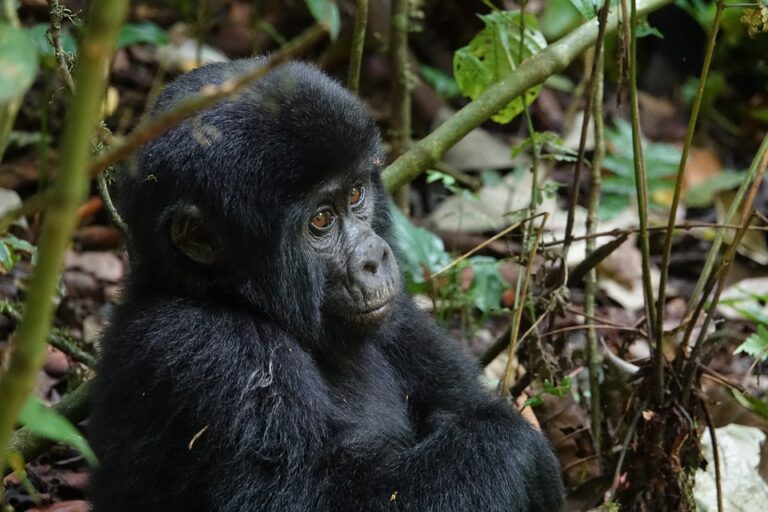
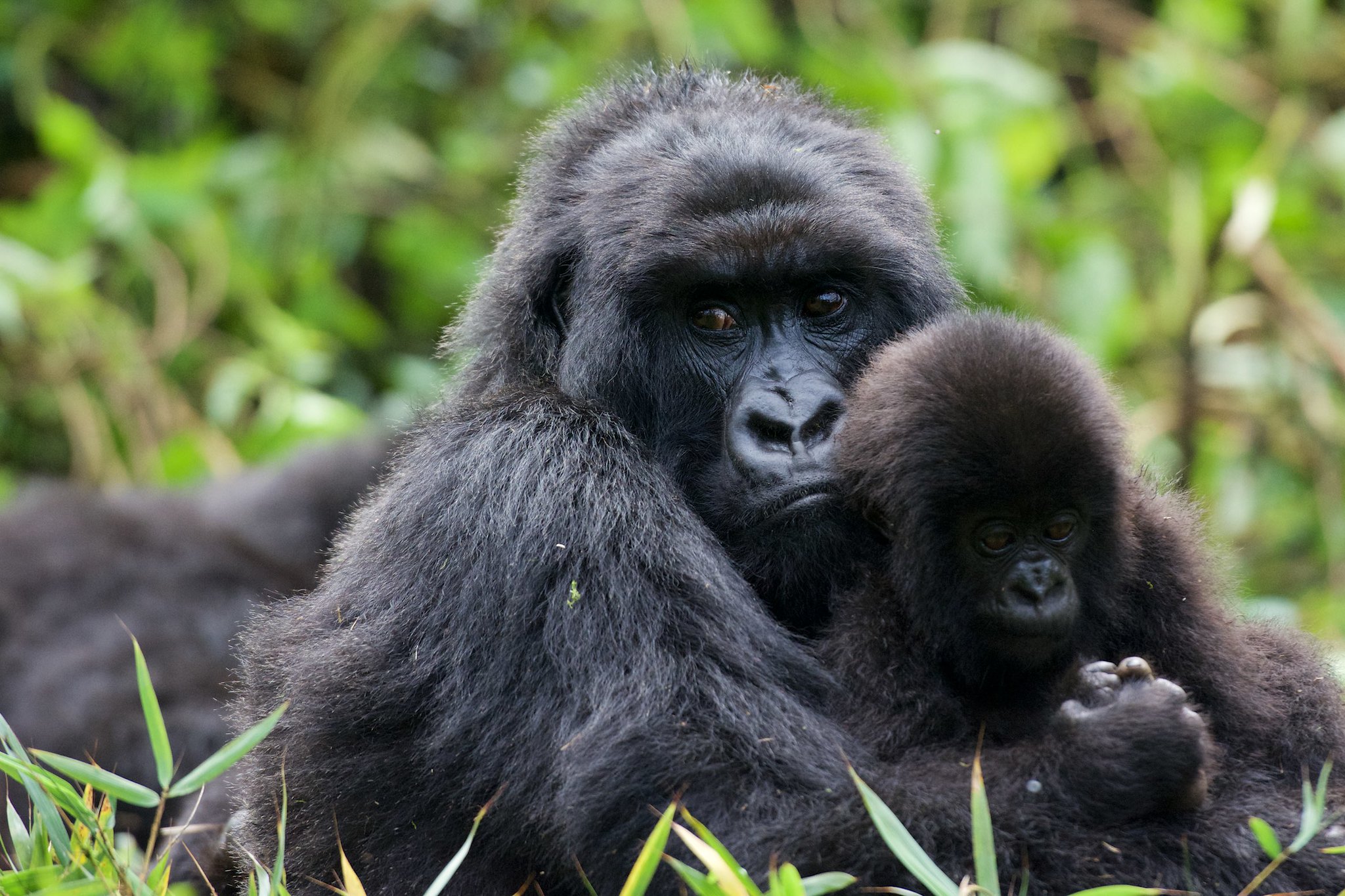
Mountain gorillas survive in just two populations. One lives in Bwindi Impenetrable National Park in Uganda, where the 2018 census counted 459 gorillas. The other lives on the Virunga volcanoes, shared by Mgahinga Gorilla National Park in Uganda, Volcanoes National Park in Rwanda and Virunga National Park in DR Congo. Together the two populations made a world total of 1,063 at the last full count, and results of the newest census are still awaited. They are the only great ape whose numbers are rising, thanks to decades of ranger patrols, veterinary care and tourism money.
For a traveller starting in Kenya, the practical choice is between Uganda and Rwanda. Gorilla tourism in Virunga has been suspended because of insecurity in eastern DR Congo, so check the situation before even considering it. Our park by park guide on where to see gorillas in Africa also covers the lowland gorillas of Gabon and Congo, which are a very different and far longer trip from Nairobi.
So which countries in Africa have gorillas? Ten, all of them in the equatorial forest belt, and Kenya is not on the list. Science splits gorillas into two species, the eastern and the western gorilla, each with two subspecies, and only the eastern pair lives anywhere near Kenya.

Kenya Safari Wildlife Instead of Gorillas: Primates, Predators and Rare Species
No gorillas, then, but a Kenya wildlife safari is hardly short of animals. Many travellers who search for gorillas in Kenya are really asking what they will see there, so here is the honest picture.
Primates. Olive baboons and vervet monkeys turn up in most parks and around many camps, and both will raid an unguarded breakfast table. Black and white colobus live in the forests of Kakamega, Mount Kenya and the Aberdares, and Kakamega adds red tailed, blue and De Brazza’s monkeys. Along the lower Tana River live two primates found nowhere else on Earth, the Tana River red colobus and the Tana River mangabey, both endangered and seldom on a standard safari route.
Predators. What predators are in Kenya? The big cats lead: lions, leopards and cheetahs, all regularly seen on Masai Mara game drives, though sightings are never guaranteed. Spotted hyenas are common, striped hyenas shy and mostly nocturnal, and African wild dogs roam Laikipia and Tsavo in small numbers. Smaller hunters include serval, caracal, black backed and side striped jackals and the bat eared fox, while Nile crocodiles wait in the Mara River for the migration crossings.
Animals found only in Kenya. Which animal is only found in Kenya? The best known answer is the hirola, or Hunter’s hartebeest, an antelope of the dry northeast near the Somali border and one of the rarest antelopes alive, with a few hundred left and a small relocated herd in Tsavo East. The two Tana River primates above are also Kenyan endemics.
Bears. Are there bears in Kenya? No. No bear lives anywhere in sub Saharan Africa, and the only bear Africa knew in historical times, the Atlas bear of the far north, died out in the nineteenth century. So the list of things Kenya lacks is short: gorillas, bears and, outside a few forests, tree dwelling apes of any kind.
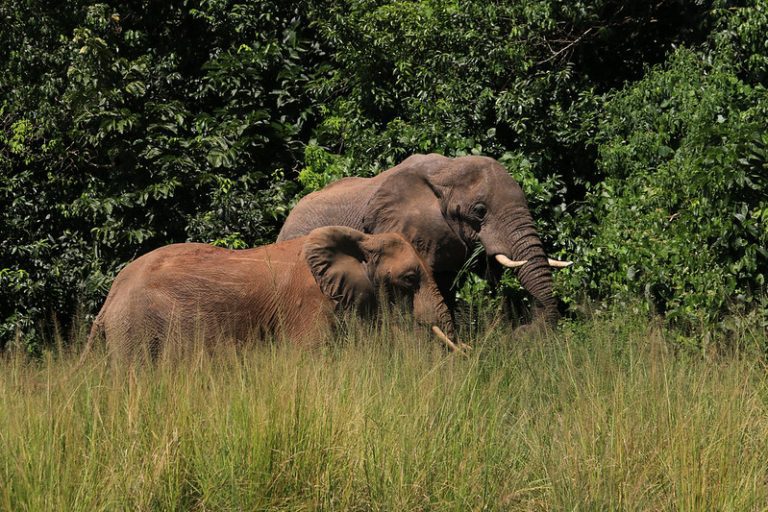
That mix of open country game is exactly what makes Kenya the savanna half of the trip, while Uganda and Rwanda supply the apes. Elephants under Kilimanjaro on an Amboseli safari and rhinos at Ol Pejeta and Lake Nakuru round out the Big Five.
How to Plan an East African Safari With Gorilla Trekking
A Kenya safari and gorilla trekking trip has two halves that feel nothing alike. The Kenya half is vehicle based: early game drives across open plains, long lunches, a sundowner by the river. The gorilla half is on foot, in steep wet forest, and the whole day builds towards one hour with a habituated family. Planning goes much more smoothly once you treat them as two separate trips joined by a flight.
Start with the gorilla permit, not the Kenya camp. Permits are limited to eight visitors per gorilla family per day, and in the busy months the popular sectors fill months ahead, so the trek date fixes everything else. Then decide on the country. Uganda gorilla trekking in Bwindi costs less per permit, offers four trekking sectors and adds chimpanzees, tree climbing lions and boat safaris if you have time. Rwanda gorilla trekking costs more but is far quicker to reach, since Volcanoes National Park sits about two and a half hours by road from Kigali airport.
After that comes the order of travel. Most visitors arrive in Nairobi, do the Masai Mara safari first while they are fresh, then fly west for the trek and leave from Entebbe or Kigali. Others prefer the reverse, doing the hardest walking days first and finishing with restful game drives. Either works; the cheapest option is usually whichever matches your international flight. Fuller detail on each country sits in our guides to gorilla trekking in Uganda’s Bwindi and Rwanda gorilla trekking. Our gorillas and Masai Mara safari itineraries show how 8 to 12 days split between the two.
Getting From Kenya to the Gorillas: Flight and Overland Safari Routes
There are three realistic ways to link a Kenya safari with a gorilla trek, and the right one depends on how many days you have.
Nairobi to Entebbe, then a bush flight to Bwindi. This is the classic Uganda routing. Kenya Airways and Uganda Airlines fly Nairobi to Entebbe several times a day, about 1 hour 15 minutes in the air. Most people overnight near Entebbe, then take a small plane to Kihihi for the Buhoma and Ruhija sectors or to Kisoro for Rushaga and Nkuringo. The scheduled flight takes roughly an hour and a half, against 8 to 10 hours by road. Our page on getting to Bwindi compares the road and air options in detail.
Nairobi to Kigali, then by road. RwandAir and Kenya Airways cover this route in about 1 hour 30 minutes. From Kigali it is about two and a half hours to Musanze for Volcanoes National Park, or around four to five hours across the border to southern Bwindi. That second option is a favourite trick for Uganda trekkers in Rushaga or Nkuringo, since it avoids the long drive from Entebbe; see gorilla trekking in Uganda from Kigali.
Overland from Kenya to Uganda. Buses and private safari vehicles run Nairobi to Kampala through the Malaba or Busia border posts, roughly 12 to 13 hours, and Kampala to Bwindi adds another long day. It suits overland group tours and travellers with time to spare, and some itineraries break the drive at Lake Naivasha, Kisumu or Jinja. For most people on a two week holiday, the days lost on the road are worth more than the flight saving.
One detail catches many travellers out. Mara flights land at Wilson Airport, Nairobi’s light aircraft field, while international and regional flights leave from Jomo Kenyatta International. Nairobi traffic between the two is unpredictable, so leave at least three hours between landing from the Mara and departing for Entebbe or Kigali, and confirm which airport each flight uses, since some light aircraft services have moved to JKIA.
Safari to the Masai Mara in Kenya
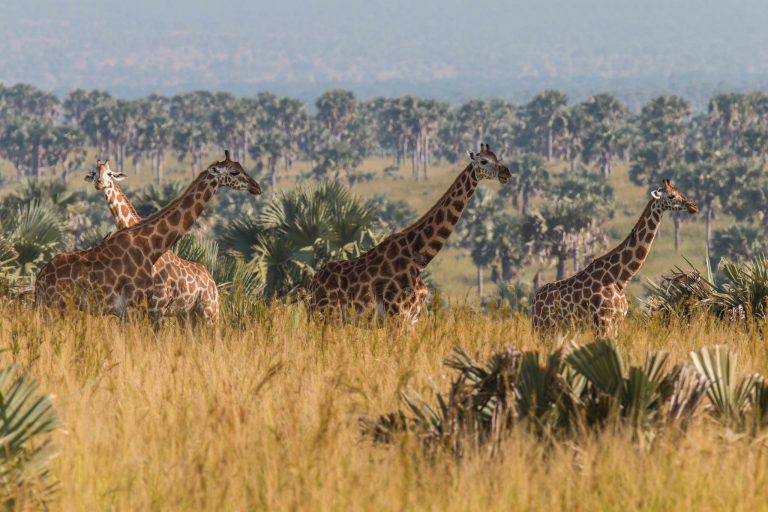
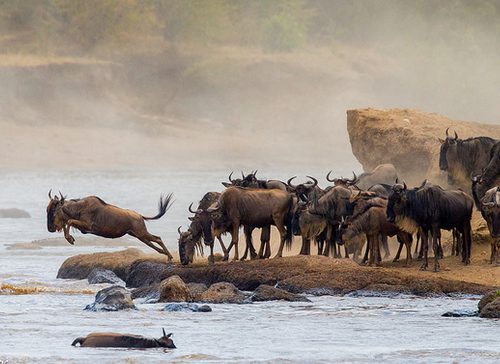
The Masai Mara safari is the Kenya half of almost every gorilla combination, and with good reason. The reserve and the private conservancies around it hold some of Africa’s densest lion populations, plus cheetah, leopard, elephant, buffalo, giraffe and huge herds of plains game all year. Between roughly July and October, the Great Wildebeest Migration crosses in from Tanzania’s Serengeti, and the Mara River crossings become the main event. Crossings depend on rain and the herds’ own timing, so a three night stay gives a much better chance than one.
Plan on two or three full days of game drives, with a hot air balloon flight at dawn as an optional extra. Staying in a private conservancy adds night drives and guided walks, which the main reserve does not allow, and keeps vehicle numbers low at sightings. A visit to a Maasai village is easy to arrange from most camps and gives some context to the land the conservancies are leased from. Our Masai Mara safari guide covers camps, sectors and game drives, and the Great Wildebeest Migration page follows the herds month by month.
Amboseli, with its elephants under Kilimanjaro, and the Rift Valley lakes at Naivasha and Nakuru are the most common additions on longer trips. A wider look at prices across parks is on our Kenya safari cost page. Our Uganda and Kenya safari cost guide sets out what a combined trip costs per person.
Visiting the Gorillas in Uganda and Rwanda
From the Mara, most travellers choose between Uganda safaris centred on Bwindi and Rwanda gorilla tours based around Musanze. Gorilla trekking in Bwindi feels wilder. The forest is steep, the trails are often freshly cut by the trackers, and the four sectors of Buhoma, Ruhija, Rushaga and Nkuringo each have their own families and lodges. Buhoma is the easiest to reach by air from Entebbe; Rushaga and Nkuringo are closest to Kigali. Mgahinga, on the Virunga slopes near Kisoro, has a single habituated family and a quieter feel.
Rwanda’s Volcanoes National Park trek usually starts with a walk through farmland to the park wall, then climbs into bamboo and hagenia forest on the volcano slopes. Trails are often shorter than in Bwindi, though not always, and the park adds golden monkey tracking, the hike to Dian Fossey’s grave at Karisoke and the crater lake on Mount Bisoke.
Both countries offer a deeper option too. Uganda’s gorilla habituation experience in Rushaga spends up to four hours with a family still being used to people, a good choice for anyone flying in from Kenya for just one gorilla day. Uganda also makes it easy to add chimpanzee trekking in Kibale, which turns a Kenya safari into a full primate and savanna circuit.
Kenya Safari and Gorilla Trekking Itineraries: 7, 10 and 14 Days
These three outlines show how the pieces fit. Each one assumes arrival and departure by international flight, flights between countries, and a gorilla permit confirmed before anything else is booked. Swap Uganda for Rwanda where noted.
For a ready made version, Insight Safari Holidays runs a 7 day safari in Kenya, gorilla trekking and culture, and more operators are listed on our gorilla safari companies page.
Best Time for a Mara Migration Safari and a Gorilla Trek
Gorilla trekking runs every day of the year and the Mara has strong resident game in every month, so there is no bad time. There is a best time, though. The long dry season from June to September lines up neatly with the migration in the Mara, which is why July, August and September are the peak months for this combination and why permits and camps book out first then.
| Month | Masai Mara | Gorilla forests | Pairing |
|---|---|---|---|
| January | Resident game | Dry | Good |
| February | Resident game | Dry | Good |
| March | Rains begin | Wetter | Fair |
| April | Long rains | Wettest | Quiet |
| May | Long rains | Wet | Quiet |
| June | Drying out | Dry | Very good |
| July | Herds arrive | Dry | Best |
| August | River crossings | Dry | Best |
| September | River crossings | Dry | Best |
| October | Herds thinning | Rains return | Good |
| November | Short rains | Wet | Quiet |
| December | Resident game | Drying | Good |
December to February is the second dry window in the gorilla forests. The migrating herds are calving far south in the Serengeti then, but the Mara still has its lions, cheetahs and big resident herds, and both halves are quieter than in August. A Christmas trip needs early booking, since camps fill over the holidays.
March to May brings the long rains. Mara tracks turn to black cotton mud, a few camps close, and Bwindi’s slopes get slippery. Then again, the forest is at its greenest, fewer people trek, and Uganda has announced a reduced low season permit for April, May and November. Treks still go ahead in rain; you just need good boots and a waterproof shell.
October and November are a gamble that often pays off. The herds usually start drifting back south in October, so crossings get rarer, and the short rains arrive in November, though they tend to fall in afternoon bursts rather than all day. For month by month detail on the forest side, see the best time to go gorilla trekking in Uganda.
Visas for a Kenya and Gorilla Trekking Trip: The EATV and Kenya’s eTA
Paperwork is the part of a three country trip that confuses people most, so take it slowly. Kenya no longer issues a classic tourist visa. Visitors who are not exempt now apply online for an Electronic Travel Authorisation (eTA) through the official portal at etakenya.go.ke, at least three working days before travel. Citizens of most African countries, including all East African Community states, are exempt, and the rules have changed several times, so check your own nationality before you pay anything.
The East Africa Tourist Visa (EATV) covers Kenya, Uganda and Rwanda on one multiple entry document valid for 90 days. It is ideal for this trip if you move between the countries, and it has three rules that matter:
Here is the snag. Kenya’s eTA portal has at times listed the East African Tourist option as temporarily unavailable, which makes it hard to get the EATV when Nairobi is your first stop. If that is still the case when you apply, you have two workable choices. Enter Kenya on an eTA, then buy single entry visas for Uganda (online only, through Uganda’s immigration portal, with no visa on arrival) and Rwanda (on arrival or online, and free for some nationalities). Or reverse the trip: fly into Kigali or Entebbe first, get the EATV there, and finish in Kenya. Our East Africa Tourist Visa page explains the application steps.
Two health papers belong in the same folder. Uganda announced in October that a yellow fever certificate is no longer mandatory for entry, but Kenya and Rwanda may still ask for one from travellers arriving from the region, so carry the card and confirm current rules before you fly. Fees for the eTA, the EATV and single visas are in the FAQ below.
What Happens on a Gorilla Trekking Day
Whether you trek in Rwanda or Uganda, the gorilla trekking day starts around 7:30 am with a briefing at the park office. Rangers split visitors into groups of up to eight, assign each group to a family, and run through the rules: a distance of about 10 metres in Uganda or 7 in Rwanda, no eating or drinking near the gorillas, masks when asked, no flash. Anyone with a cold or flu can be turned away, because gorillas catch human respiratory illnesses, and that rule is applied even after a long flight from Nairobi.
Then you walk. Trackers head out at dawn to find the family’s nest site and radio its position to your guide, which is why sightings are so reliable. The hike can take anything from 30 minutes to five or six hours each way depending on where the family moved overnight, often on steep, muddy, vine tangled ground. Porters can be hired at the trailhead to carry your daypack and give you a hand on the slopes; most trekkers who skip one wish they had not.
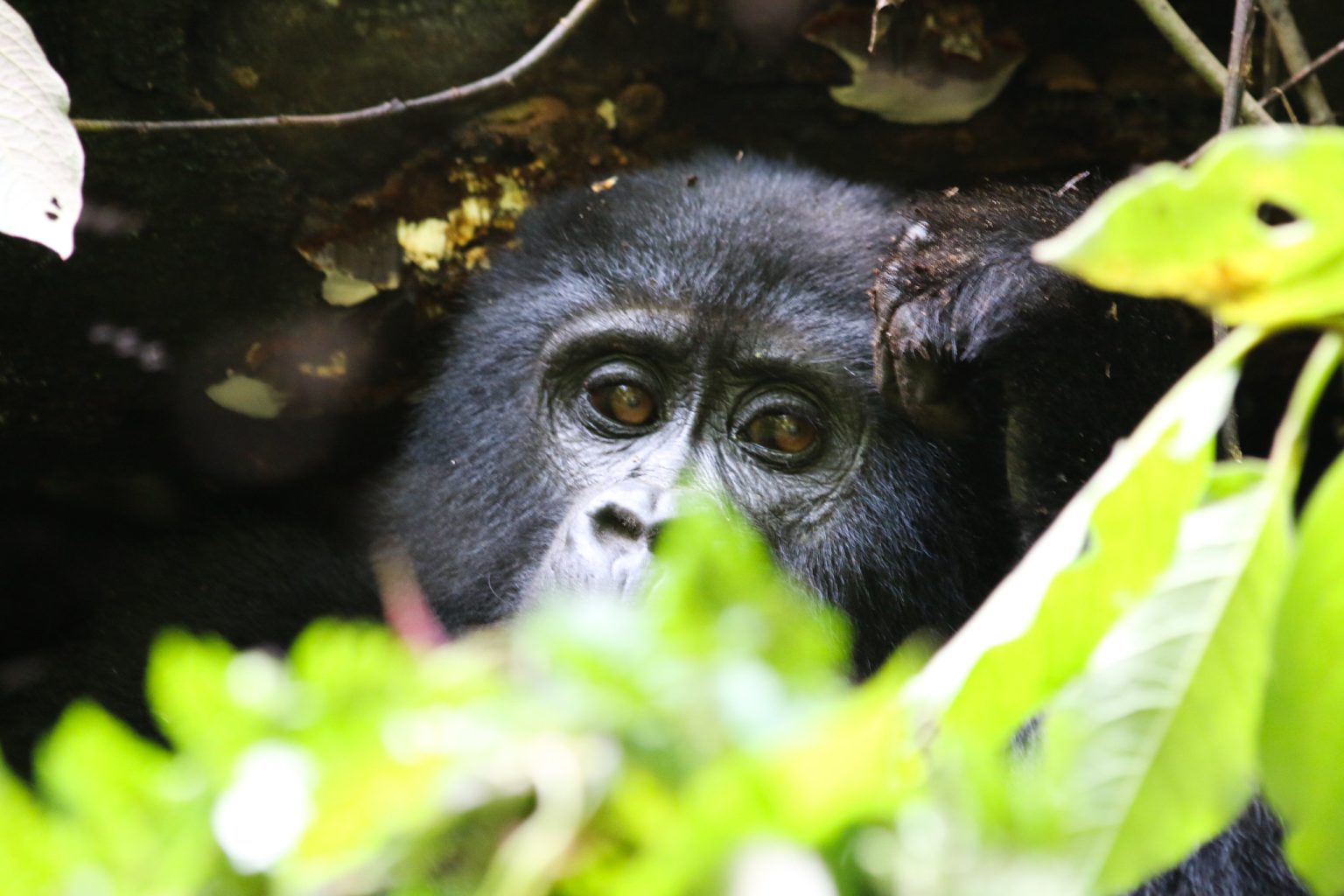
Once you reach the family, you get one hour. A silverback gorilla may be feeding a few metres away while juveniles tumble through the vines, and the hour goes much faster than anyone expects. Plenty of trekkers spend the first ten minutes behind a camera and later wish they had just watched.
Gorilla Conservation and Community Tourism on a Kenya and Uganda Safari
That hour on a gorilla trekking safari also pays for protection. Permit revenue funds the rangers, trackers and vets who keep the gorillas safe, and in Uganda a fixed share of every permit plus a fifth of park entry fees goes to the parishes on the park edge, paying for classrooms, clinics and water tanks. Jobs as porters, trackers, guides and lodge staff add to it. Mountain gorillas were down to a few hundred in the Virungas a generation ago; ranger patrols, veterinary teams and tourism money are the main reasons the count has climbed past a thousand.
Your part is simple. Trek with a licensed operator on a real permit, keep the distance, wear the mask when asked and stay home from the trail if you are ill. Kenya works the same way on a different model: in the Mara conservancies, landowners lease their land to safari camps, and that rent is what keeps the plains open for wildlife rather than fenced for farming.
Cultural Tours on an East African Safari: Maasai, Batwa and Rwanda Villages
Cultural tours give a Kenya and gorilla trip its other half of the story. In Kenya, a Maasai village visit near the Mara shows how herding families live alongside the wildlife, from the cattle enclosures to the songs and jumping dances. Visits are arranged by the camps, and the better ones are run by the community rather than for it; ask your camp how the fee is shared. The Maasai also live across the border in northern Tanzania, so a Serengeti and Ngorongoro extension carries the same culture south.
Around Bwindi, the Batwa were the forest’s first people, hunters and gatherers who left the forest when it became a national park. Community walks led by Batwa guides show their old forest skills, and a visit with the Batwa people fits neatly into the afternoon before or after your trek. Bakiga farming villages, banana beer brewing, traditional healers and craft cooperatives in Buhoma make other short walks.
Near Rwanda’s Volcanoes National Park, cultural villages run by former poachers tell the conservation story from the other side, and a morning at the Kigali Genocide Memorial is how many travellers end a Rwanda leg. None of these take more than half a day, so they slot into the gaps that flights and briefings leave.
Packing for a Savanna Safari and a Forest Trek in One Bag
The packing challenge on this trip is that two very different climates have to fit in one small bag. Light aircraft to the Mara and to Bwindi usually limit you to about 15 kg in total, carry on included, in a soft sided bag. Hard suitcases often will not fit in the hold, though most Nairobi operators will store extra luggage.
For the Mara, think neutral colours, layers for cold 6 am drives, a fleece, a sun hat, sunglasses and binoculars. For the forest, add waterproof hiking boots that are already broken in, gaiters, long trousers you do not mind ruining, a light rain jacket, and a pair of gardening gloves for grabbing nettles and thorny vines. A small daypack with a rain cover holds water, lunch and your camera. Insect repellent does double duty, since the Mara has tsetse flies in places and the forest has ants.
Our gorilla trekking packing list goes item by item, and the gear and clothing section has buying guides for boots, gloves, gaiters, rain jackets and daypacks, plus advice on what to wear on safari in Kenya.
Booking Gorilla Permits, Flights and a Kenya Safari Company
Book in this order: gorilla permit, then regional flights, then Kenya camps. Uganda permits are issued by the Uganda Wildlife Authority and Rwanda’s by the Rwanda Development Board, and most visitors buy them through a licensed operator who holds the permit while the rest of the trip is arranged. Our page on booking Uganda gorilla permits explains how the process works and how far ahead to plan.
A good operator also handles the awkward joins, such as the Wilson to JKIA transfer, the bush flight to Kihihi and the right Bwindi sector for your lodge. Lodges range from simple guesthouses to luxury forest camps: Mahogany Springs and Trackers Safari Lodge in Buhoma, Rushaga Gorilla Camp in the south, and Clouds Mountain Gorilla Lodge high on the Nkuringo ridge are names that come up often, while Governors’ Camp on the Mara River is a long standing Kenya favourite. Our guide to Bwindi safari lodges sorts them by sector. Travel insurance that covers medical evacuation is worth having on both halves of the trip, since the Mara and Bwindi are both several hours from a major hospital.
If you would rather swap Kenya for Tanzania, the same logic applies: the Serengeti safari pairs just as well with gorillas, flying through Kilimanjaro or Kigali, though the East Africa Tourist Visa will not cover Tanzania.
Kenya Safari and Gorilla Trekking FAQ
Are there any gorillas in Kenya at all, even in Kakamega Forest or a zoo?
No. Kenya has no wild gorillas, including in Kakamega Forest, which holds monkeys but no apes. There is also no gorilla on public display that a visitor can plan a trip around; the only apes in Kenya are rescued chimpanzees at Sweetwaters on Ol Pejeta. To see gorillas you need to travel to Uganda or Rwanda, both a short flight from Nairobi.
Which countries have gorillas in Africa?
Ten: Uganda, Rwanda and DR Congo for mountain gorillas, DR Congo alone for eastern lowland gorillas, and Gabon, the Republic of Congo, Cameroon, the Central African Republic, Equatorial Guinea and Angola’s Cabinda enclave for western lowland gorillas, with the rare Cross River gorilla on the Nigeria and Cameroon border. For a traveller coming from Kenya, Uganda and Rwanda are the practical choices.
Which animal is only found in Kenya, and are there bears in Kenya?
The hirola, a critically endangered antelope of the northeast, is the best known animal found only in Kenya, along with the Tana River red colobus and Tana River mangabey. There are no bears in Kenya or anywhere else south of the Sahara. Kenya’s big predators are lions, leopards, cheetahs, hyenas and wild dogs.
How much does gorilla trekking cost when added to a Kenya safari?
The permit is the biggest single cost. In Uganda a gorilla trekking permit costs US$800 for foreign non residents, US$700 for foreign residents and UGX 300,000 for East African citizens, and a reduced US$600 low season rate has been announced for April, May and November. The gorilla habituation experience in Bwindi has been sold at US$1,500, with a rise to US$1,800 announced, so confirm the price when you book. In Rwanda a permit costs US$1,500 per person. Check the current rate with UWA or RDB before paying, as fees change.
How much should I budget for a combined Kenya safari and gorilla trek?
Budget each half separately. Kenyan operators commonly quote about US$300 to US$600 per person per day for a mid range Mara safari with park fees included, less for budget camping and well over US$600 for luxury camps. The Masai Mara reserve fee for non resident adults is US$100 per day from January to June and US$200 per day from July to December, on a 12 hour ticket. The regional flight from Nairobi to Entebbe or Kigali usually costs a few hundred US dollars one way, and a bush flight to Bwindi adds a similar amount. Add the permit, two to four nights of lodge accommodation, transfers and tips, and a 10 day mid range trip lands well above a Kenya only safari of the same length. Our Kenya safari cost guide breaks down the Kenya side in detail.
What do visas cost for Kenya, Uganda and Rwanda?
Kenya’s eTA costs from US$30, with an expedited option for an extra US$100, payable only on the official portal. The East Africa Tourist Visa costs US$100 for 90 days across Kenya, Uganda and Rwanda. Bought separately, a single entry Uganda visa costs US$50 and a 30 day Rwanda visa US$50, with Rwanda waiving the fee for some nationalities. Many travellers find the EATV works out cheaper once they visit two or more of the three countries.
Should I do the Kenya safari or the gorilla trek first?
Most people do the Mara first, because Nairobi has the most international flights and game drives are an easy way to recover from jet lag. Doing the gorilla trek first makes sense if your flights land in Kigali or Entebbe, or if you want the hardest walking days out of the way before a relaxed finish on safari. Book the gorilla permit date first and build the order around it.
Can I see gorillas on a day trip from Nairobi?
Not realistically. Treks start at 7:30 am at the park office, so you need to sleep near the park the night before. A fly in trip via Kigali to Volcanoes National Park can be done in three days and two nights, and Bwindi needs at least the same, usually more.
How fit do I need to be, and is there an age limit for gorilla trekking?
The minimum age is 15 in both Uganda and Rwanda. You do not need to be an athlete, but you should be comfortable walking for several hours on steep, muddy ground at altitude. Guides set the pace for the group, porters can carry your bag, and rangers try to match slower walkers to families that are closer to the trailhead. Some weeks of regular hill walking before the trip makes a real difference.
Is Uganda or Rwanda better for gorilla trekking after a Kenya safari?
Uganda suits travellers who want more choice, a lower permit price, a second trek or chimpanzees and other parks on the same trip. Rwanda suits travellers with little time, since the drive from Kigali airport to Volcanoes National Park is about two and a half hours. Both offer the same one hour with a habituated mountain gorilla family.
Can I combine gorilla trekking with the Serengeti instead of the Masai Mara?
Yes. The migration spends most of the year in the Serengeti, and flights link Kilimanjaro and Arusha with Kigali and Entebbe. Keep in mind that Tanzania is outside the East Africa Tourist Visa, so leaving Kenya, Uganda or Rwanda for Tanzania cancels it and you will need a Tanzanian visa as well.