The best things to do in Uganda are mountain gorilla trekking in Bwindi, chimpanzee tracking in Kibale, the Nile boat safari to Murchison Falls, the Kazinga Channel in Queen Elizabeth, rhino tracking at Ziwa and rafting at Jinja. Most visitors fit four to six of these into a one or two week Uganda tour. This compact East African safari country puts rainforest primates, savanna parks and glaciated mountains within a few days’ drive.
This guide works through twenty Uganda tours and activities, one section each, with a link to the deeper page on this site wherever one exists. If you only want the gorilla park, our things to do in Bwindi page covers its forest trails, village walks, biking and lakes in far more detail. Every price sits in the FAQ at the end.
Uganda Tours and Safari Activities at a Glance
Use this table to see where each activity sits and how much time and effort it asks of you. Day counts include the drive in from the nearest base on a normal itinerary.
| Activity | Region | Days | Fitness |
|---|---|---|---|
| Gorilla trek | Southwest | 2 to 3 | Moderate |
| Golden monkeys | Southwest | 1 | Easy |
| Chimp tracking | West | 1 to 2 | Moderate |
| Queen Elizabeth | West | 2 | Easy |
| Murchison Falls | Northwest | 2 to 3 | Easy |
| Ziwa rhinos | Central | Half day | Easy |
| Lake Mburo | Southwest | 1 to 2 | Easy |
| Kidepo Valley | Far north | 3 to 4 | Easy |
| Rwenzori climb | West | 7 to 9 | Hard |
| Sipi and Elgon | East | 2 to 5 | Moderate |
| Nile rafting | Jinja | 1 | Moderate |
| Lake Bunyonyi | Southwest | 1 to 2 | Easy |
| Batwa Trail | Southwest | Half day | Easy |
| Igongo centre | Mbarara | Half day | Easy |
| Kampala tour | Central | 1 | Easy |
| Food and nights | Kampala | 1 | Easy |
| Shoebill canoe | Entebbe | Half day | Easy |
| Lake Victoria | Entebbe | 1 | Easy |
| Crater lakes | Fort Portal | 1 to 2 | Easy |
| Mabira zip line | East | Half day | Easy |

Mountain Gorilla Trekking Safari in Bwindi Impenetrable Forest
Mountain gorilla trekking is the activity that puts Uganda on most people’s map, and the main stage is Bwindi Impenetrable National Park in the far southwest. Bwindi held 459 of the world’s 1,063 mountain gorillas at the 2018 census, and results of the newer count are still awaited. More than 20 habituated families are open to visitors across four sectors: Buhoma, Ruhija, Rushaga and Nkuringo.
A gorilla trekking safari day starts with a ranger briefing at around 7.30am. Groups of up to eight then follow trackers into the forest, and the walk can last forty minutes or most of the day, since the gorillas move. Once the family is found you get one hour with them, standing at least ten metres back. Trekkers must be 15 or older.
Trip reports return again and again to the same practical points. Gardening gloves for the nettles and thorny vines. Gaiters for mud. And a porter even if you think you do not need one, because a hand on a steep, slippery bank is worth far more than the fee, and the money goes straight into a village household.
Permits sell out for the dry months, so book them first and build the rest of the trip around the date. Our gorilla trekking guide explains the sectors and families, and the gorilla permit guide covers booking. If one hour feels too short, the gorilla habituation experience in Rushaga spends up to four hours with a family still being used to people. Spare mornings in the park go on birding, waterfall walks or a mountain biking tour from Buhoma.
Golden Monkey Tracking and Volcano Hikes in Mgahinga
Golden monkey tracking in Mgahinga Gorilla National Park is the easy, cheerful counterpart to a gorilla trek. Mgahinga is Uganda’s small corner of the Virunga volcanoes, beside Kisoro and the Rwanda border, and it has one habituated gorilla family, Nyakagezi, alongside troops of golden monkeys that feed in the bamboo zone.
The monkey trek is usually short and gentle. You spend an hour with a troop that leaps between bamboo stems, which makes them harder to photograph than you would think, so a fast shutter helps. Fitter walkers add a full day volcano hike up Muhavura, Gahinga or Sabyinyo, where the top of Sabyinyo touches three countries at once. See our golden monkey trekking page for timings.
Chimpanzee Tracking Safari in Kibale Forest
Chimpanzee tracking in Kibale National Park is the second great primate trek in Uganda, and many visitors rate it alongside the gorillas. Kibale covers about 795 square kilometres of forest near Fort Portal and holds around 1,500 chimpanzees plus 13 primate species, among them red colobus and L’Hoest’s monkeys. For anyone planning a primate safari in Uganda, this is where the chimps are most reliable.
Treks leave the Kanyanchu visitor centre in the morning and early afternoon, and the minimum age is 12. Where gorillas sit and chew, chimps are loud and quick. A group can go from silent grooming to a screaming chase across the forest floor in seconds, and you will spend part of the hour craning upward at the canopy. Trip reports often mention neck ache, wet shoes and the noise.
The day long chimpanzee habituation experience suits people who want more time. Afterwards, a guided walk through Bigodi Wetland next to the park adds birds and more monkeys on boardwalks run by the local community, and the village visits there show how families grow coffee, weave baskets and build their homes. Our Kibale chimpanzee trekking guide has the full detail. Backup sites include Kyambura Gorge in Queen Elizabeth and Budongo Forest near Murchison.
Queen Elizabeth Game Drives and Kazinga Channel Boat Safari
A Queen Elizabeth National Park safari is the savanna half of almost every southwest itinerary. The park covers about 1,978 square kilometres of savanna, crater lakes and wetland between Lake George and Lake Edward, on the floor of the western Rift Valley below the Rwenzori, with around 95 mammal species and more than 600 birds recorded.
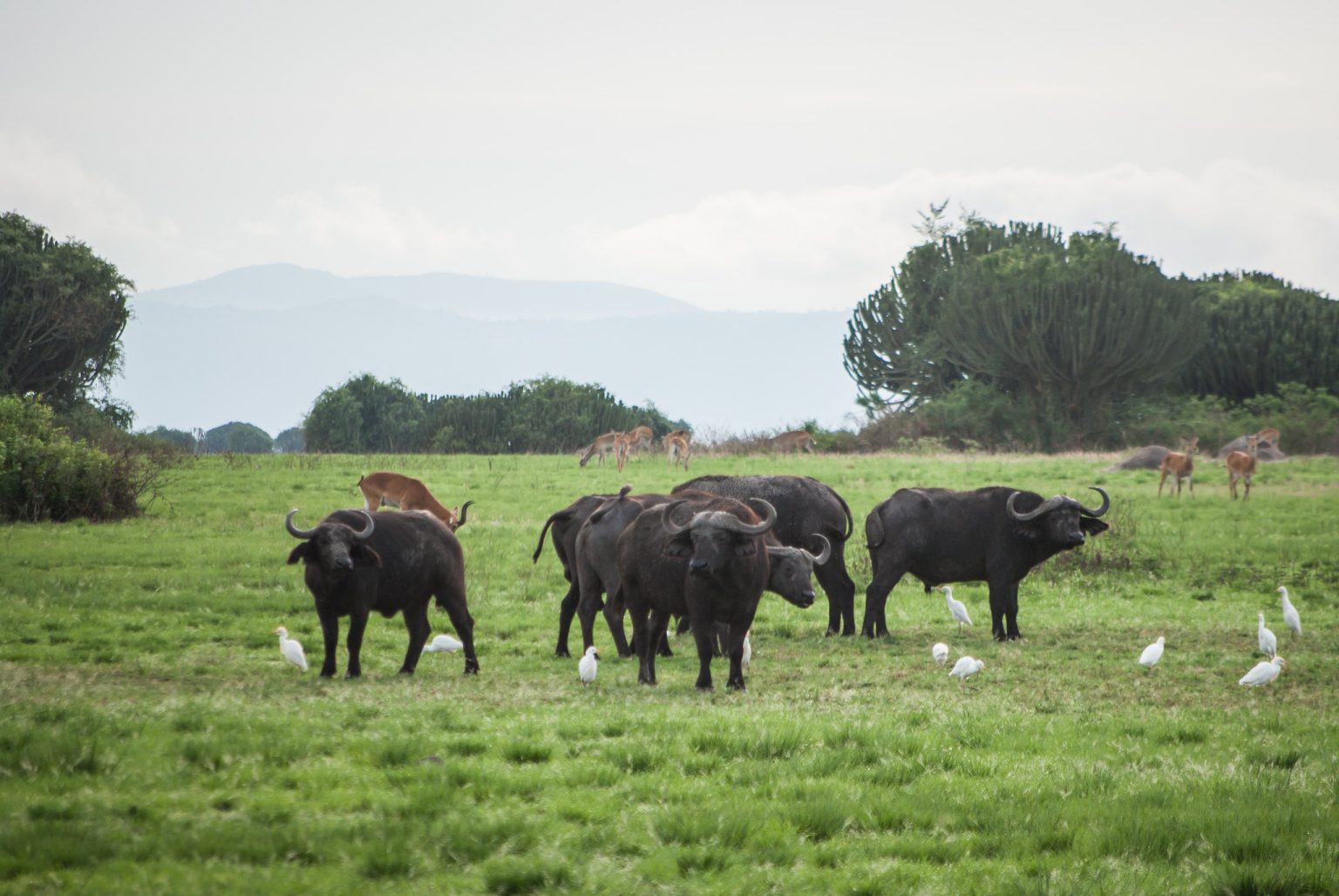
Two activities carry the visit. Morning game drives on the Kasenyi plains look for lions, Uganda kob and elephants. The afternoon Kazinga Channel boat safari then runs along the water linking the two lakes, passing hippo pods, buffalo cooling off at the edge and a long list of waterbirds; the side of the boat facing the bank gets the closer views, so board early. Further south, the Ishasha sector is famous for tree climbing lions that rest in fig trees through the heat of the day, and it sits handily on the road to Bwindi’s Buhoma sector.
Smaller extras include the salt pans at Lake Katwe, where local workers still harvest salt by hand, and the explosion craters on the road to Kabatoro, where the view down the Rift escarpment explains how the whole region was formed. Several travellers on the Uganda forums say their biggest regret was rushing this park, so give it two nights if you can. Our Queen Elizabeth National Park safari guide has routes and lodges.
Murchison Falls Boat Safari and Game Drives
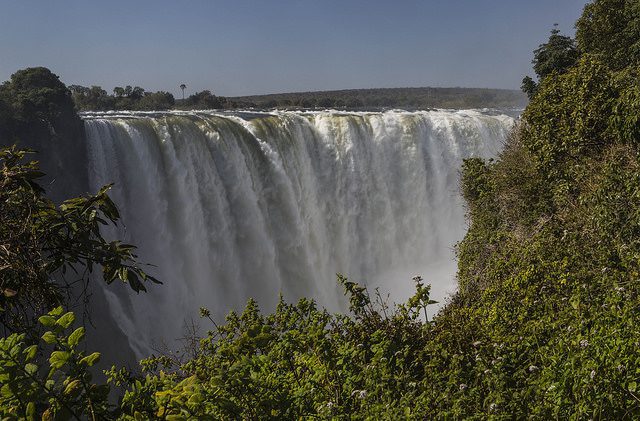
A Murchison Falls safari takes you to Uganda’s largest park, about 3,840 square kilometres split by the Victoria Nile, and a national park since 1952. Here the whole river forces itself through a gap of about seven metres before dropping into a gorge, and you can stand right beside it at the top of the falls hike. Expect spray.
The launch trip upstream from Paraa runs past hippos, Nile crocodiles and elephants drinking on the banks, ending below the falls. The downstream cruise to the delta is where birders look for the shoebill. North of the river, game drives on the Buligi tracks find Rothschild’s giraffes, Uganda kob, buffalo and lions, with leopard sightings possible but not guaranteed. Budongo Forest on the southern edge offers chimp tracking too.
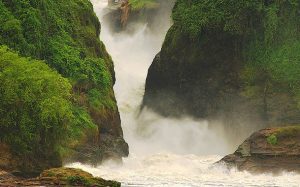
Plan at least two nights. Forum posters single out the drive from Murchison to Kibale as the longest leg of a Uganda loop, and an overnight in Hoima breaks it up. Read our Murchison Falls safari guide before you fix the route.
Rhino Tracking on Foot at Ziwa Rhino Ranch
Rhino tracking at Ziwa is the only way to see rhinos in Uganda. Both species had been wiped out in the country by the early 1980s. Ziwa Rhino and Wildlife Ranch, about three hours north of Kampala, began breeding southern white rhinos in 2005 and now holds more than forty.
Rangers lead small groups on foot to wherever the rhinos are grazing or dozing, and you watch from a respectful distance. It takes two hours or so. Ziwa sits right on the road to Murchison Falls, which is why almost every northern itinerary stops here, and the ranch has simple lodging if you want to break the drive or try the early morning shoebill walk in its swamp.
Lake Mburo Walking, Horseback and Cycling Safaris
A Lake Mburo safari is the easiest wildlife stop from Kampala and the one park in Uganda where you can explore on foot, by bike and on horseback. The park covers about 370 square kilometres of acacia woodland, rolling hills and lakes, about four hours from Entebbe on the road west.
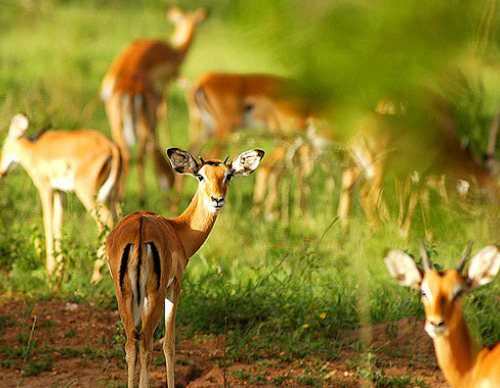
Lake Mburo has no elephants or lions to speak of. That is exactly what makes the walking safari and the horse rides possible. You ride or cycle among zebra, eland, buffalo, topi and impala, and this is the only Ugandan park with impala at all. A boat trip on the lake adds hippos and fish eagles, and a visit to a cattle keeping village on the park edge shows how the Bahima herders live beside the wildlife. It makes a natural first or last night of a southwest loop because it cuts the long drive to Bwindi in two. See our Lake Mburo National Park guide.
Igongo Cultural Centre and Ankole Cattle Tour near Mbarara
The Igongo Cultural Centre outside Mbarara is the best roadside culture tour on the drive west, and it fits neatly into the same day as Lake Mburo. A small museum explains the Ankole kingdom: milk vessels carved from wood, the fermented milk and ghee that the herding households lived on, and the reed and grass houses they built.
Outside, the fields fill with the long horned Ankole cattle whose curved horns can stretch well past a metre each. Herders bring them to water in the late afternoon, which is the time to stop for photographs. Igongo also serves a decent lunch of local food, so most drivers time the break there rather than in Mbarara town.
Kidepo Valley Game Drive Safari
A Kidepo Valley safari is for people who want somewhere almost nobody goes. The park lies in Uganda’s far northeastern corner on the South Sudan and Kenya borders, a wide semi arid valley ringed by mountains. More than 470 bird species have been recorded, and the Narus Valley game drives turn up big buffalo herds, lions, elephants, Rothschild’s giraffes, zebras and, with luck, cheetahs.
The catch is distance. By road it is a full day or more each way, so Kidepo adds three to four days unless you fly in on a scheduled light aircraft. Many visitors pair it with time among the Karamojong herders who live around the park; our page on visiting the Karamojong explains how to do that respectfully. The Ik people live in the mountains along the park edge too.
Rwenzori Mountains Trekking and Climbing
Rwenzori trekking is serious mountain walking in the “Mountains of the Moon”, a UNESCO World Heritage Site since 1994 with glaciers almost on the equator. Margherita Peak on Mount Stanley reaches 5,109 metres, the third highest point in Africa after Kilimanjaro and Mount Kenya.
A summit climb usually takes eight or nine days, with ropes and crampons on the glacier near the top. It is boggy, cold and wet much of the year, and walkers who have done Kilimanjaro tend to describe the Rwenzori as harder. Shorter treks of two to four days reach the lower valleys and giant lobelia zones without any technical climbing. Our Rwenzori Mountains National Park guide goes further.
Sipi Falls Hiking, Abseiling and Coffee Tours on Mount Elgon
A Sipi Falls tour takes you to eastern Uganda, where three waterfalls drop off the lower slopes of Mount Elgon near Mbale, the tallest close to 100 metres. A guided hike links all three in a few hours, with views across the plains towards Lake Kyoga on clear days. The trading centre sits at about 1,775 metres, so evenings are cool.
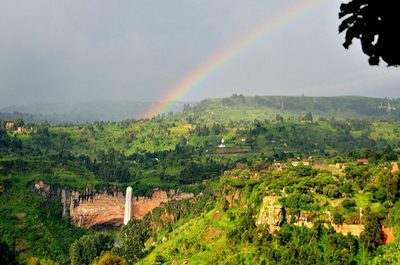
The adventure option is abseiling down the cliff beside the main fall, roughly a two hour outing that ends near the pool at the bottom, and the basalt cliffs also carry bolted rock climbing routes. Small farmers around Sipi run Arabica coffee tours, where you pick, roast and grind the beans and drink the result. Hikers with four to six days can climb Mount Elgon itself, an old volcano with one of the largest calderas in the world, topping out at Wagagai, 4,321 metres. Read our Sipi Falls tour page and the roundup of the best waterfalls in Uganda.
Jinja White Water Rafting and Source of the Nile Boat Trips
White water rafting on the Nile is the headline in Jinja, the town where the river leaves Lake Victoria, two to three hours east of Kampala. Established rafting companies run half day and full day trips on grade four and five rapids, with safety kayakers alongside, and gentler family floats for younger or nervous paddlers. Dam building has drowned some of the famous rapids nearer town, so the trips now start further downstream.
The classic short visit is a boat trip to the source of the Nile, where the explorer John Hanning Speke placed it in 1862 and where you can see the water welling out of the lake. Jinja also offers bungee jumping, kayaking, stand up paddling, quad biking along the riverbank and sunset cruises. Swim only where the rafting crews say it is safe, since still water at the lake edge can carry bilharzia. It works at the start or end of a trip. One forum traveller tried Bwindi to Jinja in a single run and called it twelve hours of misery, so split that drive.
Lake Bunyonyi Canoe Trips and Island Tours
Lake Bunyonyi in the hills near Kabale is where many people rest between the gorilla parks and the savanna. The lake winds between steep terraced slopes and holds 29 islands, and it is free of bilharzia, so swimming is common.
Canoe trips by dugout or kayak visit the islands, including Punishment Island with its sad history, and local guides run walks to hillside villages and a Batwa community. Life here is slow and quiet, which is the point. Neighbouring Lake Mutanda, closer to Kisoro, has canoe trips with the Virunga volcanoes behind them. Both are covered on our Bwindi things to do page because they fit so neatly around a gorilla trek. Our 4 day gorilla safari guide pairs Bwindi with Lake Bunyonyi or Queen Elizabeth.
Batwa Trail and Cultural Experiences in the Southwest
The Batwa cultural experience introduces the forest people who lived in Bwindi and Mgahinga until the parks were gazetted in 1991 and they were moved out. In Mgahinga, the Batwa Trail walks with Batwa guides through their former forest to Garama Cave. Around Buhoma, Batwa groups show how they hunted, gathered honey, made fire and built shelters.

These visits can be good or uncomfortable. The better ones are run by Batwa themselves, with income going back to the community. Ask your operator who organises the walk and where the fee goes, and ask before you photograph anyone. Our page on the Batwa people covers their history and the ethical options, and Uganda people and culture explains the wider mix of kingdoms and tribes.
Kampala City Tours: Kasubi, Mengo, Namugongo and the Baha’i Temple
A Kampala city tour is noisy, crowded and a good way to see how most Ugandans live. The capital spreads over a series of hills, has more than three million people, a lot of traffic and the fastest moving minibus taxi network you will ever try to cross. Go with a guide for the first day.
The Buganda kingdom sights lead the list. The Kasubi Tombs, a UNESCO World Heritage Site and burial ground of the Buganda kings, have been rebuilt after a fire, while the Kabaka’s Palace at Mengo connects to the underground cells used during the Amin years. The Namugongo Martyrs Shrine, about 15 kilometres out, marks where Christian converts were burned in 1886 under King Mwanga; on 3 June each year pilgrims arrive from across East Africa, so visit on another day unless you want to join them. Our Uganda Martyrs page tells that story. The Baha’i House of Worship on Kikaya Hill, completed in 1961, is the only Baha’i temple in Africa and sits in quiet gardens.
Add the Uganda Museum and the National Mosque at Old Kampala, whose minaret gives the best view over the hills if you are happy with the climb.
Kampala Food Tours, Nightlife and Craft Shopping
A Kampala food tour is the quickest way into everyday Uganda, and it costs very little. Start with a Rolex from a roadside stand: a chapati rolled round an omelette with tomato and cabbage, and the city’s favourite snack. Then try a plate of matooke, the steamed green banana that anchors most meals, with groundnut sauce, and whatever fruit is in season at the market; our guide to fruits in Uganda covers the jackfruit, passion fruit and small sweet bananas you will see everywhere.
Owino Market, now officially St Balikuddembe, is a maze of fabric, second hand clothes and food stalls, best visited with a guide who knows the lanes. Tailors there and around town will make a shirt or dress from bright kitenge cloth in a day or two, which makes a better souvenir than most carvings. For crafts, the stalls behind the National Theatre and the weekend craft markets sell bark cloth, woven baskets and jewellery made from rolled paper beads.
Evenings belong to the Ndere Cultural Centre in Ntinda, which stages dance and music from across Uganda’s regions several nights a week, and to Kampala’s nightlife in Kololo, Kabalagala and around Acacia Avenue, where bars and live music venues stay busy late. Take a registered taxi or a ride hailing car home at night rather than a boda boda.
Shoebill Canoe Trip at Mabamba and Uganda Birding Safaris
A shoebill canoe trip at Mabamba Swamp is the bird outing most visitors want. Mabamba is a Ramsar wetland on the northern shore of Lake Victoria, about an hour from Entebbe, and you go out in a small wooden canoe through the papyrus channels in the early morning. Sightings are frequent but not certain.
Uganda has recorded more than 1,000 bird species, which makes a Uganda birding safari one of the richest in Africa for its size. Bwindi holds the Albertine Rift endemics, Semuliki the Central African forest birds, and Murchison’s delta and Lake Albert are other shoebill sites. Our Uganda birding in Bwindi guide covers the southwest trails.
Lake Victoria Day Trips: Ngamba Island, Entebbe and the Ssese Islands
Lake Victoria trips suit the first or last day of a Uganda tour, since Entebbe airport sits right on the shore of Africa’s largest lake. The best known is the boat ride to Ngamba Island, where around fifty orphaned chimpanzees rescued from the pet and bushmeat trade live on a forested island; you watch them from a raised platform at feeding time and can stay overnight.
Closer in, the Uganda Wildlife Conservation Education Centre in Entebbe shows rescued animals and runs a behind the scenes keeper programme, and the botanical gardens are good for an easy first walk. The Ssese Islands, an archipelago of 84 islands, offer forest walks, fishing villages and a few slow days on Bugala. Anglers can read about Nile perch on our fishing trips page.
Fort Portal Crater Lakes and Semuliki Hot Springs Tours
The crater lakes tour around Fort Portal is a gentle day on foot, by bike or by car between dozens of small volcanic lakes ringed by forest and farms. Lake Nkuruba and Lake Nyabikere are favourites, with black and white colobus in the trees and swimming in some lakes, and it fits neatly beside a Kibale chimp trek.
West of Fort Portal, Semuliki National Park is a small lowland forest on the Congo border with more than 440 bird species. The Sempaya hot springs boil out of the ground hard enough to cook an egg, and the neighbouring Semliki Wildlife Reserve runs boat trips on Lake Albert. Check current advice before going, since some governments warn against travel close to the Congo border here. Tea estates line the roads around Fort Portal, and farm visits in the region include tea and vanilla tours; see agro tourism in Uganda.
Mabira Forest Zip Line, the Equator and Roadside Stops
Some of the most enjoyable Uganda tour moments happen on the road. Mabira Forest, about an hour east of Kampala on the Jinja road, has guided nature walks for monkeys and more than 300 bird species, plus a forest zip line over the canopy. Ssezibwa Falls nearby carries local legends and makes a short stop.
Heading west, nearly every safari pauses at the equator line at Kayabwe on the Masaka road for photos, coffee and craft shops. Further on, roadside stalls sell matooke, roasted maize and fruit, and the green banana and tea country of the southwest rolls on for hours. None of these need planning. Tell your driver you want to stop.
Planning a Uganda Tour: Routes, Seasons and Getting Around
Most first trips follow one loop: Entebbe to Lake Mburo, Bwindi, Queen Elizabeth and Kibale, then back via Fort Portal, over seven to ten days. Add Murchison Falls and Ziwa for twelve to fourteen days, or Kidepo by light aircraft. Jinja, Mabamba and Kampala fit at either end. The longest drives are Murchison to Kibale and Kibale to Bwindi, so split them where you can. Our Uganda safari guide lays out 3 to 14 day routes, and for operator built itineraries, compare companies offering Uganda Safaris alongside our gorilla safari companies guide. Our 10 day Uganda safari guide sets out a full wildlife and gorilla route.
The drier months, June to September and December to February, give firmer trails for gorilla and chimp trekking and better game viewing, although every activity runs year round. Lodges run from community bandas to boutique forest and savanna camps; our Bwindi safari lodges page covers the gorilla end. See the best time for gorilla trekking in Uganda, getting to Bwindi and our gorilla trekking packing list. Many travellers also add Rwanda or a Kenya or Tanzania safari: see Uganda vs Rwanda, the Masai Mara safari and Tanzania safari and gorilla trekking. For a wider look at the forest, our guide to see gorillas across Africa compares the options.
Frequently Asked Questions About Things To Do in Uganda
Is Uganda worth visiting?
For wildlife and primates, yes. Uganda is one of only three countries where you can trek mountain gorillas, it has the most reliable chimpanzee tracking in East Africa, and its savanna parks, the Nile and the Rwenzori sit within a week’s drive of each other. It is less polished than Kenya or Tanzania and the roads are slow, which many visitors count in its favour because the parks feel far less crowded.
How many days do you need for a Uganda tour?
Seven to ten days covers gorillas, chimps and one savanna park without rushing. Twelve to fourteen days lets you add Murchison Falls and Ziwa, or Jinja and Sipi. Kidepo or a Rwenzori climb needs extra time on top. Allow a rest day in Entebbe after a long haul flight if you can.
How much do gorilla and chimpanzee permits cost in Uganda?
A Uganda gorilla trekking permit costs US$800 for foreign non residents, US$700 for foreign residents and UGX 300,000 for East African citizens. A low season rate of US$600 (US$500 for foreign residents) applies in April, May and November and cannot be rescheduled. UWA has suspended the old reservation hold, so permits are paid in full at booking. The gorilla habituation experience is US$1,500, and UWA has announced a rise to US$1,800 for foreign non residents from 1 January. A Kibale chimpanzee tracking permit is US$250 for foreign non residents, with a rise to US$300 announced, so confirm the current rate when you book.
How far does $100 go in Uganda?
At recent exchange rates of close to UGX 4,000 to the US dollar, US$100 is roughly UGX 400,000. Away from the parks that stretches a long way: street food, local meals, minibus taxis and market shopping cost little, and a careful budget traveller can live on far less than that per day. It does not go far on safari, where permits, park entry, lodges and vehicle hire are priced in dollars at international levels. Carry clean, recent dollar notes, since older ones are often refused or exchanged at a worse rate.
Is it safe for Americans to travel to Uganda right now?
At the latest check, the US State Department lists Uganda at Level 4, Do Not Travel, citing health, crime, terrorism and unrest, linked to the regional Ebola outbreak, and US health authorities keep an entry restriction for travellers recently in Uganda. The UK does not advise against travel to any part of Uganda, while Canada advises avoiding travel that is not necessary. Gorilla treks run under armed ranger escort. Read your own government’s page the week you fly, and our page on Uganda safety for the details.
Can you wear red in Uganda?
Yes, red clothing is fine for visitors. The thing to avoid is the red beret, which became the symbol of an opposition political movement and has been restricted as military attire, so leave political colours, berets and slogans at home, especially around elections and rallies. Camouflage clothing is also best left behind, since it is associated with the army.
What are the best things to do in Uganda with kids?
Lake Mburo’s walking and horse rides, boat safaris on the Kazinga Channel and at Murchison, the Entebbe wildlife centre, Ngamba Island, canoeing on Lake Bunyonyi and Jinja’s family floats all suit children. Chimpanzee tracking is open from 12 under the UWA tariff, while gorilla trekking requires trekkers to be 15 or older, so younger children stay at the lodge with a parent or join a village walk instead.
Is chimpanzee tracking worth doing if I am already trekking gorillas?
Yes, for most people. The two treks feel completely different: gorillas sit calmly in a family group, while chimps move fast, call loudly and spend time in the trees. Kibale is also easy to fit between Queen Elizabeth and Fort Portal.
Should I self drive or hire a driver guide?
Self drive is possible on the main roads, but distances are long, signage is thin and park tracks get muddy. Most first time visitors use a driver guide, who also spots wildlife and handles park paperwork. Several forum travellers who used a private vehicle said it gave them the flexibility to stop when they wanted. Avoid driving after dark wherever you can.
What should I pack for a Uganda safari?
Light layers, a rain jacket, sturdy waterproof boots, long trousers and long sleeves for forest treks, gardening gloves, gaiters, binoculars and plenty of insect repellent. Mornings in Bwindi and the Rwenzori are cold. Our African safari packing list covers the savanna side.
Do I need a visa and a yellow fever certificate for Uganda?
Most visitors need a visa, applied for online before travel. Uganda’s immigration service announced in October that a yellow fever certificate is no longer a condition of entry, but the vaccine is still recommended and Rwanda, Kenya or an airline may ask for the card on an onward trip, so carry it if you have one. If you are also visiting Rwanda and Kenya, the East Africa Tourist Visa covers all three.