A Uganda gorilla trekking packing list centres on broken-in waterproof boots, knee-high gaiters, long neutral clothing, gardening gloves, a rain jacket and a daypack holding two litres of water. Which Bwindi sector you draw changes the weighting more than the season does. Bwindi Impenetrable National Park and Mgahinga Gorilla National Park sit in southwestern Uganda, and a gorilla trekking safari here means red clay, steep off-trail ground and a ten metre viewing rule.
What Makes a Uganda Gorilla Trekking Packing List Different
Uganda is the muddier of the two main gorilla countries and the wilder-feeling one. That shows up in what you carry.
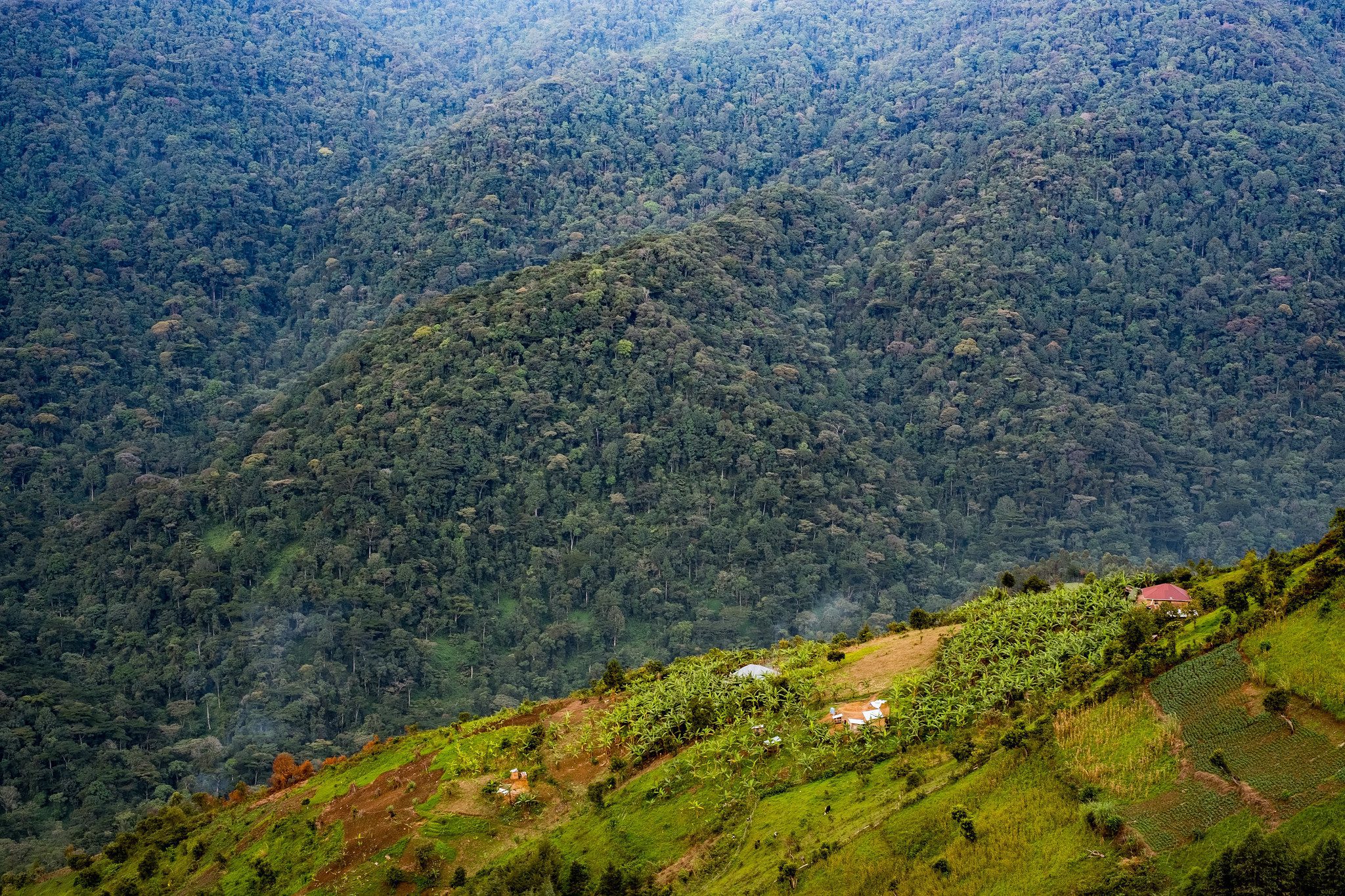
Bwindi runs from roughly 1,160 to 2,607 metres, lower than Volcanoes National Park across the border, so you are marginally warmer and considerably wetter. The soil is the thing people remember. It is red clay, it holds water for weeks after rain, and it coats everything below your knee within the first half hour. Anything pale you own will not stay pale.
The other difference is trek length and unpredictability. Trackers find your family at dawn and you walk to wherever that is, which can mean forty minutes or eight hours. Uganda’s habituated families are spread across four Bwindi sectors plus one group in Mgahinga, and terrain varies enormously between them.
Two country-specific rules also shape the bag. Uganda now asks trekkers to stay at least ten metres from the gorillas, three more than Rwanda, and military camouflage clothing is not permitted for civilians anywhere in the country.
Packing by Bwindi Sector for Your Gorilla Trekking Safari
Your permit names a sector, and that is the single most useful piece of information for packing. Ask which one before you buy anything.
Mgahinga Gorilla National Park holds one habituated family and sits higher than most of Bwindi, which makes it the coldest briefing in Uganda. Take an extra warm layer.
There is a fuller account of the steepest ground in the guide to Nkuringo gorilla trekking, and on the physical side in the notes on how long gorilla trekking takes and how fit you need to be.
Footwear and Leg Protection for Bwindi Red Clay
Boots are the item to get right and the item people get wrong.
Ankle-high or higher, waterproof, deep widely-spaced lugs, and walked in for two to three weeks before you fly. Widely spaced tread matters more in Uganda than almost anywhere, because tightly packed lugs fill with clay inside twenty minutes and then you are sliding on a smooth mud brick. Brown or black leather over pale fabric, since the red stain wipes off leather and works permanently into mesh. Waterproof mid-cut hiking boots are the category, and the full comparison sits in the guide to boots for gorilla trekking.
Uganda has a footwear culture worth noticing. Rangers and porters at Buhoma largely trek in knee-high rubber gumboots, and they can be hired cheaply near the park. In the heaviest weeks of April or October that is a genuinely sensible choice for a short trek, though the absence of arch support punishes you across five hours in Nkuringo.
Tall merino socks with your trouser cuffs tucked inside them, then knee-high gorilla trekking gaiters over the top. That combination is what stands between you and the safari ants, and it is not optional in the wet months.
Clothing for a Gorilla Trekking Safari in Uganda
Long sleeves, long trousers, neutral colours. Olive, khaki, brown, grey, muted green.
Quick-dry synthetics beat cotton and denim by a wide margin here, because Bwindi gives wet fabric no chance to dry. Shorts are a poor idea at any time of year, since nettles, thorns and biting ants all work below the knee. Ripstop quick-dry trekking trousers are the workhorse item.
The camouflage restriction deserves its own line, because it catches travellers who assume it is a suggestion. Military-pattern clothing is not permitted for civilians in Uganda, in any colour, and the rule reaches beyond shirts to hats, belts, daypacks, footwear and socks. Plain khaki and olive are entirely fine. Camo print is not, and a roadblock is a bad place to discover that.
Dark blue and black are worth avoiding on the drives rather than in the forest, since both draw tsetse flies. The complete breakdown of layers, colours and fabrics sits in the guide to what to wear for gorilla trekking, hand protection has its own guide covering gloves for gorilla trekking, and the shell is covered in rain jackets for gorilla trekking.
Daypack Contents for a Bwindi Gorilla Trekking Adventure
Twenty to thirty litres, carried by a porter for most of the day if you have any sense. Sizing, fit and pocket layout are covered in the guide to daypacks for gorilla trekking.
Two litres of water minimum, three in Rushaga or Nkuringo where treks run long. A boxed lunch from the lodge, because the trek can overrun midday without warning. A surgical mask, plus a spare, since both required and sweat-soaked within the hour, so a small pack of disposable surgical masks is worth carrying.
Electronics go in a roll-top dry bag. Ordinary plastic carrier bags have been banned in Uganda since 2018 and are taken at Entebbe on arrival, including duty free bags, so bring proper waterproof pouches rather than assuming you will improvise with a shopping bag.
Toilet paper, wet wipes, a compact first aid kit with blister plasters and antihistamine for nettle stings, insect repellent, sunscreen and lip balm. Cash in small notes for the porter and tips, because there is no card payment at a forest trailhead.
Season by Season Packing for Gorilla Trekking Tours in Uganda
Bwindi has no dry season worth the name, taking somewhere near 2,400mm of rain a year. It has degrees of wet.
Camera Gear and Optics for Gorilla Trekking in Bwindi
Bwindi’s canopy is dense and the light beneath it is dim and green. Kit that works on a savannah game drive underperforms here.
A fast lens somewhere in the 24 to 70mm range does more for you than a long telephoto, because the ten metre rule still puts you closer than open-plains photography ever does, and the trees leave no room to work at distance. Spare batteries matter, since cold damp mornings drain them faster than expected, and spare cards because you will shoot more than you planned.
Flash is prohibited outright, and it needs switching off manually rather than left on automatic, which will fire in exactly these conditions. A rain cover or dry bag for the body is worth its weight.
Binoculars do little during the viewing hour and plenty on the drives and any birding walk you add, since Bwindi is one of the finest birding forests in Africa. Detail sits in the notes on cameras and binoculars and the guide to gorilla trekking and photography.
Drones need written clearance in Uganda and are not permitted over the parks. An unauthorised one can be confiscated on arrival.
Getting to Bwindi and Why Baggage Limits Shape Your Packing
How you reach the park decides how ruthless you have to be.
Flying is the fast route, with scheduled services from Entebbe to the airstrips at Kisoro and Kihihi. Those small aircraft run tight allowances, commonly around fifteen kilos per person with excess charged at roughly three dollars a kilo. Soft duffels travel far better than wheeled hard cases, both in the hold and on the roads at the other end. This is the strongest argument for hiring gaiters and gumboots locally rather than carrying them, which is covered in renting gorilla trekking gear.
Driving from Entebbe takes roughly eight to nine hours and removes the weight limit entirely, though the road still favours soft bags.
A third route surprises people. Rushaga and Nkuringo in southern Bwindi are about four to five hours from Kigali via the Cyanika border crossing near Kisoro, which is often quicker than coming down from Entebbe. If you are routing that way, remember Rwanda’s own restrictions apply in transit, and the Rwanda gorilla trekking packing list covers those.
Uganda Park Rules That Affect What You Carry
Some items are on the list because of regulation rather than comfort.
A face mask is required near the gorillas, since these animals have no immunity to routine human respiratory infections. Bring at least two.
Minimum age is fifteen, measured on the trekking day rather than the booking day, and rangers check passports at the briefing, so carry it. Group size is capped at eight visitors per gorilla family per day and viewing time at one hour.
Arrive well before the 7am briefing, and do not trek with flu symptoms. Rangers screen at the briefing and will turn you away, and Uganda has no refund policy for illness.
All rubbish comes back out with you, down to the smallest wrapper.
Frequently Asked Questions About Packing for Uganda Gorilla Trekking
How much does a Uganda gorilla permit cost?
Eight hundred US dollars per person for foreign non-residents in Bwindi or Mgahinga, seven hundred for foreign residents in East Africa, and 300,000 Ugandan shillings for East African citizens. The four-hour habituation experience is quoted at 1,500 dollars, with some operators reporting a rise toward 1,800. Uganda has also reinstated discounted permits at 600 dollars for foreign non-residents during April, May and November, though those are date-specific and cannot be rescheduled. Compare that with 1,500 in Rwanda and around 400 in Congo. Tariffs are reviewed periodically, so confirm before booking.
What does the trek itself cost beyond the permit?
Porters at the trailhead charge roughly fifteen to twenty-five dollars, with a tip commonly ten to fifteen on top. Gaiter hire runs about five dollars a pair where the lodge does not lend them free. Accommodation near the sectors spans about thirty dollars for budget campsites to several hundred for the luxury lodges. Flights from Entebbe to Kisoro or Kihihi carry excess baggage at around three dollars a kilo above roughly fifteen kilos. Carry cash in small notes for everything at the trailhead.
Do I need different gear for Uganda than for Rwanda?
The list is the same, the weighting is not. Uganda is lower and muddier, so waterproofing and deep tread matter more, and gumboots are a more common local answer. Rwanda starts above 2,400 metres, so the cold-morning layer matters more there. Uganda asks for ten metres of distance rather than seven, which affects lens choice slightly. The camouflage restriction is a Uganda rule, and both countries ban plastic carrier bags.
Which Bwindi sector is hardest to pack for?
Rushaga, because trek length is the least predictable. It holds the widest spread of gorilla families, so your walk might be ninety minutes or most of the day depending on which one you draw. Pack for the longer end with three litres of water and a proper lunch. Nkuringo is physically harder but at least predictably so, which makes it easier to prepare for: high-cut boots, knee-high gaiters, a porter and hill fitness.
Can I buy or hire gear near Bwindi?
Yes for several items. Walking sticks are handed out free at every briefing point. Gaiters, gumboots and ponchos hire cheaply near the park, and many lodges lend gaiters, ponchos, daypacks and water bottles to guests at no charge. Kisoro town serves the southern sectors and stocks basic supplies including gumboots and work gloves. What you should not count on locally is properly fitted hiking boots, which need breaking in anyway.
Are jeans acceptable for trekking in Bwindi?
Nobody will turn you away, and plenty of visitors trek in them. Denim is simply poorly matched to a rainforest, holding water, adding weight and chafing on long climbs, and one trekker reported being stung through a pair by Bwindi’s nettles. Quick-dry synthetic trousers do the same protective job far more comfortably. If jeans are all you own, trek in them rather than buying badly at the last minute and keep a dry change in the vehicle.
What is the minimum age, and do I need my passport on the trek?
Fifteen years, measured on the day you trek rather than when you booked, and enforced without exceptions in both Bwindi and Mgahinga. Bring your passport to the briefing, because rangers verify age against it and permits are issued against passport details. A mismatch between your permit and your document creates a problem at the worst possible moment, so check the spelling on your permit when it is issued.
Continue Planning Your Uganda Gorilla Trekking Gear
This page covers what changes because you are trekking in Uganda. For the underlying checklist, start with the guide to what to pack for gorilla trekking.
For the individual items, work through what to wear, boots, gaiters, gloves, rain jackets and daypacks for gorilla trekking.