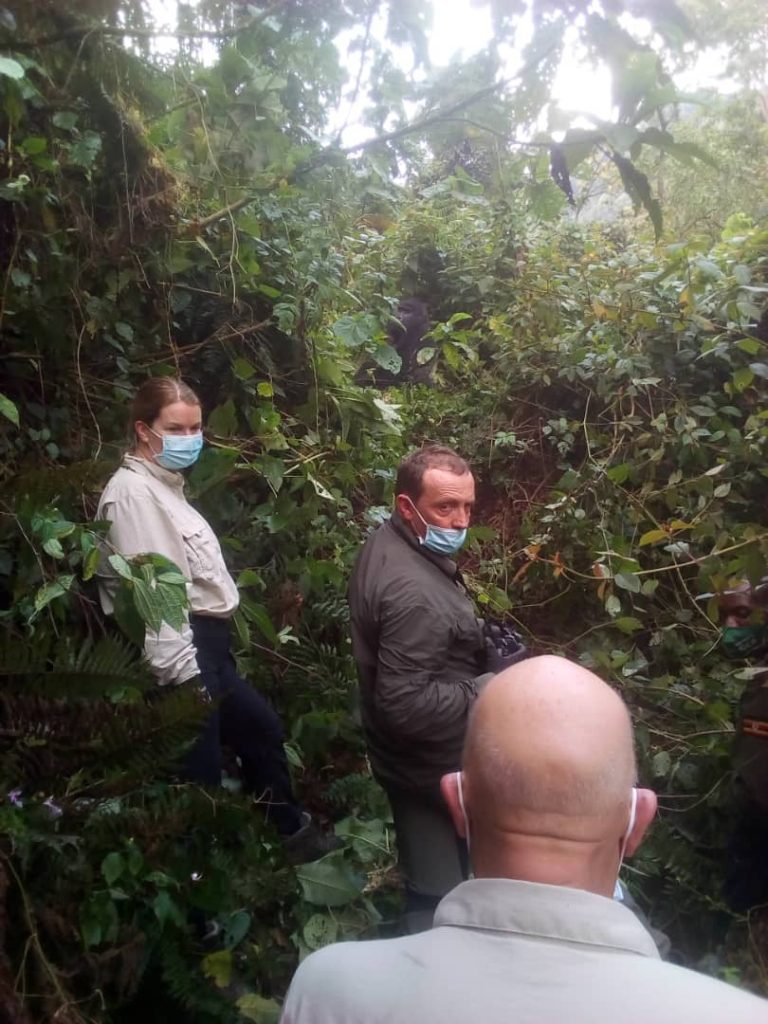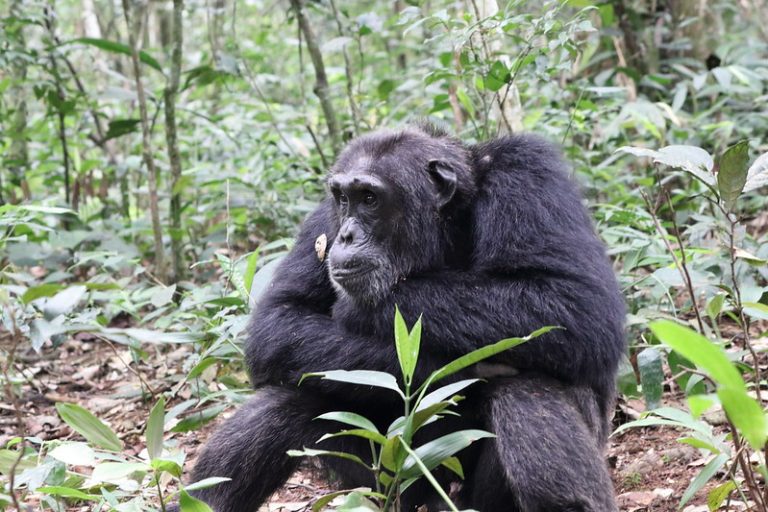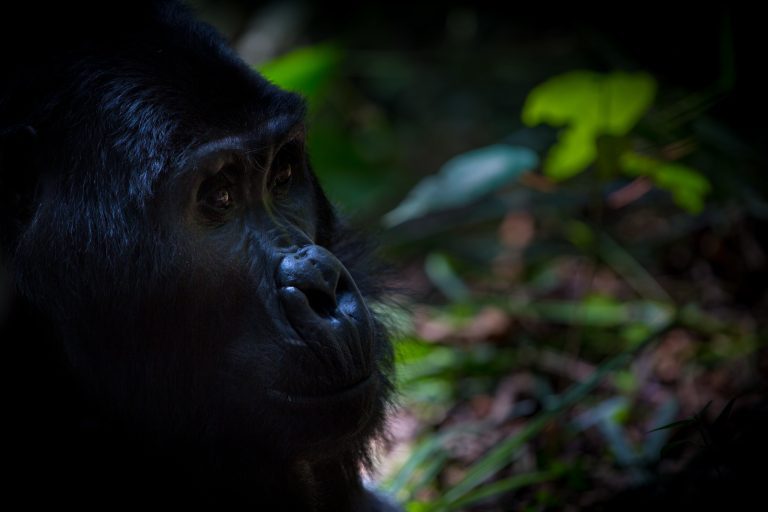
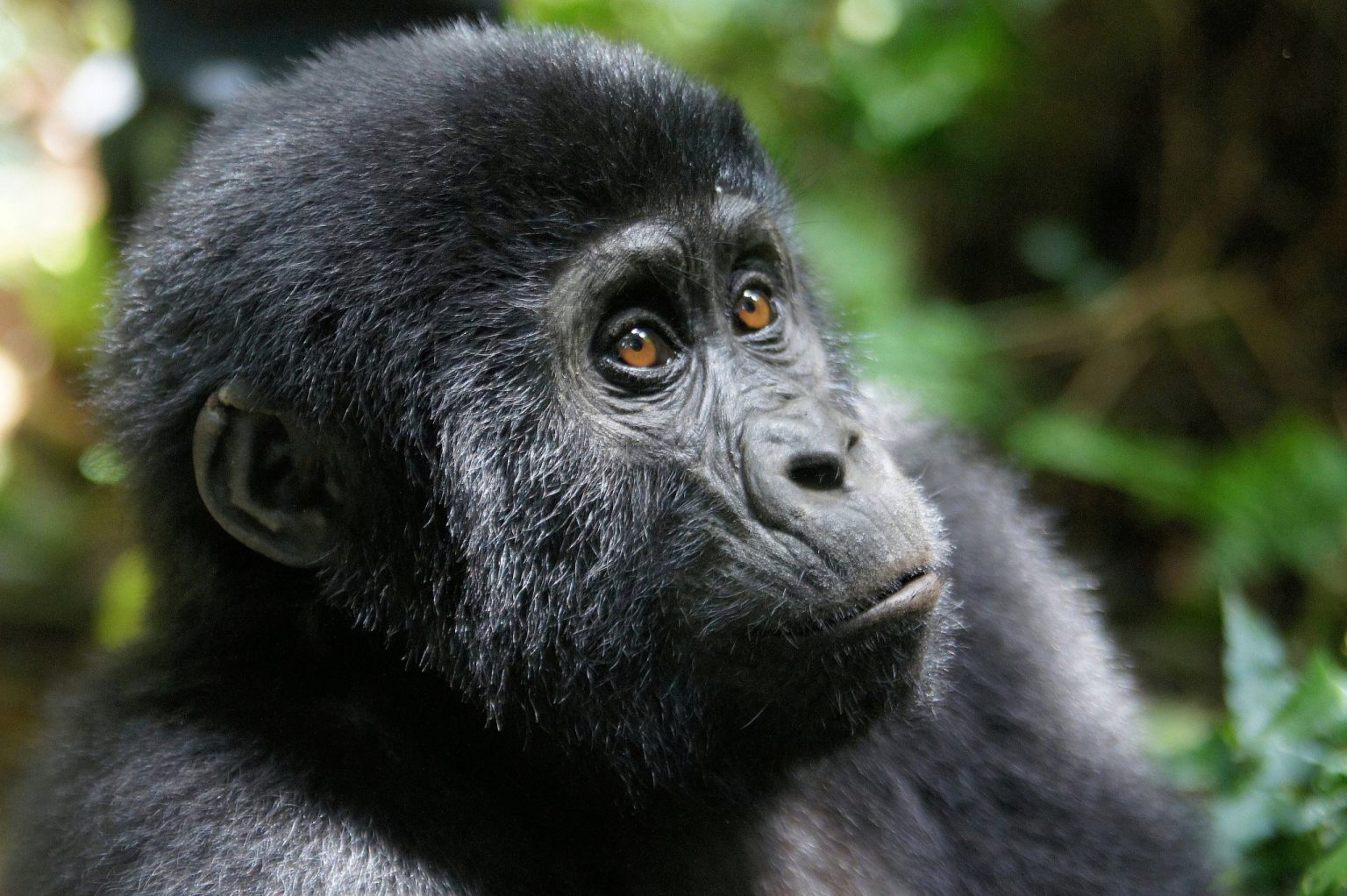
Yes, you can rent most gorilla trekking gear near the parks, or borrow it from your lodge, but not the item that matters most. Gaiters hire cheaply at Kinigi and around Bwindi, many lodges lend rain jackets, ponchos and gumboots, and walking sticks are free at the trailhead. Hiking boots are the exception: buy them at home and break them in. A gorilla trekking safari in Bwindi or Volcanoes National Park needs less bought kit than most lists suggest.
Renting Gorilla Trekking Gear in Uganda and Rwanda
Plenty of people arrive having spent heavily on gear they will use exactly once. Some of that is avoidable.
Four separate sources cover you on the ground. The parks hand out a small amount of equipment free at the briefing point. Lodges near the trailheads lend the bulkier protective items to their own guests. Stalls, community groups and staff around the park headquarters hire out gaiters and gumboots. And porters, who are hired rather than rented, take care of the load itself.
A fifth route sits behind all four: the safari company or a local outfitter can rent you a gear package before you arrive, which suits anyone flying light or travelling with teenagers who have outgrown last year’s boots.
None of these sources is a shop with a guaranteed size run. Stock depends on the lodge, the season and how many other trekkers want the same thing that morning, which is why the honest answer to “can you rent it?” is usually “yes, probably, if you ask ahead”.
| Item | Rent or borrow? | Our advice |
|---|---|---|
| Walking stick | Free at start | Do not buy |
| Gaiters | Lodge or Kinigi | Rent for one trek |
| Rain poncho | Most lodges | Borrow, or own a jacket |
| Rain jacket | Some lodges | Buy if you can |
| Gumboots | Lodges, park area | Good backup |
| Hiking boots | Rarely | Always buy |
| Gloves | Few lodges | Buy, cheap |
| Daypack | Many lodges | Bring your own |
| Waterproof trousers | Some operators | Rent or buy |
| Clothing | No | Pack your own |
| Binoculars | Rarely | Bring your own |
| Head torch | Outfitters only | Cheap to buy |
The saving is real in luggage weight as much as money, and that matters more than people expect once they see the baggage limits on the light aircraft into the airstrips near Bwindi. The full list of what to bring sits in the gorilla trekking packing list, which this page feeds into.
Gear Provided Free at the Gorilla Trekking Trailhead
Start with what costs nothing, because it includes an item people routinely buy without needing to.
Both Bwindi and Volcanoes National Park hand out sturdy wooden walking sticks at the briefing point or the trailhead, carved locally and roughly shoulder height. On soft clay a stick with a blunt end often grips better than a thin metal pole tip, which can sink. Trekkers are split on this. Some prefer a pair of their own poles on the long descents in Nkuringo and Rushaga, and a few trip reports point out that one stick is not the same as two poles if your knees are the weak point. If you already own collapsible trekking poles with cork grips, pack them; if you do not, the free stick is enough for most people.
Your permit covers the ranger guides, the armed escort and the trackers who located your gorilla family at dawn. None of that is an extra.
What the park gate does not reliably provide is protective clothing. Gaiters, boots, rain gear and gloves are on you or on your lodge. There are reports of rangers lending a spare pair of gumboots to a trekker who arrived in trainers, and of rubber boots for hire near headquarters at the briefing, but treat that as a rescue rather than a plan.
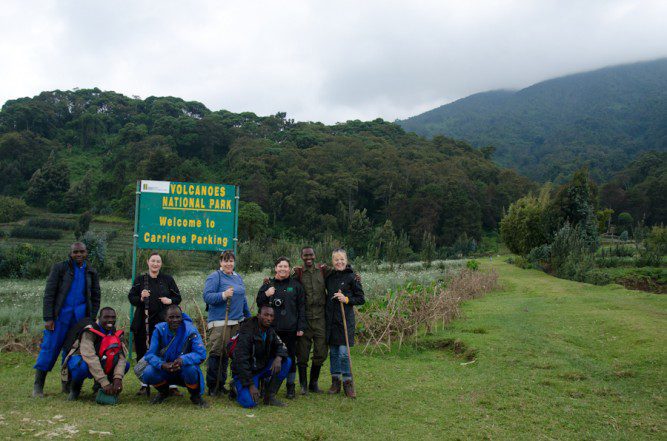
What Bwindi and Volcanoes Lodges Lend for a Gorilla Trekking Safari
This is the part most worth checking before you spend money, and a single email a few weeks out can shorten your list considerably.
A good number of lodges around Bwindi and in the Kinigi and Musanze area kit guests out at breakfast. Reports from properties near both parks describe guests being handed gaiters, ponchos or rain jackets, walking sticks, daypacks and refillable water bottles, with boxed lunches packed in case the trek runs past midday. Some add insect repellent and sunscreen. A handful keep gumboots in a row by the door, and a few hand out work gloves. Staff often help strap the gaiters on, drive guests to the right starting point and introduce them to porters.
The aftercare is the part nobody mentions until they have seen it. Many lodges wash your boots and muddy trousers after the trek, and some greet you with a footbath. That alone changes what you need to pack: one pair of trekking trousers is enough when someone is laundering them overnight.
Higher end lodges are more likely to do all of this, though it is not purely a luxury feature. Mid range properties near the trailheads often keep a stock of gaiters and gumboots, and some will lend to guests of other lodges for a small fee. The Bwindi safari lodges guide covers which areas sit closest to each trailhead.
What varies is sizing and quantity. During the busiest months a lodge with six pairs of gaiters and eight guests trekking has a problem. Loaner gaiters can also be loose, and a gaiter that keeps sliding down your calf lets mud and ants in over the boot, so check the straps tighten before you leave the lodge.
Renting Gorilla Trekking Gear Through Your Safari Operator
The most organised way to rent gorilla trekking gear is through the company running your trip. Several operators based in Musanze, around Kinigi and in Kampala advertise rental kit for gorilla treks, usually sturdy hiking boots, waterproof jackets and trousers, gaiters, gloves, a hat, a small backpack and a walking stick, and a few add binoculars or a low light camera to the list.
The process is simple. You send shoe size, height and clothing sizes when you book, the operator sources the kit, and it arrives at your lodge the evening before the trek or comes in the vehicle with your driver guide. Try everything on that night, not at 6am. Boots in particular need a proper check: lace them fully, walk the lodge stairs, and if the heel lifts or the toes hit the front, say so while there is still time to swap.
Ask a few things in writing before you rely on it. Is the boot rental a pair in your exact size or the nearest available? Is a deposit held against loss or damage? Are the boots waterproof or simply sturdy? Is the gear cleaned between renters? The answers tell you quickly whether the package is a real plan or a hopeful one.
For a longer itinerary the same logic stretches further. Climbing outfitters near the Rwenzori Mountains in western Uganda rent a full mountain list, from head torches, fleeces, down jackets and waterproof trousers to day packs, trekking poles, gaiters and binoculars, which helps on a trip that pairs gorillas with a Rwenzori trek. Kilimanjaro operators do the same for the cold summit kit covered in our Kilimanjaro gear list. For the gorilla day alone, though, a lodge loan plus your own boots is usually all you need.
Gaiter Hire at Kinigi for Rwanda Gorilla Trekking
Gorilla trekking in Rwanda starts at the Volcanoes National Park headquarters at Kinigi, where every trekker checks in early for the briefing and group allocation. That gathering point is also the easiest place in either country to hire gaiters on the morning itself.
Gaiters, walking sticks and porters are all arranged around the Kinigi headquarters, and trekkers who forgot or lost their own have hired gaiters there for years. Sizes run to the common range. Larger calves, very small adults and children are the ones who come up short, so if you fall outside the middle, bring your own pair.
Most Volcanoes lodges sit between ten and forty minutes from Kinigi, and a lot of them lend gaiters to guests outright, which makes hiring at headquarters a backup rather than the main plan. If your lodge does not lend, tell your driver guide the night before so you arrive with time to hire before the briefing starts. The Rwanda gorilla trekking guide covers the morning timetable, and the Rwanda gorilla trekking packing list covers what the bamboo zone and higher altitude change about your kit.
Bisoke, Karisimbi and the golden monkey walks start from the same headquarters, so the same gaiter hire works for those treks too.
Renting Gaiters Around Bwindi for a Gorilla Trek
On the Uganda side, gaiter hire for a Bwindi gorilla trek is less centralised. Bwindi has four trekking sectors, Buhoma, Ruhija, Rushaga and Nkuringo, each with its own briefing point, and rental depends far more on your lodge than on the gate.
Lodges are the main source. Community stalls and staff near some sector offices hire gaiters and gumboots, though stock is thinner than at Kinigi and you should not bank on it at Ruhija in particular. Ask your lodge or your safari company to confirm, and if neither can promise a pair in your size, bring one.
Gaiters are still the single best rental candidate: bulky to pack, used for one or two days, filthy afterwards, and cheap to hire. The case for owning a pair comes down to three things. Trekking on consecutive days, when you want one pair drying while you wear the other. Hygiene, if borrowed kit bothers you. And the safari ants that swarm across Bwindi trails, which a well fitted gaiter keeps out of your boots far better than a loose loaner.
If you decide to own a pair, waterproof knee high hiking gaiters with adjustable straps pack flat and weigh little. Height, materials and fitting are covered in the guide to gorilla trekking gaiters.
Renting Boots and Gumboots for Gorilla Trekking Tours
Here the answer splits, and the distinction matters.
Gumboots, the knee high rubber wellies that rangers and porters wear, are the easiest footwear to borrow or hire near both parks. They shed mud and water completely, nothing gets in over the top, and safari ants struggle to get a grip on the rubber. In the heaviest weeks of the wet season that is a real advantage, and borrowing a pair for a short trek in Buhoma in April is a sensible move.
Their limits are just as real. No arch support, no fitted heel and little cushioning, so your foot moves inside them with every step. Survivable across two hours in Buhoma. Punishing across five on the steep ground at Nkuringo, and slippery on wet roots when the sole is worn smooth. Bring thick socks if you plan to wear them, because rubber against a bare ankle rubs.
What about trainers or sneakers? On a short trek in the dry season, plenty of people manage in sturdy trail running shoes with a deep tread, and some prefer them for the lighter feel. In the wet months they soak through within minutes, slide on clay and let ants straight in at the ankle, so pair them with gaiters at the very least. Waterproof footwear matters far more in Bwindi and Volcanoes than in most hiking destinations, because the trails are wet underfoot for much of the year.
Hiking boots are a different matter, and the next section explains why.
Why Hiking Boots for Gorilla Trekking Are Best Bought at Home
Can you rent hiking boots in Bwindi? Occasionally, subject to what happens to be in your size, and if your luggage went missing that option will save your trek. As a plan it is poor, for three reasons.
Fit is the first. A boot that grips your heel and leaves room for your toes on a long descent is personal, and rental stock near the parks is small and skewed to common sizes. Large feet, wide feet and narrow feet are the ones left out.
Break in is the second, and it is the one that ruins treks. A new or unfamiliar boot first put on at 7am at a briefing point can blister you within the hour, on a trek that may run from one hour to eight with no way to turn back quickly. Boots need two to three weeks of walking before the flight, ideally on hills and in the socks you will trek in.
Support is the third. Bwindi trails are steep, wet clay with roots and loose leaf litter, and the habituation experience or a long Nkuringo trek asks a lot of your ankles. A proper mid boot holds the joint in a way a gumboot or trainer cannot. Trekkers who have done it in running shoes after lost luggage tend to describe a long, sliding day.
So a properly fitted waterproof hiking boot bought early enough to walk in is the one purchase we would never tell you to skip. Look for a waterproof membrane, a mid or high cut, and a deep lugged sole from makers such as Merrell, Salomon, Scarpa or Lowa. If you already own boots that fit, a waterproofing spray for leather and fabric boots refreshes them for a fraction of the cost of a new pair, and an old broken in boot beats a new one every time.
Carry the boots on the plane, or wear them. Lost luggage is the main reason anyone ends up renting boots at all. The reasoning behind boot choice, including how gumboots compare sector by sector, sits in the guide to boots for gorilla trekking.
Cheap Gorilla Trekking Gear Worth Buying Before You Travel
Between renting and spending heavily there is a short list of inexpensive things that are far easier to buy at home than near the park. None of it needs to be premium.
Gloves. Stinging nettles, thorny vines and the urge to grab a branch when you slip make gloves the most underrated item on a gorilla trek. They are rarely lent, so a cheap pair of rubber palmed gardening gloves from home settles it. More on fit and materials in the guide to gloves for gorilla trekking.
Socks. Long trekking socks you can tuck your trousers into are the cheapest ant defence there is. Two or three pairs of cushioned merino wool hiking socks cover a trek and a spare day, and nobody rents socks.
Trousers and a long sleeved top. Clothing does not hire. Light quick dry hiking trousers and a long sleeved quick dry hiking shirt in a muted colour do the job, and expect the mud to stain them. Camouflage of any kind is not allowed for civilians in Uganda. The full clothing picture is in what to wear for gorilla trekking.
A rain jacket. Lodges lend ponchos far more often than jackets, and a poncho snags badly in dense vegetation and flaps in the way when you need your hands. A packable waterproof rain jacket with a hood doubles as a windproof layer at the cold early briefing. See the guide to rain jackets for gorilla trekking.
Dry bags and a pack cover. A borrowed lodge daypack rarely has a rain cover, so a set of lightweight roll top dry bags keeps your camera, phone and passport copy dry inside whatever pack you end up carrying. If you prefer your own pack, the gorilla trekking daypack guide explains what to look for.
Small comforts. A blister kit with moleskin, a picaridin insect repellent and a packable brimmed hat with a chin strap weigh almost nothing. The hat can also be bought cheaply in local craft markets if you would rather not carry one out.
Waterproof trousers and colours. Some operators rent waterproof trousers, but a pair of packable waterproof rain trousers weighs little and doubles as a warm layer at a cold briefing. Whatever you wear, keep to green, khaki and brown. Bright colours stand out in the forest, and dark blue and black attract tsetse flies in the savannah parks you may visit next.
Electrics and small kit. Electricity cuts happen at lodges near the forest, so pack a rechargeable headlamp rather than relying on the room torch. Uganda uses the British three pin plug, so a Type G travel adapter with USB ports keeps camera batteries charged; Rwanda mostly uses the two round pin European type. Add a filter water bottle and a pair of polarised wrap around sunglasses for the open stretches and the savannah. None of these is ever lent at the trailhead. The headlamp guide, the Uganda plug adapter guide and the water bottle and filter guide go into detail.
Binoculars and cameras are rarely rented at the parks themselves. A few operators list them on rental sheets, and Rwenzori climbing outfitters rent binoculars, but quality and availability are a gamble, so bring your own. A pair of compact waterproof 8×42 binoculars works for forest birds and savannah game alike, and a camera rain cover saves a body from a forest downpour. If you are choosing kit for the whole trip, the safari camera and binoculars guide covers what works in a dark forest and on open savannah, with more in the guides to the best binoculars for safari and camera bags and rain covers.
Hiring Porters on a Gorilla Trekking Safari
Not gear exactly, though it belongs in any conversation about what to arrange locally, and it is the best value decision of the day.
Porters wait at every trailhead in Bwindi and at Kinigi each morning, organised by community associations that rotate the work between local families. You hire one at the start, pay in cash, and tip at the end.
A porter carries your daypack, which sounds minor until you are two hours into a climb at well over 2,000 metres. More usefully, they steady you on slick descents, take your arm on the worst sections, push from behind on the steep ground and sometimes clear vegetation ahead. Trekkers with knee trouble, older trekkers and anyone doubting their fitness routinely say the porter made the difference between finishing comfortably and struggling.
The money goes directly into the villages beside the park. That is part of how communities keep a stake in the gorillas and the forest staying intact.
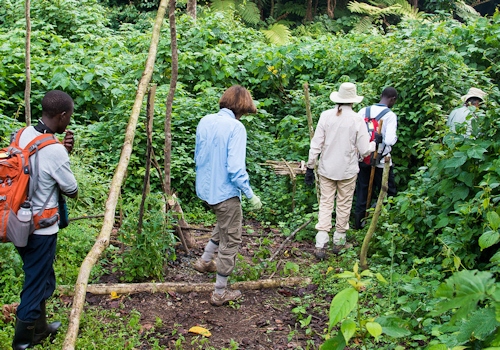
Bring small notes. Local currency is easiest for porters to use, guides tend to accept dollars, and there is no card payment at a forest trailhead.
Renting or Borrowing Trekking Gear at Home Before Your Gorilla Trip
Renting does not have to happen in Africa. Plenty of travellers rent or borrow the expensive, rarely used items at home and fly out with them, which keeps the cost down without gambling on stock near the park.
Outdoor retailers in many countries run rental desks, though what they offer varies from store to store, and specialist outfitters rent rain shells, daypacks, trekking poles and sometimes binoculars by the week. Gear libraries run by clubs, colleges and some public libraries lend kit cheaply or free, and peer to peer rental sites let local hikers rent out their own gear. Consignment and second hand outdoor shops sit in between: a used rain jacket or pair of gaiters often costs little more than two weeks of rental, and you keep it.
Borrowing from friends is the oldest version and still the best for a one off trip. Agree before you go who pays if something is lost or ruined in the mud, and note the condition of each item when you collect it.
A few rules make home rental work for a gorilla trek. Book early, because a two or three week rental across a busy holiday ties up stock. Rent items where fit is forgiving, such as poles, a rain shell, a daypack or binoculars. Skip rented boots unless you can collect them weeks ahead and walk them in. And check that anything you rent can be carried on a 15 kg soft bag allowance if your itinerary includes a light aircraft.
What You Should Never Rely on Renting for a Gorilla Trekking Trip
Some items look rentable and are not, in practice.
Boots, for the break in reason. Gloves, because they cost so little that hiring makes no sense. Your rain jacket, since the usual loan is a poncho. Socks and clothing, which nobody hires out. Medication, contact lens supplies and anything you need daily.
Camera gear, binoculars and anything sized outside the common range should all travel with you. Larger shoe sizes in particular are hard to find locally, and so are children’s gaiters, though children can only trek gorillas from age fifteen.
Then the timing point. Rental and loan stock thins during the busiest trekking months of June to September and December to February, exactly when most people travel, so anything you plan to hire should be confirmed rather than assumed. The best time for gorilla trekking in Uganda page explains how the wet and dry months change trail conditions, and with them how much gaiters and gumboots matter.
Rent or Buy for the Habituation Experience and Longer Safaris
The sums change the moment you trek more than once.
The gorilla habituation experience in Rushaga keeps you in the undergrowth with a family for up to four hours and in the forest for most of the day. Fit and comfort matter more over that length, and a loose loaner gaiter or a borrowed gumboot becomes a real problem by early afternoon. Own your gaiters for this one. The habituation experience packing list covers the rest of the longer day.
Two treks on consecutive days, a gorilla trek plus chimpanzee tracking in Kibale, or a Bisoke hike after your Rwanda trek all push the same way: buying a pair of gaiters starts to cost less than repeated hire, and wet gear needs a night to dry.
Plenty of travellers pair Bwindi with a savannah safari, for example gorillas followed by the Masai Mara migration or the Serengeti. That part of the trip needs different clothing and none of the forest kit, so buying light, packable gear and borrowing the bulky items at the gorilla lodge keeps the bag manageable across both halves. The African safari packing list and the guide to what to wear on safari handle the savannah side. Our guide to safari pants and convertible trousers covers what to buy instead.
Buying Gear in Kampala, Kisoro and Musanze
Buying locally sits between renting and packing, and it works for some things.
Kampala has the broadest choice. Hardware shops and markets carry rubber palmed work gloves, gumboots and basic waterproofs, and larger retailers stock general outdoor items. Proper technical hiking boots in a full size range are much harder to count on.
Kisoro town serves the southern Bwindi sectors of Rushaga and Nkuringo and carries basic supplies including gumboots and gloves. Musanze on the Rwandan side is comparable and close to Kinigi.
Craft markets in all three sell serviceable brimmed hats. Rwanda enforces a ban on plastic carrier bags, with checks on arrival, and Uganda restricts them too, so shopping locally means paper or canvas. The Uganda gorilla trekking packing list flags what is easy to find on the Ugandan side.
Baggage Limits on Flights to Bwindi and Why Renting Helps
There is a practical reason renting appeals beyond the money.
Scheduled flights from Entebbe to the airstrips serving Bwindi, at Kisoro and Kihihi, carry tight baggage allowances, with fifteen kilos per person typical on the small aircraft. Soft duffels travel far better than wheeled hard cases on both the aircraft and the roads at the other end; the safari duffel bag guide explains what fits.
Gaiters, gumboots, a poncho and a daypack together take a meaningful share of that allowance. Leaving them out and borrowing them at the lodge is the difference between packing comfortably and paying excess.
The overland alternative is a long drive, roughly eight to nine hours from Entebbe to Bwindi, where luggage limits stop mattering. From the Rwandan side Kigali to Musanze is about two hours, and the Cyanika border near Kisoro links the two parks. Routes are covered in getting to Bwindi.
Frequently Asked Questions About Renting Gorilla Trekking Gear
How much does it cost to rent gorilla trekking gear?
Very little, and often nothing. Gaiter hire is commonly reported at around five US dollars a pair, or the equivalent in Rwandan francs at Kinigi, with gumboots similar. Walking sticks are free at the trailhead. Operator rental lists around Volcanoes National Park advertise hiking boots at around ten US dollars and waterproof jackets or trousers at around five, and some operators bundle a full gear package for somewhere between ten and fifty dollars a day depending on what it includes. Many lodges lend gaiters, ponchos, daypacks and water bottles to guests free, so the realistic outlay for most trekkers is close to zero. Rates are informal and change, so confirm on the day. For context, the permit itself is US$800 in Uganda for foreign non residents and US$1,500 in Rwanda, and no gear is included in either.
Can I rent hiking boots in Bwindi?
Sometimes, subject to size, and it can rescue a trip where luggage went missing. As a plan it is a poor one. Boots need two to three weeks of walking to break in, and a hired pair first worn at the briefing point can blister you inside the first hour of a trek that may run to eight. Gumboots are the more reliable local option because fit matters less, though they lack arch support and ankle hold on steep ground.
Can you rent gaiters at Kinigi in Rwanda?
Yes. Gaiters, walking sticks and porters are all arranged around the Volcanoes National Park headquarters at Kinigi, where the briefing happens. Sizes cover the common range, so trekkers with large calves or small frames should bring their own. Many Volcanoes lodges lend gaiters anyway, so check with yours first.
What does the lodge usually provide for a gorilla trek?
It varies, which is why asking is worthwhile. Many lodges near Bwindi and around Kinigi and Musanze hand out gaiters, ponchos or rain jackets, walking sticks, daypacks and water bottles, and some add gumboots, gloves, repellent, sunscreen and a boxed lunch. Boot washing after the trek is common. Sizing and quantity are the limits in busy months, so confirm your size four to six weeks ahead.
Are walking sticks and trekking poles provided?
Wooden walking sticks are provided free at the briefing point in both Bwindi and Volcanoes National Park. Trekking poles are not provided. A single stick suits most people, while trekkers with weak knees often prefer their own pair of poles on the steep descents.
How much should I pay a porter, and is it worth it?
Porter fees around Bwindi are commonly quoted at fifteen to twenty US dollars for the trek, and in Rwanda at a similar amount in francs, with a tip on top at your discretion, often five to ten dollars or more for a hard day. No official national rate is published, so confirm locally. It is the best value decision of the day: a porter carries your pack, steadies you on slippery ground and puts money straight into families beside the park.
Is renting gear hygienic?
Gaiters and gumboots are worn over your own trousers and socks rather than against skin, which limits the concern. Rental and lodge stock is cleaned between uses, though standards vary. If it still bothers you, gaiters are cheap enough to own, and your own thick socks inside borrowed gumboots solve the rest.
Should I rent or buy if I am doing more than one trek?
Buy, in most cases. A few days of gaiter hire approaches the price of an inexpensive pair, and on consecutive trekking days you want one pair drying while you wear the other. The same logic applies to the gorilla habituation experience, where a long day in the undergrowth makes fit far more important.
What if my luggage is lost before the gorilla trek?
Tell your lodge and your driver guide at once. Between lodge loans, gumboots from the park area and gaiter hire, most people can still trek. Clothing and gloves can be bought in Kampala, Kisoro or Musanze. This is the main reason to wear or carry your boots on the plane.
Can I arrange gear rental through my tour operator?
Often, yes. Many operators in Musanze, Kinigi and Kampala rent boots, rain jackets, waterproof trousers, gaiters and gloves, and deliver them to your lodge. Send your sizes when you book, try everything on the evening before, and ask whether boots are waterproof and whether a deposit applies.
Can I do the gorilla trek in sneakers?
On a short trek in dry weather, sturdy trail shoes with a deep tread can work, especially with gaiters over them. In the wet months they soak through, slip on clay and let ants in, so waterproof hiking boots or borrowed gumboots are the safer choice.
What should I wear for gorilla trekking in Rwanda?
Long trousers tucked into long socks, a long sleeved top, gardening gloves, waterproof hiking boots, gaiters and a rain jacket, all in green, khaki or brown. Mornings at Kinigi are cool, so add a fleece. Your lodge or the Kinigi headquarters can supply gaiters and a walking stick if you lack them.
How much does it cost to trek with gorillas?
The permit is the main cost. In Uganda it is US$800 for foreign non residents, US$700 for foreign residents and UGX 300,000 for East African citizens, with a US$600 low season rate announced for April, May and November. Rwanda charges US$1,500. Gear rental adds very little on top. The gorilla trekking cost guide builds a full trip total.
Is gorilla trekking worth the money?
Most people who do it say yes. The hour with a habituated family is close, quiet and unlike any game drive, and the permit fees fund the rangers and the communities that keep the forest intact. Renting or borrowing the bulky kit is one easy way to keep the rest of the trip affordable.
How difficult is gorilla trekking really?
It ranges from a gentle walk of an hour to a steep, muddy day of six hours or more, depending on where the family is feeding. Bwindi trails climb and drop sharply at altitudes of roughly 1,200 to 2,600 metres, and Volcanoes starts higher still. Good boots, a stick and a porter make a bigger difference than peak fitness. See how hard gorilla trekking is for more.
Can I rent binoculars or a camera for a gorilla trek?
Rarely at the park. A few operators list them, and Rwenzori climbing outfitters rent binoculars, but quality varies. Bring your own compact pair and a rain cover for your camera; flash photography is not allowed near the gorillas.
Are gumboots good enough for a gorilla trek?
For a short trek in wet weather, yes, and rangers and porters wear them every day. For a long or steep trek, such as many in Nkuringo or Rushaga, or the habituation experience, broken in hiking boots with ankle support are more comfortable and safer on descents.
Continue Planning Your Gorilla Trekking Safari Gear
Once you know what you can source locally, build the rest of the list from the complete guide to what to pack for gorilla trekking. Every gear guide on the site sits in the safari gear and clothing section, and our affiliate disclosure explains how the Amazon links work.
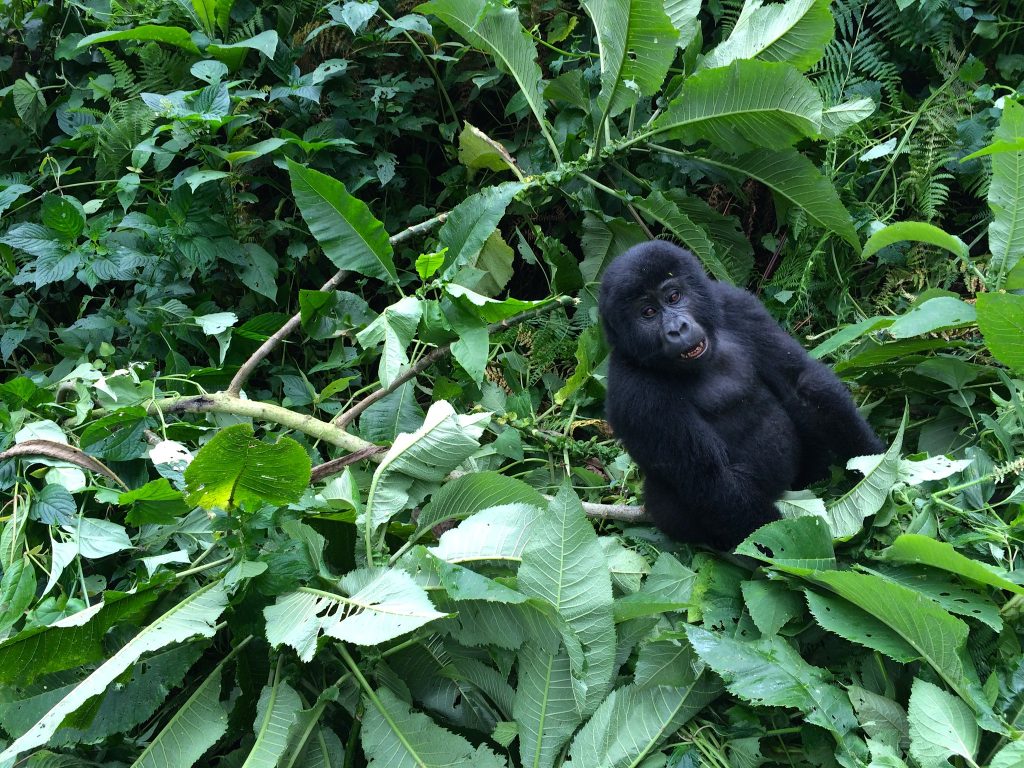
For the trek itself, the Uganda gorilla permits guide explains how permits are booked, and a licensed operator can confirm which lodge lends what before you pack.