The best rain jacket for gorilla trekking is a light hooded shell rated at 10,000mm hydrostatic head or more, with taped seams, pit zips and a stiffened hood peak, that stuffs into its own pocket. Breathability matters as much as waterproofing. Every gorilla trekking safari in Bwindi Impenetrable National Park in Uganda or Volcanoes National Park in Rwanda means steep climbing in warm, humid rainforest where showers can arrive in any month.
What Makes the Best Rain Jacket for Gorilla Trekking in Bwindi
Most rain jackets are built for cold rain. Bwindi serves up warm rain, and that is a different problem entirely. It explains why people arrive with an expensive shell and still finish the trek wet through.
The forest sits between roughly 1,160m and 2,600m on the Albertine Rift, and annual rainfall figures quoted for it run from about 1,400mm to a little under 2,400mm depending on altitude and the source. Rain follows a two peak pattern: the heaviest months are March to May and September to November, with drier spells from December to February and June to August. Drier is relative. Short afternoon showers fall in July too, and the vegetation stays soaked long after the sky clears.
Now add the effort. You climb steep ground at altitude, often for two to five hours, producing heat and sweat in air that is already close to saturated. A jacket that seals water out also seals your own vapour in, so after an hour you can be damp from the inside. Cold weather hikers rarely notice this. On a gorilla trek it is the main way rain gear fails.
So the brief is narrow. Keep the rain off, let vapour out, survive brambles and thorny undergrowth, and pack down small enough that you actually carry it instead of leaving it in the vehicle at the trailhead.
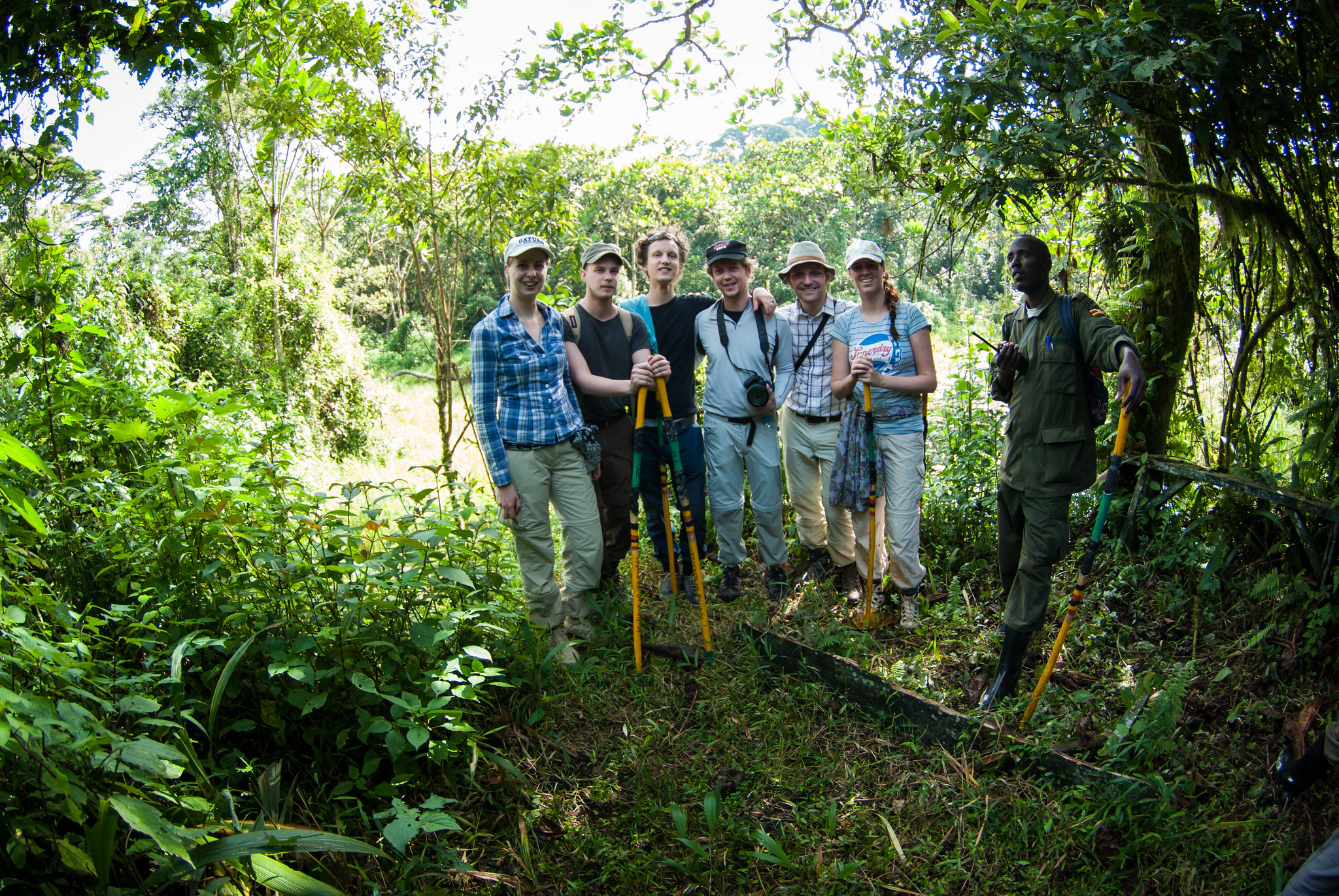
Rain Jacket Colours for Gorilla Trekking: Can You Wear Black?
Colour is the rain jacket question first time trekkers ask most, and packing lists often answer it badly. Plenty of people own exactly one shell, it is black, and somewhere they have read that black is off limits on a gorilla trek.
It is not off limits. The rules read out at the briefing in Bwindi and at Kinigi cover distance, masks, flash, voices and the one hour limit, and they do not ban any colour of jacket. Travellers who put the question to forums after their trek said much the same: a dark, plain jacket was fine, and the colours to avoid are the loud ones.
The warning about black and navy comes from somewhere else. Tsetse flies are drawn to dark blue and black, and they are far more of a problem in lowland savannah and woodland parks such as Murchison Falls, Queen Elizabeth or Akagera than in the cool montane forest where the gorillas live. So a black shell is a small nuisance on the game drive legs of a combined safari and close to a non issue on the trek itself. Black does soak up heat on the sunny farmland at the start, and it shows every streak of dried red clay.
Bright colours are a different matter. Guides ask trekkers to skip red, orange, yellow and neon shades near the gorillas, because a flash of loud fabric stands out in dim forest and the whole point of the hour is to stay calm and unobtrusive. White and pale grey are allowed, but they come back brown.
Camouflage is the one firm rule. Uganda restricts camouflage and military style clothing to the security forces, and civilians wearing it can be stopped and have it taken, so leave any camo print at home whatever its colour.
Olive, khaki, brown, mid grey and dark green are the best colours for a gorilla trekking rain jacket. If you are buying new, choose one of those, and olive and green waterproof hiking jackets is an easy search to start from. If your only jacket is black, bring it and spend the money on gloves and gaiters instead.
Sound matters as much as colour. Stiff, cheap PVC and some crinkly ultralight fabrics rustle loudly every time you move, and during the hour you stand or crouch a few metres from a silverback, roughly 10 metres in Uganda and 7 metres in Rwanda at the closest the rules allow. A softer face fabric, or a 3 layer shell with a smooth inner backer, keeps that noise down.
Waterproof Ratings for Gorilla Trekking Rain Jackets: Hydrostatic Head Explained
Hydrostatic head is the waterproof number worth reading on the label. A sample of fabric is clamped under a tube, water is added, and the height of the column in millimetres when the fabric starts to leak becomes the rating. A 10,000mm fabric held back a ten metre column.
Outdoor testers broadly agree on the bands. Under about 5,000mm is showerproof, fine for light drizzle. Around 10,000mm counts as properly waterproof for moderate rain, and that is enough for a Bwindi trek between June and August or in December and January. From 15,000mm to 20,000mm you are covered for heavy and prolonged rain, which is what April, May, October and November bring to both Bwindi and the Virunga volcanoes. Premium shells reach 28,000mm and beyond, which buys durability more than extra dryness on a single trek.
Why care about margin if 10,000mm is waterproof? Pressure. Daypack straps, a hip belt and kneeling on wet ground all push water through fabric harder than falling rain does, and lab ratings drop as a jacket ages. A jacket that passes in the shop can seep at the shoulders after three hours under a pack.
Ratings alone will not save you, though. Seams, zips, cuffs and the hem are the weak points, and a well finished 15,000mm jacket with taped seams and a decent hood beats a sloppy 20,000mm one. Check that every seam is taped, because stitch holes leak whatever the fabric number says. Some brands, Gore among them, do not publish a single hydrostatic figure at all, so a missing number on a well known membrane is not a warning sign.
Water resistant is not waterproof, and the labels blur the line. Softshells, windbreakers and many travel jackets carry a water repellent finish over a fabric with no membrane underneath, so they shed a passing shower and soak through in the first proper Bwindi downpour. A cotton anorak or a fashion parka is worse again: it drinks the water and stays heavy and cold for the rest of the day. For a gorilla trek, look for the word waterproof together with a membrane name and taped seams, and check the main zip has a storm flap or a coated, water resistant zip.
A home test settles it. Stand under the shower for ten minutes with the hood up and a daypack on, then check the shoulders, the cuffs and the zip line for damp patches. Any leak you find at home will be worse on the trail.
If you want to shop by specification, waterproof breathable rain jackets with taped seams is the filter that removes most of what will fail on a gorilla trek.
Breathability on a Humid Gorilla Trek: MVTR, RET and Membranes
Waterproofing gets the headlines. Breathability decides whether you stay comfortable on a gorilla trekking tour, because the climb produces far more moisture from your body than the rain delivers from above.
Two numbers appear on labels. MVTR, written as g/m²/24h, measures how many grams of water vapour pass through a square metre of fabric in a day, so higher is better: around 10,000 suits casual walking, and 15,000 or more suits sustained climbing. RET measures resistance to evaporating heat, so lower is better, and figures under about 6 are considered very breathable. The two scales cannot be compared directly, and brands test in different ways, so treat them as a rough guide rather than a league table.
Membranes do the work. Expanded membranes such as Gore-Tex, and the proprietary ones from Patagonia (H2No), Marmot (NanoPro) and Columbia (Omni-Tech) all keep liquid out while letting vapour through, at different rates. Air permeable designs breathe better under hard effort, while basic coated fabrics breathe least and suit the drive more than the climb.
Here is the catch nobody mentions in the shop. No membrane can move vapour fast enough when the air outside is already near saturation, and Bwindi’s forest floor often is. That is why venting matters so much on a gorilla trek, and why the next two sections exist. A Gore-Tex rain jacket with pit zips combines the most breathable membrane class with a way to dump heat when the membrane alone cannot keep up.
2.5 Layer Versus 3 Layer Shells for Gorilla Trekking Tours
Construction is described in layers, and the count tells you a lot about how a shell will behave on gorilla trekking tours.
For one trek in June or July a good 2.5 layer shell is plenty, and a packable 2.5 layer rain jacket keeps the weight and the cost down. For the wet season, or a trip that strings together gorillas, chimpanzees and a volcano hike, a 3 layer waterproof jacket with pit zips earns the extra outlay. Wear a long sleeved base layer under a 2.5 layer shell and the clammy interior stops mattering much. Under the shell, one of the best safari shirts keeps sun and insects off.
Pit Zips and Venting on a Gorilla Trekking Safari
This is the feature that separates a jacket that works on a gorilla trekking safari from one that merely works in the rain, and it is the one most buying guides underplay.
Underarm zips let you dump heat without taking the jacket off. That matters because the rain here tends to come in bursts: twenty minutes of downpour, a lull, drips from the canopy, another shower. Constantly stripping off and repacking a shell on a narrow, muddy slope is a nuisance, and you will lose your place in the group. With pit zips open, you can leave it on through the whole cycle.
Venting comes in a few forms. Classic pit zips run 25 to 35 centimetres under each arm. Full length side zips, as on the Outdoor Research Foray, open from hem to bicep and turn the jacket almost into a poncho when unzipped. Mesh backed chest pockets, a two way front zip and a loosened hem all help a little. None replaces proper underarm vents.
So a slightly heavier jacket with vents beats a lighter one without. Ultralight shells that skip pit zips to save grams run hot in rainforest conditions, which makes this a rare case where the lightest option is the wrong one.
Hood With a Brim, Cuffs and Hem on Gorilla Trekking Trails
The hood does more work on gorilla trekking trails than on an open hillside. Much of the water reaching you drips off leaves rather than falling straight from the sky, and it lands on your face while you are looking down at your footing.
Look for a stiffened or wired brim that holds its shape and sheds water clear of your eyes, plus adjustment at the back and both sides so the hood turns with your head. On a steep, slippery descent a floppy hood that blocks your peripheral view is genuinely unsafe. Glasses wearers gain most from a good brim. Some trekkers wear a cap under the hood to stiffen a soft one, which works on a budget jacket.
Cuffs want Velcro tabs you can cinch over gloves, since you will wear gardening gloves for gorilla trekking and push wet vegetation aside all day. Elastic cuffs alone let water run down your forearms when you reach up.
A drawcord hem stops the jacket riding up each time you lift a knee high, and on Bwindi gradients that is constant. Hand pockets set above the hip line stay usable with a daypack hip belt fastened. And the face fabric matters: a heavier denier nylon resists thorns and bramble snags far better than a paper thin 7 or 10 denier ultralight shell.
Rain Jackets During the Gorilla Trekking Hour: Staying Warm When You Stop
The climb is where a shell has to breathe. The hour with the gorillas is where it has to keep you warm, and that catches people out on a gorilla trekking safari.
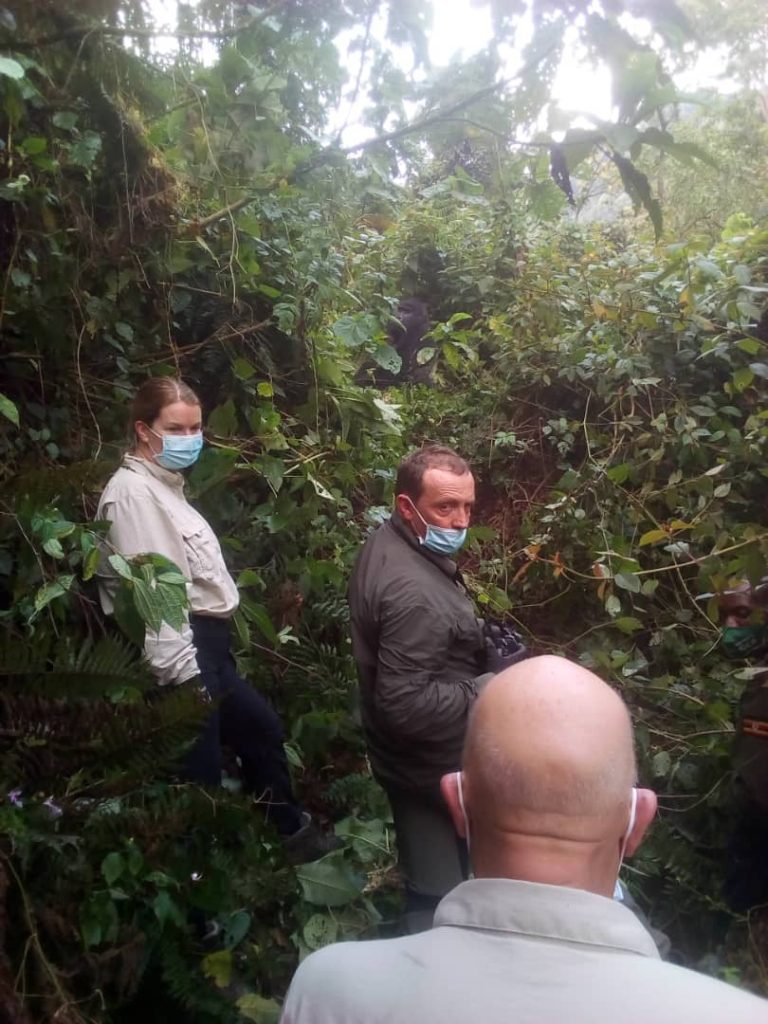
Rain does not cancel the visit. Once the trackers find the family the hour runs, and in a heavy shower the gorillas often sit hunched and still, so you stay put too. After two or three hours of hard climbing your base layer is wet with sweat, and standing in the rain for an hour chills you fast. Trekkers who got drenched while watching the gorillas say the cold, more than the wet, is what they remember.
The fix is simple. When the ranger signals that the family is close, pull the fleece from your pack, put it on under the shell, close the pit zips and cinch the hood. A thin layer under a good jacket keeps you comfortable through the whole hour. In Volcanoes National Park, where many families live higher up the slopes, it matters even more.
Keep the shell where you can reach it. If a porter is carrying your daypack, the jacket belongs in an outer pocket or tied at your waist, not buried under lunch, because rain in Bwindi often arrives with only a few minutes of warning. Ask your porter to stay close when the sky darkens.
Cameras need cover too. Many trekkers end up tucking the camera inside the jacket when the rain starts, which works for a minute but fogs the lens. A rain sleeve, mentioned in the poncho section below, does the job better and leaves the jacket free for you.
Packable Rain Jackets for Gorilla Safaris and Bush Flights
A shell you leave in the lodge because it is bulky protects nobody. Packability is part of the job on a gorilla safari, for two reasons.
First, the trek itself. Your daypack carries water, lunch, a camera and a face mask as well, and a shell that stuffs into its own pocket or a small sack slips into the top lid where you can grab it in seconds. Several of the jackets below do exactly that.
Second, the flights. Light aircraft flying to Kihihi and Kisoro for Bwindi, and to the Masai Mara or Serengeti airstrips if you combine gorillas with a plains safari, usually limit baggage to about 15kg in a soft bag, hand luggage included. A shell weighing 300 to 400g is barely noticeable against that limit. A heavy mountaineering jacket is a real cost.
Most 2.5 layer shells weigh roughly 250 to 400g; 3 layer trekking shells usually fall between about 350g and 500g. Anything far beyond that is either insulated or built for alpine climbing, and neither suits the forest.
Rain Jacket Picks for a Gorilla Trekking Safari, Tier by Tier
No jacket is made just for a gorilla trekking safari, so these are widely stocked models that meet the criteria above. Fit and venting matter more than the logo.
The Patagonia Torrentshell 3L is the sensible default. Three layer construction at a mid range price, pit zips, taped seams, a brimmed hood, and it packs into its own hand pocket. It handles both the dry and the wet months without complaint, and it comes in a women’s cut.
The Outdoor Research Foray takes venting further with full length side zips that open most of the torso, close to ideal for humid climbing. It packs bulkier than a minimalist shell. With a porter carrying your daypack, that hardly matters.
On a tighter budget the Marmot PreCip Eco is the pick: a 2.5 layer shell with pit zips and taped seams, light, and it stuffs into its own pocket. The Columbia Watertight costs less again and keeps rain out well, but it has no pit zips and vents only through its mesh lined hand pockets, so it suits short dry season treks and game drives better than a long wet season climb.
For a shell that outlasts many trips, the Arc’teryx Beta range and the Rab Downpour Eco sit at the durable end, with hoods that hold their shape. Check the Arc’teryx version carefully: the LT, SL and AR variants have pit zips, while the standard Beta does not. The Rab has long pit zips with storm flaps at a far lower price than the Arc’teryx.
Other shells that turn up on gorilla packing lists and in independent rain jacket tests fit the brief too. The Marmot Minimalist uses Gore-Tex Paclite, packs small and has pit zips. The REI Rainier is a good value 2.5 layer shell with pit zips that stuffs into its own pocket. The North Face Resolve is cheap and widely sold, though it has no pit zips, so treat it like the Watertight: fine for a short dry season trek, warm on a long wet one. The Black Diamond Fineline Stretch is very light and stretches well when you scramble, yet it skips pit zips and its thin fabric needs care around thorns. Models change between seasons, so check the current version’s vents and seams before you buy.
Women’s Rain Jackets for Gorilla Trekking: Getting the Fit Right
Women should buy the women’s cut of a shell rather than a smaller men’s or unisex size. The difference is more than colour. Women’s patterns run narrower through the shoulders, with more room at the hips and a shorter sleeve, so the jacket closes over a fleece without the sleeves covering your hands.
Three fit checks matter most on a gorilla trek. The hem should reach below your daypack hip belt, so water running down your back does not soak your waistband. The hood volume should fit snugly with the drawcords pulled, since a men’s hood on a smaller head swivels and blinds you on steep ground. And when you reach overhead, the hem should not lift above your waist, because you will grab branches and vines all day.
Most of the models above come in women’s versions, including the Torrentshell 3L, PreCip Eco, Downpour Eco and the Arc’teryx Beta range. Searching for women’s waterproof breathable rain jackets with pit zips filters out the fashion raincoats that will not survive the forest. Petite and tall lengths are worth seeking out if standard sizes leave you with sleeves past your fingertips or a hem above the hip belt. More layering detail for women sits in our guide to what to wear for gorilla trekking.
Ponchos Versus Rain Jackets on a Gorilla Trek
Ponchos have real advocates on gorilla treks, and rangers and porters often wear them, so the case deserves a fair hearing.
The advantages are genuine. A poncho covers you and your daypack together, costs very little, goes on in seconds, and lets air move underneath, so you overheat less than in a sealed jacket. Rain in Bwindi and Volcanoes often comes in short bursts, which suits something quick to throw on. Several lodges around Bwindi and near Kinigi lend ponchos at breakfast.
The problem is the forest. In dense undergrowth a poncho catches on every vine and thorn, and on exposed climbs it blows across your face when you most need to see the ground. Cheap plastic ones tear within the first hour, a complaint that comes up again and again in trip reports. A poncho also leaves your forearms bare to nettles, and it gets in the way of a camera when the gorillas appear and you need both hands.
The workable answer is both: a jacket on your body and, if you like, a ripstop hiking poncho that covers a backpack for the drives, the lodge or a porter carried pack. What does not work is a poncho as your only rain layer. Umbrellas are no answer either: under the canopy you need both hands for branches and the walking stick, and an open umbrella snags on everything.
Whichever you wear, protect what is inside the pack. Water wicks through the back panel of most daypacks, and trekkers often find that everything in the main compartment ends up damp. A rain cover sized for a 30 litre pack plus a couple of lightweight dry bags for spare socks, phone and passport solve it. Rwanda bans plastic bags, so dry bags are the right tool there anyway. Camera owners caught by a sudden downpour often end up wrapping the body in their own jacket; a camera rain sleeve weighs almost nothing and saves that scramble. Pack size and cover fit are covered in our guide to daypacks and rain covers for gorilla trekking.
Rain Trousers for Gorilla Trekking Trips
Rain trousers are the forgotten half of rain protection on gorilla trekking trips, and opinion on them is split. Some trekkers never take them out of the bag; others, caught in an October storm on a long Ruhija or Rushaga trek, say they were the best thing they packed.
The honest answer depends on the month. From March to May and September to November, when trails turn to slick clay channels and the undergrowth is drenched at knee height, overtrousers keep your legs dry and stop your trekking trousers wicking water upward. In June, July and January they mostly ride in the daypack, which is still a fair trade for the afternoon they are needed.
Full length side zips are the feature to look for, because pulling waterproof trousers over muddy boots on a narrow slope is close to impossible without them. Waterproof overtrousers with full side zips solve that, and three quarter zips are a workable compromise. Women’s cuts exist here too, and women’s waterproof rain pants with side zips fit far better at the hip than a cut down men’s pair.
Keep them light. You wear them over quick drying trekking trousers, not instead of them, so bulk is wasted weight. Pair them with knee high gaiters for gorilla trekking and waterproof boots for gorilla trekking, and the mud stays outside. In the dry months, water resistant trekking trousers plus gaiters are often enough on their own.
Rain Gear by Season for Gorilla Trekking in Uganda and Rwanda
Bwindi and Volcanoes share the same two wet seasons, though Volcanoes sits higher and runs colder. Use the table to match your rain gear to your trekking month, and see the best time to go gorilla trekking in Uganda for the full seasonal picture.
| Months | Rain | Rain gear |
|---|---|---|
| Dec to Feb | Lighter | 2.5L shell |
| Mar to May | Heavy | 3L shell, overtrousers |
| Jun to Aug | Lowest | 2.5L shell |
| Sep to Nov | Heavy | 3L shell, overtrousers |
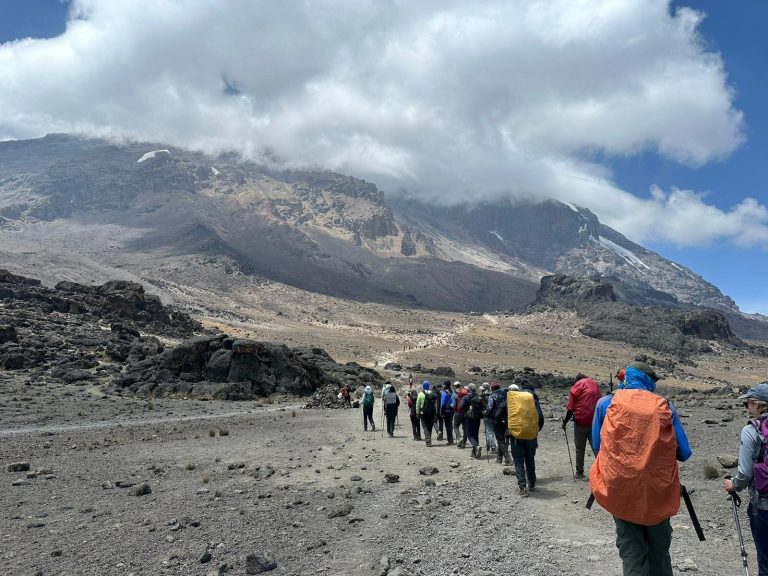
In the drier months, a light 2.5 layer shell with pit zips plus water resistant trousers covers the occasional shower, and the bigger concern is cold mornings in Volcanoes, so add a thin fleece. During the long rains of March to May and the short rains from September, wet undergrowth and slick clay make a 3 layer shell, overtrousers, gaiters and a pack cover worth every gram. Treks also run longer when the gorillas move less in the rain and trails are slower underfoot. In Rwanda, a hike up Bisoke or Karisimbi, or a climb of Nyiragongo across the border in Congo, adds real cold at the summit, so a fleece under the shell matters more there than in Bwindi.
Reproofing and Caring for a Rain Jacket After Your Gorilla Trek
Most “my jacket has stopped working” complaints on gorilla treks are not membrane failures at all. They are a worn out DWR, the durable water repellent finish that makes rain bead and roll off the face fabric. Once it wears away, the outer fabric soaks through (outdoor people call it wetting out), the membrane can no longer breathe, and you feel clammy and assume the jacket leaks.
The test is simple. Splash water on the shoulders. If it beads and rolls off, you are fine. If the fabric darkens and soaks it up, it is time to restore the finish, and that is a job for home before the trip, not a discovery on the trail.
Start with a wash. Dirt, sunscreen, insect repellent and body oils all smother the finish, so clean the jacket with a technical cleaner such as Nikwax Tech Wash rather than ordinary detergent, and never use fabric softener, which coats the fibres and kills water repellency. Rinse the detergent drawer first so old soap does not get in.
Then add gentle heat. If the care label allows, tumble dry on low for around twenty minutes, or iron on a low to medium setting through a towel. Heat often revives a tired DWR on its own.
If water still soaks in, reproof. A PFC free DWR spray applied to the damp jacket lets you target the shoulders, hood and forearms that take the most rain and abrasion, while a wash in proofer treats the whole garment in the machine. Sprays suit 3 layer shells best, since wash in products also coat the inner lining. Follow with heat if the product asks for it.
One more thing has changed. Most brands have now moved to PFC free water repellents, which are better for the environment but wear off sooner than the older chemistry. Expect to reproof a newer jacket more often, ideally before every big trip.
After the trek, rinse off the red clay before it dries, and hang the jacket to air dry rather than next to a lodge fire, since direct heat can damage membranes and delaminate a 3 layer shell. Store it loose on a hanger at home, not crushed in its stuff sack.
Frequently Asked Questions About Gorilla Trekking Rain Jackets
How much should I spend on a rain jacket for gorilla trekking?
There are three useful tiers. Budget 2.5 layer shells from mainstream brands usually cost about US$60 to US$130 and cover a single dry season trek well, provided they have taped seams and ideally pit zips. The mid tier, roughly US$150 to US$250, buys 3 layer construction, better hoods and proper venting, and it is where most gorilla trekkers should shop. Premium Gore-Tex shells from about US$300 upward buy durability for years of trips more than extra dryness on one trek. Overtrousers run from about US$40 for basic pairs to US$200 or more for premium ones. Prices vary by retailer and season, so treat these as rough ranges.
What is the best waterproof jacket for trekking in Bwindi and Rwanda?
A hooded 3 layer or good 2.5 layer shell with taped seams, pit zips and a stiffened brim, rated at 10,000mm or more. The Patagonia Torrentshell 3L is the most popular all round choice and turns up on gear tests and gorilla packing lists alike; the Marmot PreCip Eco and the Rab Downpour Eco are good value, and the Arc’teryx Beta LT or AR suits years of trips.
What is the best rain jacket for hiking in the rain for hours?
For long, wet hikes, a 3 layer shell with a hydrostatic head of 15,000mm to 20,000mm, fully taped seams and real venting. A fresh water repellent finish matters as much as the rating, because a wetted out face fabric stops the membrane breathing and you feel damp inside. Add rain trousers with side zips for the wettest months.
Is Gore-Tex worth it for gorilla trekking?
For repeat trips or wet season treks, often yes. Gore-Tex shells are durable and breathe well, and Paclite versions pack very small. For a single dry season trek, a well made shell with a proprietary membrane, such as the H2No fabric in the Torrentshell, keeps you just as dry. Pit zips and a good hood matter more than the membrane name.
Do I need a rain jacket in the dry season?
Yes. Bwindi and the Virungas see showers in every month, and the undergrowth stays wet long after the rain stops. In June, July or January a light, packable shell is enough, but leaving it at the lodge is the most common rain gear mistake.
Which rain coat is easiest to use on a gorilla trek?
One that stuffs into its own pocket, has a two way front zip and pit zips you can open without taking the pack off, and a hood that cinches with one hand. The Torrentshell 3L, the PreCip Eco and the REI Rainier all pack into a hand pocket, so they ride in the daypack lid and come out in seconds when the shower starts.
What should I wear when gorilla trekking?
Long trousers tucked into long socks or gaiters, a long sleeved shirt, waterproof hiking boots, gardening gloves, a hat, and a breathable rain jacket over a light fleece, all in muted colours. The full outfit is set out in the guide to gorilla trekking clothing and gear, and the pack that carries it all in the guide to the best daypack for gorilla trekking.
What should I wear on the gorilla trek in Rwanda?
The same clothes as in Uganda, with a little more warmth. Treks in Volcanoes National Park climb higher on the volcano slopes, so mornings and rain feel colder. Wear a fleece under the shell for the hour itself, gloves for the nettles in the bamboo, and gaiters for the mud. The Rwanda gorilla trekking packing list has the details.
What hydrostatic head rating do I actually need?
Ten thousand millimetres is the threshold at which fabric counts as properly waterproof, and it is enough for June to August and December to February. For March to May and September to November, when drizzle can carry on for hours, 15,000mm to 20,000mm gives real margin. Above that you are paying for durability. Taped seams matter as much as the number.
Do I really need pit zips on a gorilla trek?
On a gorilla trek, yes, more than on most hikes. You climb hard in warm, saturated air, so a sealed jacket leaves you soaked in sweat within an hour. Pit zips or side vents let you keep the shell on through short showers without overheating, which is easier than stopping on a muddy slope to take it off.
Is a poncho good enough on its own for a gorilla trekking safari?
Not really. Ponchos cover you and your pack, cost little and ventilate well, which is why rangers and porters use them and some lodges lend them. In dense forest they snag on vines and thorns, blow across your face on steep sections, leave your forearms exposed to nettles and get in the way of photography. Use one over your daypack alongside a jacket, not instead of one.
What colour rain jacket should I choose, and is black allowed?
Muted and natural. Olive, khaki, brown, grey and dark green all work and hide the red clay that will be on everything by mid morning. A plain black or navy jacket is allowed on the trek and is fine in the forest, so there is no need to buy a new one just for colour. Avoid bright colours and white in the forest, and black or dark blue on game drives, since they attract tsetse flies in some savannah parks. Camouflage clothing is not permitted for civilians in Uganda, so leave any camo pattern at home.
Can I hire or borrow a rain jacket near the park?
Ponchos yes, fitted jackets rarely. Many lodges around Bwindi and Kinigi lend ponchos, gaiters, walking sticks and sometimes daypacks, and community stalls near some trailheads rent boots and gaiters. A breathable fitted shell is not something to count on finding, so bring your own. Our page on renting gorilla trekking gear covers what is available locally.
Should I bring waterproof overtrousers too?
In the wet months, yes. From March to May and September to November they keep your legs dry and stop your trekking trousers wicking water up from soaked undergrowth. In the drier months they usually stay in the pack. Choose full or three quarter side zips so you can pull them on over muddy boots.
Will a 2.5 layer jacket feel clammy on a long trek?
It can, because the printed inner coating feels sticky on bare skin once you sweat. Wearing a long sleeved quick drying shirt underneath fixes most of that, and opening the pit zips does the rest. For a long habituation day or wet season trekking, a 3 layer shell is more comfortable. Our gorilla habituation packing list covers the rest of the kit for that day.
Using the Same Rain Jacket on Safari Game Drives
A good gorilla trekking shell earns its place on the rest of an African safari too, which is one more reason to buy carefully instead of grabbing a cheap one for a single day.
On early morning game drives in an open sided vehicle, the air can be surprisingly cold, and a rain jacket blocks the wind over a fleece better than the fleece alone. In the green season, roughly November to May in much of East Africa, afternoon storms on the plains can be heavy and short, and a shell stashed under the vehicle seat keeps you dry for the run back to camp. Boat trips on the Kazinga Channel or Lake Bunyonyi bring spray on top of rain. Our guide to the best jacket for safari game drives compares fleece, down and shells.
For a combined trip, say gorillas in Bwindi followed by a Masai Mara safari in Kenya or a Serengeti safari in Tanzania, one packable olive or khaki shell covers both, and the colour rules are the same. Our guide to what to wear on safari explains layering for game drives, and the African safari packing list fits the jacket into a full bag under the bush flight limit.
More Gorilla Trekking and Safari Gear Guides
A rain shell is one layer of several. The full checklist lives in the gorilla trekking packing list, which links to every gear guide on the site, and you can browse them all in the Safari Gear and Clothing section. Planning the trek itself? Start with gorilla trekking in Bwindi or gorilla trekking in Rwanda, and read about trek difficulty, length and fitness to judge how hard your jacket will be working.