A Uganda and Kenya safari costs about US$1,550 to US$2,030 per person on budget packages for a gorilla trek plus three Mara days, about US$4,180 to US$5,330 for eight days at midrange conservancy camps and lodges, and from about US$14,000 at the luxury end. Most travellers book one licensed operator for both countries. The trip joins Bwindi’s mountain gorillas in Uganda with the Masai Mara’s savannah game in Kenya.
This guide prices the join between the two countries: both sets of park fees, lodges by tier in each, the flights that link them, an eight day trip added up line by line, and the extras outside a quote. All prices are in US dollars per person sharing unless stated. Our single country guides to gorilla trekking cost and Kenya safari cost go deeper into each half; this page prices them together. For Uganda alone, savannah parks included, see the Uganda safari cost guide.
Uganda and Kenya Safari Cost per Person by Trip Tier
A combined gorilla and Masai Mara safari price bundles roughly seven costs into one per person figure. Two are fixed by park authorities, the gorilla permit and the Mara ticket, and the rest depend on choices you make: lodges, vehicles, flights, activities and the operator’s margin.
| Trip tier | Per person | Basis |
|---|---|---|
| Budget, 6 days | US$1,550 to 2,030 | Packages |
| Midrange, 8 days | US$4,180 to 5,330 | Worked total |
| Luxury, 10 nights | From US$14,000 | Lodge rates |
The budget row adds two published packages. In Kenya, a Nairobi operator’s own rate card prices three Mara days in a base camp at US$370 from January to June and US$570 from July, park fees included. In Uganda, a three day gorilla trip via Kigali is published at US$1,456 per person for two, US$1,300 for four and US$1,178 for six, with the US$800 permit, two nights full board and a private 4×4 included. Add the Nairobi to Kigali flight, visas and tips on top.
The midrange row is the worked example further down: a night in Nairobi, three nights at Porini Mara Camp in a conservancy, two nights at Mahogany Springs in Bwindi, flying to the Mara and driving in Uganda. It costs about US$4,180 in November and US$5,330 in late August, before the regional flight and international flights.
The luxury row joins Volcanoes Safaris’ published seven night Kibale and Bwindi safari, US$8,647 to US$11,702 per person, with three nights at Angama Mara, which publishes about US$1,850 a night in standard season and US$2,750 in peak, fully inclusive. Flights between the camps come on top.
For a sense of longer trips, Uganda operators publish gorillas and chimps over five days from about US$3,790, nine day Uganda trips from about US$4,990 and fourteen days from about US$6,590, and each of those grows by the Kenya half when you add the Mara. Per day, a two country safari usually costs more than either country alone, because each half carries its own transfers, airport night and vehicle.
Gorilla Permits and Uganda Park Fees in a Combined Safari Budget
The gorilla trekking permit is the one cost no operator can discount, because UWA sets it and every quote passes it through at face value. If two quotes differ, the difference is never the permit.
| Uganda visitor | Standard | Apr, May, Nov |
|---|---|---|
| Foreign non resident | US$800 | US$600 |
| Foreign resident | US$700 | US$500 |
| East African citizen | UGX 300,000 | Ask UWA |
Low season permits come with a catch: they cannot be rescheduled, so a missed connection from Nairobi means a lost permit. UWA has also suspended its seven day reservation hold, so every Uganda permit is paid in full at booking. That changes the cash flow of a combined trip: expect the first payment to an operator to cover the permit, then a deposit on the rest. The permit includes the day’s park entry, the ranger guide and the trackers. Our gorilla permits guide covers how booking works.
Other Uganda fees on the current UWA tariff, for foreign non residents:
Rwanda is the alternative some Kenya combinations use, because Kigali is a short flight from Nairobi and Volcanoes is about two and a half hours by road. Its permit costs US$1,500, or US$1,050 from November to May on the RDB offer for travellers who add two paid nights in Nyungwe or Akagera. Even with the offer, Uganda’s permit costs less, which is why most budget and midrange combinations go to Bwindi. Our Rwanda gorilla trekking page covers that side.
Masai Mara and Kenya Park Fees on a Uganda Kenya Safari
Kenya’s half of the bill runs through the Masai Mara safari fee structure. The reserve is run by Narok County, not the Kenya Wildlife Service, and the western Mara Triangle by the Mara Conservancy on the same non resident rates.
| Visitor | Jan to Jun | Jul to Dec |
|---|---|---|
| Non resident adult | US$100 | US$200 |
| Child 9 to 17 | US$50 | US$50 |
| Child 8 and under | Free | Free |
Three rules change the maths. The ticket lasts 12 hours, 6am to 6pm, whatever time you enter, so arriving at four in the afternoon still costs a full day. Fly from Entebbe to Nairobi in the morning, connect to a Mara airstrip and drive straight in, and you pay US$200 in August for two hours of game viewing. Better quotes put the first Mara night at a camp outside the gate or in a conservancy and enter fresh the next morning. The high band starts on 1 July with the migration and runs to 31 December, well after the herds turn south. And private self drive cars are barred from Narok County’s side of the reserve.
Conservancy camps work differently. Around the reserve sit private conservancies such as Mara North, Naboisho, Olare Motorogi and Ol Kinyei, whose camps build a conservancy fee for the Maasai landowners into the nightly rate: Gamewatchers lists US$130 per person a night plus a US$5 habitat payment, rising to US$150 for most conservancies next season. Their guests pay the reserve ticket only on days they drive into the reserve, and many never do, because the conservancies cap vehicle numbers and allow night drives and guided walks. Trip reports from August describe twenty or more vehicles around one cheetah in the main reserve, which is what conservancy camps sell against.
If the Kenya leg adds Amboseli or Lake Nakuru, those are Kenya Wildlife Service parks on a 24 hour ticket of US$90 per non resident adult. KWS’s schedule was challenged in court by tourism operators soon after it launched, so confirm the rate on the KWS website for your dates. See the Masai Mara safari cost guide for the reserve in detail, and the Amboseli safari page if you are adding elephants and Kilimanjaro.
Lodge and Camp Prices in Uganda and Kenya by Tier
Accommodation is where a Uganda and Kenya safari tour splits into budget, midrange and luxury, and the two countries price it differently. Around Bwindi the step from budget to midrange is moderate and the top end is a few very expensive lodges. In the Mara the spread is far wider. These are published rates per person sharing per night.
Location inside a tier counts. A Mara camp on the river in migration season costs more than the same standard of tent near the gate, because you are paying for position. In Bwindi, a lodge in the sector where your permit is issued saves a predawn drive; a cheap lodge in the wrong sector, say a Buhoma room with a Rushaga permit, can cost more in fuel and lost sleep than it saves. Bwindi’s four trekking sectors are Buhoma, Ruhija, Rushaga and Nkuringo, and our Bwindi lodges page lists options by sector.
Ask what “full board” means in each country. Near the forest it should cover breakfast, dinner and a packed lunch on trek day, yet some budget places quote room only. In the Mara, conservancy camps such as Porini fold drinks and drives into the rate, while budget camps charge for drinks on the spot. Repeat visitors mix tiers: they spend on the camp with the most nights, usually the Mara, and go simple for transit nights.

Flights and Transfers Between Uganda and Kenya: What the Link Costs
The link between the two halves is usually a flight from Nairobi to Entebbe, a little over an hour on Kenya Airways or Uganda Airlines with several departures most days. Neither airline publishes a fixed fare; it moves with the booking date, so price it when you book the permit. The road through the Busia or Malaba border is cheaper but takes a long day, which on a short trip costs you a night in a park.
Within each country the same trade repeats. In Uganda the road from Entebbe to Bwindi takes eight to ten hours, and the flight about an hour plus transfers. In Kenya the road to the Mara takes five to six hours, and Wilson flights well under one. Flying every leg saves about three days; driving means paying for a vehicle and guide on those travel days, moving or not.
That second point is the one quotes hide. When you fly into the Mara, the camp’s own vehicles run your game drives, so you are not paying for a Kenya driver and vehicle to sit idle. The Kigali route is the other saving: from Kigali, Rushaga, Nkuringo and Mgahinga are four to five hours by road, half the Entebbe drive, which saves a vehicle day of about US$120 plus fuel. Nairobi to Kigali has several flights a day. Light aircraft enforce soft bag limits, so a safari duffel bag saves an excess charge, and our getting to Bwindi and gorilla trekking in Uganda from Kigali pages compare the Uganda routes.
Worked Example: Eight Days of Gorillas and the Masai Mara Costed per Person
Here is one realistic Uganda and Kenya safari built line by line: two people sharing, late August, a night in Nairobi, three nights at Porini Mara Camp in the Ol Kinyei conservancy with flights from Wilson, a flight to Entebbe and a night there, then two nights at Mahogany Springs in Buhoma by road with one gorilla trek. Every figure comes from the sections above.
Move the same trip to November and three lines fall at once: Porini Mara drops to US$584 a night, the gorilla permit to its low season US$600, and Mahogany Springs to US$325. The total comes to about US$4,180, though the permit then cannot be moved if a flight slips. Travelling alone adds the Porini single supplement of about US$210 a night in August and the Mahogany Springs single rate of US$545 against US$420, and you carry the whole Uganda vehicle, which together push the total to about US$6,500.
Two swaps change the shape. Replace the Mara camp with a three day budget base camp package and the Kenya half falls from about US$3,270 to about US$780 including the Nairobi night, eTA and tips, at the price of a long road day each way. Or replace Bwindi with Rwanda, and the permit line rises to US$1,500, or US$1,050 with the extra park nights, while the vehicle line falls because Volcanoes is close to Kigali. Our gorilla and Masai Mara safari page gives full day by day itineraries for this trip.
Safari Seasons in Uganda and Kenya and How They Move the Price
Season is the biggest lever you control on a combined gorilla and Mara safari, and the two countries do not move in step. That mismatch is where the savings hide.
Read across those rows and two windows stand out. June gives dry trekking and the US$100 Mara band before peak camp rates. April and May are cheapest on most lines, if you can live with rain, Mara mud and slick Bwindi trails. Travellers who went in May mostly say the empty sightings were worth it, but not on a short trip with no spare day, since the low season permit cannot move.
Timing also lines up well for the migration. July to October in the Mara falls in Uganda’s long dry season, the easiest time to trek, which is also when permits sell out first, so secure the permit before anything else. For month by month detail, see the best time for gorilla trekking in Uganda and the great migration safari packages page for the herds.
Group Size, Solo Travel and Private Vehicles on a Two Country Trip
Group size explains most of the gap between a cheap Uganda Kenya safari package and a private one. The vehicle, fuel and driver guide cost the operator the same each day whether one person rides or six.
Overland group trips are the cheapest way to see both countries, often camping, with long road days, fixed dates and full vehicles; some carry groups of up to twenty and run as far as Zanzibar and the Serengeti before reaching the Mara, Jinja, Lake Bunyonyi and Bwindi. Their quotes often add a local payment collected on arrival, so ask for it in writing. Private trips cost more per head for two people, but for a family or group of four or more the gap almost disappears.
Solo travellers pay twice: a single supplement at most camps and the whole vehicle on a private trip. Joining a shared Mara safari and a small group gorilla trip often costs far less, and some camps waive the supplement in the rains. Children are cheaper than parents expect on the Kenya side, where under nines enter the Mara free; on the Uganda side they cannot trek gorillas until 15 or track chimps until 12, so younger children stay at the lodge with an adult on trek day.
Visas, Tips, Porters and Extras Outside a Uganda and Kenya Safari Quote
A few costs catch people out on a two country Uganda and Kenya safari trip.
Gorilla porters are paid on the day, and trekkers who skip one often regret it on the climb out; see how hard gorilla trekking is. Tips are paid in cash, so carry clean, recent US dollar notes, since old or torn ones are often refused in Uganda, and cards can carry a surcharge in both countries. Health costs such as malaria tablets and a yellow fever certificate are paid before you leave; Uganda has relaxed its yellow fever entry rule, but Kenya and Rwanda may still ask on an onward crossing. Gear is the last line: waterproof boots, gaiters, gardening gloves for nettles and a rain jacket for Bwindi, and warm layers for dawn Mara drives, all covered in the gorilla trekking packing list. Keep a buffer of 15 to 20 percent on top of the quote for tips, drinks and souvenirs.
Comparing Quotes and Booking a Uganda and Kenya Safari Package
Most combined Uganda and Kenya safari packages fall into four shapes, and each quote should show particular lines.
One operator handling both countries usually costs less than two separate bookings, because there is one margin and one point of contact if a flight slips. A Ugandan operator will buy your permit in your name and subcontract the Kenya leg, or a Kenyan operator does the reverse; either works if the contract names who is responsible on each side. Foreign visitors buy Uganda gorilla and chimp permits through a licensed tour operator, so check the company holds a current licence and belongs to the Association of Uganda Tour Operators, and in Kenya that it holds a Tourism Regulatory Authority licence.
Book the gorilla permit first, then the Entebbe and Nairobi flights, then camps. For July to October and Christmas, start four to six months ahead. Ask every operator for the same format: total per person, park fees and permits as separate lines, camp names rather than “or similar”, and a written list of exclusions. If one quote is far cheaper than the rest, the difference is almost always a camp outside the reserve, a shared vehicle, fees left out, or a road leg where the others fly. A three day trip advertised at a few hundred dollars cannot include a US$800 permit. Our 7 day Uganda safari, 10 day Uganda safari and 5 day Kenya safari show each half alone, the two week East Africa safari adds Tanzania, and the African safari cost overview shows how this pairing compares with Tanzania or Rwanda.
Uganda and Kenya Safari Cost Questions
How much does a Uganda and Kenya safari cost per person?
About US$1,550 to US$2,030 on budget packages for three Mara days and a three day gorilla trip, before the regional flight; about US$4,180 to US$5,330 for eight days at midrange conservancy camps and Bwindi lodges; and from about US$14,000 at luxury camps. The gorilla permit is US$800 of that, or US$600 in April, May and November.
How much does a Kenya safari cost?
On published rates, about US$120 to US$190 per person a day on a shared budget road trip with fees, US$200 to US$320 at mid range lodges, and US$450 to US$1,000 a night at conservancy and river camps. The Mara ticket alone is US$100 or US$200 per adult a day. Our Kenya safari cost guide has the full breakdown.
Is Uganda expensive to visit?
The gorilla permit is, at US$800. Much of the rest is moderate: a 4×4 with driver at about US$120 a day before fuel, park entry at US$40 a day in Queen Elizabeth, a US$50 eVisa and community camps near Bwindi at roughly US$100 a night. A three day budget gorilla trip via Kigali is published at US$1,178 to US$1,456 per person with the permit included.
Is 70 too old to go on safari?
No. Game drives in the Mara suit any age, and gorilla trekking has a minimum age of 15 but no upper limit. Older trekkers hire a porter for US$15 to US$20, ask the rangers at the briefing for a nearer family, and travellers with limited mobility can be carried in a sedan chair by a porter team, booked and priced separately. Check that your insurance covers evacuation at your age.
Which is better, Tanzania or Kenya?
Both have the migration. Kenya is usually cheaper for a short trip: the Mara costs US$100 or US$200 for 12 hours, against the Serengeti’s US$70.80 to US$82.60 per 24 hours with VAT, depending on season, plus a concession fee of up to US$60 a night before VAT inside the park, and Kenya’s camps sit closer to Nairobi. Our Tanzania safari cost guide sets out the difference.
How many days do I need for a Uganda and Kenya safari?
Eight days covers one gorilla trek and three Mara nights without rushing. Ten to twelve days adds chimps and a second savannah park. Fewer than seven days makes the flight overhead hard to justify.
Should I do Uganda or Kenya first?
Either works. Uganda first puts the hardest day early and gives the gorilla date a buffer if your long haul flight is late. Kenya first lets you recover from jet lag on easy game drives. With a low season permit that cannot be rescheduled, leave a spare day before the trek.
Can I travel overland between Kenya and Uganda?
Yes, through the Busia or Malaba borders. It suits long overland group trips. On a short private trip the flight saves a full day and a vehicle day of about US$120 plus fuel, and border queues can be slow.
Do I need two visas for Uganda and Kenya?
Not always. The US$100 East Africa Tourist Visa covers both, plus Rwanda. If it cannot be issued through Kenya’s eTA portal when you apply, plan on a US$30 Kenyan eTA plus a US$50 Uganda eVisa, which costs less in any case.
Can children join a Uganda and Kenya safari?
Yes for game drives, and under nines enter the Mara free. The minimum age for gorilla trekking is 15 and for chimp tracking 12, so younger children stay at the lodge with an adult on trek day. Mara camps and balloon flights may set their own age limits.
Is Uganda’s savannah enough so I can skip Kenya?
For some travellers, yes. Queen Elizabeth and Murchison have lions, elephants and buffalo at US$40 to US$45 a day in entry, but nothing like the Mara’s density of big cats or the migration. If the plains matter as much as the gorillas, keep Kenya.
What a Gorilla and Masai Mara Safari Is Like
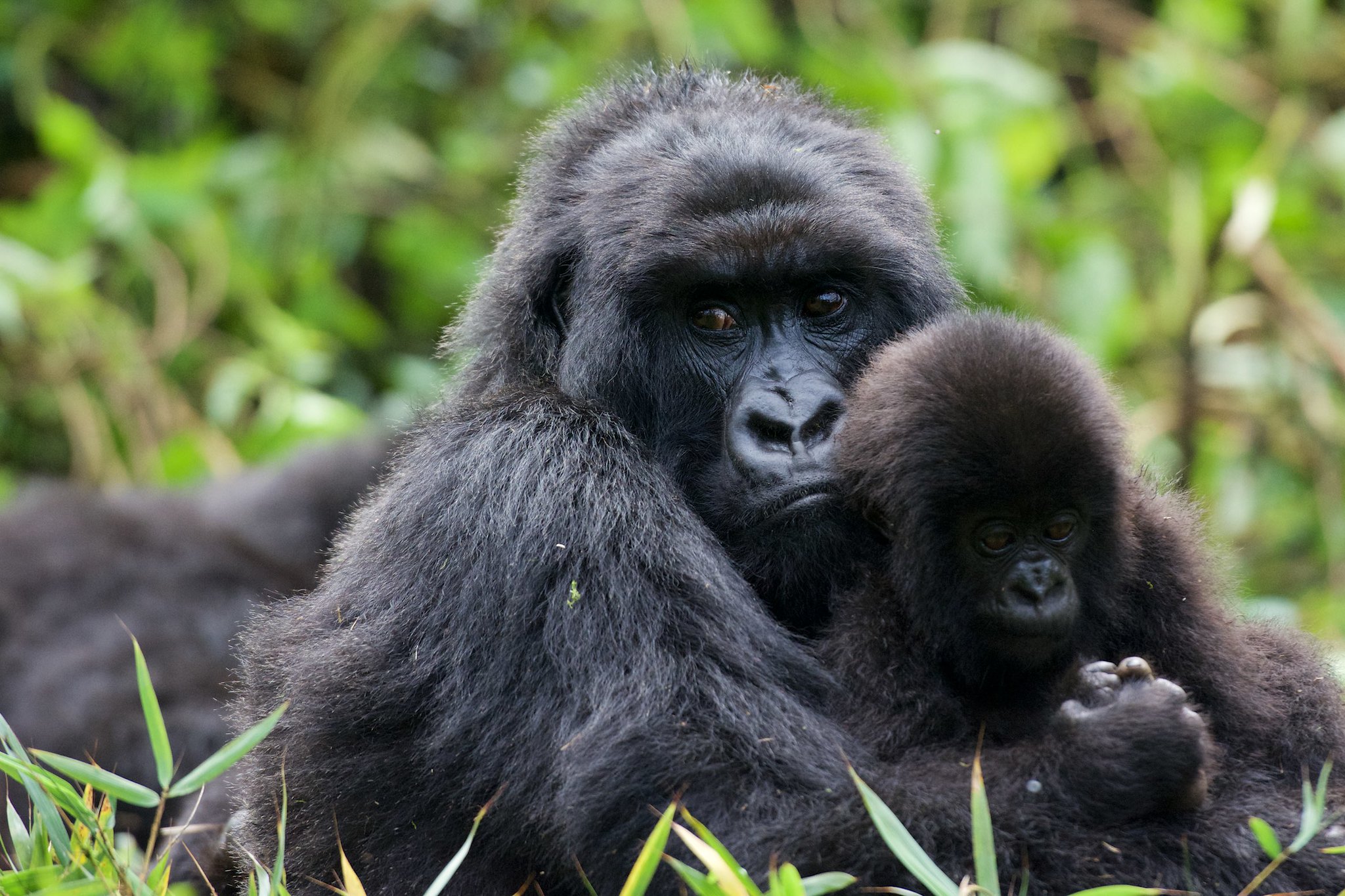
The two halves of a Uganda and Kenya safari feel like different trips. Bwindi is a steep, wet rainforest: the gorilla trek starts with a briefing at the park office around eight, then a walk that might be fifteen minutes from the road or three hours down and up a valley. Trackers radio ahead, the guide cuts a path through vines and nettles, and then the group stops, leaves bags and sticks behind, and the hour begins. You keep about 10 metres back. It passes faster than anyone expects, and plenty of travellers put the camera down for part of it.
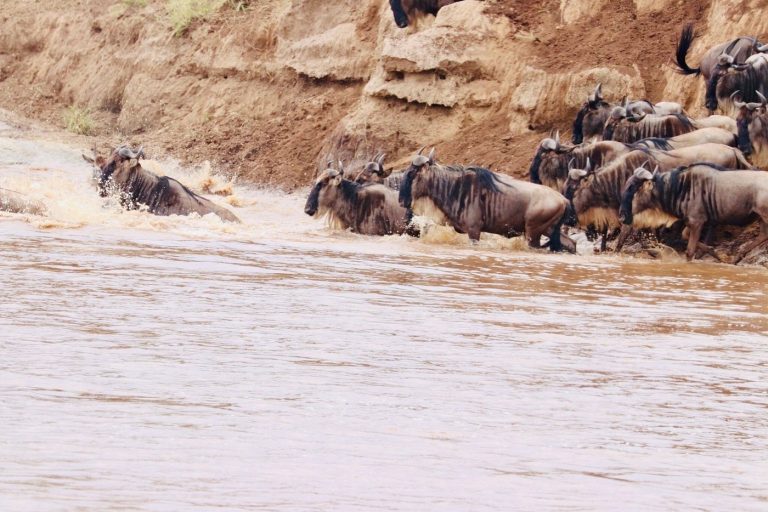
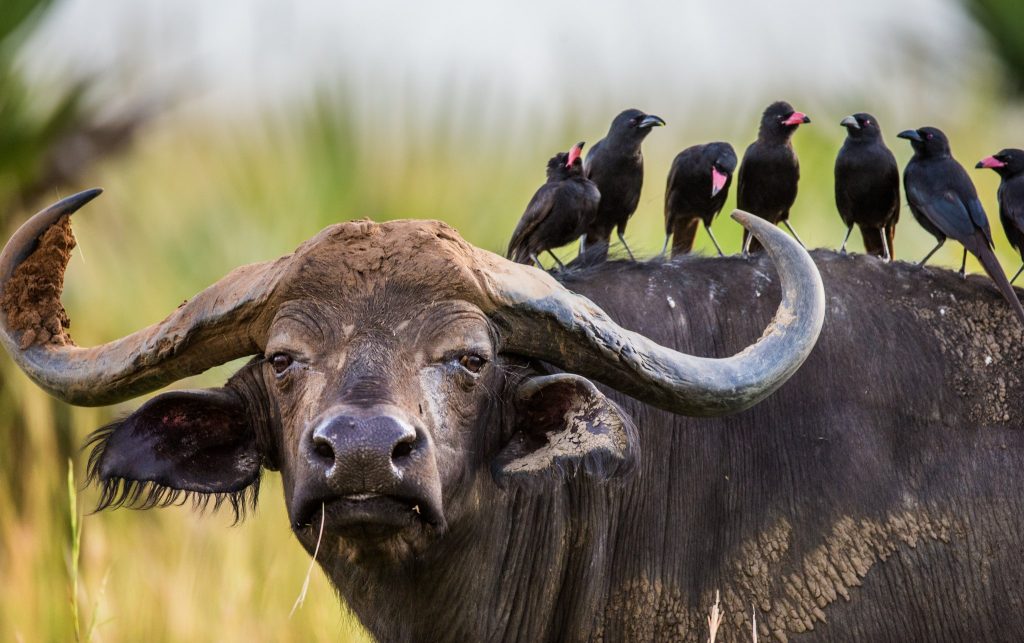
The Mara is the opposite: open grass, long sightlines and game drives at dawn and late afternoon. Lions, cheetahs and elephants are seen on most days, and from about July to October the wildebeest herds cross the Mara River, though crossings are never guaranteed on any given day and guides often wait for hours by the bank. Uganda’s own savannah parks fill the gap between the two on a longer trip: tree climbing lions in Queen Elizabeth’s Ishasha sector, the Kazinga Channel’s hippos and waterbirds, Murchison Falls on the Nile, chimps in Kibale or Budongo, and the quiet of Lake Bunyonyi, Lake Mburo and Lake Mutanda, where canoe trips fill a rest day. Batwa community visits near Bwindi and Maasai village visits near the Mara show the people who share these landscapes with the wildlife.
Uganda alone has ten national parks, including Kidepo in the far north east; Kenya adds Amboseli’s elephants below Kilimanjaro, Lake Nakuru’s rhinos and Samburu’s northern species. There are no gorillas in Kenya, which is why the combination exists at all; our guide are there gorillas in Kenya explains the geography, and gorilla trekking in Uganda covers the parks and sectors.
Routes and Itineraries for a Uganda and Kenya Safari
Most routes fly Nairobi to Entebbe after the Mara, or the reverse, then drive or take a small plane to Bwindi. Some travellers piece together light aircraft links via Kisumu, clearing immigration on each side, so ask an operator whether a scheduled connection is running for your dates. Flying into Kigali instead puts the southern Bwindi sectors and Mgahinga closest, and Nairobi to Kigali has several flights a day.
A week in Uganda for gorillas, chimps and Queen Elizabeth, then a week in Kenya for the Mara and perhaps Amboseli, is the pattern forum regulars suggest most often for a first two country trip. Shorter trips usually drop the chimps and the second savannah park. Longer ones add Tanzania’s Serengeti and Ngorongoro, Zanzibar for a beach finish, or Rwanda’s Volcanoes; see our Uganda safari guide, the Masai Mara safari guide and the Rwanda safari cost page for each piece.