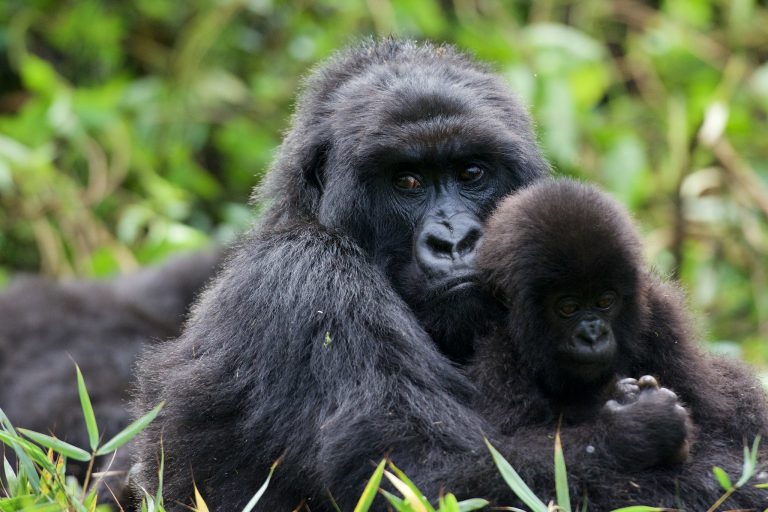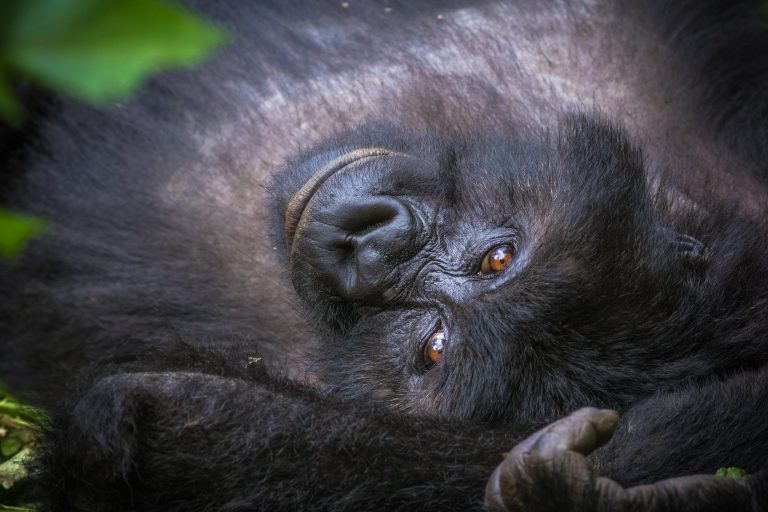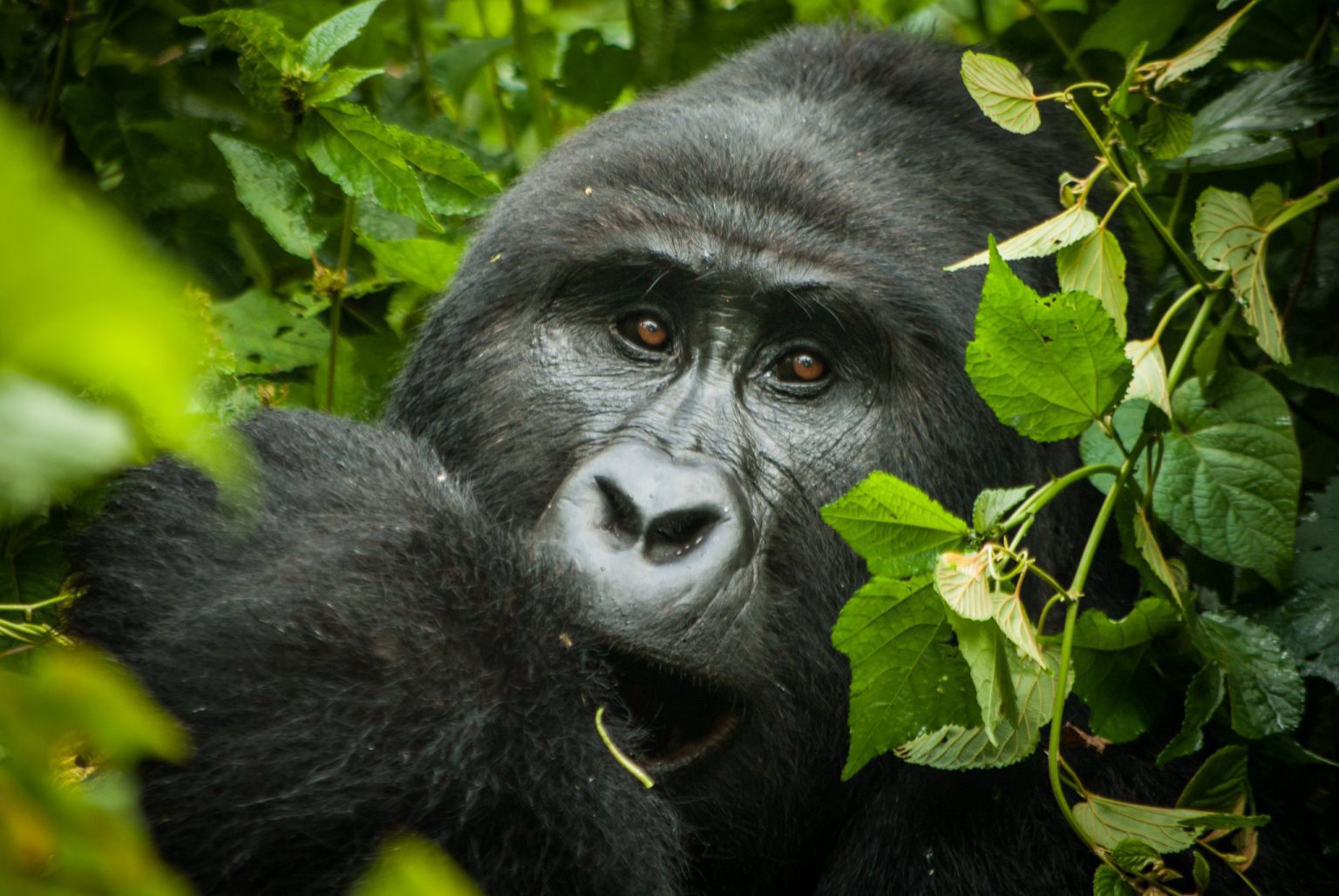
The Rushegura gorilla group is a habituated family of about 16 mountain gorillas trekked from the Buhoma sector of Bwindi Impenetrable National Park, now led by the silverback Kabukojo. Trekkers hold a Buhoma permit from the Uganda Wildlife Authority, and rangers decide each morning which family each group of eight visits. Rushegura split from Habinyanja in 2002 and often feeds close to park headquarters, so treks tend to be short.
Of the Buhoma families, this is the one guides call the neighbour. Rushegura has been seen near the Batwa village, the park office, the waterfall trail and even lodge gardens, and those sightings are a bonus for anyone staying nearby. Below is its history, the people (and gorillas) behind it, and the practical side of a Rushegura gorilla trek.
How the Rushegura Gorilla Family Formed in Buhoma
Rushegura began as part of the Habinyanja family. After Habinyanja’s old leader Mugurusi died, his sons Mwirima and Rwansigazi led together for a time. They wanted different things. Mwirima liked a compact home range; his brother preferred to roam, taking the family on long ranging trips across the forest.
In February 2002 Mwirima walked away with roughly a dozen gorillas, five of them adult females, at a place where ebishegura trees grow. There was no recorded fight. The new family took the name of the spot, and UWA opened it to visitors in the same year. Some operator histories date the start of separate monitoring to 2000, when the two halves were already drifting apart, but the formal split and opening are usually given as 2002.
Accounts of the founding group vary. One version has Mwirima leaving with seven or eight gorillas and gathering more females soon after, another gives twelve from the start, and both arrive at the same place: a family of around a dozen within months of the split. Guides say his name means darkness, after his unusually dark face.
Under Mwirima the group grew steadily, reaching 19 by about 2010. He defended it against several wild groups over the years. Rangers still describe one clash with a wild group that ended with the Rushegura gorillas staying put on the fight site and feeding there for two days, and older guides recall that the family sometimes crossed the border into the Democratic Republic of Congo before returning to Bwindi. It has since settled on the Ugandan side.
Rushegura Silverbacks: Mwirima’s Era and Kabukojo Today
Mwirima died in the middle of the last decade. Sources disagree on the year, giving either 2014 or 2015, and he was thought to be in his mid thirties. Leadership went to Kabukojo, listed in older rosters as the family’s blackback, who had grown into a silverback by then. One operator page dates Mwirima’s death to 2004, which cannot be right, since he was still leading the family when it reached 19.
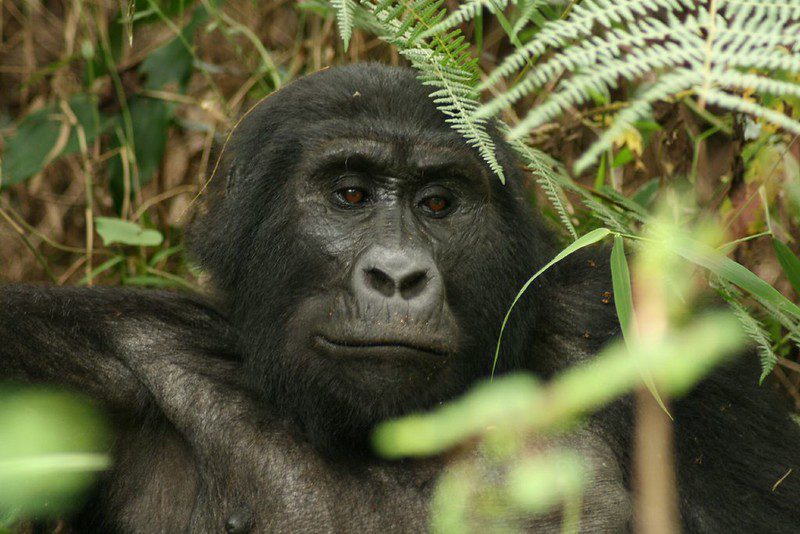
The handover appears to have gone smoothly. One account describes a second male trying to leave with several females, only for the group to come back together later. The International Gorilla Conservation Programme now lists Kabukojo as leader with a second silverback in the family.
A few tour pages name Makara as the Rushegura leader. Makara leads Habinyanja, the parent family, and the mix up shows how easily the two Buhoma groups get confused. Operator news from late 2019 also reported that two females had moved from Rushegura to the much smaller Mubare family under its new silverback; that came from tour companies rather than the park, so treat it as a report, not a census.
Rushegura Group Size and Members
IGCP’s latest profile counts 16 gorillas: two silverbacks, two blackbacks, five adult females and a mix of subadults and four infants. Other pages give 18, 19 or even 21, figures from before Mwirima’s death or from the family’s peak, and at least one of those breakdowns does not add up to its own total. Because births and transfers happen every year, ask your ranger for the current number.
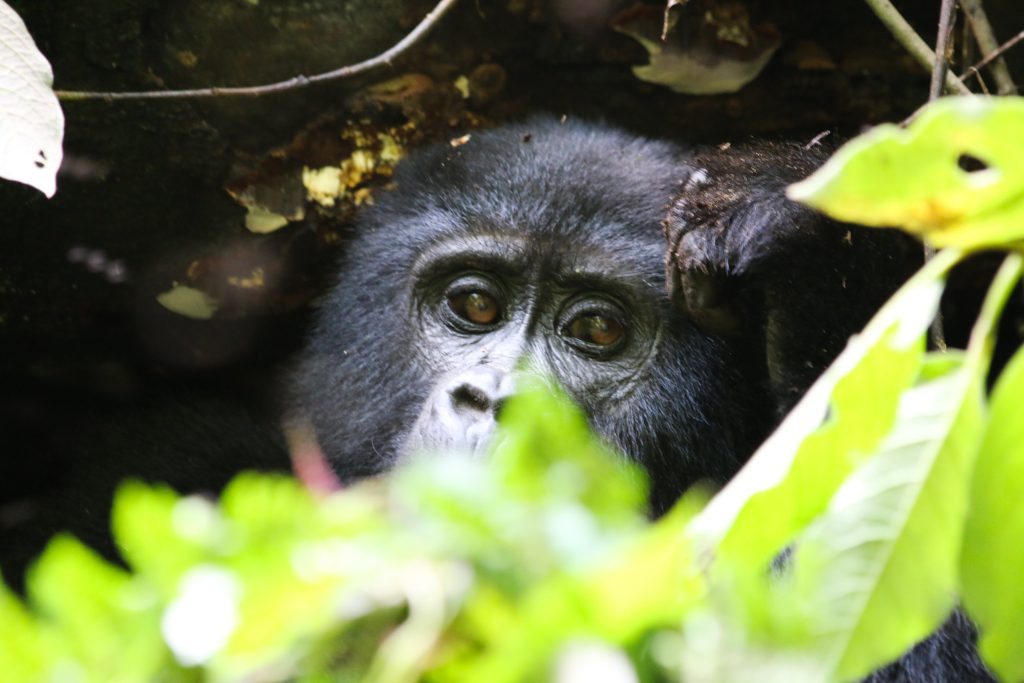
For many years this page listed the members by name. That roster is reproduced below as a record of the family around its peak; several of these gorillas will have grown up, moved on or died since.
Rushegura Gorilla Trekking Difficulty and Range
Rushegura’s habit of staying near Buhoma makes it a likely choice for slower walkers. Many treks reach the family within one to three hours, and on some mornings they are feeding just past the forest edge. That is a tendency, not a rule. Gorillas follow food, and a dry spell or a clash with another group can send them deep into the hills for days. Counting the walk back, most Rushegura trekking days run from about three hours to a little over five.
Most groups walk straight out from the briefing point. On some mornings the family has moved toward the Mukono side of the sector, and the group drives about fifteen minutes to a different trailhead first, so keep your boots on after the briefing.
The terrain is typical of northern Bwindi: steep but short climbs, stream crossings, and thick undergrowth that guides clear with machetes as they go. At about 1,500 metres, Buhoma feels warm and humid rather than cold. Rain can turn the paths to clay within minutes.
Because the family sometimes moves out of the park into neighbouring farmland, you may find them among banana plants at the boundary. Those sightings can be just as good as any in deep forest, though some visitors feel short changed. If deep jungle is what you want, mention it at the briefing. The difficulty of the whole sector, family by family, is set out on our Buhoma gorilla trekking guide.
Your Hour with the Rushegura Gorillas: Trekking Rules on Contact
The day opens with a briefing at around 7:30 at Buhoma park headquarters, where rangers split visitors into groups of up to eight and name the family each group will track. Once the trackers radio that they have the family, your ranger stops the group a short way off. Bags, sticks and food stay with the porters. You put on a face mask, since gorillas catch human colds and flu easily, and walk the last stretch with only a camera.
The hour starts then. Visitors are asked to stay about ten metres back, keep voices low and avoid flash. Rushegura’s young ones are often curious and may wander closer than the rule allows; when that happens, the ranger will move you back rather than the gorilla. If Kabukojo grunts or stands up, crouch, look down and follow the guide. Anyone with a cough or fever on the morning should tell the warden, who can ask them to sit the trek out.
Back at headquarters, UWA hands each trekker a certificate with the family’s name on it. Nobody under 15 may trek any family in Uganda.
Requesting the Rushegura Group on a Uganda Gorilla Safari
No permit names a gorilla family. The Uganda Wildlife Authority sells gorilla permits for a sector and a date, and the warden assigns families after the briefing. Your safari company can pass on a request for Rushegura, and you can repeat it on the morning; rangers do listen, particularly where age, fitness or a medical issue makes a short walk sensible.
Several licensed operators include Buhoma and its families in their itineraries. Insight Safari Holidays, for example, runs Uganda safari trips that visit this family among others, and our directory lists more. Buhoma permits for the dry months sell out early, so allow plenty of lead time: three to six months is sensible for June to August and December to February, and UWA takes full payment when the permit is issued.
Planning Days and Best Months for a Rushegura Gorilla Trek
A Rushegura gorilla trekking trip needs at least three days from Entebbe or Kampala: one long drive in, the trek, and the drive out. The road to Buhoma via Rukungiri takes eight to nine hours, so many travellers fly to Kihihi instead, a little over an hour in the air followed by an hour and a half to two hours by road. From Kigali the drive to Buhoma runs six to eight hours, longer than to Bwindi’s southern sectors, so a two day trip from Rwanda is tight here. Our getting to Bwindi page sets out every route.
The drier months, June to August and December to February, give firmer trails and are the busiest for permits. March to May and October to November bring more rain and quieter forest, and UWA’s announced low season rate applies in April, May and November. Rain falls in every month, though, and Rushegura’s habit of staying low near the village helps on a wet morning. The best time to visit guide goes through the year month by month.
Lodges Closest to the Rushegura Family
Rushegura’s range overlaps several Buhoma lodges, and guests at camps inside the boundary sometimes see gorillas pass on the slopes below. The tented Gorilla Forest Camp and Buhoma Lodge both sit inside the park a few minutes from the briefing point, and Bwindi Lodge overlooks the river nearby; our profiles of Gorilla Forest Camp and Bwindi Lodge describe the top end. Guests at the forest camp have reported the family feeding around the tents into the evening, a chance event rather than something any lodge can promise.
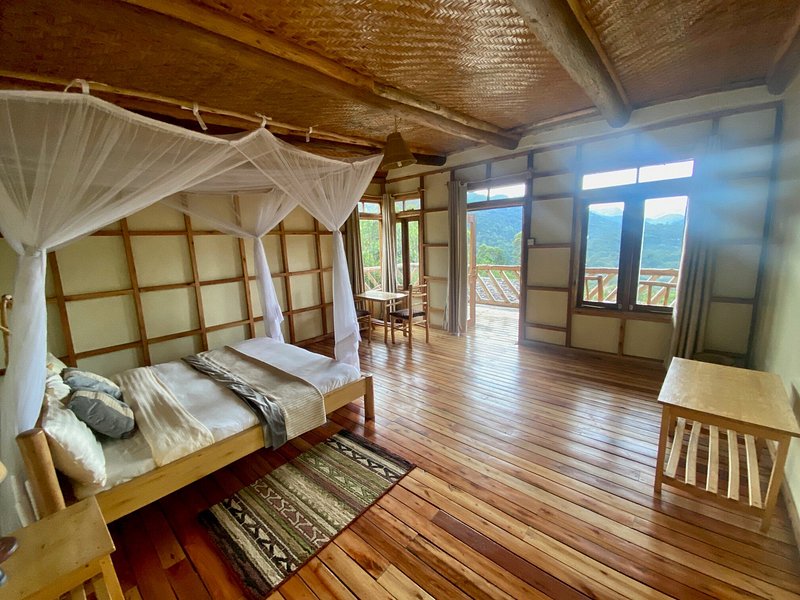
Engagi Lodge, Buhoma Haven Lodge and the CTPH Gorilla Conservation Camp cover the middle and lower budgets. Every option is compared by tier on our Bwindi safari lodges page.
Gear for a Rushegura Gorilla Trek
A shorter trek still needs proper kit, because the first steep, wet bank can arrive within ten minutes of leaving the road. Bring waterproof boots that grip, long sleeves and long trousers against nettles, and gloves for holding on. A rain jacket goes in the daypack whatever the sky looks like.
The hub for all of this is our gorilla trekking packing list, which links on to the boots, gaiters and rain jacket guides. Travelling light? Our page on renting trekking gear explains what can be hired locally and what is better brought from home.
Neighbouring Gorilla Families and Planning the Wider Trip
Buhoma’s other families make a natural comparison. Mubare, the oldest group in Uganda, is now small and lives in the hills above the village, while Habinyanja usually means a longer walk. Katwe, Muyambi, Binyindo and Happy are the newer Buhoma families. Over in the south, the Nshongi family in Rushaga shows how large a single group can grow. All of them are profiled on our gorilla groups hub. The story of Ruhondeza, the Mubare silverback, shows how Uganda’s gorilla trekking began.
Most trips to Buhoma combine the trek with Queen Elizabeth National Park, two to three hours away through Ishasha, or start with a flight to Kihihi. Our gorilla trekking safari guide covers routes, seasons and sample plans. After the trek, the waterfall trail and village walk on our Bwindi nature walks page fill an afternoon, and a visit with the Batwa people explains who lived in this forest before it became a park.
Rushegura Gorilla Family FAQ
How much is a permit for Rushegura gorilla trekking?
Rushegura is visited on a Buhoma permit. Foreign nonresidents pay US$800, foreign residents US$700 and East African citizens UGX 300,000. UWA has announced a US$600 low season rate for April, May and November, so check which applies to your date. For the trek itself, see our gorilla trekking guide.
How much does a gorilla tour cost in Uganda?
A three day trip with the permit, lodges and transport runs from about US$1,200 per person on a shared budget tour to about US$2,100 at a comfortable Buhoma lodge, before international flights. Longer trips with chimpanzees and a game park cost more. Our gorilla trekking cost guide builds a total line by line.
Is gorilla trekking worth the money?
Most people who do it say yes. The permit buys an hour within a few metres of a wild family, and it pays for the rangers, trackers and vets who keep Bwindi’s gorillas safe, with a share going to villages around the park. A gentle family such as Rushegura suits travellers who worry about the hike.
Is Rushegura an easy gorilla trek?
It is often one of the easier treks in Buhoma because the family tends to stay near headquarters, but the gorillas move every day and a long walk is always possible.
How many gorillas are in the Rushegura group?
About 16 in IGCP’s latest profile, including two silverbacks, five adult females and four infants. Figures of 19 or 21 date from the family’s peak.
Why is it called Rushegura?
The split from Habinyanja happened in an area where ebishegura trees grow, and the new family took the place name.
Who leads the Rushegura family?
The silverback Kabukojo, who took over after Mwirima died in 2014 or 2015.
Can I see the Rushegura gorillas from my lodge?
Occasionally, at lodges inside or right beside the park in Buhoma. It is chance, not something to plan around, and you still need a permit and a ranger to trek.
Can older travellers trek Rushegura?
Many do. Mention any mobility concern at the briefing, hire a porter, and the rangers will usually try to assign the closest family that day.
How many gorilla families are there in Rwanda?
Rwanda has 12 families habituated for tourist trekking in Volcanoes National Park, with several more kept for research. Our Rwanda gorilla trekking guide profiles them.
What are the best gorilla trekking companies in Uganda and Rwanda?
Look for a current licence, membership of the Association of Uganda Tour Operators or its Rwandan equivalent, clear inclusions and permits issued in your name. Our gorilla safari companies page explains how to check them.