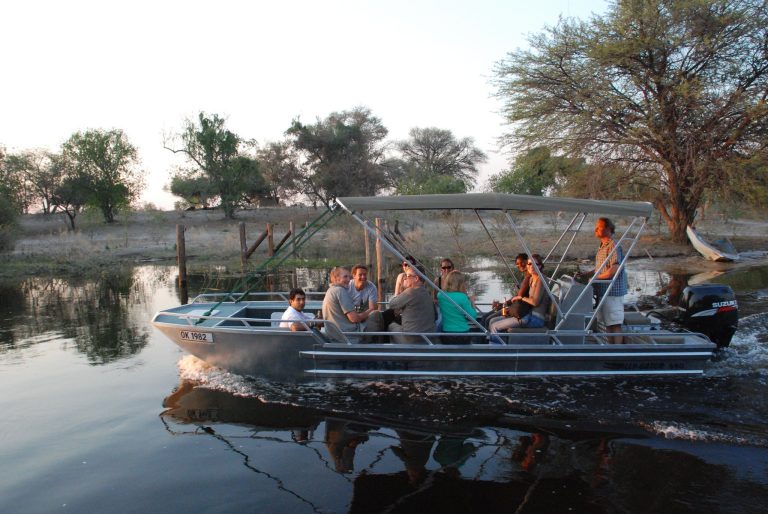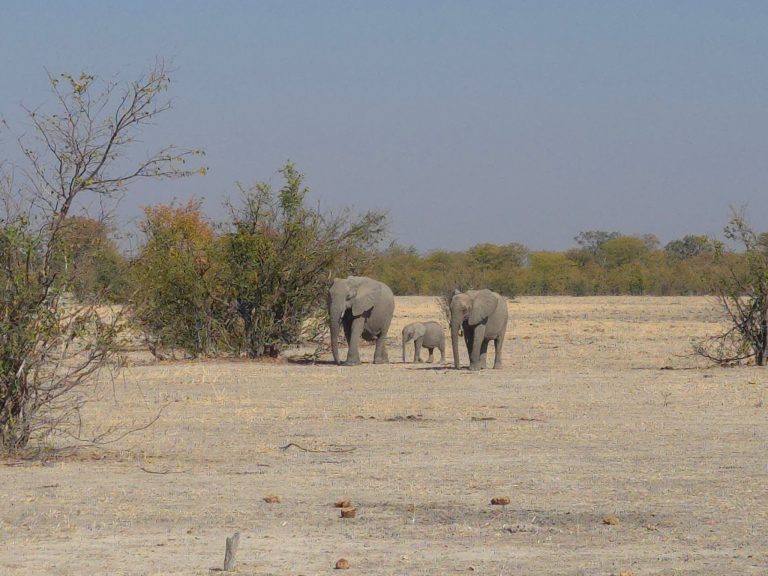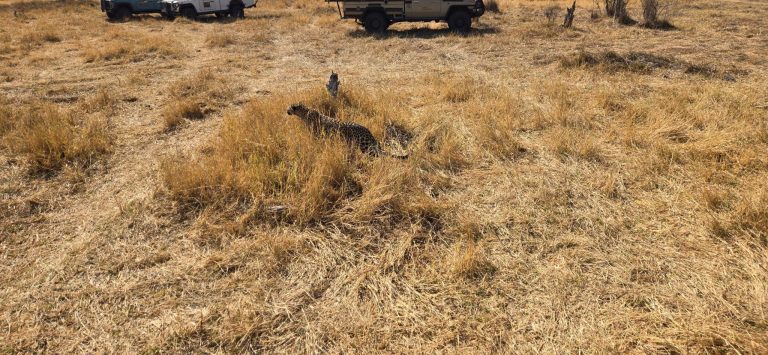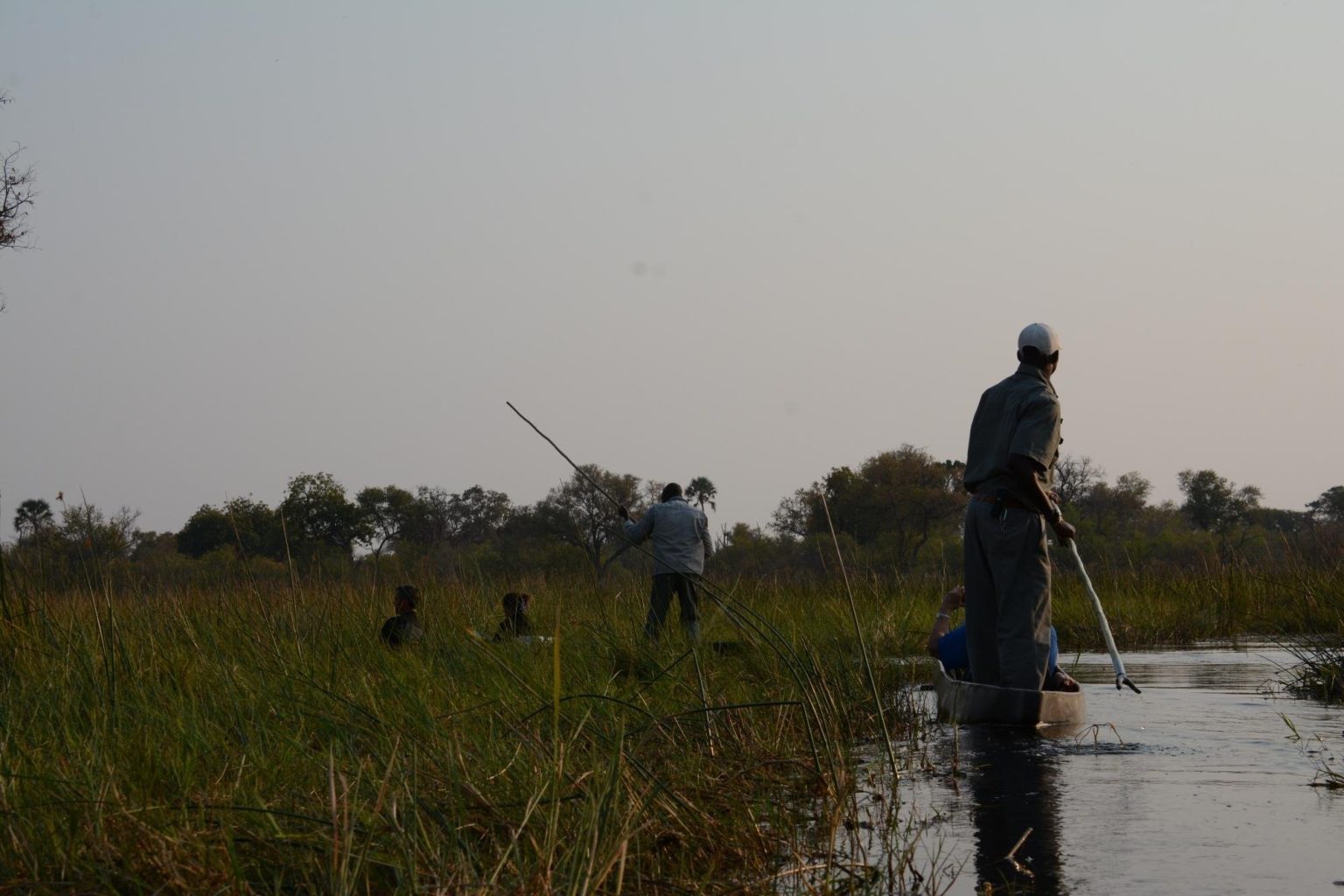
An Okavango Delta safari cost runs from about US$310 per person a night on a two night mokoro camping trip out of Maun, through US$595 to US$1,445 at mid range Khwai and Delta camps, to US$995 to US$3,895 at classic and premier camps, per person sharing, with meals, activities and park fees normally inside the rate. Most visitors fly in from Maun for five to seven nights, booked through a licensed operator. The Delta is Botswana’s UNESCO listed inland wetland.
Okavango Delta safari cost at a glance (US dollars, per person sharing).
This page covers money. Activities and camps are described in our Okavango Delta safari guide, and countrywide pricing is on the Botswana safari cost page.
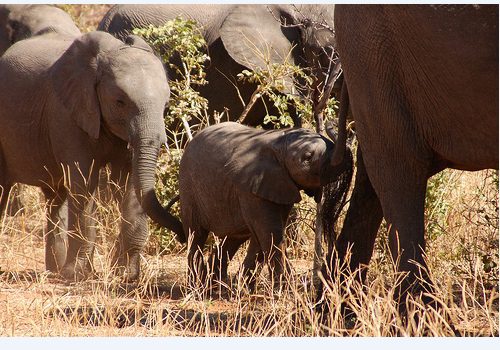
Okavango Delta Safari Cost per Night by Safari Style
Okavango safari prices are quoted per person per night, sharing a tent or room, and nearly always fully inclusive. That makes them look high beside East African quotes that list meals and park fees apart. Each rung of the ladder below buys a different trip, not just a nicer bed, and every figure comes from an operator’s or camp group’s own published rates.
| Safari style | Per night | Example |
|---|---|---|
| Mokoro camping | About US$310 | Lelobu, from Maun |
| Mobile camping | US$450 to US$600 | Bush Ways, Lelobu |
| Budget fly in | US$400 to US$560 a day | Lelobu packages |
| Khwai Explorer camps | US$595 to US$1,445 | Elephant Pan, Little Sable |
| Delta Explorer camps | US$660 to US$1,445 | Mokolwane |
| Classic Delta camps | US$995 to US$2,295 | Mbamba, Duke’s Camp |
| Premier camps | US$1,545 to US$3,895 | North Island, Tawana |
The bottom rungs come from operator packages divided by nights. Lelobu Safaris’ two night mokoro trip from Maun costs US$625, so a little over US$310 a night. Bush Ways’ six night Serval route through Moremi, Savute and Chobe runs US$2,680 to US$2,830, and Lelobu’s five night Okavango and Moremi mobile trip costs US$2,990, landing between about US$450 and US$600 a night. Lelobu’s fly in lodge packages, US$2,700 for five days in the Delta and Khwai and US$3,890 for seven days on private concessions, prove a basic fly in week need not run to five figures. Our Botswana budget safari guide covers that end in detail.
The camp rungs come from Natural Selection’s published Botswana rack sheet, one of the few camp groups that prints every rate. Elephant Pan in the Khwai Private Reserve starts at US$595 a night in the green season. Mokolwane in the southern Delta runs US$660 to US$1,445, Mbamba in the northern Delta US$995 to US$1,995 and Duke’s Camp US$1,195 to US$2,295. North Island Okavango tops the Delta camps at US$1,545 to US$3,545, and Tawana in Moremi reaches US$3,895 at peak. A handful of famous flagship camps sit above even that and publish nothing.
So what does it cost per day? Roughly US$310 at the cheapest guided rung, around US$1,230 to US$1,375 a night for a June to August week at mid range camps on the long stay rate, and US$2,000 to US$3,900 a night at the top. Group size, season and the number of flights move it from there.
Why an Okavango Delta Safari Costs More: Concessions, Camp Size and Flights
Sticker shock is normal. People who price an Okavango Delta safari after Kenya or Tanzania assume the quote is wrong. It isn’t. Our African safari cost guide shows why.
Botswana runs a high value, low volume tourism policy. Outside Moremi Game Reserve, most of the Delta is leased as private concessions with only a few beds each. The rate sheet shows how few: Duke’s East has four rooms, Duke’s Camp eight, Mbamba twelve, and Skybeds three sleeping platforms. A handful of guests carry the cost of running a camp in a swamp, plus a community, conservation and reserve fee of US$60 per person per night that Natural Selection adds to every bed night from age six.
Geography adds the rest. No road reaches most of the inner Delta, so food, fuel and guests arrive by small aircraft from Maun. A camp that flies in its lettuce does not price like a lodge on a tarred road.
What the money buys is space. On a private concession only its own guests may drive, so a sighting often has one vehicle, and guides can go off road, run night drives and lead walks. That is why Little Sable on private Khwai land, at US$660 to US$1,445, costs more than lodges on public land a few kilometres away, and why a simple tent on a good concession can outprice a plush hotel. Is Botswana expensive for tourists? In the Delta, yes. The mokoro and mobile rungs below show where it is not.
Okavango Delta Safari Camp Prices: Water Camps, Land Camps and Khwai Lodges
Two camps a short flight apart can be priced very differently, and camp type explains most of it. This is the part of the Okavango safari bill you control most directly.
Okavango Delta camp types and what they cost per night.
For one camp, pick a water and land camp. For two, a camp in the Delta proper plus a Khwai land camp gives more for the money than two premier names. Next door to Moremi, the Khwai area allows night drives and has the best value camps in the region, which is why so many mid range trips use it.
Concession names matter on a quote. Northern ones around Vumbura, Duba and the Linyanti are known for predators and price to match; Xudum and Abu in the southwest mix water and land. A well placed classic camp often delivers sightings close to the famous camp next door, so ask about the concession and how many camps share its roads before the brand. Natural Selection’s private Khwai ranger excursion, at US$740 per group and paid into conservation on the concession, shows how a private activity is priced here.
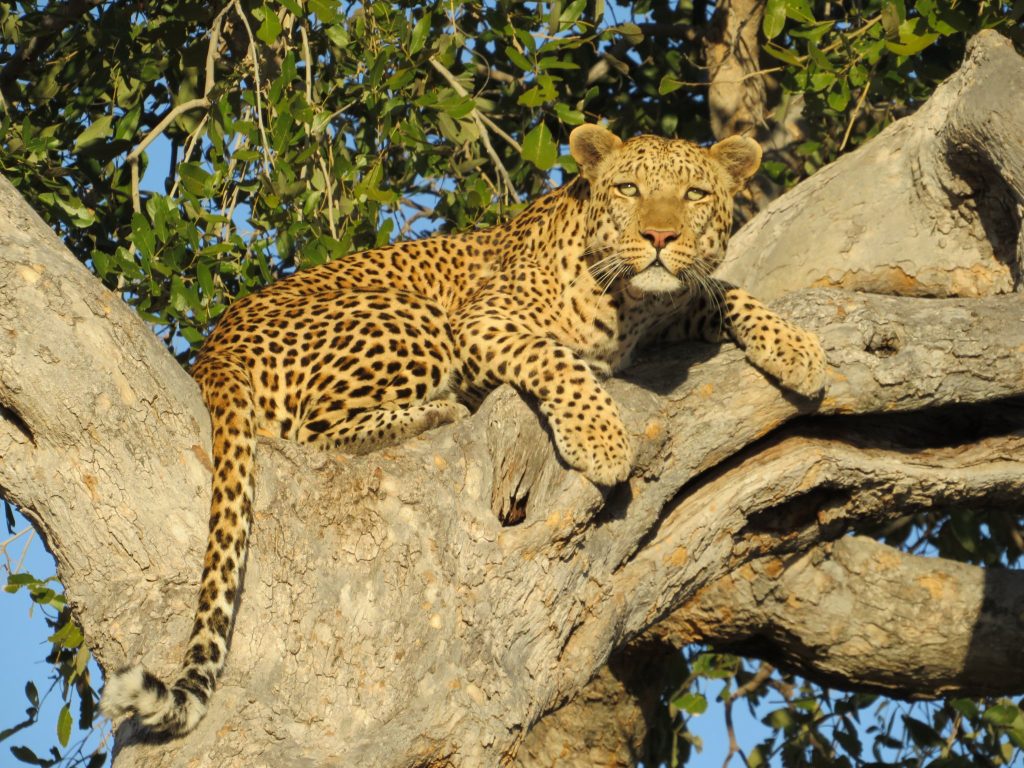
Okavango Safari Season Prices and the Flood
Season is the second lever on an Okavango Delta safari price, and the same tent can cost more than double in August what it costs in February. Natural Selection splits the year into five bands: green from 10 January to 31 March, shoulder in April and from 1 November to 19 December, shoulder high in May and October, high in June, September and the festive fortnight from 20 December, and peak in July and August.
| Season | Mokolwane | Mbamba | North Island |
|---|---|---|---|
| Green | US$660 | US$995 | US$1,545 |
| Shoulder | US$925 | US$1,325 | US$2,095 |
| Shoulder high | US$1,045 | US$1,575 | US$2,495 |
| High | US$1,295 | US$1,795 | US$2,995 |
| Peak | US$1,445 | US$1,995 | US$3,545 |
The Delta’s water and its rain run on different clocks. The flood comes down from the Angolan highlands and peaks in the dry months, so the dearest weeks are also the wettest underfoot.
| Months | Rate band | Delta water | Best for |
|---|---|---|---|
| Jan to Mar | Lowest | Low | Birds, calves |
| Apr to May | Shoulder | Rising | Value |
| Jun | High | High | Mokoro, game |
| Jul to Oct | Peak, high | High, falling | Predators |
| Nov to Dec | Shoulder | Low | Value, heat |
July and August bring animals to the remaining water and mokoro trips almost everywhere. You pay the top rate and still compete for beds. September holds the high rate, and October drops to shoulder high at US$1,045 at Mokolwane but is fiercely hot, so plan a long midday rest.
April, May and November are the months experienced visitors keep recommending. April at Mokolwane costs US$925 against US$1,445 in July, a saving of about 36 percent, with drying bush and the flood arriving.
The green season has the lowest rates, and Natural Selection waives single supplements then and again from 1 October to 19 December. Expect storms, tall grass and scattered game. Some camps close, Skybeds and Expeditions Camp among them, and some southern camps cannot run mokoro trips until the water returns, so ask what runs in your month. The camp group’s next season sheet is already out, with Mokolwane rising to US$720 to US$1,575 and North Island to US$1,660 to US$3,795. Our best time to visit Botswana guide goes month by month.
Budget Okavango Trips: Mokoro Camping, Mobile Safaris and Moremi Self Drive Costs
A budget Okavango Delta safari trades the inner Delta’s private concessions for the edges, Moremi and the community mokoro areas. It is still a real Delta trip, and the price gap is wide.
Mokoro day trips from Maun sit below all of these, priced by the Maun lodges and community polers that run them; ask what the price covers before you pay. They earn good reviews for quiet and birds, and mixed ones from people who expected lions, since big game is thin on the southern fringe. Self drivers on forums say it plainly: you see the edge, and the inner Delta needs a flight or a boat.
Read mobile trip exclusions line by line. Bush Ways lists “any rise in National Park fees” as an exclusion, which matters while the fee schedule is under review. A mobile price per person also falls fast as your group grows, because a private guide and vehicle cost the same whether two or six share them. Confident sand drivers can read our self drive safaris in Africa page first.

Fly In Okavango Safari Costs: Light Aircraft, Luggage and Scenic Flights
Every fly in Okavango safari starts with a small aircraft out of Maun, or Kasane if you come from Chobe, and every hop is a cost line. Some packages fold flights in; others quote each seat per sector. Mack Air, one of the main Maun charter airlines, sells shared seat rates for camp circuits and private charters, but publishes no fares, so ask for flights as a separate line on every quote.
Camp groups soften the bill. Natural Selection’s rates already cover the airstrip transfer at each camp. Book three nights at Tawana with three at another of its Botswana camps and flights between Tawana and Maun, the Delta or the Linyanti are included; book three nights at Mokolwane on the same terms and the arrival helicopter transfer is free. Hops take twenty to forty minutes, yet a two night stop still loses part of two days to transfers, which is why planners push three nights per camp.
Light aircraft luggage rules.
Trip reports describe travellers repacking hard cases on the floor of Maun airport. A soft safari duffel bag solves most of it, and laundry is included at fixed camps, so pack light.
Scenic flights are the other flying cost. Mack Air runs one hour scenic flights from Maun in the early morning or late afternoon, carrying no more than nine passengers so everyone gets a window; the price is quoted on request. Helicopter flights from camps are also priced on request on Natural Selection’s sheet. Maun is usually reached through Johannesburg, and if your connection is fragile, a night in Maun costs less than a missed bush flight.
What an Okavango Delta Safari Price Includes and the Park Fee Question
Most Okavango Delta safari quotes are per person sharing and fully inclusive, so compare them line by line rather than by the headline.
Line by line check for a Delta quote.
Park fees are set by Botswana’s Department of Wildlife and National Parks, and the schedule is under review. The figures in circulation disagree and we could not confirm the current rate on a government source, so this page quotes none. For most travellers it changes little, because camp, mokoro and mobile rates normally include park fees. Self drivers pay them per person per day, plus vehicle and camping fees, and should confirm the current rate at a DWNP office or the gate.
Watch the quiet differences too. Four camps in seven nights is a different trip from two camps of three or four nights at the same headline price, and a quote without flights can look cheaper and end up dearer.
Hidden Okavango Safari Costs: Tips, Single Supplements, Children and Private Vehicles
The camp rate covers most things. These lines sit outside it, and on a Delta safari they add up.
Bring clean US dollar notes in small denominations for tips, paid at the end of each camp stay. Trip reports often mention carrying more cash than expected, since card machines are rare in the bush. Our family safari in Africa guide covers age rules in more detail.
Worked Example: A 6 Night Okavango and Khwai Safari Costed per Person
Here is a realistic Okavango Delta safari budget for one named trip shape: 6 nights, two people sharing, three nights at Mokolwane in the southern Delta, then three nights at Little Sable, a land camp in the Khwai Private Reserve, shared activities, travelling in June. It uses Natural Selection’s published 6 to 7 night rate.
Light aircraft seats from Maun to the southern Delta, on to Khwai and back are quoted by the camp’s reservations team or the airline rather than published, so ask for them as their own line. The gap between June and February, about US$3,800 per person for identical nights, is the single biggest saving available on an Okavango safari.
Sample Okavango Delta Safari Trips at Three Budgets
These three Okavango safari trips show how the pieces add up, each priced from a published rate.
Budget: five days by mokoro from Maun, from US$625 plus Maun nights.
Mid range: six nights with a value water camp and Khwai, from US$3,900.
This split answers the classic complaint of missing either the predators or the water, and two sectors keep flight costs down. Lelobu’s five day Delta and Khwai fly in package at US$2,700 is the cheaper version of the same idea.
Top end: six nights across concession camps, about US$17,200.
Swap North Island for Mbamba at US$1,895 a night in July and the top end total falls by about US$4,400 with little loss in sightings. Package versions are on Botswana safari packages, and our Botswana luxury safari cost guide goes deeper into the top camps.
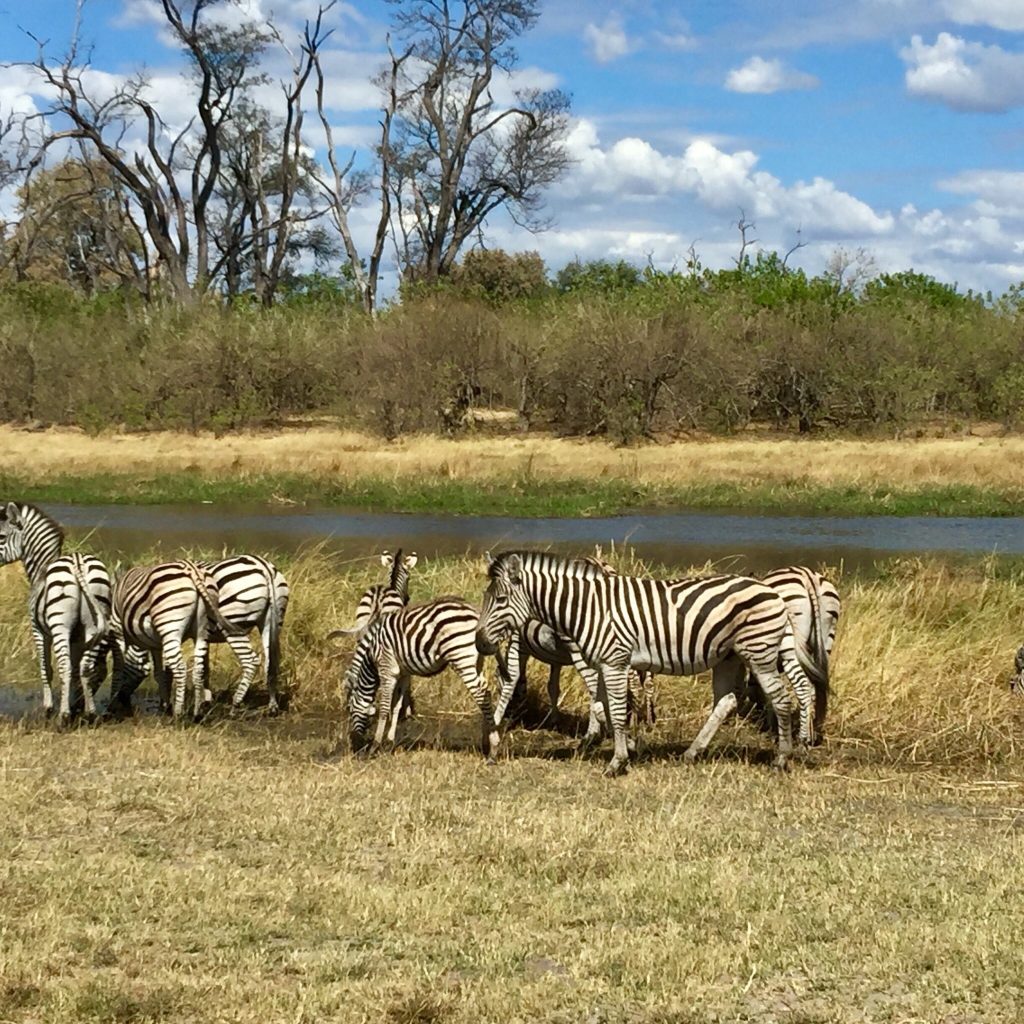
How to Cut the Cost of an Okavango Delta Safari
An affordable Okavango safari comes from a few deliberate choices, each with a number attached and none of which means a poor trip.
Ask how your planner is paid, since layers of agents add margin without adding guiding. And don’t cut the guiding itself. Disappointed trip reports rarely blame the tent; they blame short stays or a guide who never left the track.
Okavango Delta Safari Combos: Chobe, Victoria Falls and Bwindi Gorilla Costs
The Delta rarely stands alone, and the add on costs are easy to price. Chobe’s riverfront near Kasane is a short flight away and gives the cheapest big game in Botswana; Lelobu pairs it with the Okavango for US$2,780 over seven days by fly in package, or US$3,480 over five days, and adds Victoria Falls for US$3,250 over nine. Victoria Falls is a road transfer from Kasane, and our Botswana and Victoria Falls itinerary lays out routes of seven to fourteen nights, with the Victoria Falls Zambia and Zimbabwe safari guides covering each side of the Falls. Our Chobe safari cost page prices the riverfront itself.
Gorillas are the other common pairing. Flights connect Maun or Kasane through Johannesburg or Nairobi to Entebbe or Kigali for gorilla trekking in Bwindi or Rwanda. A Uganda permit costs US$800 for foreign non residents, US$700 for foreign residents and UGX 300,000 for East African citizens; in April, May and November it drops to US$600 and US$500, but those permits cannot be rescheduled and are paid in full at booking. Gorilla habituation costs US$1,500, with a rise to US$1,800 announced. Rwanda’s permit costs US$1,500, with the RDB 30 percent offer bringing it to US$1,050 from November to May when you add nights in Nyungwe or Akagera. Botswana’s shoulder months line up with Uganda’s low season permit months.
Sort the Uganda gorilla permit first, then pack both trips into one soft bag with the African safari packing list and gorilla trekking packing list, and check your safari insurance covers evacuation.
Okavango Delta Safari Cost: Frequently Asked Questions
How much does an Okavango Delta safari cost per day?
About US$310 a night on a guided mokoro camping trip from Maun, US$450 to US$600 on a mobile camping trip, US$595 to US$1,445 at Explorer camps in Khwai and the Delta, and US$995 to US$3,895 at classic and premier camps, per person sharing with meals, activities and park fees included. Some camp groups add a US$60 nightly community fee.
Why is the Okavango Delta so expensive?
Botswana’s low volume tourism policy keeps camps small, often four to twelve rooms, on private concessions that only their own guests may use. Most camps can be reached only by light aircraft, so fuel, food and staff all fly in. The result is fewer vehicles at sightings and a higher nightly rate.
What is the best month to go to the Okavango Delta?
July and August for high water and dry bush together, at the peak rate; June and September for nearly the same at the high rate; April, May and November for value, with Mokolwane at US$925 in April against US$1,445 in July; and January to March for birds, calves and the lowest rates.
Is the Okavango Delta worth it?
For travellers who value space and water over sheer numbers, usually yes. Kenya and Tanzania show more animals on a short budget, so first timers on a tight budget often start there or on the Chobe riverfront, then come to the Delta for a second safari.
Is Botswana expensive for tourists?
At the top end it is Africa’s priciest safari country, and the Delta is its most expensive area. Mobile camping weeks from US$2,680 and fly in packages from US$2,700 keep it within reach of many budgets. Our Botswana safari cost guide compares every region.
How much does an Okavango Delta safari cost for a couple?
Double the per person rate: six June nights at Mokolwane and Little Sable come to about US$15,870 for two before flights, or about US$8,240 in February. Newlyweds can ask about Natural Selection’s honeymoon special, which halves one spouse’s nightly rate within a year of the wedding.
How much does a mokoro trip in the Okavango cost?
Lelobu’s guided two night mokoro camping trip from Maun costs US$625 per person sharing, with park and community fees, meals and transfers included. At fly in camps, mokoro outings are part of the nightly rate where water allows, plus a tip of about US$5 a day for the poler.
Are park fees included in an Okavango safari price?
At fixed camps, on guided mokoro trips and on most mobile safaris, yes. The national fee schedule is under review and we could not confirm the current rate on a government source, so no figure is given here. Self drivers pay at the gate and should confirm the rate with a DWNP office first.
How many nights do I need in the Okavango Delta?
Five or six nights split between a water camp and a land camp is the shape most guides suggest. Three nights at one mixed camp works as a taste. Fewer than three nights per camp loses too much time to flights, and six nights unlocks long stay rates at some camp groups.
Can children go on an Okavango Delta safari?
Yes, but Natural Selection’s Delta camps take children from six, Skybeds only from sixteen, and younger children need a private vehicle at US$725 to US$935 a night. Mobile safaris and some Khwai camps are more flexible.
How far ahead should I book an Okavango safari?
Ten to twelve months for the best known camps between July and October, around six months for most others in peak season. Green season trips can often be booked a few months out, and that is when special offers appear.
Is an Okavango Delta Safari Worth It? What the Money Buys on the Water
The money buys a particular kind of quiet. A morning on a private concession starts in the dark with coffee by the fire, then a drive or a walk while the light is low, often without another vehicle in sight. Midday is slow and hot. In the afternoon a mokoro slides through papyrus channels with the poler standing at the back, close enough to see reed frogs on the stems, and the evening drive ends with a spotlight on the way home. Sightings are never guaranteed, and in the green season the grass hides a lot.
Trip reports from East Africa veterans say much the same: fewer animals in a single view than the Serengeti, far fewer people, and the sense of having the place to yourselves. People who loved it rarely mention the price afterwards. People who regretted it usually rushed it.
Planning Notes for the Okavango: Maun, Malaria and Booking
Maun is the gateway town, on the Thamalakane River, with hotels, charter airlines and operators; most international routes come through Johannesburg. The Delta, Moremi and Chobe are malaria areas, with the highest risk from about November to April, so speak to a travel clinic and use repellent and long sleeves at dusk all year. Many camps set minimum ages for walks and mokoro trips, and the best known ones fill early, so settle the season first, then the camps, then the flights between them.