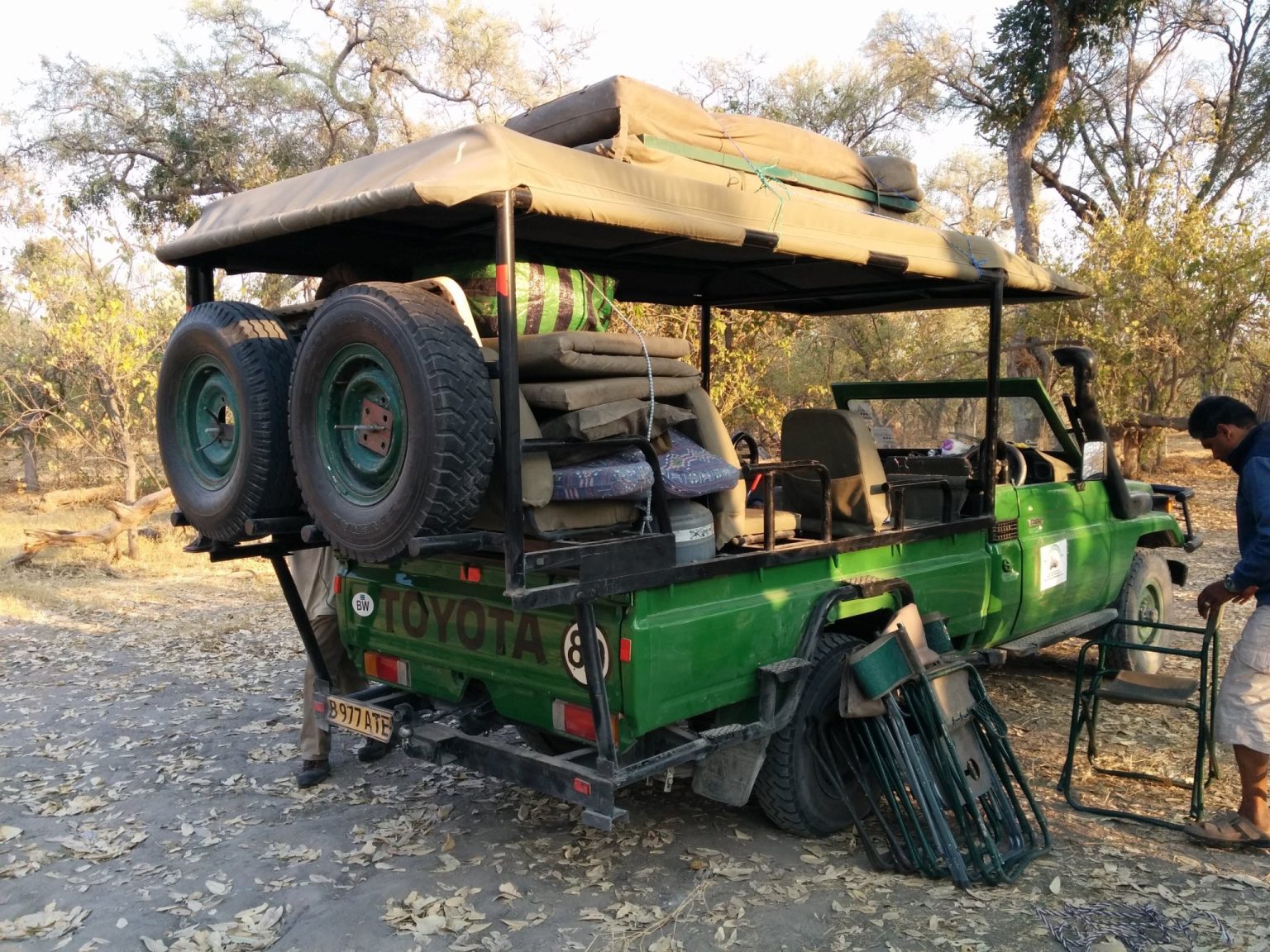
A Botswana budget safari costs about US$230 to US$600 per person per night when you travel by road: from US$1,625 for a seven night group camping route from Maun to Victoria Falls, US$2,425 to US$3,600 for a private mobile camping trip, and US$330 to US$760 a night at simple lodges in Khwai and Chobe. Most budget travellers spend seven to ten days on the Maun, Moremi, Savuti and Chobe route with a licensed operator or their own 4×4.
Botswana budget safari at a glance (US dollars, per person sharing).

Botswana Budget Safari Cost per Night: Camping, Mobile and Lodge Tours Compared
A budget safari in Botswana is priced per person for the whole route, so the easiest way to compare styles is to divide by the nights. These bands come from the operators’ and camps’ own rate pages.
| Budget style | Per night | Example |
|---|---|---|
| Group camping, bow tents | US$224 to US$265 | Bush Ways Buffalo, Fish Eagle |
| Private mobile, en suite tents | US$404 to US$598 | Lelobu, Bush Ways Serval |
| Road trip in lodges | US$420 to US$458 | Bush Ways Sable Safari |
| Khwai Guest House | US$330 to US$400 | Two activities included |
| Budget camps, Khwai and Chobe | US$435 to US$760 | Sango, Chobe Elephant Camp |
The bottom row looks dearer than mobile camping, yet those camp rates leave out activities, park fees and transfers, while the camping trips include all three. So does a budget Botswana safari really cost less than a fly in trip? By a long way. The cheapest fly in camps on Natural Selection’s published sheet start at US$595 a night in the green season and reach US$1,445 at Little Sable in July, before light aircraft.
Self drive sits outside the table because the costs are split: the vehicle, which two people share, then campsites, fees, fuel and food. It can be the cheapest option for two or four confident drivers and the dearest mistake for anyone who has never driven deep sand.
Why Botswana Is Hard to Do Cheaply, and Where Budget Safaris Save Money
Botswana is priced for the top of the market on purpose. The government’s high value, low volume tourism policy keeps the famous Okavango camps small, on private concessions and supplied by air, which is why a Botswana budget safari looks different from a budget trip in Kenya or Tanzania. There is little middle ground, and planners who sell only lodges often say the country does not suit small budgets at all. Our African safari cost guide shows where the cheaper alternatives lie.
The savings come from three places. Sleeping in tents at public campsites inside Moremi Game Reserve and Chobe National Park. Moving by road instead of by light aircraft, since Maun’s charter airlines such as Mack Air quote seats only on request. And sharing a guide, cook and Land Cruiser that cost the same for two people or six.
What you give up is honest to list. Night drives and off road tracking are not allowed in the national parks. You will see more vehicles at the big sightings around Xakanaxa or the Chobe riverfront. Showers may be a bucket on a tree. Yet lions walk through Savuti whether you paid for a suite or a dome tent.
Group Camping Safari Tours From Maun: Bush Ways and Overland Prices
A group camping safari is the lowest cost guided way to see northern Botswana. You join a small group in an open sided 4×4 or a converted truck and follow a fixed route on set departure dates, most often Maun to Moremi, Khwai, Savuti and Chobe, finishing in Kasane or at Victoria Falls.
On Bush Ways’ camping routes you sleep in bow tents of 2.1 by 2.1 metres on a 5 cm foam mattress, eat meals cooked in camp, and share ablutions the team sets up at each park campsite. The price includes the guide, a camp assistant, park fees for the activities on the route, transfers between destinations and Okavango Air Rescue cover. It leaves out drinks of any kind except filtered water, tea and coffee, airport transfers, the Victoria Falls entrance, visas, tips, and your sleeping bag and pillow. One line in the terms is worth reading twice: any increase in national park fees is passed on.
On the older participation model you help: guests pitch and strike their own tents, carry their bags and pitch in with washing up while the cook makes dinner over the fire. Trip reports from these routes repeat the same practical notes. Bring a proper sleeping bag, because winter nights from June to August drop close to freezing and morning drives in an open vehicle are cold. Pack a head torch with spare batteries, since the HATAB public campsites at Savuti have no facilities and the crew digs the toilet and hangs the shower. And pick an operator with long, recent reviews, because guiding quality varies more on budget tours than anywhere else in Botswana.
Private Mobile Camping Safari Costs: Lelobu, Bush Ways and Serviced Camps
A private mobile safari is the classic Botswana way to see Moremi, Khwai, Savuti and Chobe for less than fixed camps cost. A guide and crew drive ahead, set up a camp of walk in tents with real beds, and move it every two or three nights. You arrive to a camp already standing.
Group size is where a mobile safari wins. The vehicle, guide and crew are one fixed cost, so a family of four or six pays far less per head than a couple for the same private departure. Lelobu brings its own cooler and ice, and you bring the drinks, which keeps the bar bill to whatever you buy in Maun.
Mobile operators also hold their own campsite bookings, and in the dry season that alone can decide whether a trip happens. Forum regulars point out that mobile companies sometimes find space in Moremi and Khwai when self drivers have been told everything is full.
One thing surprises people. Campsites in Botswana’s parks are not fenced. Elephants feed in the trees beside the tents, hyenas check the kitchen, and lions sometimes walk through at night. Guides brief guests on the rules: stay inside the tent after dark, use the toilet before you zip up, and never keep food in the tent.
Botswana Self Drive Safari Costs: 4×4 Hire, Campsites and Park Fees
A Botswana self drive safari is the cheapest way into the parks for a pair of experienced drivers, and the most demanding. You rent a fully equipped 4×4, usually a Toyota Hilux or Land Cruiser with a rooftop tent, fridge, long range tank, cooking kit and recovery gear, and you plan, book and drive the whole route.

Self drive costs from a rental firm’s own rate sheet (Bushlore, Namibian dollars, equal to rand).
Campsites are the tight constraint, not cars. Each operator sells its own pitches, replies can be slow, and dry season sites go up to a year ahead. Gate staff ask to see your campsite voucher, and wild camping inside a park is not allowed. Park fees are best paid in advance at the department’s offices in Maun or Kasane, where card machines are more reliable than at the gates. No fuel is sold inside the parks, so fill in Maun, Kasane or Khwai village and carry spare water for the whole stretch.
Forum advice for first timers is consistent. Moremi’s tracks are manageable in the dry months with the right tyre pressures, but the deep sand between Savuti and Kachikau catches inexperienced drivers, and breakdowns happen where there is no phone signal. A gentler plan runs on tar from Maun to Nata and Kasane for the Chobe riverfront, then back to Maun for a loop through Khwai and Third Bridge. Travelling with a second vehicle is the sensible rule in remote areas.
Self drive also costs you a guide’s eyes. Leopard and wild dog sightings come far more often with someone reading tracks and alarm calls. Our self drive safaris in Africa guide covers vehicles, border paperwork and park rules in more depth.
Budget Lodge Safaris in Khwai and Chobe: Guest House and Camp Rates
A budget lodge safari suits travellers who want a bed and a roof without fly in camp rates. Bush Ways runs three of the best known budget properties and publishes their rates.
The two Khwai properties sit side by side in practice. Khwai Guest House runs as a guest house, with brick chalets, no high tea and drinks paid for locally, while Sango has six permanent tents with en suite bathrooms and a plunge pool. Both run on the edge of Moremi, and because Khwai is a community area run by the local trust, not the park, night drives are allowed. That makes it the best value way to get concession style game viewing.
Bush Ways’ pages show the rates in US dollars without saying whether they are per person or per room; on safari camps they are almost always per person sharing, but confirm when you book.
Cheap Okavango Delta Trips: Mokoro Safaris and Short Fly In Packages
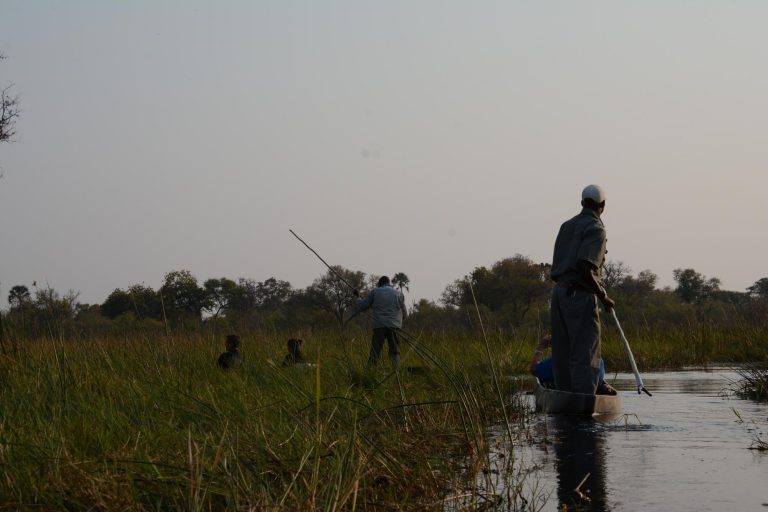
An Okavango Delta mokoro safari from Maun is the cheapest way onto Delta water. A road transfer takes you to a community poling station, then you spend hours in a dugout style canoe through reed channels, with walks on islands and, on overnight trips, a camp on an island.
Game on the eastern channels near Maun is thinner than in the deep Delta, and the polers’ route depends on water levels. The overnight trips are what most people remember: no engine noise, birds at eye level, and a fire on an island at night. Our Okavango Delta safari guide explains how the Delta’s zones differ.
Maun itself is the cheap base. Backpacker lodges and campsites such as Old Bridge Backpackers and Audi Camp sit on the Thamalakane River, and operators collect from them for mokoro day trips and trails.
Chobe Riverfront Safaris From Kasane on a Budget
A Chobe riverfront safari from Kasane is the easiest budget way to see big game in Botswana. Kasane has an airport, a tarred road from Victoria Falls, and lodges and guesthouses at every price. The riverfront section of Chobe National Park starts at the edge of town.
The big saving is that activities are sold one at a time. You can stay in a simple room or campsite in Kasane and book a three hour morning game drive and an afternoon boat cruise on the Chobe River, where elephant herds cross to the islands, buffalo graze the floodplain and hippos and crocodiles line the banks. Kasane operators quote those activities on request rather than publishing prices, so ask whether park entry is in the figure, since it often is not. At Chobe Elephant Camp, US$435 to US$640 a night covers meals and local drinks but not drives, cruises or park fees.
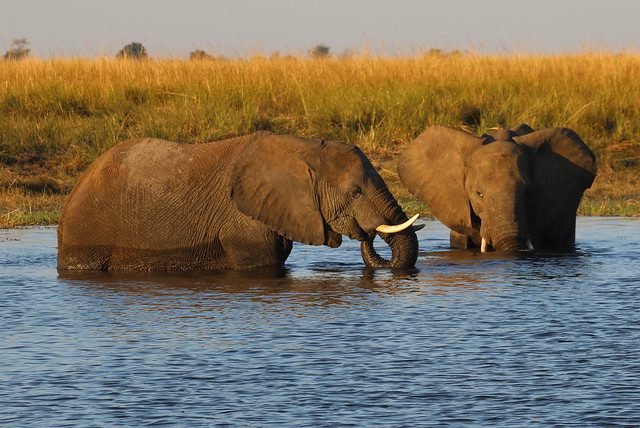
The riverfront is busy in the dry season, and night drives are not allowed inside the park. Chobe also pairs neatly with Victoria Falls, a short road transfer away across the Kazungula border; Bush Ways’ Buffalo and Sable routes both end there, and the Falls entrance is extra, listed at US$58 on Intrepid’s trip notes. Our Victoria Falls safari guide covers the Zambian side.
Makgadikgadi and Nxai Pan on the way. East of Maun, budget stops such as Planet Baobab near Gweta and Elephant Sands near Nata make cheap overnight breaks on the road to Kasane, and sell their own pan trips and meerkat outings. In the green season, zebra and wildebeest gather on the Makgadikgadi and Nxai Pan grasslands, which makes this a good addition to a wet season route. Bush Ways’ six night Kalahari Safari from US$1,590 covers the pans with a guide.
Budget Safari Seasons in Botswana: Green Season Prices and Trade Offs
Timing changes a budget safari in Botswana in two ways: the price, and what the tracks allow. The swing is far smaller than at fly in camps.
| Trip | November to May | June to October |
|---|---|---|
| Buffalo Safari, 7 nights | US$1,625 | US$1,780 |
| Serval Safari, 6 nights | US$2,680 | US$2,830 |
| Sable Safari, 10 nights | US$4,195 | US$4,580 |
| Sango, per night | US$435 to US$550 | US$760 |
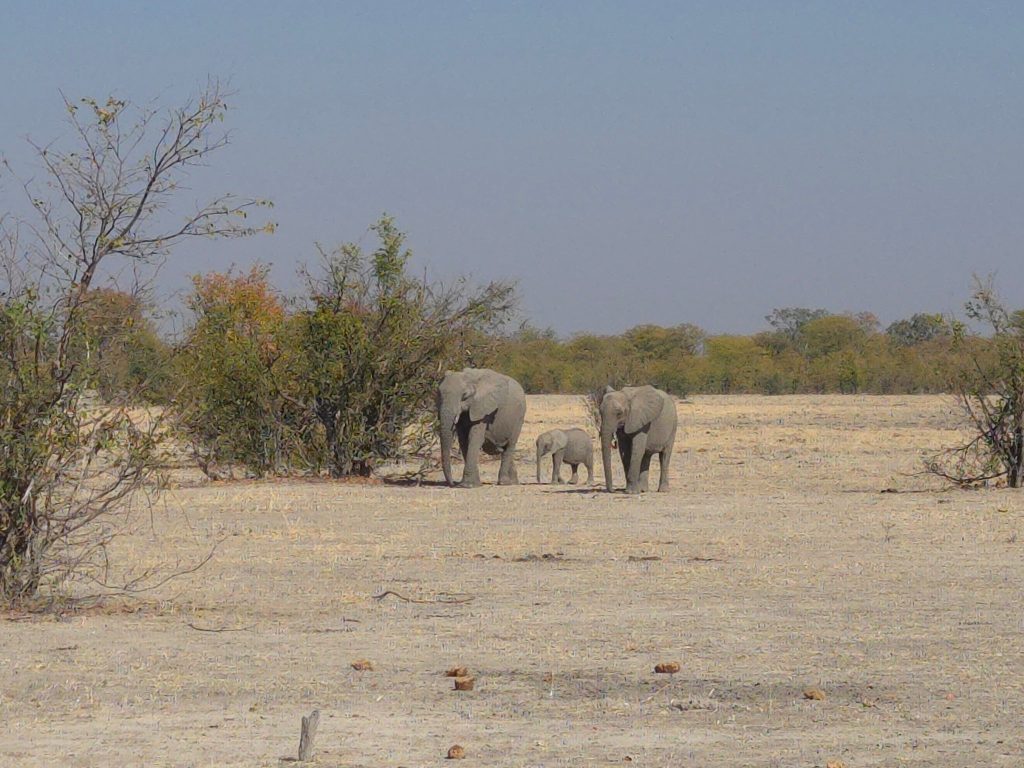
Self drivers should treat the green season with care, since the black soil around Savuti turns to clay after rain. Guided camping tours run through most of the rains, and their lower prices are real value if you can live with storms; the camping tour price drops by under 10 percent, so the bigger green season win is the empty campsites. Our best time to visit Botswana guide goes through the year month by month.
Hidden Costs on a Budget Safari: Tips, Drinks, Sleeping Bags and Visas
The quoted price of a budget Botswana safari leaves more out than a fly in camp rate does. These are the lines to add.
On a seven night camping tour, the group guide and crew minimums come to US$210 per person. Bring clean US dollar notes in small denominations, since card machines are rare in the bush. A soft bag helps too: one budget safari trip report notes that soft bags flying through Johannesburg may need to be wrapped, so set aside time for that on the way out.
Worked Example: A 7 Night Budget Botswana Safari Costed per Person
Here is a realistic budget safari in Botswana for one named trip shape: 7 nights, two people sharing, Bush Ways’ Buffalo Safari from Maun through Moremi, Savuti and the Chobe riverfront to Victoria Falls, travelling in July.
The camping trip costs about a fifth of the fly in week for the same Khwai and Moremi game, which is the whole case for travelling this way. What the extra money buys at the camp is a private concession, night drives and walks, not different animals.
Sample Budget Botswana Safari Routes and What a Quote Should Include
Three route shapes cover most budget Botswana safari trips, each with a priced example. Longer and mid range options are in our Botswana safari packages guide.
Check every budget quote for these lines.
One splurge is worth thinking about. Two or three nights at a fly in camp in the Delta, added to the end of a camping trip, gives you the deep water and the mokoro trips road routes cannot reach. Natural Selection’s Explorer camps such as Elephant Pan start at US$595 a night in the green season, and its six nights for the price of four offer, for three nights at each of two camps such as Elephant Pan and Meno a Kwena, applies outside July and August. Our luxury Botswana safari cost guide explains the camp tiers if you want to price that option.
Adding Victoria Falls or Gorilla Trekking to a Budget Botswana Trip
Victoria Falls is the natural extension, a short drive from Kasane, and the falls town has backpacker lodges, campsites and hotels. The Zimbabwe safari cost and Zambia safari cost pages cover the neighbouring parks, and Namibia is another self drive friendly neighbour, where a Bushlore hire crosses the border for NAD 800.
Mountain gorillas are a longer hop, via Johannesburg to Entebbe or Kigali. A Uganda gorilla permit costs US$800 for foreign non residents, US$700 for foreign residents and UGX 300,000 for East African citizens. Budget travellers can use the April, May and November low season rate of US$600, or US$500 for foreign residents, but those permits cannot be rescheduled, and all permits are paid in full at booking. Rwanda’s permit costs US$1,500, with the RDB 30 percent offer bringing it to US$1,050 from November to May when you add nights in Nyungwe or Akagera.
Our budget gorilla trekking in Uganda guide shows how to keep that leg cheap, and the gorilla trekking cost page gives the full trip budget. Permits sell out early, so secure them first through our gorilla permits page, and compare licensed Uganda operators on our gorilla safari companies list.
Botswana Budget Safari FAQ
How much does a budget safari in Botswana cost?
About US$230 to US$600 per person per night by road. Bush Ways’ seven night group camping route costs US$1,625 to US$1,780, Lelobu’s six night private mobile trip US$2,425, and simple lodges in Khwai and Chobe US$330 to US$760 a night. A realistic seven night total with tips is about US$1,890 to US$2,050.
How much should I budget for an African safari?
For Botswana on a budget, plan on about US$1,900 to US$2,700 per person for a week by road with tips, from a group camping tour to a private mobile trip, plus international flights. Budget lodge and camping safaris in East Africa cost less per day; our African safari cost guide compares countries.
When to visit Botswana for safari?
June to October gives the easiest game viewing and the highest prices. For a budget trip, April, May and November are good value, with Bush Ways’ lower rates and game still close to water. December to March is cheapest and green, with births and birds, but wet tracks.
Why can’t I wear white on safari?
You can, but it shows every speck of Kalahari dust and stands out to animals more than khaki, olive or tan. Dark blue and black attract tsetse flies in some areas. Our what to wear on safari guide covers colours and layers.
Is 70 too old to go on safari?
No. Plenty of people in their seventies and eighties go on safari in Botswana. On a camping tour, think about cold nights, climbing into a high vehicle and walking to a shared ablution in the dark; a lodge route such as Bush Ways’ Sable Safari or a stay at Khwai Guest House avoids the camping.
What does a self drive safari in Botswana cost?
Bushlore’s Hilux camper for two costs NAD 2,555 to NAD 4,090 a day on an 8 to 15 day hire, with a R8,000 to R8,300 surcharge to collect in Maun or Kasane. Add campsites, park fees paid to the wildlife department, fuel, food and cover.
Should I choose a group camping tour or a private mobile safari?
Solo travellers and couples on the tightest budget usually choose group camping at about US$230 to US$265 a night. Families and groups of four to six often get a private mobile safari for a similar price per head, with their own schedule and en suite tents.
Is camping in Botswana’s parks safe?
Yes, for people who follow the rules: stay in the tent after dark, keep food in the vehicle and never wander from camp. Campsites are unfenced, and guides give a safety briefing on the first night.
Do I need 4×4 experience to self drive in Botswana?
For Moremi, Khwai and Savuti, yes, or at least sand driving training before the trip. Novices do better on the tar route from Maun to Nata and Kasane plus a dry season loop through Khwai and Third Bridge, ideally with a second vehicle.
Can I see the Okavango Delta on a budget?
Yes, partly. Lelobu’s two night mokoro safari from Maun costs US$625, camping tours visit Moremi on the Delta’s eastern side, and a scenic flight adds the aerial view. The deep water of the inner Delta is mostly reached by fly in camps.
How far ahead should I book campsites or a camping tour?
For June to October, book Moremi, Khwai and Savuti campsites up to a year ahead. Group tours with fixed departures often have space three to six months out, and green season trips can be booked later.
Is Botswana or Kenya better for a budget safari?
Kenya and Tanzania give more wildlife for the money at the bottom of the market, with lodge and minibus safaris Botswana does not have. Botswana’s budget trips feel wilder, with unfenced camping and fewer people. Compare our Kenya safari cost and Tanzania safari cost guides, or the Tanzania budget camping safari page.
What a Budget Botswana Safari Is Really Like: Camps, Chores and Wildlife
The days run on the light. Coffee by the fire before dawn, a long morning drive while the animals are moving, back to camp for a late brunch, then a hot, slow middle of the day. The afternoon drive ends at a waterhole or on the riverbank as the sun drops, and dinner is cooked over coals. On a camping route you strike the tents every two or three days and the vehicle turns into a moving house, with the kitchen in the trailer.
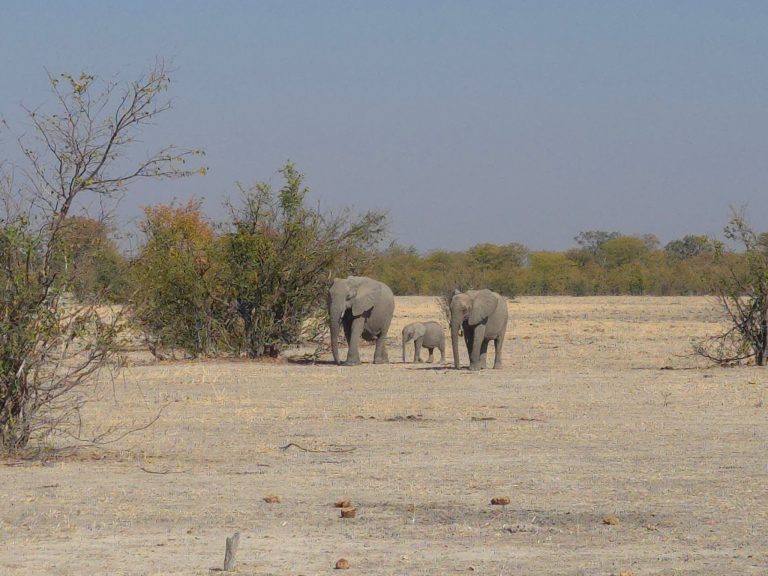
Nights are the part people talk about afterwards. Lions calling close to the tents at Savuti, hyenas sniffing round the kitchen, an elephant feeding a few metres from the canvas. Some find it unnerving on the first night and miss it by the last. The washing is a bucket shower or a cold tap, and the toilet may be a hole the crew dug that afternoon. None of that changes the sightings: the same leopards, wild dogs and breeding herds the fly in camps sell are on the public side of Moremi and Chobe too, seen from a vehicle that cost a fraction as much.
Budget Botswana Safari Areas at a Glance