An Amboseli safari costs about US$655 to US$950 per person for a three day, two night road trip from Nairobi with park fees, two sharing, and about US$1,040 to US$1,285 for two nights flying in to a lodge inside the park, before the US$90 daily park ticket. Most travellers book through a licensed Nairobi operator. Amboseli National Park is a Kenya Wildlife Service park in Kajiado County, below Kilimanjaro, famous for its elephant herds.
This page prices Amboseli on its own: every KWS fee, lodges by tier with their published rates, the road and the flight, a three day trip added up line by line, and the extras that sit outside a quote. All prices are in US dollars per person sharing unless stated. For the whole country, our Kenya safari cost guide covers the Mara, Samburu and the coast, and if Amboseli is one stop on a longer route, the 5 day Kenya safari and best safari in Kenya pages show how it fits.

Amboseli Safari Cost per Person for a Day Trip, 2 Day and 3 Day Tour
An Amboseli safari package bundles four things into one figure: the room and meals, the KWS ticket for each day in the park, the vehicle with fuel and a driver guide, and the operator’s margin. Here is what that bundle costs at each length, from operators’ and lodges’ own published rates.
| Trip shape | Per person | Basis |
|---|---|---|
| 3 days by road, 2 sharing | US$655 to 950 | Fees in |
| 3 days by road, 5 to 7 | US$520 to 790 | Fees in |
| 3 days by road, solo | US$940 to 1,400 | Fees in |
| 2 nights fly in, Ol Tukai | US$1,040 to 1,285 | Fees out |
| 1 night fly in, Ol Tukai | US$820 to 920 | Fees out |
| Conservancy camp, a night | US$508 to 793 | All in |
The road rows come from Perfect Wilderness Tours’ own rate card for a three day, two night trip from Nairobi in a pop roof safari van, with both park days, hotel pickup and full board included. Two people sharing pay US$655 at Penety Amboseli Resort or Nyati Safari Camp from January to June, US$705 at AA Lodge or Sentrim, and US$785 at Ol Tukai Lodge or Amboseli Serena. From July to December the same three tiers cost US$725, US$785 and US$950. Drinks and tips are extra.
The fly in rows are Ol Tukai Lodge’s published flying package: a return Safarilink ticket from Wilson, full board, two game drives a day and airstrip transfers, priced per person sharing. One night costs US$820 in April and May, US$855 from January to March and in November and December, and US$920 from June to October. Two nights cost US$1,040, US$1,150 and US$1,285 across the same seasons. Park fees are not included. The conservancy row is Porini Amboseli Camp in the Selenkay Conservancy on its six night rates, with meals, drinks, game drives, walks, night drives and conservancy fees all in.
A two day, one night road safari is the most sold shape, yet none of the operators we checked publish a separate card for it. Take one lodge night and one day’s ticket out of the three day figure and it usually lands a little above half the three day price, because the vehicle still has to make the same return drive from Nairobi.
The day trip is the shape with the least published pricing. Its fixed part is the US$90 ticket; the rest is a vehicle and driver for a fourteen hour day, plus lunch. Ask any operator offering one to state whether the ticket is inside the price, because a cheap day trip that leaves it out is not cheap.
Amboseli National Park Fees: KWS Conservation Fees, Package Tickets and Camping
Amboseli is a Kenya Wildlife Service (KWS) park, unlike the Masai Mara, which Narok County runs. KWS lists it with Lake Nakuru as a premium park, the top tier of its conservation fee schedule, and the ticket is valid for up to 24 hours from entry.
| Visitor | Adult | Child |
|---|---|---|
| Non resident | US$90 | US$45 |
| African citizen | US$50 | US$25 |
| Kenya resident | KSh 2,025 | KSh 1,050 |
| East African citizen | KSh 1,500 | KSh 750 |
| Tsavo West and Amboseli | US$150 | US$80 |
| Both Tsavos and Amboseli | US$215 | US$115 |
A KWS child is five to seventeen, and under fives enter free. The two package tickets are for non residents and save money on a southern circuit: Tsavo West on its own is US$80, so the pair costs US$20 less than buying both, and the three park ticket saves US$35. A vehicle adds KSh 600 a day for under six seats and KSh 1,500 for six to twelve. Payment is cashless through KWS’s online system, and most operators pay on your behalf.
The 24 hour rule is the one to plan around. A lodge stay of two nights that enters at nine on the first morning and leaves before nine on the third uses two tickets; leave at noon and the clock has run past 48 hours. Good operators time the exit drive so it fits.
This schedule was challenged in court by tourism operators soon after KWS launched it, so check the KWS website for the rate in force on your dates before you pay a balance. Conservancy camps outside the boundary charge their own conservancy fee, usually inside the camp rate, and their guests pay the KWS ticket only on days they drive into the park.
Camping and KWS houses are the cheapest beds in Amboseli. A non resident pays US$30 per adult and US$25 per child a night at the public campsite, and US$50 and US$25 at a special campsite, which also carries a KSh 10,000 weekly reservation fee. KWS also rents self catering houses inside the park: its rate card lists Simba and Chui Cottages at KSh 6,000 per unit a night, Kibo House at KSh 15,000 and the Kilimanjaro Guest House at KSh 20,000. Park fees come on top of all of them.
Amboseli Safari Lodge and Camp Prices by Tier
Accommodation is the largest line on an Amboseli safari tour above the cheapest level, and its location matters as much as its tier. These are the lodges’ own published rates.
Two quotes at the same lodge can still differ because “full board” means different things. Ol Tukai and Tortilis full board covers meals; Tortilis adds house wine, beer and laundry, while Ol Tukai charges for drinks. Porini folds almost everything in, so its bill on departure is mostly tips. Other camps around the park, among them Elerai Camp, Tawi Lodge and Ol Donyo Lodge in the Chyulu Hills, quote through operators.
On a two day trip, sleeping inside the park or right by a gate saves the most time. On three days or more, a conservancy camp adds walks and night drives that park rules do not allow, and the conservancy nights also save the KWS ticket. Our safari lodges section has more on choosing a camp.
Road Safari or Fly In Safari: Amboseli Transport Costs
Transport decides how much of a short Amboseli safari trip you spend watching elephants. By road from Nairobi the drive takes four to five hours each way; by air it takes about 45 minutes.
The Land Cruiser upgrade is worth it in the long rains. From March to May the old lake bed turns to black mud, and a minivan can sit stuck for hours, which is why many travellers who have done both say the vehicle matters more than the lodge in those months. In the dry season a van with a pop roof is fine, provided every guest gets a window seat. Split between two people, the upgrade is US$150 each.
Flying makes sense on a two or three day trip. It saves two road days and returns the hours of a morning drive. Seen another way, the Ol Tukai flying package for two nights, with its two park tickets added, costs about US$435 to US$545 more per person than the same lodge by road on the Perfect Wilderness card, and for that you get back most of two days.
The Madaraka Express train from Nairobi to Emali is a middle path. Ol Tukai sells an SGR package with return transfers from Emali station and full board, priced on request for groups of four. The train fare itself is booked separately with Kenya Railways.
Worked Example: A Three Day Fly In Amboseli Safari Costed per Person
Here is one realistic Amboseli safari built line by line: two people sharing, two nights at Ol Tukai Lodge inside the park on its flying package, flying from Wilson, in February. Each figure comes from the sections above.
Now change one line at a time. Travelling alone adds Ol Tukai’s single supplement of US$100 a night in February, or US$200 over two nights. A Maasai village visit adds about US$85 at Tortilis’ published price, less on budget packages. If the flight leaves after your second 24 hours inside the park have run out, a third ticket adds US$90.
By road the same lodge costs less. On the Perfect Wilderness card, three days at Ol Tukai or Serena with both park days included is US$785 per person from January to June or US$950 from July; add the same tips, drinks, eTA and cover and the total lands near US$935 or US$1,100. The gap of about US$545 in February buys back two road days. Our 3 day Kenya safari page shows how a road trip of this length is paced.
Amboseli Safari Prices by Season and Kilimanjaro Visibility
Season moves Amboseli safari prices more than anything except the tier. The KWS ticket stays at US$90 all year, so the swings come from the lodges and the operators.
| Months | Ol Tukai pp | Tortilis pp | Road 3 days |
|---|---|---|---|
| Jan to Mar | US$290 | US$491 | US$655 to 785 |
| Apr to May | US$190 | US$317 | US$655 to 785 |
| June | US$325 | US$491 | US$655 to 785 |
| Jul to Oct | US$325 | US$715 | US$725 to 950 |
| Nov to mid Dec | US$290 | US$491 | US$725 to 950 |
| Christmas | US$325 | US$715 | Supplement |
The lodge columns are full board per person sharing a double, and the road column is two people sharing on the Perfect Wilderness card, park fees in. Both Ol Tukai and the operators add Christmas supplements, and Ol Tukai sets a three night minimum over the festive dates.
January and February are the quiet favourite. Lodges sit on mid season rates, the country is green after the short rains and the mountain shows most often; forum regulars who have been in several seasons single out these months for the clearest mornings. June is a value window: dry, with the road card still on its lower rate and Tortilis on mid season. July to October is the dearest stretch, when Tortilis climbs to US$715 and the road card to its higher band; the elephants gather around the swamps and game viewing is easiest, but dust hangs in the air by late afternoon and the mountain is often lost in haze. April and May are cheapest, with Ol Tukai at US$190 and Tortilis at US$317, yet Porini Amboseli closes, roads turn to mud and Kilimanjaro is rarely seen. November and early December bring short showers and the lower lodge rate.
Whatever the month, Kilimanjaro is most likely in the first hour after sunrise and sometimes again at sunset. Trip reports from day trippers keep describing a mountain that played hide and seek all day. A night in the park is the cheapest way to raise the odds.
Day Trip, 2 Day or 3 Day Amboseli Safari: What Each Length Costs and Gets You
Picking the length of your Amboseli safari tour matters more than picking the lodge, because the road from Nairobi eats four to five hours each way and the elephants are best at dawn and late afternoon.
These are the trip shapes Nairobi operators sell most, with what each one spends its days on.
On longer routes, a 4 or 5 day Amboseli and Tsavo safari adds two nights in Tsavo West for Mzima Springs and the Shetani lava flows before heading to Mombasa or Diani, using the US$150 combined ticket for the two parks. If you can add one night anywhere on a Kenya trip, Amboseli repays it. Our guide to the best African safari countries sets Kenya’s parks against the rest of the continent.
Group Size, Private Vehicles, Children and the Single Supplement on an Amboseli Safari
Group size explains most of the gap between a cheap Amboseli group safari and a private one. The vehicle, fuel and driver guide cost the operator the same whether one person sits in the van or seven.
A family of four on a private trip pays less per person than a couple, and a solo traveller pays about US$255 to US$470 more than each half of a couple. Joining a shared group trip is the usual way round it, at the cost of fixed dates and less say over how long you stay at a sighting.
Single supplements at the lodges run US$80 to US$150 a night on Ol Tukai’s flying package and US$130 on its ground package. At Porini’s camps the supplement is US$180 to US$210 a night. Tortilis prices a single room outright at US$476 to US$1,073, against US$317 to US$715 per person sharing.
Children are cheaper than most parents expect. KWS charges US$45 for a child of five to seventeen, and under fives enter free. Ol Tukai charges children three to eleven half the rack rate when sharing with parents and 70 percent on its packages, and under threes stay free. Porini charges a child aged eight to sixteen sharing with two adults 60 percent of the adult rate and does not take children under eight, so families with young children usually choose the park lodges, which also have pools. Our Kenya family safari guide covers ages and pacing.
Private vehicles at the camps are an extra line too. At Porini a vehicle to yourself costs US$375 a day with a two day minimum, which photographers often pay so they can wait at a sighting. Several trip reports describe a cluster of vans around one lion near the main roads, which is the case for the conservancy camps.
Hidden Costs on an Amboseli Safari: Tips, Visas, Activities and Extras
Beyond the package, a few costs catch people out on an Amboseli safari trip. These are the ones to budget for.
Balloon flights are advertised for Amboseli by some operators, but Tortilis lists them as on request with no published price, so ask for a written figure before you plan around one.
Carry clean, recent US dollar notes for tips, since card payments can carry a surcharge. Bring a buff or scarf and a cover for your camera, because dry season dust in Amboseli is fine and constant and gets into everything on an open roof drive; our best lens for safari and binoculars for safari guides cover optics that cope with it. A reasonable rule from experienced travellers: keep a buffer of 15 to 20 percent on top of the quote for tips and extras.
Booking an Amboseli Safari Tour and Checking the Quote
Two Amboseli safari packages that look alike can be priced far apart, and the gap almost always comes from a handful of lines. Ask every operator to itemise the quote, then check these points.
Who is the best safari company in Kenya? There is no single answer, and we do not rank one above the rest. A sound choice holds a licence from Kenya’s Tourism Regulatory Authority, ideally belongs to KATO, the Kenya Association of Tour Operators, puts camp names rather than “or similar” in writing, and takes payment to a company account. A local operator is usually cheaper than an overseas agent because there is one margin, not two. Our Kenya safari companies page explains how to check a licence, and the budget Kenya safari and luxury Kenya safari guides cover the two ends of the market.
Book early for July to October and Christmas, when lodges inside the park fill first. For April, May and early June, shorter notice is usually fine, and late offers are common.
Adding Amboseli to the Mara, Tsavo or a Gorilla Trek: Combined Trip Costs
Amboseli rarely stands alone, and each pairing adds its own fixed costs to an Amboseli safari.
With the Masai Mara, you add the reserve ticket of US$100 per adult a day from January to June and US$200 from July to December, on a 12 hour ticket run by Narok County. There is no direct road between the two parks: the drive goes through or round Nairobi and takes most of a day, so most good itineraries either break it at Lake Naivasha or Nakuru or fly, at US$283 one way from Wilson to the Mara on Gamewatchers’ fares. Our Masai Mara safari guide and the Masai Mara migration safari page cover that half, and the 7 day Kenya safari joins Amboseli, Lake Nakuru and the Mara.
With Tsavo West, Amboseli makes a south Kenya loop that ends on the beach, and the US$150 combined ticket or the US$215 three park ticket keeps the fees down. Tsavo is three to four hours away by road.
With gorilla trekking, a flight from Nairobi to Entebbe or Kigali adds Bwindi or Volcanoes in three or four days. The permit is the big line: US$800 in Uganda for foreign non residents, US$600 in April, May and November, and US$1,500 in Rwanda, or US$1,050 from November to May on the RDB offer with Nyungwe or Akagera nights. See the Bwindi gorilla trekking guide, how to book Uganda gorilla permits and the Uganda and Kenya safari cost page for the joined budget.
From Tanzania, Amboseli sits a short drive from the Namanga border post, which makes it a natural link between Nairobi and Arusha on a two country trip; our Tanzania safari cost guide prices the other side.
Amboseli Safari Cost Questions
How much does an Amboseli safari cost?
On operators’ and lodges’ own rates, about US$655 to US$950 per person for a three day road trip from Nairobi with park fees, two sharing, and about US$1,040 to US$1,285 for two nights flying in to Ol Tukai Lodge, plus US$90 a day in park fees. Conservancy camps such as Porini Amboseli cost US$508 to US$793 a night all in. A three day fly in trip with tips and extras comes to about US$1,370 to US$1,615.
How many days are enough for Amboseli National Park?
Two nights is the sweet spot: two dawn drives, a full middle day and a fair chance of a clear Kilimanjaro. One night works if time is tight. Three nights suits a conservancy stay with walks and night drives. Amboseli covers about 392 square kilometres, so more time adds depth rather than new ground.
Can you see the Big 5 in Amboseli?
No. Amboseli has no rhinos, and leopards are rarely seen. You will very likely see elephant and buffalo, and lion often. Pair it with Lake Nakuru, which has rhinos, or the Masai Mara for the full set.
What are the Amboseli park entry fees?
Kenya Wildlife Service publishes US$90 per non resident adult and US$45 per child for 24 hours; African citizens pay US$50 and US$25, East African citizens KSh 1,500 and Kenya residents KSh 2,025 per adult. Under fives enter free. The schedule was challenged in court after it launched, so confirm the rate on the KWS website before you travel.
What is the best safari company in Kenya?
There is no single best one. Shortlist three operators licensed by the Tourism Regulatory Authority, ideally KATO members, ask each for the same itemised quote and compare camp names, vehicle type and whether park fees are inside the price. Our Kenya safari companies list is a starting point.
Is an Amboseli day trip from Nairobi worth it?
Only if you have no other option. It means eight or more hours in the vehicle for about four hours in the park, mostly in the midday heat when the mountain is clouded, and you still pay the full US$90 ticket. One night makes a much better trip.
Which is better, Kruger or Masai Mara?
They suit different trips. The Mara has denser big cat viewing and the migration from about July to October, on a US$100 or US$200 daily ticket; Kruger is larger, has rhinos and allows self drive on tarred roads. Many Kenya trips pair the Mara with Amboseli for elephants. Our Masai Mara safari cost page prices the Kenyan side.
Should I choose Amboseli or the Masai Mara?
For elephants and mountain views, Amboseli. For big cats and the migration, the Mara. With five days or more, do both, flying one leg to avoid the long drive between them.
When will I see Kilimanjaro from Amboseli?
Early morning, most often, and sometimes again at sunset. The mountain clouds over by mid morning on many days. January, February and the dry months from June to October give the best odds, but no month guarantees a view.
Can I drive myself on an Amboseli safari?
You can, in a suitable 4×4, since Amboseli is a Kenya Wildlife Service park. You pay the US$90 ticket plus KSh 600 a day for the car. Stay on marked tracks, keep 20 metres from animals and plan around the 6pm gate closing. Most visitors still find a driver guide worth it for spotting and for the wet season mud; our self drive safaris guide covers the paperwork.
Is Amboseli good for a family safari with children?
Yes. The open plains make animals easy for small children to see, drives from park lodges are short, children pay half or less at Ol Tukai, and under fives enter the park free. The dust and midday heat are the main drawbacks, so plan drives early and late.
What an Amboseli Safari Is Like: Elephants, Swamps and Kilimanjaro
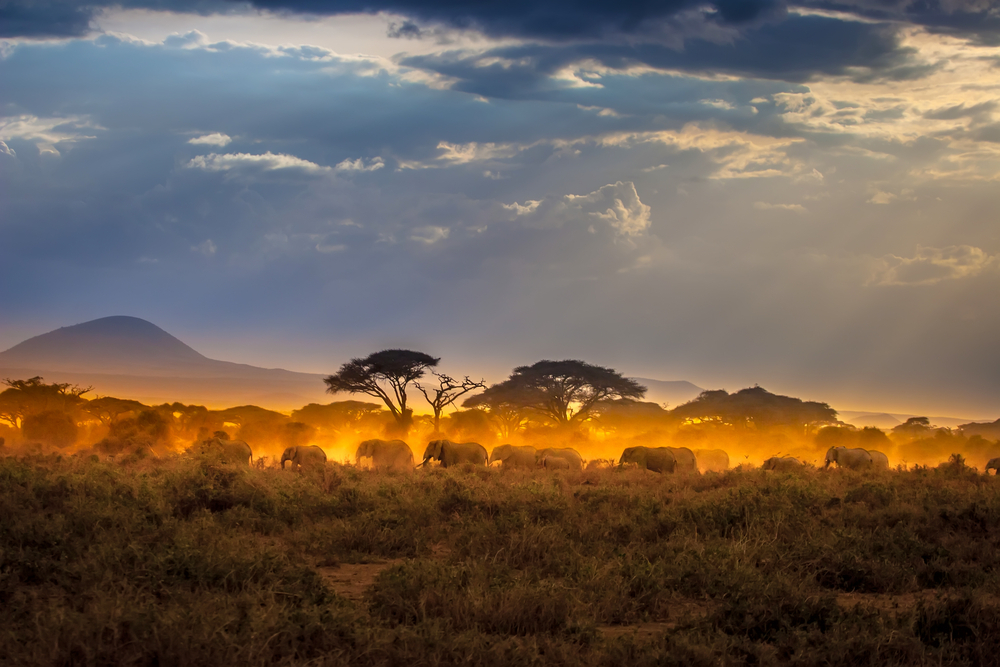
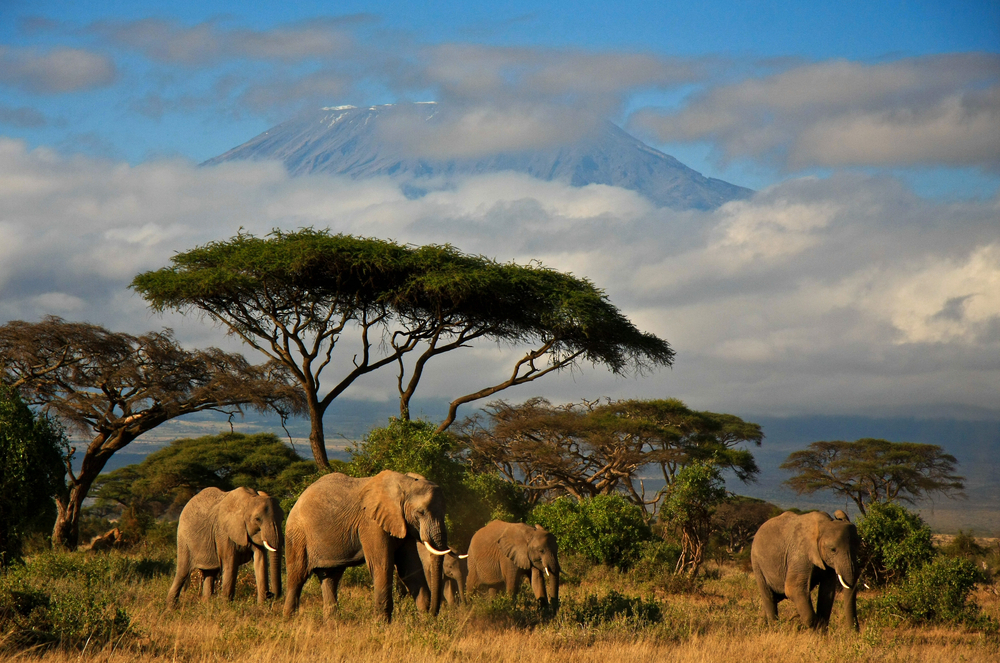
The Amboseli elephant safari is the reason most people come. The park covers about 392 square kilometres of flat, dry country, much of it an old lake bed that floods briefly in heavy rain and bakes to dust the rest of the year. What keeps it alive is water from Kilimanjaro: snowmelt and rain soak into the mountain and resurface as springs, feeding a chain of permanent swamps across the middle of the park, which is why game stays through droughts that empty other parks.
Elephants live by that water. Family herds spend the night in the bush outside the swamps and walk in each morning, then wade out again in the late afternoon. Because the country is so open, you watch them for long stretches rather than in glimpses through trees. Big bulls with heavy tusks are part of the draw; Amboseli’s best known super tusker, Craig, died of natural causes at 54, and guides still point out the bulls that may follow him. These are among the most studied elephants in Africa: the Amboseli Elephant Research Project, started in 1972 by Cynthia Moss, has followed individual families for decades, and many animals are known by name.
Other game is good too. Lion, cheetah, spotted hyena, buffalo, Maasai giraffe, zebra, wildebeest and hippo are all regular, and the swamps hold pelicans, herons and other waterbirds. Kenya Wildlife Service lists over 400 bird species, about 40 of them raptors. There are no rhinos, and leopard sightings are rare.
An Amboseli game drive follows the water. Most guides run a loop around the central swamps, where elephants feed belly deep in the reeds and hippos rest in open pools; the Ol Okenya swamp and the wetlands near the lodges are the usual first stops. Observation Hill, known locally as Nomatior, is one of the few places you can leave the vehicle, with a view over the swamps and the dry lake bed. To the north, the Sinet Delta spreads seasonal water into acacia woodland, good for birding and giraffe, and after good rains flamingos gather on Lake Amboseli, where mirages and dust devils rise in the heat.
Park rules shape the day. Off road driving is not allowed, vehicles keep at least 20 metres from wildlife, the speed limit is 40 kilometres an hour and visitors stay inside the vehicle except at designated points. Gates open at 6am and close at 6pm for anyone not staying inside.
The land has a long human story. The explorer Joseph Thomson passed through in 1883, the area became part of a Maasai game reserve under colonial rule, a reserve in 1948 and a national park in 1974. Maasai families still graze cattle on the group ranches around the boundary, and the conservancies there, from Selenkay to Kimana, keep corridors open for elephants moving in and out of the park. Kilimanjaro itself is the backdrop, not part of the park: it stands across the border in Tanzania and is often hidden by cloud from mid morning. Many visitors see it only at dawn. Some see it not at all.
Getting to Amboseli for Your Safari: Roads, Gates and Distances
| Route | By road | By air |
|---|---|---|
| Nairobi | 4 to 5 hrs | About 45 min |
| Masai Mara | About 10 hrs | About 1 hr |
| Tsavo West | 3 to 4 hrs | Not usual |
| Mombasa | 7 to 9 hrs | Via Nairobi |
By road from Nairobi, there are two routes. The Namanga road runs south on tarmac to the Tanzanian border town of Namanga, then on murram to Meshanani gate, about 220 kilometres in all. The Mombasa highway route turns off at Emali onto the Loitokitok road for the Iremito and Kimana gates, about 204 kilometres to Iremito. Nairobi traffic decides whether the trip takes four hours or five.
By train, the Madaraka Express runs from Nairobi to Emali, where a pre arranged vehicle can collect you for the drive south. By air, scheduled light aircraft fly from Wilson Airport to the Amboseli and Kimana airstrips in about 45 minutes, with a morning service that connects on to the Mara. Bags are limited to a soft holdall of about fifteen kilograms; see our safari duffel bag guide.
Pack for dust and cool mornings: neutral layers, a fleece for the dawn drive, a wide brimmed hat and sun cream. Our guide to what to wear on safari and gorilla treks covers the rest, and the East Africa tourist visa page explains the entry paperwork if you are crossing into Uganda or Rwanda afterwards.