A Madagascar trip cost runs from about €1,000 to €1,500 per person for 8 to 12 days with a local ground operator, about US$2,850 to US$4,900 for a 12 to 14 day international small group tour, and €9,400 or more for a private luxury tour, before international flights. Most visitors book a Madagascar tour through a licensed operator. Madagascar is the large Indian Ocean island off Mozambique, famous for lemurs and baobabs.
Holding a quote and wondering if it is fair? This page breaks the price into its parts, with the published rates behind each one. For the regions, parks and wildlife, read our full Madagascar tours guide. To see how the days fit together, our 10 to 14 day Madagascar itinerary lays out four routes day by day.
What a Madagascar Trip Costs Per Person: Local, Group and Luxury Tour Prices
The spread is wide because three very different products all get called a Madagascar tour package. A local operator in Antananarivo sells you its own vehicle, driver and contract hotel rates. An international company resells a similar trip with a tour leader, its own margin and financial protection at home. A luxury specialist adds private flights and island lodges priced like the top camps in Botswana.
Here is what operators publish on their own rate pages for common trip shapes, per person sharing, before international flights:
| Trip shape | Days | Per person |
|---|---|---|
| Local group, RN7 | 12 | from €1,060 |
| Local private, RN7 | 8 | €1,025 to €1,510 |
| Local private, east | 10 | €600 to €2,450 |
| Intl group, west | 12 | US$2,848 to 3,350 |
| Intl group, RN7 | 14 | US$3,912 to 4,890 |
| Intl group, island | 25 | from US$7,275 |
| Private luxury | 14 | €9,400 to €10,700 |
The local rows come from Great Madagascar Tours and Ortour, both based in Antananarivo. The 12 day group price assumes at least four travellers sharing a private guide, and the 8 day private price assumes two. The international rows are Intrepid’s three Madagascar departures, where the lower figure is a last minute sale price and the higher one the full fare. The luxury row is Ortour’s 14 day VIP tour, which runs from May to November.
Why does a local 12 day trip cost a third of an international one? Partly margin, partly what is inside. The local RN7 group price includes the vehicle, fuel, an English speaking guide, park and guide fees and the Toliara flight back to the capital. Intrepid’s 14 day RN7 trip includes 13 breakfasts, 4 lunches and 1 dinner, so most meals are yours to buy. Read the inclusions before you compare totals, and check who holds your money if the trip is cancelled.
How a Madagascar Tour Price Is Built: Vehicle, Driver and Fuel Costs
Every private Madagascar tour is the same handful of costs with a margin on top. Learn the pieces and any quote becomes easy to read.
Here is the quirk that catches people. The vehicle costs the same whether one person rides in it or four. At €50 a day, a 14 day hire is €700 before fuel: €700 for a solo traveller, €350 each for a couple, €175 each for four friends. That single line is why a couple pays far less per head than someone travelling alone.
Road days cost money too. A rest day in Isalo and a ten hour transfer cost the same in vehicle hire. Trip reports say it again and again: people who tried to cover the whole island in two weeks paid for hours of tarmac and mud, and wished they had chosen one region.
One warning from travellers who took the cheapest private quote: very low prices sometimes mean an older vehicle, a substitute car after a breakdown, or a driver with little English. Ask which vehicle you will get, how old it is, and what happens if it breaks down far from a town. The better hire companies promise a replacement vehicle in writing. Then there is the taxi brousse, the shared minibus network that links every town. It costs a fraction of a private car, but several governments advise visitors to avoid it because of crashes and robbery.
Madagascar National Park Fees and Lemur Tour Guide Costs
Madagascar National Parks runs the main protected areas, and entry is charged per person per day, in ariary cash, at the park office. Its published tariff splits the parks into three tiers, with the busiest at the top. A child rate of 25,000 ariary applies to foreign children at every tier.
| Tier | Example parks | Adult now | Announced |
|---|---|---|---|
| Exceptional | Isalo, Ankarana | 65,000 Ar | 130,000 Ar |
| Flagship | Tsingy, Ranomafana | 55,000 Ar | 110,000 Ar |
| Nature | Andasibe, Mantadia | 45,000 Ar | 90,000 Ar |
At about 4,500 ariary to the dollar, today’s rates work out at roughly US$10 to US$14 a day. The parks authority has announced a doubling across every visitor category. The start was reportedly pushed back after objections from tour operators, and it is now reported as due from 1 November, which would put the top tier at about US$29 a day. Many operators quote park fees as a separate line for exactly this reason, so check whether yours are inside the price and at which rate.
Every lemur tour inside a national park needs a registered local guide. Guides are not park staff, so each park sets its own guide rates, charged per circuit rather than per person: a short indri walk in Andasibe costs less than a full day in Mantadia, and night walks are a separate fee. Ranomafana also collects a commune tax of 5,000 ariary from each foreign visitor before the circuits. Agree on the circuit and the price before you set off; one trip report describes a guide adding an extra loop and charging for it at the end.
Community reserves such as Anja near Ambalavao charge their own entry, with the money going to the village, and private reserves such as Berenty, Palmarium or Vakona set their own prices. At the Tsingy de Bemaraha a helmet charge applies on the Grand Tsingy. Our guides to lemur tours in Madagascar and the primates of Madagascar explain which parks are worth paying for if lemurs are the priority.

Domestic Flight Prices and Baggage Rules on a Madagascar Trip
Flights decide the shape of a Madagascar trip budget more than lodges do. Madagascar Airlines, the national carrier that absorbed the old Tsaradia domestic brand, links Ivato airport in Antananarivo with Morondava, Toliara, Fort Dauphin, Diego Suarez, Nosy Be, Sainte Marie and other towns.
Those are the airline’s own “from” fares on its cheapest economy class; flexible fares and busy dates cost more. The trade is simple. Antananarivo to Morondava is about two long days on the road and an hour in the air, and on a short trip the hour is worth paying for.
Baggage is better than people expect on most fares: Madagascar Airlines allows 20 kg in the hold and 5 kg in the cabin on its economy fares, while the lightest fare carries no hold bag at all, so check which one your operator booked. Change rules vary by fare class too, with Great Madagascar Tours listing a €18 per person penalty to change some tickets once issued.
Morondava flights fill early in July and August. One traveller who booked in May still found August seats gone, so lock in the flights as soon as the route is agreed.
Madagascar Tour Lodge and Hotel Prices by Budget Tier
Accommodation is where a Madagascar holiday cost is won or lost. By East African safari standards most rooms are cheap. The top end is the exception.
The cleanest way to see the gap is one operator’s price for the same route at three hotel standards. Great Madagascar Tours sells its private 8 day RN7 trip for two at about €1,025 per person with budget hotels, €1,180 mid range and €1,510 with its luxury hotel option. Spread over seven nights, the step from budget to luxury is roughly €70 per person a night.
Many small hotels quote more online than locally, and a good operator often pays contract rates below both. Electricity cuts happen at every level, so a safari battery pack or solar charger earns its place in the bag.
Madagascar Travel Seasons and How Trip Prices Move
The season changes a Madagascar trip cost less than it does in the Masai Mara, but it still matters. Luxury rates often hold all year: Miavana’s published rate is the same in every month. The movement comes from availability, sale prices and which routes are open.
| Month | East and north | West and south | Price level |
|---|---|---|---|
| Jan to Mar | Wet, cyclones | Hot, wet | Low, many closed |
| Apr to May | Drying | Green, warm | Low |
| Jun | Cool, showers | Dry, mild | Medium |
| Jul to Aug | Cool, showers | Dry, cool | Peak |
| Sep | Drier | Dry, warm | High |
| Oct to Nov | Dry, warm | Hot, dry | High |
| Dec | Rains begin | Hot, rains due | Medium |
January to March is cheap for a reason: roads wash out, the western Tsingy road closes and some lodges shut, which is why luxury tours such as Ortour’s VIP circuit run only from May to November. April and May are the value months, though the Tsingy may not open until late May. Madagascar National Parks names May to October as the best window for wildlife at Mantadia, and September to November brings baby lemurs and active chameleons, so it books early and rarely discounts.
Discounts do appear on group departures with spare seats. Intrepid’s 14 day RN7 trip showed a last minute price of US$3,912 against a full fare of US$4,890 on a late October start, a saving of about a fifth. For month by month detail by region, see the seasons section of our Madagascar tours guide.
Worked Total: What a Madagascar Tour Costs for a Couple
Prices only make sense added up. This total uses a real private Madagascar tour on the RN7, the classic road south from Antananarivo through Andasibe, Ranomafana and Isalo to the coast near Toliara, for two people sharing at mid range hotels.
Stretch the same idea to 14 days on an international group tour and the arithmetic changes shape. Intrepid’s Madagascar Adventure costs US$3,912 to US$4,890, the 15 day eVisa is US$35, an airport taxi to the joining hotel is about 90,000 ariary if you do not book a transfer, and an optional visit to the Lemurs’ Park outside the capital is 80,000 ariary. That comes to roughly US$3,970 to US$4,950 before the 9 or so lunches and 12 dinners the trip leaves to you, a single supplement if you want your own room, and flights.
Three Madagascar Trip Budgets and What Each Quote Should Include
These three Madagascar tour shapes cover what most people book. Use them to check a quote line by line, with the published price beside each. Our Madagascar itinerary page has the full day plans, and the RN7 road trip itinerary covers the most booked route stop by stop.
Ask for itemised quotes from at least three operators on the same lodges and nights. One cheaper line usually means something is missing.
Hidden Costs on a Madagascar Tour: Visa, Cash, Tips and Extras
The visa first. The official eVisa portal charges €30 for up to 15 days, €35 for 30 days, €40 for 60 days and €50 for 90 days, or US$35, US$41, US$47 and US$59 if you pay in dollars. The portal states that the price on arrival is the same, so buying online saves queue time rather than money. Some older guides still describe a free short stay with a small border fee; that is out of date.
Cash. Some costs never reach a Madagascar safari quote, and in a cash economy they need planning. The ariary cannot be bought outside Madagascar. Parks, guides, markets and most restaurants take cash only. ATMs cap each withdrawal and charge a fee, small town machines run dry, and Visa cards are more widely accepted than Mastercard, mostly at larger hotels in the capital. Withdraw in Antananarivo, carry clean euro notes as a backup, and keep a thick stack of small notes, because guides rarely have change.
Tips are expected by driver guides, park guides, porters and lodge staff, though no operator we checked publishes a set amount; Intrepid’s advice is that tipping is not compulsory but that guides, drivers and porters expect it. The custom is to tip per vehicle or per group rather than per person, and more when the driver has also guided. Give it in ariary at the end; euros and dollars are hard to use outside the capital.
Add travel insurance with medical evacuation cover, malaria tablets, a local SIM or eSIM, laundry charged per item at lodges, and drinks, which are rarely included. Whale watching off Sainte Marie from about July to September, snorkelling and scuba trips from Nosy Be, a boat and skipper to reach the reef surf breaks off Ifaty, the Palmarium aye aye night visit, a canoe on the Manambolo gorge and community walks all cost extra. Gear bought at home saves money on the ground: a head torch for night walks, decent safari binoculars and a strong insect repellent for Africa are hard to find in Madagascar. Our African safari packing list covers the rest. Souvenirs such as vanilla, silk lambas and wood carvings are cheap, but customs checks apply on departure, so keep receipts and avoid anything made from protected wood or wildlife.
Ways to Pay Less on a Madagascar Trip
The biggest saving is buying direct. A Madagascar tour from a local operator in Antananarivo costs roughly a quarter to a third of an international group tour on the same road, because you skip a layer of margin. The trade is less protection if something goes wrong, so pay deposits by card and read the cancellation terms.
Fill the vehicle. With hire from about €50 a day, four people sharing a car pay a quarter each of what a solo traveller pays for that line. Group departures that let you “join a group” on your own dates do the same for single travellers.
Choose one region. Each domestic flight saves days but costs €90 or more per person one way, while a single region by road keeps fuel and flights down. Travel in April, May or early June when lodges are quieter. Book the cheapest flight fare only if you are sure of your dates, because changes cost €18 or more per ticket. And watch for last minute group prices, which can take a fifth off the fare on departures with empty seats.
Adding Gorilla Trekking to a Madagascar Trip: Permit Costs and Flights
Madagascar has lemurs but no apes, so many travellers pair it with gorilla trekking in Bwindi or Volcanoes National Park. Flights connect through Nairobi on Kenya Airways or Addis Ababa on Ethiopian Airlines, and June to September is dry in both places.
The gorilla permit is the single largest item and sells out before anything else, so secure it first. A Uganda permit costs US$800 for foreign non residents, or US$600 in the April, May and November low season, when permits cannot be rescheduled. Rwanda charges US$1,500, cut to US$1,050 under the RDB 30% offer from November to May when you add nights in Nyungwe or Akagera. One Uganda permit costs about as much as a whole budget week on the RN7.
Order matters at present. Madagascar refuses entry to foreign visitors who have been in an Ebola affected country in the previous 21 days and has not published a fixed list, so the safer plan is Madagascar first, then Uganda or Rwanda. A yellow fever certificate is also required when you arrive from a country with yellow fever risk, which includes Uganda and Kenya. Confirm the latest rules with your airline before paying for flights.
Our Madagascar and Uganda itinerary joins the two trips day by day. The gorilla trekking cost guide, the Uganda gorilla permits page and the Rwanda gorilla trekking guide explain permits and seasons, and the Bwindi gorilla trekking safari guide covers the trek itself. For a wider comparison, the African safari cost page sets Madagascar against Kenya, Tanzania and Botswana.
Is a Madagascar Trip Worth the Cost? Ten Days on the Island
Day to day, Madagascar is not expensive. What costs money is distance: a big island with slow roads, where every region needs either long drives or a flight. Travellers who set their budget against that, rather than against a beach holiday, tend to come home feeling it was fair value.
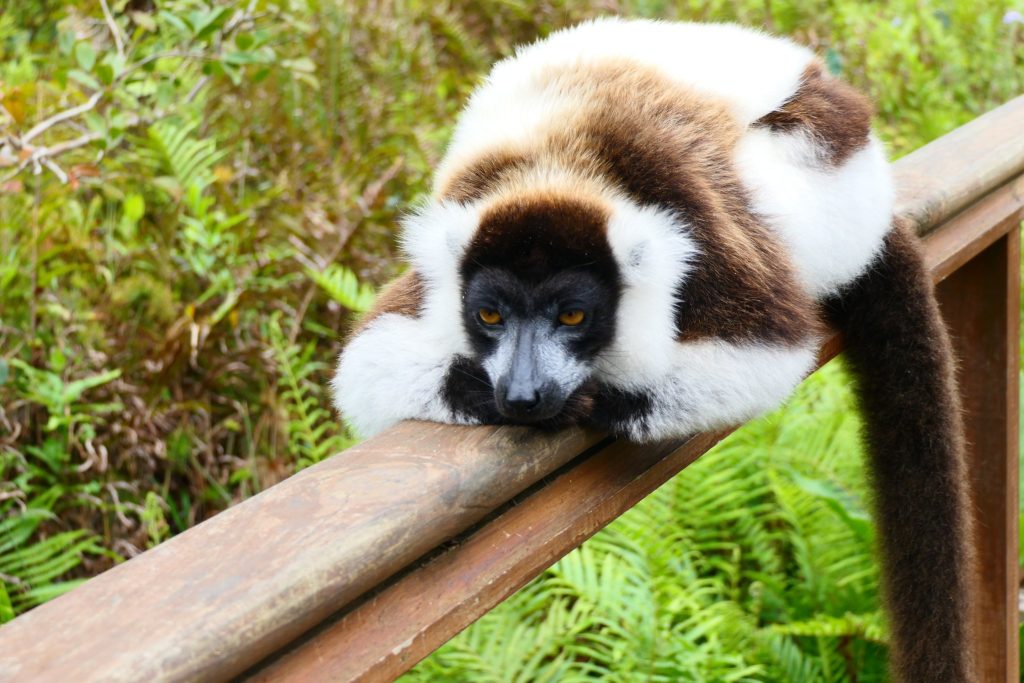
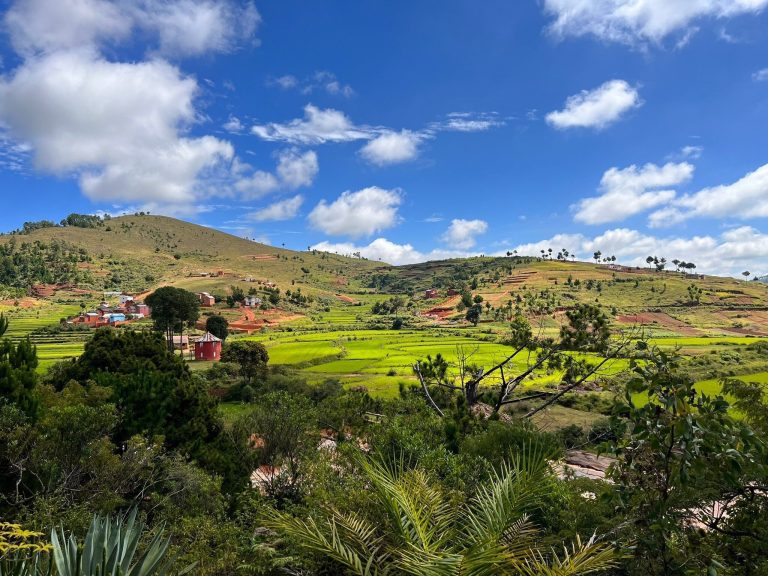
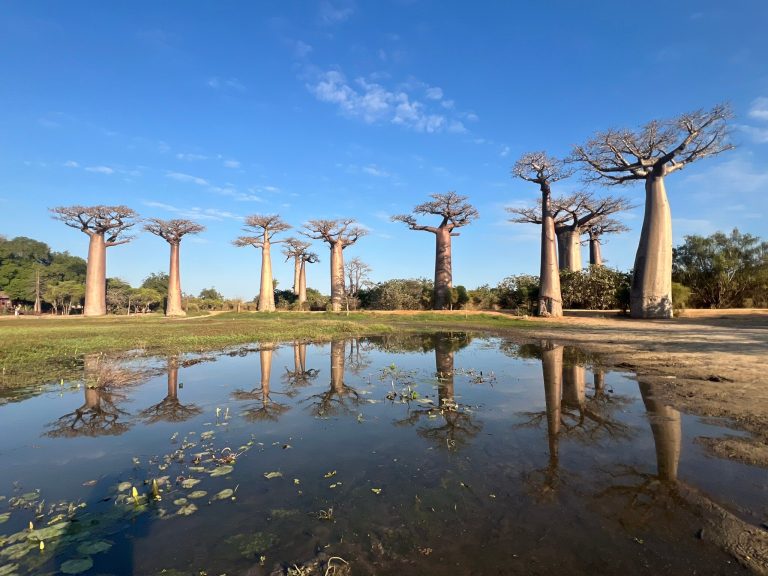
Ten days fits one or two regions comfortably. The usual first trip is Andasibe for the indri, whose call carries across the forest at dawn, then south on the RN7 through the highland rice terraces and Ambositra’s woodcarving workshops to Ranomafana’s rainforest, the ring tailed lemurs at Anja and the sandstone canyons of Isalo, ending with a flight from Toliara. A second option swaps the south for the west: Morondava’s baobab avenue at sunset, Kirindy’s dry forest at night, and the Tsingy if the road is open. Trying to do both in ten days means living in the car. Honeymooners often finish on a private island such as Anjajavy, reached only by small plane, while families do best with older children who will enjoy night walks and do not mind long drives.
Visitor numbers stay low, a few hundred thousand a year, far fewer than Kenya or Tanzania receive. That shows in empty trails and simple infrastructure. Lemur sightings at Andasibe, Anja and Isalo are near certain, though no species is guaranteed, and the hour on a night walk with a good guide is often what people remember most.
Madagascar Trip Cost FAQ
Are holidays to Madagascar expensive?
Day to day, no. Meals, guesthouses and park fees are cheap by safari standards; the long distances, domestic flights and the private vehicle are what push the price up. Luxury tours and private islands are expensive by any measure, with Miavana at US$3,700 per person a night.
How much does a Madagascar trip cost per person?
Before international flights, about €1,025 to €1,510 for a local private 8 day RN7 tour for two, from €1,060 for a local 12 day group trip, US$3,912 to US$4,890 for a 14 day international group tour and €9,400 to €10,700 for a 14 day private luxury tour. Add the visa, meals outside the package, tips, drinks and insurance.
How to spend 10 days in Madagascar?
Pick one or two regions: Andasibe and the RN7 south to Isalo and Ifaty, or the west for Morondava, Kirindy and the Tsingy between late May and November. Our Madagascar itinerary sets out both day by day.
How long is a flight from the USA to Madagascar?
There are no direct flights from the United States. Travellers connect through Paris, Istanbul, Addis Ababa, Nairobi or Johannesburg to Ivato airport in Antananarivo, and with the connection the trip usually takes a full day or more door to door. The international fare is often the largest single cost of the whole trip, so price it before you choose a tour.
How many tourists visit Madagascar per year?
A few hundred thousand, far fewer than Kenya, Tanzania or South Africa. That keeps parks quiet, but it also means small planes, simple roads and limited hotel stock on popular routes in July, August and October, which is why good lodges fill early.
What do park fees, guides and the visa cost in Madagascar?
Foreign adults pay 45,000 to 65,000 ariary a day under the current Madagascar National Parks tariff, depending on the park’s tier, and children 25,000. A doubling has been announced, reportedly due from 1 November, which puts Isalo and Ankarana at about 130,000 ariary, the Tsingy and Ranomafana at about 110,000 and Andasibe Mantadia at about 90,000. Local guides charge per circuit at rates each park sets, and the eVisa costs €30 for up to 15 days. Check with your operator which park rate applies to your dates.
What do a car with driver and domestic flights cost?
Local hire with a driver starts at about €50 a day, with the driver’s meals and lodging included; ask whether fuel is inside the price. Madagascar Airlines’ cheapest one way economy fares start around €89 to €127 on routes such as Toliara, Nosy Be and Sainte Marie, with 20 kg of hold baggage on most fares.
Is a private driver guide worth it for a couple?
For most couples, yes. The vehicle is shared between you, so the per person difference against a group tour is smaller than it looks, and you gain your own pace, your own lodges and a guide who handles police checks, ferries and lodge bookings in Malagasy. Solo travellers often get better value from a small group departure.
Is Madagascar safe for a guided trip?
For most visitors on an organised tour, yes, with sensible care. Pickpocketing is common in Antananarivo, robberies happen on isolated beaches and on roads after dark, and political protests can flare in the capital. Travel with a reputable operator, never drive at night and check your government’s advice before booking. Our safe countries to visit in Africa guide gives regional context.
Will I definitely see lemurs on a Madagascar tour?
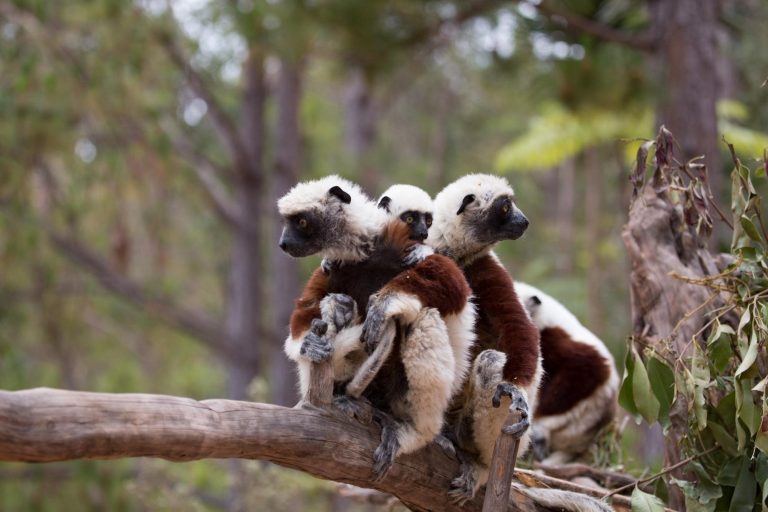
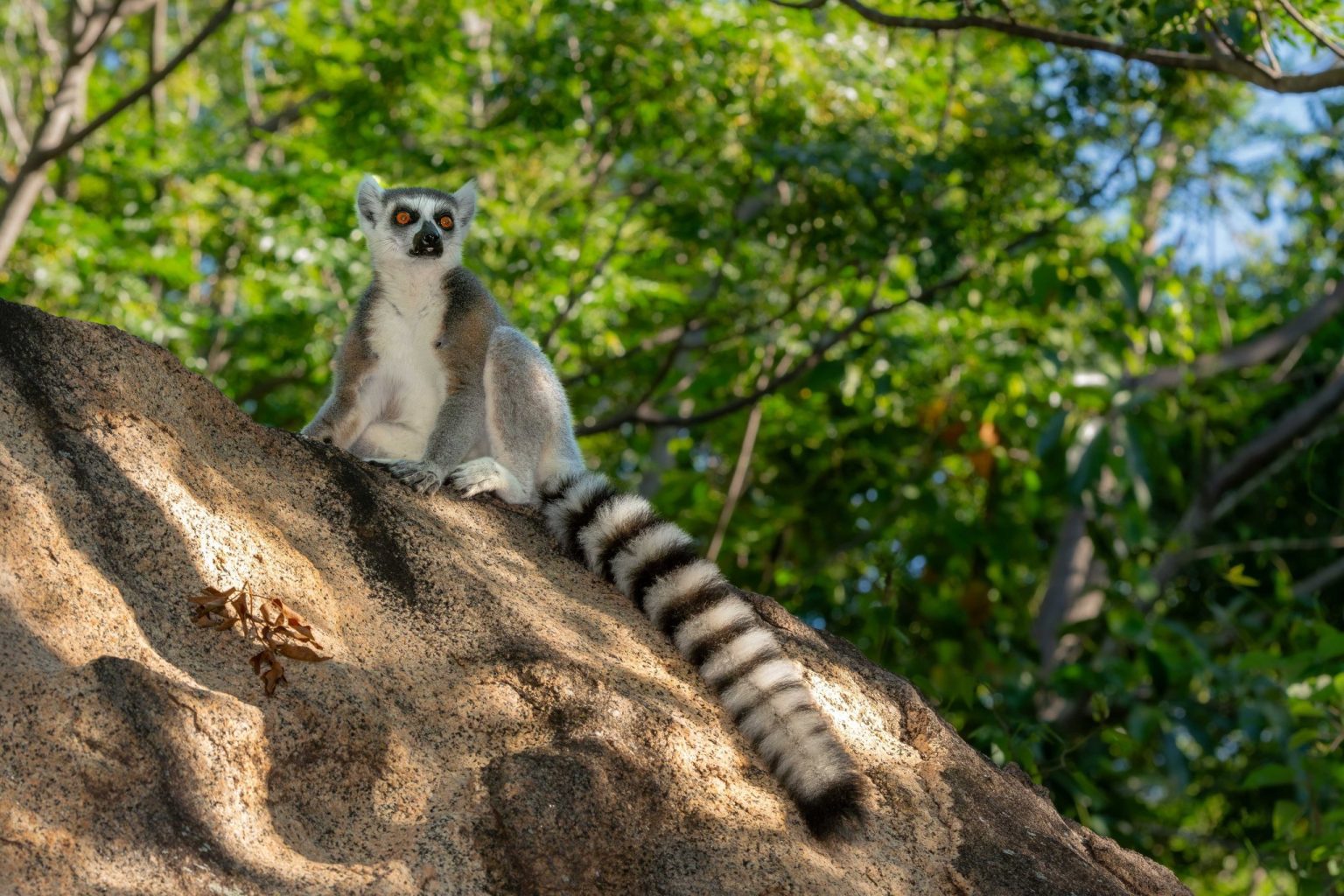
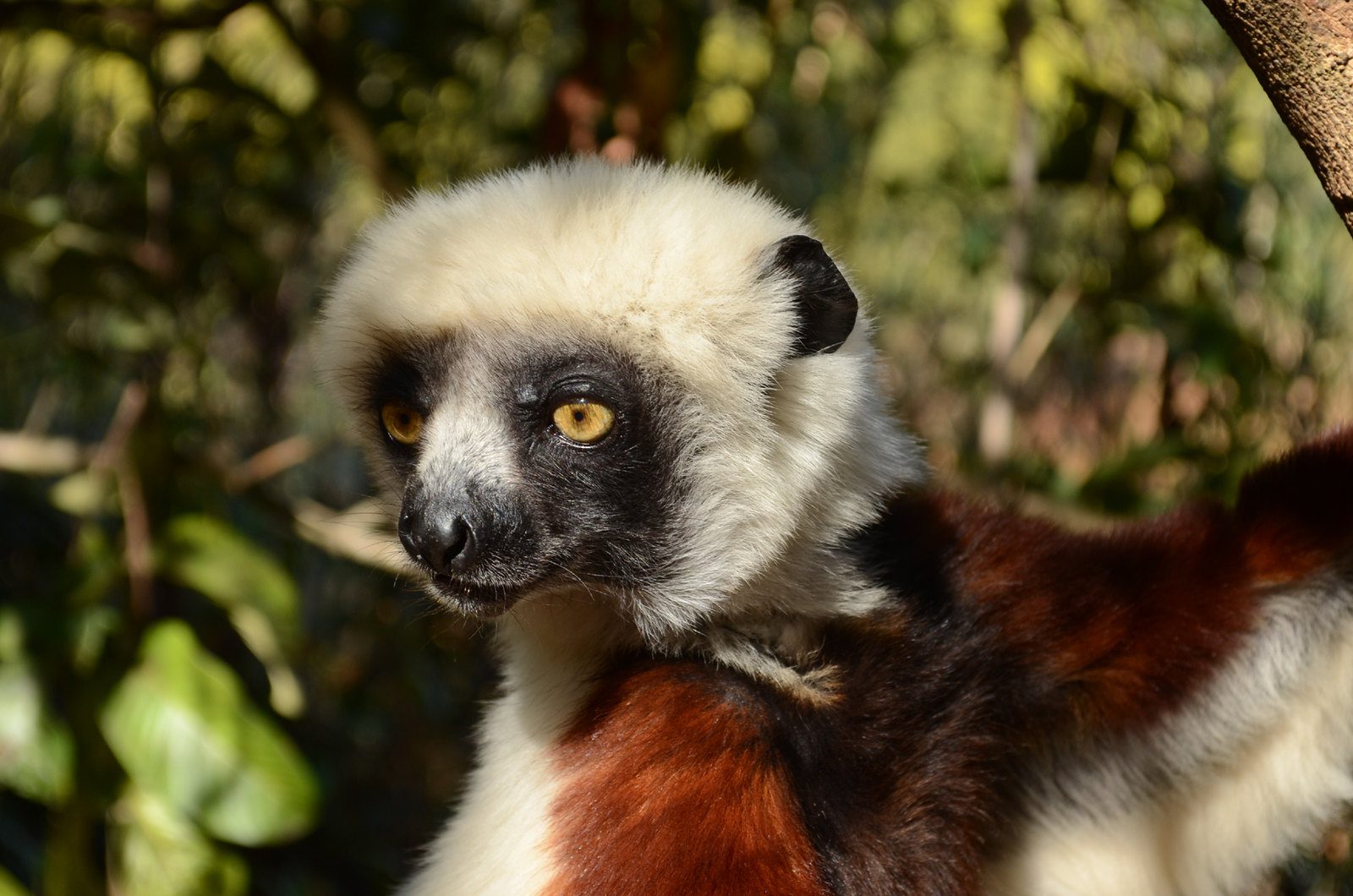
Almost certainly, though no species is guaranteed. Indri in Andasibe, ring tailed lemurs at Anja and Isalo and sifakas in the western dry forests are seen on most visits. The aye aye and the rarer bamboo lemurs need extra time and a good guide.
Do I need vaccinations or malaria tablets for Madagascar?
Malaria tablets are advised for the whole island. Bubonic plague cases occur most years in the rainy season, mainly in rural and poor urban areas away from tour routes, so insect repellent and normal precautions are the standard advice. A yellow fever certificate is required if you arrive from a country with yellow fever risk, which includes Uganda and Kenya, so it matters on a combined gorilla trip. See a travel clinic six to eight weeks before you leave.
What should I pack for a Madagascar trip?
A head torch for night walks, binoculars, a light rain jacket, a warm layer for cold highland nights, long socks against leeches in Ranomafana, walking shoes with grip for Isalo and the Tsingy, and sun protection. Use a soft bag for domestic flights; our safari duffel bag guide explains what fits small aircraft.