For most trips, the best solar charger for safari is a folding USB panel of about 20 to 30 watts paired with a 20,000 mAh battery pack: the panel fills the pack by day and the pack charges your phone and camera at night. On lodge safaris the pack alone is usually enough. Camping safaris, Kilimanjaro treks, fly camps and long overland routes are where solar earns its place, and any pack you fly with should stay at or under 100 Wh in your cabin bag.
The reason charging matters on a safari is simple. Camps in the Serengeti, the Masai Mara and the Okavango run on solar panels and generators, sockets can be scarce, and some camps switch off overnight. A dead camera battery on the morning of a leopard sighting is the outcome everyone wants to avoid. For the camera kit itself, see our best camera for safari guide.
Where You Can Charge on Safari: Lodges, Tented Camps, Vehicles and Campsites
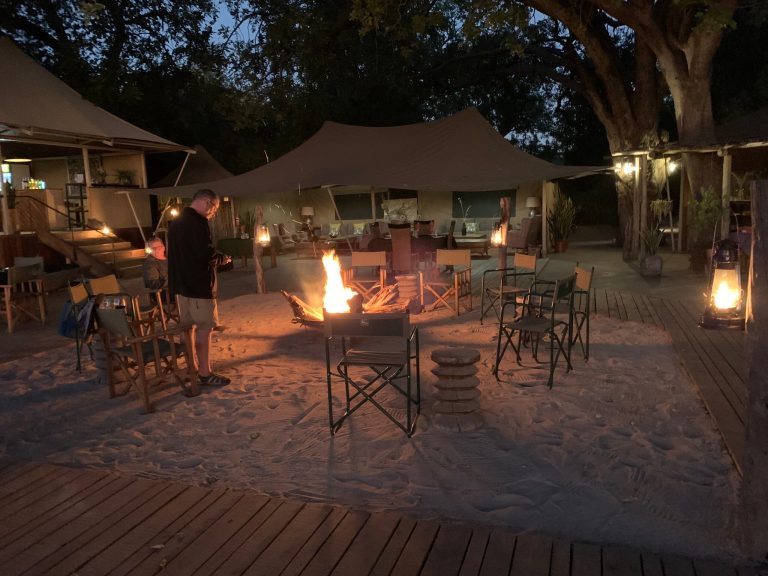
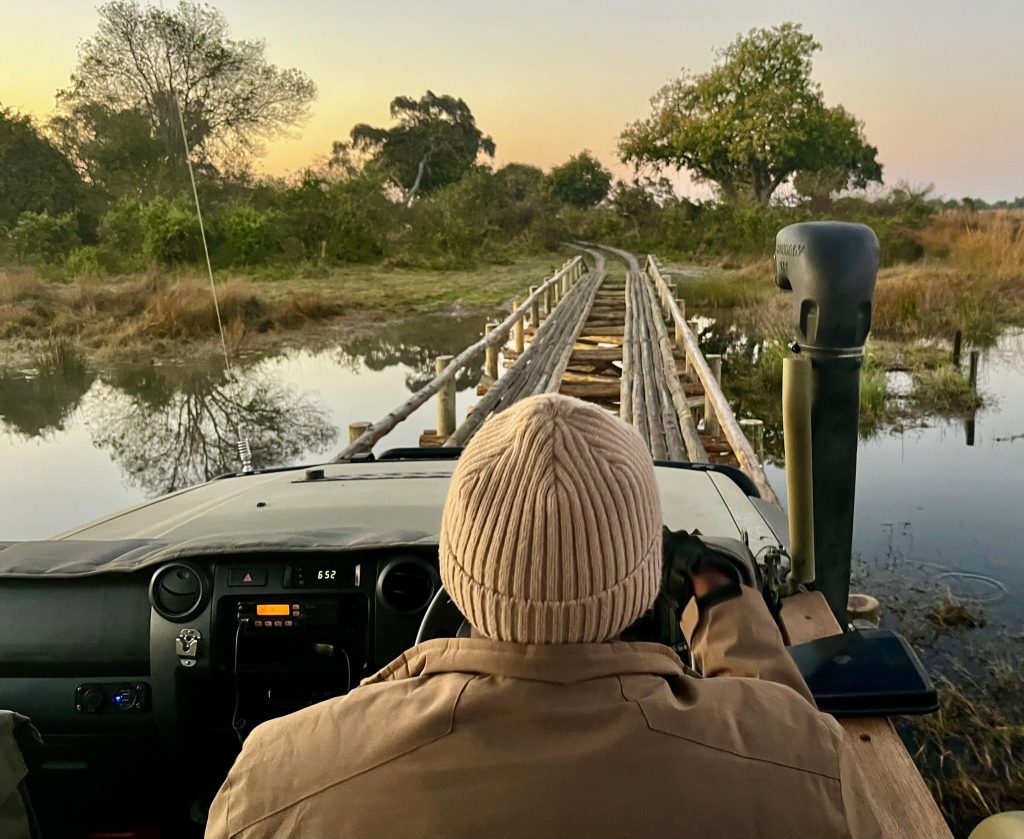
Before buying anything, it helps to know what a typical African safari offers. Charging varies far more by type of stay than by country.
Trip reports from lodge based safaris often say the battery pack barely left the bag. Reports from camping trips say the opposite. Work out which group you are in before spending money, and if in doubt, ask the camp or your operator how charging works there.
One more thing to settle early. A solar setup is a chain of three parts: something that collects energy (the wall socket, the vehicle’s 12V socket, or a panel), something that stores it (a battery pack, or on big overland trips a portable battery station), and the phone, camera or headlamp that uses it. The wall is always the fastest source, the vehicle comes next, and the sun is the slowest. Fill everything from the wall before you leave home and at every lodge on the way, and solar only has to cover the gaps.
Battery Pack Capacity for Safari Trips: mAh, Watt Hours and Real Charges
Capacity is printed two ways. Milliamp hours (mAh) is the big number on the box; watt hours (Wh) is the number airlines care about, usually in small print on the case. To convert, multiply mAh by the cell voltage, typically about 3.6 or 3.7 volts, and divide by 1,000. A 20,000 mAh pack works out at roughly 74 Wh.
| Pack size | About | Phone charges | Best for |
|---|---|---|---|
| 10,000 mAh | 37 Wh | About 2 | Lodge trips |
| 20,000 mAh | 74 Wh | About 4 | Most safaris |
| 26,800 mAh | 99 Wh | About 5 | Camping, Kili |
Real charges come in lower than the arithmetic suggests. Some energy is lost as heat in conversion, so expect around two thirds of the rated capacity to reach your phone. So a 20,000 mAh pack gives about four phone charges, or two or three camera battery refills depending on the camera.
A quick way to size a pack: take your phone’s battery capacity, multiply it by the number of charges you need between sockets, then add a third for losses. A phone with a battery of about 4,000 mAh, charged twice a day over two nights without a socket, needs about 16,000 mAh before losses, which points straight at a 20,000 mAh pack. Add your camera batteries on top if they will charge from the same pack.
For most visitors, a 20,000 mAh USB C battery pack with fast charging from makers such as Anker, UGREEN or INIU is the right size. It weighs roughly what a large phone and a half weigh, fits a camera bag, and stays well under the airline limits. Camping safaris and Kilimanjaro climbs suit a 26,800 mAh pack rated just under 100 Wh, the largest size most travellers can fly with. On a short lodge trip, a slim 10,000 mAh pocket pack rides along on game drives without weighing down a jacket. Magnetic packs such as the Anker MagGo slim 10,000 mAh clip to the back of a recent iPhone, which is handy in a bouncing vehicle where a cable snags on everything.
Outdoor brands make packs built around their panels. Voltaic sells its V50 and V75 USB battery packs to pair with its own panels, and Goal Zero sells the Venture 35 and Venture 75 packs with rugged, weather resistant cases. Either suits dust and rough handling better than a slim office pack.
Output matters as much as capacity. Look for a USB C port with USB PD fast charging of at least 20 watts, or 45 watts or more if you charge a laptop or a mirrorless camera body over USB C. A pack that can recharge itself quickly from the wall also helps when a camp only runs its generator for a few hours, and one that supports pass through charging, filling itself while it charges a phone, suits a single socket tent. Stick to known brands: cheap unbranded packs often overstate capacity and may skip the safety testing airlines expect. Most lithium packs last somewhere between 500 and 1,000 full charge cycles, so a pack bought for one safari will see many more.
Solar Chargers on Safari: Folding Panels, Solar Battery Packs and Real Output
Solar chargers come in three forms, and confusing them is the commonest mistake in this category.
Folding solar panels are thin fabric panels with two to six cells and a USB port, typically rated from about 10 to 60 watts. They have no battery of their own. Laid in full sun and angled toward it, a good panel of around 20 to 30 watts can top up a phone or fill a battery pack over a sunny day. Brands such as Anker, BigBlue, Goal Zero, BioLite, FlexSolar, Nekteck and NESTOUT sell well regarded models; search foldable 28W USB solar panels to compare them, or look at the Goal Zero Nomad panels if you want a more rugged frame.
Panels with a built in battery sit in between. A small panel, often around 10 watts, carries a modest battery in a pocket or on the back, so it stores what it collects and can charge a phone after dark. They suit one person who needs a phone and a headlamp topped up, and little else.
Solar battery packs are ordinary battery packs with a small panel glued to the case. They are handy and rugged, yet that panel is tiny, so a whole day of sun often adds only a small part of a phone charge. Independent testers keep reaching the same verdict: charge them from the wall and treat the panel as an emergency trickle. A rugged solar battery pack still makes sense as a dust proof backup on a camping safari, so long as you know what it can and cannot do.
Most consumer panels now use monocrystalline cells, and the better ones turn somewhere around a fifth to a quarter of the sunlight that hits them into electricity. Many are semi flexible: they bend a little but do not roll up. Rigid framed panels are heavier and suit a vehicle roof or a fixed camp.
Several safari forum threads land on the same honest answer. On lodge and tented camp trips, a solar panel often goes home unused, and a spare camera battery would have done more. Solar pays off on camping safaris, long self drive routes, Kilimanjaro and remote fly camps.
Do Solar Phone Chargers Really Work on an African Safari?
Yes, in the right conditions, and East Africa offers more of those conditions than most hiking trails. A folding panel of 20 watts or more in clear savanna sun will fill a battery pack over a day at camp, and in good sun a 10 to 20 watt panel can charge a phone in a few hours. Where solar disappoints on a safari trip is almost always down to one of the following.
Shade, even a little. Partial shade does far more damage than people expect. When one cell of a multi panel charger falls into the shadow of a branch or a tent pole, testers have seen output fall from tens of watts to a few. Move the panel with the sun, or set it in open ground.
Cloud and the rains. Thin high cloud costs some output; heavy cloud in the long rains of March to May in East Africa can cut a small panel to almost nothing. Larger panels still collect some energy on grey days, which is one argument for 28 watts over 10. A pack charged at the last lodge carries you through.
Forest. Under the canopy of Bwindi, Nyungwe or Kibale, a panel on your pack is dead weight. The same goes for the shaded campsites in riverine woodland.
Movement. A panel strapped to a moving vehicle swings in and out of sun and shade, which is exactly the stop and start that upsets phones. A parked vehicle at a lunch stop or a full afternoon at camp gives far better results.
Day length helps here. Close to the equator in Uganda, Kenya and northern Tanzania, the sun gives roughly twelve hours of daylight in every month of the year, and it rides high at midday. Further south, in Botswana and Zimbabwe, the dry season falls in the southern winter, when days run closer to eleven hours and the sun sits lower, so a slightly larger panel makes sense there.
So, are solar battery packs worth it? The small glued on panels are worth it as an emergency backup, not as a main supply. Separate folding panels feeding a good battery pack are the setup that actually works, and testers keep finding that a panel plus a separate pack outperforms an all in one unit for the same money.
Best Solar Chargers for Safari: Named Panels, Solar Banks and Battery Stations
These are the models that keep turning up in independent testing and on outdoor retailers’ shelves, grouped by the kind of safari trip they suit. Check each maker’s current specifications before buying, since models are revised often.
A solar charging backpack, such as Voltaic’s Converter or OffGrid packs, sews the panel onto a daypack. It suits walking safaris in open country and cycle tours, less so a forest gorilla trek. For a lighter option on a camping trip, a small USB rechargeable lantern such as the Goal Zero Lighthouse Micro lights a tent and charges from the same panel; our safari headlamps guide covers head torches.
What to Look For in a Solar Panel for a Safari Tour
Rated watts are only the start. These details decide whether a panel works on a dusty safari tour or ends up in the bottom of the duffel.
If any of your kit runs on AA or AAA cells, such as an older headlamp or a GPS, carry USB rechargeable AA batteries and swap two sets, charging one from the pack while the other is in use.
Charging Camera Batteries on Safari Game Drives
Cameras drain fastest on a game drive safari: long lenses with stabilisation, burst shooting at a hunt, the screen lit for hours. The easiest fix is a second or third spare camera battery, charged overnight and carried in a pocket. Cold mornings on the Ngorongoro rim or in the Mara also make lithium cells read low until they warm up, so keep spares inside your jacket.
To charge spares from a battery pack, use a dual USB C camera battery charger made for your battery model. It refills two batteries from one pack or one socket, which matters when a tent has a single outlet. Many recent mirrorless cameras from Sony, Canon, Nikon, Fujifilm and OM System can also charge in the body over USB C, though some only do so when switched off. Check the manual before you rely on it.
Binoculars need no charging, which is one reason our safari binoculars guide rates them so highly. For lenses and the rest of the camera bag, see the best lens for safari and our safari camera and binoculars guide, and the safari camera bag and rain cover page for keeping it all dry.
Flying to Safari With Battery Packs: IATA, ICAO and FAA Lithium Rules
Airline rules decide what you can bring on an African safari flight, so check them before buying the biggest pack you can find. What follows summarises IATA’s guidance document for passengers travelling with lithium batteries, revised for the latest edition of its Dangerous Goods Regulations, and the US FAA’s PackSafe guidance. Your airline’s own policy is the one that applies on the day, and many carriers are stricter.
Safari light aircraft operators in Tanzania, Kenya, Uganda and Botswana work within the same lithium rules, so the pack stays in your soft hand luggage on those hops too. Our safari duffel bag guide covers the soft bag and weight limits for light aircraft. A fire resistant battery pouch keeps packs, spare batteries and cables together, which also makes the security check quicker. Solar panels themselves hold no battery and can go in either bag, unless the model has a battery built in.
Best Charging Kit by Safari Trip Type
Match the kit to the safari trip you have booked rather than to the worst case.
A compact four port GaN USB C wall charger is the quiet hero of every one of these kits. Camps often have one socket per tent, and a single block that charges phone, pack and camera battery at once avoids a nightly rota. Add two or three short braided USB C cables, since dust and constant packing kill cheap ones.
Dust, Heat and Rain: Protecting Charging Gear on Safari
Fine dust in the dry season gets into everything on a game drive, including USB ports. Keep a pack and its cables in a zip pouch or small roll top dry bag, and blow out the ports now and then. In the rainforest of Bwindi the threat is water instead, so the same dry bag goes inside your daypack on a gorilla trekking safari, under a gorilla trekking rain jacket.
Heat is the third enemy. A battery pack left on the dashboard or a hot vehicle seat at midday can overheat and shut down, and repeated heat shortens its life. Keep it shaded in a bag on the floor. Charge panels in the sun, but keep the pack they feed in the shade beside them or in the panel’s own pocket.
At camp, two more risks. Wind can lift a light panel off a tent roof, so tie or weigh it down. And monkeys and baboons around some campsites will grab a bright object left unattended, so do not leave a panel and pack charging in the open while you are out on a drive.
Plugs, Adapters and Car Chargers for a Safari Kit
East Africa mostly uses the British style Type G plug, with three square pins, at about 230 to 240 volts: you will find it in Uganda, Kenya and Tanzania, though older Type D sockets turn up in Tanzania. Rwanda uses the two round pin Types C and J, and Botswana mixes Types D, G and M. Most phone, camera and laptop chargers accept 100 to 240 volts, so you need an adapter rather than a converter. A Type G travel adapter with USB C ports covers most itineraries, and our travel adapter guide for Uganda, Kenya and Tanzania goes through each country.
If your safari vehicle has a 12V socket, a small USB C car charger for 12V sockets lets you top up between sightings, often faster than the vehicle’s built in USB ports. Ask the driver guide first, since the socket may already feed a fridge or radio.
Charging on Combined Safaris: Bwindi, Kilimanjaro and the Serengeti
Many travellers link a Serengeti safari or a Masai Mara safari with gorillas in Uganda, or add a climb of Mount Kilimanjaro. The charging kit carries across, so pack it once. For the rest of the bag, our African safari packing list and the gorilla trekking packing list cover clothes, documents and the smaller gear, what to wear gorilla trekking covers the clothing, and gorilla trekking photography explains the camera settings for low light under the canopy.
Safari Charging FAQ
Do I need a solar charger for a safari?
On most lodge and tented camp safaris, no. A 20,000 mAh battery pack and a spare camera battery are enough. A solar charger is worth carrying on camping safaris, long self drive trips, remote fly camps and Kilimanjaro treks, where sockets are missing for days.
Do solar phone chargers really work?
Folding panels of 10 watts and up work well in direct sun, angled toward it and free of shade, and East Africa’s high equatorial sun suits them. They struggle under forest canopy, in heavy cloud, behind glass and when part of the panel is shaded. The small panels glued onto solar battery packs collect very little, so charge those from the wall.
What is the best solar phone charger that actually works?
For a safari, a folding panel of 20 to 30 watts with a USB C port and auto restart, such as the BigBlue 28W or Goal Zero Nomad 20, feeding a separate 20,000 mAh pack. That pairing beats any all in one solar battery pack because the panel is many times larger.
What is the best solar phone charger for hiking and trekking?
Weight decides it. A 10 watt panel such as the BioLite SolarPanel 10+, Blavor 10W or FlexSolar E10 Mini hangs off a daypack and keeps one phone going in open country. On Kilimanjaro it works above the forest zone; on a gorilla trek in Bwindi it will barely charge under the trees.
Are solar powerbanks worth it on safari?
Only as a rugged emergency backup. Their built in panel is too small to refill the battery in a day of sun. A plain battery pack plus a separate folding panel gives far more charge for the same weight.
How long does a solar panel take to charge a phone?
In strong direct sun, a 10 to 20 watt panel can charge a phone in roughly two to four hours. Partial shade, cloud or a poor angle can double that or stop it entirely, which is why charging a pack by day and the phone at night works better.
What size battery pack can I take on a plane to Africa?
Packs up to 100 Wh, which covers most up to about 26,800 mAh, can go in your cabin bag without airline approval. IATA’s current guidance limits you to two such packs, bars recharging them from the aircraft’s sockets and lists packs above 100 Wh as forbidden, while the FAA still lets airlines approve up to two spare batteries of 100 to 160 Wh. Anything above 160 Wh is not allowed. Packs never go in checked bags, and some airlines are stricter, so read your carrier’s policy.
How much do battery packs and solar panels for safari cost?
Good 20,000 mAh packs from major brands commonly sell for roughly US$30 to US$70, and 26,800 mAh packs with high output ports often run higher. Folding USB panels of 20 to 30 watts commonly sell for about US$50 to US$120, with rugged branded panels and 40 to 60 watt models above that. Prices move with sales, so check current listings.
Can I charge my phone in the safari vehicle?
Often, yes. Many safari vehicles have USB ports or a 12V socket, and some carry an inverter for normal plugs. It varies by operator and vehicle, so ask before the trip and carry a battery pack anyway.
Do safari camps have electricity all night?
Not always. Many tented camps run on solar with a backup generator and switch off for part of the night, and some only charge devices in the main area. Charge everything in the evening before dinner.
Will a solar charger work on a gorilla trek in Bwindi?
Not well. The forest canopy blocks most direct sun, and treks are rarely long enough to need one. Charge at the lodge, carry a small pack in a dry bag, and save solar for open country.
How do I keep batteries working on Kilimanjaro?
Cold drains lithium cells quickly. Keep the battery pack, phone and spare camera batteries in an inside pocket by day and in your sleeping bag at night, and charge from the pack in the tent rather than in the wind.