The best safari in Kenya for a first trip is six to eight days built around the Masai Mara, with three nights there for big cats and, from about July to October, the wildebeest migration, plus one contrasting park: Amboseli for elephants below Kilimanjaro, Lake Nakuru for rhinos, or Ol Pejeta and Samburu for rhino tracking and northern species. Most first timers book a private road or fly in safari through a licensed Nairobi operator.
Everything after that depends on three choices: what you most want to see, how many days you have, and how many hours you will sit in a vehicle between parks. This guide ranks the parks, sets out four itineraries that work and explains the reserve, conservancy and vehicle decisions that shape the trip. Every price sits in the FAQ.

The Best Safari in Kenya for a First Trip: The Mara and One Contrast Park
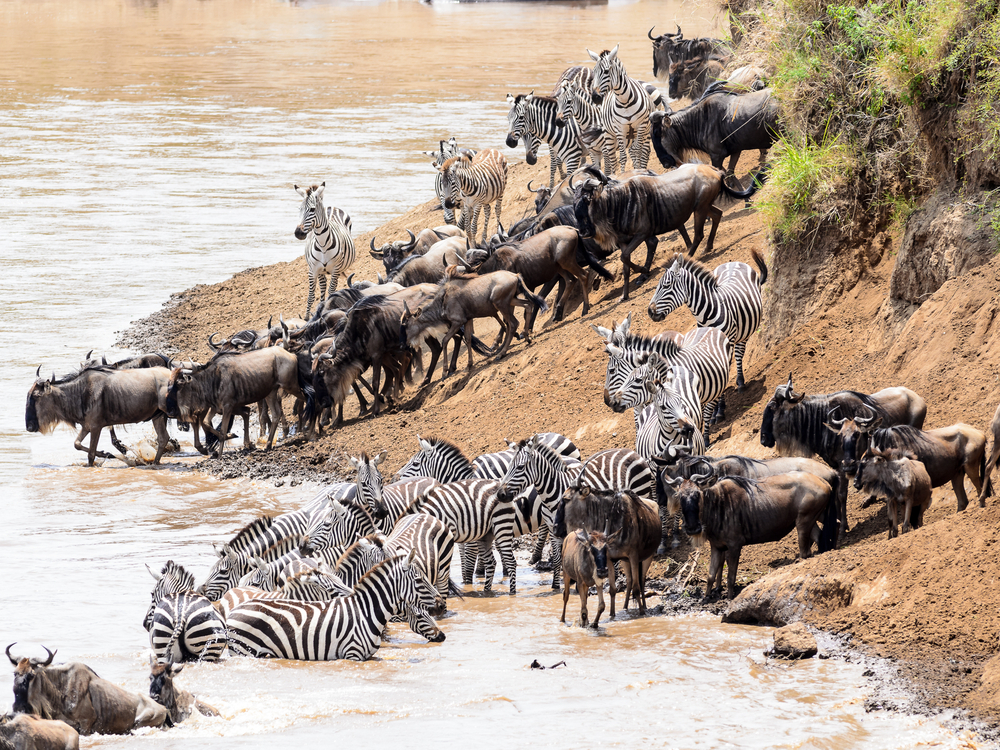
Put the question to ten Kenyan guides and nine will open with the Masai Mara safari. The reason is density. Lions, cheetahs and leopards live in the reserve all year, open grassland makes them easy to find, and in the dry months the migration arrives from Tanzania’s Serengeti. No other single park in Kenya delivers that much on a first visit.
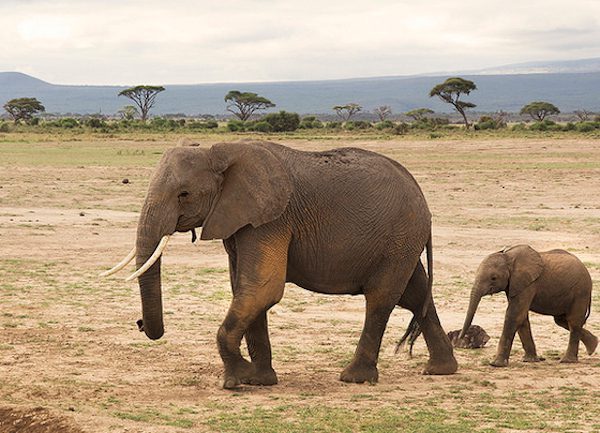
The Mara plus one other park still beats the Mara alone, because the second park shows you something the Mara cannot. Amboseli has big tusked elephants crossing dry lake beds with Kilimanjaro behind them. Lake Nakuru has black and white rhinos inside a fence. Samburu has a desert river and animals never seen in the south, and Ol Pejeta adds rhino tracking with Mount Kenya on the horizon. Choose one. Choose two only with eight days or more.
What spoils first trips is the opposite urge: four or five parks in a week. Trip reports from people who tried it describe long drives, few animals along the way and final days that blurred into checkouts. Kenya rewards staying put. If Kenya is one option among several, our guide to the best African safari countries compares it with its neighbours.
National Park, Reserve or Conservancy: How Kenya’s Safari Areas Differ
Kenya’s safari country is run by three kinds of landholder, and the label on the gate changes the rules on the ground. Knowing which is which explains most of the differences between two Kenya safari tours that look alike on paper.
The practical upshot? A park is open to everyone and fills up at the famous sightings. A conservancy costs more but feels private. Many of the best trips mix both.
Kenya’s Best Safari Parks Ranked for First Timers
The table ranks the parks most first trips draw from, with how far each sits from Nairobi by road and how many nights a first visit usually gives it. Drive times assume dry roads and normal Nairobi traffic, which is never quite normal.
| Park | Best for | By road | Nights |
|---|---|---|---|
| Masai Mara | Big cats | 5 to 6 hrs | 2 to 4 |
| Amboseli | Elephants | 4 to 5 hrs | 2 |
| Ol Pejeta | Rhinos | 4 to 5 hrs | 2 |
| Samburu | Rare species | 5 to 6 hrs | 2 to 3 |
| Lake Nakuru | Rhinos, birds | 3 hrs | 1 |
| Naivasha | Boats, walks | 2 hrs | 1 |
| Tsavo | Wild space | 5 to 6 hrs | 2 |
| Meru | Solitude | 6 hrs | 2 |
1. Masai Mara. The core of the best safari in Kenya, for the reasons above. Big cats every month, the migration from about July to October, and the widest choice of camps. Its weak point is crowds at peak season sightings, which the conservancies solve.
2. Amboseli safari. Small, flat and dry, fed by springs from Kilimanjaro that keep its swamps green, so elephants come in big family herds and are easy to watch closely. The mountain stands across the border in Tanzania and hides in cloud for much of the day; early morning gives the best chance of a clear view. Our Amboseli safari guide covers it in depth.
3. Ol Pejeta and Laikipia rhino safaris. The ranches and conservancies of the Laikipia plateau, Ol Pejeta and Lewa among them, hold much of Kenya’s black rhino population. Ol Pejeta guards the last two northern white rhinos and runs a chimpanzee refuge, the only place in Kenya to see chimps. Rhino tracking on foot, horseback safaris and camel walks run across the plateau. Some independent travellers rank Ol Pejeta above the Mara for its management and its variety, and it is a strong choice for a second trip or for anyone who dislikes crowds.
4. Samburu safari. Samburu, Buffalo Springs and Shaba sit on the Ewaso Ng’iro River in hot, dry country, home to the Samburu Special Five: Grevy’s zebra, reticulated giraffe, gerenuk, Beisa oryx and Somali ostrich. Leopard sightings along the river are good, and Buffalo Springs takes its name from a clear natural spring. Most first timers fly in.
5. Lake Nakuru National Park. Fenced and compact, so black and white rhinos are reliably found, with Rothschild’s giraffe, buffalo and the view from Baboon Cliff. The lake has risen sharply over the last fifteen years, flooding the old main gate and pushing many flamingos to other Rift Valley lakes, so go for the rhinos and the birdlife and treat flamingos as a bonus.
6. Lake Naivasha and Hell’s Gate. Naivasha is a freshwater lake rather than a park: hippos, fish eagles, boat trips and a guided walk on Crescent Island among giraffe and zebra. Hell’s Gate National Park next door has no big predators, which is why cycling and gorge walks are allowed; it works well early in a trip, before safari fatigue sets in.
7. Tsavo safari. Tsavo East and West together form Kenya’s largest protected area. Elephants look red from dust bathing in the iron rich soil, Tsavo East’s open plains along the Galana River make game easier to spot, and Mzima Springs in Tsavo West has an underwater hide for watching hippos. Game is spread thinly, so it suits travellers heading for the coast more than a first trip.
8. Meru, the Aberdares and the Chyulu Hills. Meru, where Elsa of Born Free was released, sees a fraction of the Mara’s vehicles. The Aberdares are high, wet and forested, better for hikes and waterfalls than for game counts. The Chyulu Hills between Amboseli and Tsavo hold a few quiet luxury camps with walking and riding.
Nairobi deserves half a day: Nairobi National Park on the city’s edge, the Sheldrick elephant orphanage, the Giraffe Centre and the Karen Blixen Museum all fit around a flight. Some travellers driving through Laikipia also report seeing rhinos from public roads beside the fenced reserves. That is luck, not a safari.
For camps, sectors and the herds, see our Masai Mara safari guide and the great wildebeest migration page.
Masai Mara Safari Choices: Reserve, Triangle or Conservancy
Inside the national reserve, in the Mara Triangle, or in a private conservancy beside them? That choice changes the feel of a Mara safari more than the camp itself does.
The Maasai Mara National Reserve is run by Narok County. It holds most of the river crossing points and the widest range of camps, from simple tented sites near Talek and Sekenani gates to long established riverside lodges. Driving stays on tracks, with no walks or night drives, and in August a lion kill can draw a crowd of vehicles. Many high season trip reports mention exactly that.
The Mara Triangle, west of the river, is managed separately by the Mara Conservancy. It is calmer, its rangers enforce the rules at crossings, and it admits private 4x4s.
The conservancies, among them Mara North, Naboisho, Olare Motorogi and Ol Kinyei, are Maasai owned land leased to a handful of camps. Vehicles at a sighting are capped, guides can drive off track, and walks and night drives are allowed. The trade is distance from the crossings and a higher nightly rate. A good split in migration months is two conservancy nights and one or two near the reserve.
One rule shapes every Mara plan: the reserve ticket covers a 12 hour window from 6am to 6pm, not 24 hours. Arrive at four in the afternoon and you pay a full day for two hours of driving, so sensible operators time the first afternoon around it. Our Masai Mara safari cost guide explains how the ticket and the camp tiers feed into a quote.
Four First Timer Kenya Safari Itineraries That Work
Kenyan operators run each of these shapes every week, so any licensed company can quote them. All four start and end in Nairobi.
Notice what is missing. None of the four sends you from Amboseli to the Mara by road in one push. There is no good direct road, the route runs through or around Nairobi, and travellers who tried it describe close to ten hours in the vehicle. Itinerary 2 breaks the trip at the lakes; the others fly. If a quote does it in one day, ask why.
Our 5 day Kenya safari page sets out the Amboseli, Nakuru and Mara loop day by day, the 7 day Kenya safari and 10 day Kenya safari pages cover the longer routes, and the 3 day Kenya safari page covers the Mara only trip. Families should read the Kenya family safari guide first, since age rules and drive lengths matter more with children.
How Many Parks to Fit Into One Kenya Safari Trip
A simple rule works: one park for every two or three nights, never fewer than two nights in the Mara, and no more than one transfer day in a row. Five days fits two parks. Seven or eight fits three if one leg is short or flown. Ten days opens up the north or the coast.
Each move costs more than the drive itself. Checkout, packing, the road, check in and a briefing take most of a day, and the first and last drives in each park are the shortest. Staying three nights in one camp also lets your guide learn where the local lion pride or leopard is that week, which is how the best sightings tend to happen.
Choosing Your Kenya Safari Style: Road, Fly In, Group or Private
Most first timers travel on a road safari with one vehicle and driver guide throughout. It is cheaper and takes in the Rift Valley escarpment viewpoint, but a three park road trip can spend two full days on the road, and the last stretch into the Mara from Narok has been badly rutted for years.
A fly in safari uses small scheduled planes from Wilson Airport to airstrips in the Mara, Amboseli, Samburu and Laikipia, with game drives in each camp’s own vehicles. Flights are often under an hour, but bags are limited to about fifteen kilograms in a soft holdall, so many travellers leave a suitcase at their Nairobi hotel. Driving to the lakes and flying out of the Mara is a common middle path.
A private safari gives your party its own vehicle and guide, so you set the pace. A group safari joins strangers on fixed departures and costs less, at the price of a set route and sometimes a middle seat. Self drive works in the KWS parks but not in Narok County’s side of the Mara, and a guide spots far more than a first timer at the wheel.
Kenya uses two vehicle types. Pop up roof minivans are cheaper and fine on dry roads; Land Cruisers handle mud, sit higher and ride more steadily. Either way, ask in writing for a window seat for every guest. The Kenya safari cost guide shows how vehicle, group size and park fees move the price.
Matching the Kenya Safari to the Traveller
The best safari in Kenya for one person can be the wrong trip for the next.
Big lodges and small camps suit different people. Large lodges inside the parks have pools, buffets and wifi, and they put you close to the action. Small tented camps feel quieter, their guides often stay with the same guests all week, and the evening fire is shared by a dozen people rather than a hundred. Ask any operator who will guide you, how long they have guided in the Mara and whether your guide changes between parks. Anyone with back trouble should think hard about road safaris; flying in avoids the worst roads.
Kenya Safari Seasons Month by Month for First Timers
Kenya works as a safari destination all year. The real question is which trade you prefer: herds and crowds, or green grass and quiet tracks.
| Months | Weather | Mara | Crowds |
|---|---|---|---|
| Jan to Feb | Dry, hot | Cats, calves | Moderate |
| Mar | Rains begin | Residents | Low |
| Apr to May | Long rains | Residents | Very low |
| Jun | Drying, cool | Herds near | Rising |
| Jul to Aug | Dry, cool | Migration | Peak |
| Sep to Oct | Dry | Crossings | High |
| Nov | Short rains | Herds leave | Low |
| Dec | Mixed | Residents | Holiday peak |
January and February are the quiet favourite of people who know Kenya: short grass, easy predators and often a clear Kilimanjaro. Pack serious sun protection. March to May brings the long rains, when black cotton soil in the Mara and Amboseli turns to deep mud, some camps close and minivans get stuck where a Land Cruiser would not. Fly in if you travel then; the reward is green, empty parks full of young animals.
June is dry, cool and still before peak rates. July to October is migration season, with crossings most often reported in August and September; book many months ahead and expect company at big sightings. Dawn drives are cold in an open roof vehicle, so a fleece and windproof layer belong in the daypack. November brings short storms and few visitors, and December stays quiet until Christmas. For a gorilla add on, see our best time for gorilla trekking guide.
Booking Your First Kenya Safari Tour: Operators and Quotes
This site does not sell safaris, but we can tell you how to judge the companies that do. Choose an operator licensed by Kenya’s Tourism Regulatory Authority and ideally a member of KATO, the Kenya Association of Tour Operators. Ask for named camps rather than “or similar”, the vehicle type, private or shared, and a line confirming every park and conservancy fee is included. Get three quotes for the same itinerary, and compare them line by line.
Book early for July to October and Christmas. Take out safari travel insurance with evacuation cover, apply for your Kenya eTA online before flying, and check the East Africa Tourist Visa if Uganda or Rwanda are on the plan; Kenya’s part of that visa is uncertain at the latest check, so most travellers take a Kenyan eTA for the Kenya leg. For packing, start with what to wear on safari and a decent pair of safari binoculars.
Adding Gorilla Trekking or Tanzania to a Kenya Safari Trip
Kenya has no gorillas, but a Kenya safari followed by gorilla trekking in Uganda or Rwanda is one of East Africa’s most popular trips. A short flight reaches Entebbe for gorilla trekking in Bwindi, or Kigali for Rwanda gorilla trekking. Permits sell out in busy months, so secure the Uganda gorilla permit first and fit Kenya around it. Our gorillas and Masai Mara safari page has 8 to 12 day routes, and the guide to combining Kenya with gorilla trekking has 7, 10 and 14 day options.
Tanzania is the other common pairing, since the Serengeti and the Mara are one ecosystem split by a border. Our Serengeti safari guide covers the southern side. For a first trip of a week or less, Kenya usually wins on shorter distances; Tanzania wins on the scale of the Serengeti and the Ngorongoro Crater.
Best Safari in Kenya FAQ
What is the best safari in Kenya for first timers?
A six to eight day Kenya safari that gives the Masai Mara three nights and adds Amboseli or the Rift Valley lakes. It shows you big cats, large elephant herds and rhinos without spending most of the trip on the road. With only five days, Lake Nakuru and the Mara is the best pairing.
How much does a first Kenya safari cost per person?
Shared road packages with park fees run about US$120 to US$320 per person a day. Fly in conservancy and river camps cost roughly US$450 to US$1,000 a night per person sharing, and flagship camps US$1,850 to US$2,750. A seven day private mid range trip for two usually falls around US$2,200 to US$3,500 per person before international flights. Light aircraft legs from Wilson Airport add about US$224 to US$320 per person one way. Our Kenya safari cost guide has worked totals.
What park fees will my Kenya safari quote include?
The Masai Mara charges non resident adults US$100 per day from January to June and US$200 from July to December, on a 12 hour ticket; children nine to seventeen pay US$50 and younger children enter free. Under the Kenya Wildlife Service schedule, Amboseli and Lake Nakuru charge non resident adults US$90 per 24 hours, Tsavo US$80 and Hell’s Gate US$50. That schedule was challenged in court after it launched, so confirm on the KWS website for your dates. Conservancy fees are usually built into camp rates.
How many days do I need for a Kenya safari?
Six to eight days suits most first visits: three nights in the Mara and two or three elsewhere. Five days works for two parks if you accept two long road days. Ten days or more opens up Samburu, Laikipia, Tsavo or a beach stay without rushing.
Which is the best national park in Kenya for wildlife?
For sheer numbers and big cats, the Masai Mara. For rhinos, Ol Pejeta, Lewa and Lake Nakuru. For elephants, Amboseli. For species found nowhere in the south, Samburu. Most first trips pair the Mara with one of the others.
Will I see the Big Five on a Kenya safari?
Lions, elephants and buffalo are close to certain on a Mara safari. Leopards are shy and seen on many trips but not all. Rhinos are hardest in the Mara; Lake Nakuru, Ol Pejeta and Lewa give a far better chance. Nobody can promise any sighting.
Is Kenya safe for a first safari?
The safari circuit is well run and busy with visitors. The US rates Kenya at Level 3, Reconsider Travel, at the latest check, naming crime, terrorism, unrest and road safety, with the sharpest warnings for border areas. Usual city care applies in Nairobi: hotel or app taxis at night and valuables out of sight. In the parks the risks are road conditions and animals, both handled by a good guide. Check your government’s travel advice and our page on safe countries to visit in Africa.
Should I drive or fly between Kenya’s safari parks?
Drive if you are on a budget or visiting the Mara and the Rift Valley lakes. Fly if your route includes Samburu, Laikipia or both Amboseli and the Mara, or if you travel in the rains. Flying turns a day of transfers into an hour and gives you an extra game drive.
What extras should I budget for beyond the safari package?
A dawn hot air balloon flight over the Mara costs about US$450 to US$500 per person. Many travellers tip the driver guide about US$10 to US$20 a day and put US$5 to US$10 a night in the camp staff box. Add insurance, the Kenya eTA at US$30, drinks and souvenirs. Kenya has also gazetted a health insurance requirement linked to the eTA, but its enforcement was challenged in the High Court, so check the eTA portal before travel.
Can I do a Kenya safari without a tour operator?
Not in Narok County’s side of the Mara, where private self drive cars are barred; the Mara Triangle does admit private 4x4s. Self drive is possible in parks such as Nairobi, Lake Nakuru and Samburu, but most first timers find a driver guide spots far more. Our self drive safaris page sets out the options, and the African safari packing list covers what to bring either way.