A 10 day Uganda safari covers the country’s whole wildlife circuit in one loop from Entebbe: rhino tracking at Ziwa, game drives and the Nile launch in Murchison Falls, chimpanzees in Kibale, the Kazinga Channel and Ishasha lions in Queen Elizabeth, then gorilla trekking in Bwindi. Most travellers go privately in a 4×4 with a driver guide from a licensed Ugandan operator. Ten days is the shortest trip that reaches both the north and the southwest without a long drive every single day.
Ten days is the point where a Uganda trip stops being a gorilla trip with extras and turns into a proper safari. The price of that is road time. How a route spreads it out decides whether day nine feels like a holiday or an endurance test.

How a 10 Day Uganda Wildlife Safari Fits Together
Almost every 10 day Uganda wildlife safari on sale follows the same clockwise loop. It heads north first to Murchison Falls by way of Ziwa, then swings south down the western side of the country past Fort Portal to Kibale, Queen Elizabeth and Bwindi, and finally runs east back to Entebbe through Lake Mburo or Lake Bunyonyi.
There is a reason for that order. The road north is good tarmac, easy on the first morning after a long flight. Kibale lies on the way south, so the chimp trek costs no extra driving. Bwindi comes late, once your legs have had a gentler forest walk with the chimps. And a last night at Lake Mburo splits the final run home, so nobody spends their final day in a ten hour transfer.
Compared with the 7 day Uganda safari, which covers Kibale, Queen Elizabeth and Bwindi, the extra three days buy the Nile, the rhinos and the giraffe. That is what turns the trip into a Big Five safari, with rhino on foot at Ziwa filling the one gap the parks cannot. For background on every park the circuit touches, see the Uganda safari guide.
The Classic 10 Day Uganda Wildlife and Gorilla Safari, Day by Day
The route below is a sample to compare quotes against, not a package sold here. Single days can swap places freely; the long legs stay where they are because the geography puts them there.
Three legs decide how tired you get. Day three is the big one, and a few operators split it with a night in Hoima or Fort Portal, which means losing a night somewhere else. Day seven depends on the Ishasha tracks and bridge, both fragile in heavy rain. Day nine is long but on decent roads.
Most long haul flights land in Entebbe in the evening or overnight. If yours does, book a night near the airport before day one rather than starting the drive north on no sleep. With a spare morning, the canoe trip into Mabamba swamp on Lake Victoria, about an hour from Entebbe, is the best single chance of a shoebill anywhere in Uganda, and several of the operators ranking for this route open with it. Others use that first day for Kampala: the Uganda Museum, the cathedral hills and the crush of the central markets.
Ziwa Rhino Tracking and the Murchison Falls Safari
Rhino tracking at Ziwa is the only way to see rhinos in Uganda. Both native species were poached out by the early 1980s, and Ziwa, a fenced private reserve about 176 km north of Kampala, now breeds southern white rhinos for an eventual return to the national parks. You walk with a ranger to a safe distance from a resting group, usually for an hour or two, and the rhinos mostly carry on grazing or dozing. It fits neatly into the drive north and gives the trip its fifth member of the Big Five.
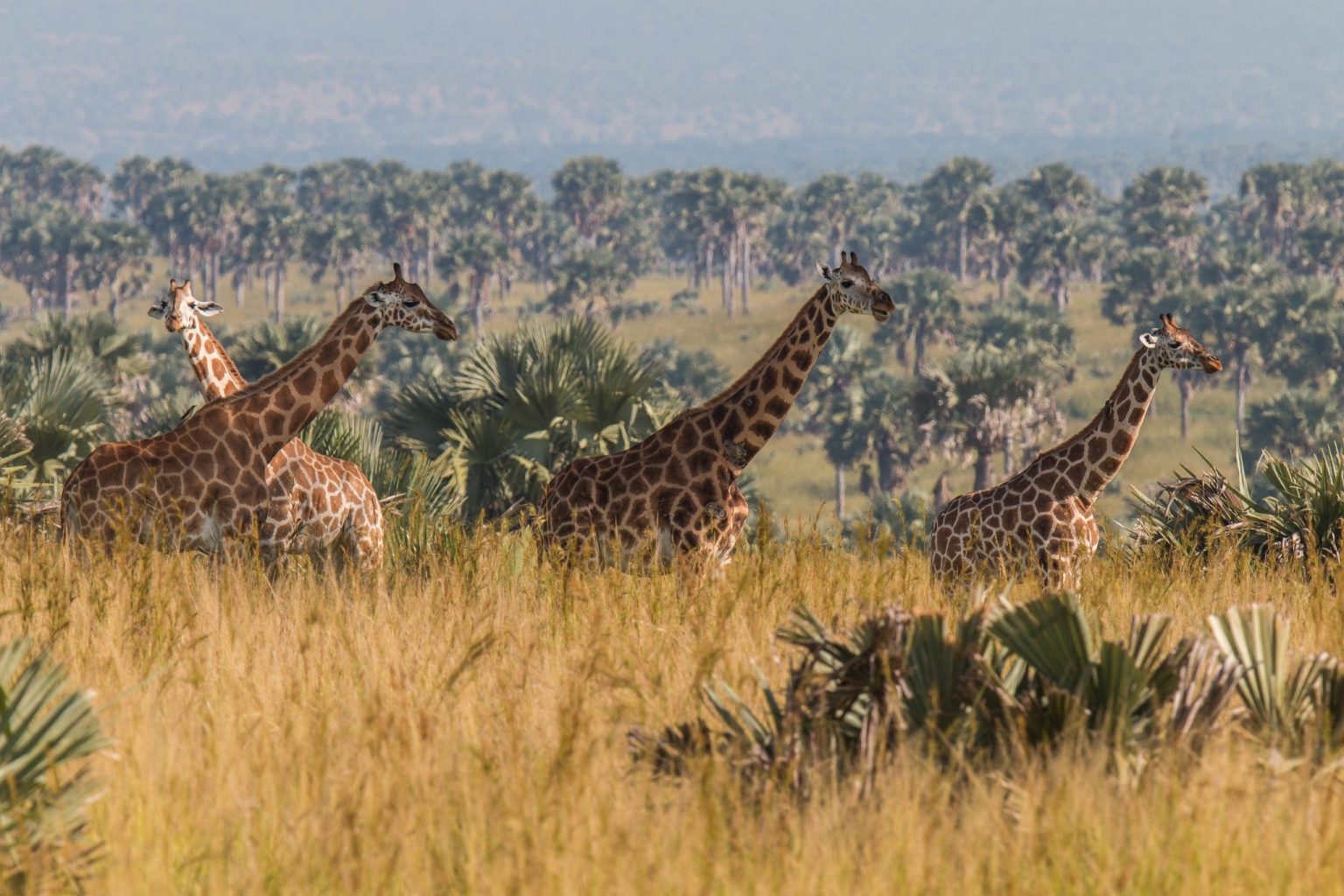
Murchison Falls National Park is Uganda’s largest park, split in two by the Victoria Nile. North of the river, the Buligi tracks cross open grassland with Rothschild’s giraffe, elephants, buffalo, Uganda kob and the lions that follow them. South of the river the country is wooded and quieter, with fewer vehicles.
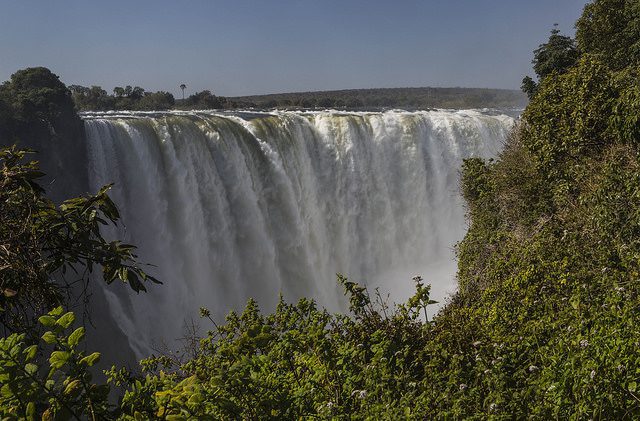
The afternoon launch trip to the base of the falls is the highlight for many people. It takes two to three hours return, past hippo pods, big crocodiles and elephants drinking at the water’s edge, until the boat stops below the spray. Sit on the left going up. On another day, the short hike to the top of the falls shows the whole river forcing itself through a gap only a few metres wide. The roar is the point. Bring a rain jacket or poncho for the spray.
Birders often add the morning boat trip to the delta, where the Nile enters Lake Albert, for another chance of shoebill. Chimp tracking in Budongo Forest, on the southern edge of the park, is a quieter alternative to Kibale for anyone who wants chimps early. Our Murchison Falls safari guide covers both banks, the ferry and the lodges.
Murchison is hot. Game drives run early and late, the middle of the day is for shade, and people who have done this route in the dry months rate an air conditioned room or a lodge pool here more than anywhere else on the trip.

Kibale Chimpanzee Trekking and the Fort Portal Crater Lakes
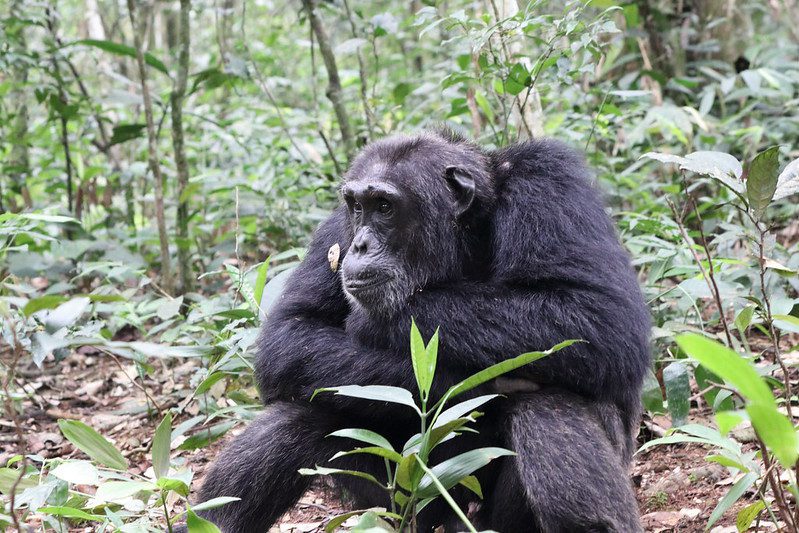
Chimpanzee trekking in Kibale is the primate warm up for Bwindi. Kibale holds around 1,500 chimps, and the Kanyanchu community is well used to visitors, so finding them is very likely. Treks run two to four hours on mostly flat forest trails in small groups, and the hour with the chimps is loud and busy compared with gorillas. They may race past you on the ground, then sit high in a fig tree for half an hour while fruit rains down.
After the long drive from Murchison, a lodge close to Kanyanchu helps. In the afternoon, the community run Bigodi wetland walk is gentle and good for red colobus, grey cheeked mangabey and the great blue turaco, and the fees go back to the village. Serious primate fans can swap the standard trek for the chimpanzee habituation experience, which spends most of a day with a community still getting used to people. The Kibale chimpanzee trekking guide covers both.
North of the park, the crater lakes tour around Fort Portal fills a spare afternoon well: old volcanic craters with small lakes in them, tea estates, viewpoints over the Rwenzori foothills on a clear day, and a few lodges perched on the crater rims. It also makes the best alternative to Bigodi if you arrive early.
Queen Elizabeth Game Drives, the Kazinga Channel and Ishasha
Two nights in Queen Elizabeth National Park give the safari its central savanna days. The Kazinga Channel boat trip on the afternoon you arrive runs about two hours along the water between Lake George and Lake Edward, with hippos, buffalo, elephants and waterbirds close to the boat. Next morning, the Kasenyi game drive covers open plains where Uganda kob gather in big numbers and lions hunt them at first light.
That leaves a free afternoon. Kyambura Gorge, a forested rift sunk into the savanna, has a small chimp community, though sightings are less reliable than in Kibale. One budget version of this route skips Kibale altogether and tracks chimps here instead, which saves a permit fee and a night but makes the chimps far less certain. The explosion crater drive north of Mweya is easier, and some routes visit the Katwe salt flats or a village walk through cocoa and vanilla gardens.
On day seven the route crosses the Ishasha sector, known for lions that rest in the fig trees. They do not climb every day, so allow a couple of hours of slow searching and treat a sighting as a bonus. Read our pages on tree climbing lions in Uganda and the Queen Elizabeth National Park safari for sectors and lodges.
Gorilla Trekking in Bwindi and the Batwa Experience
Gorilla trekking in Bwindi falls on day eight. By then your legs know forest trails and your body has adjusted to the altitude and the early starts. Arrive the afternoon before, sleep near the park office, and report for the 7.30am briefing. Groups of up to eight visitors set out with UWA rangers and trackers to a habituated family. The walk may take under an hour or most of the day, and once you reach them you get one hour at least 10 metres away.
Bwindi holds a little under half of the world’s mountain gorillas. The 2018 census counted 459 in Bwindi and Sarambwe, out of a world total of 1,063, and results from a newer count are still awaited. The rules on the day are simple: voices low, no flash, no eating near the gorillas, a face mask when you are close, and stay put if a silverback runs at you. The rangers handle the rest.
Hire a porter even if you feel strong; the fee goes to a local family and the help on a muddy slope is real. Bring gardening gloves for the nettles, gaiters and a rain jacket. Coming from Ishasha, Buhoma is the natural sector, with lodges such as Mahogany Springs Lodge, Gorilla Mist Camp and Buhoma Community Haven Lodge close to the gate. The Bwindi gorilla trekking guide covers sectors, families and rules in full.
Most ten day routes add a short cultural visit in the afternoon. The Batwa cultural tour near Buhoma is run with the forest people who lived inside Bwindi before it became a national park, and it shows how they hunted, gathered and sheltered there. Read about the Batwa people before you go, so the visit lands as more than a dance show.
With ten days, a second gorilla trek is worth weighing. Plenty of people find the first hour goes on photographs and the second on simply watching. The other upgrade is the gorilla habituation experience in Rushaga, which allows up to four hours with a family still being habituated.
Lake Mburo or Lake Bunyonyi: The Last Leg of the Safari
The last leg of the safari runs east to Lake Mburo National Park, a compact park of acacia, rocky ridges and lakes with zebra, eland, impala, topi and the odd leopard. With no elephants and few lions, it is one of the few Ugandan parks where a walking safari is routine. Evening options are a boat trip for hippos and fish eagles, a sunset game drive or, at some lodges, a night drive for bushbabies, hyena and leopard.
Lake Bunyonyi is the common alternative, a deep, island scattered lake in terraced hills an hour or so from Bwindi’s southern sectors. There is no game, but canoes, island walks and a swim in a lake free of bilharzia make it the gentlest night on the route. Some itineraries use both, with a night at Bunyonyi after the gorillas and a night at Mburo before the drive home, which pushes the trip to eleven days.
Either way, the run back to Entebbe passes the equator at Kayabwe, where most drivers stop for photographs, a coffee and the craft shops. Plan to reach the airport with a few hours to spare; Kampala traffic is the one part of the day nobody can predict.
Five Ways to Plan a 10 Day Uganda Safari Tour
The classic loop is not the only 10 day Uganda safari tour. These five variants cover most of the quotes you will see, and each solves a different problem.
Budget versions usually make two swaps: Kyambura Gorge in place of Kibale for the chimps, and simpler rest camps in Murchison and Queen Elizabeth. Kidepo Valley in the far northeast, Jinja on the Nile and the Rwenzori all fit too, but each pushes the trip past ten days unless something else comes out, and Kidepo realistically needs a flight. Every route here can be changed; any good operator will move days around for you.
Pacing, Drive Times and Lodges on a 10 Day Uganda Tour
The most common regret in trip reports on longer Uganda routes is trying to fit in too much. If something has to go, Lake Mburo or the Kyambura afternoon is easier to lose than a night in Bwindi.
Times are for dry roads with short stops. Add an hour for any day in the rains, and never plan to arrive anywhere after dark.
Lodges should match the activity, not just the budget. The panel below names the places operators on this route quote most often, by stop and level. Availability changes, so treat it as a guide to what to ask for.
Booking a 10 Day Uganda Safari: Operators, Private Trips and Quotes
There are three realistic ways to book a ten day trip. A licensed Ugandan operator is the most common and usually the best value, since the vehicle, guide and permits are all local. An overseas agent adds convenience and home country payment protection, and passes the booking to a local operator anyway, which typically adds a sizeable margin. Self drive is possible with a well equipped 4×4, covered on our Uganda car hire page, but ten days of unfamiliar roads, ferry times and park tracks is hard work.
Private or shared? Almost every ten day trip on this route is private: your group, your vehicle, your driver guide. Shared group departures exist and cost less per head, though they run on fixed dates and seat up to seven in one vehicle. Two people on a private trip pay for the whole car between them, which is why group size moves the price more than anything else.
A ten day quote has more line items than a short gorilla trip, so gaps hide more easily. Ask each operator for the same breakdown.
Permits are paid in full at booking now that UWA has suspended its reservation hold, so expect an early payment and ask for copies. Pay a company account, by card where possible for the extra protection. Check the Uganda Tourism Board licence on the board’s own list; our guide to gorilla safari companies walks through the checks, and the gorilla permit guide explains how permits work.
After group size, lodge tier moves the price most, then season and flights.
Planning the Trip: Seasons, Health, Entry and Packing
June to September and December to February are the drier months and the busiest. Roads are firmer, game concentrates near water in Murchison and Queen Elizabeth, and gorilla trails are less slippery. March to May is wettest, with the Ishasha road at its worst, but lower gorilla permit rates in April and May. The best time for gorilla trekking page goes month by month.
| Months | Conditions | On this route |
|---|---|---|
| Dec to Feb | Short dry | Hot Murchison |
| Mar to May | Long rains | Muddy Ishasha |
| Jun to Sep | Long dry | Busiest, firm trails |
| Oct to Nov | Short rains | Green, quieter |
Uganda’s immigration service announced in October that a yellow fever certificate is no longer a condition of entry, but the vaccine is still recommended and Rwanda or Kenya may ask for the card on an onward crossing, so carry it if you have one. Antimalarials are advised for the whole route. Apply for the eVisa, or the East Africa Tourist Visa if Rwanda or Kenya is also on the plan, only through the official portal; our visa page explains which to choose.
Bring clean US dollar notes printed in recent years, since older or torn ones are often refused, and some Ugandan shillings for small purchases. Cash machines thin out once you leave the towns. On safety, the US State Department listed Uganda at Level 4 at the latest check, while other governments rate it lower; read our page on whether Uganda is safe to visit and your own government’s advice before you book, and buy insurance that covers evacuation.
Pack for heat in Murchison and cold, wet mornings in Bwindi on the same trip. Neutral colours suit game drives; dark blue and black draw tsetse flies in Murchison and Queen Elizabeth. Our Uganda gorilla trekking packing list and African safari packing list cover both, with boots and cameras and binoculars covered separately. For flights, roads and the airstrips, see getting to Bwindi.
Adding Rwanda, Kenya or Tanzania After Uganda
Ten days in Uganda pairs well with a few days on the big plains. Nairobi is about an hour’s flight from Entebbe, which puts the Masai Mara in easy reach, and the Serengeti links through Kilimanjaro or Arusha, as our page on combining a Tanzania safari with gorilla trekking explains. Rwanda is the other easy extension, by road from southern Bwindi to Volcanoes National Park and Kigali. Do Uganda first; the gorilla day is the one most likely to need a spare morning.
10 Day Uganda Safari: Questions and Costs
How much does a 10 day Uganda safari cost?
Permits come first. The UWA gorilla permit is US$800 for foreign non residents, US$700 for foreign residents and UGX 300,000 for East African citizens, dropping to US$600 and US$500 in April, May and November, paid in full at booking and not reschedulable. Kibale chimp tracking is US$250 for foreign non residents, with a rise to US$300 announced. Park entry is around US$45 per person per 24 hours in Murchison and about US$40 in Queen Elizabeth, Kibale and Lake Mburo, the Murchison launch is about US$30, and Ziwa rhino tracking is commonly quoted at about US$50, set by the reserve. Operator quotes for the full route with private 4×4, driver guide, full board lodges, permits and activities commonly fall around US$3,500 to US$4,500 per person on a budget basis and US$5,000 to US$7,500 midrange for two sharing, with luxury trips higher. One operator’s own published budget departure, for example, lists about US$3,800 each for two people and about US$3,250 each for four. These are typical ranges, not fixed prices. The Uganda safari cost guide breaks the same parks down line by line.
What sits outside a 10 day safari quote?
Usually international flights, the Uganda eVisa (US$50 single entry, or US$100 for the East Africa Tourist Visa), travel insurance, gorilla porters paid on the day (commonly US$15 to US$20), tips for the driver guide and rangers, and drinks. Many travellers tip the driver guide around US$10 to US$20 per day from the group. The gorilla habituation experience costs US$1,500 instead of a standard permit, with a rise to US$1,800 announced.
Is 10 days enough for a Uganda safari?
It is enough for the main circuit: Murchison, Kibale, Queen Elizabeth and Bwindi, plus one easy park or lake on the way back. Kidepo, the Rwenzori or a second gorilla sector need more time or a flight.
How many national parks does a 10 day Uganda safari visit?
The classic route visits five: Murchison Falls, Kibale, Queen Elizabeth, Bwindi Impenetrable and Lake Mburo, plus Ziwa, which is a private rhino reserve rather than a national park.
Which 10 day Uganda itinerary is best for wildlife?
The northern loop described here, because Murchison adds giraffe, the Nile and the biggest herds, and Ziwa adds rhino. If primates matter more than plains game, the primates and lakes variant trades Murchison for a second gorilla trek and golden monkeys.
Can I see the Big Five on a 10 day Uganda safari?
Elephant, buffalo and lion live in Murchison and Queen Elizabeth, and leopard is seen at times in both and in Lake Mburo. Rhino are only at Ziwa, where you track them on foot. Sightings of lion and leopard are never guaranteed.
Can you do birding on a 10 day Uganda safari?
Yes, and the route is a strong one for birds without trying: shoebill chances at Mabamba and the Murchison delta, waterbirds on the Kazinga Channel, turacos at Bigodi and Albertine Rift species in Bwindi. Serious birders should ask for a specialist birding guide; our Bwindi birding guide shows what the forest adds.
Is a 10 day Uganda safari too much driving?
It is a lot, with three days of six hours or more. Most people find it fine with two nights per stop, a good vehicle and an early start each day. Flying the Bwindi to Entebbe leg is the simplest way to cut it.
How fit do I need to be?
Most of the trip is vehicle and boat based. The gorilla trek is the hard part, on steep muddy slopes at altitude, and the chimp trek and Mburo walk are moderate. Read trekking difficulty and fitness before you go, and hire a porter.
Can families with children do this route?
Yes for game drives, boat trips, Ziwa and Lake Mburo. The minimum age is 15 for gorilla trekking and 12 for Kibale chimps under the current UWA tariff, so younger children stay at the lodge with an adult on those days.
Should I self drive a 10 day Uganda safari?
It is possible with a well equipped 4×4, but most visitors use a driver guide. Ten days of unfamiliar roads, ferry times and park tracks is tiring, and a good guide finds far more wildlife than a first time visitor will.