A chimpanzee trekking packing list starts with long trousers tucked into tall socks, a long sleeved shirt in a muted colour, boots with real grip and a light rain jacket, because forest trails in Kibale and Nyungwe carry nettles, safari ants and sudden showers. Add binoculars and a camera that copes with dim light, since chimps feed high in the canopy and move fast. Kibale in western Uganda is the main chimp tracking destination in East Africa.
This page sits under our gorilla and primate trekking packing list, which covers the shared forest kit in depth. Everything here is about what changes when the primate you are following is a chimpanzee.
Chimpanzee Trekking Clothes: Long Sleeves and Trousers for the Forest
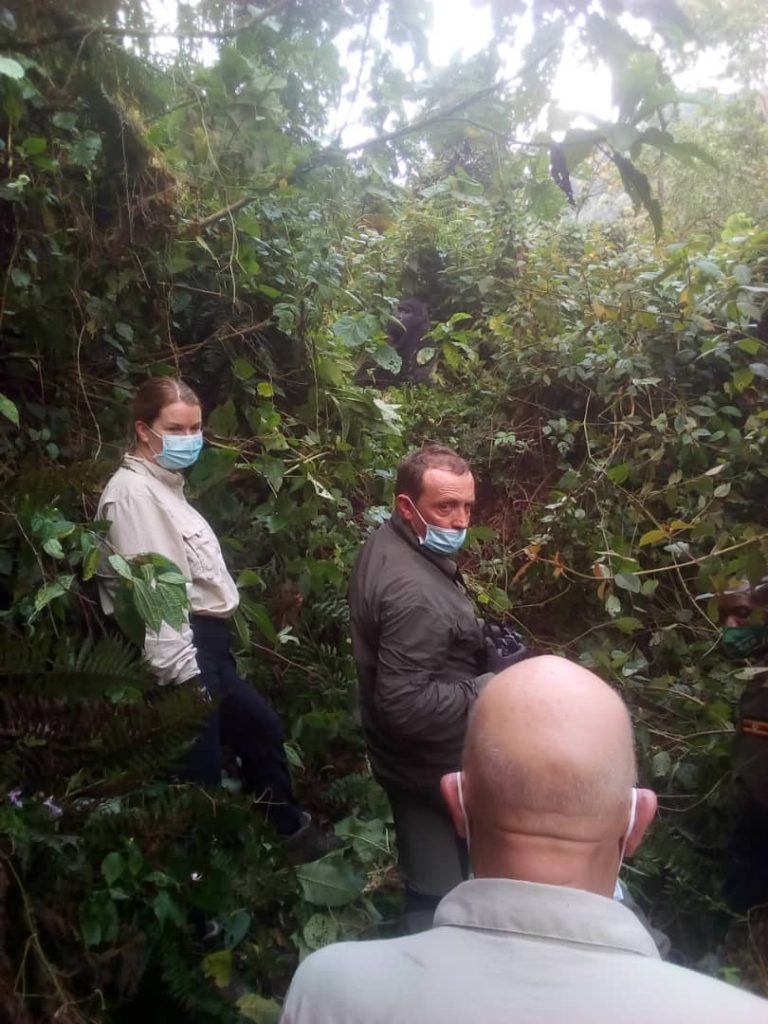
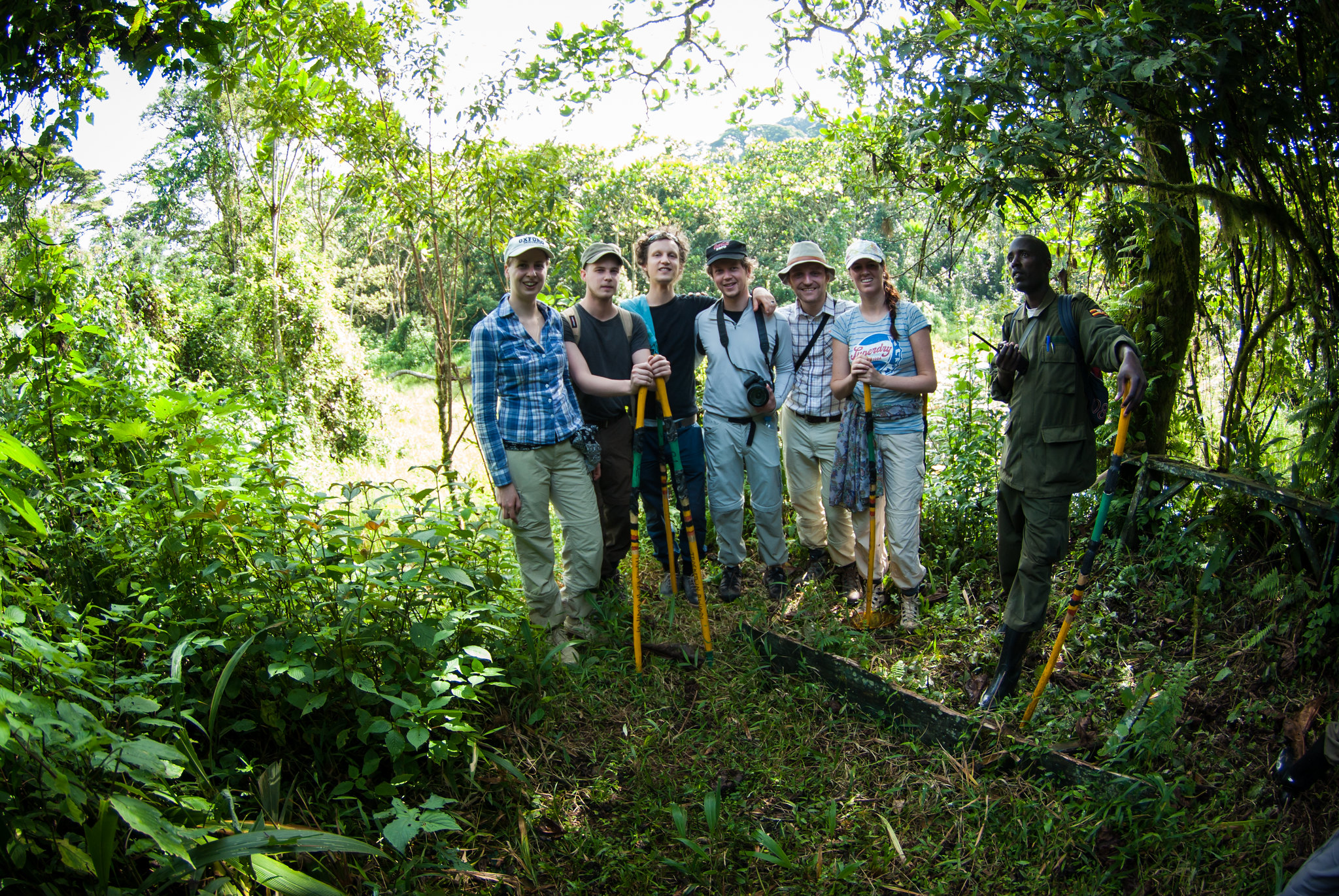
Chimpanzee trekking clothes have one job above all others: covering skin. Kibale’s trails run through stinging nettles, thorny vines and leaf litter where safari ants cross in columns, and the guide often leaves the cut path to follow a calling chimp party. Shorts and a vest top turn an easy walk into a sore one.
Pick a long sleeved shirt in a thin, quick drying fabric. Cotton works on a dry morning but stays wet after rain or sweat, so many trekkers prefer quick dry synthetic hiking shirts with a collar that turns up against the sun in clearings. For the legs, ripstop quick dry hiking trousers shrug off thorns better than leggings, which nettles go straight through. Trousers treated with permethrin, such as insect repellent treated trousers, add a second barrier against ants and forest flies.
Colour matters less to the chimps than to you. Olive, khaki, brown and grey hide mud and do not stand out in photographs of your group. Bright white turns brown within an hour, and a few forum posters advise against head to toe black, which shows dust and draws flies in some areas. Camouflage prints are best left at home in Uganda, Rwanda and Tanzania, where they are linked with the military.
Thin fabric is fine. Kibale sits lower than Bwindi, and by late morning the forest is humid rather than cold, so a heavy shirt soaks through. Our guide on what to wear for gorilla trekking covers fabrics and fits in more detail, and the same outfit works for both apes.
Boots, Tucked Socks and Gaiters on a Chimp Trek
Footwear for a chimp trek needs grip more than height. Kanyanchu’s trails in Kibale are flatter than gorilla country, but roots, wet leaves and steep stream banks are everywhere, and you may be half jogging when the community moves. Waterproof mid hiking boots are the safe choice in the wet months and in steep sites such as Kyambura Gorge and Nyungwe. In a dry spell at Kibale or Budongo, waterproof trail hiking shoes with a lugged sole are enough for many walkers. Our page on gorilla trekking boots compares models, and the best shoes for safari covers lighter trail shoes.
Safari ants are the reason guides keep repeating the same advice. A column crossing the trail will climb any boot, find the gap at the ankle and bite in numbers. Tuck the trouser hem into tall over the calf merino socks before you leave the visitor centre, not after the first bite.
Gaiters do the same job with less fuss. One trip writer bought them after reading mixed advice and was glad, because tucked trousers kept working loose on the walk. Light mid height waterproof hiking gaiters also keep mud and nettle stings off your shins. Sizing and fitting are covered on our gorilla trekking gaiters page, and sock heights and fabrics on the best socks for safari.
Rain Jacket and Cool Morning Layers for Chimpanzee Tracking
Rain can arrive in any month on a chimpanzee tracking safari. Kibale takes a lot of rain each year and showers come fast, often in the afternoon, so a lightweight packable waterproof rain jacket with pit zips rides in every daypack. Pit zips matter in humid forest, where a sealed jacket leaves you as wet inside as out. The gorilla trekking rain jacket guide explains what to look for in a shell.
Mornings are cooler than most people expect. At Kanyanchu before the 8am session the air is damp and fresh, and in Nyungwe, which sits much higher, a dawn start can be properly cold. A thin fleece or merino layer under the rain jacket handles it, and it comes off once the walking starts.
Waterproof trousers are optional. Most trekkers manage without them in Kibale, but anyone booked in the long rains, or on the full day habituation, may be glad of a packable pair.
Binoculars and Neck Strain: Packing for Chimps High in the Canopy
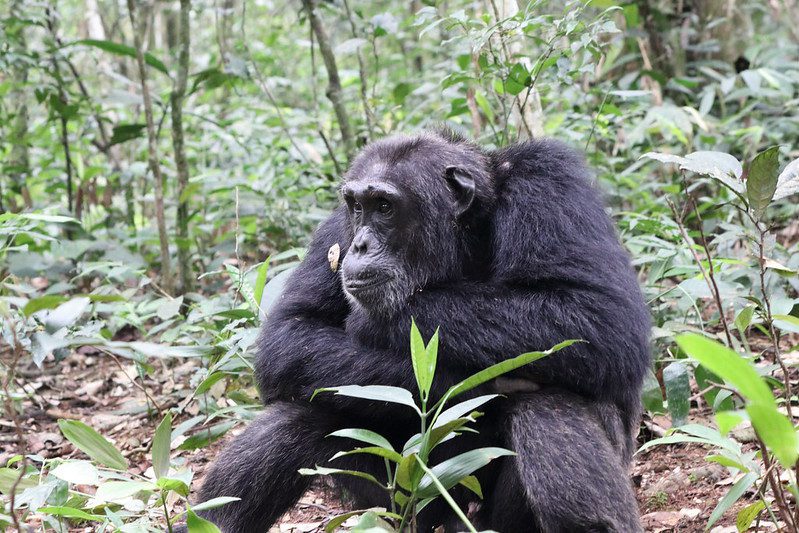
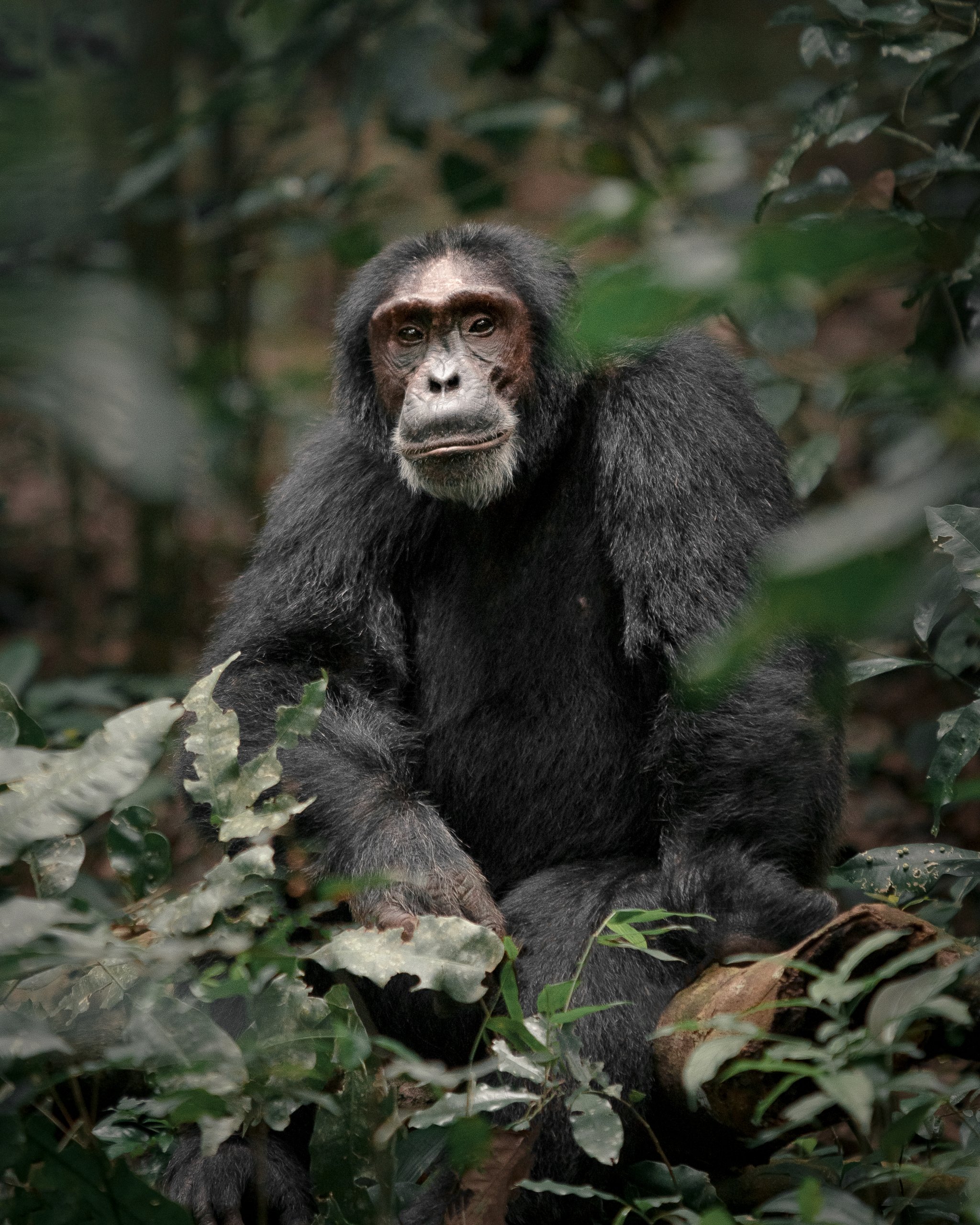
This is where a chimp packing list parts company with a gorilla one. Gorillas sit on the ground and feed in one place for long stretches. Chimpanzee trekking often means standing under a fig in fruit, staring straight up at animals thirty metres above you that never stay still for long. A stiff neck by the end of the hour is common.
Binoculars turn those high views from dark shapes into faces. A pair of lightweight 8×32 ED binoculars is the sweet spot: bright enough for forest shade, wide enough to find a moving chimp, and light enough to hold up for minutes at a time. Ten times magnification shakes more when your arms are raised. A binocular chest strap takes the weight off your neck, which is already working hard. Our binoculars for safari guide explains magnification and glass in more depth.
Two small habits help. Stand back from the trunk so you look up at an angle rather than vertically, and stretch your neck between bursts of watching. Also stand clear when chimps are directly overhead, because fruit, twigs and urine drop without warning.
Camera Kit for Chimpanzee Trekking: Fast Lens, High ISO, No Flash
Photography on a chimp tracking walk is harder than on a gorilla trek, and the kit should reflect that. The forest floor is dark even at noon, chimps are black against shade, and they move quickly. Flash is forbidden near the apes, so light is the problem you pack for.
A bright zoom does more than a long one. Many photographers in Kibale use a 70 to 200mm f/2.8 zoom, which reaches chimps on low branches and gathers far more light than a slow super telephoto. For close views when the community comes down to groom, a cheap 50mm f/1.8 prime is light, fast and easy to carry in a pocket. The best lens for safari page covers mounts and longer options for game drives.
Set the camera before you reach the chimps. Raise the ISO well above what you would use on the savannah, keep the shutter fast enough to freeze a moving arm, and switch off the flash and the focus assist lamp. Expect some soft frames. A phone with a strong night mode is a fair backup on ground level views.
Pack a spare battery and memory card in a jacket pocket, not the bottom of the daypack, because the hour goes quickly and porters may be a few metres behind. A camera rain sleeve keeps a sudden shower off the lens without putting the camera away.
Daypack Contents for a Chimp Trek: Water, Gloves, Repellent and Snacks
Your daypack on a standard chimp trek stays small. Most walks last two to five hours in total, with one hour once the chimps are found, so a 25 litre hiking daypack with a built in rain cover holds everything. Porters can be hired at the visitor centre if you would rather walk free.
Dry bags keep the camera and passport safe if the rain cover slips; our dry bags for safari page covers sizes. Repellent strength and which formulas suit forest walking are compared in our insect repellent for Africa guide.
Trekking poles are a personal call. Kibale’s trails are gentle enough that most people do without, but Kyambura Gorge and Nyungwe have steep drops where a pole or a ranger’s walking stick saves a slip.
Packing for the Chimpanzee Habituation Experience in Kibale
The chimpanzee habituation experience is a different packing problem. Instead of an hour with a fully habituated community, you follow researchers and a semi habituated group from about 6am, when the chimps climb down from their nests, often until they build fresh nests in the late afternoon. It is a full day on foot, much of it off trail.
Because the chimps are less settled, the walking is harder and the views less predictable than standard tracking. Bush toilets apply: the guide will show you how waste is dug in and buried. Our habituation experience packing list covers the gorilla version in Bwindi, and most of that kit carries straight across. The Kibale chimpanzee trekking guide explains how the day runs and how to book it.
Chimp Trekking Kit by Site: Kibale, Nyungwe, Budongo, Kyambura, Gombe and Mahale
The same core kit works at every chimp trekking site, but the terrain changes what matters most.
| Site | Country | Terrain | Pack extra |
|---|---|---|---|
| Kibale | Uganda | Flat, humid | Gaiters |
| Kyambura | Uganda | Steep gorge | Boots, pole |
| Budongo | Uganda | Flat, trailed | Repellent |
| Nyungwe | Rwanda | Steep, cold | Warm layer |
| Gombe | Tanzania | Steep valleys | Dry bag |
| Mahale | Tanzania | Steep, remote | Spare kit |
Kibale is the easiest walking of the group and the most humid, so breathable layers and good ant protection count for more than ankle support. Kyambura Gorge, in Queen Elizabeth National Park, drops steeply into a forested valley; grip and a walking stick matter on the descent, and the climb out in late morning heat is warm work. Budongo Forest, near Murchison Falls, has flatter, well cut trails and plenty of biting insects; see our Murchison Falls safari guide for how it fits a northern route.
In Rwanda, Nyungwe Forest sits high, with steep ridges and cold, often misty dawns. Treks start early from Cyamudongo or the forest’s main sectors, so pack a warm layer and expect slippery slopes. The Nyungwe Forest National Park guide covers the trails. Gombe Stream and Mahale Mountains in western Tanzania are reached by boat on Lake Tanganyika or by light aircraft, so dry bags for the boat leg and a soft bag that meets small plane limits come first, and there are few shops to replace anything forgotten. Trails at both run up and down steep forested valleys.
What to Leave Out of a Chimpanzee Trekking Bag
A few items cause more trouble than they solve on a chimpanzee trek. Flash units stay behind or switched off. Strong perfume and scented lotions draw insects. Food in an open pocket near the chimps is a problem, since eating is not allowed within sight of them and a curious juvenile notices rustling wrappers.
Big camera backpacks and long super telephoto lenses are hard work in thick undergrowth and rarely earn their weight in the shade. Leave white and brightly coloured clothes for the lodge, and leave sandals and casual trainers with smooth soles for camp. Our what not to wear on safari page lists the wider mistakes, from camouflage to jeans.
Leave the cold at home too. Anyone with a cough, cold or fever should not track, because chimps catch human respiratory infections easily, and the guide may ask you to rebook.
Chimp Trekking Rules, Minimum Age and Health Checks
The minimum age for chimpanzee tracking in Uganda is 12, on the Uganda Wildlife Authority tariff, and rangers check passports at the visitor centre. Some operators still quote 15 or 16, which is out of date for Uganda. Rwanda sets its own rule for Nyungwe, where the park applies a minimum of 15, and Tanzania’s parks set theirs, so confirm the age for Gombe or Mahale when you book. For comparison, gorilla trekking in Uganda and Rwanda has a minimum age of 15.
On the trail, groups are small, at six visitors per group in Kibale, and once the chimps are found you have one hour with them. Keep about 8 metres back, step away if a chimp walks towards you, keep voices low and use no flash. Standard tracking leaves Kanyanchu in morning and afternoon slots, and the morning group tends to find chimps feeding low and active.
One Bag for Chimp Trekking and Gorillas in Bwindi
Most visitors to Kibale are also trekking gorillas a few days later, and the good news is that one outfit covers both. Gorilla trekking in Bwindi is steeper and wetter, so build the bag around gorilla needs (boots, gaiters, gloves, rain jacket) and add the chimp extras: binoculars and a bright lens. Our gorilla and chimpanzee safari in Uganda guide shows how the two parks link by road, and the safari gear hub sorts every gear page by trip type.
Kit gets wet on a chimp trek and has little time to dry before the next one. Hang boots and socks in the lodge as soon as you return, carry a second pair of trekking socks, and keep one dry shirt sealed in a bag for the drive south.
Chimpanzee Trekking Packing List: Questions Travellers Ask
What should I wear for chimpanzee trekking in Kibale?
Long trousers tucked into tall socks or covered by gaiters, a long sleeved shirt in a muted colour, boots or trail shoes with a lugged sole and a light rain jacket. Add gardening gloves for vines and nettles. The same outfit works for gorilla trekking later in the trip.
Do I need hiking boots for chimp trekking, or are trainers enough?
Kibale’s trails are flatter than Bwindi’s, so sturdy trail shoes with a deep tread are fine in dry weather. Choose waterproof mid boots in the rainy months, for the full day habituation experience, and at steep sites such as Kyambura Gorge and Nyungwe. Smooth soled city trainers slip on wet roots.
Should I wear gaiters or just tuck my trousers into my socks?
Both work against safari ants. Tucking costs nothing but tends to work loose on a long walk, while gaiters stay put and also keep off mud and nettle stings. On a standard hour long chimp trek tucked socks are usually enough; for habituation, gaiters are worth packing.
Can I use flash, and what camera settings work for chimps?
No flash is allowed near chimpanzees. Use a bright lens, raise the ISO high, keep the shutter fast enough for a moving animal and switch off the focus assist light. A 70 to 200mm f/2.8 zoom or a fast prime does better in forest shade than a slow long lens.
What is the minimum age for chimpanzee trekking?
Twelve in Uganda, on the UWA tariff, for Kibale, Budongo and Kyambura. Nyungwe in Rwanda applies 15. Tanzania’s Gombe and Mahale set their own limits, so check when booking. Gorilla trekking is 15 in both Uganda and Rwanda.
How much does a chimpanzee trekking permit cost?
In Kibale, standard chimp tracking costs US$250 for foreign non residents and US$200 for foreign residents on the current UWA tariff, with East African citizens paying about UGX 180,000. A low season rate for April, May and November drops tracking to US$200 and US$150. The habituation experience is US$300 for foreign non residents. UWA has announced rises to US$300 for tracking and US$400 for habituation, so confirm the rate for your dates. In Nyungwe, chimpanzee tracking is US$150 on the park’s price sheet, on top of park entry.
Is chimp trekking harder than gorilla trekking?
Usually easier on the legs. Kibale is lower and flatter than Bwindi and the walks are shorter. The effort comes from keeping pace when the chimps travel and from craning upward for the whole hour, so pack binoculars and expect a stiff neck rather than sore thighs.