A Uganda and Rwanda gorilla safari treks with one mountain gorilla family in Rwanda’s Volcanoes National Park and another in Uganda’s Bwindi or Mgahinga, crossing the border by road in between. Most trips last 7 to 10 days, either as a loop from Kigali or one way from Entebbe to Kigali, and both permits are booked before anything else. Two treks mean two different forests, two families and two very different walks.

How a Uganda and Rwanda Gorilla Safari Works
The idea is simple. Mountain gorillas live in two blocks of forest: the Virunga volcanoes, shared by Rwanda, Uganda and the Congo, and Bwindi in Uganda, a short drive north of them. A combined gorilla safari treks once on each side of the border, with a road crossing between the two that takes most of a morning.
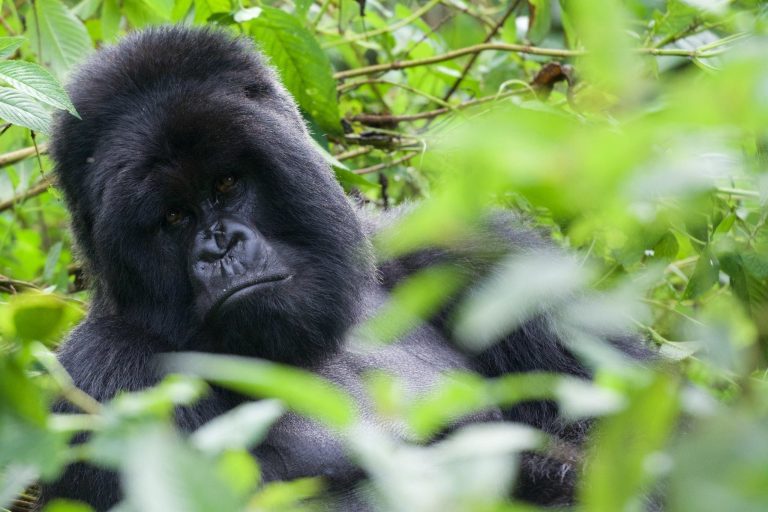
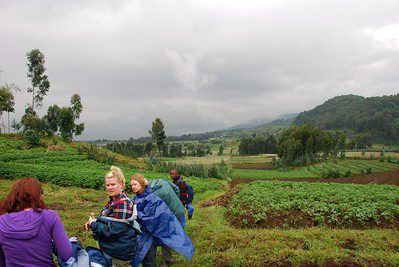
Why do it at all, when both treks end with the same rule of one hour and a group of eight? Because the days feel different. Rwanda’s trek usually starts with a walk through potato fields to a stone wall, then climbs into bamboo on the volcano slopes. Bwindi’s begins at the forest edge and drops into dense, steep rainforest where trackers sometimes cut the trail as you go. Several travellers say the second hour is the one they remember best, because the first is spent behind a camera.
Most trips run on Kigali, because the airport sits about two and a half hours from Volcanoes and four to six hours from Uganda’s southern sectors. Longer trips start in Entebbe, work through Uganda’s parks and finish in Kigali. Our Uganda vs Rwanda comparison covers the choice for travellers who only want one country.
The numbers explain why a second trek is easy to fit. Rwanda lists 12 families for tourism, about 96 permits a day, and every trek starts with a 7am check in at Kinigi. Bwindi has more than 20 bookable families across four sectors, plus Nyakagezi in Mgahinga, so Uganda’s permits are usually the easier half to secure.
Bwindi, Mgahinga and Volcanoes: Two Forests on One Gorilla Trip
Pairing the right Uganda park with Volcanoes is the first design decision on a two country gorilla trek.
For the biggest contrast, pair Volcanoes with Bwindi rather than Mgahinga. The Bwindi gorilla families page lists every habituated group by sector.
Trek Day on Each Side: Terrain, Altitude and Gorilla Families
The gorilla trekking rules match on both sides: one group of up to eight people per family per day, one hour once the family is found, no eating or coughing near the gorillas, and a distance of about 10 metres in Uganda and 7 metres in Rwanda. What changes is the ground.
Volcanoes is higher. Treks there commonly run one to four hours return through bamboo, where the canopy is open and photographs come easily, though Susa, the family Dian Fossey studied, can mean a long climb high on Karisimbi. At the morning briefing rangers match visitors to families by fitness, so say so if you want a shorter walk.
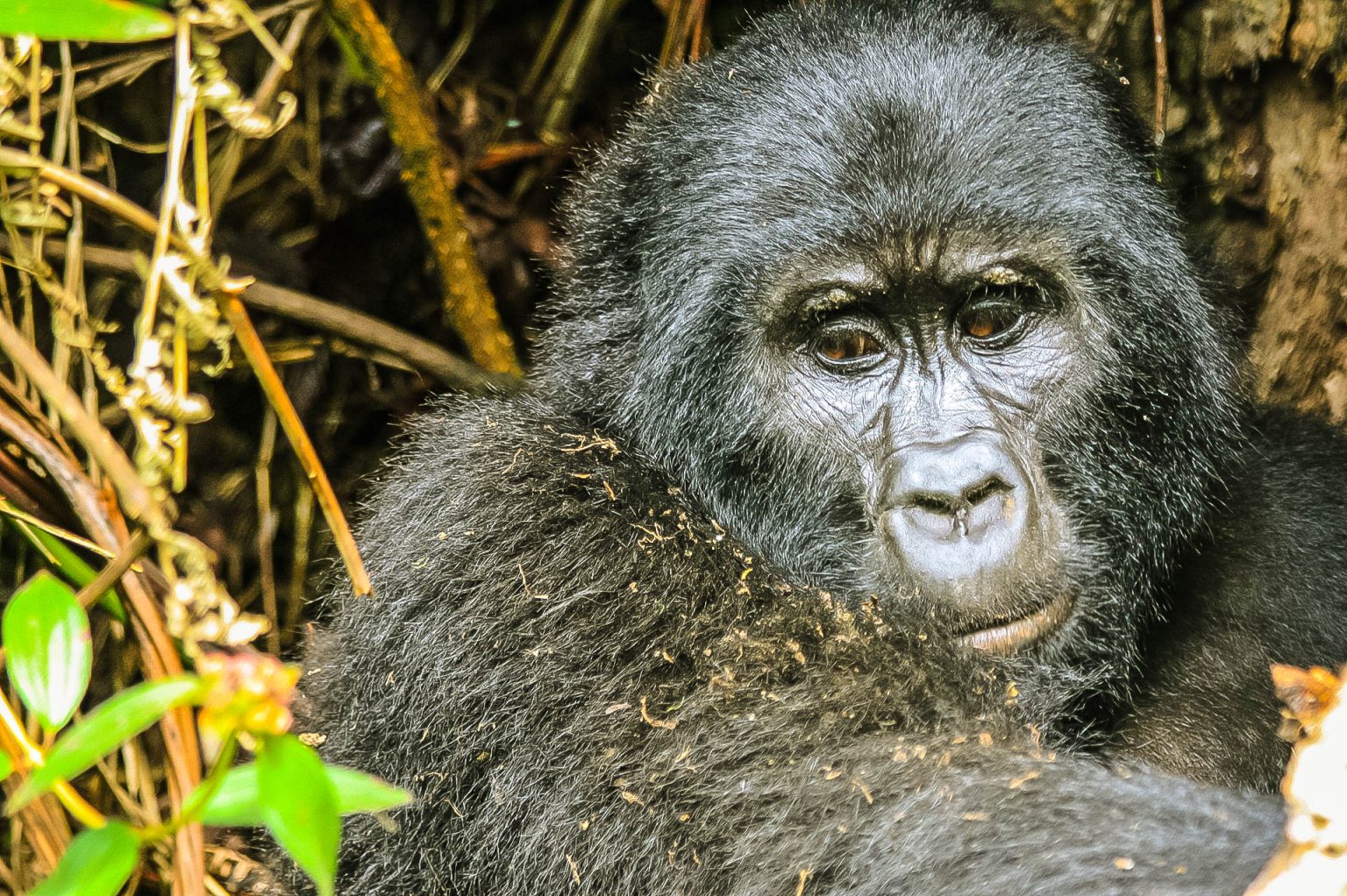
Bwindi is lower but rougher. The park runs from about 1,160 metres to 2,607 metres, so altitude matters less than the slope, the mud and the undergrowth. Ruhija sits highest at roughly 2,300 metres; Nkuringo is known for a long descent and a hard climb back. Your lodge also needs to sit near your sector’s trailhead, because a family in Rushaga cannot be reached from a Buhoma bed in time for the briefing.
Trackers go out early to find each family, so sightings are very likely on both sides, though nobody can promise one. Gardening gloves, gaiters and a porter make a bigger difference in Bwindi than in Rwanda. Our page on Rwanda gorilla trekking covers the Kinigi side in more depth.
Kigali Loop or Entebbe to Kigali: Shaping the Safari Route
Two shapes cover nearly every Uganda and Rwanda gorilla tour.
The Kigali loop. Fly in and out of Kigali, trek in Volcanoes, cross at Cyanika or Katuna, trek in Bwindi or Mgahinga, drive back. Simple return flights and short drives. The drawback is that Uganda’s savanna parks stay out of reach.
Entebbe to Kigali, one way. Land in Entebbe, travel through Kibale or Queen Elizabeth to Bwindi, cross into Rwanda and fly home from Kigali. You see far more of Uganda, but you need an open jaw ticket, so check the fare before building the trip around it. Our Uganda safari guide covers the parks on the way.
Which country first? Ending in Rwanda is popular, since the roads are smoother and the trek is often shorter, so the trip finishes on its gentlest days. Doing Rwanda first suits people who want the more open views for photographs early on, before Bwindi’s darker forest. A domestic flight from Entebbe to Kihihi or Kisoro, about an hour plus transfers, can also replace a day of road; see the fly in gorilla safari guide.
7 Day Kigali Loop Gorilla Safari: Volcanoes and Rushaga
The tightest comfortable plan for two treks, with a rest day built in. It suits a first Uganda and Rwanda gorilla safari with no other parks.
Lodges: one night in Kigali, two near Kinigi (see lodges near Volcanoes), three on the Uganda side at places such as Chameleon Hill Lodge on Lake Mutanda or Ichumbi Gorilla Lodge in Rushaga. Short of time? Drop day 6 and you have the five day version described on our Bwindi from Kigali page.
8 Day Double Gorilla Trek with Lake Bunyonyi and Ruhija
A gentler loop that swaps southern Bwindi for Ruhija, adding a night on Lake Bunyonyi and the Kanaba Gap road with its view of the Virunga cones.
Ruhija’s lodges, such as Agandi Eco Lodge or Gorilla Mist Camp, are cold at night at that altitude, so pack a warm layer.
9 Day Entebbe to Kigali Safari: Queen Elizabeth, Bwindi and Volcanoes
The one way route that adds a savanna safari to two gorilla treks.
The Lake Mutanda night breaks what would otherwise be a very long day from Buhoma to Kinigi. Buhoma lodges include Buhoma Community Haven Lodge and Mahogany Springs; Queen Elizabeth National Park covers the savanna stop.
10 Day Primate Safari: Kibale Chimps, Bwindi and Volcanoes
The fullest version: chimpanzee tracking, savanna, two gorilla treks and golden monkeys.
Some operators run this the other way, starting in Kigali with chimps in Nyungwe instead of Kibale; our 7 day Rwanda safari covers Nyungwe. For Uganda only, see the 10 day Uganda safari and Kibale chimpanzee trekking.
Three swaps work on any of these routes. The habituation experience in Rushaga replaces a standard Uganda trek with up to four hours beside a family still getting used to people, which suits travellers who want one long visit more than two short ones; see the habituation experience guide. A second Rwanda morning can go on the Dian Fossey tomb hike or the climb to the crater lake on Mount Bisoke instead of golden monkeys. And two nights in Akagera, Rwanda’s savanna park, can replace Queen Elizabeth on a Kigali loop, which also fits the season when Rwanda discounts permits for extra park nights; see Akagera National Park.
Pace matters more than the parks you pick. Trip reports from these routes repeat the same lesson: the drives look short on a map and take longer on the ground, with village speed limits, roadside markets and murram near the forests. A rest day after each trek costs little and keeps the second gorilla hour from feeling like a chore.
Shorter and Longer Uganda and Rwanda Gorilla Tours
The routes above are the core, but Uganda and Rwanda gorilla tours are sold from four days to nearly three weeks.
For a broader fortnight that adds Kenya, the two week East Africa safari and gorilla and Masai Mara safari pages set out the routes.
Border Crossing Day on a Two Country Gorilla Tour
Border day on a gorilla tour is usually quiet: your guide parks, walks you through both offices, and you are moving again within half an hour to an hour. A few details still trip people up.
Rwanda holds Umuganda, a community work morning, on the last Saturday of each month, when roads are largely closed to traffic for a few hours. Avoid planning a Rwanda transfer for that morning. Full detail on both crossings is on Bwindi gorilla trekking from Kigali.
Booking Both Gorilla Permits and Timing the Trip
Two countries means two permit systems: the Uganda Wildlife Authority and the Rwanda Development Board. Rwanda’s permits can be bought on the RDB online portal or through an operator, with no need to name a family. Uganda’s are bought through a licensed operator that is a recognised member of AUTO, the Association of Uganda Tour Operators, since UWA sells permits to licensed operators. Book both permits before any lodge, and check the dates leave a buffer day between them. Uganda permits are paid in full when booked. If the Rwanda date slips, the Uganda one does not move with it.
Both forests are wet all year, so treks never stop; what changes is mud, crowds and price.
| Months | Rain | Trails | Permit demand |
|---|---|---|---|
| Jan to Feb | Lighter | Firm | High |
| March | Rising | Muddy | Moderate |
| April to May | Heaviest | Slippery | Low season |
| June to Sept | Lowest | Firmest | Peak |
| October | Rising | Muddy | Moderate |
| November | Heavy | Slippery | Low season |
| December | Easing | Drying | Holiday peak |
June to September and the Christmas weeks sell out first; book Rwanda four to six months ahead and Uganda at least three. April, May and November bring Uganda’s reduced low season permits, which cannot be rescheduled. From November to May, Rwanda offers a permit discount to visitors who also stay in Nyungwe or Akagera, which is worth building into a 10 day plan. Details are on our Rwanda gorilla permits, Uganda gorilla permits and best time for gorilla trekking pages.
What a Uganda and Rwanda Safari Quote Should Include
Use this checklist on every gorilla safari quote.
Compare at least two itemised quotes on the same lodges. The Rwanda safari cost and gorilla trekking cost guides break each side down.
Visas, Health and Rules for Crossing Between Uganda and Rwanda
The East Africa Tourist Visa covers Uganda, Rwanda and Kenya for 90 days with multiple entries inside those three, which suits a Kigali loop that enters Rwanda twice. Apply through the country you enter first. Rwanda waives its own visa fee for many nationalities, so separate visas sometimes work out cheaper; our East Africa Tourist Visa page compares the options.
Carry a yellow fever certificate dated at least ten days before travel. Uganda’s immigration service has said it no longer requires one, but Rwanda asks for it from travellers arriving from Uganda. Rwanda also bans plastic carrier bags. Take clean, newer US dollar notes, since older or torn notes are often refused.
Safety advice differs between the two. At the latest check the US State Department rates Uganda at Level 4 and Rwanda at Level 3, so read your own government’s advice, confirm your insurance covers you under it, and see our is Uganda safe page.
For the treks, gardening gloves help with nettles on both sides, and tucking trousers into long socks keeps ants out. Walking sticks are handed out at briefings. See the gorilla trekking packing list, gorilla trekking boots and what to wear for gorilla trekking.
Uganda and Rwanda Gorilla Safari FAQ
How much does a Uganda and Rwanda gorilla safari cost?
As a rough market guide for two sharing, with both permits included and international flights excluded: a 7 day Kigali loop in budget lodges is commonly quoted around US$3,800 to US$4,800 per person, and in midrange lodges around US$4,800 to US$6,500. A 9 or 10 day route from Entebbe to Kigali with chimps usually falls around US$5,500 to US$8,000 midrange. Luxury lodges near Kinigi and in Bwindi push a week past US$10,000. The two gorilla permits alone come to US$2,300 per person at full rate. These are ranges, not prices.
What do the gorilla permits cost in each country?
Uganda charges US$800 for foreign non residents, US$700 for foreign residents and UGX 300,000 for East African citizens. In April, May and November low season permits cost US$600 (US$500 for foreign residents), on fixed dates that cannot be rescheduled. Bwindi’s habituation experience is US$1,500, with a rise to US$1,800 announced. Rwanda charges US$1,500; from November to May RDB takes 30 percent off (US$1,050) for visitors who stay two nights in Nyungwe or Akagera. Golden monkey tracking is US$100 in Rwanda.
What else should I budget for?
The East Africa Tourist Visa is US$100. Porters usually cost around US$15 to US$20 per trek plus a tip, and driver guides commonly receive US$10 to US$20 per guest per day.
Is it worth trekking gorillas in both countries?
For most people who do it, yes. The forests, the walks and the families are different, and the second hour tends to be calmer because the photographs are already taken. If budget is tight, two treks in Uganda’s different sectors give a similar contrast for less.
Should I trek in Uganda or Rwanda first?
Many travellers prefer Uganda first, so the trip ends on Rwanda’s smoother roads and usually shorter trek. On a Kigali loop it is often easier to trek Volcanoes first, since it is closest to the airport.
Can I trek in both countries in five days?
Yes, from Kigali: Volcanoes, then Cyanika to Rushaga or Mgahinga, then back to Kigali. It works, but leaves no rest day. Seven is easier on the legs.
How long do I spend with the gorillas, and how many people are in the group?
One hour once the family is found, in a group of no more than eight visitors, on both sides of the border. The habituation experience in Rushaga is the exception, with up to four hours and four visitors.
What are the chances of seeing the gorillas?
Very high on both sides, because trackers find each family before you set off, but sightings are not guaranteed. A trek can take thirty minutes or most of a day depending on where the family moved overnight.
Can I trek on two days in a row?
You can, and fit hikers do. Most people prefer a gap day, because a Bwindi trek can take most of a day on steep ground. The minimum age is 15 in both countries. Our page on how hard gorilla trekking is explains trek lengths.
Is gorilla trekking in Uganda and Rwanda safe?
The trekking areas are guarded, and rangers lead every group. Travel advice is a separate question: at the latest check the US rates Uganda at Level 4 and Rwanda at Level 3, so read the current advice for your country before you book.
Do I need a yellow fever certificate to go back into Rwanda?
Plan on it. Rwanda asks for one from travellers arriving from Uganda, whatever Uganda’s own entry rule says.
Can I self drive between Uganda and Rwanda?
Yes, if the rental company authorises the crossing and supplies the vehicle papers and a COMESA Yellow Card. Expect to switch driving sides at the border and slow murram roads near Rushaga. See Uganda car hire.