Budget gorilla trekking in Uganda costs about US$850 to US$1,000 per person on the cheapest realistic trip: a US$600 low season permit in April, May or November, the public bus to Kisoro, a guesthouse and a shared car on trek day. Shared three day trips from Kampala or Kigali usually land between US$1,100 and US$1,600 each. The treks run in Bwindi Impenetrable and Mgahinga national parks in Uganda’s far southwest, where the standard permit for foreign visitors is US$800.
Uganda Gorilla Permit Prices on a Budget Gorilla Trek
On a budget gorilla trek in Uganda, the permit is more than half the bill, and no operator, lodge or group size moves it. Uganda Wildlife Authority sets one price per visitor category on its current tariff and the permit is bought in your name, so a backpacker and a guest at a luxury lodge pay exactly the same for the same hour.
| Visitor | Standard permit | April, May, November |
|---|---|---|
| Foreign non resident | US$800 | US$600 |
| Foreign resident | US$700 | US$500 |
| Other African citizens | US$500 | US$500 |
| East African citizen | UGX 300,000 | UGX 300,000 |
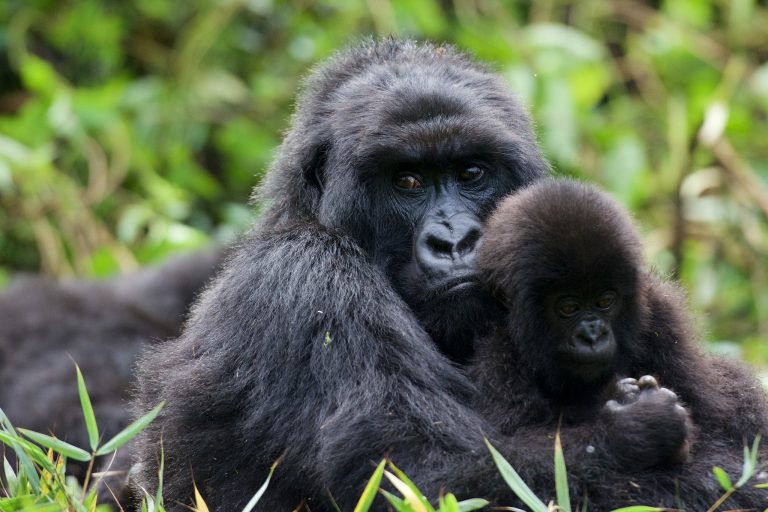
What the permit buys does not change with your budget: park entry for the day, the ranger guide, the trackers and the armed escort, a group of no more than eight visitors and one hour with a habituated family at a distance of 10 metres. Trekkers must be at least 15. What it leaves out is everything else on this page: getting there, the bed, the meals, the porter, the tips and the visa. How the trek day itself runs is set out in our guide to Uganda gorilla trekking.
The gorilla habituation experience in Rushaga gives four hours with a family still being habituated. It costs US$1,500, with a rise to US$1,800 announced, so it is not a budget product. Anyone advertising a “cheap gorilla permit” below the UWA rate is either selling the low season permit under another name or selling something that does not exist.
Booking rules cost money too. UWA suspended its seven day permit hold, so the full fee is paid when you book, and the gorilla permits page covers refunds and transfers. For the full line by line budget at every tier, see gorilla trekking cost; this page is about the cheapest trips that still work.
Low Season Gorilla Permits: US$200 Off in April, May and November
UWA’s reduced low season gorilla permit is the only real discount on the permit itself. For treks in April, May and November, foreign non residents pay US$600 instead of US$800, and foreign residents US$500 instead of US$700. On a three day budget trip that one choice cuts the total by around 15 percent, more than any change of lodge.
The saving comes with two conditions. Low season permits cannot be rescheduled, so a missed flight or a fever on the day costs you the full US$600, and they are paid in full at booking like every other permit. Buy one only once your flights and travel insurance are fixed.
The weather is the other price. These are the wettest months, with rain most afternoons and slow murram roads into the sectors. Travellers who went in May or November describe the same pattern in trip reports: fewer vehicles at the briefing, easier permit availability, often a cheaper room, and a lot of mud on the descent. Gaiters, gardening gloves for the nettles and a rain jacket earn their place, and renting gorilla trekking gear near the park beats buying kit you will use once.
Outside those three months, the cheapest way to cut the permit’s share of the trip is to book early, since June to September and December to February sell out first. The best time for gorilla trekking in Uganda guide sets out month by month conditions.
Budget Lodges and Camping for a Uganda Gorilla Safari: Nightly Rates
Beds are where a Uganda gorilla safari gets cheap. The rates below come from each property’s own published rate card. Note the basis: some charge per room, some per person, and full board in a remote village matters more than it sounds, since there are few other places to eat.
| Where | Room or pitch | Meals | Rate |
|---|---|---|---|
| Mianzi, Kisoro | Own tent | None | US$10 pp |
| Mianzi, Kisoro | Double room | Breakfast | US$45 room |
| Mianzi, Kisoro | Double room | Full board | US$60 room |
| Nshongi, Rushaga | Own tent | Full board | US$45 pp |
| Nshongi, Rushaga | Standard double | Full board | US$150 room |
| Buhoma Rest Camp | Banda double | Breakfast | US$126 room |
| Buhoma Rest Camp | Banda double | Full board | US$166 room |
Per person, that puts a couple at about US$23 each in Kisoro with breakfast, US$75 each at Nshongi Camp beside the Rushaga gate on full board, and US$83 each at the Buhoma Community Rest Camp by the Buhoma gate on full board. Nshongi Camp also sells a bring your own tent pitch at US$45 per person with all three meals, which is the cheapest way to sleep at a Bwindi trailhead. The Buhoma Community Rest Camp is run for the local community and sits at the park gate, so you walk to the briefing.
Other low cost bases are the CTPH Gorilla Conservation Camp and Bwindi Forest Lodge in Buhoma, Wild Olives Lodge in Rubuguri near Rushaga, and Gift of Nature Lodge in Ruhija. Ask each for its current rate card and whether the price is per room or per person, then compare like with like.
The single supplement. Solo travellers pay more per head everywhere. At Nshongi, a standard single on full board is US$95 against US$75 each in a shared double; at Buhoma, US$115 against US$83. In Kisoro the single at Mianzi is US$35 with breakfast, so a solo traveller saves most by sleeping in town.
Three checks before you pay for a cheap room. Does the rate include dinner and a packed lunch for trek day? Is there a warm blanket, because nights in Ruhija and Rushaga are cold? And is it walking distance to your sector’s briefing, or will you need a car at dawn? The most expensive mistake on a budget trip is sleeping in one sector with a permit for another, then paying for a long drive before sunrise. The Bwindi safari lodges guide lists every lodge by sector.
Bus, Car Hire or Shared Tour: Transport Costs for Gorilla Trekking in Uganda
Transport is the second big lever on a budget gorilla trip, because the forest is a long way from Entebbe. Bwindi’s sectors are eight to ten hours by road from Kampala, and the last stretch is murram that slows after rain.
Public bus. Buses leave Kampala’s bus parks daily for Kabale, Kisoro and Kihihi. Fares reported at the Kisenyi bus park run roughly UGX 45,000 to UGX 60,000 one way, about US$12 to US$16, and they rise before Christmas and other holidays. Kisoro is the base for Mgahinga and the southern sectors, Kabale for Ruhija, Kihihi for Buhoma. It is the cheapest way in and the hardest: ten hours or more, early starts, and a boda boda or special hire for the last leg.
The trek day car. This is the cost bus travellers forget. After the briefing, each group follows its ranger to the family’s trailhead, which can be a long drive from the office, so you need a vehicle for the day. Camps and guesthouses arrange a car and driver the evening before. Kampala operators’ published rates for a RAV4 with driver run about US$65 to US$80 a day before fuel, and a local hire for one short run usually costs less; agree the price, the fuel and the return time before you set off. Split between two or three trekkers, it becomes a small line.
Self drive. Uganda car hire companies publish rates of roughly US$40 to US$65 a day for a self drive RAV4 and about US$130 to US$170 a day for a Land Cruiser with driver, fuel extra. A rental makes sense for three or four people; for one, the bus plus a trek day car is cheaper. The Uganda car hire guide and car hire for gorilla trekking pages cover deposits, insurance and the roads.
Shared group tour. A seat in a vehicle on fixed dates, with the driver, fuel and lodges split across the group. Per person it is usually the cheapest packaged option, and the trailhead problem becomes the driver’s job.
Via Kigali. Flying into Kigali halves the drive to Rushaga, Nkuringo and Mgahinga, which sit four to six hours away through the Cyanika or Katuna border. If your international fare into Kigali is close to Entebbe’s, the road saving often makes it the cheaper route. A Rwanda visa costs up to US$50 for most travellers (waived for African Union, Commonwealth and Francophonie nationals), or the East Africa Tourist Visa at US$100 covers both countries. Our page on gorilla trekking in Uganda from Kigali covers the border, and getting to Bwindi has drive times sector by sector.
Budget Gorilla Trekking Packages in Uganda: What Operators Charge
Most budget gorilla trekking packages bundle the permit, a vehicle with driver, fuel, budget lodges and meals, and quote per person for two or more sharing. Prices taken from operators’ own published rate pages show the spread:
Two patterns stand out. Solo travellers pay US$120 to US$500 more than each member of a couple, because the car and driver cost the same for one person or four. And a cheap headline price is often a price before the permit, so ask the question in writing.
Many operators quote a standard US$800 permit by default. If your dates fall in April, May or November, ask for the low season permit and check the quote drops by US$200 per foreign non resident, and that the operator has explained the no rescheduling rule.
A fair quote names the lodge for each night, says whether the vehicle is private or shared, includes fuel and the driver’s costs, confirms the permit is bought in your name at your visitor rate, and lists the exclusions: usually porters, tips, visas and drinks. The 3 day gorilla safari page describes the most common budget shape in detail.
Planning this trip? Send your dates, group size and budget through our contact page for free, independent advice on which shape fits. To get priced quotes, compare licensed operators on the gorilla safari companies list.
Worked Totals: The Cheapest Realistic Uganda Gorilla Trekking Trips Per Person
These budget gorilla trek totals are built line by line from the rates above, in US dollars, per person, for a foreign non resident. International flights and travel insurance are left out because they vary too much by departure city.
What moves these totals: the season moves the permit by US$200; travelling alone adds roughly US$100 to US$500 depending on how much of the trip is a private car; and each extra night adds a bed and meals, which is why Trip A stays cheap even at three nights. The camping version of Trip A, a pitch in Kisoro at US$10 a night plus meals in town, trims the bed line further but leaves you buying food separately.
Hidden Costs of Gorilla Trekking in Uganda: Porters, Tips, Visas and Extras
The extras on a gorilla trekking safari are small one by one and easy to leave out of a budget. Allow for these in US dollars:
Hire the porter even on the tightest budget. It is one of the smallest lines of the trip, much of it goes straight to families living beside the park, and travellers who planned to carry their own bag keep writing afterwards that they were glad of a hand on the steep climbs. Walking sticks are free at the briefing. A packed lunch from your camp costs less than anything on the road, and treks can run from under an hour to most of a day, so carry two litres of water.
Gear is where budget travellers overspend before they leave home. Waterproof boots, gaiters, gardening gloves, long sleeves and a rain jacket cover the trek. The Uganda gorilla trekking packing list shows what you can bring, and the gorilla trekking gaiters guide explains the one cheap item most people forget.
Uganda, Rwanda or Congo: Where Gorilla Trekking Costs Least
For mountain gorillas, Uganda is the cheapest country open to visitors. The Rwanda permit costs US$1,500, almost double Uganda’s US$800, and Rwanda’s 30 percent low season offer brings it to US$1,050 only from November to May, for travellers who also pay for two nights in Nyungwe or Akagera. Even discounted, it stays above Uganda’s standard rate and well above Uganda’s US$600 low season permit.
The difference shrinks on a very short trip. Volcanoes National Park is two to three hours from Kigali, so a Rwanda trek needs fewer nights and less fuel than a road trip from Kampala. Our budget gorilla trekking in Rwanda page works through the Rwanda sums, and the honest answer for most budget travellers who fly into Kigali is to cross into Uganda for the cheaper permit.
Congo’s lower permit is not an option today. In the Democratic Republic of Congo, Virunga National Park lists its gorilla treks as closed until further notice, so older articles quoting Congo prices describe a trek you cannot currently book. The Congo gorilla trekking page tracks the situation.
Within Uganda, Mgahinga and Bwindi cost the same per permit. Mgahinga has one habituated family and cheap rooms in Kisoro town, so permits are scarce. Bwindi’s sectors are spread far apart by road: Buhoma suits Kampala starts and camps at the gate, Rushaga has the most families and is closest to Kigali, Ruhija is quiet and cold, and Nkuringo is steep with fewer cheap beds. Choosing the sector that matches your route saves more fuel than any other decision.
Paying Less Without Booking Risks: Budget Gorilla Permit Rules
Visitors get a Uganda gorilla permit through a licensed tour operator that is a recognised member of AUTO, the Association of Uganda Tour Operators, which buys it from UWA in your name. Many operators sell a permit alone, or a permit plus transfers, for a service fee. Forum travellers call this the hybrid route, and for a couple it is often the cheapest workable plan: the operator handles the one thing that must be right, and the bus and guesthouse stay cheap.
Doing everything yourself saves most on paper and carries every risk: the bus that leaves late, the driver who does not appear at 5.30am, a guesthouse an hour further from the gate than its listing implied. Each of those can cost you the permit, and a lost permit is US$600 to US$800 gone. A question that keeps coming up in budget travel groups is whether it is cheaper to wait and book on arrival. For gorillas it is not: the permit price is fixed, permits for popular dates sell out months ahead, and the full fee is due at booking anyway.
The gorilla safari companies page explains how to vet an operator. If one quote is far below the others, it is usually missing the permit, using a vehicle that will struggle on wet murram, or booking a lodge in the wrong sector. For a second primate without a second gorilla permit, golden monkey trekking in Mgahinga or a community walk around Buhoma costs a small fraction of it.
Budget Gorilla Trekking Uganda Questions
How much does it cost to trek gorillas in Uganda?
The UWA permit is US$800 for foreign non residents, US$700 for foreign residents, US$500 for citizens of other African countries and UGX 300,000 for East African citizens. In April, May and November it drops to US$600 and US$500 for the first two groups, not reschedulable. A whole budget trip costs about US$850 to US$1,000 per person on your own in low season, or US$1,100 to US$1,600 on a shared three day package.
Where is the cheapest place to go gorilla trekking?
Uganda, among the parks open today. Its permit is US$800, or US$600 in low season, against US$1,500 in Rwanda. Virunga in Congo lists its gorilla treks as closed until further notice.
How expensive is gorilla trekking in Uganda compared with other safaris?
One hour with the gorillas costs more than most full days on safari elsewhere, because the permit alone is US$600 to US$800. The rest of a budget trip is cheap by safari standards: camping from US$10 a night, guesthouse doubles from US$45 and bus fares of roughly UGX 45,000 to UGX 60,000.
Is gorilla trekking worth the money on a budget?
For most people who go, yes, and a budget trip buys the same hour as a luxury one. The section below sets out what the permit fee pays for and why travellers on tight budgets still rate it the best money they spent.
What is the cheapest way to see gorillas in Uganda?
A low season permit, the bus to Kisoro, a guesthouse or campsite, and a shared car on trek day, for about US$855 per person for two people over three nights. Mgahinga and Rushaga are the sectors within reach of Kisoro.
Can I do gorilla trekking in Uganda without a tour operator?
Mostly. The permit is booked through a licensed operator that is a recognised AUTO member, and some sell it alone for a service fee, but you can arrange the bus, the bed and the trek day car yourself. Book that car through your camp the evening before.
Can I buy a gorilla permit when I arrive to save money?
No saving exists. The price is the same whenever you buy, it is paid in full at booking, and popular dates sell out months ahead. Waiting only risks having no permit.
How much should I budget for porters and tips?
About US$15 to US$20 for a porter plus a tip, a combined US$10 to US$20 per person for the ranger and tracker team, and US$10 to US$20 a day per group for a driver guide on a package.
How far ahead should I book a budget gorilla permit?
Three to six months for June to September and December to February, longer for a group. In April, May and November permits are easier to find, sometimes weeks out. Secure the permit first, then the cheap bed in the same sector.
How fit do I need to be, and what is the minimum age?
Reasonably fit, since treks climb steep, muddy slopes for anything from under an hour to most of a day; see trekking difficulty and fitness. The minimum age is 15, checked against passports at the briefing.
Is Budget Gorilla Trekking in Uganda Worth the Money?
The US$800 permit, or US$600 in low season, is high because it pays for the whole system around the hour: ranger salaries, trackers who follow each family every day, anti poaching patrols, veterinary monitoring and a share for the communities around the park. Group sizes are capped at eight so the gorillas are not overwhelmed, and that cap is what keeps the price where it is.
On the trail, nothing tells a budget trekker from a luxury guest. Everyone gets the same briefing at 7.30am, the same rangers and trackers, the same one hour at 10 metres. The walk can take forty minutes or five hours, through nettles, vines and mud, and porters often end up pulling people up the last slope. Trip reports from budget travellers keep making the same point: the bed and the bus fade quickly, while the hour with a silverback is what they talk about. If a choice has to be made, spend on the permit and the porter, and save on everything else.
Stretching a Budget Uganda Gorilla Trip Into a Wider Safari
A gorilla trek pairs easily with Uganda’s other parks: chimpanzee trekking in Kibale, game drives in Queen Elizabeth National Park or a trip north to Murchison Falls. Longer trips often cost less per day, since the vehicle and driver are already paid for. The Uganda safaris guide shows how these fit together.
Further afield, budget group camping safaris in Kenya and Tanzania are some of the cheapest ways to see big game in Africa. Regional flights from Entebbe reach Nairobi and Kilimanjaro, so a Bwindi trek can sit next to a Masai Mara safari or a Serengeti safari, and the East Africa Tourist Visa covers Uganda, Rwanda and Kenya on one fee.