A 7 day Rwanda safari fits all three of the country’s big parks into one loop from Kigali: two nights of game drives in Akagera, mountain gorilla trekking and golden monkeys in Volcanoes National Park, a night on Lake Kivu and chimpanzee tracking in Nyungwe Forest. Most travellers go privately with a driver guide from a licensed operator. Rwanda is small and its main roads are paved, so a week covers savannah, volcanoes and rainforest without a single flight.
The route below runs east first, then northwest, then south, so the long drives fall on days with little else planned and the gorilla trek sits mid week with a spare day either side. Other ways to shape the week follow, along with lodges for each night and what a fair quote should include. Every cost figure is in the FAQ.
The 7 Day Rwanda Safari Route at a Glance
Think of the trip as a figure drawn from Kigali: out east to Akagera and back, up to the volcanoes, west to the lake, south to the forest, then home across the middle of the country. Six nights, four beds.
| Night | Base | Main activity |
|---|---|---|
| 1 and 2 | Akagera | Game drives |
| 3 and 4 | Volcanoes | Gorillas |
| 5 | Lake Kivu | Golden monkeys |
| 6 | Nyungwe | Canopy, chimps |
Two nights in Akagera is not padding. It is the stay that qualifies a gorilla permit for RDB’s low season offer from November to May, and it gives you one morning when the lions are still moving. Trip reports from people who did Akagera in a single day mostly say they saw it at midday, when the animals were lying down.
Arrival and departure shape the edges of the week. Flights that land in Kigali late in the evening mean a hotel night in the city before day one; flights that leave early mean one after day seven. Either way, a spare half day in Kigali is well spent on a city tour: Kimironko market for fabric and baskets, the Richard Kandt House museum, coffee roasted in the city, and the Campaign Against Genocide museum at the parliament building.
Day 1 and 2: Akagera Big Game Safari and Lake Ihema Boat Trip
The Akagera safari starts with a paved drive east from Kigali through Rwamagana and Kayonza, about two and a half hours, then a dirt road to the southern gate. Akagera is Rwanda’s savannah park, run by African Parks with the Rwanda Development Board, and lions and black rhinos have been brought back to it in the last decade, so it now holds the Big Five. Sightings are never guaranteed, and leopard is the hardest to find.
Arrive by early afternoon and the Lake Ihema boat trip is the obvious first outing. Scheduled boats leave the jetty near park headquarters several times a day, with a longer sunset trip in the late afternoon. Hippos and crocodiles are close to certain, and the papyrus edges carry fish eagles, kingfishers and, with luck, a shoebill.

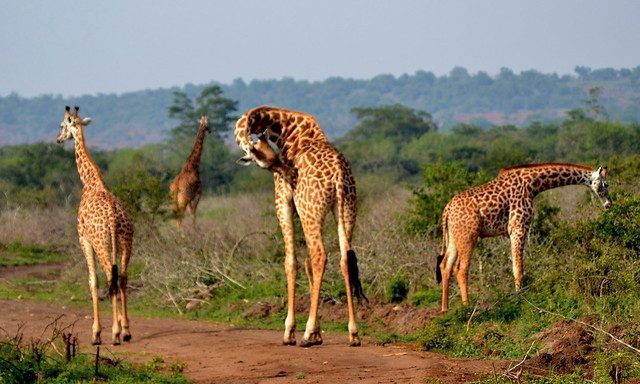
Day two is the Akagera game drive safari proper. Leave at first light and work north along the chain of lakes, with a picnic stop at Lake Mihindi, then up to the Kilala plains, open grassland where giraffe, zebra, topi and elephants gather and the views stretch toward Tanzania. A self drive needs a park guide on board to make sense of the tracks; most travellers stay in their operator’s vehicle or book a park safari car with a ranger. An optional night drive leaves from the south around dusk, the one chance on the trip for bushbabies, genets and hunting leopard.
Two practical things from trip reports. Tsetse flies get thicker as you head north and are drawn to dark blue and black, so wear khaki and keep the windows up in the woodland sections. And if your driver plans to leave by the northern gate, confirm with the park that it is open for exit that day. The Akagera National Park guide has the sectors, gates and lodges.
Day 3: Kigali Memorial Stop and the Drive to the Volcanoes
Day three is the longest road day of this Rwanda safari tour, roughly five hours of driving from Akagera to Musanze with Kigali at the halfway point. Use the break. The Kigali Genocide Memorial at Gisozi tells the story of 1994 plainly and with care, and an hour or two there explains much of what you will see in the country afterwards. Entry is free, donations are welcome, and a quiet lunch in the city follows naturally.
The afternoon road north climbs through terraced hills on a good paved highway to Musanze, the town many drivers still call Ruhengeri. Aim to arrive before dark; fog settles on the hills in the evening and every forum thread on Rwanda driving says the same thing about not doing this stretch at night. Settle in, pack the daypack for the morning and get an early night.
If the day feels too long, there is an easy fix. Some operators drive straight from Akagera to Kigali on day two after a morning drive and do the memorial and city tour then, which moves the long drive north to the following morning and makes the gorilla trek day five. That costs a night on the lake, not a park.
Day 4: Mountain Gorilla Trekking Day in Volcanoes National Park
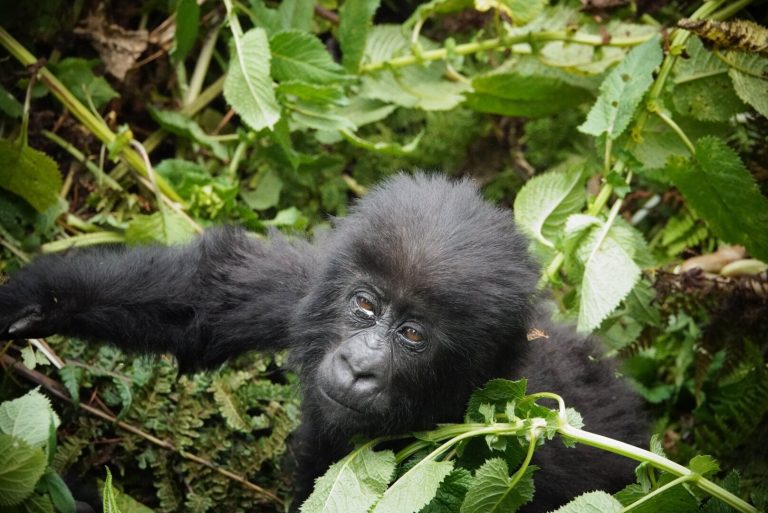
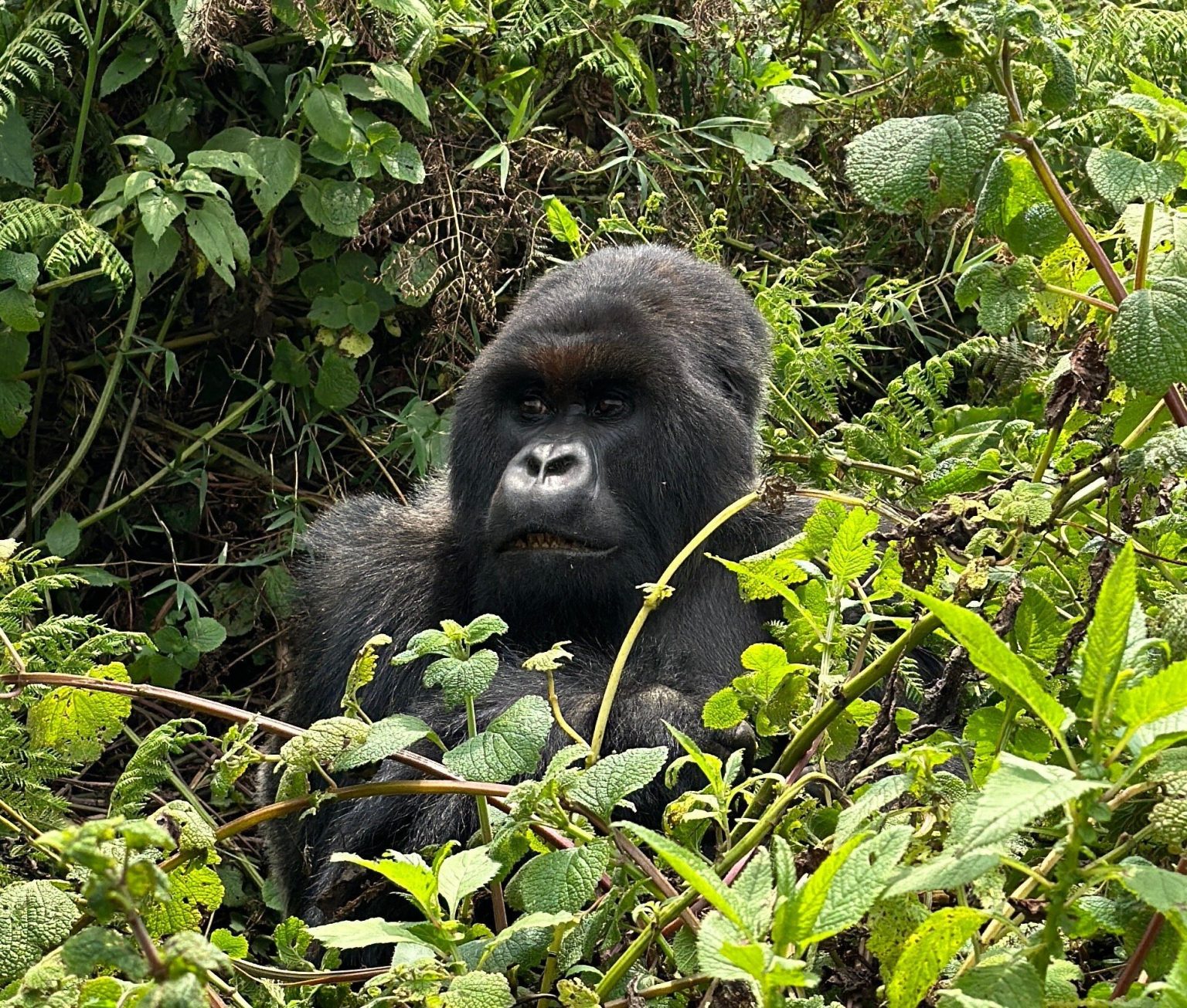
Mountain gorilla trekking is the reason most people book a Rwanda safari, and the day runs to a fixed rhythm. Report at Kinigi park headquarters by 7am for coffee, traditional dancers and the briefing, where rangers assign each group of eight to one of the twelve families listed for tourism. Tell them if you want a shorter walk; they try to match fitness to family.
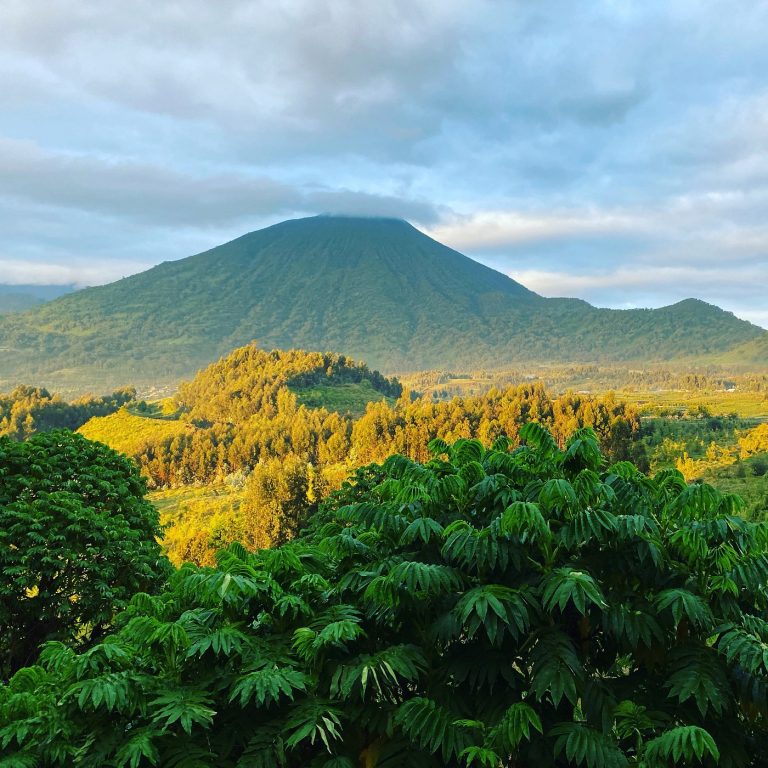
Then drive to the trailhead, which can be ten minutes or nearly an hour away along rough lava tracks, and walk up through farmland to the stone wall that marks the park edge. Beyond it the climb goes through bamboo and hagenia forest at well over 2,500 metres. Treks can take half an hour or most of the day. Once the trackers find the family, you get one hour, keeping about 7 metres back, masks on, no flash, voices low. Trip reports repeat that the hour feels like ten minutes.

Hire a porter at the start point. They carry your bag and pull you up the steep sections, and trekkers who skip one on a long walk usually regret it. Gardening gloves help with the nettles and safari ants, gaiters with the mud, and a packed lunch with the long days. The Rwanda gorilla trekking guide covers the families and the trek in full, and the Rwanda gorilla permits guide covers booking.
The afternoon is yours. Rest, or pick one of three short outings. The Iby’iwacu cultural village tour, the community project near Kinigi now often called the Gorilla Guardians village, shows traditional dance, a healer’s garden and a king’s house, and was started with former poachers. The Ellen DeGeneres Campus of the Dian Fossey Gorilla Fund, a short drive away, explains the research behind the gorillas you just saw. Or drive to the twin lakes of Burera and Ruhondo for a canoe trip and the view of the volcanoes from the water.
Day 5: Golden Monkey Tracking and the Lake Kivu Road Trip
Golden monkey tracking starts from the same Kinigi briefing and takes you into the bamboo zone for an hour with a habituated troop of these orange and black monkeys, found only in the Virunga region. It is shorter and easier than the gorilla trek and accepts children from 12, which helps families with younger teenagers. Some people prefer it before the gorillas, as a gentle first walk at altitude; that works if the permits allow. Our golden monkey trekking guide has the detail.
Prefer a harder morning? Swap the monkeys for the Dian Fossey tomb hike to the old Karisoke research site, or the full day Mount Bisoke hike to its crater lake, though Bisoke leaves no time for the lake drive and pushes Kivu to a short evening. The two day Mount Karisimbi climb, to the highest of the Virunga volcanoes, needs its own extra days and does not fit inside this week.
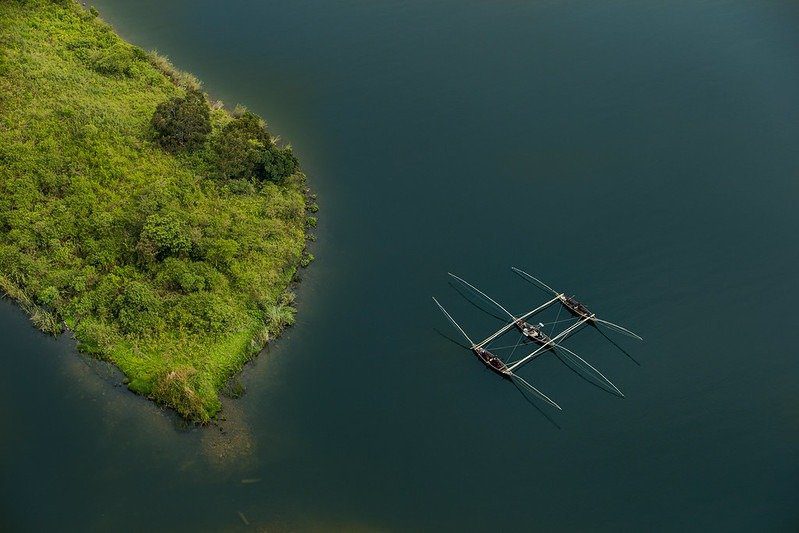
After lunch, drive west for about an hour and a half to Rubavu, the lake town once called Gisenyi, on the shore of Lake Kivu. The afternoon is slow on purpose: a walk along the sandy beach, a sundowner while the fishing boats head out with their long poles, or a visit to Red Rocks near Nyundo for banana beer brewing and local crafts.
Travellers with an extra morning here take the Lake Kivu boat trip to Napoleon Island, with its colony of fruit bats, and Monkey Island. It runs about two hours and needs sun cream and water; the lake glare is fierce.
Day 6: Lake Kivu to Nyungwe and the Canopy Walk Tour
The Congo Nile road trip south along Lake Kivu is one of the prettiest drives in Rwanda and also one of the slowest: winding tarmac through Karongi and the tea and coffee hills of Nyamasheke to Gisakura at the edge of Nyungwe. Allow most of the morning and early afternoon, five to six hours with stops. Karongi, the old Kibuye, makes a good lunch break, and leaving Rubavu by 7am keeps the afternoon free.
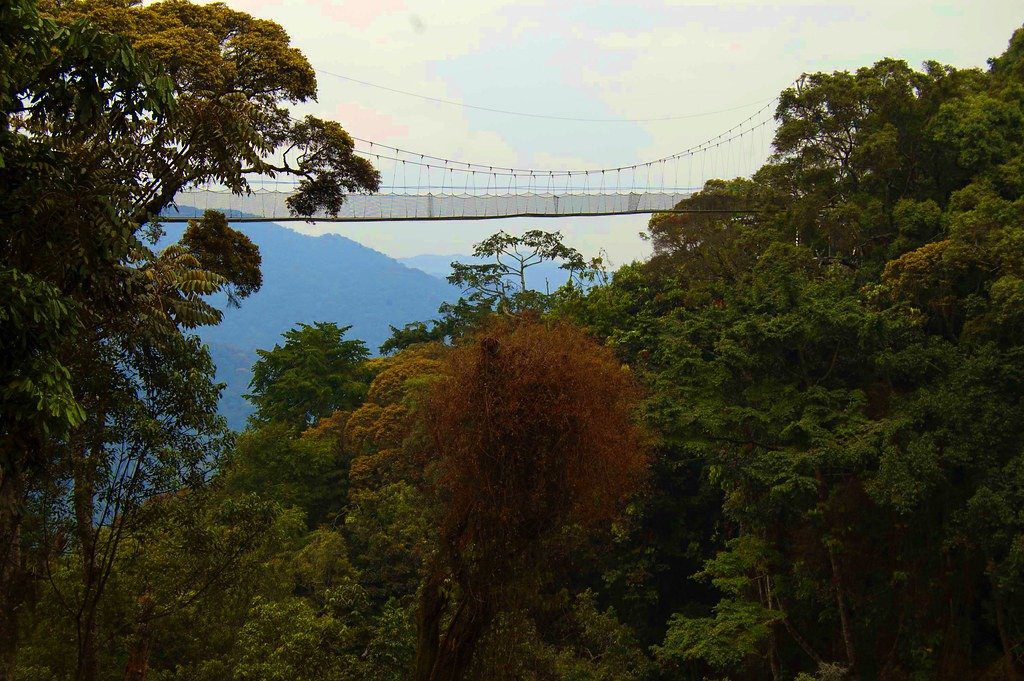
Nyungwe is a big mountain rainforest, about 1,019 square kilometres between 1,600 and 2,950 metres, with 13 primate species and a long list of Albertine Rift birds. Spend the afternoon on the Nyungwe canopy walk: a guided walk of about two hours from Uwinka on the Igishigishigi trail to a suspended walkway that hangs over a forested valley. It suits anyone comfortable with height.
Two other afternoon walks compete for the same slot. The Isumo waterfall trail from near Gisakura crosses the tea estate and drops to a waterfall in a fern lined gorge, a round trip of around four hours with a steep climb back. And a short colobus monkey walk finds the big black and white colobus troops that move through the forest edge, easier than chimps and often closer.
Day 7: Nyungwe Chimpanzee Tracking and the Drive to Kigali
Chimpanzee tracking in Nyungwe starts before dawn, often with a 5am departure, because chimps leave their nests at first light and travel fast once they are fed. The main group lives around Uwinka; a smaller group lives in Cyamudongo, a separate patch of forest about an hour’s rough drive from Gisakura. Once found, you get an hour with them.
Set expectations honestly. Nyungwe’s chimps are wilder than Uganda’s Kibale chimps and much of the hour is spent looking up into fig trees, and several reviewers describe brief or distant views after a steep, muddy walk. On a good morning the group comes down to the ground. If chimps matter most to you, Uganda’s Kibale chimpanzee trekking is more reliable; read the Nyungwe Forest guide for the full picture.
By late morning you are back at the lodge for a shower and lunch, then on the road to Kigali, five to six hours east through Nyamagabe and Huye. Stop at the Ethnographic Museum in Huye, Rwanda’s best, or the reconstructed King’s Palace at Nyanza with its long horned cattle if time allows. The Murambi memorial near Nyamagabe is the hardest stop in the country and the most direct; give it a whole morning on a longer trip rather than squeezing it in.
Book a late evening flight. If yours leaves earlier, add a night in Kigali and turn this into an eight day trip, or move chimps to the afternoon of day 6 and skip the canopy walk. Flights from Kamembe near Nyungwe to Kigali take about 40 minutes and cut the drive entirely, though schedules are thin.
Five Ways to Shape a Week Long Rwanda Safari
The loop above is the classic three park week. It is not the only good version, and the right one depends on what you want most from your Rwanda safari.
Running the classic loop in reverse also works. Whatever the order, keep the gorilla day away from the first and last days, so a delayed flight or a bad night cannot cost you the permit.
Booking a Rwanda Safari Week: Operators, Private Trips and Self Drive
Most week long trips are booked with a licensed Rwandan or regional operator, who buys the permits, supplies the vehicle and driver guide and books the lodges. An overseas agent adds a layer of home country protection and usually a sizeable margin, since the trip is passed to a local operator anyway. Ask any operator for its RDB licence and pay into a company account, by card where possible.
Nearly every quote you see will be for a private trip: your group, your car, your guide. Shared departures exist but are rare in Rwanda, because the permits fix the dates and most travellers want their own pace. Two people pay for the whole vehicle between them, so a group of four pays noticeably less each than a couple.
Self drive works in Rwanda better than almost anywhere in East Africa: paved main roads, clear signs, short distances. You still need a vehicle and ranger arrangement for the gorilla trailhead, a guide in Akagera, and a firm rule about not driving after dark. At the other end, fly in trips use helicopter transfers between Kigali, the volcanoes, Akagera and Nyungwe, which removes the long road days at a steep price.
Rwanda Safari Lodges for Each Night of the Week
Lodge choice sets the comfort and the price of a Rwanda safari more than anything else. Every stop on this route has options at three levels.
Nights near the volcanoes and in Nyungwe are cold, so most lodges light fires and hand out hot water bottles. Akagera is the opposite: hot afternoons and a midday lull. For Uganda’s side of a combined trip, the safari lodges section covers Bwindi.
What a 7 Day Rwanda Safari Quote Should Include
Quotes for the same 7 day Rwanda safari can look far apart, mostly because of the lodges and because operators include different things. A complete quote spells out each of these.
The biggest cost drivers, in order: lodge level, the permit category and season, the number of people sharing the vehicle, and whether you add a second gorilla trek or a helicopter leg. The Rwanda safari cost guide breaks each one down, and the Rwanda gorilla trekking cost per person page shows how group size changes your share. A shorter alternative is our budget gorilla trekking in Rwanda guide.
When to Take a Rwanda Safari Week and How the Season Changes the Route
Rwanda works all year, but the seasons change the feel of each stop. June to September is the long dry season: firmer trails on the volcanoes, animals near water in Akagera, and the busiest months for permits and lodges. December to February is a shorter dry spell. March to May brings the long rains, with muddy treks, green forest and fewer visitors, and November is the short rains.
| Months | Season | On this route |
|---|---|---|
| Dec to Feb | Short dry | Permit offer applies |
| Mar to May | Long rains | Muddy, quiet |
| Jun to Sep | Long dry | Busiest, full rate |
| Oct to Nov | Short rains | Offer from Nov |
The money angle cuts the other way. RDB’s low season gorilla permit offer runs from November to May and needs exactly the Akagera or Nyungwe nights this route already includes, so a week in those months costs noticeably less per person. December to February sits inside the offer and is drier than March to May. Chimp tracking in Nyungwe is often easier in the rainy months, when fruit keeps the groups lower and closer. Pack for rain in every month; see the Rwanda gorilla trekking packing list, and for comparison with the Uganda calendar, the best time for gorilla trekking in Uganda.
A few entry and health points apply all year. Rwanda bans plastic carrier bags, and officers at the airport and park gates may take them, so pack in cloth or paper. Masks are worn near the gorillas. Malaria tablets are advised for Akagera and the lowlands. Rwanda asks for a yellow fever certificate from travellers arriving from countries with yellow fever risk, Uganda and Kenya among them, so carry the card if your trip crosses a border. Book permits six to twelve months ahead for the dry months.
Many travellers add a second week elsewhere in Africa. Kigali has direct flights to Nairobi and Kilimanjaro, so the Masai Mara or the Serengeti follows easily; our 7 day Tanzania safari makes a natural second half.
7 Day Rwanda Safari FAQ
How much does a 7 day Rwanda safari cost per person?
A self built week with gorillas, Akagera, Nyungwe and simple rooms comes to roughly US$2,800 to US$3,300 per person for two sharing, and published packaged weeks start from about US$3,570 per person. Mid range lodges add roughly US$300 to US$450 a night per person on top of a budget room, and at the top lodges a week passes US$10,000 per person, with helicopter transfers adding more. Solo travellers pay more because they carry the whole vehicle and a single supplement. These are market ranges, not fixed prices, and exclude international flights.
| Level | Per person |
|---|---|
| Self built | US$2,800 to 3,300 |
| Packaged | From US$3,570 |
| Top lodges | US$10,000+ |
What do the permits and park fees on this route cost?
The RDB gorilla permit is US$1,500 for foreign non residents, reduced by 30 percent to US$1,050 from November to May with two qualifying nights in Akagera or Nyungwe, or one in each on consecutive nights, plus a paid hotel receipt and one paid park activity. Golden monkey tracking is US$100, and the Bisoke and Dian Fossey hikes US$75 each. In Nyungwe, international visitors pay entry of US$100 for one night, US$150 for two and US$200 for three, plus US$150 for chimpanzee tracking and US$40 for the canopy walk. Akagera entry is US$100 for one night, US$150 for two and US$200 for three; scheduled boat trips cost US$35 (sunset US$45), park run game drives US$200 per vehicle for a half day or US$350 for a full day, and night drives US$40 per adult.
Do you need a visa for a Rwanda safari, and what else should I budget for?
Many nationalities get a visa on arrival or online, at US$50 for a single entry where a fee applies; African Union, Commonwealth and Francophonie passports are often exempt. The East Africa Tourist Visa covers Rwanda, Uganda and Kenya together. Budget also for porters at Kinigi, roughly US$10 to US$20 plus a tip, and tips for ranger guides, trackers and the driver guide. A common guideline is US$10 to US$20 per traveller per day for the driver guide, so tips on a week come to well over US$100 per person.
Is a week enough for gorillas, chimps and Akagera?
Yes, with one long day at each end of the loop. Seven days covers the three parks and a night on Lake Kivu. Eight days lets you add a Kigali night before flying, which takes the pressure off the final drive.
Which order is best for a Rwanda safari week?
Akagera first suits travellers arriving early in the day, since the park is close to Kigali. Nyungwe first suits those who want big game at the end. Keep the gorilla trek mid trip so a flight delay or a sick day does not cost you the permit.
Can you see the Big Five on a Rwanda safari?
Yes, in Akagera, which holds lion, leopard, elephant, buffalo and black rhino. Rhino and leopard are the hardest to find, and no sighting is guaranteed, so two nights and an early start give the best odds.
How fit do I need to be for the gorilla and chimpanzee treks?
Reasonably fit. Gorilla treks climb steep, muddy slopes above 2,500 metres and last from half an hour to most of a day. Chimp tracking in Nyungwe moves faster through steep valleys. Hire porters, use the walking sticks, and tell rangers if you need an easier group.
Can children join a 7 day Rwanda safari?
Yes, though not on every activity. Gorilla trekking and chimpanzee tracking need trekkers aged 15 or over, golden monkey tracking accepts children from 12, and Akagera game drives and boat trips suit all ages. Families often split the trek day, with one adult staying behind.
Do you need vaccinations for a Rwanda safari?
Talk to a travel clinic well before you go. Malaria tablets are advised, and a yellow fever certificate is needed if you arrive from a country with yellow fever risk, which includes Uganda and Kenya. Get the jab at least ten days before travel, since a newer certificate is not yet valid.
Is Akagera worth it if I am also going to the Serengeti or Masai Mara?
As a warm up, yes, for the boat trip and the quiet. It is a smaller park with fewer animals than the big Tanzanian or Kenyan reserves. If you are heading there next, the primates first version without Akagera may suit you better.
Is Rwanda safe for a week long safari?
Rwanda’s parks and main roads are well run and it is widely regarded as one of the calmer countries in the region, but at the latest check the US State Department listed Rwanda at Level 3, Reconsider Travel, with the areas near the Congo border of most concern. Read your own government’s latest advice, avoid night driving and use normal care in Kigali.