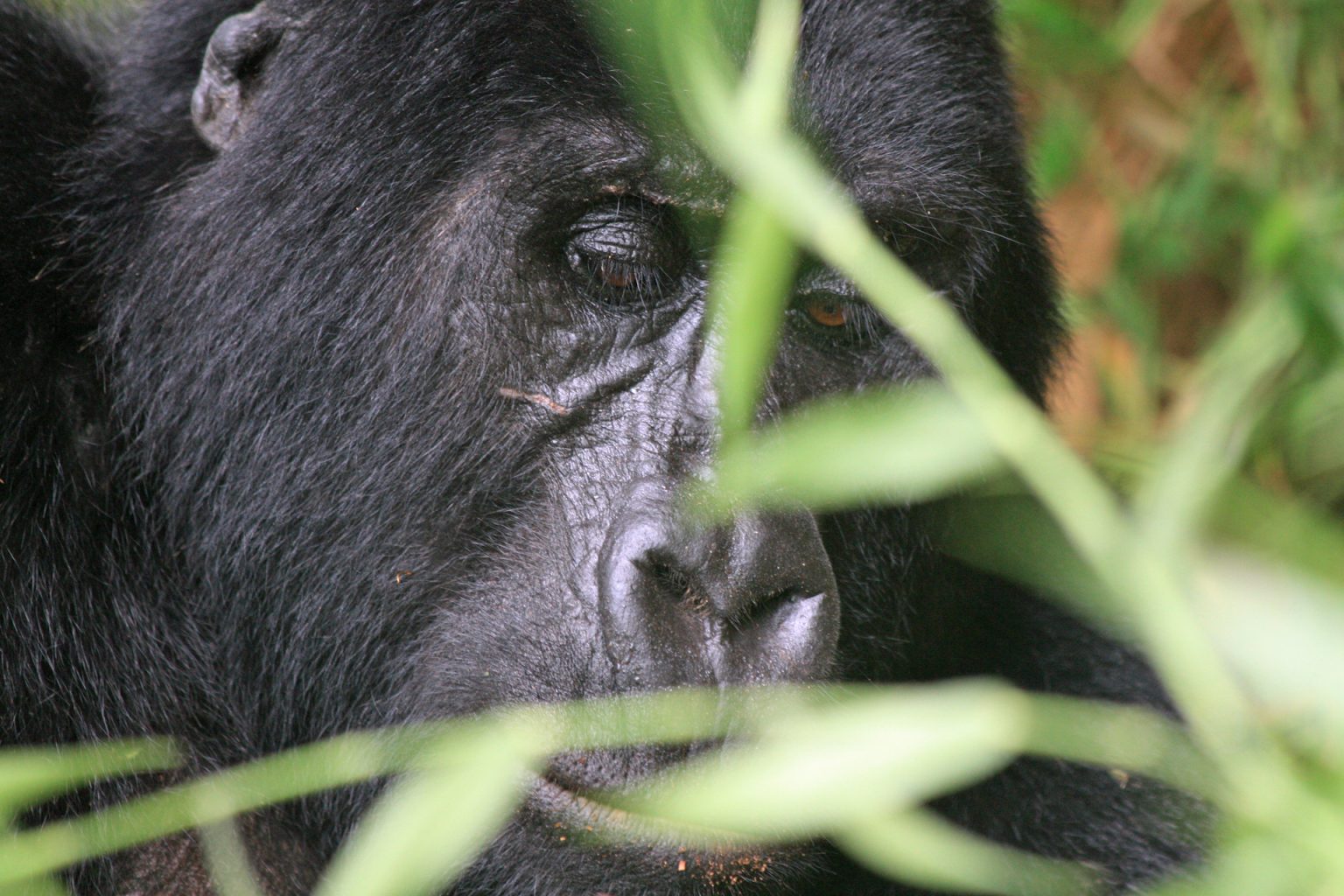
Uganda gorilla tours are guided trips of one to fourteen days built around a gorilla trekking permit in Bwindi Impenetrable National Park or Mgahinga Gorilla National Park. Licensed operators sell them as road trips from Kampala or Entebbe, short fly in safaris, or quicker routes from Kigali in Rwanda. Both parks sit in Uganda’s southwest corner, where close to half of the world’s mountain gorillas live.
If you have opened ten operator tabs and they all seem to sell the same trip at wildly different prices, it is not just you. The tours really do look alike on paper. What separates them is the detail underneath, and that is what this page lays out.

How Uganda Gorilla Tours Work: Parks, Permits and What You Book
A Uganda gorilla tour is a transport and lodging package wrapped around one morning in the forest. The permit, issued by the Uganda Wildlife Authority (UWA), fixes the date, the sector and the gorilla family you are assigned. Everything else the operator sells exists to put you at the right briefing point on that date, fed, rested and on time.
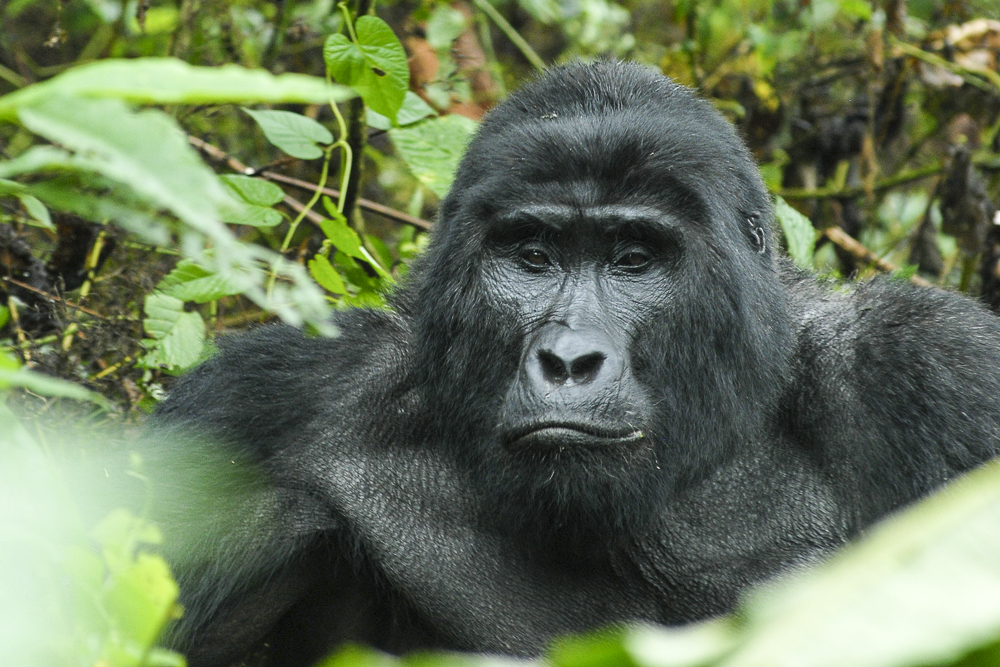
Most tours head for Bwindi Impenetrable National Park. Its 321 square kilometres of steep rainforest hold roughly twenty habituated families open to visitors, spread across four sectors that lie hours apart by road. The 2018 census counted 459 gorillas in Bwindi, out of a world total of 1,063. A smaller number of trips use Mgahinga Gorilla National Park, Uganda’s smallest park, where the single habituated Nyakagezi family ranges over the lower slopes of the Virunga volcanoes. Our main gorilla trekking guide explains both parks and the trekking day in full. Our comparison of gorilla trekking in Bwindi and Mgahinga sets the two parks side by side.
On trek morning your operator’s role pauses. The driver guide hands you over to UWA rangers and trackers, who lead the walk, and picks you up again afterwards. So the forest hour is identical whichever company you book. The rest is not.
Uganda Gorilla Tour Packages by Length: One Day to Two Weeks
Search for Uganda gorilla tour packages and you will find trips from a single day to three weeks. Length is set mostly by distance. Bwindi lies eight to ten hours by road from Entebbe, and that drive eats a day each way.
Three days does the job for one trek. It leaves nothing spare, though, and a late flight or a washed out road on day one can cost you the permit. Plenty of travellers say afterwards that they spent their hour behind a camera and wished they had booked a second trek just to watch. A fourth night fixes both problems.
Sample Uganda Gorilla Trekking Tours, Day by Day
These five samples are not packages sold here. They are realistic patterns, drawn from how licensed operators build their gorilla trekking tours, to hold up against the quotes you receive.
Look at what the better itineraries share. The lodge sits in the same sector as the permit. The day before the trek is never the longest drive. And the last day leaves slack before the international flight, because Kampala traffic does not care about your check in time.
Kampala, Fly In or Kigali: Picking the Start of Your Gorilla Tour
Where your gorilla safari begins decides how many days it needs and how tired you are on trek morning. Every road and distance is in our guide to getting to Bwindi.
By road from Kampala or Entebbe. The classic version. Lunch in Mbarara, a climb through the terraced Kigezi hills that guides like to call the Switzerland of Africa, and arrival by late afternoon. It is the cheapest per person for two or more, but it means two very long days in a vehicle. Here the car and the driver matter more than the lodge.
By small plane. Aerolink Uganda flies from Entebbe to Kihihi, for Buhoma and Ruhija, and to Kisoro, for Rushaga, Nkuringo and Mgahinga. Flights go in the morning, a road transfer of one to two hours follows, and baggage allowances are tight, so pack soft bags. Fly the day before the trek, never the same morning. A helicopter charter is the private version, and our fly in gorilla safari page covers the scheduled routes.
From Kigali. Rushaga and Nkuringo are four to six hours from Kigali, roughly half the Entebbe drive, which is why so many Uganda gorilla tours now start in Rwanda. You cross at Cyanika or Katuna on a Ugandan visa or the East Africa Tourist Visa. Uganda runs one hour ahead of Rwanda, and that hour has caught out more than one trekker on briefing morning. The Kigali to Bwindi route guide walks through the border.
What Gorilla Tour Packages Include, Leave Out and Hide
Operator websites agree closely on the basics of a gorilla tour package. The trouble is in the small print, where one quote counts the permit and the next does not.
Vehicles deserve a question of their own. Some companies use a 4×4 safari van with a pop up roof, others a Land Cruiser, and a few send a saloon car with a 4×4 badge. On the wet murram roads into Ruhija or Nkuringo that difference is real. Ask what you will ride in, how many seats are filled, and whether everyone gets a window.
Private, Group and Habituation Gorilla Tours Compared
Most Uganda gorilla tours are private. You book a vehicle and driver guide for your own party and set your own dates, and the operator fits the trip around the permits it can secure. Local Ugandan companies work almost entirely this way.
Group departures are the other model. International operators fix dates and sell seats, often as part of a longer East Africa loop, and overland trucks pass through Bwindi on their way between Kenya and Rwanda. Because UWA allows only eight visitors per family, a group of twelve may trek on two different days or with two different families. Nothing about the hour itself changes.
Money and freedom pull in opposite directions here. A solo traveller on a private trip carries the whole vehicle and driver cost, which is why single quotes look so steep. Two to four people sharing a car cut the per person price sharply, and a scheduled group spreads it further at the cost of fixed dates, fixed lodges and someone else’s pace.
Then there is the gorilla habituation experience, run only in Rushaga. Instead of one hour with a fully habituated family you spend up to four with a group still being accustomed to people, alongside researchers and trackers. Places are few each day, the permit costs more, and it books out early, so tours built around it need longer lead times.
Budget, Midrange and Luxury Gorilla Safaris in Uganda
The permit is the same on every tier. A backpacker and a guest in the most expensive lodge pay one UWA rate, US$800 for foreign non residents, US$700 for foreign residents and UGX 300,000 for East African citizens, and walk the same trails behind the same rangers.
Budget gorilla tours use community bandas, simple guesthouses and campsites, sometimes a little further from the trailhead, and sometimes a shared vehicle. The Buhoma Community Rest Camp and the CTPH Gorilla Conservation Camp are two at the park gate. The low season permit for April, May and November trims the biggest single cost to US$600 for foreign non residents and US$500 for foreign residents, though those permits are paid in full and cannot be moved. Our budget gorilla trekking guide applies the same logic to Rwanda.
Midrange tours are what most people book: a comfortable lodge in the right sector with hot water and full board, a private 4×4 and a driver guide who knows the route by heart. Bweza Gorilla Lodge and Ichumbi Gorilla Lodge in Rushaga, or Chameleon Hill Lodge on Lake Mutanda, sit in this band.
Luxury gorilla safaris trade the long drives for flights, use the lodges with forest views and private cottages, and often add a second permit or the habituation day. Read luxury gorilla trekking in Rwanda and Uganda, or browse every Bwindi safari lodge by sector.
Choosing the Best Uganda Gorilla Tour Operator
The best Uganda gorilla tour is the one whose permit actually exists. UWA sets the permit price, so it costs the same whoever buys it. When one quote sits far below the rest, the saving is coming from somewhere: an older vehicle, a lodge in the wrong sector, a shared seat, or in the worst cases a permit that was never bought. Ugandan media have reported investigations into tampered and recycled permits, which is one more reason to ask for proof.
Check the licence first. A genuine company holds a current Uganda Tourism Board licence, and many belong to the Association of Uganda Tour Operators. Look them up on those bodies’ own lists, not the logo strip at the foot of a website. Our guide to gorilla safari companies covers every check, and for Rwanda based operators there is the Rwanda safari companies list.
Reviews help, with a caveat. A long run of recent, detailed reviews that name guides and lodges says more than a high score built on short ones. Read the three star reviews too. They tell you what goes wrong and how the company handled it.
Since UWA suspended its old seven day reservation hold, permits are paid in full when booked, so expect to pay that portion early and expect a copy in return. A company that cannot produce one within a reasonable time deserves a pointed question in writing. Forum posters regularly complain that few operators send back an itinerary matching what they asked for, and that alone narrows the field fast.
Be wary of anyone promising a particular gorilla family, a guaranteed short walk, or a discounted permit outside the official low season rate. None of those things exist. Sightings on habituated families are very likely, but no honest company can promise them.
Season, Sector and Fitness on a Uganda Gorilla Trek
The sector printed on your permit should shape the whole gorilla trekking tour. A Buhoma lodge with a Rushaga permit means hours of driving in the dark, and that mismatch happens when lodges get booked before permits.
Buhoma suits tours arriving from Queen Elizabeth or flying into Kihihi. Ruhija, reached from Kabale, is the quietest and the best for birders. Rushaga has the most families and so the best permit availability. Nkuringo is close to Kisoro and Kigali but begins with a steep descent and ends with the climb back. Mgahinga is quick to reach from Rwanda, with one family and very few permits.
Season comes next. June to September and December to February are the drier months and they sell out first; March to May and October to November bring mud, quieter briefings and, in April, May and November, a lower permit rate. Bwindi is a rainforest, so it rains in every month anyway. Our best time for gorilla trekking page goes month by month.
Fitness matters less than people fear and more than brochures admit. Treks run from under an hour to most of a day at altitudes between about 1,160 and 2,600 metres, and mud counts for more than distance. Tell the rangers about bad knees or a heart condition at the briefing; they try to place you with a closer family, without promises. Hire a porter even if you feel strong. The fee goes straight to families living around the park, and the porter’s hand on a greasy bank is worth more than the money. Our page on trekking difficulty and fitness has more.
Pack for rain whatever the month. Gardening gloves for nettles and thorny vines, gaiters or socks pulled over trousers against ants, broken in boots and a light rain jacket come up in nearly every trip report. The Uganda gorilla trekking packing list has the rest, and you can rent trekking gear if a fly in baggage limit leaves no room for boots.
Uganda, Rwanda or Congo: Gorilla Tours Across Africa
Only three countries offer mountain gorilla trekking. Uganda’s draw is the permit, at a little over half the Rwandan price, plus the choice of two parks and the habituation day. Rwanda wins on time, since Volcanoes National Park is about two and a half hours from Kigali by road, and on easier logistics. Many travellers split the difference by landing in Kigali and trekking in southern Bwindi. Our comparison of Uganda and Rwanda for a safari and the Rwanda gorilla trekking guide set out both sides.
The Democratic Republic of Congo is the third. Virunga National Park has been closed to visitors for long stretches because of conflict in the east, so check its status before planning anything there; our Congo gorilla trekking page has the background. Lowland gorillas are a different animal and a different trip, tracked in the forests of Congo Republic, Gabon and the Central African Republic.
Gorillas also pair well with a savannah safari. A short flight to Nairobi puts the Masai Mara within reach, and the Serengeti links through Kilimanjaro, as our page on combining a Tanzania safari with gorilla trekking explains. Put the gorillas first if you can. The trek is the part most likely to need a spare day.
Uganda Gorilla Tours: Prices and Planning Questions
How much does it cost to see gorillas in Uganda?
The UWA gorilla permit is US$800 for foreign non residents, US$700 for foreign residents and UGX 300,000 for East African citizens. In April, May and November the rate falls to US$600 for foreign non residents and US$500 for foreign residents, paid in full at booking and not reschedulable. The gorilla habituation experience costs US$1,500, and UWA has announced a rise to US$1,800 for foreign non residents.
What do Uganda gorilla tour packages cost by length?
Typical operator quotes, per person for two sharing and including the permit, run roughly US$1,300 to US$2,000 for a 3 day road tour at midrange lodges, from about US$1,900 for a 3 day fly in trip and past US$3,500 at luxury lodges, US$2,000 to US$3,000 for five days with chimps, and about US$2,600 to US$3,400 for a 7 day safari on a budget or US$3,800 to US$5,500 midrange. Group departures from international operators of nine to sixteen days often sit between US$3,500 and US$5,000. Solo travellers pay noticeably more, and some headline “from” prices leave out the permit. Add porters at around US$15 to US$20, tips, and a Uganda eVisa at US$50 or the East Africa Tourist Visa at US$100. These are typical ranges, not fixed prices.
What is the best time of year to see gorillas in Uganda?
June to September and December to February, the drier seasons, when trails are firmer and road days run closer to schedule. Gorillas can be seen in every month, though, and the wetter months bring quieter briefings and the low season permit. Afternoon showers are common, so a morning trek in April can still start dry.
Is it safe to go gorilla trekking in Uganda?
Every trek runs with armed UWA rangers, and Bwindi and Mgahinga receive visitors daily on organised tours. The bigger everyday risks are road travel and petty crime in towns. Government advice differs sharply, with the US rating much stricter than the UK’s or Germany’s at times, and some advisories single out areas near the Congo border, so read your own government’s page before booking and again before flying. Our Uganda safety guide compares them.
What are the best gorilla tours in Africa?
For mountain gorillas, Bwindi or Mgahinga in Uganda and Volcanoes National Park in Rwanda. Uganda suits travellers who want a lower permit fee, a choice of sectors or the habituation experience; Rwanda suits short trips from Kigali. A good tour in either country has a confirmed permit, a lodge in the right sector and a spare day. Combining both on a 5 to 8 day trip is common.
Is a gorilla tour worth the money, or can I go without one?
Most people who go say the hour is worth it, often to their own surprise. You can skip the full tour: book only the permit through a licensed operator that is a recognised member of AUTO, the Association of Uganda Tour Operators, since UWA sells permits to licensed operators, and self drive or public transport to Kisoro and Kabale works for confident travellers, covered on our gorilla permit booking guide and car hire for gorilla trekking page. An operator earns its fee by lining up permit, lodge and transport on one date and sector.
How far ahead should I book a gorilla tour?
For July, August and the Christmas weeks, six months or more is sensible. For the wetter months, three months is usually enough. Habituation places go first. Last minute trips are sometimes possible in the rains, but you take whichever sector is left.
What happens if we do not find the gorillas, or I fall ill?
Missing the gorillas is rare, because trackers set out at dawn from the previous night’s nests. Treks can run long if the family moved. Anyone with a cold or stomach bug may be stopped from trekking, since gorillas catch human illnesses. Refund terms in both cases depend on UWA rules and the operator’s own policy, so ask both and get the answer in writing.
Can children or older travellers join a gorilla tour?
Trekkers must be 15 or older; younger children can stay at the lodge. Travellers in their 60s and 70s trek regularly with a porter and a stick, and a carried chair can be arranged through UWA, as our special needs gorilla trekking page explains.