The best camera rain cover for a safari is a reusable nylon cover sized to your longest lens, with a clear rear window, a hand sleeve and a strap that grips the lens hood, backed up by a two pack of clear rain sleeves. Pack it with a padded camera backpack that has its own all weather cover and fits a bush plane’s 15 kg soft bag limit. For gorilla treks and green season trips, a roll top dry bag inside the pack finishes the setup.
This page deals with protecting and carrying the kit. Bodies, lenses and settings live in our best camera for safari and best lens for safari guides.
Why a Weather Sealed Camera Still Needs a Rain Cover on Safari
Most current mirrorless bodies and pro zooms are sold as weather sealed, and the makers choose that word with care. Sealed is not waterproof. Gaskets slow drizzle and dust for a while; they do not stop a tropical downpour running into the join between body and lens for twenty minutes, nor fine dust from working into a zoom ring after a week in an open vehicle.
Africa hands your camera both problems, often on one trip.
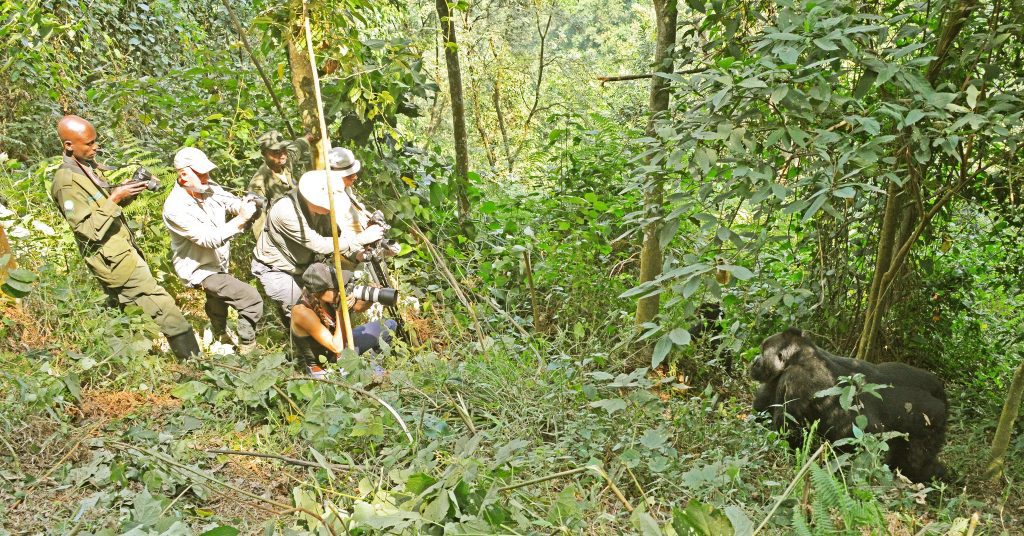
Rain falls in every month in Bwindi, Mgahinga and Volcanoes National Park, and the forest can go from grey to a downpour within minutes while you stand with a gorilla family. Trip reports describe the same scramble again and again: one person wraps the camera in a jacket, another pushes it up a shirt, and meanwhile the hour with the gorillas keeps running. Lens changes under the wet canopy are the other regret people mention. Do them at the lodge before you leave, if at all.
Out on the plains of the Serengeti, the Masai Mara or Queen Elizabeth in the dry months, dust is the enemy. Every vehicle ahead throws up a fine powder that settles on everything, gets into bag pockets and grinds inside zoom mechanisms. Photographers who come home from Tanzania often say their kit needed a proper clean, and the habit forums agree on is simple: keep the long lens mounted all day and cover the camera between sightings.
Camera Rain Cover Types for Safari Photography
Shops and reviewers sort rain gear for cameras into six broad kinds. They differ in how fast they go on, how easily you shoot through them and how small they pack, so the right camera rain cover for safari depends on which of those you care about most.
For most safari travellers the sensible pair is an emergency nylon cover for daily use and a pack of disposable sleeves as spares. Search for a nylon emergency camera rain cover from makers such as Think Tank, Altura or Neewer, and a clear camera rainsleeve two pack for the backup. Sleeves weigh next to nothing and slide into a jacket pocket.
Anyone heading out in the green season, or booked on a dedicated photo safari, should look harder at a fitted camera rain cover with eyepiece. Think Tank (Hydrophobia), LensCoat and Vortex Media all make covers sized to lens ranges, with taped seams and room for both hands. Loading one takes a minute, so fit it before the drive, not when the first drops land.
Best Camera Rain Covers for Safari Trips by Budget
The models below come up repeatedly in photography reviews, camera shop ranges and the Amazon rain cover category. We have not tested them ourselves, and makers revise sizes and features often, so check the current listing against your lens before you buy.
A field test of enclosure covers in Namibia found the same trade offs most owners report. Lighter covers stay steady in wind once cinched but hide the controls; covers with a big clear panel make buttons easy to see but can lack an eyepiece; the best sealed covers still let a little sand in at a zip or bungee. No cover is perfect, which is why the camera also lives in a dry bag on the walk.
Sizing a Rain Cover to Your Safari Lens
Covers are sized by lens length, not by camera body. The commonest mistake is a cover that fits the camera with a kit zoom but not with the telephoto you will actually use on safari. Measure from the back of the body to the front of the lens hood, with the zoom extended if it extends, and compare that with the maker’s listed length.
| Lens on safari | Cover size | Best for |
|---|---|---|
| 24 to 105mm | Small | Gorillas, camps |
| 70 to 200mm | Medium | Gorilla treks |
| 100 to 400mm | Medium/large | All rounder |
| 150 to 600mm | Large | Game drives |
| Bridge camera | Small | Light travel |
A medium emergency cover usually takes a full frame body with a 70 to 200mm f/2.8 or a 24 to 70mm, the right size for a gorilla trekking safari. Owners of a 150 to 600mm or 200 to 600mm zoom need a large rain cover for a 150 to 600mm lens. Bridge and compact camera owners can use a small mirrorless camera rain cover, which packs to the size of a sock.
Rain Cover Features to Check Before a Safari Trip
Size comes first. After that, a handful of details decide whether a cover gets used or stays in the bag.
Viewfinder access. Some covers have a built in eyepiece opening, some need a separate eyepiece made for your camera model, and some have none, so you lift the cover or look through plastic. If you frame through the viewfinder on a long lens, this matters more than anything else on the list.
A clear rear panel. Mirrorless shooters often frame on the rear screen under the forest canopy. Without a clear window, you are guessing.
Hand sleeves. One sleeve lets you hold the grip; two let you work the zoom ring too. On a long lens, two is far easier.
A hood strap or drawcord. It grips the lens hood so the cover does not creep back in wind or when you swing the lens.
An opening at the base. Useful for a monopod or a tripod collar, and on a boat or vehicle it lets the lens foot rest on a bean bag. Side opening covers exist for side mount gimbal heads, though few safari travellers carry one.
Flash and microphone fit. Most covers block a flashgun, and flash is not allowed with gorillas or chimps anyway. Video shooters using a top mounted mic should look for a cover with a mic sleeve or room above the hot shoe.
Pack size and colour. Emergency covers pack to fist size; enclosure covers take more room. Pick neutral green, grey or black. Some LensCoat and Neewer covers come in camouflage prints, and camouflage is widely reported as restricted for civilians in Uganda and Tanzania, so skip those patterns for East Africa.
Rain Covers for Gorilla and Chimpanzee Trekking Safaris
On a gorilla trekking day, the rain cover has two jobs: keep the camera dry on the walk in, and let you keep shooting through a shower during the hour with the family.
For the walk, the camera rides inside a roll top dry bag in your daypack. That daypack is often on a porter’s back, which is one more reason to keep the cover in an outside pocket rather than deep inside. Once the trackers find the family, take the camera out, fit the cover with the hood strap already set, and leave it on. The rules say 10 metres in Uganda and 7 metres in Rwanda, yet the gorillas often close the gap themselves, so a medium cover over a 70 to 200mm or 100 to 400mm zoom is the useful size. Flash is not permitted, and ISO climbs quickly under the canopy, which the gorilla trekking photography guide covers.
Plenty of trip reports describe trekkers using their own rain jacket as a camera cover in a sudden shower and getting soaked themselves. A cover weighing a little over 100 grams saves that trade. The gorilla trekking rain jacket guide keeps you dry; this page keeps the camera dry.
Chimpanzee tracking in Kibale or Nyungwe follows the same pattern, with more walking and a lot more looking up. A light emergency cover suits it better than a full enclosure, since chimps move and you follow. Children need to be 12 for chimp tracking and 15 for gorilla trekking, so family groups with younger children usually split for these days.
Dust Covers for Game Drive Safaris
Dust is the bigger threat on a game drive safari in the dry season. Rain covers do double duty here, but a quicker answer is a soft bag that drops over the camera and lens between sightings.
Photographers on safari forums swear by a lightweight waterproof stuff sack of around 13 litres, which takes a body with a 150 to 600mm or 200 to 600mm lens attached. Others use a pillowcase or a small towel. Both work. What matters is that the lens stays mounted, because every lens change in an open vehicle invites dust onto the sensor. If you want two focal lengths, carry two bodies.
A question that comes up in Tanzania safari groups is whether spare bodies need dust covers. They do, in the sense that a body cap and rear lens cap should go on the moment a lens comes off. Close fitting neoprene lens covers are fiddly to fit and not enough alone, yet testers in Namibia found them useful at keeping dust away from the zoom and focus rings and the lens mount.
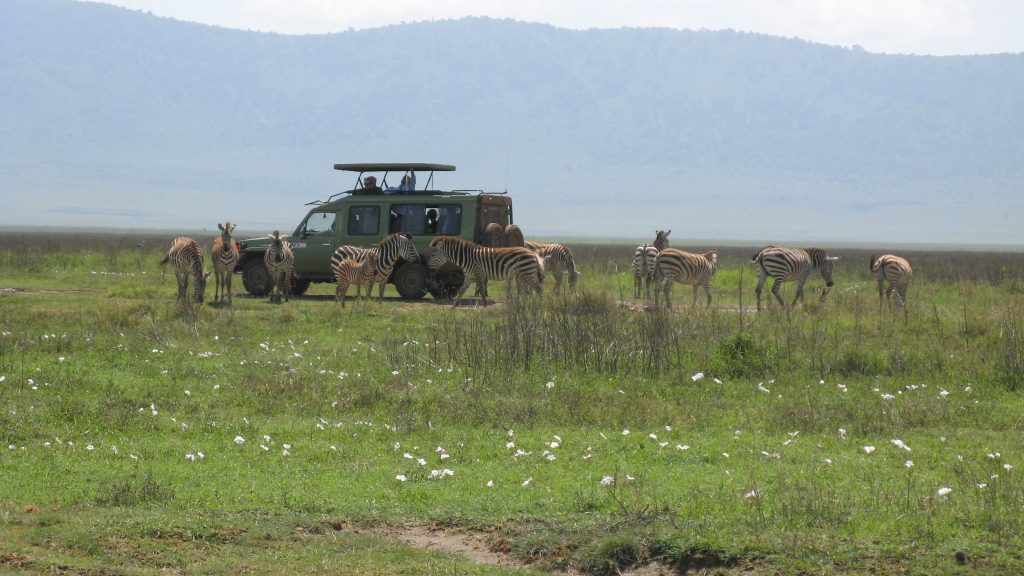
In the vehicle, rest the camera on your lap or the seat beside you, covered, rather than in a bag on the floor where dust gathers. A camera bean bag for safari vehicles steadies a long lens on the window frame or roof hatch and doubles as a cushion on rough tracks. At the end of each day, a rocket air blower and lens cleaning kit clears grit before you wipe anything; rubbing a dusty lens just drags the grit across the glass.
DIY Camera Rain Cover for a Safari Trip
A homemade cover is the cheapest answer, and travel photographers have used one for years. The usual method takes a small tapered bin bag, a rubber band and your lens hood. Slide the camera into the bag with the lens pointing at the bottom corner, pull the plastic tight just behind the hood and band it there, then cut a small hole over the front of the lens and widen it slowly until the hood’s rim pushes through. The open end of the bag stays at the back, where your hands go in.
It works in passing showers. It is less good in long downpours, the plastic flaps in wind, and holding a long lens through a loose bag for an hour gets tiring.
The bigger problem is East Africa itself. Rwanda, Kenya and Tanzania ban plastic carrier bags and check luggage at the airport, and Uganda restricts the thinnest bags, so a bin bag cover is not something to rely on for a gorilla trek or a Mara safari. If you want the DIY route, make it from a reusable clear zip pouch or a waterproof stuff sack with a hole cut for the lens, or simply pack the cheap commercial sleeves above, which do the same job for little money. When rain drops land on the front element, blot them with a soft tissue or lens cloth instead of rubbing.
Choosing a Camera Bag for an African Safari Trip
The safari camera bag has several jobs: ride on a bush flight, sit in a vehicle, and keep dust and rain off everything inside. Hard cases fail most of those. Soft padded bags win.
Camera backpacks suit most travellers. Look for padded, adjustable dividers, a rear or side opening so you reach the camera without dropping the shoulder straps in the dust, and an integrated all weather cover that tucks into the base. Lowepro marks its covered models AW; Vanguard, F Stop, Think Tank and MindShift all make safari friendly versions. Search for a camera backpack with rain cover for a telephoto lens. Safari photographers single out designs whose lid limits how much dust blows in when opened.
If your pack came without a cover, buy one to fit. F Stop, Nomatic and Peak Design all sell separate rain flies sized by pack volume, and a camera backpack rain fly is cheap insurance for a gorilla trek.
Sling bags and shoulder bags suit lighter kits, such as a mirrorless body with one zoom, or a bridge camera. A weatherproof camera sling bag swings round to the front in a vehicle, so you reach the camera without standing up.
Camera inserts turn any daypack into a camera bag. On a gorilla trek, where you want a hiking pack with a hip belt and a porter may carry it, a padded camera insert cube inside a normal gorilla trekking daypack works better than a dedicated camera pack.
Colour matters a little. Neutral greens, browns and greys fit the general safari dress advice in our what to wear for gorilla trekking guide. Avoid camouflage prints on bags and covers for the reason given above.
Bush Flight Weight Limits for Camera Bags on Safari
Light aircraft that fly between parks in Kenya, Tanzania and Uganda usually allow about 15 kg per person, hand luggage included, in soft bags. Your camera bag counts toward that total, which is the detail people miss. A long lens, two bodies and a padded backpack can reach half the allowance before a single shirt goes in.
Weigh everything at home. If you are over, move clothes out, not lenses; camps do laundry. Photographers with heavy kit sometimes book an extra seat, a common arrangement on photo safaris, so ask your operator. The safari duffel bag guide covers soft bag sizes for the aircraft pod, and pilots let camera bags ride on knees or under seats where space allows. For the rest of the bag, the African safari packing list keeps the total in check.
On international flights, keep the camera bag in the cabin and check its size against your airline’s carry on limit. Flatter backpacks fit the overhead lockers on regional jets better than deep ones.
Dry Bags, Humidity and Boat Safari Protection
Even a backpack with a rain cover lets water wick in through the back panel and straps. A roll top dry bag of around 20 litres inside the pack keeps spare batteries, cards and a second lens dry whatever happens outside. Fabric dry bags and stuff sacks also sidestep the plastic bag rules, and they last for years. Our guide to dry bags for safari covers sizes for rain, boats and dusty drives.
Humidity is the quieter problem in the forest parks. Carry a cool camera from an air conditioned room into warm, damp air and the lens fogs inside and out. Leave the camera in its closed bag for a while before you head out, and drop a few rechargeable silica gel packets into the bag overnight at the lodge. Body heat can fog the clear window of a cover on a muggy day too, which is why some covers advertise anti fog panels.
On boat safaris, such as the Kazinga Channel in Queen Elizabeth National Park or a mokoro in the Okavango Delta, spray and splashes join the rain. Keep the camera in the dry bag on the way out and fit the rain cover before you start shooting. If you set a tripod in shallow water or wet sand, clear tripod leg sleeves make the clean up afterwards much easier.
Safari Camera Protection Gear to Skip
Hard cases. They protect well and fail every other test: too heavy for bush flights, too rigid for an aircraft pod, too big for a vehicle seat.
Wheeled camera rollers. Light aircraft operators ask for soft bags without wheels, and wheels are useless on a camp path.
Covers that fit only the body. Many cheap covers stop at a short zoom. Measure your longest lens with its hood.
Covers with no clear window. If you frame on the rear screen, you need to see it.
Waterproof camera housings. Underwater housings are overkill on safari unless you are snorkelling in Zanzibar afterwards.
Bin bag covers for East Africa. Fine at home, risky at a Rwandan or Kenyan airport.
Caring for Your Camera Bag and Rain Cover on Safari Trips
Dry the cover inside out each evening rather than packing it wet, or it will smell by the end of the week. After a dusty day, blow the camera off first, then wipe it with a barely damp cloth, let it dry and pack it. Clean zips with a dry brush, because grit in a zip is how a bag fails mid trip.
Keep the rain cover and a disposable spare in an outside pocket, where you can reach them in ten seconds. For the full kit list, see the safari camera and binoculars guide and the gorilla trekking packing list, along with our pick of the best binoculars for safari. The best time to go gorilla trekking guide shows when the wettest months fall, and the Bwindi gorilla trekking guide covers the trek itself. The safari gear guide brings the optics, clothing and luggage guides together in one place.
Camera Rain Cover and Safari Bag FAQs
How do you cover a camera when it is raining on safari?
Fit a rain cover sized to your lens before the rain arrives, with its strap around the lens hood, and keep the hood on to shield the front glass. Between shots, a dry bag or stuff sack is safer still. In a sudden shower with no cover, a fabric stuff sack or a spare shirt beats leaving the camera bare.
What is the best camera cover for rain on a safari?
For most travellers, a packable nylon emergency cover in the right size, such as Think Tank’s Emergency Rain Cover or a similar model, plus a pack of clear sleeves as backups. Photographers with 150 to 600mm class lenses in the green season do better with a full enclosure cover like the Hydrophobia, LensCoat RainCoat or AquaTech Sport Shield.
What is the best outdoor camera cover for rain and dust?
One that seals at the lens end, has a clear rear panel and packs small enough to carry every day. On safari the same cover handles game drive dust, which is why a cinched nylon cover or a stuff sack over the camera between sightings is the common answer in the dry season.
How can I make a DIY camera rain cover?
Put the camera in a small bag with the lens toward a bottom corner, band the bag tightly behind the lens hood, then cut a hole over the lens and widen it until the hood’s rim pokes through. For East Africa, use a reusable clear pouch or a waterproof stuff sack rather than a plastic carrier bag, since several countries there ban them.
Do I need a camera rain cover for gorilla trekking?
Yes. Rain falls in Bwindi and the Virungas in every month, and showers often arrive while you are with the gorillas. A cover lets you keep shooting through the one hour visit without wrapping the camera in your jacket.
Is a weather sealed camera waterproof enough for safari?
No. Sealing slows water and dust down but is not waterproofing. Use a rain cover in heavy rain, a dust cover on dry season game drives, and a dry bag inside your pack.
What size rain cover fits a 150 to 600mm lens?
A large or telephoto cover. Covers are listed by the longest lens they take, so measure from the back of the camera to the front of the hood with the lens extended, and pick a cover whose listed length beats that figure.
Can I use a plastic bag as a camera cover in Africa?
Not in Rwanda, Kenya or Tanzania, which ban plastic carrier bags, and Uganda restricts thin ones. Pack a reusable rain cover and a dry bag or stuff sack instead.
Backpack or shoulder bag for a safari?
A backpack for heavy kits and bush flights, since it spreads weight and fits under a seat. A sling or shoulder bag for a light mirrorless or bridge camera setup, since it is quicker to reach in a vehicle.
Does my camera bag count toward the bush flight weight limit?
Yes. Light aircraft limits of about 15 kg usually include hand luggage, so weigh the camera bag with your duffel.
How much do camera rain covers and safari camera bags cost?
As a rough guide on Amazon, disposable clear sleeves cost about US$8 to US$12 for two, nylon emergency covers about US$20 to US$60, fitted telephoto covers with an eyepiece about US$80 to US$200, and padded camera backpacks with a rain cover about US$80 to US$300. Prices change often, so check current listings.