A good Kilimanjaro gear list covers a sleeping bag with a comfort rating near minus 10C, broken in waterproof hiking boots, a hooded down jacket, merino base layers, fleece, a waterproof shell, warm mittens, a headlamp and two litre bottles. Your climbing operator supplies tents, mats and meals. Porters carry a soft duffel of about 15 kg, and you carry a 30 to 35 litre daypack with water, sun protection and a warm layer. Rent the bulky items in Moshi; buy anything that has to fit your body.
Kilimanjaro is a trek, not a technical climb, so you need warm, dry clothes rather than mountaineering kit. The mountain still runs from humid rainforest to a summit night well below freezing in a strong wind, and the gear decides how much of that week you enjoy. Below you will find a full checklist, then each group of kit with what to look for, what to rent and what to leave behind. The Mount Kilimanjaro trekking guide covers routes and summit night, and the cost to hike Kilimanjaro breaks down the money.
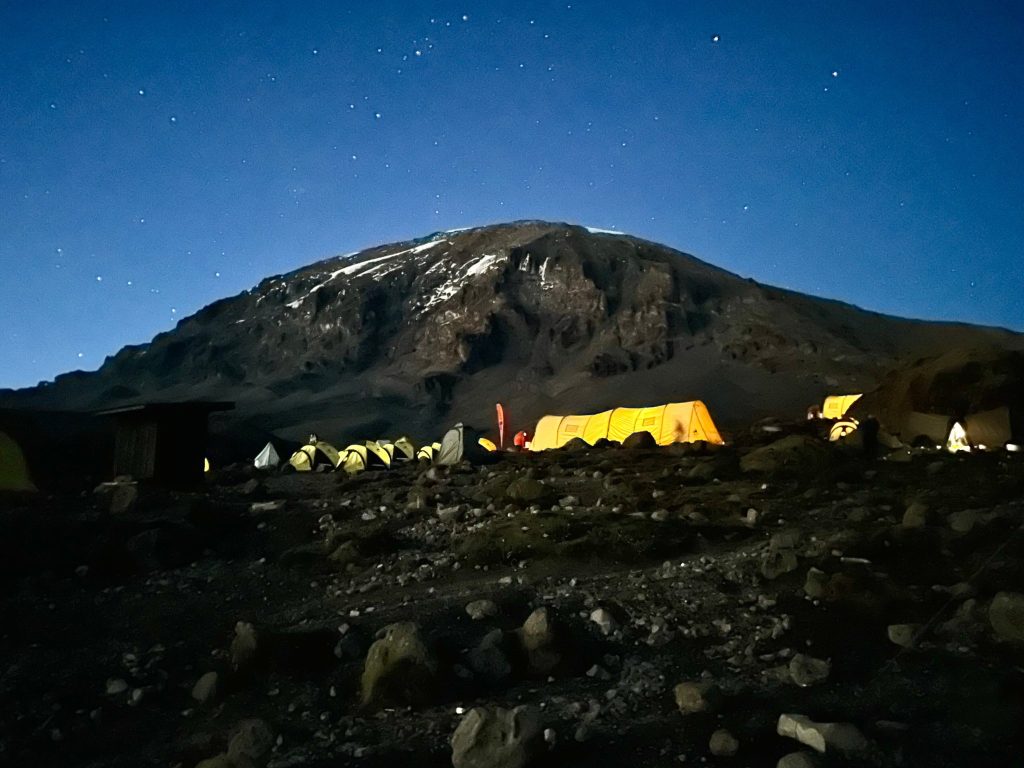
Kilimanjaro Packing List Checklist: What to Bring on the Trek
This is the whole Kilimanjaro packing list on one screen, with quantities for a six to eight day climb. Copy it into your notes and tick it off as you pack. Each group is explained in the sections that follow.
Most of this is clothing you layer, not separate outfits. Nobody washes on the mountain, and nobody minds. The list looks long, yet packed carefully it fits inside the duffel limit with room left for the sleeping bag.
How Kilimanjaro Trekking Gear Works: Duffel, Daypack and Five Climate Zones
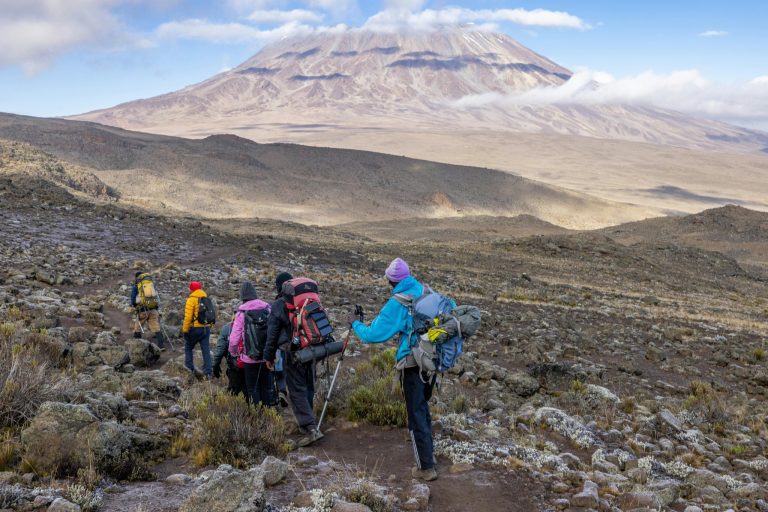
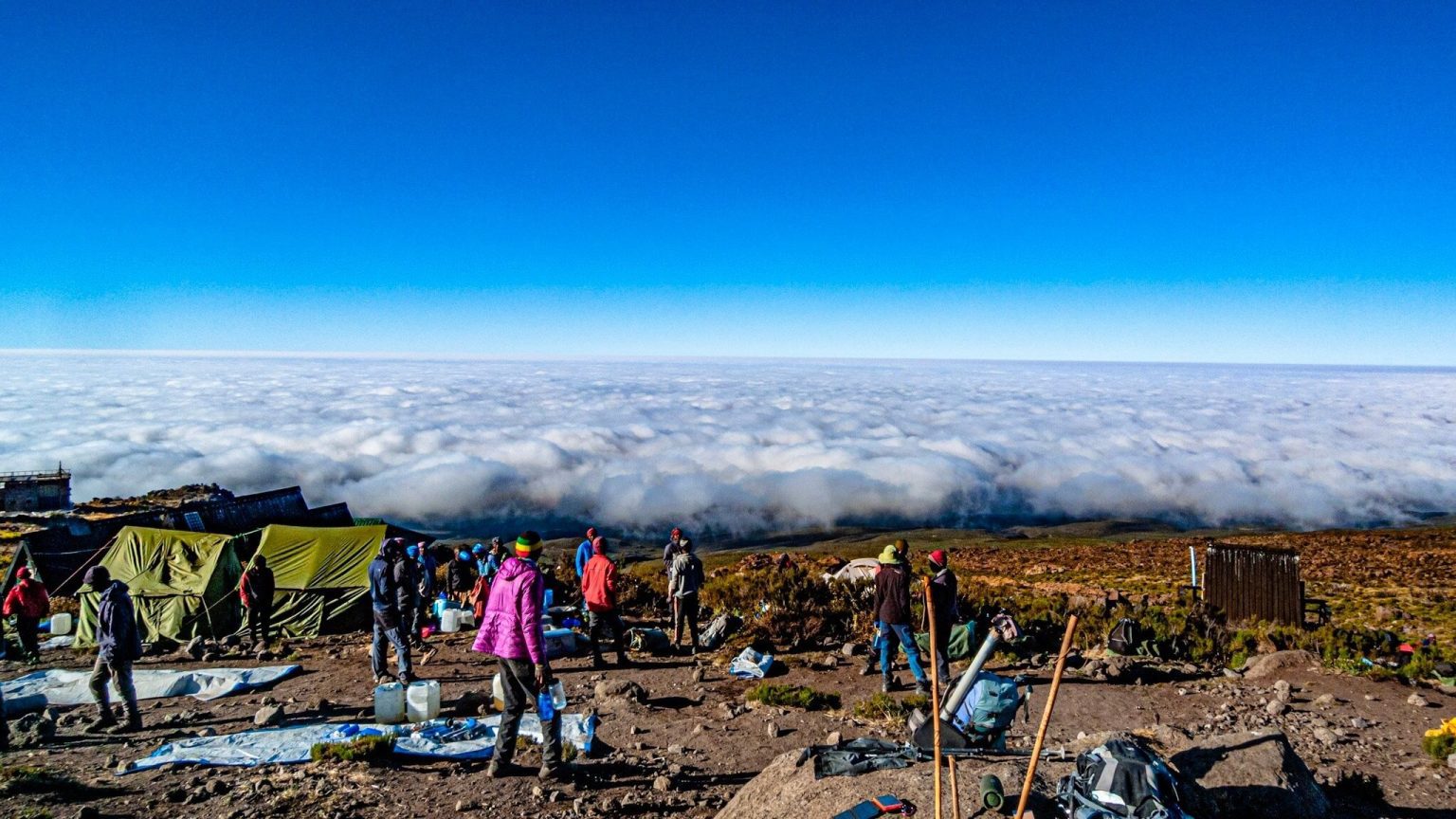
Every Kilimanjaro climb splits your kit in two. Porters carry a soft duffel with your sleeping bag, spare clothes and camp gear, and you only see it at camp each afternoon. You carry a daypack with water, snacks, sun protection, a rain shell and a warm layer. Whatever you might need on the trail goes in the daypack, because the porters move faster than you and the duffel will be ahead of you all day.
Operators cap the duffel, commonly at about 15 kg including the sleeping bag, and bags are weighed at the park gate. Anything over usually means paying for an extra porter. The Kilimanjaro Responsible Trekking Organization, formerly the Kilimanjaro Porters Assistance Project, sets a ceiling of 20 kg for the load a porter carries for the company, on top of his own kit, which is why the personal limit sits lower. Its standards also cover fair wages, proper meals and adequate tents, and the Kilimanjaro cost guide explains how porter pay sits inside a climb price. Pack light, and packing well follows.
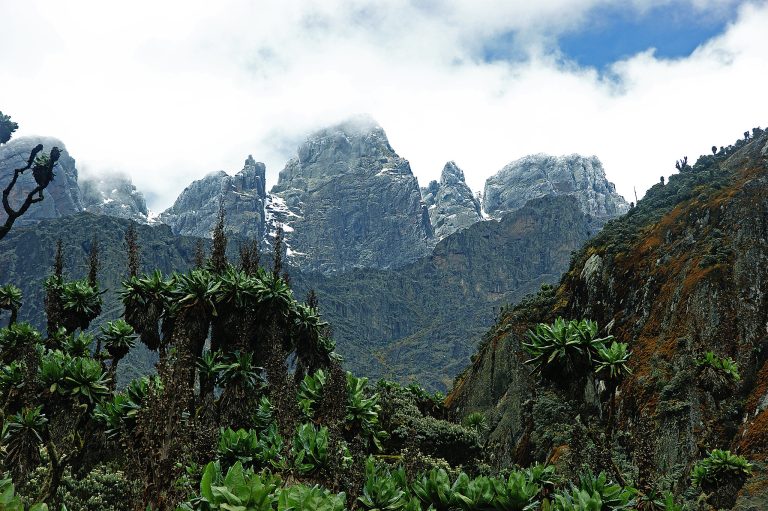
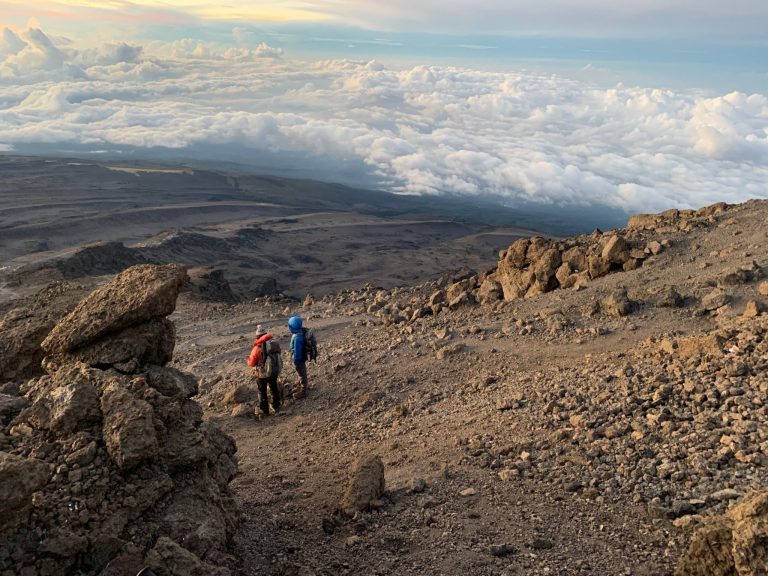
The other thing to grasp is the range of conditions. In one climb you pass through rainforest, heath and moorland, alpine desert and the arctic summit zone on Kibo.
| Zone | Altitude | Day | Night |
|---|---|---|---|
| Rainforest | 1,800 to 2,800 m | Warm, humid | Mild |
| Heath, moorland | 2,800 to 4,000 m | Cool, sunny | Near freezing |
| Alpine desert | 4,000 to 5,000 m | Strong sun | Below freezing |
| Summit zone | Above 5,000 m | Cold, windy | Down to minus 20C |
The summit figure includes wind chill before dawn at the crater rim, near Uhuru Peak at 5,895 metres. Lower down you will walk in a T shirt and convertible trousers. That spread is why layers beat a single heavy jacket every time.
Season changes the list a little. In the long rains of April and May and the short rains around November, add a second dry bag layer, rain trousers you can pull on fast and synthetic insulation that copes with damp. In the dry, cold months from June to October, including September, nights at the high camps are at their coldest, so the warmer sleeping bag and the thick summit socks matter more. From late December to February, days are warmer and clearer, yet summit night is still well below freezing.
Sleeping Bags for a Kilimanjaro Climb: Comfort Ratings, Down and Liners
The sleeping bag for Kilimanjaro is the item people most often get wrong, usually because of how bags are labelled. European and international testing gives each bag a comfort rating, the temperature at which an average sleeper stays warm, and a lower limit rating, which is closer to survival than sleep. Many bags, especially in the US, print only the limit figure on the stuff sack. A bag sold as 0F (about minus 18C) often has a comfort rating somewhere around minus 9C to minus 12C, which is the right zone for the high camps.
For most climbers the right buy is a down mummy sleeping bag rated to 0F, from makers such as Marmot, Mountain Hardwear, Rab, The North Face or Kelty. A thermal sleeping bag liner adds a few degrees, keeps the bag clean, and makes a rented bag far more pleasant to sleep in.
Trip reports mention the other side too. Some climbers in the warmer months found a heavy expedition bag too hot at the lower camps and slept with it unzipped. That is a better problem than shivering at Barafu, and a bag can always be opened. Operators supply a foam or inflatable mattress, so you rarely need your own mat; ask before you pack one. A small inflatable pillow, or a stuff sack filled with your fleece, makes the nights easier.
Hiking Boots, Socks and Gaiters for Kilimanjaro Trekking
Kilimanjaro hiking boots need to be waterproof, mid or high cut for ankle support on scree, with a deep lugged sole and enough room in the toe for a long descent. You do not need stiff mountaineering boots or crampon compatible soles on the standard routes; they are heavy and slow to break in. Ordinary trekking boots are what most guides wear.
Break them in over several weeks of hill walks before you fly, in the socks you will climb in. Then wear them on the plane or keep them in your hand luggage. Lost bags are the main reason climbers end up in rented boots, and rented boots are where most of the blisters on this mountain come from.
Good options are waterproof mid hiking boots with ankle support from Salomon, Merrell, Lowa or Scarpa. Our guide to the best hiking boots for Kilimanjaro compares named models by foot shape, and the reasoning on fit and soles is the same as in our guide to boots for gorilla trekking.
Socks matter almost as much. Pack four or five pairs of cushioned merino wool hiking socks for the trail and one thicker pair kept dry for summit night. Some people add thin liner socks to cut friction. Bring trail shoes or light sneakers for camp, because taking boots off each afternoon lets your feet and the boots dry, and closed shoes make the night time trip to the toilet tent far easier than sandals.
Gaiters keep mud out in the rainforest and grit out on the scree descent. Waterproof hiking gaiters are cheap to own and also rentable in Moshi. One climber who skipped them still kept dry feet in waterproof boots and trousers, so treat them as useful rather than critical outside the rainy months. The gaiters guide explains heights and fit.
The Layering System for Kilimanjaro Hiking: Base, Mid, Shell and Down
Kilimanjaro layers follow the same logic as any mountain trek: trap warm air, move sweat away from the skin, and keep wind and rain out. Cotton has no place in the bag beyond camp, because once it is wet it stays wet and cold. Our guide on what to wear on Kilimanjaro takes each layer in turn, from the rainforest to summit night.
On summit night most climbers wear two base layers, a fleece, the down jacket and the shell on top, with three layers on the legs. That sounds like too much until you are walking slowly at minus 15C in the wind, around 2am, and stopping every few minutes for breath.
Rental down jackets are common in Moshi and fine for one trip. If you hike in cold places at home or plan more mountains, owning one makes more sense, and it doubles as the cold morning layer at Bwindi. Our guide to the best down jacket for Kilimanjaro compares fill weight, hoods and sizing.
Gloves, Hats and Eye Protection for Summit Night on Kilimanjaro
Ask anyone what hurt on summit night and the answer is usually fingers. Kilimanjaro gloves need to work as a system: thin liner gloves for the cold mornings and for working zips and cameras, and insulated mittens over them for the summit push. Mittens keep fingers together and stay warmer than gloves of the same weight. Insulated waterproof mittens with liner gloves cover both jobs. Some climbers add a midweight softshell glove for the cold but dry days at Barafu.
Chemical hand and toe warmers are worth packing from home, since several climbers report they are hard to find in Moshi and Arusha. Slip one into each mitten before the summit start. Hand and toe warmer packs weigh almost nothing; note that toe warmers are thinner and made to work inside a boot.
For your head, a warm beanie that covers the ears, a windproof fleece balaclava or a neck gaiter for the wind on Kibo, and a brimmed sun hat for the open moorland. The sun at altitude is fierce, and a wide brim with a chin cord, like those in our best safari hats guide, works on the mountain too.
Eyes need real protection above 4,000 metres, where UV is far stronger and snow or pale rock reflects it. Category 4 glacier sunglasses with side shields are the safe choice for the summit morning; good category 3 wraparound sunglasses are fine lower down. Bring high factor sunscreen and lip balm with SPF, and reapply at every rest stop. Contact lens wearers should pack glasses as a backup, since dust and dry air at altitude irritate lenses.
Trekking Poles, Headlamps, Water Bottles and Charging on the Climb
Trekking poles are on every Kilimanjaro list for good reason. The descent from Uhuru Peak to a lower camp drops well over 2,000 metres in one day, and poles take a share of that load off your knees. Collapsible aluminium or carbon poles with lever locks and cork grips are the standard choice. Our trekking poles guide covers sizing, materials and when renting is fine.
A headlamp is not optional: summit night starts around midnight, and camp toilets are a walk away in the dark. Choose a rechargeable headlamp with a red light mode and carry spare lithium AAA batteries, which hold their charge in the cold far better than alkaline cells. Keep the lamp and batteries inside your jacket on summit night. The headlamp guide covers beam and battery choices in more detail.
Water is the most common surprise. Hydration bladders are handy on the lower days, but the hose freezes on summit night; several climbers report sucking on a solid tube at 5,000 metres. Carry two wide mouth one litre bottles in insulated sleeves, store them upside down so ice forms at the bottom, and ask the cook to fill one with hot water before you leave camp. Plan on three to four litres a day. Hard plastic bottles take boiling water; thin metal ones get too hot to hold and some guides discourage them for that reason.
Crews collect water from streams and boil or treat it, and most operators add a filter. A packet of water purification tablets is a cheap backup if you top up on the trail. Disposable plastic bottles are discouraged on the mountain, so arrive with your own. More on bottles and filters is in our water bottles and filters guide.
Phones and cameras drain fast in the cold and there is no mains charging on the mountain. A compact battery pack of 10,000 to 20,000 mAh, kept in your sleeping bag overnight, covers most climbs; a small folding solar panel helps on longer routes. Signal is patchy but exists at several camps, including Barranco, Karanga and Barafu on the southern routes. Tanzania uses type D and type G sockets at 230 volts, so pack a type G travel adapter for the hotel nights either side of the climb.
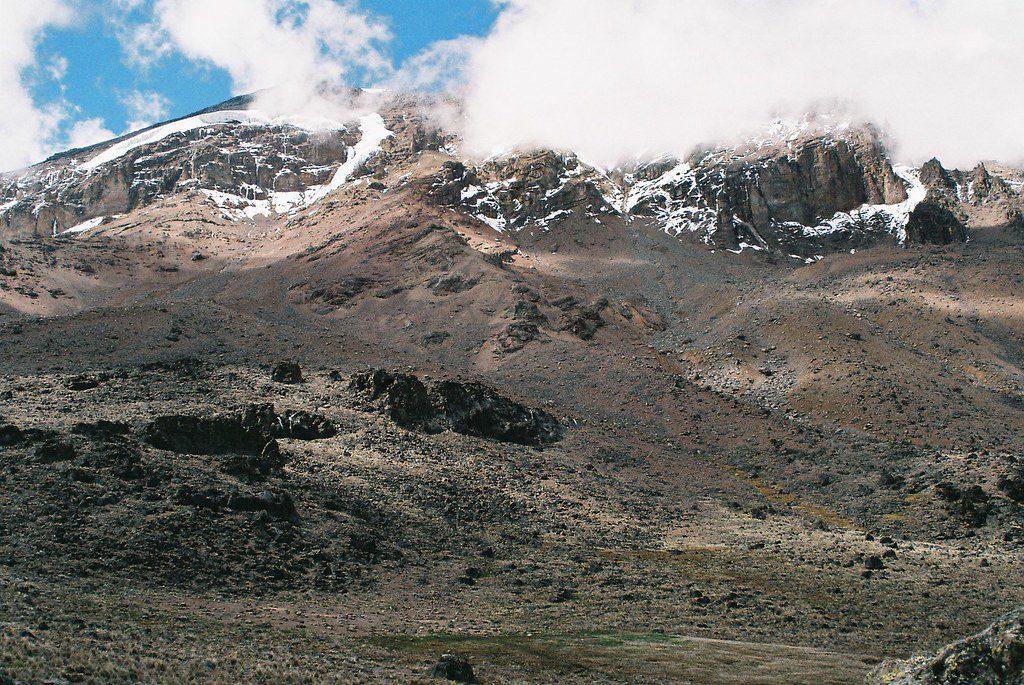
Duffel Bags and Daypacks for Kilimanjaro Porters and Climbers
Your duffel should be soft sided, roughly 70 to 90 litres and as waterproof as you can get. Wheeled suitcases and hard cases are not accepted, because porters carry bags on their heads or inside their own packs. A 90 litre waterproof duffel with backpack straps, from makers such as The North Face, Patagonia or Osprey, does the job. Line it with dry bags anyway. Tanzania bans plastic carrier bags, so leave supermarket bags at home and use a set of roll top dry bags to keep the sleeping bag and summit clothes dry. A small lock for the duffel, and a second bag left at your hotel with travel clothes, round out the system.
The daypack should be around 30 to 35 litres, with a padded hip belt that takes the weight off your shoulders, a chest strap, side pockets you can reach for bottles, and a rain cover. A 30 litre hiking daypack with a rain cover and hip belt is the usual pick. Smaller packs struggle to fit the down jacket and shell together on summit day. Our guide to the best backpack for Kilimanjaro covers fit, hydration and what goes in it each day. If you are also trekking gorillas, the gorilla trekking daypack guide covers the same criteria for the forest.
Most climbers keep in the daypack: the shell jacket and trousers, a fleece, gloves, a hat, sunglasses, sunscreen, water, snacks, a small first aid kit, toilet paper, hand sanitiser and a phone. Keep the passport and cash in a small waterproof pouch inside it, not in the duffel. A typical daypack weighs 5 to 8 kg when loaded.
Toiletries, First Aid and Medication for a Kilimanjaro Trek
The Kilimanjaro trek has no shops and no pharmacy between the gate and the summit, so the wash kit and first aid kit come with you. Keep both small. Decant toiletries into travel bottles; wet wipes, hand sanitiser and a microfibre towel do most of the washing, since the crew brings a small bowl of warm water to the tent each morning and evening.
Earplugs are worth a line of their own. Camps are busy, tents are close together and porters start early, and a pair of soft foam plugs buys an extra hour of sleep. Insect repellent is only needed in the forest and on the safari, so one small bottle covers both.
Women’s Kilimanjaro Packing List: Bras, Periods and Night Time Toilets
A Kilimanjaro packing list for women adds a handful of items to the main checklist, and most of them make the cold nights easier. Pack two or three supportive, quick dry sports bras, worn in and comfortable under a hip belt and chest strap, and a few pairs of merino or synthetic underwear.
Bring period products even if your cycle is not due, because altitude, exertion and travel can change timing. Pack them with small opaque bags to carry used items down, since nothing is left on the mountain. A reusable female urination funnel used with a marked pee bottle saves leaving the tent at 3am, and an antimicrobial pee cloth cuts toilet paper on the trail. Practise with the funnel at home first. Plenty of women climbers say this one item made the high camps far more comfortable.
Renting Kilimanjaro Gear in Moshi and Arusha Against Buying Your Own
Renting is sensible for bulky kit you will use once. Most operators either keep their own rental stock or work with shops in Moshi and Arusha, and they will deliver the gear to your hotel the evening before the climb. Quality varies widely, from almost new to worn out, so treat rented kit as something to check rather than trust.
| Item | Rent? | Reason |
|---|---|---|
| Sleeping bag | Often fine | Bulky, one use |
| Down jacket | Often fine | Bulky, one use |
| Trekking poles | Yes | Check locks |
| Gaiters | Yes | Cheap, simple |
| Rain jacket, trousers | Possible | Check seams |
| Duffel bag | Yes | Operators lend |
| Hiking boots | Never | Fit, blisters |
| Base layers | No | Hygiene, fit |
| Gloves, socks | No | Cheap to own |
| Headlamp | No | Reliability |
Before you leave the hotel, unroll the rented sleeping bag and read its label, try on the jacket over your fleece, extend each pole and lean on it, and check every zip. One climber described rented long underwear as scratchy and not quite clean even after washing; that is a reason to own your base layers, not your poles. Bring your own liner for any rented bag, since a bag that copes at the forest camps may not cope at Barafu.
If you are flying in with a tight luggage allowance or connecting from a safari, renting the bag and jacket can also save several kilos. Ask your operator for a written list of what they supply and what they rent, and the rating of the rental bag, when you book. Rental prices for each item are in the FAQ below and in the gear section of our Kilimanjaro climb cost breakdown.
Ten Things Kilimanjaro Climbers Wish They Had Packed or Known
Trip reports and climbing forums keep returning to the same lessons. None of them are expensive, and most concern the small things in the daypack rather than the big buys.
Kilimanjaro Climbing Gear Not Worth Packing
Overpacking is as common as underpacking, and the duffel limit punishes it. These are the items most often carried up and back unused.
Mountaineering boots, crampons and ice axes. Not needed on any standard route in a normal season. Your operator will tell you if conditions on a specific route change that; in a rare snowy spell, light microspikes are the most you would carry.
Too many trousers and T shirts. Two pairs of trekking trousers and two or three tops are plenty; nobody washes on the mountain and nobody minds.
Cotton clothing for walking, including jeans and cotton hoodies. Fine for the hotel, wrong for the trail.
A sleeping mat, unless your operator has told you to bring one. Most supply a mattress.
Heavy toiletries. Decant into small bottles. Wet wipes, hand sanitiser and a microfibre towel do most of the work.
Large camera kit. A phone or a single compact camera covers most of what climbers shoot. Extra lenses add weight to your daypack on the steepest days. The safari camera and binoculars guide suggests what to keep for the safari afterwards.
Plastic carrier bags and disposable bottles. Tanzania bans the bags, and checks at the airport and park gate can confiscate them.
And one thing to buy at home that people forget: blister plasters, painkillers, rehydration salts and any altitude medication your doctor prescribes. Pharmacies in Moshi exist, but you will not pass one on the trail.
Reusing Your Kilimanjaro Kit for Gorilla Trekking and a Tanzania Safari
Most climbers add something else to the trip, and the good news is that much of the Kilimanjaro kit carries straight over. Boots, gaiters, the rain shell, a fleece, gloves, poles and the daypack are exactly what a gorilla trekking safari in Bwindi needs, where trails are steep, wet clay and early mornings can be cool. The gorilla trekking packing list and our guide to rain jackets for gorilla trekking fill in the forest specifics, and the gorilla trekking clothing guide covers what to wear on the day.
For a savannah safari in the Serengeti or the Masai Mara, the summit layers go to the bottom of the bag and lighter clothes take over: neutral safari shirts, safari pants, a brimmed hat and a good insect repellent for Africa. The fleece and down jacket still earn their keep on dawn game drives in the Ngorongoro highlands. Our guides to safari clothes for women and safari clothes for men cover the rest, and the African safari packing list pulls it together. Packing for both in one bag is easier with the Kilimanjaro climb and safari itineraries in hand.
Watch the luggage limit if a light aircraft is involved. Many safari and Bwindi flights cap soft bags at around 15 kg, so climbers often leave the sleeping bag and down jacket with their Moshi or Arusha hotel, or rent them in the first place.
Kilimanjaro Gear List: Frequently Asked Questions
What should I bring on a Kilimanjaro packing list?
A four season sleeping bag, broken in waterproof boots, merino base layers, one or two fleeces, a hooded down jacket, a waterproof jacket and trousers, liner gloves and insulated mittens, a beanie and sun hat, sunglasses, a headlamp, trekking poles, two litre bottles, a 30 to 35 litre daypack and a soft duffel for the porter. Add sunscreen, a small first aid kit, your medication and documents.
What sleeping bag rating do I need for Kilimanjaro?
A comfort rating of about minus 10C suits most climbers, and closer to minus 15C if you sleep cold or climb in the coldest months. Bags sold in the US as 0F (about minus 18C) usually have a comfort rating in that range, because the headline figure is often a lower limit. Add a liner for extra warmth.
How much does Kilimanjaro gear cost to rent or buy?
Hiring the three bulky items, a sleeping bag, a down jacket and trekking poles, costs roughly US$45 to US$80 for the climb in Moshi. Typical local rates run about US$20 to US$40 for a sleeping bag, US$15 to US$25 for a down jacket, US$10 to US$15 for poles, US$10 to US$20 for a rain jacket or trousers, and US$5 to US$10 each for gaiters, gloves or a hat. Buying good quality gear from scratch runs about US$500 to US$800. Rates and quality vary by shop, so confirm with your operator.
Can I rent hiking boots for Kilimanjaro?
Sometimes, but you should not plan to. Boots need several weeks of walking to break in, and a rented pair first worn at the gate can blister badly over six or seven days. Bring broken in boots and wear or carry them on the plane.
How heavy can my Kilimanjaro duffel be?
Most operators set a limit of about 15 kg for the bag a porter carries, including your sleeping bag, and loads are weighed at the gate. The Kilimanjaro Responsible Trekking Organization caps the total company load a porter carries at 20 kg. Your daypack is separate and usually weighs 5 to 8 kg.
How cold is Kilimanjaro at the top?
Before dawn at the crater rim, temperatures often fall to between about minus 7C and minus 20C once wind chill is counted. Lower camps are milder, and the rainforest days are warm and humid, which is why layers matter more than any single jacket.
Do you need a pee bottle for Kilimanjaro?
Not strictly, but many climbers call it the most useful small item they packed. Drinking three to four litres a day at altitude means getting up at night, and a wide mouth, clearly marked leak proof pee bottle saves pulling on boots in the cold. Women can use it with a funnel.
Do I need trekking poles for Kilimanjaro?
Not strictly, but almost everyone uses them, mainly for the long descent after the summit. They are easy to rent in Moshi or cheap to own. Check that rented poles lock firmly before the climb.
What does my Kilimanjaro operator usually provide?
Tents, a mattress or sleeping mat, a mess tent with tables and chairs, cooking gear, meals, treated drinking water and often a private toilet tent. Some operators include or rent sleeping bags, jackets and poles. Ask for a written list before you pack.
How much cash should I carry for the climb?
Tips are the main cash cost on the mountain: operators’ published guidance runs from about US$200 to US$400 per climber for a 7 day climb. Add the Tanzanian visa, US$50 for most nationalities or US$100 on a US passport, and some spending money for Moshi. Bring clean, recent US dollar notes in small denominations.
Can I use the same gear for gorilla trekking?
Yes. Boots, gaiters, the rain jacket, a fleece, gloves, poles and your daypack all work in Bwindi or Volcanoes National Park. Leave the sleeping bag, down jacket and summit mittens behind for that part of the trip.
Down or synthetic jacket for Kilimanjaro?
Down for most climbers, because it is warmer for its weight and packs small. Synthetic insulation is a reasonable budget choice in the wetter months, when it copes better with damp. Either way it should be hooded and fit over all your other layers.
Plan Your Kilimanjaro Climb and East Africa Trip
Once the gear is sorted, the Kilimanjaro trekking guide helps you pick a route and itinerary length, and the Kilimanjaro cost guide explains park fees, crew pay and tips. To find a climbing operator, compare the Tanzania safari companies and the best safari companies in Tanzania, many of which also run climbs. If you plan a second mountain in Uganda, the Rwenzori packing list covers the gumboots and bog gear that range needs. Entry rules are on our East Africa tourist visa page, and every gear guide on the site sits in the safari gear and clothing section.